

6 months 3 weeks ago
The outsider, Haller says, is a self-divided man; being self-divided, his chief desire is to be unified. He is selfish as a man with a lifelong raging toothache.
▼
Source
source
Chapter Three, The Romantic Outsider

4 months 1 week ago
One needs only eyes to see the necessary influence of old age on reason.
9 months 1 day ago
The aged are cared for until death; adults are employed in jobs that make full use of their abilities; and children are nourished, educated, and fostered;...orphans... the disabled and the diseased are all well taken care of....
8 months 1 week ago
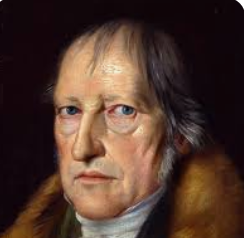
Not only must philosophy be in agreement with our empirical knowledge of Nature, but the origin and formation of the Philosophy of Nature presupposes and is conditioned by empirical physics. However, the course of a science's origin and the preliminaries of its construction are one thing, while the science itself is another. In the latter, the former can no longer appear as the foundation of the science; here, the foundation must be the necessity of the Concept.
8 months 1 week ago
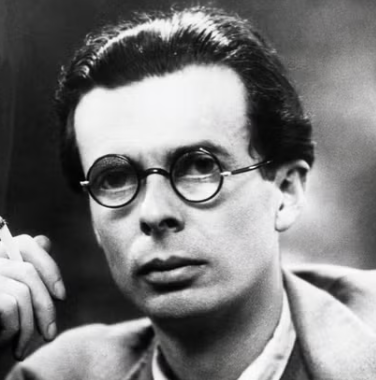
Never give children a chance of imagining that anything exists in isolation. Make it plain from the very beginning that all living is relationship. Show them relationships in the woods, in the fields, in the ponds and streams, in the village and in the country around it. Rub it in.
7 months 2 weeks ago
Superstition is more injurious to God than atheism.
6 months 1 week ago
The artist is the person who invents the means to bridge biological inheritance and the environments created by technological innovation.
▼
Source
source
p. 98
7 months 2 weeks ago
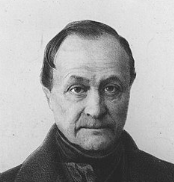
The errors of Communism must be rectified; but there is no necessity for giving up the name, which is a simple assertion of the paramount importance of Social Feeling. However, now that we have happily passed from monarchy to republicanism, the name of Communist is no longer indispensable; the word Republican expresses the meaning as well, and without the same danger. Positivism, then, has nothing to fear from Communism; on the contrary, it will probably be accepted by most Communists among the working classes, especially in France where abstractions have but little influence on minds thoroughly emancipated from theology. The people will gradually find that the solution of the great social problem which Positivism offers is better than the Communistic solution.
▼
Source
source
p. 169

7 months 1 week ago
Tell me how you want to die, and I'll tell you who you are.
4 months 4 days ago
Every person is an end in themselves. That's universal. To respect that leads to flourishing. Not respecting it in extremes leads to unnecessary death.
6 months 3 weeks ago
The mystical impulse in men is somehow a desire to possess the universe. In women, it's a desire to be possessed.
▼
Source
source
p. 108
8 months 1 week ago
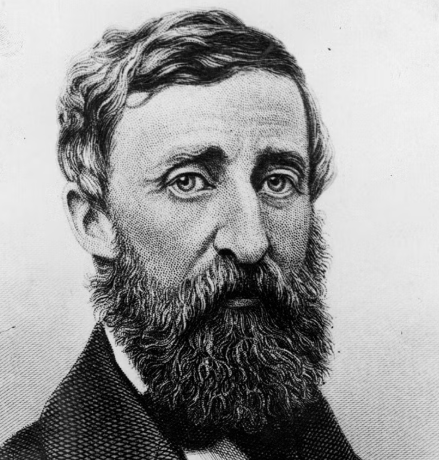
If you can speak what you will never hear, if you can write what you will never read, you have done rare things.
7 months 1 week ago
No sound ought to be heard in the church but the healing voice of Christian charity.
6 months 3 weeks ago
We accumulate our opinions at an age when our understanding is at its weakest.
▼
Source
source
H 4
8 months 2 weeks ago
T is one and the same Nature that rolls on her course, and whoever has sufficiently considered the present state of things might certainly conclude as to both the future and the past.
▼
Source
source
Book II, Ch. 12. Apology for Raimond Sebond
6 months 3 weeks ago
The case is a good example of what Van Vogt came to call "the violent man" or the "Right Man." He is a man driven by a manic need for self-esteem - to feel that he is a "somebody." He is obsessed by the question of "losing face," so will never, under any circumstances, admit that he might be in the wrong.
▼
Source
source
p. 211
6 months 2 weeks ago
If we accept values as given and consistent, if we postulate an objective description of the world as it really is, and if we assume that the decision maker's computational powers are unlimited, then two important consequences follow. First, we do not need to distinguish between the real world and the decision maker's perception of it: he or she perceives the world as it really is. Second, we can predict the choices that will be made by a rational decision maker entirely from our knowledge of the real world and without a knowledge of the decision maker's perceptions or modes of calculation. (We do, of course, have to know his or her utility function.)
8 months 2 weeks ago
For where God built a church, there the Devil would also build a chapel...Thus is the Devil ever God's ape.
▼
Source
source
67. Compare "Where God hath a temple, the Devil will have a chapel", Robert Burton, Anatomy of Melancholy, part III, section 4, member 1, subsection 1
7 months 1 week ago
Kings will be tyrants from policy, when subjects are rebels from principle.
▼
Source
source
Volume iii, p. 334
8 months 2 weeks ago
We believe that the very beginning and end of salvation, and the sum of Christianity, consists of faith in Christ, who by His blood alone, and not by any works of ours, has put away sin, and destroyed the power of death.
▼
Source
source
p. 224
8 months 1 week ago
Either the USSR was not the country of socialism, in which case socialism didn't exist anywhere and doubtless, wasn't possible: or else, socialism was that, this abominable monster, this police state, the power of beasts of prey.
▼
Source
source
p. 184
6 months 3 weeks ago
They certainly demonstrate that Seth, whether an aspect of Jane Robert's unconscious mind or a genuine "spirit," was of a high level of intelligence. Yet when Jane Roberts produced a book that purported to be the after-death journal of the philosopher William James, it was difficult to take it seriously. James's works are noted for their vigour and clarity of style; Jane Robert's "communicator" writes like an undergraduate . . . there is a clumsiness here that is quite unlike James's swift-moving, colloquial prose.
▼
Source
source
p. 390

8 months 1 week ago
When at first thought we think of a creator our ideas appear to us undefined and confused; but if we reason philosophically, those ideas can be easily arranged and simplified. It is a Being, whose power is equal to his will.
▼
Source
source
A Discourse, &c. &c.
1 year 1 week ago
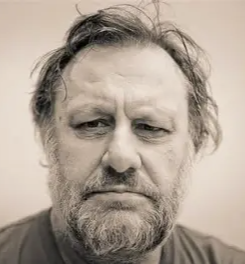
The source of totalitarianism is a dogmatic attachment to the official word: the lack of laughter, of ironic detachment. An excessive commitment to Good may in itself become the greatest Evil: real Evil is any kind of fanatical dogmatism, especially exerted in the name of supreme Good... Consider only Mozart's Don Giovanni at the end of the opera, when he is confronted with the following choice: if he confesses his sins, he can still achieve salvation; if he persists, he will be damned forever. From this viewpoint of the pleasure principle, the proper thing to do would be to renounce his past, but he does not, he persists in his Evil, although he knows that by persisting he will be damned forever. Paradoxically, with his final choice of Evil, he acquires the status of an ethical hero - that is, of someone who is guided by fundamental principles beyond the pleasure principle and not just by the search for pleasure or material gain.
8 months 1 week ago
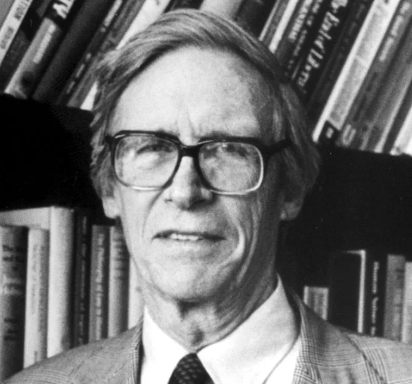
Properly understood, then, the desire to act justly derives in part from the desire to express most fully what we are or can be, namely free and equal rational beings with the liberty to choose.
▼
Source
source
Chapter IV, Section 40, p. 256
8 months 2 weeks ago
Where men are the most sure and arrogant, they are commonly the most mistaken, and have there given reins to passion, without that proper deliberation and suspense, which can alone secure them from the grossest absurdities.
▼
Source
source
§ 9.13 : Conclusion, Pt. 1
4 months 1 week ago
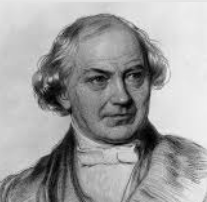
Natural Groups are best described, not by any definition which marks their boundaries, but by a 'Type' which marks their centre. The Type of any natural group is an example which possesses in a marked degree all the leading characters of the class.
6 months 1 week ago
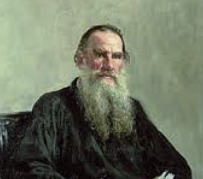
Only the truth and its expression can establish that new public opinion which will reform the ancient obsolete and pernicious order of life; and yet we not only do not express the truth we know, but often even distinctly give expression to what we ourselves regard as false. If only free men would not rely on that which has no power, and is always fettered - upon external aids; but would trust in that which is always powerful and free - the truth and its expression!
▼
Source
source
Ch. 17
8 months 1 week ago
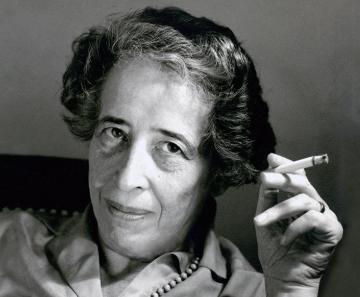
The ideal subject of totalitarian rule is not the convinced Nazi or the convinced Communist, but people for whom the distinction between fact and fiction (i.e., the reality of experience) and the distinction between true and false (i.e., the standards of thought) no longer exist.
▼
Source
source
Part 3, Ch. 13, § 3
4 months 1 week ago
With silent strides Odysseus then shot back the bolt,passed lightly through the courtyard and sped down the street.Some saw him take the graveyard's zigzag mountain path,some saw him leap on rocks that edged the savage shore,some visionaries saw him in the dead of nightswimming and talking secretly with the sea-demons,but only a small boy saw him in a lonely dreamsit crouched and weeping by the dark sea's foaming edge.
▼
Source
source
Book II, line 457

8 months 6 days ago
The soul is the prison of the body.
▼
Source
source
Discipline and Punish (1977) as translated by Alan Sheridan, p. 30
8 months 2 weeks ago
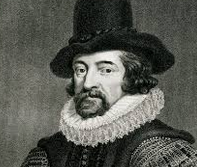
There are also Idols formed by the intercourse and association of men with each other, which I call Idols of the Market Place, on account of the commerce and consort of men there. For it is by discourse that men associate, and words are imposed according to the apprehension of the vulgar. And therefore the ill and unfit choice of words wonderfully obstructs the understanding. Nor do the definitions or explanations wherewith in some things learned men are wont to guard and defend themselves, by any means set the matter right. But words plainly force and overrule the understanding, and throw all into confusion, and lead men away into numberless empty controversies and idle fancies.
▼
Source
source
Aphorism 43
6 months 1 week ago
The telegraph press mosaic is acoustic space as much as an electric circus.
8 months 2 weeks ago
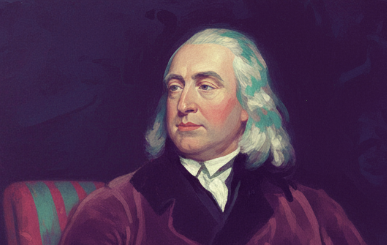
To what shall the character of utility be ascribed, if not to that which is a source of pleasure?
▼
Source
source
Théorie des peines et des récompenses (1811); translation by Richard Smith, The Rationale of Reward, J. & H. L. Hunt, London, 1825, Bk. 3, Ch. 1
8 months 2 weeks ago
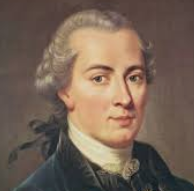
The deceiver is really the fool.
▼
Source
source
Kant, Immanuel (1996), page 101
7 months 1 week ago
The Scientific discourse extracts truths from the errors which surround and oppose it on all sides and in every form; and, by demolition of these opposing views as error, and as impossible to true thought, shows the truth as that which alone remains after their withdrawal, and therefore as the only possible truth:--and in this separation of opposites, and elucidation of the truth from the confused chaos in which truth and error lie mingled together, consists the peculiar and characteristic nature of the Scientific discourse. This method creates and produces truth, before our eyes, out of a world full of error.
▼
Source
source
P. 26-27
7 months 1 week ago
Second, in the presence of this continuity of feeling, nominalistic maxims appear futile. There is no doubt about one idea affecting another, when we can directly perceive the one generally modified and shaping itself into the other. Nor can there any longer be any difficulty about one idea resembling another, when we can pass along the continuous field of quality from one to the other and back again to the point which we had marked.
8 months 2 weeks ago
Heretics cannot themselves appear good unless they depict the Church as evil, false, and mendacious. They alone wish to be esteemed as the good, but the Church must be made to appear evil in every respect.
▼
Source
source
Dictata super Psalterium (Dictations on the Psalter). This is Luther's first major work from the years 1513 to 1515.
8 months 1 week ago
In the part of this universe that we know there is great injustice, and often the good suffer, and often the wicked prosper, and one hardly knows which of those is the more annoying.
▼
Source
source
"The Argument for the Remedying of Injustice"
7 months 3 days ago
If one examines the reason why certain works of art offend us, one is likely to find that the cause is that there is no personally felt emotion guiding the selecting the assembling of the materials presented. We derive the impression that the artist, say the author of a novel, is trying to regulate by conscious intent the nature of the emotion aroused. We are irritated by a feeling that he is manipulating materials to secure an effect decided upon in advance. The facets of the work, the variety so indispensable to it, are held together by some external force. The movement of the parts and the conclusion disclose no logical necessity. The author, not the subject matter, is the arbiter.
8 months 1 day ago
Now, that we do not really know of what sort each thing is, or is not, has often been shown.
6 months 2 weeks ago
If by motivation we mean whatever it is that causes someone to follow a particular course of action, then every action is motivated - by definition. But in most human behavior the relation between motives and action is not simple; it is mediated by a whole chain of events and surrounding conditions. We observe a man scratching his arm. His motive (or goal)? To relieve an itch.
▼
Source
source
p. 265.
9 months 1 day ago
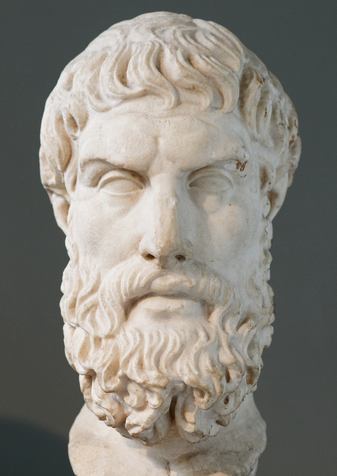
A wise man, who puts himself under the government of reason, will be able to receive an injury with calmness, and to treat the person who committed it with lenity; for he will rank injuries among the casual events of life, and will prudently reflect that he can no more stop the natural current of human passions, than he can curb the stormy winds.
7 months 1 week ago
The first thinker was, without a doubt, the first man obsessed by why. An unaccustomed mania, not at all contagious: rare indeed are those who suffer from it, who are a prey to questioning, and who can accept no given because they were born in consternation.


7 months 4 days ago
Entertainment and learning are not opposites; entertainment may be the most effective mode of learning.
▼
Source
source
pp. 66-67
9 months 2 weeks ago
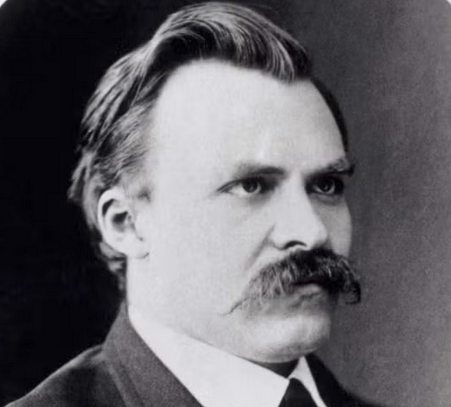
As a genius of construction man raises himself far above the bee in the following way: whereas the bee builds with wax that he gathers from nature, man builds with the far more delicate conceptual material which he first has to manufacture from himself.
CivilSimian.com created by AxiomaticPanic, CivilSimian, Kalokagathia