

7 months 2 weeks ago
Three days later the little princess was buried, and Prince Andrei went up the steps to where the coffin stood, to give her the farewell kiss. And there in the coffin was the same face, though with closed eyes. "Ah, what have you done to me?" it still seemed to say, and Prince Andrei felt that something gave way in his soul and that he was guilty of a sin he could neither remedy nor forget.
▼
Source
source
Bk. IV, Ch. 9
8 months 3 weeks ago
This is a work that cannot be completed except by a society of men of letters and skilled workmen, each working separately on his own part, but all bound together solely by their zeal for the best interests of the human race and a feeling of mutual good will.
▼
Source
source
Article on Encyclopedia, as translated in The Many Faces of Philosophy : Reflections from Plato to Arendt (2001), "Diderot", p. 237
8 months 2 weeks ago
Toleration is good for all, or it is good for none.
▼
Source
source
Speech on the Bill for the Relief of Protestant Dissenters
8 months 2 weeks ago
In Germany, the judicial system has been the whore of the German princes for centuries.


5 months 1 week ago
What the inventive genius of mankind has bestowed upon us in the last hundred years could have made human life care free and happy if the development of the organizing power of man had been able to keep step with his technical advances. As it is, the hardly bought achievements of the machine age in the hands of our generation are as dangerous as a razor in the hands of a three-year-old child. The possession of wonderful means of production has not brought freedom-only care and hunger.
5 months 1 week ago
The standard bearers have grown weak in the defense of their priceless heritage, and the powers of darkness have been strengthened thereby. Weakness of attitude becomes weakness of character; it becomes lack of power to act with courage proportionate to danger. All this must lead to the destruction of our intellectual life unless the danger summons up strong personalities able to fill the lukewarm and discouraged with new strength and resolution.
9 months 2 weeks ago
I opened with that which good Catholics have more than once made to Huguenots. "My dear sir," said I, "were you ever baptized?" "No, friend," replied the Quaker, "nor any of my brethren." "Zounds!" said I to him, "you are not Christians then!" "Friend," replied the old man, in a soft tone of voice, "do not swear; we are Christians, but we do not think that sprinkling a few drops of water on a child's head makes him a Christian." "My God!" exclaimed I, shocked at his impiety, "have you then forgotten that Christ was baptized by St. John?" "Friend," replied the mild Quaker, "once again, do not swear. Christ was baptized by John, but He Himself never baptized any one; now we profess ourselves disciples of Christ, and not of John." "Mercy on us," cried I, "what a fine subject you would be for the holy inquisitor! In the name of God, my good old man, let me baptize you."
▼
Source
source
Voltaire's account of his conversations with Andrew Pit

9 months 2 weeks ago
"For many, abstract thinking is toil; for me, on good days, it is feast and frenzy." (XIV, 24) Abstract thinking a feast? The highest form of human existence? ... "The feast implies: pride, exuberance, frivolity; mockery of all earnestness and respectability; a divine affirmation of oneself, out of animal plenitude and perfection-all obviously states to which the Christian may not honestly say Yes. The feast is paganism par excellence." (WM, 916). For that reason, we might add that thinking never takes place in Christianity. That is to say, there is no Christian philosophy. There is no true philosophy that could be determined anywhere else than from within itself.
▼
Source
source
p. 5
7 months 2 weeks ago
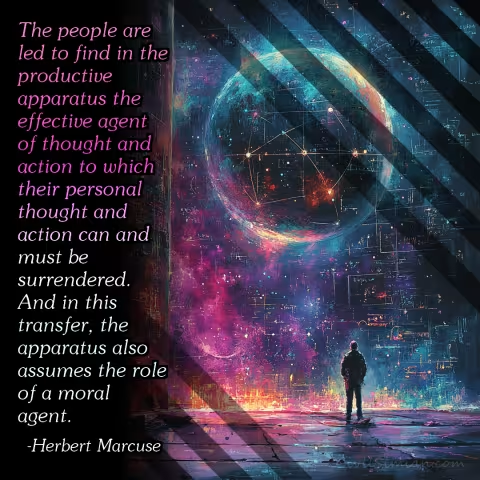
Quite often a man goes on for years imagining that the religious teaching that had been imparted to him since childhood is still intact, while all the time there is not a trace of it left in him.
▼
Source
source
Pt. I, ch. 1
5 months 4 weeks ago
As long as I can remember, I have suffered because of the great misery I saw in the world. I never really knew the artless, youthful joy of living, and I believe that many children feel this way, even when outwardly they seem to be wholly happy and without a single care.

9 months 2 weeks ago
As to riots and tumults, let those answer for them, who, by willful misrepresentations, endeavor to excite and promote them; or who seek to stun the sense of the nation, and to lose the great cause of public good in the outrages of a misinformed mob. We take our ground on principles that require no such riotous aid. We have nothing to apprehend from the poor; for we are pleading their cause. And we fear not proud oppression, for we have truth on our side.
▼
Source
source
Address and Declaration at a Select Meeting of the Friends of Universal Peace and Liberty (August 20, 1791) p. 6
10 months 2 weeks ago
When one plays for top prizes one must be prepared to pay top stakes.
9 months 1 week ago
As it has long been and shall be, not ever, I think, will unfathomable time be emptied of either. This quote refers to Love and Strife, the fundamental opposing and ordering forces in Empedocles' model of the cosmos.
▼
Source
source
fr. 16
10 months 2 weeks ago
Just as it sometimes happens that deformed offspring are produced by deformed parents, and sometimes not, so the offspring produced by a female are sometimes female, sometimes not, but male, because the female is as it were a deformed male.
9 months 2 weeks ago
Most of the luxuries, and many of the so-called comforts of life, are not only not indispensable, but positive hindrances to the elevation of mankind.
▼
Source
source
p. 18
10 months 2 weeks ago
By 1204, the only place where the entire body of Greek learning existed, still intact, was Constantinople. As a result of the crusaders' conquest, however, Constantinople was ruthlessly pillaged and destroyed and almost all the great treasures of ancient Greek learning were lost forever. It is because of that sack, for instance, that we have only seven plays left out of the better than one hundred written by Sophocles. The tragedy of 1204 can never be undone and for all of time, only bits and pieces of the marvelous Greek world can be known to us.
9 months 2 weeks ago
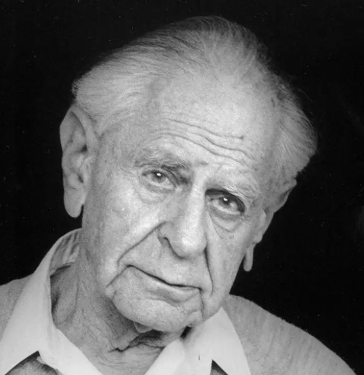
Science is not a system of certain, or well established, statements; nor is it a statement which steadily advances towards state of finality. Our science is not knowledge (epistēmē): it can newer claim to have attained truth, or even substitute for it, such as probability. . . . We do not know; we can only guess.
▼
Source
source
Ch. 10 "Corroboration, or How a Theory Stands up to Tests", section 85: The Path of Science, p. 278.
8 months 1 day ago
The characteristic of the really great writer is the ability of his mind to to suddenly leap beyond his ordinary human values, into sudden perception of universal values.
▼
Source
source
p. 33
6 months 2 weeks ago
The newspaper is in all its literalness the bible of democracy, the book out of which a people determines its conduct.
▼
Source
source
What Modern Liberty Means, p. 47. Essay first published in The Atlantic (November 1919).
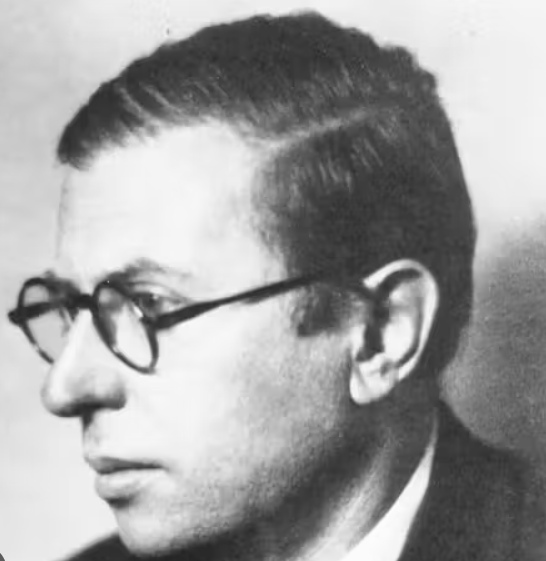
9 months 2 weeks ago
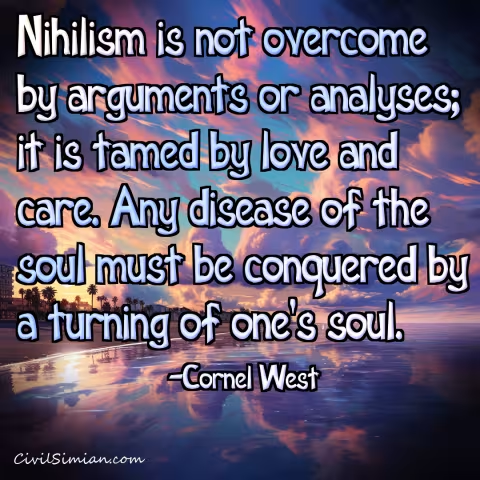
...in order to change poverty into wealth, one must start by displaying it.
▼
Source
source
p. 420
7 months 1 week ago
No realistic, sane person goes around Chicago without protection.
▼
Source
source
Humboldt's Gift (1975), p. 452
7 months 3 weeks ago
We will never know if an advertisement or opinion poll has had a real influence on individual or collective wills, but we will never know either what would have happened if there had been no opinion poll or advertisement.
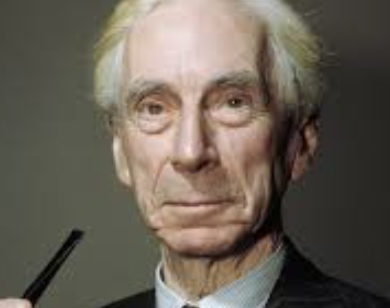
9 months 2 weeks ago
Of all evils of war the greatest is the purely spiritual evil: the hatred, the injustice, the repudiation of truth, the artificial conflict.
▼
Source
source
Justice in War-Time (1916), p. 27
9 months 2 weeks ago
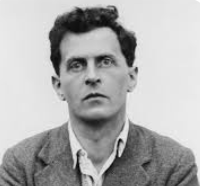
What I give is the morphology of the use of an expression. I show that it has kinds of uses of which you had not dreamed. In philosophy one feels forced to look at a concept in a certain way. What I do is suggest, or even invent, other ways of looking at it. I suggest possibilities of which you had not previously thought. You thought that there was one possibility, or only two at most. But I made you think of others. Furthermore, I made you see that it was absurd to expect the concept to conform to those narrow possibilities. Thus your mental cramp is relieved, and you are free to look around the field of use of the expression and to describe the different kinds of uses of it.
▼
Source
source
Lectures of 1946 - 1947, as quoted in Ludwig Wittgenstein : A Memoir (1966) by Norman Malcolm, p. 43
8 months 4 days ago
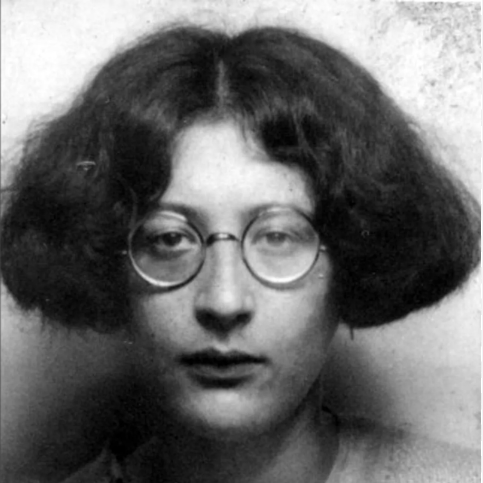
Conscience is deceived by the social. Our supplementary energy (imaginative) is to a great extent taken up with the social. It has to be detached from it. That is the most difficult of detachments.
▼
Source
source
p. 123

9 months 2 weeks ago
Our aim as scientists is objective truth; more truth, more interesting truth, more intelligible truth. We cannot reasonably aim at certainty. Once we realize that human knowledge is fallible, we realize also that we can never be completely certain that we have not made a mistake.
8 months 1 week ago
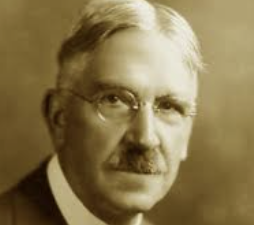
The discovery that mass changes with velocity, a discovery made when minute bodies came under consideration, finally forced surrender of the notion that mass is a fixed and inalienable possession of ultimate elements or individuals, so that time is now considered to be their fourth dimension.
5 months 4 weeks ago
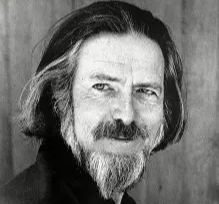
The prevalent sensation of oneself as a separate ego enclosed in a bag of skin is a hallucination which accords neither with Western science nor with the experimental philosophy-religions of the East - in particular the central and germinal Vedanta philosophy of Hinduism. This hallucination underlies the misuse of technology for the violent subjugation of man's natural environment and, consequently, its eventual destruction. We are therefore in urgent need of a sense of our own existence which is in accord with the physical facts and which overcomes our feeling of alienation from the universe.
9 months 2 weeks ago
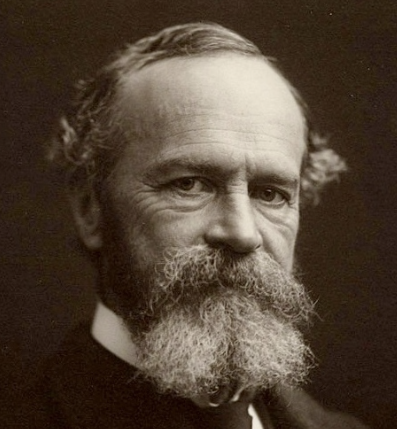
The mere word 'design' by itself has no consequences and explains nothing. It is the barrenest of principles. The old question of whether there is design is idle. The real question is what is the world, whether or not it have a designer - and that can be revealed only by the study of all nature's particulars.
▼
Source
source
Lecture III, Some Metaphysical Problems Pragmatically Considered
10 months 2 weeks ago
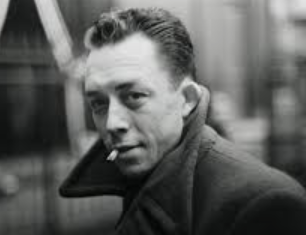
One recognizes one's course by discovering the paths that stray from it.
7 months 2 weeks ago
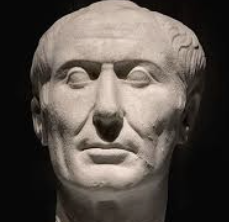
The judge is condemned when the guilty is absolved.
▼
Source
source
Maxim 407 Adopted by the original Edinburgh Review magazine as its motto.
9 months 3 weeks ago
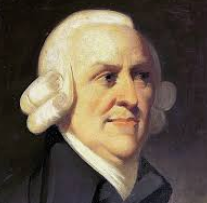
For in every country of the world, I believe, the avarice and injustice of princes and sovereign states, abusing the confidence of their subjects, have by degrees diminished the real quantity of metal, which had been originally contained in their coins.
▼
Source
source
Chapter IV, p. 34.
7 months 2 weeks ago
When a person inflates his own importance, he does not see his own sins; and his sins get bigger right along with him.
▼
Source
source
p. 108
7 months 1 day ago
The equation of religion with belief is rather recent.
▼
Source
source
Christianity Among the Religions of the World (New York: Scribner's, 1957) p. 7

9 months 2 weeks ago
For passionate emotions of all sorts, and for everything which has been said or written in exaltation of them, he professed the greatest contempt. He regarded them as a form of madness. "The intense" was with him a bye-word of scornful disapprobation. He regarded as an aberration of the moral standard of modern times, compared with that of the ancients, the great stress laid upon feeling.
▼
Source
source
(p. 49)
5 months 4 weeks ago
Modern mind has become more and more calculating. The calculative exactness of practical life which the money economy has brought about corresponds to the ideal of natural science: to transform the world into an arithmetic problem, to fix every part of the world by mathematical formulas. Only money economy has filled the days of so many people with weighing, calculating, with numerical determinations, with a reduction of qualitative values to quantitative ones.
▼
Source
source
p. 414
8 months 2 weeks ago
It is terrible to see how a single unclear idea, a single formula without meaning, lurking in a young man's head, will sometimes act like an obstruction ... in an artery, hindering the nutrition of the brain, and condemning its victim to pine away in the fullness of his intellectual vigor and in the midst of intellectual plenty.
▼
Source
source
How to make our ideas clear, Popular Science Monthly, Vol. 12

8 months 2 weeks ago
The premonition of madness is complicated by the fear of lucidity in madness, the fear of the moments of return and reunion, when the intuition of disaster is so painful that it almost provokes a greater madness. One would welcome chaos if one were not afraid of lights in it.
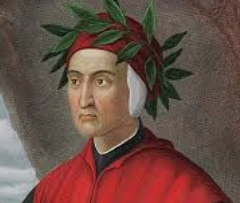
10 months 1 day ago
Love with delight discourses in my mind Upon my lady's admirable gifts...Beyond the range of human intellect.
▼
Source
source
Trattato Terzo, line 1.
9 months 2 weeks ago
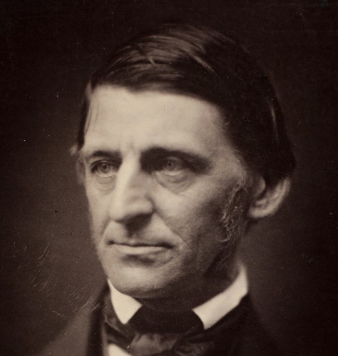
The bitterest tragic element in life to be derived from an intellectual source is the belief in a brute Fate or Destiny.
▼
Source
source
"The Tragic", p. 217. From The Dial (April 1844) p. 515
9 months 2 weeks ago
What is a weed? A plant whose virtues have yet to be discovered.
▼
Source
source
Fortune of the Republic, 1878
8 months 1 week ago
It is a familiar and significant saying that a problem well-put is half-solved.
▼
Source
source
"The Pattern of Inquiry"
9 months 2 weeks ago
Philosophy hasn't made any progress?-If someone scratches where it itches, do we have to see progress? Is it not genuine scratching otherwise, or genuine itching?
▼
Source
source
p. 98e
9 months 2 weeks ago
The evil that has resulted from the error of the schools in teaching natural philosophy as an accomplishment only has been that of generating in the pupils a species of atheism. Instead of looking through the works of creation to the Creator Himself, they stop short and employ the knowledge they acquire to create doubts of His existence. They labor with studied ingenuity to ascribe everything they behold to innate properties of matter and jump over all the rest by saying that matter is eternal.
▼
Source
source
A Discourse, &c. &c.
CivilSimian.com created by AxiomaticPanic, CivilSimian, Kalokagathia