

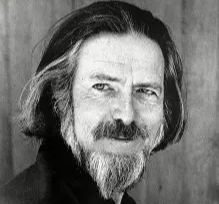
5 months 4 weeks ago
For several years I have referred to this, hitherto, rare and inaccessible work as the I-told-you-so-book, because it has often been implied that I have invented my explanations of Buddhism out of thin air, thus falsifying its authentic teachings... Yet, despite the occultist flavor of its title, The Secret Oral Teachings in the Tibetan Buddhist Sects is the most direct, no-nonsense, and down-to-earth explanation of Mahayana Buddhism which has thus far been written.
▼
Source
source
Watts' Foreward to The Secret Oral Teachings in the Tibetan Buddhist Sects (1964)], by Alexandra David Neel
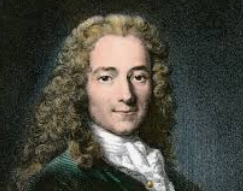
9 months 2 weeks ago
If God has made us in his image, we have returned him the favor.
▼
Source
source
Notebooks, c.1735-c.1750
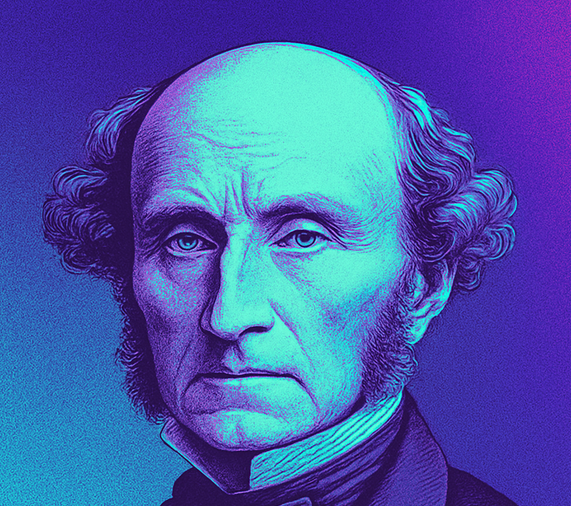
9 months 2 weeks ago
He regarded it with the feelings due not to a mere mental delusion, but to a great moral evil. He looked upon it as the greatest enemy of morality: first, by setting up factitious excellencies,-belief in creeds, devotional feelings, and ceremonies, not connected with the good of human kind,-and causing these to be accepted as substitutes for genuine virtues: but above all, by radically vitiating the standard of morals; making it consist in doing the will of a being, on whom it lavishes indeed all the phrases of adulation, but whom in sober truth it depicts as eminently hateful.
▼
Source
source
(p. 40)



10 months 2 weeks ago
Science doesn't purvey absolute truth. Science is a mechanism. It's a way of trying to improve your knowledge of nature. It's a system for testing your thoughts against the universe and seeing whether they match. And this works, not just for the ordinary aspects of science, but for all of life. I should think people would want to know that what they know is truly what the universe is like, or at least as close as they can get to it.
10 months 2 weeks ago
Of things said without any combination, each signifies either substance or quantity or qualification or a relative or where or when or being-in-a-position or having or doing or being affected. To give a rough idea, examples of substance are man, horse; of quantity: four-foot, five-foot; of qualification: white, grammatical; of a relative: double, half, larger; of where: in the Lyceum, in the market-place; of when: yesterday, last-year; of being-in-a-position: is-lying, is sitting; of having: has-shoes-on, has-armour-on; of doing: cutting, burning; of being-affected: being-cut, being-burned.

8 months 4 days ago
By reducing any quality to quantity, myth economizes intelligence: it understands reality more cheaply.
▼
Source
source
p. 153
5 months 4 weeks ago
Human nature is full of riddles, and one of these riddles is this: How is it that people who have been crushed by the sheer weight of slavery and cast to the bottom of the pit can nevertheless find strength to rise up and free themselves, first in spirit then in body, while those who soar unhampered over the peaks of freedom suddenly appear to lose the taste for freedom, lose the will to defend it, and hopelessly confused and lost almost begin to crave slavery?
▼
Source
source
"Argentina's President Javier Milei Loves Being the Skunk at the Garden Party" (at 47m35s), Honestly with Bari Weiss, 6 June 2024.

9 months 1 week ago
The capacity to reason is a special sort of capacity because it can lead us to places that we did not expect to go.
▼
Source
source
Chapter 4, Reason, p. 88

8 months ago
The time is come when women must do something more than the "domestic hearth," which means nursing the infants, keeping a pretty house, having a good dinner and an entertaining party.


7 months 1 day ago
Instead of water belonging to millions of local communities, water too is to be controlled by five or six global water giants. These are recipes that use economic systems to appropriate for the few the base of survival of the majority.

9 months 2 weeks ago
I became my own only when I gave myself to Another.
▼
Source
source
Letters of C. S. Lewis (17 July 1953), para. 2, p. 251 - as reported in The Quotable Lewis (1989), p. 334
8 months 2 weeks ago
Wit is the appearance, the external flash of imagination. Thus its divinity, and the witty character of mysticism.
▼
Source
source
Aphorism 26, as translated in Dialogue on Poetry and Literary Aphorisms (1968)

9 months 3 weeks ago
I assert once again as a truth to which history as a whole bears witness that men may second their fortune, but cannot oppose it; that they may weave its warp, but cannot break it. Yet they should never give up, because there is always hope, though they know not the end and more towards it along roads which cross one another and as yet are unexplored; and since there is hope, they should not despair, no matter what fortune brings or in what travail they find themselves.
▼
Source
source
Book 2, Ch. 29 (as translated by LJ Walker and B Crick)

8 months 2 weeks ago
The real, the unique misfortune: to see the light of day. A disaster which dates back to aggressiveness, to the seed of expansion and rage within origins, to the tendency to the worst which first shook them up.

8 months 3 weeks ago
To prove the Gospels by a miracle is to prove an absurdity by something contrary to nature.
▼
Source
source
As quoted in The Anchor Book of French Quotations with English Translations (1963) by Norbert Gutermam
8 months 4 days ago
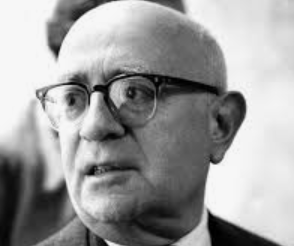
If philosophy is still necessary, it is so only in the way it has been from time immemorial: as critique, as resistance to the expanding heteronomy, even if only as thought's powerless attempt to remain its own master and to convict of untruth, by their own criteria, both a fabricated mythology and a conniving, resigned acquiescence. ... It is incumbent upon philosophy ... to provide a refuge for freedom. Not that there is any hope that it could break the political tendencies that are throttling freedom throughout the world both from within and without and whose violence permeates the very fabric of philosophical argumentation.
▼
Source
source
p. 10
8 months 2 weeks ago
Skepticism is an exercise in defascination.
7 months 2 weeks ago
The role of the artist is to create an Anti-environment as a means of perception and adjustment.
▼
Source
source
(p. 31)
10 months 2 weeks ago
It was a purely Christian satisfaction to me that if ordinarily there was no one else there was one who in action tried a little to do the doctrine about loving the neighbor, alas, one who precisely by his act also received a frightful into what an illusion Christendom is and indeed, particularly later, also into how the common people let themselves be seduced by wretched journalists, whose striving and fighting for equality can only lead, if it leads to anything, since it is in the service of the lie, to making the elite, in self-defense, proud of their aloofness from the common man, and the common man brazen in his rudeness.
9 months 3 weeks ago
Every man is, no doubt, by nature, first and principally recommended to his own care; and as he is fitter to take care of himself than of any other person, it is fit and right that it should be so.
▼
Source
source
Section II, Chap. II.
10 months 2 weeks ago
I don't say it was deliberate fraud. He was probably madly sincere, and sincerely mad.
8 months 2 weeks ago
Life is too full of death for death to be able to add anything to it.


9 months 1 week ago
A sensible man takes pleasure in what he has instead of pining for what he has not.

9 months 3 weeks ago
Anyone who actually admires money as the most precious thing in life, and rests his security on it to the extent of believing that as long as he possesses it he will be happy, has fashioned too many false gods for himself. Too many people put money in the place of Christ, as if it alone has the key to their happiness or unhappiness.
▼
Source
source
p. 100
7 months 2 weeks ago
It is always the psychic and social grounds, brought into play by each medium or technology, that readjust the balance of the hemispheres and of human sensibilities into equilibrium with those grounds.
▼
Source
source
p. 82

9 months 1 week ago
It is not by recognizing the want of courage in someone else that you acquire courage yourself.
▼
Source
source
p. 44e


8 months 2 weeks ago
In the interval between his campaigns Agricola was employed in the great labours of peace. He knew that the general must be perfected by the legislator; and that the conquest is neither permanent nor honourable, which is only an introduction to tyranny... In short, he subdued the Britons by civilizing them; and made them exchange a savage liberty for a polite and easy subjection. His conduct is the most perfect model for those employed in the unhappy, but sometimes necessary, task of subduing a rude and free people.
▼
Source
source
An Essay towards an Abridgment of English History (1757-c. 1763)
8 months 2 weeks ago
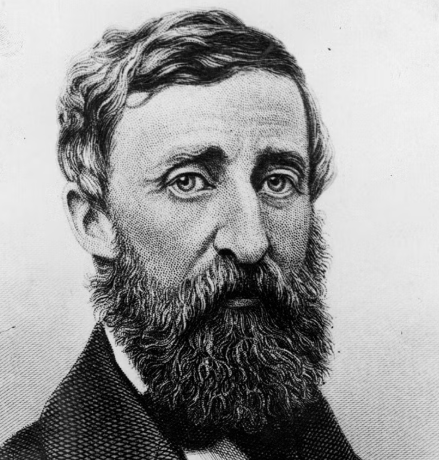
In a word, we reject all legislation, all authority, and all privileged, licensed, official, and legal influence, even though arising from universal suffrage, convinced that it can turn only to the advantage of a dominant minority of exploiters against the interest of the immense majority in subjection to them. This is the sense in which we are really Anarchists.
9 months 2 weeks ago
Go where we will on the surface of things, men have been there before us.
8 months 2 weeks ago
Anyone who speaks in the name of others is always an impostor.
7 months 2 weeks ago
Mysticism is just tomorrow's science dreamed today.
8 months 2 weeks ago
We are fulfilled only when we aspire to nothing, when we are impregnated by that nothing to the point of intoxication.
8 months 1 week ago
Even a minor event in the life of a child is an event of that child's world and thus a world event.
▼
Source
source
The Phoenix, a Linguistic Phenomenon, ch. 1

5 months 3 weeks ago
If one does not preserve the learned in a state he will be injuring the state; if one is not zealous (to recommend) the virtuous upon seeing one, he will be neglecting the ruler. Enthusiasm is to be shown only to the virtuous, and plans for the country are only to be shared with the learned. Few are those, who, neglecting the virtuous and slighting the learned, could still maintain the existence of their countries. Book 1; Befriending the Learned Variant translation: To enter upon rulership of a country but not preserve its scholars will result in the downfall of the country. To see the worthy but not hasten to them will make the country's ruler less able to perform his duties. To the unworthy is due no attention. The ignorant should remain without inclusion in the state's affairs. To impede the virtuous and neglect the scholarly and still maintain the survival of the state has yet to be, indeed.


6 months 3 days ago
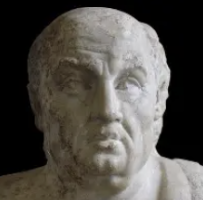
Let us now enquire whether anger be in accordance with nature, and whether it be useful and worth entertaining in some measure.
5 months 4 weeks ago
What we see as death, empty space, or nothingness is only the trough between the crests of this endlessly waving ocean. It is all part of the illusion that there should seem to be something to be gained in the future, and that there is an urgent necessity to go on and on until we get it. Yet just as there is no time but the present, and no one except the all-and-everything, there is never anything to be gained-though the zest of the game is to pretend that there is.
▼
Source
source
p. 96
5 months 1 week ago
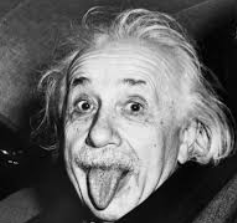
I lie on the beach like a crocodile and let myself be roasted by the sun. I never see a newspaper and don't give a damn for what is called the world.
9 months 2 weeks ago
I wish to suggest that a man may be very industrious, and yet not spend his time well. There is no more fatal blunderer than he who consumes the greater part of his life getting his living. All great enterprises are self-supporting. The poet, for instance, must sustain his body by his poetry, as a steam planing-mill feeds its boilers with the shavings it makes. You must get your living by loving.
▼
Source
source
pp. 486-7
7 months 1 week ago
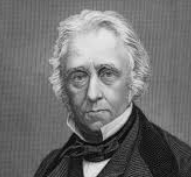
At last I have attained true glory. As I walked through Fleet Street the day before yesterday, I saw a copy of Hume at a bookseller's window with the following label: "Only 2l. 2s. Hume's History of England in eight volumes, highly valuable as an introduction to Macaulay." I laughed so convulsively that the other people who were staring at the books took me for a poor demented gentleman.
▼
Source
source
Alas for poor David! Journal entry (8 March 1849), quoted in George Otto Trevelyan, The Life and Letters of Lord Macaulay, Volume II (1876), p. 253
CivilSimian.com created by AxiomaticPanic, CivilSimian, Kalokagathia