


10 months ago
One of the principal reasons that diverts those who are entering upon this knowledge so much from the true path which they should follow, is the fancy that they take at the outset that good things are inaccessible, giving them the name great, lofty, elevated, sublime. This destroys everything. I would call them low, common, familiar: these names suit it better; I hate such inflated expressions.

10 months 2 days ago
By protracting life, we do not deduct one jot from the duration of death.
▼
Source
source
Book III, lines 1087-1088 (tr. Rouse)
9 months 2 weeks ago
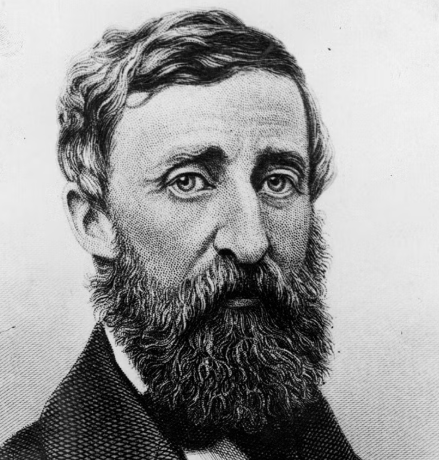
The New Testament is an invaluable book, though I confess to having been slightly prejudiced against it in my very early days by the church and the Sabbath school, so that it seemed, before I read it, to be the yellowest book in the catalogue. Yet I early escaped from their meshes. It was hard to get the commentaries out of one's head and taste its true flavor. - I think that Pilgrim's Progress is the best sermon which has been preached from this text; almost all other sermons that I have heard, or heard of, have been but poor imitations of this. - It would be a poor story to be prejudiced against the Life of Christ because the book has been edited by Christians.
7 months ago
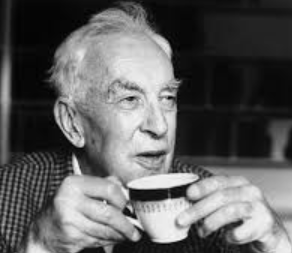
Now who are the individuals who are the greatest benefactors of the living generation of mankind? I should say: Confucius and Lao-Tse; the Buddha; the Prophets of Israel and Judah; Zoroaster, Jesus, Muhammad; and Socrates.
▼
Source
source
Ch. 8: Civilization on Trial
9 months 3 weeks ago
The very port and gait of a swan, or turkey, or peacock show the high idea he has entertain'd of himself; and his contempt of all others. This is the more remarkable, that in the two last species of animals, the pride always attends the beauty, and is discover'd in the male only. The vanity and emulation of nightingales in singing have been commonly remark'd [...] All these are evident proofs, that pride and humility are not merely human passions, but extend themselves over the whole animal creation.
▼
Source
source
Part 1, Section 12
9 months 3 weeks ago
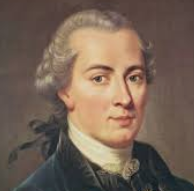
Habit... makes the endurance of evil easy (which, under the name of patience, is falsely honored as a virtue), because sensations of the same type, when continued without alteration for a long time, draw our attention away from the senses so that we are scarcely conscious of them at all. On the other hand, habit also makes the consciousness and the remembrance of good that has been received more difficult, which then gradually leads to ingratitude (a real vice). [...] Acquired habit deprives good actions of their moral value because it undermines mental freedom and, moreover, it leads to thoughtless repetitions of the same acts (monotony), and thus becomes ridiculous.
▼
Source
source
Kant, Immanuel (1996), pages 34-35

5 months 2 weeks ago
A teacher's major contribution may pop out anonymously in the life of some ex-student's grandchild. A teacher, finally, has nothing to go on but faith, a student nothing to offer in return but testimony.
▼
Source
source
"Wallace Stegner and the Great Community"
8 months 5 days ago
I am the center of my universe, the center of the universe, and in my supreme anguish I cry with Michelet, "Mon moi, ils m'arrachent mon moi!" What is a man profited if he shall gain the world and lose his own soul? (Matt. xvi. 26).
9 months 3 weeks ago
The more one presupposes that his own power will suffice him to realize what he desires the more practical is that desire. When I treat a man contemptuously, I can inspire him with no practical desire to appreciate my grounds of truth. When I treat any one as worthless, I can inspire him with no desire to do right.
▼
Source
source
Part III : Selection on Education from Kant's other Writings, Ch. I Pedagogical Fragments, # 15
7 months 2 weeks ago
I am not advocating a morality based on evolution. I am saying how things have evolved. I am not saying how we humans morally ought to behave.
▼
Source
source
Ch. 1. Why Are People?
5 months 2 weeks ago
"Since we cannot change reality, let us change the eyes which see reality," says one of my favorite Byzantine mystics. I did this when a child; I do it now as well in the most creative moments of my life.
▼
Source
source
"The Son", Ch. 4, p. 45

5 months 2 weeks ago
Never have nations been civilized, except by religion.
▼
Source
source
XXXIII, p. 99
9 months 1 week ago
It is worth observing, how we feel ourselves affected in reading the characters of Cæsar, and Cato, as they are so finely drawn and contrasted in Salust. In one, the ignoscendo, largiundo; in the other, nil largiundo. In one, the miseris perfugium; in the other, malis perniciem. In the latter we have much to admire, much to reverence, and perhaps something to fear; we respect him, but we respect him at a distance. The former makes us familiar with him; we love him, and he leads us whither he pleases.
▼
Source
source
Edmund Burke, A Philosophical Enquiry into the Origin of Our Ideas of the Sublime and Beautiful (2nd ed. 1759), pp. 206-207
8 months 4 days ago
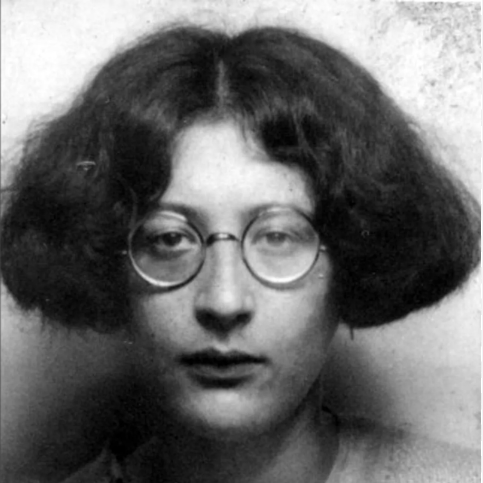
A society like the Church, which claims to be Divine is perhaps more dangerous on account of the ersatz good which it contains then on account of the evil which sullies it. Something of the social labelled divine: an intoxicating mixture which carries with it every sort of license.
▼
Source
source
Devil disguised. p. 122
9 months 2 weeks ago
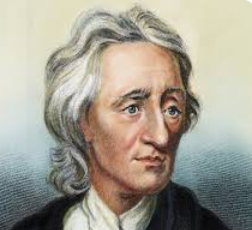
Long discourses, and philosophical readings, at best, amaze and confound, but do not instruct children. When I say, therefore, that they must be treated as rational creatures, I mean that you must make them sensible, by the mildness of your carriage, and in the composure even in the correction of them, that what you do is reasonable in you, and useful and necessary for them; and that it is not out of caprichio, passion or fancy, that you command or forbid them any thing.
▼
Source
source
Sec. 81
9 months 2 weeks ago
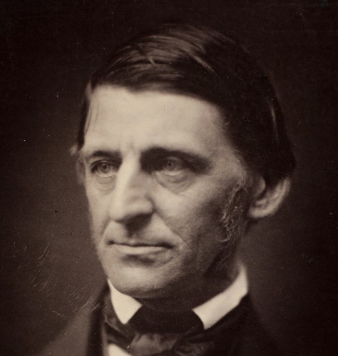
Now shall we say that only the first men were well alive, and the existing generation is invalided and degenerate? ... A more subtle and severe criticism might suggest that some dislocation has befallen the race; that men are off their centre; that multitudes of men do not live with Nature, but behold it as exiles. People go out to look at sunrises and sunsets who do not recognize their own quietly and happily, but know that it is foreign to them. As they do by books, so they quote the sunset and the star, and do not make them theirs. Worse yet, they live as foreigners in the world of truth, and quote thoughts, and thus disown them. Quotation confesses inferiority.
▼
Source
source
Quotation and Originality

5 months 2 weeks ago
In the army, capitalist development leads to the extension of obligatory military service to the reduction of the time of service and consequently to a material approach to a popular militia. But all of this takes place under the form of modern militarism in which the domination of the people by the militarist State and the class character of the State manifest themselves most clearly.
▼
Source
source
Ch.8
10 months 2 weeks ago
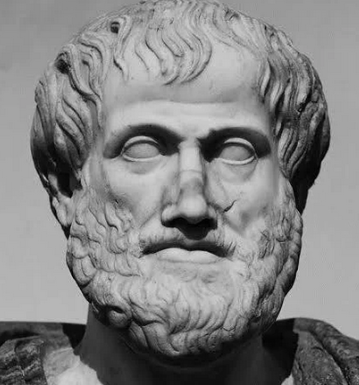
According to one mode... nature is thus denominated, viz. the first subject matter to every thing which contains in itself the principle of motion and mutation. But after another mode it is denominated form, which subsists according to definition: for as art is called that which subsists according to art, and that which is artificial; so likewise nature is both called that which is according to nature, and that which is natural. ...that which is composed from these is not nature, but consists from nature; as, for instance, man. And this is nature in a greater degree than matter: for every thing is then said to be, when it is form in energy... entelecheia, rather than when it is incapacity.
6 months 3 days ago
Other vices can be concealed and cherished in secret; anger shows itself openly and appears in the countenance, and the greater it is, the more plainly it boils forth. Do you not see how in all animals certain signs appear before they proceed to mischief, and how their entire bodies put off their usual quiet appearance and stir up their ferocity? Boars foam at the mouth and sharpen their teeth by rubbing them against trees, bulls toss their horns in the air and scatter the sand with blows of their feet
6 months 1 week ago
To conceive the good, in fact, is not sufficient; it must be made to succeed among men. To accomplish this less pure paths must be followed.
▼
Source
source
Ch. 5.

8 months 4 weeks ago
We ought so to behave to one another as to avoid making enemies of our friends, and at the same time to make friends of our enemies.
▼
Source
source
As quoted in Diogenes Laërtius, Lives and Opinions of Eminent Philosophers, "Pythagoras", Sect. 23, as translated in Dictionary of Quotations (1906) by Thomas Benfield Harbottle, p. 320

6 months 1 week ago
I take the liberty of asserting that there is one valid reason, and only one, for either punishing a man or rewarding him in this world; one reason, which ancient piety could well define: That you may do the will and commandment of God with regard to him; that you may do justice to him. This is your one true aim in respect of him; aim thitherward, with all your heart and all your strength and all your soul, thitherward, and not elsewhither at all! This aim is true, and will carry you to all earthly heights and benefits, and beyond the stars and Heavens. All other aims are purblind, illegitimate, untrue; and will never carry you beyond the shop-counter, nay very soon will prove themselves incapable of maintaining you even there. Find out what the Law of God is with regard to a man; make that your human law, or I say it will be ill with you, and not well!

9 months 2 weeks ago
No one ever told me that grief felt so like fear. First line.
6 months 3 days ago
It is a fact that Mussolini entered the scene of world politics as an ally of the democracies, while Lenin entered it as a virtual ally of imperial Germany.
7 months 3 weeks ago
The true line is not between "hard" natural science and "soft" social sciences, but between precise science limited to highly abstract and simple phenomena in the laboratory and inexact science and technology dealing with complex problems in the real world.
▼
Source
source
p. 302.
7 months 2 weeks ago
Bless advertising art for its pictorial vitality and verbal creativity.
▼
Source
source
(p. 18)
6 months 3 weeks ago
Philosophy in its very act is a process of translation!
▼
Source
source
Chapter 4, Philosophy As Writing: The Case Of Hegel, p. 81
9 months 2 weeks ago
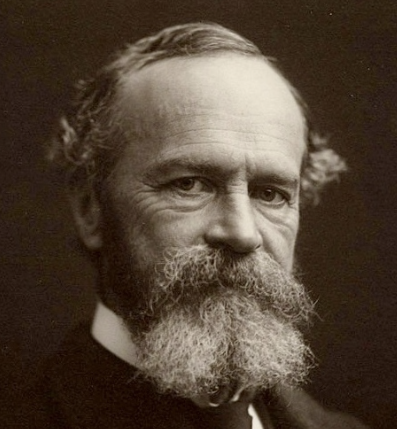
There is but one indefectibly certain truth, and that is the truth that pyrrhonistic scepticism itself leaves standing, - the truth that the present phenomenon of consciousness exists.
▼
Source
source
The Will to Believe, 1897
9 months 2 weeks ago
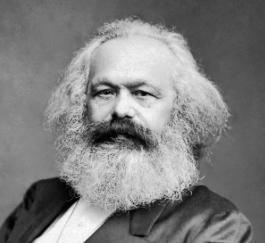
Beauty is the main positive form of the aesthetic assimilation of reality, in which aesthetic ideal finds its direct expression...
▼
Source
source
About Beauty
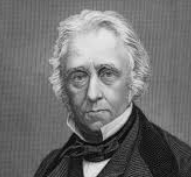
7 months 6 days ago
Joe Hume talked to me very earnestly about the necessity of an union of Liberals. He said much about Ballot and the Franchise. I told him that I could easily come to some compromise with him and his friends on these matters, but that there were other questions about which I feared that there was an irreconcileable difference, particularly the vital question of national defence. He seemed quite confounded, and had absolutely nothing to say. I am fully determined to make them eat their words on that point, or to have no political connection with them.
▼
Source
source
Journal entry (November 1852), quoted in George Otto Trevelyan, The Life and Letters of Lord Macaulay, Volume II (1876), p. 368
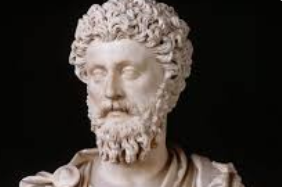
5 months 2 weeks ago
Does anything genuinely beautiful need supplementing? No more than justice does-or truth, or kindness, or humility. Are any of those improved by being praised? Or damaged by contempt? Is an emerald suddenly flawed if no one admires it? Or gold, or ivory, or purple? Lyres? Knives? Flowers? Bushes?
▼
Source
source
(Hays translation) IV, 20
9 months 2 weeks ago
The world of our experience consists at all times of two parts, an objective and a subjective part, of which the former may be incalculably more extensive than the latter, and yet the latter can never be omitted or suppressed. The objective part is the sum total of whatsoever at any given time we may be thinking of, the subjective part is the inner "state" in which the thinking comes to pass.
▼
Source
source
Lecture XX, "Conclusions"

9 months 1 week ago
There are more ideas on earth than intellectuals imagine. And these ideas are more active, stronger, more resistant, more passionate than "politicians" think. We have to be there at the birth of ideas, the bursting outward of their force: not in books expressing them, but in events manifesting this force, in struggles carried on around ideas, for or against them. Ideas do not rule the world. But it is because the world has ideas (and because it constantly produces them) that it is not passively ruled by those who are its leaders or those who would like to teach it, once and for all, what it must think.
▼
Source
source
As quoted in Michel Foucault (1991) by Didier Eribon, as translated by Betsy Wind, Harvard University Press, p. 282

8 months 3 weeks ago
I know of no country in which there is so little independence of mind and real freedom of discussion as in America.
▼
Source
source
Chapter XV.
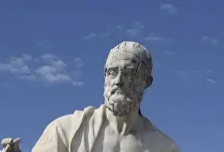
6 months 1 week ago
How highly should we honor the Macedonians, who for the greater part of their lives never cease from fighting with the barbarians for the sake of the security of Greece? For who is not aware that Greece would have constantly stood in the greater danger, had we not been fenced by the Macedonians and the honorable ambition of their kings?
▼
Source
source
Histories, IX, 35:2 (Loeb)
9 months 3 weeks ago
To oppose the torrent of scholastic religion by such feeble maxims as these, that it is impossible for the same thing to be and not to be, that the whole is greater than a part, that two and three make five; is pretending to stop the ocean with a bullrush. Will you set up profane reason against sacred mystery? No punishment is great enough for your impiety. And the same fires, which were kindled for heretics, will serve also for the destruction of philosophers.
▼
Source
source
Part XI - With regard to reason or absurdity
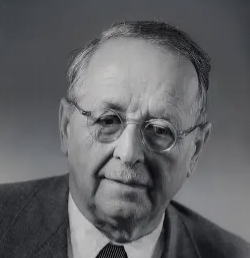
5 months 4 weeks ago
Einstein's theory of relativity has advanced our ideas of the structure of the cosmos a step further. It is as if a wall which separated us from Truth has collapsed. Wider expanses and greater depths are now exposed to the searching eye of knowledge, regions of which we had not even a presentiment. It has brought us much nearer to grasping the plan that underlies all physical happening.
▼
Source
source
From the Author's Preface to First Edition

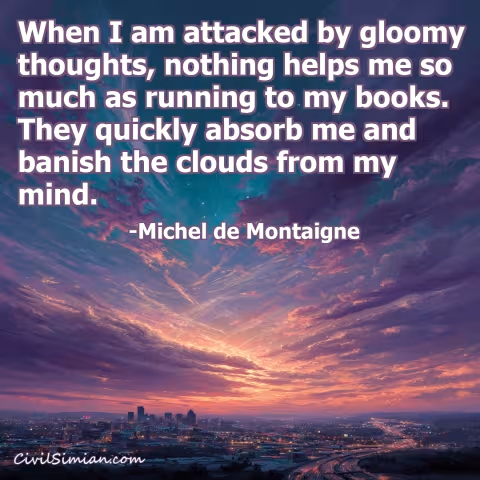

9 months 3 weeks ago
War is sweet to them that know it not.
▼
Source
source
Though Erasmus quoted this proverb in Latin at the start of his essay Bellum [War], and it is sometimes attributed to him, it originates with the Greek poet Pindar
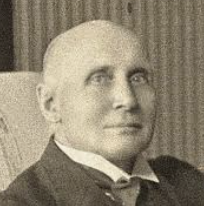
8 months 2 days ago
There remains the final reflection, how shallow, puny, and imperfect are efforts to sound the depths in the nature of things. In philosophical discussion, the merest hint of dogmatic certainty as to finality of statement is an exhibition of folly.
▼
Source
source
Preface, p. 16 (Corrected Edition)

9 months 2 weeks ago
For the lesson of such stories [of resistance to Nazi atrocities] is simple and within everybody's grasp. Politically speaking, it is that under conditions of terror, most people will comply but some people will not, just as the lesson of the countries to which the Final Solution was proposed is that "it could happen" in most places but it did not happen everywhere. Humanly speaking, no more is required, and no more can reasonably be asked, for this planet to remain a place fit for human habitation.
▼
Source
source
Ch. XIV
9 months 2 weeks ago
Though love repine, and reason chafe, There came a voice without reply, - "'T is man's perdition to be safe When for the truth he ought to die."
▼
Source
source
Sacrifice
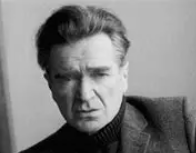
8 months 2 weeks ago
Isn't history ultimately the result of our fear of boredom?
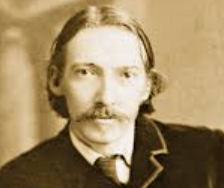
7 months 1 week ago
It is a sore thing to have laboured along and scaled the arduous hilltops, and when all is done, find humanity indifferent to your achievement. Hence physicists condemn the unphysical; financiers have only a superficial toleration for those who know little of stocks; literary persons despise the unlettered; and people of all pursuits combine to disparage those who have none. But though this is one difficulty of the subject, it is not the greatest. You could not be put in prison for speaking against industry, but you can be sent to Coventry for speaking like a fool. The greatest difficulty with most subjects is to do them well; therefore, please to remember this is an apology. It is certain that much may be judiciously argued in favour of diligence; only there is something to be said against it, and that is what, on the present occasion, I have to say.
▼
Source
source
An Apology for Idlers.
9 months 2 weeks ago
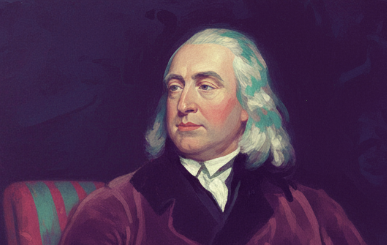
The principle of utility judges any action to be right by the tendency it appears to have to augment or diminish the happiness of the party whose interests are in question... if that party be the community the happiness of the community, if a particular individual, the happiness of that individual.
▼
Source
source
Introduction, 1789 edition
7 months 2 weeks ago
The total amount of suffering per year in the natural world is beyond all decent contemplation. During the minute it takes me to compose this sentence, thousands of animals are being eaten alive; others are running for their lives, whimpering with fear; others are being slowly devoured from within by rasping parasites; thousands of all kinds are dying of starvation, thirst and disease. [...] In a universe of blind physical forces and genetic replication, some people are going to get hurt, other people are going to get lucky, and you won't find any rhyme or reason in it, nor any justice. The universe we observe has precisely the properties we should expect if there is, at bottom, no design, no purpose, no evil and no good, nothing but blind, pitiless indifference. DNA neither knows nor cares. DNA just is. And we dance to its music.
▼
Source
source
pp. 131-132
7 months 1 week ago
My friends, I tell you that hitherto you have been prevented from even knowing what happiness really is, solely in consequence of the errors - gross errors - that have been combined with the fundamental notions of every religion that has hitherto been taught to men. And, in consequence, they have made man the most inconsistent, and the most miserable being in existence. By the errors of these systems he has been made a weak, imbecile animal; a furious bigot and fanatic or a miserable hypocrite; and should these qualities be carried, not only into the projected villages, but into Paradise itself, a Paradise would no longer be found!
▼
Source
source
Statement (21 August 1817), as quoted by Jim Herrick, in "Bradlaugh and Secularism: 'The Province of the Real'"
9 months 2 weeks ago
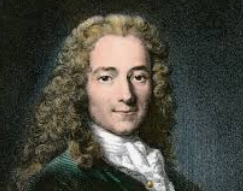
It is said that God is always on the side of the big battalions.
▼
Source
source
Letter to François-Louis-Henri Leriche (6 February 1770) Note: In his Notebooks (c.1735-c.1750)
9 months 2 weeks ago
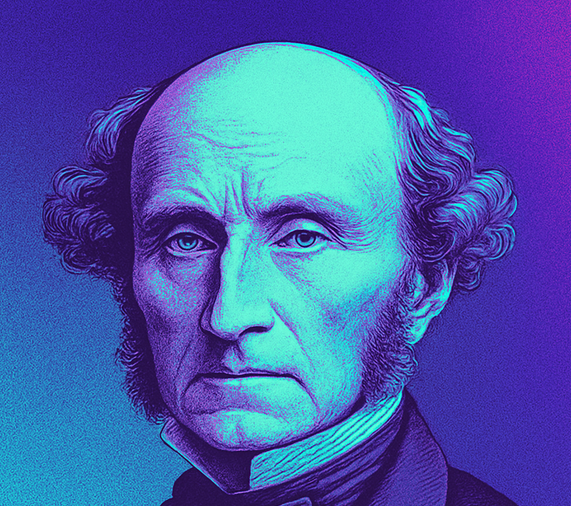
Whenever the general disposition of the people is such, that each individual regards those only of his interests which are selfish, and does not dwell on, or concern himself for, his share of the general interest, in such a state of things, good government is impossible.
▼
Source
source
Ch. II: The Criterion of a Good Form of Government (p. 167)
CivilSimian.com created by AxiomaticPanic, CivilSimian, Kalokagathia