

8 months 2 weeks ago
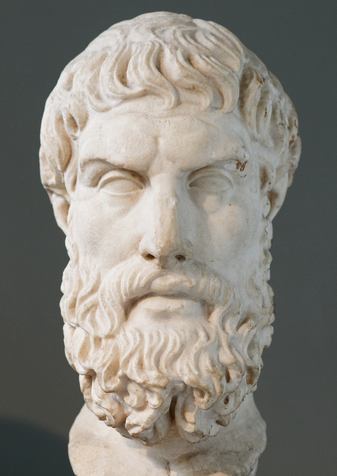
Pleasure, or pain, is not only good, or evil, in itself, but the measure of what is good or evil, in every object of desire or aversion; for the ultimate reason why we pursue one thing, and avoid another, is because we expect pleasure from the former, and apprehend pain from the latter. If we sometimes decline a present pleasure, it is not because we are averse to pleasure itself, but because we conceive, that in the present instance, it will be necessarily connected with a greater pain. In like manner, if we sometimes voluntarily submit to a present pain, it is because we judge that it is necessarily connected with a greater pleasure.
8 months 2 days ago
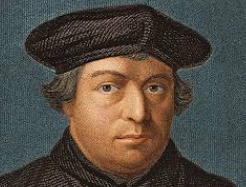
Our preaching does not stop with the law. That would lead to wounding without binding up, striking down and not healing, killing and not making alive, driving down to hell and not bringing back up, humbling and not exalting. Therefore, we must also preach grace and the promise of forgiveness - this is the means by which faith is awakened and properly taught. Without this word of grace, the law, contrition, penitence, and everything else are done and taught in vain.
▼
Source
source
pp. 78-79
6 months 3 weeks ago
I: My consciousness of the object is only a yet unrecognised consciousness of my production of the representation of an object. Of this production I know no more than that it is I who produce, and thus is all consciousness no more than a consciousness of myself, and so far perfectly comprehensible. Am I in the right? Spirit. Perfectly so ; but whence then is derived the necessity and universality thou hast ascribed to these propositions, to that of causality for instance?
▼
Source
source
Jane Sinnett, trans 1846 p. 47
3 months 3 weeks ago
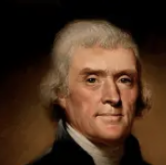
In framing scientific terms, the appropriation of old words is preferable to the invention of new ones.
3 months 3 weeks ago
The mother principle is that governments are republican only in proportion as they embody the will of their people, and execute it.

4 months 2 weeks ago
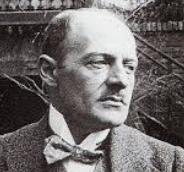
The barrenest of all mortals is the sentimentalist.
▼
Source
source
Characteristics.
6 months 2 weeks ago
In ressentiment morality, love for the "small," the "poor," the "weak," and the "oppressed" is really disguised hatred, repressed envy, an impulse to detract, etc., directed against the opposite phenomena: "wealth," "strength," "power," "largesse." When hatred does not dare to come out into the open, it can be easily expressed in the form of ostensible love-love for something which has features that are the opposite of those of the hated object. This can happen in such a way that the hatred remains secret. When we hear that falsely pious, unctuous tone (it is the tone of a certain "socially-minded" type of priest), sermonizing that love for the "small" is our first duty, love for the "humble" inspirit, since God gives "grace" to them, then it is often only hatred posing as Christian love.
▼
Source
source
L. Coser, trans. (1961), pp. 96-97
6 months 2 weeks ago
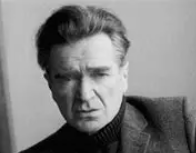
One grasps incomparably more things in boredom than by labor, effort being the mortal enemy of meditation.
6 months 1 week ago
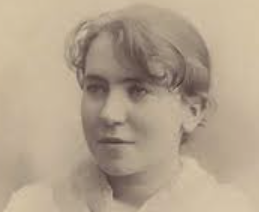
The Fathers of the Church can well afford to preach the gospel of Christ. It contains nothing dangerous to the regime of authority and wealth; it stands for self-denial and self-abnegation, for penance and regret, and is absolutely inert in the face of every indignity, every outrage imposed upon mankind.
3 months 3 weeks ago
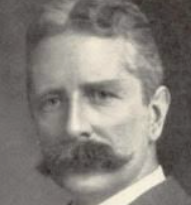
"Spirit" is matter seen in a stronger light. What else did Malebranche mean when he spoke of "seeing all things in God"? Existence is a mystery because the light of it is inexhaustible.
▼
Source
source
Near the Brink: Observations of a Nonagenarian (1952). p. 17.
7 months 2 weeks ago
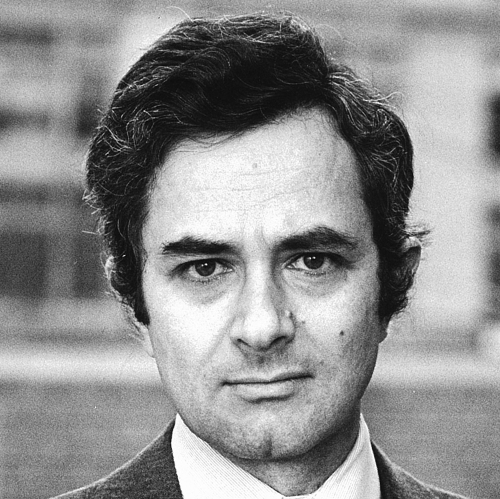
Ethics increases the range of what it is about ourselves that we can will-extending it from our actions to the motives and character traits and dispositions from which they arise. We want to be able to will the sources of our actions down to the very bottom.
▼
Source
source
p. 135.
6 months 1 week ago
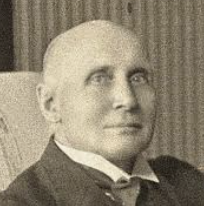
Life is complex in its expression, involving more than percipience, namely desire, emotion, will, and feeling. ... identification of rhythm as the causal counterpart of life; wherever there is some life, only perceptible to us when the analogies are sufficiently close ... The rhythm is then the life, in the sense in which it can be said to be included within nature.
▼
Source
source
p. 197
7 months 3 weeks ago
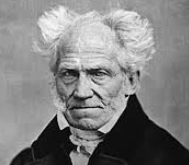
Men are by nature merely indifferent to one another; but women are by nature enemies.
▼
Source
source
Vol. 2 "On Women" as translated in Essays and Aphorisms (1970), as translated by R. J. Hollingdale
6 months 2 weeks ago
I used to ask myself, over a coffin: "What good did it do the occupant to be born?," I now put the same question about anyone alive.
5 months 2 weeks ago
The genes are the master programmers, and they are programming for their lives.
▼
Source
source
Ch. 4. The Gene machine
7 months 2 weeks ago
This market way of life promotes addictions to stimulation and obsessions with comfort and convenience.
▼
Source
source
(p29)

4 months 2 weeks ago
Civil government does by its nature include much that is mechanical, and must be treated accordingly. We term it indeed, in ordinary language, the Machine of Society, and talk of it as the grand working wheel from which all private machines must derive, or to which they must adapt, their movements.
5 months 2 weeks ago
Orb webs in real life do their business largely in two dimensions. If the mesh is too coarse, flies pass straight through. If the mesh is too fine, rival spiders will achieve nearly the same result at less cost in silk, and will therefore leave behind more progeny to carry on their economically more prudent genes. Natural selection finds the efficient compromise.
▼
Source
source
Chapter 2, "Silken Fetters" (p. 58)
5 months 3 weeks ago
The strongest of all warriors are these two - Time and Patience.
▼
Source
source
Bk. X, ch. 16
7 months 1 day ago
Solicitation and effort or conation belong properly to animate beings alone. When they are attributed to other things, they must be taken in a metaphorical sense; but a philosopher should abstain from metaphor.
▼
Source
source
Paragraph 3
8 months 3 weeks ago
We may assume the superiority ceteris paribus [all things being equal] of the demonstration which derives from fewer postulates or hypotheses—in short from fewer premisses; for... given that all these are equally well known, where they are fewer knowledge will be more speedily acquired, and that is a desideratum. The argument implied in our contention that demonstration from fewer assumptions is superior may be set out in universal form...
5 months 1 week ago
A city that outdistances Man's walking powers is a trap for Man. It threatens to become a prison from which he cannot escape unless he has mechanical means of transport, the thoroughfares for carrying these, and the purchasing power for commanding the use of artificial means of communication.
▼
Source
source
"Has Man's Metropolitan Environment Any Precedents?", Ekistics, vol. 22, no. 133 (December 1966) pp. 385-7
8 months 3 weeks ago
Against that positivism which stops before phenomena, saying "there are only facts," I should say: no, it is precisely facts that do not exist, only interpretations...
3 months 3 weeks ago
No body wishes more than I do to see such proofs as you exhibit, that nature has given to our black brethren, talents equal to those of the other colors of men, and that the appearance of a want of them is owing merely to the degraded condition of their existence, both in Africa & America. I can add with truth, that no body wishes more ardently to see a good system commenced for raising the condition both of their body & mind to what it ought to be, as fast as the imbecility of their present existence, and other circumstances which cannot be neglected, will admit.
▼
Source
source
Letter to Benjamin Banneker (30 August 1791), quoted in The Writings of Thomas Jefferson (1853), p. 291
8 months 2 days ago
I approached the task of destroying images by first tearing them out of the heart through God's Word and making them worthless and despised. This indeed took place before Dr. Karlstadt ever dreamed of destroying images. For when they are no longer in the heart, they can do no harm when seen with the eyes. But Dr. Karlstadt, who pays no attention to matters of the heart, has reversed the order by removing them from sight and leaving them in the heart. For he does not preach faith, nor can he preach it; unfortunately, only now do I see that. Which of these two forms of destroying images is best, I will let each man judge for himself.
▼
Source
source
pp. 84-85
8 months 3 weeks ago
But as more arts were invented, and some were directed to the necessities of life, others to recreation, the inventors of the latter were naturally always regarded as wiser than the inventors of the former, because their branches of knowledge did not aim at utility. ... This is why the mathematical arts were founded in Egypt; for there the priestly caste was allowed to be at leisure.
6 months 1 week ago
To-day is the parent of to-morrow. The present casts its shadow far into the future. That is the law of life, individual and social. Revolution that divests itself of ethical values thereby lays the foundation of injustice, deceit, and oppression for the future society. The means used to prepare the future become its cornerstone.
8 months 1 week ago
The confession of evil works is the first beginning of good works.
▼
Source
source
Tractates on the Gospel of John; tractate XII on John 3:6-21, and 13
8 months 3 weeks ago
Perception and knowledge could never be the same.
7 months 3 weeks ago
To choose one sock from each of infinitely many pairs of socks requires the Axiom of Choice, but for shoes the Axiom is not needed.
▼
Source
source
As quoted in Williams' Weighing the Odds: A Course in Probability and Statistics (2001), p. 498
8 months 3 weeks ago
Perhaps no philosopher is more correct than the cynic. The happiness of the animal, that thorough cynic, is the living proof of cynicism.
6 months 2 weeks ago
History is nothing but assisted and recorded memory. It might almost be said to be no science at all, if memory and faith in memory were not what science necessarily rest on. In order to sift evidence we must rely on some witness, and we must trust experience before we proceed to expand it. The line between what is known scientifically and what has to be assumed in order to support knowledge is impossible to draw. Memory itself is an internal rumour; and when to this hearsay within the mind we add the falsified echoes that reach us from others, we have but a shifting and unseizable basis to build upon. The picture we frame of the past changes continually and grows every day less similar to the original experience which it purports to describe.
▼
Source
source
Ch. 2 "History"
6 months 3 weeks ago
The state is therefore everyone; the rules within the state are laws which safeguard the welfare of all and which must originate from the welfare of all.
6 months 1 week ago
An army and navy represents the people's toys.

6 months 2 weeks ago
Great joys, why do they bring us sadness? Because there remains from these excesses only a feeling of irrevocable loss and desertion which reaches a high degree of negative intensity. At such moments, instead of a gain, one keenly feels loss. sadness accompanies all those events in which life expends itself. its intensity is equal to its loss. Thus death causes the greatest sadness.
8 months 1 week ago
Nature, which alone is good, is wholly familiar and common.

7 months 3 weeks ago
Ramsgate is full of Jews and fleas.
▼
Source
source
MEKOR IV, 490, 25 August 1879
6 months 3 weeks ago
The Doctrine of Knowledge, apart from all special and definite knowing, proceeds immediately upon Knowledge itself, in the essential unity in which it recognises Knowledge as existing; and it raises this question in the first place - How this Knowledge can come into being, and what it is in its inward and essential Nature? The following must be apparent: - There is but One who is absolutely by and through himself, - namely, God; and God is not the mere dead conception to which we have thus given utterance, but he is in himself pure Life. He can neither change nor determine himself in aught within himself, nor become any other Being; for his Being contains within it all his Being and all possible Being, and neither within him nor out of him can any new Being arise.

7 months 3 weeks ago
I am to talk about Apologetics. Apologetics means of course Defence. The first question is - what do you propose to defend? Christianity, of course...
▼
Source
source
"Christian Apologetics" (1945), p. 89
6 months 3 weeks ago
Toleration is good for all, or it is good for none.
▼
Source
source
Speech on the Bill for the Relief of Protestant Dissenters

8 months 2 days ago
The demands of a free populace, too, are very seldom harmful to liberty, for they are due either to the populace being oppressed or to the suspicious that it is going to be oppressed... and, should these impressions be false, a remedy is provided in the public platform on which some man of standing can get up, appeal to the crowd, and show that it is mistaken. And though, as Tully remarks, the populace may be ignorant, it is capable of grasping the truth and readily yields when a man, worthy of confidence, lays the truth before it.
▼
Source
source
Book 1, Ch. 4 (as translated by LJ Walker and B Crick)
4 months 1 week ago
If you have been given a talent, exercise it freely and happily like the sun: give everyone from your splendour.
7 months 3 weeks ago
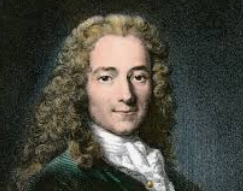
Man is free at the instant he wants to be.
▼
Source
source
Source Brutus, act II, scene I, 1730
4 months 2 days ago
The Americans' "open-mindedness", which is sometimes cited in their favor, is the other side of their interior formlessness. The same goes for their "individualism". Individualism and personality are not the same: the one belongs to the formless world of quantity, the other to the world of quality and hierarchy. The Americans are the living refutation of the Cartesian axiom, "I think, therefore I am": Americans do not think, yet they are. The American "mind", puerile and primitive, lacks characteristic form and is therefore open to every kind of standardization.
▼
Source
source
American "Civilization" (1945) · Excerpts
CivilSimian.com created by AxiomaticPanic, CivilSimian, Kalokagathia