




8 months 1 week ago
If you have a garden and a library, you have everything you need.
▼
Source
source
To Varro, in Ad Familiares IX, 4


6 months 6 days ago
Men and women meet now to be idle. Is it extraordinary that they do not know each other, and that, in their mutual ignorance, they form no surer friendships? Did they meet to do something together, then indeed they might form some real tie. But, as it is, they are not there, it is only a mask which is there - a mouth-piece of ready-made sentences about the "topics of the day"; and then people rail against men for choosing a woman "for her face" - why, what else do they see?

6 months 1 week ago
Pornography completes the deritualization of love.
7 months 3 weeks ago
If you feel irritated by the absurd remarks of two people whose conversation you happen to overhear, you should imagine that you are listening to a dialogue of two fools in a comedy.
▼
Source
source
T. B. Saunders, trans., § 38
4 months 5 days ago
Buddhism ... is not a culture but a critique of culture, an enduring nonviolent revolution or "loyal opposition" to the culture in which it is involved.
▼
Source
source
p. 7

7 months 3 weeks ago
Mr. Sensible learned only catchwords from them. He could talk like Epicurus of spare diet, but he was a glutton. He had from Montaigne the language of friendship, but no friend.
▼
Source
source
Pilgrim's Regress 176
7 months 4 weeks ago
Art may make a suit of clothes; but nature must produce a man.
▼
Source
source
Part I, Essay 15: The Epicurean
7 months 4 weeks ago
That a joint stock company should be able to carry on successfully any branch of foreign trade, when private adventurers can come into any sort of open and fair competition with them, seems contrary to all experience.
▼
Source
source
Chapter I, Part III, Article I, p. 810.
7 months 3 weeks ago
Whoever has used what means he is capable of, for the informing of himself, with a readiness to believe and obey what shall be taught and prescribed by Jesus, his Lord and King, is a true and faithful subject of Christ's kingdom; and cannot be thought to fail in any thing necessary to salvation.
▼
Source
source
§ 233
4 months 2 weeks ago
What we call objective reality is, in the last analysis, what is common to many thinking beings, and could be common to all; this common part, we shall see, can only be the harmony expressed by mathematical laws. It is this harmony... which is the sole objective reality, the only truth we can attain; and when I add that the universal harmony of the world is the source of all beauty, it will be understood what price we should attach to the slow and difficult progress which little by little enables us to know it better.
7 months 3 weeks ago
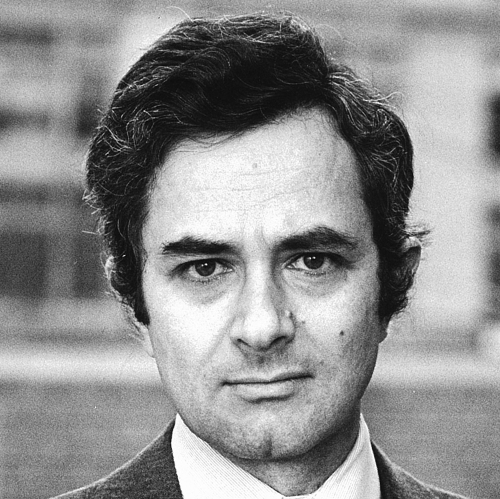
I do not think it can be questioned that sympathy is a genuine motive, and that some people at some times are made somewhat uncomfortable by the sufferings of some other people. It is sympathy that has produced the many humanitarian advances of the last hundred years. We are shocked when we hear stories of the ill-treatment of lunatics, and there are now quite a number of asylums in which they are not ill-treated. Prisoners in Western countries are not supposed to be tortured, and when they are, there is an outcry if the facts are discovered. We do not approve of treating orphans as they are treated in Oliver Twist.

7 months 2 weeks ago
Philosophy is the childhood of the intellect, and a culture that tries to skip it will never grow up.
▼
Source
source
p. 12.
6 months 1 week ago
Underlying even the so-called problem of knowledge there is simply this human feeling, just as underlying the inquiry into the "why," the cause, there is simply the search for the "wherefore," the end. All the rest is either to deceive oneself or to wish to deceive others; and to wish to deceive others in order to deceive oneself.

3 months 3 weeks ago
Why should we divide the sensitive principle which thinks in man? ...For a thing that is divided can no longer without absurdity be regarded as indivisible.

4 months 2 weeks ago
I knew Robert Burns, and I knew my father. Yet were you to ask me which had the greater natural faculty, I might perhaps actually pause before replying. Burns had an infinitely wider education, my father a far wholesomer. Besides, the one was a man of musical utterance; the other wholly a man of action, with speech subservient thereto. Never, of all the men I have seen, has one come personally in my way in whom the endowment from nature and the arena from fortune were so utterly out of all proportion. I have said this often, and partly know it. As a man of speculation - had culture ever unfolded him - he must have gone wild and desperate as Burns; hut he was a man of conduct, and work keeps all right. What strange shapable creatures we are!

5 months 3 weeks ago
One might expect that a consideration of grievability pertains only to those who are dead, but my contention is that grievability is already operative in life, and that it is a characteristic attributed to living creatures, marking their value within a differential scheme of values and bearing directly on the question of whether or not they are treated equally and in a just way. To be grievable is to be interpellated in such a way that you know your life matters; that the loss of your life would matter; that your body is treated as one that should be able to live and thrive, whose precarity should be minimized, for which provisions for flourishing should be available. The presumption of equal grievability would be not only a conviction or attitude with which another person greets you, but a principle that organizes the social organization of health, food, shelter, employment, sexual life, and civic life.
▼
Source
source
p. 59
6 months 3 weeks ago
The power of perpetuating our property in our families is one of the most valuable and interesting circumstances belonging to it, and that which tends most to the perpetuation of society itself. It makes our weakness subservient to our virtue; it grafts benevolence even upon avarice. The possession of family wealth and of the distinction which attends hereditary possessions (as most concerned in it,) are the natural securities for this transmission.
5 months 3 days ago
What is an artist? A provincial who finds himself somewhere between a physical reality and a metaphysical one... It's this in-between that I'm calling a province, this frontier country between the tangible world and the intangible one - which is really the realm of the artist.
▼
Source
source
Every Time We Say Goodbye in Sight and Sound [London]
6 months 2 weeks ago
... I once shook hands with Longfellow at a garden party in 1881; and I often saw Dr. Holmes, who was our neighbor in Beacon Street: but Emerson I never saw.
▼
Source
source
p. 50
5 months 3 weeks ago
Marx shared with economists then and since the inability to make his concepts include innovational processes. It is one thing to spot a new product but quite another to observe the invisible new environments generated by the action of the product on a variety of pre-existing social grounds.
▼
Source
source
(p. 63)

7 months 6 days ago
Step not beyond the beam of the balance.
▼
Source
source
Symbol 14
3 months 3 weeks ago
Either all things proceed from one intelligent source and come together as in one body, and the part ought not to find fault with what is done for the benefit of the whole; or there are only atoms, and nothing else than a mixture and dispersion. Why, then, art thou disturbed? Say to this ruling faculty, Art thou dead, art thou corrupted, art thou playing the hypocrite, art thou become a beast, dost thou herd and feed with the rest?
▼
Source
source
IX, 39
3 months 3 weeks ago
Would not all we mean by "communication between mind and mind" be provided for if we suppose that common knowledge comes about, not from our explaining things to one another, but from things explaining themselves in the same terms to us all? Accepting the object as its own interpreter, as its own "medium of communication," do we not begin to understand what is utterly dark on any other view, how it comes to pass that the resulting knowledge is a common possession?
7 months 4 weeks ago
Methinks I am like a man, who having struck on many shoals, and having narrowly escap'd shipwreck in passing a small frith, has yet the temerity to put out to sea in the same leaky weather-beaten vessel, and even carries his ambition so far as to think of compassing the globe under these disadvantageous circumstances.
▼
Source
source
Part 4, Section 7

5 months 1 day ago
Though it is often assumed that naturalism must be hostile to religion, the opposite is true. Enemies of religion think of it as an intellectual error, which humanity will eventually grow out of. It is hard to square this view with Darwinian science - why should religion be practically universal, if it has no evolutionary value?
▼
Source
source
Sweet Morality (p. 224)
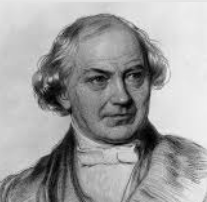
3 months 3 weeks ago
The Sight cannot decompose a compound colour into simple colours, or distinguish a compound from a simple colour


3 months 3 weeks ago
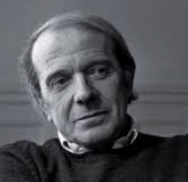
Today, local economies are being destroyed by the "pluralistic," displaced, global economy, which has no respect for what works in a locality. The global economy is built on the principle that one place can be exploited, even destroyed, for the sake of another place.
▼
Source
source
Interview in New Perspectives Quarterly (1992), quoted in his Profile at The Poetry Foundation

6 months 4 days ago
Instead of gambling on the eternal impossibility of the revolution and on the fascist return of a war-machine in general, why not think that a new type of revolution is in the course of becoming possible, and that all kinds of mutating, living machines conduct wars, are combined and trace out a plane of consistence which undermines the plane of organization of the World and the States?
▼
Source
source
from Dialogues with Claire Parnet, p. 147 [emphasis in original].
4 months 1 week ago
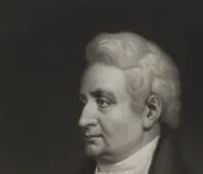
Never give way to melancholy; resist it steadily, for the habit will encroach.
▼
Source
source
Vol. I, ch. 10, p. 372
6 months 3 weeks ago
A definition may be very exact, and yet go but a very little way towards informing us of the nature of the thing defined.
▼
Source
source
Introduction On Taste
6 months 3 days ago
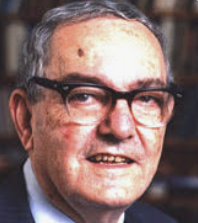
In an information-rich world, the wealth of information means a dearth of something else: a scarcity of whatever it is that information consumes. What information consumes is rather obvious: it consumes the attention of its recipients. Hence a wealth of information creates a poverty of attention and a need to allocate that attention efficiently among the overabundance of information sources that might consume it.
▼
Source
source
Simon, H. A. (1971) "Designing Organizations for an Information-Rich World" in: Martin Greenberger, Computers, Communication, and the Public Interest, Baltimore. MD: The Johns Hopkins Press. pp. 40-41.

3 months 3 weeks ago
Trial by jury, the best of all safeguards for the person, the property, and the fame of every individual.

6 months 2 weeks ago
Word - that invisible dagger.

7 months 2 weeks ago
Certainly it is correct to say: Conscience is the voice of God.
▼
Source
source
p. 75
7 months 4 weeks ago
No society can surely be flourishing and happy, of which the greater part of the members are poor and miserable. It is but equity, besides, that they who feed, cloath and lodge the whole body of the people, should have such a share of the produce of their own labour as to be themselves tolerably well fed, clothed, and lodged.
▼
Source
source
Chapter VIII, p. 94.
6 months 3 weeks ago
While moral rules may be propounded by authority the fact that these were so propounded would not validate them.
▼
Source
source
"The Meaning of Life".
6 months 2 weeks ago
The tendency to regard continuity, in the sense in which I shall define it, as an idea of prime importance in philosophy conveniently may be be termed synechism. The present paper is intended chiefly to show what synechism is, and what it leads to.
6 months 2 weeks ago
There have always been poor and working classes; and the working class have mostly been poor. But there have not always been workers and poor people living under conditions as they are today.
5 months 3 weeks ago
For us, with the rule of right and wrong given us by Christ, there is nothing for which we have no standard. And there is no greatness where there is not simplicity, goodness, and truth.
▼
Source
source
Bk. XIV, ch. 18
6 months 3 weeks ago
Abstract liberty, like other mere abstractions, is not to be found.
5 months 1 week ago
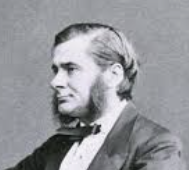
Is Man so different from any of these Apes that he must form an order by himself? Or does he differ less from them than they differ from one another, and hence must take his place in the same order with them?
▼
Source
source
Ch.2, p. 86

7 months 2 weeks ago
Eternity, not as a static "now," nor as a sequence of "nows" rolling off into the infinite, but as the "now" that bends back into itself. ... Thinking the most difficult thought of philosophy means thinking being as time.
▼
Source
source
p. 20
CivilSimian.com created by AxiomaticPanic, CivilSimian, Kalokagathia