↑ Back to the start
11 months ago

Of these not right forms of government, monarchy, when bound by good written rules, which we call laws, is the best of all the six; but without law it is hard and most oppressive to live with. The government of the few must be considered intermediate, both in good and in evil. The government of the multitude is weak in all respects and able to do nothing great, either good or bad, when compared with the other forms of government, therefore of all these governments when they are lawful, this is the worst, and when they are all lawless it is the best.

0
⚖0
11 months ago

The tyrant has arisen, and the king and oligarchy and aristocracy and democracy, because men are not contented with that one perfect ruler, and do not believe that there could ever be any one worthy of such power or willing and able by ruling with virtue and knowledge to dispense justice and equity rightly to all, but that he will harm and kill and injure any one of us whom he chooses on any occasion, since they admit that if such a man as we describe should really arise, he would be welcomed and would continue to dwell among them, directing to their weal as sole ruler a perfectly right form of government. But, as the case now stands, since, as we claim, no king is produced in our states who is, like the ruler of the bees in their hives, by birth pre-eminently fitted from the beginning in body and mind, we are obliged, as it seems, to follow in the track of the perfect and true form of government by coming together and making written laws.

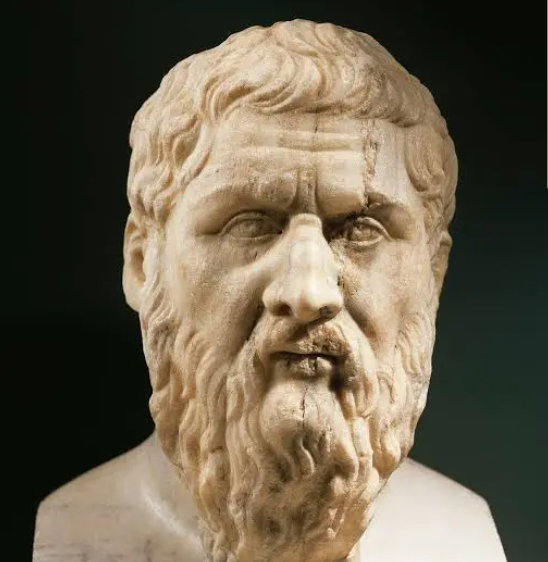
0
⚖0
11 months ago

No multitude is able to acquire any art whatsoever. Then if there is a kingly art, neither the collective body of the wealthy nor the whole people could ever acquire this science of statesmanship.

0
⚖0
11 months ago

Doing what is for the good of the people, this must be the truest criterion of right government, in accordance with which the wise and good man will govern the affairs of his subjects. Just as the captain of a ship keeps watch for what is at any moment for the good of the vessel and the sailors, not by writing rules, but by making his science his law, and thus preserves his fellow voyagers, so may not a right government be established in the same way by men who could rule by this principle, making science more powerful than the laws? And whatever the wise rulers do, they can commit no error, so long as they maintain one great principle and by always dispensing absolute justice to them with wisdom and science are able to preserve the citizens and make them better than they were, so far as that is possible.

0
⚖0
11 months ago

Law could never, by determining exactly what is noblest and must just for one and all, enjoin upon them that which is best; for the differences of men and of actions and the fact that nothing, I may say, in human life is ever at rest, forbid any science whatsoever to promulgate any simple rule for everything and for all time. So, that which is persistently simple is inapplicable to things which are never simple.

0
⚖0
11 months ago

The greatest and noblest conceptions have no image wrought plainly for human vision, which he who wishes to satisfy the mind of the inquirer can apply to some one of his senses and by mere exhibition satisfy the mind. We must therefore endeavor by practice to acquire the power of giving and understanding a rational definition of each one of them; for immaterial things, which are the noblest and greatest, can be exhibited by reason only, and it is for their sake that all we are saying is said. But it is always easier to practice in small matters than in greater ones.

0
⚖0
11 months ago

It is difficult to set forth any of the greater ideas, except by the use of examples; for it would seem that each of us knows everything that he knows as if in a dream and then again, when he is as it were awake, knows nothing of it all.

0
⚖0
11 months ago

The attempt to separate everything from everything else is not only not in good taste but also shows that a man is utterly uncultivated and unphilosophical. The complete separation of each thing from all is the utterly final obliteration of all discourse. For our power of discourse is derived from the interweaving of the classes or ideas with one another.

0
⚖0
11 months ago

We certainly must contend by every argument against him who does away with knowledge or reason or mind and then makes any dogmatic assertion about anything. The philosopher, who pays the highest honor to these things, must necessarily, as it seems, because of them refuse to accept the theory of those who say the universe is at rest, whether as a unity or in many forms, and must also refuse utterly to listen to those who say that being is universal motion; he must say that being and the universe consist of both.

0
⚖0
11 months ago

I shall have to test the theory of my father Parmenides, and contend forcibly that after a fashion not-being is and on the other hand in a sense being is not. For unless these statements are either disproved or accepted, no one who speaks about false words, or false opinion whether images or likenesses or imitations or appearances about the arts which have to do with them, can ever help being forced to contradict himself and make himself ridiculous.

0
⚖0

CivilSimian.com created by AxiomaticPanic, CivilSimian, Kalokagathia