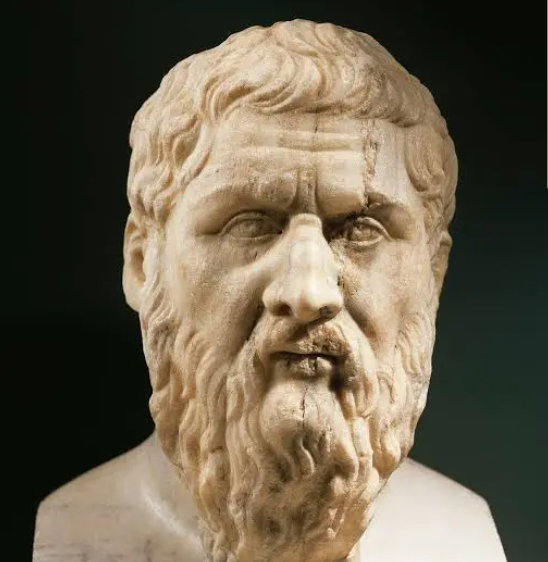
[I]n my early manhood I learned to respect ignorance, to regard ignorance as an object of legitimate interest and reflection; and as I say, a sort of unconsidered preparation for this attitude of mind appears to have run back almost to my infancy. Moreover, when I got around to read Plato, I found that he reinforced and copper-fastened the notion which experience had already rather forcibly suggested, that direct attempts to overcome and enlighten ignorance are a doubtful venture; the notion that it is impossible, as one of my friends puts it, to tell anybody anything which in a very real sense he does not already know. It seemed extraordinary that this should be so. Nevertheless, there it was; and apparently no one could give,—certainly no one, not even Plato, did give,—any more intelligent and satisfying reason why it should be so than I could give; and I could give none at all.
0
⚖0
▼Source
source
Albert Jay Nock, Memoirs of a Superflous Man (NY: Harper and Brothers, 1943), pp. 16–17
It is no idle question to wonder whether Plato, if he had stayed free of the Socratic spell, might not have found an even higher type of the philosophical man, now lost to us forever.
0
⚖0
▼Source
source
Friedrich Nietzsche, Human, All Too Human: A Book for Free Spirits (1878)
It is not in Science only that Plato is misled by his Method. The same confidence in deduction from unverified premisses vitiates his teaching in every other department of inquiry, moral and political; but in Science his errors are more patent, because his statements admit of a readier, and less equivocal, confrontation with fact.
0
⚖0
▼Source
source
George Henry Lewes, Aristotle: a Chapter from the History of Science (1864)
In one place revolutionary philosophers went on strike because they got a reading list including Plato, Descartes and other bourgeois idiots, instead of relevant great philosophers like Che Guevara and Mao.
0
⚖0
▼Source
source
Leszek Kolakowski, commenting on leftist campus radicals of the 1960s, in "My Correct Views on Everything: A Rejoinder to Edward Thompson's 'Open Letter to Leszek Kolakowski'", Socialist Register (1974)
Fasting, meditation, chastity of thought, word, and deed; silence for certain periods of time to enable nature herself to speak to him who comes to her for information; government of the animal passions and impulses; utter unselfishness of intention, the use of certain incense and fumigations for physiological purposes, have been published as the means since the days of Plato and lamblichus in the West, and since the far earlier times of our Indian Rishis...
0
⚖0
▼Source
source
Koot Hoomi The Mahatma Letters to A. P. Sinnett, Letter No. XLLX, p. 283, (1923)
Until the eleventh century, when the thinking of Aristotle reached Western Europe, men had believed along with Plato that man had three ways of knowing:1. He knew by sense experience.2. He knew by reason.3. And he knew by what Plato called Divine madness, or a direct contact with nonphysical reality; myths were one result of this last kind of knowing.
0
⚖0
▼Source
source
Morton Kelsey, Myth, History & Faith: The Mysteries of Christian Myth & Imagination (1974)
He filled his writings with mathematical discoveries, and exhibited on every occasion the remarkable connection between mathematics and philosophy.
0
⚖0
▼Source
source
Eudemus of Rhodes (c. 340 BC), as quoted in Proclus's commentaries on Euclid, referred to as the Eudemian Summary by Florian Cajori in A History of Mathematics (1893) p. 30
Here, first of all men for pure justice famed, And moral virtue, Aristocles lies; And if there e'er has lived one truly wise, This man was wiser still; too great for envy.
0
⚖0
▼Source
source
The epigram on his tomb, with what Laërtius reported to be his original name, in: {{cite web