
4 months 3 weeks ago
A straightforward, honest person should be like someone who stinks: when you're in the same room with him, you know it. (Hays translation)
▼
Source
XI, 15

4 months 3 weeks ago
This world was created from God's fear of solitude. In other words, us, the creatures, have no other meaning but to distract the Creator. Poor clowns of the absolute, we forget that we live dramas for the boredom of a spectator, whose claps have never reached the ears of a mortal.
4 months 3 weeks ago
No doubt you know that Galileo had been convicted not long ago by the Inquisition, and that his opinion on the movement of the Earth had been condemned as heresy. Now I will tell you that all things I explain in my treatise, among which is also that same opinion about the movement of the Earth, all depend on one another, and are based upon certain evident truths. Nevertheless, I will not for the world stand up against the authority of the Church. ...I have the desire to live in peace and to continue on the road on which I have started.
▼
Source
Letter to Marin Mersenne (end of Feb., 1634) as quoted by , Pendulum: Leon Foucault and the Triumph of Science (2003)

4 months 3 weeks ago
Everywhere in life, the true question is not what we gain, but what we do.
▼
Source
Essays. Goethe's Helena.

4 months 3 weeks ago
The world evades us because it becomes itself again. That stage scenery masked by habit becomes what it is. It withdraws at a distance from us.
4 months 3 weeks ago
And their judgment was based more upon blind wishing than upon any sound prediction; for it is a habit of mankind to entrust to careless hope what they long for, and to use sovereign reason to thrust aside what they do not desire.
▼
Source
Book IV, 4.108-[4]
4 months 3 weeks ago
A thirsty ambition for truth and virtue, and a frenzy to conquer all lies and vices which are not recognized as such nor desire to be; herein consists the heroic spirit of the philosopher.
▼
Source
Socratic Memorabilia, J. Flaherty, trans. (Baltimore: 1967), p. 147.
4 months 3 weeks ago
Having given up autonomy, reason has become an instrument.
▼
Source
p. 21.
4 months 3 weeks ago
Do not act as if thou wert going to live ten thousand years. Death hangs over thee. While thou livest, while it is in thy power, be good.
▼
Source
IV. 17, trans. George Long
4 months 3 weeks ago
O Truth! pure and sacred virgin, when wilt thou be worthily revered? O Goddess who instructs us, why didst thou put thy palace in a well? When will our learned writers, alike free from bitterness and from flattery, faithfully teach us life?
▼
Source
p. 11
4 months 3 weeks ago
Scaffolds, dungeons, jails flourish only in the shadow of a faith — of that need to believe which has infested the mind forever. The devil pales beside the man who owns a truth, his truth. We are unfair to a Nero, a Tiberius: it was not they who invented the concept heretic: they were only degenerate dreamers who happened to be entertained by massacres. The real criminals are men who establish an orthodoxy on the religious or political level, men who distinguish between the faithful and the schismatic.
4 months 3 weeks ago
The history of the world is but the biography of great men.
4 months 3 weeks ago
Can one be a saint without God?, that's the problem, in fact the only problem, I'm up against today.
4 months 3 weeks ago
Immortal gods, I crave no pelf; I pray for no man but myself: Grant I may never prove so fond,To trust man on his oath or bond.
▼
Source
Apemantus, scene ii
4 months 3 weeks ago
Where there is much pretension, much has been borrowed — nature never pretends.
▼
Source
No. 556
4 months 3 weeks ago
Hannibal Lecter: I've read the case files. Have you? Everything you need to find him is right there in those pages.Clarice Starling: Then tell me how.Hannibal Lecter: First principles, Clarice: simplicity. Read Marcus Aurelius, "Of each particular thing, ask: What is it in itself? What is its nature?" What does he do, this man you seek?Clarice Starling: He kills women.Hannibal Lecter: No, that is incidental. What is the first and principal thing he does, what needs does he serve by killing?Clarice Starling: Anger, social acceptance, and, uh, sexual frustration ...Hannibal Lecter: No, he covets. That's his nature. And how do we begin to covet, Clarice? Do we seek out things to covet? Make an effort to answer, now.Clarice Starling: No. We just ...Hannibal Lecter: No. We begin by coveting what we see every day.
▼
Source
Ted Tally (1991), Silence of the Lambs screenplay, adapted from the novel by Thomas Harris; Lecter is paraphrasing or quoting an alternate translation of Meditations Book VIII, 11: "This thing, what is it in itself, in its own constitution? What is its su
4 months 3 weeks ago
Superstition is to religion what astrology is to astronomy: a very stupid daughter of a very wise mother.
▼
Source
p. 111
4 months 3 weeks ago
Even when he turns from religion, man remains subject to it; depleting himself to create false gods, he then feverishly adopts them; his need for fiction, for mythology triumphs over evidence and absurdity alike.
4 months 3 weeks ago
Of this Shakspeare of ours, perhaps the opinion one sometimes hears a little idolatrously expressed is, in fact, the right one; I think the best judgement not of this country only, but of Europe at large, is slowly pointing to the conclusion, That Shakspeare is the chief of all Poets hitherto; the greatest intellect who, in our recorded world, has left record of himself in the way of Literature. On the whole, I know not such a power of vision, such a faculty of thought, if we take all the characters of it, in any other man. Such a calmness of depth; placid joyous strength; all things imaged in that great soul of his so true and clear, as in a tranquil unfathomable sea!
4 months 3 weeks ago
Art is the activity that exalts and denies simultaneously. "No artist tolerates reality," says Nietzsche.
▼
Source
Part 4: Rebellion and Art
4 months 3 weeks ago
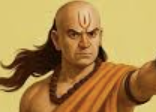
The area extending from the Himalayas in the north to the sea and a thousand yojanas wide from east to west is the area of operation of the King-Emperor.
▼
Source
Chakravarti-kshetra as described by Kautilya: Arthashastra 9:1:17 (tr. L.N. Rangarajan), quoted from Elst, Koenraad (2001). Decolonizing the Hindu mind: Ideological development of Hindu revivalism. New Delhi: Rupa. p.457
4 months 3 weeks ago
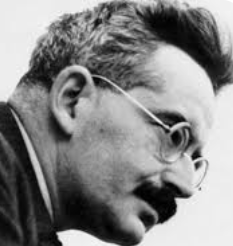
Nothing is so hateful to the philistine as the "dreams of his youth." ... For what appeared to him in his dreams was the voice of the spirit, calling him once, as it does everyone. It is of this that youth always reminds him, eternally and ominously. That is why he is antagonistic toward youth.
▼
Source
"Experience" (1913) as translated by L. Spencer and S. Jost, in Walter Benjamin: Selected Writings, Vol. 1 (1996), pp. 4-5
4 months 3 weeks ago
The Intentionality of the mind not only creates the possibility of meaning, but limits its forms.
▼
Source
P. 166.
4 months 3 weeks ago
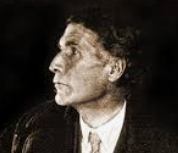
The love that interferes and knows not how to leave alone is a love alien to Nature's ways.
▼
Source
p. 209
4 months 3 weeks ago
"There is no God, but don't tell that to my servant, lest he murder me at night". False quote, misattributed to Voltaire by Yuval Noah Harari in his book Sapiens: A Brief History of Humankind
4 months 3 weeks ago
I find in myself as much evil as in anyone, but detesting action — mother of all vices — I am the cause of no one's suffering.
4 months 3 weeks ago
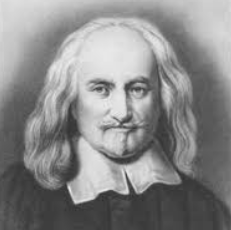
The passion of laughter is nothing else but a sudden glory arising from sudden conception of some eminency in ourselves, by comparison with the infirmities of others, or with our own formerly...
▼
Source
The Elements of Law, Natural and Politic Pt. I Human Nature (1640) Ch. 9
4 months 3 weeks ago
For the Scepticism, as I said, is not intellectual only; it is moral also; a chronic atrophy and disease of the whole soul. A man lives by believing something; not by debating and arguing about many things.
4 months 3 weeks ago
Don’t walk behind me, I may not lead. Don’t walk in front of me, I may not follow. Just walk beside me and be my friend.
▼
Source
Widely attributed, but [https://quoteinvestigator.com/2015/08/23/friend/ likely apocryphal.] Researchers have searched for this quote unsuccessfully in Camus' extant works.
4 months 3 weeks ago
The laws would not prevent each man from living according to his inclination, unless individuals harmed each other; for envy creates the beginning of strife.
▼
Source
Freeman (1948), p. 166 | Variant: Envy is the cause of political division.
4 months 3 weeks ago
We know that the Jews were prohibited from investigating the future. The Torah and the prayers instruct them in remembrance, however. This stripped the future of its magic, to which all those succumb who turn to the soothsayers for enlightenment. This did not imply, however, that for the Jews the future turned into homogeneous empty time. For every second of time was the straight gate through which the Messiah might enter.
▼
Source
Note B
4 months 3 weeks ago
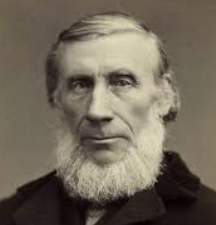
Superstition may be defined as constructive religion which has grown incongruous with intelligence.
▼
Source
Science and Man.
4 months 3 weeks ago
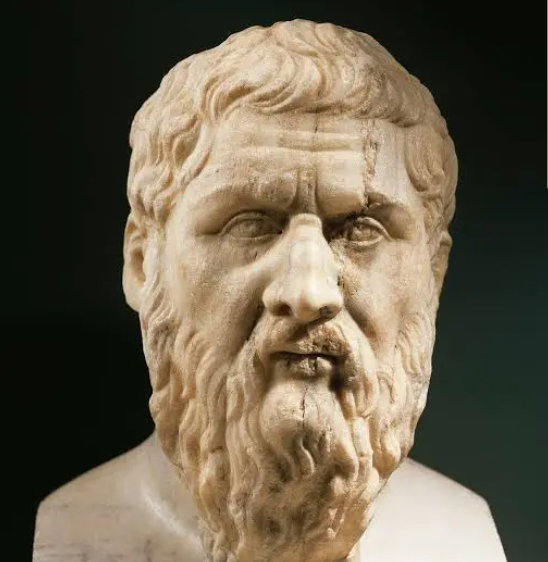
Perception and knowledge could never be the same.
▼
Source
186e
4 months 3 weeks ago
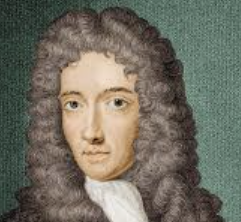
I need not tell you, what complaints the more candid and judicious of the Chymists themselves are wont to make of those boasters, that confidently pretend, that they have extracted the salt or sulphur of quicksilver, when they have disguised it by additaments, wherewith it resembles the concretes, whose names are given it; whereas by a skilful and rigid examen, it may be easily enough stripped of its disguises, and made to appear again in the pristine form of running mercury. The pretended salts and sulphurs being so far from being elementary parts extracted out of the body of mercury, that they are rather... de-compound bodies, made up of the whole metal and the menstruum, or other additaments employed to disguise it.
4 months 3 weeks ago
If just once you were depressed for no reason, you have been so all your life without knowing.
4 months 3 weeks ago
From the same it proceedeth,that men gives different names, to one and the same thing, from the difference of their own passions: As they that approve a private opinion, call it Opinion; but they that mislike it, Haeresie: and yet haeresie signifies no more than private opinion; but has only agreater tincture of choler
▼
Source
The First Part, Chapter 11, p. 50
4 months 3 weeks ago
Every noble crown is, and on earth will forever be, a crown of thorns.
▼
Source
Bk. III, ch. 7.
4 months 3 weeks ago
Fame and wealth without wisdom are unsafe possessions.

4 months 3 weeks ago
Purely philosophical assertions which do not pertain to theology should not be solemnly condemned or forbidden by anyone, because in connection with such [assertions] anyone at all ought to be free to say freely what pleases him.
▼
Source
[http://www.britac.ac.uk/pubs/dialogus/t1d2b.html Vol. I, Book 2, Ch. 22], as translated by John Scott (1999)
4 months 3 weeks ago
This has been a very exciting 10 years for the study of animal minds. People are daring to go there in a way they didn’t before and to entertain the possibility that animals like bees and octopuses and cuttlefish might have some form of conscious experience
4 months 3 weeks ago
Knowledge is the food of the soul; and we must take care, my friend, that the Sophist does not deceive us when he praises what he sells, like the dealers wholesale or retail who sell the food of the body; for they praise indiscriminately all their goods, without knowing what are really beneficial or hurtful.
▼
Source
313c, Benjamin Jowett, trans.
4 months 3 weeks ago
He introduced the air-pump into England, and his "pneumatical engine" enabled him to discover many of the fundamental properties of a gas, notably the relation of its volume to pressure.
4 months 3 weeks ago
A gifted humanity can only produce skeptics, never saints.
4 months 3 weeks ago
As also the great number of Corporations; which are as it were many lesser Common-wealths in the bowels of a greater, like wormes in the entrayles of a natural man.
▼
Source
The Second Part, Chapter 29, p. 174
4 months 3 weeks ago
It is all work and forgotten work, this peopled, clothed, articulate-speaking, high-towered, wide-acred World. The hands of forgotten brave men have made it a World for us; they,— honour to them; they, in spite of the idle and the dastard. This English Land, here and now, is the summary of what was found of wise, and noble, and accordant with God's Truth, in all the generations of English Men. Our English Speech is speakable because there were Hero-Poets of our blood and lineage; speakable in proportion to the number of these. This Land of England has its conquerors, possessors, which change from epoch to epoch, from day to day; but its real conquerors, creators, and eternal proprietors are these following, and their representatives if you can find them: All the Heroic Souls that ever were in England, each in their degree; all the men that ever cut a thistle, drained a puddle out of England, contrived a wise scheme in England, did or said a true and valiant thing in England.

4 months 3 weeks ago
Assume, provisionally at any rate, a utilitarian ethic. The abolitionist project follows naturally, in "our" parochial corner of Hilbert space at least. On its completion, if not before, we should aim to develop superintelligence to maximise the well-being of the fragment of the cosmos accessible to beneficent intervention. And when we are sure – absolutely sure – that we have done literally everything we can do to eradicate suffering elsewhere, perhaps we should forget about its very existence.
▼
Source
"[https://www.abolitionist.com/multiverse.html Quantum Ethics? Suffering in the Multiverse]", BLTC Research, 2008
4 months 3 weeks ago
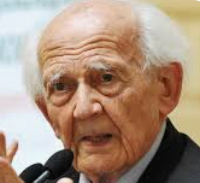
Avoid the crowd, avoid mass audiences, keep your own counsel, which is the counsel of philosophy—of wisdom you can acquire and make your own.
▼
Source
[paraphrasing the view of Seneca], p. 34.
4 months 3 weeks ago
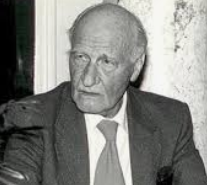
And in this, that philosophy begins in wonder [Plato, Theaetetus 155d], lies the, so to speak, non-bourgeois character of philosophy; for to feel astonishment and wonder is something non-bourgeois (if we can be allowed, for a moment, to use this all-too-easy terminology). For what does it mean to become bourgeois in the intellectual sense? More than anything else, it means that someone takes one's immediate surroundings (the world determined by the immediate purposes of life) so "tightly" and "densely," as if bearing an ultimate value, that the things of experience no longer become transparent. The greater, deeper, more real, and (at first) invisible world of essences is no longer even suspected to exist; the "wonder" is no longer there, it has no place to come from; the human being can no longer feel wonder. The commonplace mind, rendered deaf-mute, finds everything self-explanatory. But what really is self-explanatory? Is it self-explanatory, then, that we exist? Is it self-explanatory that there is such a thing as "seeing"? These are questions that someone who is locked into the daily world cannot ask; and that is so because such a person has not succeeded, as anyone whose senses (like a deaf person) are simply not functioning — has not managed even for once to forget the immediate needs of life, whereas the one who experiences wonder is one who, astounded by the deeper aspect of the world, cannot hear the immediate demands of life — if even for a moment, that moment when he gazes on the astounding vision of the world.
▼
Source
pp. 101–102
4 months 3 weeks ago
Your pride has been too much for the pride of your admirers; they were numerous and high-spirited, but they have all run away, overpowered by your superior force of character; not one of them remains. And I want you to understand the reason why you have been too much for them. You think that you have no need of them or of any other man, for you have great possessions and lack nothing, beginning with the body, and ending with the soul.
▼
Source
Socrates speaking to Alcibiades
4 months 3 weeks ago
The more intense a spiritual leader's appetite for power, the more he is concerned to limit it to others.
CivilSimian.com created by AxiomaticPanic, CivilSimian, Kalokagathia