

4 months 3 weeks ago
Who would govern that can get along without governing? He that is fittest for it, is of all men the unwillingest unless constrained.

4 months 3 weeks ago
[H]uman nature as encoded in our DNA isn't immutable. Mankind's barbaric track-record to date is an unreliable guide to the future. If Homo sapiens' nastier alleles and their more sinister combinations can be silenced or edited out of the genome, and new improved code-sequences inserted instead, then the pessimists will be confounded. A major discontinuity in the development of life lies ahead. Providentially, we've learned that the DNA-driven world isn't written in God-given proprietary code it would be hubris to tamper with, but in bug-ridden open source amenable to improvement.
▼
Source
"[https://www.hedweb.com/ecstasy/index.html Utopian Pharmacology: Mental Health in the Third Millennium MDMA and Beyond]", BLTC Research, last updated 2020
4 months 3 weeks ago
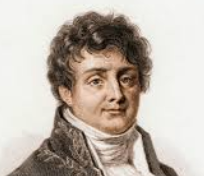
We conclude... that there exists a physical cause always present which modifies the temperature at the surface of the earth, and gives this planet a fundamental heat, which is... independent of the action of the sun and that internal heat preserved... It is to be attributed to the radiation from all the bodies in the universe, whose light and heat can reach us... rays which penetrate every part of the planetary regions... Any point of space whatever which contains these bodies acquires a fixed temperature.
4 months 3 weeks ago
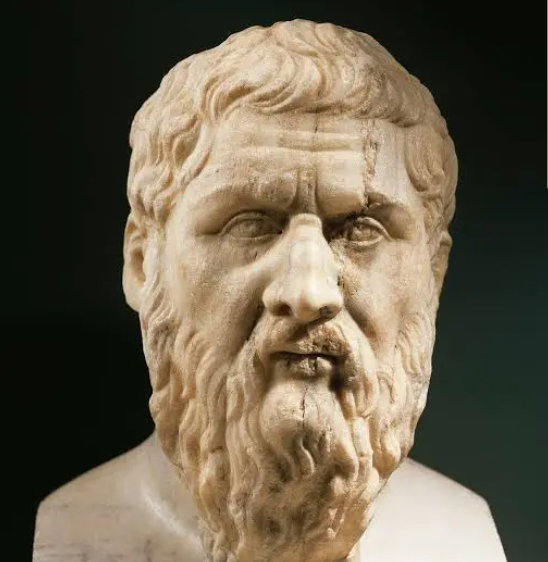
It is not in Science only that Plato is misled by his Method. The same confidence in deduction from unverified premisses vitiates his teaching in every other department of inquiry, moral and political; but in Science his errors are more patent, because his statements admit of a readier, and less equivocal, confrontation with fact.
▼
Source
George Henry Lewes, Aristotle: a Chapter from the History of Science (1864)
4 months 3 weeks ago
Marxism is a revolutionary worldview that must always struggle for new revelations. Marxism must abhor nothing so much as the possibility that it becomes congealed in its current form. It is at its best when butting heads in self-criticism, and in historical thunder and lightning, it retains its strength.
▼
Source
As quoted in Quote Junkie : Political Edition (2008) by Hagopian Institute

4 months 3 weeks ago
The flesh spreads, further and further, like a gangrene upon the surface of the globe. It cannot impose limits upon itself, it continues to be rife despite its rebuffs, it takes its defeats for conquests, it has never learned anything. It belongs above all to the realm of the Creator, and it is indeed in the flesh that He has projected His maleficent instincts.
4 months 3 weeks ago
If a soul is born with divine intelligence, and has its lips touched with hallowed fire, in consecration for high enterprises under the sun, this young soul will find the question asked of him by England every hour and moment: "Canst thou turn thy human intelligence into the beaver sort, and make honest contrivance, and accumulation of capital by it? If so, do it; and avoid the vulpine kind, which I don't recommend. Honest triumphs in engineering and machinery await thee; scrip awaits thee, commercial successes, kingship in the counting-room, on the stock-exchange;—thou shalt be the envy of surrounding flunkies, and collect into a heap more gold than a dray-horse can draw. "—"Gold, so much gold?" answers the ingenuous soul, with visions of the envy of surrounding flunkies dawning on him; and in very many cases decides that he will contract himself into beaverism, and with such a horse-draught of gold, emblem of a never-imagined success in beaver heroism, strike the surrounding flunkies yellow. This is our common course; this is in some sort open to every creature, what we call the beaver career; perhaps more open in England, taking in America too, than it ever was in any country before. And, truly, good consequences follow out of it: who can be blind to them? Half of a most excellent and opulent result is realized to us in this way; baleful only when it sets up (as too often now) for being the whole result.
4 months 3 weeks ago
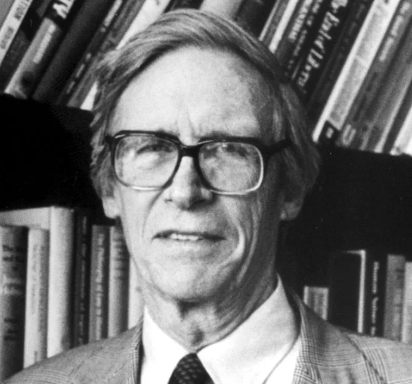
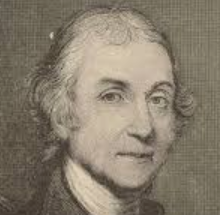
A conception of justice cannot be deduced from self evident premises or conditions on principles; instead, its justification is a matter of the mutual support of many considerations, of everything fitted together into one coherent view.
▼
Source
Chapter I, Section 4, p. 21
4 months 3 weeks ago
If any person, discouraged by these difficulties, should think to relieve himself by rejecting all religion, natural and revealed, he will find, if he reflect at all, that he has miserably deceived himself, and that he is involved in greater perplexity than ever; the scheme he has adopted not only filling his mind with great darkness and distress, but being contrary to some of the plainest appearances in nature, and therefore manifestly irrational and absurd.
▼
Source
Vol. I : Preface (1772)
4 months 3 weeks ago
Granting, as Lenin wants, such absolute powers of a negative character to the top organ of the party, we strengthen, to a dangerous extent, the conservatism inherent in such an organ.
4 months 3 weeks ago
I used to ask myself, over a coffin: “What good did it do the occupant to be born?,” I now put the same question about anyone alive.
4 months 3 weeks ago
I knew Robert Burns, and I knew my father. Yet were you to ask me which had the greater natural faculty, I might perhaps actually pause before replying. Burns had an infinitely wider education, my father a far wholesomer. Besides, the one was a man of musical utterance; the other wholly a man of action, with speech subservient thereto. Never, of all the men I have seen, has one come personally in my way in whom the endowment from nature and the arena from fortune were so utterly out of all proportion. I have said this often, and partly know it. As a man of speculation — had culture ever unfolded him — he must have gone wild and desperate as Burns; hut he was a man of conduct, and work keeps all right. What strange shapable creatures we are!
4 months 3 weeks ago
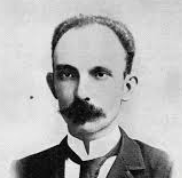
We must choose for others as we have reason to believe they would choose for themselves if they were at the age of reason and deciding rationally.
▼
Source
Chapter IV, Section 33, p. 209
4 months 3 weeks ago
Hatred, slavery's inevitable aftermath.
▼
Source
Woman Suffrage (1887)
4 months 3 weeks ago
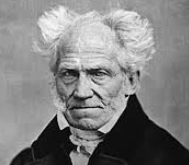
… necessitating the unilateral choice of one of three orientation, I would summarize the disjointed temporal multiple which organizes our site in the following manner:
4 months 3 weeks ago
Reason is feminine in nature; it can only give after it has received. Of itself it has nothing but the empty forms of its operation. There is no absolutely pure rational knowledge except the four principles to which I have attributed metalogical truth; the principles of identity, contradiction, excluded middle, and sufficient reason of knowledge. For even the rest of logic is not absolutely pure rational knowledge. It presupposes the relations and the combinations of the spheres of concepts. But concepts in general only exist after experience of ideas of perception, and as their whole nature consists in their relation to these, it is clear that they presuppose them.
▼
Source
Vol. I, Ch. 10, as translated by R. B. Haldane | Variant translations: | Reason is feminine in nature; it can give only after it has received. Of itself alone, it has nothing but the empty forms of its operation. | As translated by Eric F. J. Payne (1958)
4 months 3 weeks ago
What is that one crucifixion compared to the daily kind any insomniac endures?
4 months 3 weeks ago
He is like a lover or an outlaw who wraps up his message in a serenade, which is nonsense to the sentinel, but salvation to the ear for which it is meant. He does not dodge the question, but gives sincerity where it is due. One word more respecting this remarkable style. We have in literature few specimens of magnificence. Plato is the purple ancient, and Bacon and Milton the moderns of the richest strains. Burke sometimes reaches to that exuberant fullness, though deficient in depth. Carlyle in his strange, half mad way, has entered the Field of the Cloth of Gold, and shown a vigour and wealth of resource which has no rival in the tourney play of these times—the indubitable champion of England. Carlyle is the first domestication of the modern system, with its infinity of details, into style.
▼
Source
Ralph Waldo Emerson, in the introduction to Past and Present (1843).
4 months 3 weeks ago
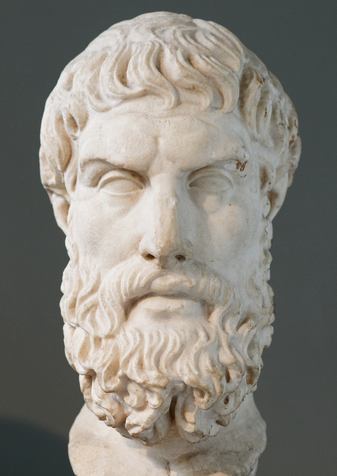
It is impossible for someone to dispel his fears about the most important matters if he doesn't know the nature of the universe but still gives some credence to myths. So without the study of nature there is no enjoyment of pure pleasure.
▼
Source
Variant translation: One cannot rid himself of his primal fears if he does not understand the nature of the universe, but instead suspects the truth of some mythical story. So without the study of nature, there can be no enjoyment of pure pleasure. [http:
4 months 3 weeks ago
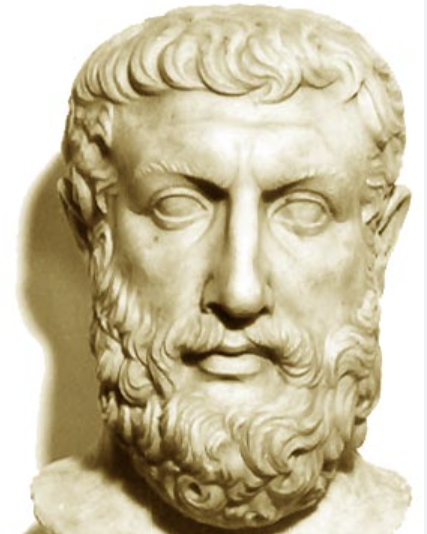
As Parmenides categorically threw out all observation with the senses, so this student of philosophy is inclined to throw out Parmenides as a complete waste of time! His static theories denying motion and change were in direct antithesis to the Kinetic metaphysics of Heracleitus, and his depressing monism was later refuted by the atomists Democritus and Leucippus. In a nutshell; in a word; Parmenides is Pah! — and definitely not a philosopher to take to bed with you on a long winter evening! … Personally speaking the whole thing makes me shudder — although I do acknowledge that paradoxes and riddles are very popular with the average thirteen-year-old school boy. Zeno however, impressed his dialectical ability on Socrates, who then began turning it loose on the average citizen in the Agora (market-place) and in consequence made himself most unpopular. I only think that it is a pity that when they asked Socrates to drink the hemlock in 399 B.C., they didn' t include Zeno and Parmenides in the invitation.
▼
Source
Maureen O' Sullivan, in The Four Seasons of Greek Philosophy (1982), p. 56
4 months 3 weeks ago
I know that when the world surrenders, pallid, to repose, the murmur of a tranquil stream through the deep silence flows.
▼
Source
I (Yo soy un hombre sincero) as translated by Esther Allen in José Martí : Selected Writings (2002), p. 275

4 months 3 weeks ago
Much of the time, the question goes unasked in prosperous liberal democracies like Britain or the United States, because most of us see political equality as exhausted by “one person, one vote” and dig no deeper; we know that one person, one vote coexists with the better-off and better-organized buying influence through lobbying, campaign contributions, and use of the mass media, but we find ourselves puzzled to balance a belief that everyone has the right to use his or her resources to influence government—which is certainly one form of political equality—with our sense that excessive inequality of political resources undermines democracy.
▼
Source
Introduction: Thinking about Politics.
4 months 3 weeks ago
Descartes is rightly regarded as the father of modern philosophy primarily and generally because he helped the faculty of reason to stand on its own feet by teaching men to use their brains in place whereof the Bible, on the one hand, and Aristotle, on the other, had previously served.
▼
Source
E. Payne, trans. (1974) Vol. 1, p. 3
4 months 3 weeks ago
There is nothing to say about anything. So there can be no limit to the number of books.
4 months 3 weeks ago
It was in the spring of 1837 that Carlyle's first great historical work appeared, "The French Revolution:—Vol. I., The Bastile; Vol. II, The Constitution; Vol. III., The Guillotine." The publication of this book produced a profound impression on the public mind. A history abounding in vivid and graphic descriptions, it was at the same time a gorgeous "prose epic." It is perhaps the most readable of all Carlyle's works, and indeed is one of the most remarkable books of the age. There is no other account of the French Revolution that can be compared with it for intensity of feeling and profoundness of thought.
▼
Source
With White, Andrew Dickson. [https://ia600302.us.archive.org/33/items/cu31924029541640/cu31924029541640.pdf On the Choice of Books: The Inaugural Address of Thomas Carlyle, Lord Rector of the University of Edinburgh, Reprinted From the Times, With Additio
4 months 3 weeks ago
Nearly allied to justice are the virtues of beneficence, compassion, gratitude, piety, and friendship.
4 months 3 weeks ago
It is the duty of man to raise up man. One is guilty of all abjection that one does not help to relieve. Only those who spread treachery, fire, and death out of hatred for the prosperity of others are undeserving of pity.
4 months 3 weeks ago
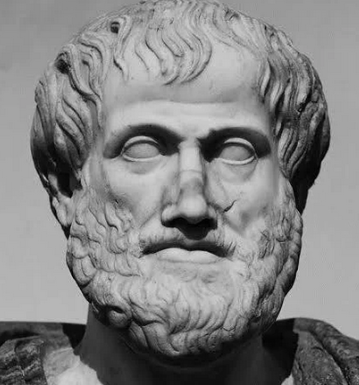
The first philosophers, in investigating the truth and the nature of things, wandered, as if led by ignorance, into a certain... path. Hence, they say that no being is either generated or corrupted, because it is necessary that what is generated should be generated either from being or non-being: but both these are impossible; for neither can being be generated, since it already is; and from nothing, nothing can be generated... And thus... they said that there were not many things, but that being alone had a subsistence. ...the ancient philosophers ...through this ignorance added so much to their want of knowledge, as to fancy that nothing else was generated or had a being; but they subverted all generation.
▼
Source
Book I, Ch. IX, pp. 73-76.
4 months 3 weeks ago
A view of the unseemly actions of drunken men is the most effectual dissuasive from wine.
▼
Source
As quoted in Diogenes Laertius, The Lives and Opinions of Eminent Philosophers, Chapter "Life of Anacharsis", 1702 edition, John Nicholson, p. 55
4 months 3 weeks ago
If you feel irritated by the absurd remarks of two people whose conversation you happen to overhear, you should imagine that you are listening to a dialogue of two fools in a comedy.
▼
Source
T. B. Saunders, trans., § 38
4 months 3 weeks ago
Obviously God was a solution, and obviously none so satisfactory that will ever be found again.
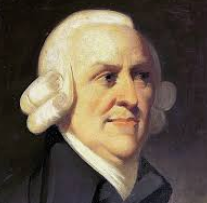
4 months 3 weeks ago
mercy to the guilty is cruelty to the innocent
▼
Source
Section II, Chap. III.

4 months 3 weeks ago
The civilization of the bulk of the people of Europe, is very partial; nay, it may be made a question, whether they have acquired any virtues in exchange for innocence, equivalent to the misery produced by the vices that have been plastered over unsightly ignorance, and the freedom which has been bartered for splendid slavery. The desire of dazzling by riches, the most certain pre-eminence that man can obtain, the pleasure of commanding flattering sycophants, and many other complicated low calculations of doting self-love, have all contributed to overwhelm the mass of mankind, and make liberty a convenient handle for mock patriotism. For whilst rank and titles are held of the utmost importance, before which Genius "must hide its diminished head," it is, with a few exceptions, very unfortunate for a nation when a man of abilities, without rank or property, pushes himself forward to notice. Alas! what unheard of misery have thousands suffered to purchase a cardinal's hat for an intriguing obscure adventurer, who longed to be ranked with princes, or lord it over them by seizing the triple crown!Such, indeed, has been the wretchedness that has flowed from hereditary honours, riches, and monarchy, that men of lively sensibility have almost uttered blasphemy in order to justify the dispensations of providence. Man has been held out as independent of his power who made him, or as a lawless planet darting from its orbit to steal the celestial fire of reason; and the vengeance of heaven, lurking in the subtile flame, sufficiently punished his temerity, by introducing evil into the world.
▼
Source
Ch. 1
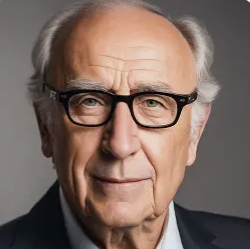
4 months 3 weeks ago
Normal science, the activity in which most scientists inevitably spend almost all their time, is predicated on the assumption that the scientific community knows what the world is like. Normal science often suppresses fundamental novelties because they are necessarily subversive of its basic commitments.
▼
Source
p. 5

4 months 3 weeks ago
I may not be as unambiguously hostile to capitalism as many people are, but what I don't like about it is the commodification of personal experiences, it turns everyone into actors.
▼
Source
Quoted in Will Self, [http://web.archive.org/web/20080403080859/http://www.independent.co.uk/news/people/john-gray-forget-everything-you-know-641878.html "John Gray: Forget everything you know,"] The Independent (2002-09-03)
4 months 3 weeks ago
I feel that we are all philosophers, and that those who describe themselves as a ‘philosopher’ simply do not have a day job to go to.
▼
Source
in Hendricks, V: “Feisty Fragments for Philosophy”, King’s College Publications, London,2004.
4 months 3 weeks ago
But as more arts were invented, and some were directed to the necessities of life, others to recreation, the inventors of the latter were naturally always regarded as wiser than the inventors of the former, because their branches of knowledge did not aim at utility. ... This is why the mathematical arts were founded in Egypt; for there the priestly caste was allowed to be at leisure.
▼
Source
Book A(I).1 981b20-24 | See also Charles Sanders Peirce The Scientific Attitude and Fallibilism

4 months 3 weeks ago
Birth control - individual choice, safe contraceptive methods, as well as abortions when necessary - is a fundamental prerequisite for the emancipation of women.
▼
Source
Chapter 12, "Racism, Birth Control and Reproductive Rights"
4 months 3 weeks ago
Life is a task to be done. It is a fine thing to say defunctus est; it means that the man has done his task.
▼
Source
"On the Sufferings of the World"
4 months 3 weeks ago
We are all of us in error, the humorists excepted. They alone have discerned, as though in jest, the inanity of all that is serious and even of all that is frivolous.
4 months 3 weeks ago
The value which the workmen add to the materials, therefore, resolves itself in this case into two parts, of which the one pays their wages, the other the profits of the employer upon the whole stock of materials and wages which he advanced.
▼
Source
Chapter VI, p. 58.
4 months 3 weeks ago
An ardent affection for the human race makes enthusiastic characters eager to produce alteration in laws and governments prematurely. To render them useful and permanent, they must be the growth of each particular soil, and the gradual fruit of the ripening understanding of the nation, matured by time, not forced by an unnatural fermentation.
▼
Source
Appendix
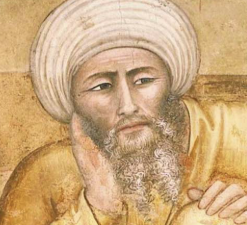
4 months 3 weeks ago
After logic we must proceed to philosophy proper. Here too we have to learn from our predecessors, just as in mathematics and law. Thus it is wrong to forbid the study of ancient philosophy. Harm from it is accidental, like harm from taking medicine, drinking water, or studying law.
▼
Source
Ch 1.9
4 months 3 weeks ago
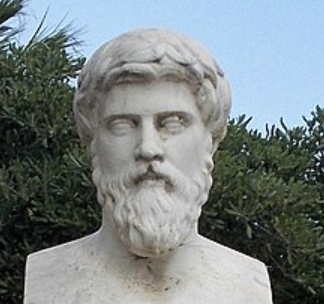
Philip being arbitrator betwixt two wicked persons, he commanded one to fly out of Macedonia and the other to pursue him.
▼
Source
36 Philip
4 months 3 weeks ago
In the world as we find it, even the barest requirements of a life worth living cannot all be always met in full. Toppling a tyranny may trigger civil war. Protecting a broad range of liberal freedoms may result in the regime that guarantees them being short lived. At the same time, supporting a strong state as a bulwark against anarchy may worsen the abuse of power. Wise policy can temper these conflicts. It cannot hope to overcome them.
▼
Source
'Modus Vivendi' (p.28)
4 months 3 weeks ago
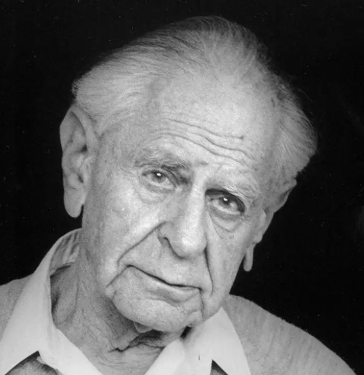
...no matter how many instances of white swans we may have observed, this does not justify the conclusion that all swans are white.
▼
Source
Ch. 1 "A Survey of Some Fundamental Problems", Section 1: The Problem of Induction, p. 4.
4 months 3 weeks ago
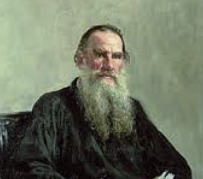
Science is meaningless because it gives no answer to our question, the only question important for us: 'what shall we do and how shall we live
▼
Source
Quoted by Max Weber in his lecture "Science as a Vocation"; in Lynda Walsh (2013), Scientists as Prophets: A Rhetorical Genealogy (2013), Oxford University Press, p. 90
4 months 3 weeks ago
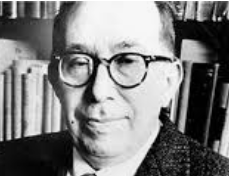
Philosophy has to grant that revelation is possible. But to grant that revelation is possible means to grant that philosophy is perhaps something infinitely unimportant. To grant that revelation is possible means to grant that the philosophic life is not necessarily, not evidently, the right life. Philosophy, the life devoted to the quest for evident knowledge available to man as man, would itself rest on an unevident, arbitrary, or blind decision. This would merely confirm the thesis of faith, that there is no possibility of consistency, of a consistent and thoroughly sincere life, without belief in revelation. The mere fact that philosophy and revelation cannot refute each other would constitute the refutation of philosophy by revelation.
▼
Source
p. 75
4 months 3 weeks ago
For legislators make the citizens good by forming habits in them, and this is the wish of every legislator, and those who do not effect it miss their mark, and it is in this that a good constitution differs from a bad one.
▼
Source
Book II, 1103b.4
4 months 3 weeks ago
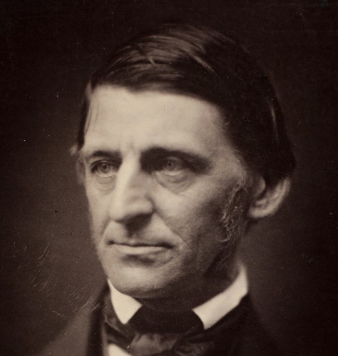
Yet a man may love a paradox, without losing either his wit or his honesty.
▼
Source
"Walter Savage Landor", from The Dial, xii (1841)
CivilSimian.com created by AxiomaticPanic, CivilSimian, Kalokagathia