
4 months 3 weeks ago
This argument too shows that in truth we know nothing about anything, but every man shares the generally prevailing opinion.
4 months 3 weeks ago
Journalism has become a great god of the period, and gods have a way of ruthlessly and demonically taking over their servitors.
▼
Source
Chapter Two, The Encounter With Nothingness, p. 27
4 months 3 weeks ago
Christian love was not the feeling which long animated the respective followers of Peter and Paul.We who have been born into a settled state of things can hardly realise the commotion out of which this tranquillity has emerged. We have, for example, the canon of Scripture already arranged for us. But to sift and select these writings from the mass of spurious documents afloat at the time of compilation was a work of vast labour, difficulty, and responsibility. The age was rife with forgeries. Even good men lent themselves to these pious frauds, believing that true Christian doctrine, which of course was their doctrine, would be thereby quickened and promoted. There were gospels and counter-gospels; epistles and counter-epistles—some frivolous, some dull, some speculative and romantic, and some so rich and penetrating, so saturated with the Master's spirit, that, though not included in the canon, they enjoyed an authority almost equal to that of the canonical books.
4 months 3 weeks ago
It is difficult to set forth any of the greater ideas, except by the use of examples; for it would seem that each of us knows everything that he knows as if in a dream and then again, when he is as it were awake, knows nothing of it all.
▼
Source
277d
4 months 3 weeks ago
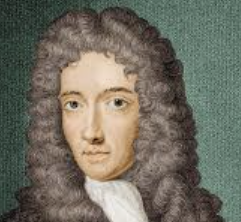
But for my part (Continues Carneades) what my Indignation at this Un-philosophical way of teaching Principles has now extorted from me, is meant chiefly to excuse my self, if I shall hereafter oppose any Particular Opinion or assertion, that some Follower of Paracelsus or any Eminent Artist may pretend not to be his Masters. For, as I told you long since, I am not Oblig'd to examine private mens writings, (which were a Labour as endless as unprofitable) being only engag'd to examine those Opinions about the Tria Prima, which I find those Chymists I have met with to agree in most: And I Doubt not but my Arguments against their Doctrine will be in great part easily enough applicable ev'n to those private Opinions, which they do not so directly and expresly oppose.

4 months 3 weeks ago
To hope is to contradict the future.
4 months 3 weeks ago
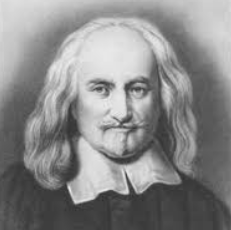
Whatsoever therefore is consequent to a time of Warre, where every man is Enemy to every man; the same is consequent to the time, wherein men live without other security, than what their own strength, and their own invention shall furnish them withall. In such condition, there is no place for Industry; because the fruit thereof is uncertain: and consequently no Culture of the Earth; no Navigation, nor use of the commodities that may be imported by Sea; no commodious Building; no Instruments of moving, and removing things as require much force; no Knowledge of the face of the Earth; no account of Time; no Arts; no Letters; no Society; and which is worst of all, continuall feare, and danger of violent death; And the life of man solitary, poore, nasty, brutish, and short.
▼
Source
The First Part, Chapter 13, p. 62

4 months 3 weeks ago
Such souls are, in these days, getting somewhat out of humour with the world. Your very Byron, in these days, is at least driven mad; flatly refuses fealty to the world. The world with its injustices, its golden brutalities, and dull yellow guineas, is a disgust to such souls: the ray of Heaven that is in them does at least pre-doom them to be very miserable here. Yes:—and yet all misery is faculty misdirected, strength that has not yet found its way. The black whirlwind is mother of the lightning. No smoke, in any sense, but can become flame and radiance! Such soul, once graduated in Heaven's stern University, steps out superior to your guinea.
4 months 3 weeks ago
Seek after the good, and with much toil shall ye find it; the evil turns up of itself without your seeking it.

4 months 3 weeks ago
The nationalism I grew up with is a principled standpoint that regards the world as governed best when nations are able to chart their own independent course, cultivating their own traditions and pursuing their own interests without interference. This is opposed to imperialism, which seeks to bring peace and prosperity to the world by uniting mankind, as much as possible, under a single political regime.
4 months 3 weeks ago
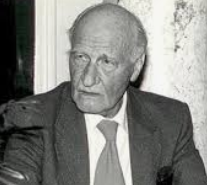
Not only the Greeks in general — Aristotle no less than Plato — but the great medieval thinkers as well, all held that there was an element of purely receptive "looking," not only in self-perception but also in intellectual knowing or, as Heraclitus said, "Listening-in to the being of things."The medievals distinguished between the intellect as ratio and the intellect as intellectus. Ratio is the power of discursive thought, of searching and re-searching, abstracting, refining, and concluding [cf. Latin dis-currere, "to run to and fro"], whereas intellectus refers to the ability of "simply looking" (simplex intuitus), to which the truth presents itself as a landscape presents itself to the eye.
▼
Source
p. 11
4 months 3 weeks ago
Socrates: The disgrace begins when a man writes not well, but badly. Phaedrus: Clearly. Socrates: And what is well and what is badly—need we ask Lysias, or any other poet or orator, who ever wrote or will write either a political or any other work, in metre or out of metre, poet or prose writer, to teach us this?
▼
Source
258d | paraphrased in Zen and the Art of Motorcycle Maintenance by Robert M. Pirsig: "And what is good, Phaedrus, and what is not good—need we ask anyone to tell us these things?"
4 months 3 weeks ago
He revived the atomic hypothesis, and explained chemical combination on the basis of affinity.
4 months 3 weeks ago
It is an understatement to say that in this society injustices abound: in truth, it is itself the quintessence of injustice.
4 months 3 weeks ago
Power as is really divided, and as dangerously to all purposes, by sharing with another an Indirect Power, as a Direct one.
▼
Source
The Third Part, Chapter 42, p. 315
4 months 3 weeks ago
It is the very joy of man's heart to admire, where he can; nothing so lifts him from all his mean imprisonments, were it but for moments, as true admiration.

4 months 3 weeks ago
Human intuitions are systematically biased. Evolutionary psychology explains how our moral intuitions and the rationalisations they spawn have been shaped by millennia of natural selection to maximise the inclusive fitness of our genes, not to track the welfare of other sentient beings impartially conceived. Many human cultures have found nothing intuitively wrong with aggressive warfare, slavery, wife-beating, infanticide or female genital mutilation. Ultimately, folk morality is a doomed enterprise as hopeless as folk physics. A mature posthuman ethics, I'd argue, must be committed to the well-being of all sentient life; and mature posthuman technology offers the means to deliver that commitment.
▼
Source
[https://www.hedweb.com/population-ethics/postdarwinian.html "Post-Darwinian Ethics?"], H+ Magazine, May 2009
4 months 3 weeks ago
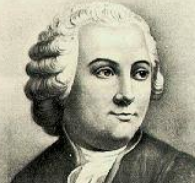
We shall not … begin this logic by definitions, axioms, or principles; we shall begin by observing the lessons which nature gives us.
▼
Source
The Logic of Condillac (trans. Joseph Neef, 1809), "Of the Method of Thinking", p. 3.
4 months 3 weeks ago
Being precedes Truth, and … Truth precedes the Good.
4 months 3 weeks ago
Successful people never worry about what others are doing.
▼
Source
Alleged source in Plato unknown. Earliest occurrence to have been located is a [https://twitter.com/ochocinco/status/93332058864238592 Tweet from 2011].
4 months 3 weeks ago
We understand God by everything in ourselves that is fragmentary, incomplete, and inopportune.
4 months 3 weeks ago
To all men it is evident that the social interests of one hundred and fifty Millions of us depend on the mysterious industry there carried on; and likewise that the dissatisfaction with it is great, universal, and continually increasing in intensity,—in fact, mounting, we might say, to the pitch of settled despair.
4 months 3 weeks ago
Humans are prone to status quo bias. So let's do a thought-experiment. Imagine we stumble across an advanced civilisation that has abolished predation, disease, famine, and all the horrors of primitive Darwinian life. The descendants of archaic lifeforms flourish unmolested in their wildlife parks – free living, but not "wild". Should we urge scrapping their regime of compassionate stewardship of the living world – and a return to asphyxiation, disembowelling and being eaten alive? Or is a happy biosphere best conserved intact?
▼
Source
Reply to "[https://qr.ae/TWKYMB Should humans wipe out all carnivorous animals so the succeeding generations of herbivores can live in peace?]", Quora, 16 Jun. 2018
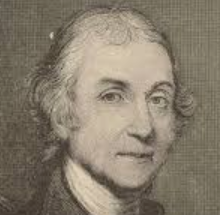
4 months 3 weeks ago
I was led into in consequence of inhabiting a house adjoining to a public brewery, where I at first amused myself with making experiments on the fixed air [carbon dioxide] which I found ready made in the process of fermentation. When I removed from that house I was under the necessity of making the fixed air for myself; and one experiment leading to another, as I have distinctly and faithfully noted in my various publications on the subject, I by degrees contrived a convenient apparatus for the purpose, but of the cheapest kind.
▼
Source
Letter to Dr. Richard Price (Oct. 19, 1771) as quoted in John Towill Rutt, [http://books.google.com/books?id=psMGAAAAQAAJ Life and Correspondence of Joseph Priestley] (1831)
4 months 3 weeks ago
We can imagine that the Academy, which could be attended only by men of leisure, was a cradle of discontent. The author of the Laws was a disgruntled old man, full of political rancor, fearing and hating the crowd and above all their demagogues; his prejudices had crystallized and he had become an old doctrinaire, unable to see anything but the reflections of his own personality and to hear anything but the echoes of his own thoughts. The worst of it was that he, a noble Athenian, admired the very Spartans who had defeated and humiliated his fatherland. Plato was witnessing a social revolution (even as we are) and he could not bear it at all. His main concern was: how could one stop it.
▼
Source
George Sarton, A History of Science (1952), Vol. 1 p. 409

4 months 3 weeks ago
The scene has thoroughly changed. The six weeks' march to Paris has come world drama. Mass murder has become a monotonous task, and yet the final solution is not one step nearer. Capitalist rule is caught in its own trap, and cannot ban the spirit that it has Gone is the first mad delirium. Gone are the patriotic street demonstrations, the chase after suspicious-looking automobiles; the false telegrams, the cholera-poisoned wells. Gone the mad stories of Russian students who hurl bombs from every bridge of Berlin, or French men flying over Nuremberg; gone the excesses of spy-hunting populace, the singing through, the coffee shops with their patriotic songs; gone the violent mobs, ready to denounce, ready to persecute women, ready to whip themselves into a delirious frenzy over every wild rumor; gone the atmosphere of ritual murder, the Kishinev air that left the policeman at the corner as the only remaining representative of human dignity.
▼
Source
Ch.1
4 months 3 weeks ago
When you have understood that nothing is, that things do not even deserve the status of appearances, you no longer need to be saved, you are saved, and miserable forever.
4 months 3 weeks ago
[I]t is our fatalest misery just now, not easily alterable, and yet urgently requiring to be altered, That no British man can attain to be a Statesman, or Chief of Workers, till he has first proved himself a Chief of Talkers: which mode of trial for a Worker, is it not precisely, of all the trials you could set him upon, the falsest and unfairest?
4 months 3 weeks ago
Philosophy is an everlasting fire, sometimes damped down by setting itself limits, then flaring into new life as it consumes them. Every field of inquiry is limited, but philosophy has an essential relation to the question of limits, to its own limits.
▼
Source
Introduction, p. xiii
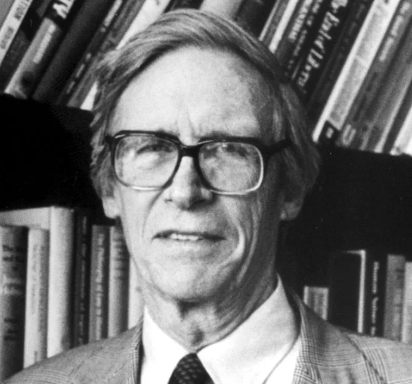
4 months 3 weeks ago
In all sectors of society there should be roughly equal prospects of culture and achievement for everyone similarly motivated and endowed. The expectations of those with the same abilities and aspirations should not be affected by their social class.
▼
Source
Chapter II, Section 12, pg. 73
4 months 3 weeks ago
As I conceive this doctrine to be a gross misrepresentation of the character and moral government of God, and to affect many other articles in the scheme of Christianity, greatly disfiguring and depraving it; I shall show, in a fuller manner than I mean to do with respect to any other corruption of Christianity, that it has no countenance whatever in reason, or the Scriptures; and, therefore, that the whole doctrine of atonement, with every modification of it, has been a departure from the primitive and genuine doctrine of Christianity.
▼
Source
On conventional doctrines of Jesus Christ's atonement for sins, in Part II : Opinions Relating to the Doctrine of Atonement, Introduction
4 months 3 weeks ago
Rarely was heard on her lips the phrase, “I cannot”; more frequently were heard the words, “I must.”
▼
Source
Clara Zetkin, as quoted in [https://www.marxists.org/archive/zetkin/1919/09/rosa.htm Rosa Luxemburg], marxists.org, September 1919.
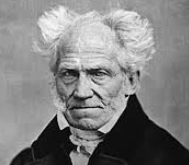
4 months 3 weeks ago
It is the courage to make a clean breast of it in the face of every question that distinguishes the philosopher. He must be like Sophocles' Oedipus, who, seeking enlightenment concerning his terrible fate, pursues his indefatigable inquiry even though he divines that appalling horror awaits him in the answer. But most of us carry with us the Jocasta in our hearts, who begs Oedipus, for God's sake, not to inquire further.
▼
Source
Letter to Johann Wolfgang von Goethe (November 1815)[https://archive.org/details/schopenhauerbri00schegoog/page/90/mode/1up?view=theater]
4 months 3 weeks ago
Having always lived in fear of being surprised by the worst, I have tried in every circumstance to get a head start, flinging myself into misfortune long before it occurred.
4 months 3 weeks ago
It must have been in his teens, perhaps rather early, that he and his elder brother John, with William Bell (afterwards of Wylie Hill, and a noted drover) and his brother, all met in the kiln at Eelief to play cards. The corn was dried then at home. There was a fire, therefore, aud perhaps it was both heat and light. The boys had played, perhaps, often enough for trifling stakes, and always parted in good humor. One night they came to some disagreement. My father spoke out what was in him about the folly, the sinfulness, of quarreling over a perhaps sinful amusement. The earnest mind persuaded other minds. They threw the cards into the fire, and (I think the younger Bell told my brother James) no one of the four ever touched a card again through life. My father certainly never hinted at such a game since I knew him. I cannot remember that I, at that age, had any such force of belief. Which of us can?
4 months 3 weeks ago
A just system must generate its own support.
▼
Source
Chapter V, Section 41, p. 261
4 months 3 weeks ago
This is the age in which hills can look down upon the mountains.
▼
Source
A Morir [To Die]
4 months 3 weeks ago
Everything turns on mastering the gap between the presupposition (that must be rejected) of a being of the one and the thesis of its 'there is'.
▼
Source
Meditation One: The One and the Multiple: a priori conditions of any possible ontology
4 months 3 weeks ago
If a person is stupid, we excuse him by saying that he cannot help it; but if we attempted to excuse in precisely the same way the person who is bad, we should be laughed at.
▼
Source
E. Payne, trans., vol. 2, p. 230
4 months 3 weeks ago
It is trifling to believe in what you do or in what others do. You should avoid simulacra and even "realities"; you should take up a position external to everything and everyone, drive off or grind down your appetites, live, according to a Hindu adage, with as few desires as a "solitary elephant.
4 months 3 weeks ago
It is really, as Coleridge I think said of something else, like reading a story by flashes of lightning!
▼
Source
Francis Jeffrey, [http://carlyleletters.dukejournals.org/cgi/content/full/9/1/lt-18370530-TC-JAC-01#FN4 letter to Carlyle] (30 May 1837) on The French Revolution. This is often repeated as stating that Carlyle's style is “like reading history by flashes o
4 months 3 weeks ago
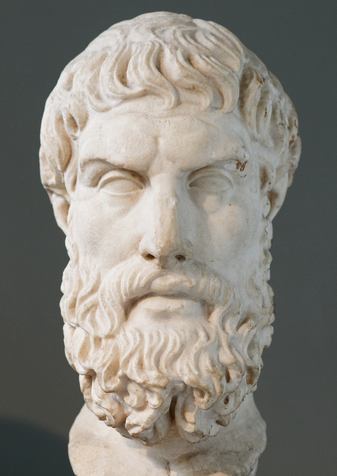
Natural justice is a symbol or expression of usefulness, to prevent one person from harming or being harmed by another.
▼
Source
Variant: Natural justice is a pledge of reciprocal benefit, to prevent one man from harming or being harmed by another.
4 months 3 weeks ago
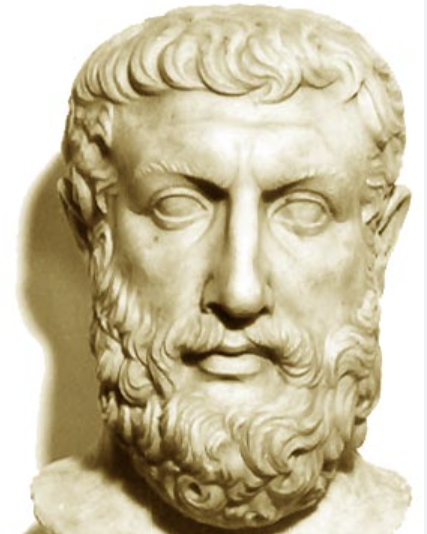
One of Parmenides' merits is to have been the first philosopher who strove to handle general concepts like "being", "not-being", "knowing", "unity", "identity", in their systematic connection.
▼
Source
Willem Jacob Verdenius, in Parmenides (1964), p. 2
4 months 3 weeks ago
To insist on racial divisions, on racial differences, in an already divided people, is to place obstacles in the way of public and individual happiness, which can only be obtained by bringing people together as a nation.
4 months 3 weeks ago
The present article is almost wholly devoted to a single problem—the definition of truth. Its task is to construct—with reference to a given language—a materially adequate and formally correct definition of the term 'true sentence. This problem, which belongs to the classical problems of philosophy, raises considerable difficulties. For although the meaning of the term 'true sentence' in colloquial language seems to be quite clear and intelligible, all attempts to define this meaning more precisely have hitherto been fruitless, and many investigations in which this term has been used and which started with apparently evident premisses have often led to paradoxes and antinomies (for which, however, a more or less satisfactory solution has been found). The concept of truth shares in this respect the fate of other analogous concepts in the domain of the semantics of language.
▼
Source
"The Concept of Truth in Formalized Languages" (1931) in Logic, Semantics, Metamathematics: Papers from 1923 to 1938 (1956) Tr. J. H. Woodger.
4 months 3 weeks ago
No doubt, when modesty was made a virtue, it was a very advantageous thing for the fools, for everybody is expected to speak of himself as if he were one.
▼
Source
Vol. 1, Ch. 3, Section 2: Pride
4 months 3 weeks ago
This very second has vanished forever, lost in the anonymous mass of the irrevocable. It will never return. I suffer from this and I do not. Everything is unique — and insignificant.
4 months 3 weeks ago
In truth, men speak too much of danger. Let others be terrified by the natural and healthy risks of life! We shall not be frightened! Poison sumac grows in a hard-working man's field, the serpent hisses from its hidden den, and the owl's eye shines in the belfry, but the sun goes on lighting the sky, and truth continues marching across the earth unscathed.
4 months 3 weeks ago
There is... something which is in energy only; and there is something which is both in energy and capacity. ...of relatives, one is predicated as according to excess and defect: another according to the effective and passive, and, in short, the motive, and that which may be moved... Motion, however, has not a substance separate from things... But each of the categories subsists in a twofold manner in all things. Thus... one thing pertaining to it is form, and another privation. ...So the species of motion and mutation are as many as those of being. But since in every genus of things, there is that which is in entelecheia, and that which is in capacity; motion is the entelecheia of that which is in capacity... That there is energy, therefore, and that a thing then happens to be moved, when this energy exists, and neither prior nor posterior to it, is manifest. ... Neither motion nor mutation can be placed in any other genus; nor have those who have advanced a different opinion concerning it spoken rightly. ...for by some motion is said to be difference, inequality, and non-being; though it is not necessary that any of these should be moved... Neither is mutation into these, nor from these, rather than from their opposites. ...The cause, however, why motion appears to be indefinite, is because it can neither be simply referred to the capacity, nor to the energy of beings. ...It is difficult to apprehend what motion is: for it is necessary to refer it either to privation, or to capacity, or to simple energy; but it does not appear that it can be any of these. The above-mentioned mode, therfore remains, viz. that it is a certain energy; but... difficult to be perceived, but which may have a subsistence.
▼
Source
Book III, Ch. I, pp. 137-147.

4 months 3 weeks ago
Where cultural representations do not reach out beyond themselves, there is the danger that they will function as the surrogates for activism, that they will constitute both the beginning and the end of political practice.
▼
Source
"Black Nationalism: The Sixties and the Nineties." Black Popular Culture, ed. Gina Dent (Seattle, Wash: Bay Press, 1992), 324.
CivilSimian.com created by AxiomaticPanic, CivilSimian, Kalokagathia