

5 months ago
Materialism ends up denying the existence of any irreducible subjective qualitative states of sentience or awareness.
▼
Source
Consciousness and Language (2002) p. 47.
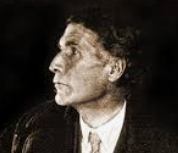
5 months ago
If by the time we're sixty we haven't learned what a knot of paradox and contradiction life is, and how exquisitely the good and the bad are mingled in every action we take, and what a compromising hostess Our Lady of Truth is, we haven't grown old to much purpose.
▼
Source
The Art of Growing Old (1944), p. 13
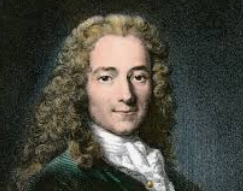
5 months ago
This world is but a lottery of goods, of ranks, of dignities, of rights.
▼
Source
p. 191

5 months ago
We define only out of despair, we must have a formula... to give a facade to the void.

5 months ago
The battling Reformer too is, from time to time, a needful and inevitable phenomenon. Obstructions are never wanting: the very things that were once indispensable furtherances become obstructions; and need to be shaken off, and left behind us,—a business often of enormous difficulty.
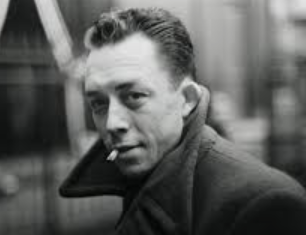
5 months ago
The essential is to cease being free and to obey, in repentance, a greater rogue than oneself. When we are all guilty, that will be democracy.

5 months ago
Man is a universe in little [Microcosm].
▼
Source
Freeman (1948), p. 150
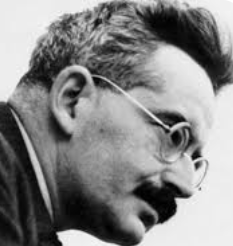
5 months ago
Our image of happiness is indissolubly bound up with the image of the past.
▼
Source
II
5 months ago
There is one mistake we got to avoid, and that is the mistake of supposing that if you simulate it, you duplicate it. This is a deep mistake embedded in our popular culture - that simulation is equivalent to duplication, but of course it isn't. A perfect simulation of the brain - say, on a computer - would no longer thereby be conscious than a perfect simulation of a rainstorm on a weather-predicting computer will leave us all wet.
5 months ago
Pride in one’s work carries with it a determination to accept the demands imposed by that work: in the case of philosophy to follow the argument where it leads, in the case of history to discover what actually happened, in the case of literature to explore to its depths a particular theme. In consequence, this sort of pride demands freedom: it has to be laid low in any authoritarian State. The historian, in such a system, has to conform to official interpretations of the past, the philosopher to dogmas, the writer to stereotypes of human action, the craftsman to “production-schedules.” More subtly, attempts are made to lay pride low in a consumer’s society: the film-director, the novelist, the craftsman are called upon to produce “what will sell” at whatever cost to their pride in workmanship.
▼
Source
p. 290.
5 months ago
I remember, that being once at Leyden, I was brought to the top of a tower, where, in a darkened room (such as is now used in many places to bring in the species of external object) a convex glass, applied to the only hole, by which light was permitted to enter, did project upon a large white sheet of paper, held at a just distance from it, a lively representation of divers of the chief buildings in the town; all which, upon the admission of more light into the room, by opening the window, did immediately disappear, And methinks... that in divers of the philosophical theories, that have been formerly applauded, something not unlike this may be easily observed. for though, whilst they are looked on with such a weak and determinate degree of light, they may appear very artificial and well-proportioned fabrics, yet they appear so but in that twilight, as it were, which is requisite to their conspicuousness. For if but a full light of new experiments and observations be freely let in upon them, the beauty of those (delightful, but fantastical) structures does immediately vanish.
5 months ago
Not a day goes by without our using the word optimism, coined by Voltaire against Leibniz, who had demonstrated (in spite of the Ecclesiastes and with the approval of the Church) that we live in the best of possible worlds. Voltaire, very reasonably, denied that exorbitant opinion... Leibniz could have replied that a world which has given us Voltaire has some right to be considered the best.
▼
Source
Jorge Luis Borges, Obra completa, Vol. IV, p. 523
5 months ago
In the torments of the intellect, there is a certain bearing which is to be sought in vain among those of the heart. Skepticism is the elegance of anxiety.
5 months ago
Desire, to know why, and how, CURIOSITY; such as is in no living creature but Man; so that Man is distinguished, not only by his Reason; but also by this singular Passion from other Animals; in whom the appetite of food, and other pleasures of Sense, by predominance, take away the care of knowing causes; which is a Lust of the mind, that by a perseverance of delight in the continual and indefatigable generation of Knowledge, exceedeth the short vehemence of any carnal Pleasure.
▼
Source
The First Part, Chapter 6, p. 26
5 months ago
I plead guilty to valuing such a man beyond all other sorts of men. Smooth-shaven Respectabilities not a few one finds, that are not good for much. Small thanks to a man for keeping his hands clean, who would not touch the work but with gloves on!
5 months ago
Not from fear but from a sense of duty refrain from your sins.
5 months ago
Power as the pursuit of more power inevitably founders in the void that lies beyond itself.
▼
Source
Chapter Eight, Nietzsche, p. 181
5 months ago
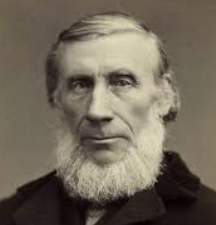
Christ found the religions of the world oppressed almost to suffocation by the load of formulas piled upon them by the priesthood. He removed the load, and rendered respiration free. He cared little for forms and ceremonies, which had ceased to be the raiment of man's spiritual life. To that life he looked, and it he sought to restore.
5 months ago
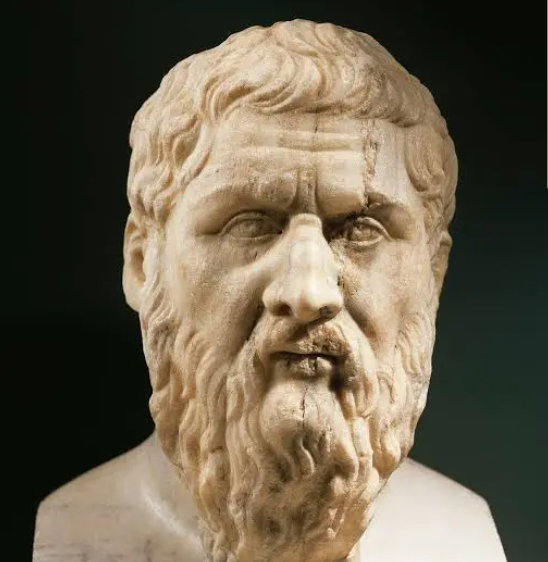
Parmenides: Just as things in a picture, when viewed from a distance, appear to be all in one and the same condition and alike.
▼
Source
165c
5 months ago
Among Latin writers, the acceptations of the word nature are so many, that I remember, one author reckons up no less than fourteen or fifteen. Hence we see how easy 'tis for the generality of men, without excepting those who write of natural things, to impose upon others and themselves, in the use of a word so apt to be mis-employ'd. ..the very great ambiguity of this term, and the promiscuous use made of it, without sufficiently attending to its different significations, render many of the expressions wherein 'tis employ'd either unintelligible, improper, or false.
▼
Source
Sect. 1
5 months ago
Without its assiduity to the ridiculous, would the human race have lasted more than a single generation?
5 months ago
As in the presence of the Master, the Servants are equall, and without any honour at all; So are the Subjects, in the presence of the Soveraign. And though they shine some more, some lesse, when they are out of his sight; yet in his presence, they shine no more than the Starres in presence of the Sun.
▼
Source
The Second Part, Chapter 18, p. 93
5 months ago
Democracy, which means despair of finding any Heroes to govern you, and contented putting up with the want of them,—alas, thou too, mein Lieber, seest well how close it is of kin to Atheism, and other sad Isms: he who discovers no God whatever, how shall he discover Heroes, the visible Temples of God?
5 months ago
The pleasures that give most joy are the ones that most rarely come.
5 months ago
[T]here is no fundamental biological reason why the human genome can't be rewritten to allow everyone to be "in" love with everyone else - if we should so choose. But simply loving each other will be miraculous enough; and will probably suffice. An empty religious piety can be transformed into a biological reality.
▼
Source
"[https://www.huxley.net/ Brave New World? A Defence of Paradise-Engineering]", BLTC Research, 1998
5 months ago
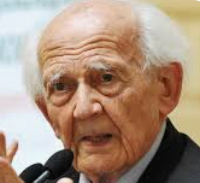
In fact, we almost lost our lives because of his honesty. In 1939, we were running away from Posnan as the Germans were invading - the town was almost on the German border. We took the last train east, but we were stopped at a station which was being bombed by the Germans. We should have run away from the station because that was the object of the bombing, but he wanted to find a ticket inspector to pay for our tickets.
▼
Source
From an interview, as cited in [https://www.theguardian.com/books/2003/apr/05/society "Passion and pessimism"], The Guardian (5 April 2003)
5 months ago
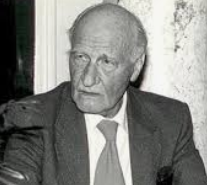
Within the world of total work, the "festival" is either "a break from work" (and thus only there for the sake of work), or it is a more intensive celebration of the principles of work itself (as in the "Labor Days," and thus belongs, again, to the working world). There will naturally be "games" — like the Roman circences — but who would dignify the amusements for the masses with the name of "festival"?
▼
Source
p. 53
5 months ago
There is no one who ever acts honestly in the administration of states, nor any helper who will save any one who maintains the cause of the just.
▼
Source
496d
5 months ago
Mind, even more deadly to empires than to individuals, erodes them, compromises their solidity.
5 months ago
The reasoning of Caligula agrees with that of Hobbes and Grotius.
▼
Source
Jean-Jacques Rousseau, The Social Contract, I Ch.2
5 months ago
Every colony, every agent for a matter colonial, has his tragic tale to tell you of his sad experiences in the Colonial Office; what blind obstructions, fatal indolences, pedantries, stupidities, on the right and on the left, he had to do battle with; what a world-wide jungle of red-tape, inhabited by doleful creatures, deaf or nearly so to human reason or entreaty, he had entered on; and how he paused in amazement, almost in despair; passionately appealed now to this doleful creature, now to that, and to the dead red-tape jungle, and to the living Universe itself, and to the Voices and to the Silences;—and, on the whole, found that it was an adventure, in sorrowful fact, equal to the fabulous ones by old knights-errant against dragons and wizards in enchanted wildernesses and waste howling solitudes; not achievable except by nearly superhuman exercise of all the four cardinal virtues, and unexpected favor of the special blessing of Heaven. His adventure achieved or found unachievable, he has returned with experiences new to him in the affairs of men. What this Colonial Office, inhabiting the head of Downing Street, really was, and had to do, or try doing, in God's practical Earth, he could not by any means precisely get to know; believes that it does not itself in the least precisely know. Believes that nobody knows;—that it is a mystery, a kind of Heathen myth; and stranger than any piece of the old mythological Pantheon; for it practically presides over the destinies of many millions of living men.
▼
Source
Latter Day Pamphlets, No. 3.
5 months ago
Both natural selection and the historical record offer powerful reasons for doubting the trustworthiness of our naive moral intuitions. So the possibility that human civilisation might be founded upon some monstrous evil should be taken seriously - even if the possibility seems transparently absurd at the time.
▼
Source
"[https://ieet.org/index.php/IEET2/more/pearce20130726 The Antispeciesist Revolution]", Institute for Ethics and Emerging Technologies, 26 Jul. 2013
5 months ago
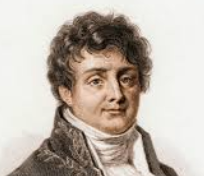
Primary causes are unknown to us; but are subject to simple and constant laws, which may be discovered by observation, the study of them being the object of natural philosophy. Heat, like gravity, penetrates every substance of the universe, its rays occupy all parts of space. The object of our work is to set forth the mathematical laws which this element obeys. The theory of heat will hereafter form one of the most important branches of general physics.
▼
Source
Ch. 1, p. 1
5 months ago
Empathy is the highest form of knowledge. (Sometimes this appears as ‘Empathy is the highest form of knowledge, for it requires us to suspend our egos and live in another's world’.)
▼
Source
Very common online pop-psychological slogan which has been traced no further than a graduation speech to students at San Francisco University High School given by Bill Bullard, who within the speech attributes it to George Eliot. [https://web.archive.org/
5 months ago
He who has never envied the vegetable has missed the human drama.
▼
Source
p. 178, first American edition (1970)
5 months ago
In looking at this wreck of Governments in all European countries, there is one consideration that suggests itself, sadly elucidative of our modern epoch. These Governments, we may be well assured, have gone to anarchy for this one reason inclusive of every other whatsoever, That they were not wise enough; that the spiritual talent embarked in them, the virtue, heroism, intellect, or by whatever other synonyms we designate it, was not adequate,—probably had long been inadequate, and so in its dim helplessness had suffered, or perhaps invited falsity to introduce itself; had suffered injustices, and solecisms, and contradictions of the Divine Fact, to accumulate in more than tolerable measure; whereupon said Governments were overset, and declared before all creatures to be too false.
5 months ago
The functional regions of the brain which subserve physical agony, the "pain centres", and the mainly limbic substrates of emotion, appear in phylogenetic terms to be remarkably constant in the vertebrate line. The neural pathways involving serotonin, the periaquaductal grey matter, bradykinin, dynorphin, ATP receptors, the major opioid families, substance P etc all existed long before hominids walked the earth. Not merely is the biochemistry of suffering disturbingly similar where not effectively type-identical across a wide spectrum of vertebrate (and even some invertebrate) species. It is at least possible that members of any species whose members have more pain cells exhibiting greater synaptic density than humans sometimes suffer more atrociously than we do, whatever their notional "intelligence".
▼
Source
1.9 [https://www.hedweb.com/hedethic/hedon1.htm#taste The Taste of Depravity]
5 months ago
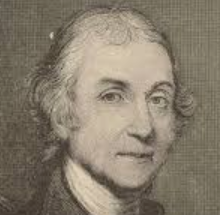
Were it possible to trace the succession of ideas in the mind of Sir Isaac Newton, during the time that he made his greatest discoveries, I make no doubt but our amazement at the extent of his genius would a little subside. But if, when a man publishes discoveries, he, either through design, or through habit, omit the intermediate steps by which he himself arrived at them; it is no wonder that his speculations confound others... Where we see him most in the character of an experimental philosopher, as in his optical inquiries... we may easily conceive that many persons, of equal patience and industry... might have done what he did. And were it possible to see in what manner he was first led to those speculations, the very steps by which he pursued them, the time that he spent in making experiments, and all the unsuccessful and insignificant ones that he made in the course of them; as our pleasure of one kind would be increased, our admiration would probably decrease. Indeed he himself used candidly to acknowledge, that if he had done more than other men, it was owing rather to a habit of patient thinking, than to any thing else. ...The interests of science have suffered by the excessive admiration and wonder, with which several first rate philosophers are considered; and... an opinion of the greater equality of mankind, in point of genius, and powers of understanding, would be of real service in the present age.
▼
Source
Vol. 2, pp. 167-169.
5 months ago
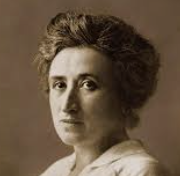
One is immediately struck with the obstinacy and rigid consistency with which Lenin and his comrades stuck to this slogan, a slogan which is in sharp contradiction to their otherwise outspoken centralism in politics as well as to the attitude they have assumed towards other democratic principles. Wile they showed a quite cool contempt for the Constituent Assembly, universal suffrage, freedom of press and assemblage, in short for the whole apparatus of basic democratic liberties of the people which, taken all together, constituted the "right of self-determination" inside Russia, they treated the right of self-determination of peoples as a jewel of democratic policy for the sake of which all practical considerations of real criticism had to be stilled.
▼
Source
Chapter Three, "Nationalities Question"
5 months ago
When you know that every problem is only a false problem, you are dangerously close to salvation.
5 months ago
[B]ooks—there is a good kind of a book and a bad kind of a book. I am not to assume that you are all ill acquainted with this; but I may remind you that it is a very important consideration at present. It casts aside altogether the idea that people have that if they are reading any book—that if an ignorant man is reading any book, he is doing rather better than nothing at all.
5 months ago
Dialogue never ends not for lack of time or opportunity but for essential reasons.
▼
Source
Chapter 7, Vigilance and Interruption, p. 121
5 months ago
The circumstances of justice may be described as the normal conditions under which human cooperation is both possible and necessary.
▼
Source
Chapter III, Section 22, pg. 126
5 months ago
Yours is one of the few lives precious to mankind, and for the continuance of which every thinking man is solicitous. Bigots may be an exception. What an effort, my dear sir, of bigotry in politics and religion have we gone through! The barbarians really flattered themselves they should be able to bring back the times of Vandalism, when ignorance put everything into the hands of power and priestcraft. All advances in science were proscribed as innovations. They pretended to praise and encourage education, but it was to be the education of our ancestors. We were to look backwards, not forwards, for improvement … This was the real ground of all the attacks on you. Those who live by mystery and charlntanerie, fearing you would render them useless by simplifying the Christian philosophy — the most sublime and benevolent, but most perverted system that ever shone on man — endeavored to crush your well-earned and well-deserved fame. But it was the Lilliputians upon Gulliver. Our countrymen have recovered from the alarm into which art & industry had thrown them; science & honesty are replaced on their high ground; and you, my dear Sir, as their great apostle, are on it's pinnacle.
▼
Source
Thomas Jefferson, in a [http://eText.Lib.Virginia.edu/etcbin/toccer-new2?id=JefLett.sgm&images=images/modeng&data=/texts/english/modeng/parsed&tag=public&part=136&division=div1 letter to Priestly (21 March 1801)]; published in The Life of Thomas Jefferson
5 months ago
Whenever I reflect, my reflecting upon what I suffer only rouses me to blame him that begot me. And I gave peace to my children, for they are in the bliss of non-existence which surpasses all the pleasures of this world. Had they come to life, they would have endured a misery casting them to destruction in trackless wildernesses.
▼
Source
As quoted in Studies in Islamic Poetry (1921) by Reynold A. Nicholson
5 months ago
Just as ivy in search of support entwines itself around a thick prop, adjusts itself to its contours and exactly follows its shape, though it retains its own life and its particular charms, and looks most attractive, so Christian doctrine issuing from the wisdom of India has covered over the old trunk of gross Judaism, which is completely dissimilar to itself. What has been preserved of the fundamental form of the latter is something entirely different, something true and living which has been transformed by this doctrine. The trunk looks the same but is quite different. The Creator outside the world, which he has made out of nothing, is identified with the Saviour and through him with mankind; he is mankind's representative, it was redeemed by him as it had been lost in Adam, since when it has been enchained by the bonds of sin, corruption, suffering and death. For this is the attitude of Christianity as it is of Buddhism. The world can no longer be seen in the light of Jewish optimism which found that "all is well". No, rather is it the devil who now calls himself "prince of this world".... "We may hope", he wrote, "that Europe will free itself some day of all Jewish mythology. Perhaps the century is approaching when the peoples of Japhetic stock, originating in Asia, will find the sacred relics of their native land, because, after going astray for so long, they have reached sufficient maturity for this."
▼
Source
quoted in Poliakov, L. (1974). The Aryan myth : a history of racist and nationalist ideas in Europe p 247-8
5 months ago
For a long while I have lived with the notion that I was the most normal being that ever existed. This notion gave me the taste, even the passion for being unproductive: what was the use of being prized in a world inhabited by madmen, a world mired in mania and stupidity? For whom was one to bother, and to what end? It remains to be seen if I have quite freed myself from this certitude, salvation in the absolute, ruin in the immediate.
5 months ago
There is no English historian who has a right to be judged by a higher or severer test, for no one has spoken more deeply and truly on the character and dignity of history... He showed an intelligence of things which no other English historian has understood. He dwelt upon the invisible impersonal forces that act in history, and appreciated, often with rare sagacity, the true significance and sequence of events. But he was unable to follow the course he had pointed out, and failed even to maintain himself on the high ground he had reached. He could not distinguish in history what was unknown to him in religion: thus he fell to the exclusive contemplation of certain typical individuals, whose greatness appeared to supply what he wanted, an object of worship, and personified invisible elements in visible men. And now the belongings of his hero possess so great an importance that they distract his attention from him; he invests with an absurd dignity not only his relations, but their goods and chattels, and allows merely material things to eclipse the human interest of his subject. It is a history made up of eccentricities. This is the way that Mr. Dickens writes novels; for whom the spectacles of an elderly gentleman, a pair of mulberry coloured hose, or a wandering American pig, have greater attractions than any psychological problem.
▼
Source
Lord Acton, 'Literary Notices', The Rambler, Vol. X. New Series. Part LX (December 1858), p. 429 | Unsigned article attributed to Acton in Herbert Butterfield, Man on His Past: The Study of the History of Historical Scholarship (1955), p. 217, n. 3
5 months ago
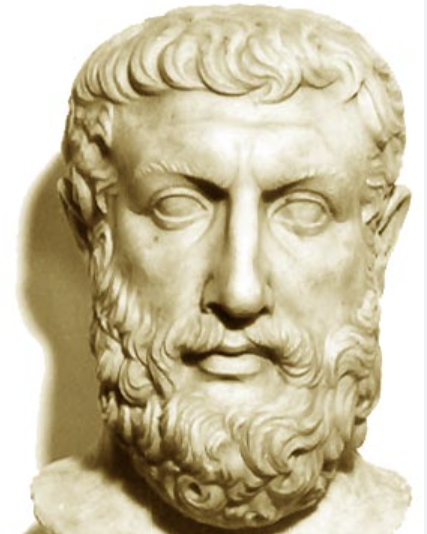
Do not let habit, born from experience, force you along this road, directing aimless eye and echoing ear and tongue; but judge by reason the much contested proof which I have spoken.
▼
Source
Frag. B 7.3-8.1, quoted by Sextus Empiricus, Against the Mathematicians, vii. 3
5 months ago
The hazards of the generalized prisoner's dilemma are removed by the match between the right and the good.
▼
Source
Chapter IX, Section 86, p. 577
CivilSimian.com created by AxiomaticPanic, CivilSimian, Kalokagathia