
5 months ago
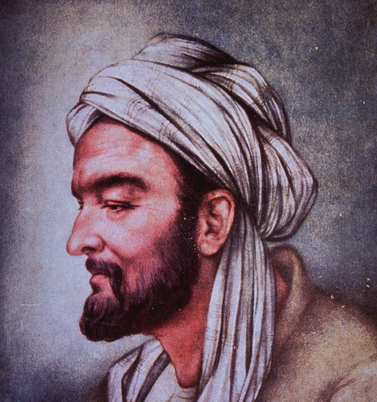
Religious law makes it illegal for the ignorant to drink wine, but intelligence makes it legal for the intellectual.
▼
Source
As quoted in Jason Goodwin, [http://www.jstor.org/stable/40261181 "The Glory That Was Baghdad"], The Wilson Quarterly, vol. 27, no. 2 (2003), p. 27
5 months ago
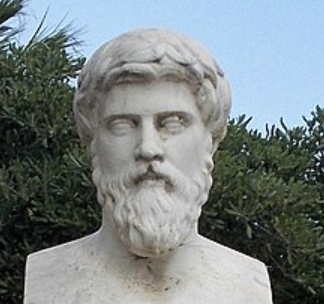
King Agis said, "The Lacedæmonians are not wont to ask how many, but where the enemy are."
▼
Source
58 Agis

5 months ago
The irony of scientific progress is that in solving human problems it creates problems that are not humanly soluble. Science has given humans a kind of power over the natural world achieved by no other animal. It has not given humans the ability to remodel the planet according to their wishes. The Earth is not a clock that can be wound up and stopped at will. A living system, the planet will surely rebalance itself. It will do so, however, without any regard for humans.
▼
Source
Sweet Morality (p. 212)
5 months ago
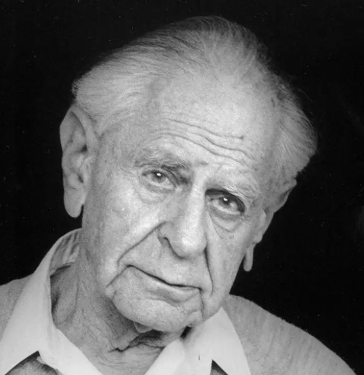
No rational argument will have a rational effect on a man who does not want to adopt a rational attitude.
▼
Source
Vol. 2, Ch. 24 "Oracular Philosophy and the Revolt against Reason"
5 months ago
He received me graciously... I made the sign of the Knights of the East and of Jerusalem, and he responded in the same manner, asking me with a mild smile what I had learned and gained in the Prussian and Scottish lodges. I told him everything as best I could, and told him what I had proposed to our Petersburg lodge, of the bad reception I had encountered, and of my rupture with the Brothers. Joseph Alexéevich, having remained silent and thoughtful for a good while, told me his view of the matter, which at once lit up for me my whole past and the future path I should follow. He surprised me by asking whether I remembered the threefold aim of the order: (1) The preservation and study of the mystery. (2) The purification and reformation of oneself for its reception, and (3) The improvement of the human race by striving for such purification. Which is the principal aim of these three? Certainly self-reformation and self-purification. Only to this aim can we always strive independently of circumstances. But at the same time just this aim demands the greatest efforts of us; and so, led astray by pride, losing sight of this aim, we occupy ourselves either with the mystery which in our impurity we are unworthy to receive, or seek the reformation of the human race while ourselves setting an example of baseness and profligacy. Illuminism is not a pure doctrine, just because it is attracted by social activity and puffed up by pride. On this ground Joseph Alexéevich condemned my speech and my whole activity, and in the depth of my soul I agreed with him.
▼
Source
Book VI, Chapter VIII
5 months ago
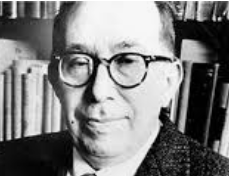
There were two reasons why contemporary Jews were inclined to celebrate Spinoza. The first is Spinoza's assumed merit about mankind and only secondarily about the Jews; the second is his assumed merit about the Jewish people and only secondarily about mankind. Both reasons had induced contemporary Jews not only informally to rescind the excommunication which the Jewish community in Amsterdam had pronounced against Spinoza, but even, as Cohen put it, to canonize him.
▼
Source
Preface
5 months ago
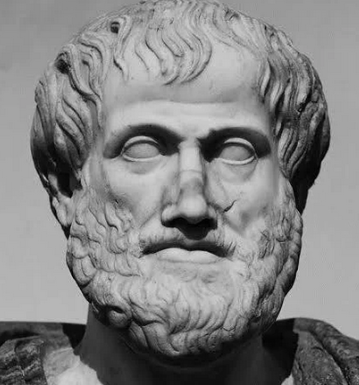
The young have exalted notions, because they have not been humbled by life or learned its necessary limitations; moreover, their hopeful disposition makes them think themselves equal to great things—and that means having exalted notions. They would always rather do noble deeds than useful ones: Their lives are regulated more by moral feeling than by reasoning.... All their mistakes are due to excess and vehemence and their neglect of the maxim of Chilon [The maxim was Μηδὲν ἄγαν, Ne quid nimis, Never go to extremes.]. They overdo everything; they love too much, hate too much, and the same with everything else. And they think they know everything, and confidently affirm it, and this is the cause of their excess in everything.
▼
Source
καὶ μεγαλόψυχοι (οὐ γὰρ ὑπὸ τοῦ βίου πω τεταπείνωνται, ἀλλὰ τῶν ἀναγκαίων ἄπειροί εἰσιν, καὶ τὸ ἀξιοῦν αὑτὸν μεγάλων μεγαλοψυχία: τοῦτο δ᾽ εὐέλπιδος). καὶ μᾶλλον αἱροῦνται πράττειν τὰ καλὰ τῶν συμφερόντων: τῷ γὰρ ἤθει ζῶσι μᾶλλον ἢ τῷ λογισμῷ, ... καὶ ἅπα
5 months ago
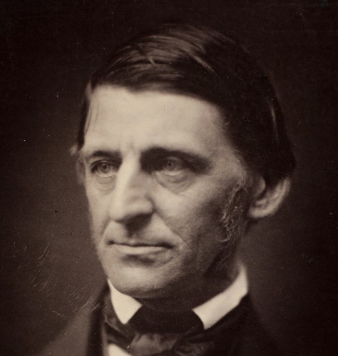
A sect or party is an elegant incognito devised to save a man from the vexation of thinking.
▼
Source
June 20, 1831

5 months ago
Regimes of racial segregation were not disestablished because of the work of leaders and presidents and legislators but rather because of the fact that ordinary people adopted a critical stance in the way in which they perceived their relationship to reality. Social realities that may have appeared inalterable, impenetrable, came to be viewed as malleable and transformable; and people learned how to imagine what it might mean to live in a world that was not so exclusively governed by the principle of white supremacy. This collective consciousness emerged within the context of social struggles.

5 months ago
Impossible for me to know whether or not I take myself seriously. The drama of detachment is that we cannot measure its progress. We advance into a desert, and we never know where we are in it.
5 months ago
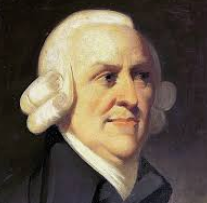
Goods can serve many other purposes besides purchasing money, but money can serve no other purpose besides purchasing goods.
▼
Source
Chapter I, p. 471.
5 months ago
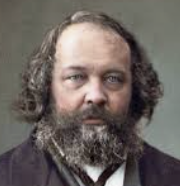
Everywhere, especially in France and England, social and religious societies are being formed which are wholly alien to the world of present-day politics, societies that derive their life from new sources quite unknown to us and that grow and diffuse themselves without fanfare. The people, the poor class, which without doubt constitutes the greatest part of humanity; the class whose rights have already been recognized in theory but which is nevertheless still despised for its birth, for its ties with poverty and ignorance, as well as indeed with actual slavery – this class, which constitutes the true people, is everywhere assuming a threatening attitude and is beginning to count the ranks of its enemy, far weaker in numbers than itself, and to demand the actualization of the right already conceded to it by everyone. All people and all men are filled with a kind of premonition, and everyone whose vital organs are not paralyzed faces with shuddering expectation the approaching future which will utter the redeeming word. Even in Russia, the boundless snow-covered kingdom so little known, and which perhaps also has a great future in store, even in Russia dark clouds are gathering, heralding storm. Oh, the air is sultry and pregnant with lightning. And therefore we call to our deluded brothers: Repent, repent, the Kingdom of the Lord is at hand!
▼
Source
"The Reaction in Germany" (1842)
5 months ago
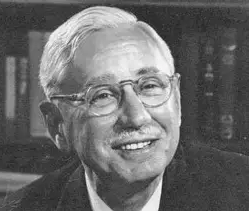
History is a process of rebarbarization. A people made vigorous by arduous physical conditions of life, and driven by the increasing exigencies of survival, leaves its native habitat, moves down upon a less vigorous people, conquers, displaces, or absorbs it. Habits of resolution and activity developed in a less merciful environment now rapidly produce an economic surplus; and part of the resources so accumulated serve as capital in a campaign of imperialist conquest. The growing surplus generates a leisure class, scornful of physical activity and adept in the arts of luxury. Leisure begets speculation; speculation dissolves dogma and corrodes custom, develops sensitivity of perception and destroys decision of action. Thought, adventuring in a labyrinth of analysis, discovers behind society the individual; divested of its normal social function it turns inward and discovers the self. The sense of common interest, of commonwealth, wanes; there are no citizens now, there are only individuals. From afar another people, struggling against the forces of an obdurate environment, sees here the cleared forests, the liberating roads, the harvest of plenty, the luxury of leisure. It dreams, aspires, dares, unites, invades. The rest is as before. Rebarbarization is rejuvenation. The great problem of any civilization is how to rejuvenate itself without rebarbarization.
5 months ago
My very own Plutarch – so perfect, so outstanding a judge of human actions.
▼
Source
Michel de Montaigne, 'On drunkenness', The Complete Essays, translated by M. A. Screech (1991; 2003), p. 389
5 months ago
The modern world inherits the Christian view in which salvation is played out in history. In Christian myth human events follow a design known only to God; the history of humankind is an ongoing story of redemption. This is an idea that informs virtually all of western thought – not least when it is intensely hostile to religion. From Christianity onwards, human salvation would be understood (at least in the west) as involving movement through time. All modern philosophies in which history is seen as a process of human emancipation – whether through revolutionary change or incremental improvement – are garbled versions of this Christian narrative, itself a garbled version of the original message of Jesus.
▼
Source
The Faith of Puppets: The Revelation of Philip K. Dick (p. 60)
5 months ago
[E]ven serious students are misled by the myth of the subject.
5 months ago
My reason will still not understand why I pray, but I shall still pray, and my life, my whole life, independently of anything that may happen to me, is every moment of it no longer meaningless as it was before, but has an unquestionable meaning of goodness with which I have the power to invest it.'
▼
Source
Pt. VIII, ch. 19
5 months ago
For Strauss, every philosopher at all times is in the situation of political persecution, and hence has to construct a specific way of writing, which on its surface is “exoteric,” that is, meant for the general, unsophisticated reader, yet is “esoteric” in its hidden message, accessible only to few “thoughtful” and “careful” readers capable of understanding the true message of and behind a text by “reading between the lines”. True philosophers, then, including Plato, “must conceal their opinions from all but philosophers, either by limiting themselves to oral instruction of a carefully selected group of pupils, or by writing about the most important subject by means of ‘brief indication’”.
▼
Source
Dmitri Nikulin, "Plato: Testimonia et Fragmenta" in The other Plato : the Tübingen interpretation of Plato’s inner-academic teachings edited by Dmitri Nikulin
5 months ago
It appears to me that there can be no question, that Aristotle stands forth, not only as the greatest figure in antiquity, but as the greatest intellect that has ever appeared upon the face of this earth.
▼
Source
George J. Romanes, as quoted in "The most important question in the world.": Is mankind advancing? (1910), p. 38
5 months ago
The believing we do something when we do nothing is the first illusion of tobacco.
▼
Source
1859
5 months ago
Angela Davis has profoundly influenced the discourses on social justice in relationship to race, gender, and class nationally and internationally through her writings and her role in organizations such as the Communist Party and the Student Nonviolent Coordinating Committee (SNCC) in the past, and her more recent activism through the prison abolitionist organization Critical Resistance, along with being an honorary co-chair for the Women's March during 2017.
▼
Source
Sharon Lynette Jones Introduction to Conversations with Angela Davis Edited by Sharon Lynette Jones (2021)
5 months ago
Lucidity is not necessarily compatible with life, actually not at all.
5 months ago
Consumption is the sole end and purpose of all production; and the interest of the producer ought to be attended to, only so far as it may be necessary for promoting that of the consumer.
▼
Source
Chapter VIII, p. 719.
5 months ago
The first revolt is against the supreme tyranny of theology, of the phantom of God. As long as we have a master in heaven, we will be slaves on earth.
5 months ago
Life is that which is discontent, which struggles and seeks, which suffers and creates.
▼
Source
Ch. 1 : Our life begins

5 months ago
The greatness of the human being consists in this: that it is capable of the universe.
▼
Source
q. 1, art. 2, ad 4

5 months ago
One of the most erudite as well as one of the most spiritual, of the literati of any age or people, and certainly the most estimable of all the extant Greek philosophers after the days of Plutarch.
▼
Source
Howard Williams, [http://www.ivu.org/history/williams/porphyry.html The Ethics of Diet]
5 months ago
Through my association with Popper I experienced a great liberation in escaping from the rigid conventions that are generally held with respect to scientific research. ... When one is liberated from these restrictive dogmas, scientific investigation becomes an exciting adventure opening up new visions; and this attitude has, I think, been reflected in my own scientific life since that time.
▼
Source
John Eccles, "Under the spell of the synapse," The Neurosciences: Paths of Discovery ed. F. G. Worden, J. P. Swazey, G. Adelman (1976)
5 months ago
Slavery exists in full vigor, but we do not perceive it, just as in Europe at the end of the Eighteenth Century the slavery of serfdom was not perceived.People of that day thought that the position of men obliged to till the land for their lords, and to obey them, was a natural, inevitable, economic condition of life, and they did not call it slavery.It is the same among us: people of our day consider the position of the laborer to be a natural, inevitable economic condition, and they do not call it slavery. And as, at the end of the Eighteenth Century, the people of Europe began little by little to understand that what formerly seemed a natural and inevitable form of economic life-namely, the position of peasants who were completely in the power of their lords-was wrong, unjust and immoral, and demanded alteration, so now people today are beginning to understand that the position of hired workmen, and of the working classes in general, which formerly seemed quite right and quite normal, is not what it should be, and demands alteration.
▼
Source
Chapter 8: Slavery Exists Among Us
5 months ago
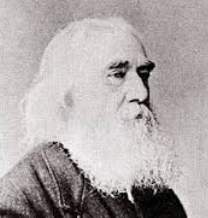
Those who are capable of tyranny are capable of perjury to sustain it.
▼
Source
An Essay on the Trial by Jury, Boston, MA: John P. Jewett and Company, Cleveland, Ohio: Jewett, Proctor & Worthington (1852) p. 14 [http://www.gutenberg.org/files/32984/32984-h/32984-h.htm]
5 months ago
The sublime is excited in me by the great stoical doctrine, Obey thyself.
▼
Source
p. 14
5 months ago
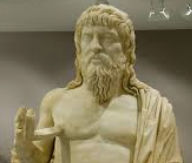
The natural philosopher Heraclitus said that man is naturally irrational. If this is true, as it is true, then everyone who enjoys futile glory should hide his face.
▼
Source
to Euphrates, Epp. Apoll. 18
5 months ago
In a community, the constitution of which provides for a legislator and a law, it is the concern of the legislator and of the laws given by him to ascertain the mediation through calculable and attainable rules and to prevent the terror of the direct and automatic enactment of values. That is a very complicated problem, indeed. One may understand why law-givers all along world history, from Lycurgus to Solon and Napoleon have been turned into mythical figures. In the highly industrialized nations of our times, with their provisions for the organization of the lives of the masses, the mediation would give rise to a new problem. Under the circumstances, there is no room for the law-giver, and so there is no substitute for him. At best, there is only a makeshift which sooner or later is turned into a scapegoat, due to the unthankful role it was given to play.A jurist who interferes, and wants to become the direct executor of values should know what he is doing. He must recall the origins and the structure of values and dare not treat lightly the problem of the tyranny of values and of the unmediated enactment of values. He must attain a clear understanding of the modern philosophy of values before he decides to become valuator, revaluator, upgrader of values. As a value-carrier and value-sensitive person, he must do that before he goes on to proclaim the positings of a subjective, as well as objective, rank-order of values in the form of pronouncements with the force of law.
5 months ago
That of beaver skins, of beaver wool, and of gum Senega, has been subjected to higher duties; Great Britain, by the conquest of Canada and Senegal, having got almost the monopoly of those commodities.
▼
Source
Chapter II, Part II, Article IV, p. 954-955.
5 months ago
One persistent strand in utopian thinking, as we have often mentioned, is the feeling that there is some set of principles obvious enough to be accepted by all men of good will, precise enough to give unambiguous guidance in particular situations, clear enough so that all will realize its dictates, and complete enough to cover all problems which actually arise. Since I do not assume that there are such principles, I do not presume that the political realm will whither away. The messiness of the details of a political apparatus and the details of how it is to be controlled and limited do not fit easily into one's hopes for a sleek, simple utopian scheme.
▼
Source
Ch. 10 : A Framework for Utopia; Utopian Means and Ends, p. 330
5 months ago
But one no longer wonders when one realizes that in the higher classes there is an unerring instinct of what tends to maintain and of what tends to destroy the organization by virtue of which they enjoy their privileges. The fashionable lady had certainly not reasoned out that if there were no capitalists and no army to defend them, her husband would have no fortune, and she could not have her entertainments and her ball-dresses. And the artist certainly does not argue that he needs the capitalists and the troops to defend them, so that they may buy his pictures. But instinct, replacing reason in this instance, guides them unerringly. And it is precisely this instinct which leads all men, with few exceptions, to support all the religious, political, and economic institutions which are to their advantage.
▼
Source
Chapter XII, Conclusion—Repent Ye, for the Kingdom of Heaven is at Hand
5 months ago
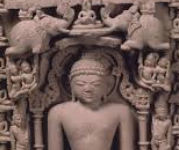
A living body is not merely an integration of limbs and flesh but it is the abode of the soul which potentially has perfect perception (Anant-darshana), perfect knowledge (Anant-jnana), perfect power (Anant-virya), and perfect bliss (Anant-sukha).
▼
Source
As quoted in Jainism and Indian Civilization (2004) by Raj Pruthi, p. 24.
5 months ago
Talents differ; all is well and wisely put; If I cannot carry forests on my back, Neither can you crack a nut.
▼
Source
Fable
5 months ago
All the world's not a stage.
▼
Source
E. Jephcott, trans. (1974), § 94

5 months ago
Could this reaction against the personal by [analytic] philosophers … be, at bottom, one of fear? … Are … bright people … blindly afraid of their own precarious identity and unspeakable vulnerability as particular bodily beings?
▼
Source
p. xiii
5 months ago
This dumb ox will fill the world with his bellowing.
▼
Source
Attributed to Albertus Magnus in: Anne Jackson Fremantle (1962) The Great Ages of Western Philosophy : The Age of Belief : The Medieval Philosophers | Albertus Magnus, in response to other of his students calling Thomas Aquinas a "dumb ox" because of his

5 months ago
The Utopianism of the standpoint which expects an era of peace and retrenchment of militarism in the present social order is plainly revealed in the fact that it is having recourse to project making. For it is typical of Utopian strivings that, in order to demonstrate their practicability, they hatch "practical" recipes with the greatest possible details. To this also belongs the project of the "United States of Europe" as a basis for the limitation of international militarism.
5 months ago
Bourgeois class domination is undoubtedly an historical necessity, but, so too, the rising of the working class against it. Capital is an historical necessity, but, so too, its grave digger, the socialist proletariat.
▼
Source
The Junius Pamphlet
5 months ago
For Lenin, the difference between the Social Democracy and Blanquism is reduced to the observation that in place of a handful of conspirators we have a class-conscious proletariat. He forgets that this difference implies a complete revision of our ideas on organization and, therefore, an entirely different conception of centralism and the relations existing between the party and the struggle itself.
5 months ago
The scene has thoroughly changed. The six weeks' march to Paris has come world drama. Mass murder has become a monotonous task, and yet the final solution is not one step nearer. Capitalist rule is caught in its own trap, and cannot ban the spirit that it has Gone is the first mad delirium. Gone are the patriotic street demonstrations, the chase after suspicious-looking automobiles; the false telegrams, the cholera-poisoned wells. Gone the mad stories of Russian students who hurl bombs from every bridge of Berlin, or French men flying over Nuremberg; gone the excesses of spy-hunting populace, the singing through, the coffee shops with their patriotic songs; gone the violent mobs, ready to denounce, ready to persecute women, ready to whip themselves into a delirious frenzy over every wild rumor; gone the atmosphere of ritual murder, the Kishinev air that left the policeman at the corner as the only remaining representative of human dignity.
▼
Source
Ch.1
5 months ago
It makes no sense to regard the right of suffrage as a utopian product of fantasy, cut loose from social reality. And it is for this reason that it is not a serious instrument of the proletarian dictatorship. It is an anachronism, an anticipation of the juridical situation which is proper on the basis of an already completed socialist economy, but is not in the transition period of the proletarian dictatorship.
▼
Source
Chapter Five, "The Question of Suffrage"
5 months ago
In the history of bourgeois society, legislative reform served to strengthen progressively the rising class till the latter was sufficiently strong to seize political power, to suppress the existing juridical system and to construct itself a new one.
▼
Source
Ch.8
5 months ago
But here is the "ego" of the Russian revolutionary again! Pirouetting on its head, it once more proclaims itself to be the all-powerful director of history - this time with the title of His Excellency the Central Committee of the Social Democratic Party of Russia.
5 months ago
Plausible as the idea of the United States of Europe as a peace arrangement may seem to some at first glance, it has on closer examination not the least thing in common with the method of thought and the standpoint of social democracy . . . At the present stage of development of the world market and of world economy, the conception of Europe as an isolated economic unit is a sterile concoction of the brain. Europe no more forms a special unit within world economy than does Asia or America.
5 months ago
I suppose I must be out of sorts to feel everything so deeply. Sometimes, however, it seems to me that i am not really a human being at all, but like a bird or a beast in human form. I feel so much more at home even in a scrap of garden like the one here, and still more in the meadows when the grass is humming with bees than - at one of the our party congresses.
▼
Source
Prison Letter, (May 12, 1917), Rosa Luxemburg Speaks
CivilSimian.com created by AxiomaticPanic, CivilSimian, Kalokagathia