
5 months ago
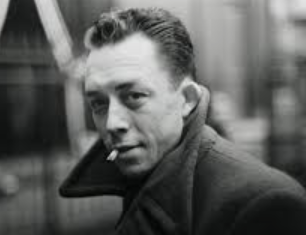
A sub-clerk in the post office is the equal of a conqueror if consciousness is common to them. All experiences are indifferent in this regard. There are some that do either a service or a disservice to man. They do him a service if he is conscious. Otherwise, that has no importance: a man's failures imply judgment, not of circumstances, but of himself.
5 months ago
Now the only sure basis of an alliance is for each party to be equally afraid of the other...
▼
Source
Book III, 3.11-[2]
5 months ago
The claim that suffering is bad for those who experience it and thus ought in general to be prevented when possible cannot be seriously doubted.
▼
Source
"[http://opinionator.blogs.nytimes.com/2010/09/19/the-meat-eaters/ The Meat Eaters]", The New York Times, 19 Sept. 2010
5 months ago
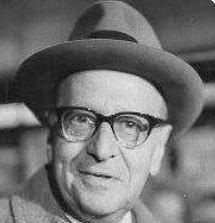
Men have been released from [concentration] camps who have taken over the jargon of their jailers and with cold reason and mad consent (the price, as it were, of their survival) tell their story as if it could not have been otherwise than it was, contending that they have not been treated so badly after all.
▼
Source
p. 45.
5 months ago
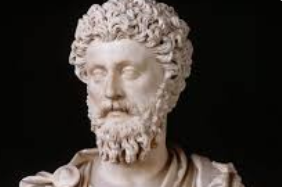
A cucumber is bitter. Throw it away. There are briars in the road. Turn aside from them. This is enough. Do not add, "And why were such things made in the world?"
▼
Source
VIII. 50, trans. George Long
5 months ago
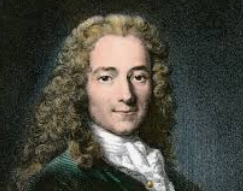
I opened with that which good Catholics have more than once made to Huguenots. "My dear sir," said I, "were you ever baptized?" "No, friend," replied the Quaker, "nor any of my brethren." "Zounds!" said I to him, "you are not Christians then!" "Friend," replied the old man, in a soft tone of voice, "do not swear; we are Christians, but we do not think that sprinkling a few drops of water on a child's head makes him a Christian." "My God!" exclaimed I, shocked at his impiety, "have you then forgotten that Christ was baptized by St. John?" "Friend," replied the mild Quaker, "once again, do not swear. Christ was baptized by John, but He Himself never baptized any one; now we profess ourselves disciples of Christ, and not of John." "Mercy on us," cried I, "what a fine subject you would be for the holy inquisitor! In the name of God, my good old man, let me baptize you."
▼
Source
Voltaire's account of his conversations with Andrew Pit

5 months ago
The more one is obsessed with God, the less one is innocent. Nobody bothered about him in paradise. The fall brought about this divine torture. It's not possible to be conscious of divinity without guilt. Thus God is rarely to be found in an innocent soul.
5 months ago
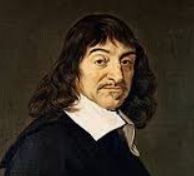
His Geometry is not easy reading. An edition appeared subsequently with notes by his friend De Beaune, which were intended to remove the difficulties.

5 months ago
In that strange island Iceland,—burst up, the geologists say, by fire from the bottom of the sea; a wild land of barrenness and lava; swallowed many months of every year in black tempests, yet with a wild gleaming beauty in summertime; towering up there, stern and grim, in the North Ocean with its snow jokuls, roaring geysers, sulphur-pools and horrid volcanic chasms, like the waste chaotic battle-field of Frost and Fire;—where of all places we least looked for Literature or written memorials, the record of these things was written down.
5 months ago
The world is what it is, which is to say, nothing much. This is what everyone learned yesterday, thanks to the formidable concert of opinion coming from radios, newspapers, and information agencies. Indeed we are told, in the midst of hundreds of enthusiastic commentaries, that any average city can be wiped out by a bomb the size of a football. American, English, and French newspapers are filled with eloquent essays on the future, the past, the inventors, the cost, the peaceful incentives, the military advantages, and even the life-of-its-own character of the atom bomb. We can sum it up in one sentence: Our technical civilization has just reached its greatest level of savagery. We will have to choose, in the more or less near future, between collective suicide and the intelligent use of our scientific conquests. Meanwhile we think there is something indecent in celebrating a discovery whose use has caused the most formidable rage of destruction ever known to man. What will it bring to a world already given over to all the convulsions of violence, incapable of any control, indifferent to justice and the simple happiness of men — a world where science devotes itself to organized murder? No one but the most unrelenting idealists would dare to wonder.
5 months ago
When men are once checked in what they consider their special excellence, their whole opinion of themselves suffers more than if they had not at first believed in their superiority, the unexpected shock to their pride causing them to give way more than their real strength warrants; and that is probably now the case with the Athenians.
▼
Source
Book VII, 7.66-[3]
5 months ago
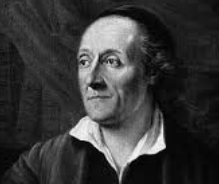
If you see one cold and vehement at the same time, set him down for a fanatic.
▼
Source
No. 292
5 months ago
Pragmatism, in trying to turn experimental physics into a prototype of all science and to model all spheres of intellectual life after the techniques of the laboratory, is the counterpart of modern industrialism, for which the factory is the prototype of human existence, and which models all branches of culture after production on the conveyor belt.
▼
Source
p. 50.
5 months ago
In the morning, when thou art sluggish at rousing thee, let this thought be present; “I am rising to a man’s work.”
▼
Source
Meditations. v. 1.
5 months ago
Virtue: a word easy to pronounce, difficult to understand.
▼
Source
p. 68
5 months ago
His power to adore is responsible for all his crimes: a man who loves a god unduly forces other men to love his god, eager to exterminate them if they refuse.
5 months ago
Mahomet was only fourteen; had no language but his own: much in Syria must have been a strange unintelligible whirlpool to him. But the eyes of the lad were open; glimpses of many things would doubtless be taken in, and lie very enigmatic as yet, which were to ripen in a strange way into views, into beliefs and insights one day. These journeys to Syria were probably the beginning of much to Mahomet. One other circumstance we must not forget: that he had no school-learning; of the thing we call school-learning none at all.
5 months ago
The words that reverberate for us at the confines of this long adventure of rebellion are not formulas for optimism, for which we have no possible use in the extremities of our unhappiness, but words of courage and intelligence which, on the shores of the eternal seas, even have the qualities of virtue.
5 months ago
The assertion that men are objectively equal is so absurd that it does not even merit being refuted.
▼
Source
p. 90.

5 months ago
Materialism ends up denying the existence of any irreducible subjective qualitative states of sentience or awareness.
▼
Source
Consciousness and Language (2002) p. 47.
5 months ago
If by the time we're sixty we haven't learned what a knot of paradox and contradiction life is, and how exquisitely the good and the bad are mingled in every action we take, and what a compromising hostess Our Lady of Truth is, we haven't grown old to much purpose.
▼
Source
The Art of Growing Old (1944), p. 13
5 months ago
This world is but a lottery of goods, of ranks, of dignities, of rights.
▼
Source
p. 191
5 months ago
We define only out of despair, we must have a formula... to give a facade to the void.
5 months ago
The battling Reformer too is, from time to time, a needful and inevitable phenomenon. Obstructions are never wanting: the very things that were once indispensable furtherances become obstructions; and need to be shaken off, and left behind us,—a business often of enormous difficulty.
5 months ago
The essential is to cease being free and to obey, in repentance, a greater rogue than oneself. When we are all guilty, that will be democracy.

5 months ago
Man is a universe in little [Microcosm].
▼
Source
Freeman (1948), p. 150
5 months ago
Our image of happiness is indissolubly bound up with the image of the past.
▼
Source
II
5 months ago
There is one mistake we got to avoid, and that is the mistake of supposing that if you simulate it, you duplicate it. This is a deep mistake embedded in our popular culture - that simulation is equivalent to duplication, but of course it isn't. A perfect simulation of the brain - say, on a computer - would no longer thereby be conscious than a perfect simulation of a rainstorm on a weather-predicting computer will leave us all wet.
5 months ago
Pride in one’s work carries with it a determination to accept the demands imposed by that work: in the case of philosophy to follow the argument where it leads, in the case of history to discover what actually happened, in the case of literature to explore to its depths a particular theme. In consequence, this sort of pride demands freedom: it has to be laid low in any authoritarian State. The historian, in such a system, has to conform to official interpretations of the past, the philosopher to dogmas, the writer to stereotypes of human action, the craftsman to “production-schedules.” More subtly, attempts are made to lay pride low in a consumer’s society: the film-director, the novelist, the craftsman are called upon to produce “what will sell” at whatever cost to their pride in workmanship.
▼
Source
p. 290.
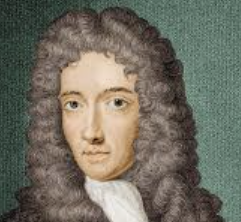
5 months ago
I remember, that being once at Leyden, I was brought to the top of a tower, where, in a darkened room (such as is now used in many places to bring in the species of external object) a convex glass, applied to the only hole, by which light was permitted to enter, did project upon a large white sheet of paper, held at a just distance from it, a lively representation of divers of the chief buildings in the town; all which, upon the admission of more light into the room, by opening the window, did immediately disappear, And methinks... that in divers of the philosophical theories, that have been formerly applauded, something not unlike this may be easily observed. for though, whilst they are looked on with such a weak and determinate degree of light, they may appear very artificial and well-proportioned fabrics, yet they appear so but in that twilight, as it were, which is requisite to their conspicuousness. For if but a full light of new experiments and observations be freely let in upon them, the beauty of those (delightful, but fantastical) structures does immediately vanish.
5 months ago
Not a day goes by without our using the word optimism, coined by Voltaire against Leibniz, who had demonstrated (in spite of the Ecclesiastes and with the approval of the Church) that we live in the best of possible worlds. Voltaire, very reasonably, denied that exorbitant opinion... Leibniz could have replied that a world which has given us Voltaire has some right to be considered the best.
▼
Source
Jorge Luis Borges, Obra completa, Vol. IV, p. 523
5 months ago
In the torments of the intellect, there is a certain bearing which is to be sought in vain among those of the heart. Skepticism is the elegance of anxiety.
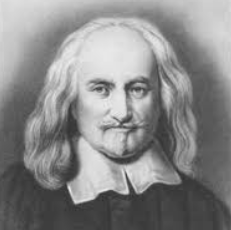
5 months ago
Desire, to know why, and how, CURIOSITY; such as is in no living creature but Man; so that Man is distinguished, not only by his Reason; but also by this singular Passion from other Animals; in whom the appetite of food, and other pleasures of Sense, by predominance, take away the care of knowing causes; which is a Lust of the mind, that by a perseverance of delight in the continual and indefatigable generation of Knowledge, exceedeth the short vehemence of any carnal Pleasure.
▼
Source
The First Part, Chapter 6, p. 26
5 months ago
I plead guilty to valuing such a man beyond all other sorts of men. Smooth-shaven Respectabilities not a few one finds, that are not good for much. Small thanks to a man for keeping his hands clean, who would not touch the work but with gloves on!
5 months ago
Not from fear but from a sense of duty refrain from your sins.

5 months ago
Power as the pursuit of more power inevitably founders in the void that lies beyond itself.
▼
Source
Chapter Eight, Nietzsche, p. 181
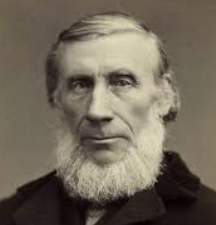
5 months ago
Christ found the religions of the world oppressed almost to suffocation by the load of formulas piled upon them by the priesthood. He removed the load, and rendered respiration free. He cared little for forms and ceremonies, which had ceased to be the raiment of man's spiritual life. To that life he looked, and it he sought to restore.
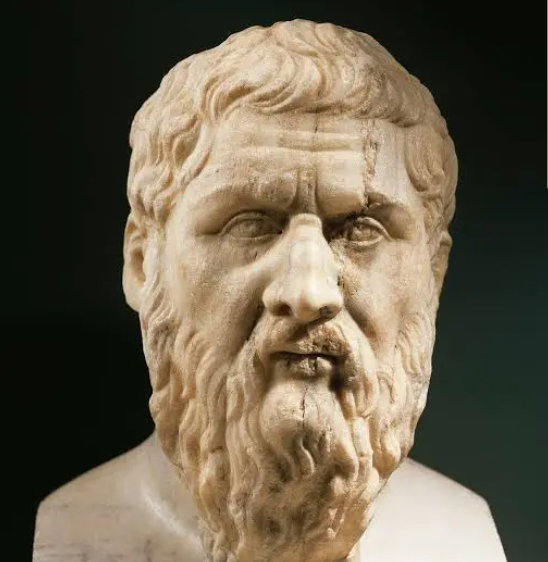
5 months ago
Parmenides: Just as things in a picture, when viewed from a distance, appear to be all in one and the same condition and alike.
▼
Source
165c
5 months ago
Among Latin writers, the acceptations of the word nature are so many, that I remember, one author reckons up no less than fourteen or fifteen. Hence we see how easy 'tis for the generality of men, without excepting those who write of natural things, to impose upon others and themselves, in the use of a word so apt to be mis-employ'd. ..the very great ambiguity of this term, and the promiscuous use made of it, without sufficiently attending to its different significations, render many of the expressions wherein 'tis employ'd either unintelligible, improper, or false.
▼
Source
Sect. 1
5 months ago
Without its assiduity to the ridiculous, would the human race have lasted more than a single generation?
5 months ago
As in the presence of the Master, the Servants are equall, and without any honour at all; So are the Subjects, in the presence of the Soveraign. And though they shine some more, some lesse, when they are out of his sight; yet in his presence, they shine no more than the Starres in presence of the Sun.
▼
Source
The Second Part, Chapter 18, p. 93
5 months ago
Democracy, which means despair of finding any Heroes to govern you, and contented putting up with the want of them,—alas, thou too, mein Lieber, seest well how close it is of kin to Atheism, and other sad Isms: he who discovers no God whatever, how shall he discover Heroes, the visible Temples of God?
5 months ago
The pleasures that give most joy are the ones that most rarely come.
5 months ago
[T]here is no fundamental biological reason why the human genome can't be rewritten to allow everyone to be "in" love with everyone else - if we should so choose. But simply loving each other will be miraculous enough; and will probably suffice. An empty religious piety can be transformed into a biological reality.
▼
Source
"[https://www.huxley.net/ Brave New World? A Defence of Paradise-Engineering]", BLTC Research, 1998
5 months ago
In fact, we almost lost our lives because of his honesty. In 1939, we were running away from Posnan as the Germans were invading - the town was almost on the German border. We took the last train east, but we were stopped at a station which was being bombed by the Germans. We should have run away from the station because that was the object of the bombing, but he wanted to find a ticket inspector to pay for our tickets.
▼
Source
From an interview, as cited in [https://www.theguardian.com/books/2003/apr/05/society "Passion and pessimism"], The Guardian (5 April 2003)
5 months ago
Within the world of total work, the "festival" is either "a break from work" (and thus only there for the sake of work), or it is a more intensive celebration of the principles of work itself (as in the "Labor Days," and thus belongs, again, to the working world). There will naturally be "games" — like the Roman circences — but who would dignify the amusements for the masses with the name of "festival"?
▼
Source
p. 53
5 months ago
There is no one who ever acts honestly in the administration of states, nor any helper who will save any one who maintains the cause of the just.
▼
Source
496d
5 months ago
Mind, even more deadly to empires than to individuals, erodes them, compromises their solidity.
5 months ago
The reasoning of Caligula agrees with that of Hobbes and Grotius.
▼
Source
Jean-Jacques Rousseau, The Social Contract, I Ch.2
5 months ago
Every colony, every agent for a matter colonial, has his tragic tale to tell you of his sad experiences in the Colonial Office; what blind obstructions, fatal indolences, pedantries, stupidities, on the right and on the left, he had to do battle with; what a world-wide jungle of red-tape, inhabited by doleful creatures, deaf or nearly so to human reason or entreaty, he had entered on; and how he paused in amazement, almost in despair; passionately appealed now to this doleful creature, now to that, and to the dead red-tape jungle, and to the living Universe itself, and to the Voices and to the Silences;—and, on the whole, found that it was an adventure, in sorrowful fact, equal to the fabulous ones by old knights-errant against dragons and wizards in enchanted wildernesses and waste howling solitudes; not achievable except by nearly superhuman exercise of all the four cardinal virtues, and unexpected favor of the special blessing of Heaven. His adventure achieved or found unachievable, he has returned with experiences new to him in the affairs of men. What this Colonial Office, inhabiting the head of Downing Street, really was, and had to do, or try doing, in God's practical Earth, he could not by any means precisely get to know; believes that it does not itself in the least precisely know. Believes that nobody knows;—that it is a mystery, a kind of Heathen myth; and stranger than any piece of the old mythological Pantheon; for it practically presides over the destinies of many millions of living men.
▼
Source
Latter Day Pamphlets, No. 3.
CivilSimian.com created by AxiomaticPanic, CivilSimian, Kalokagathia