
4 months 3 weeks ago
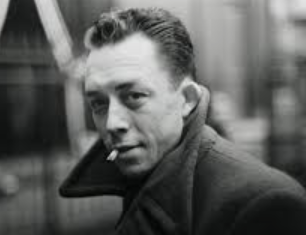
There lay certitude; there, in the daily round. All the rest hung on mere threads and trivial contingencies; you couldn't waste your time on it. The thing was to do your job as it should be done.
4 months 3 weeks ago
Magic of bounty! all these spirits thy power Hath conjur'd to attend! I know the merchant.
▼
Source
Poet, scene i
4 months 3 weeks ago
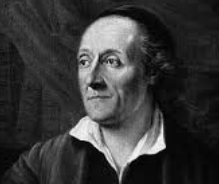
The prudent sees only the difficulties, the bold only the advantages, of a great enterprise; the hero sees both, diminishes those, makes these preponderate, and conquers.
▼
Source
No. 390
4 months 3 weeks ago
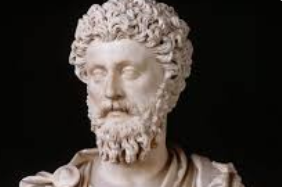
You have power over your mind – not outside events. Realize this, and you will find strength.
▼
Source
Not from any known translation of the Meditations. Quote is attributed to Marcus Aurelius, e.g. in the 2006 book: [https://books.google.com/books?id=zc0_hcEwRnIC&q=%22you+have+power+over+your+mind+not+outside+events%22&dq=%22you+have+power+over+your+mind+
4 months 3 weeks ago
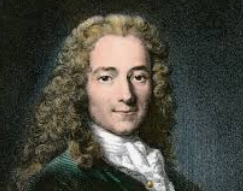
Love is of all the passions the strongest, for it attacks simultaneously the head> the heart, and the senses.
▼
Source
p. 92

4 months 3 weeks ago
In every man sleeps a prophet, and when he wakes there is a little more evil in the world.

4 months 3 weeks ago
The panting breathless haste and vehemence of a man struggling in the thick of battle for life and salvation; this is the mood he is in!
4 months 3 weeks ago
Real fulfillment, for the man who allows absolutely free rein to his desires, and who much dominate everything, lies in hatred.
▼
Source
Part 2: Metaphysical Rebellion
4 months 3 weeks ago
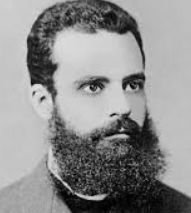
Society is not homogeneous, and those who do not deliberately close their eyes have to recognize that men differ greatly from one another from the physical, moral, and intellectual viewpoints.
▼
Source
p. 281.
4 months 3 weeks ago
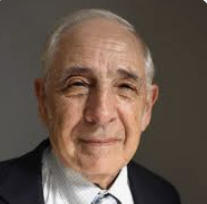
The assertion fallacy ... is the fallacy of confusing the conditions for the performance of the speech act of assertion with the analysis of the meaning of particular words occurring in certain assertions.
▼
Source
P. 141.
4 months 3 weeks ago
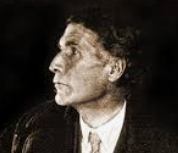
"The meaning of culture" is nothing less than the conduct of life itself, fortified, thickened, made more crafty and subtle, by contact with books and with art.
▼
Source
p. 134
4 months 3 weeks ago
Self-love is a balloon filled with wind, from which tempests emerge when pricked.
▼
Source
p. 229
4 months 3 weeks ago
Intelligence flourishes only in the ages when belief withers.
4 months 3 weeks ago
Theocracy, Government of God, is precisely the thing to be struggled for!
4 months 3 weeks ago
The aim of art, the aim of a life can only be to increase the sum of freedom and responsibility to be found in every man and in the world. It cannot, under any circumstances, be to reduce or suppress that freedom, even temporarily.
▼
Source
"The Artist and His Time"

4 months 3 weeks ago
Education is an ornament for the prosperous, a refuge for the unfortunate.
▼
Source
Freeman (1948), p. 161
4 months 3 weeks ago
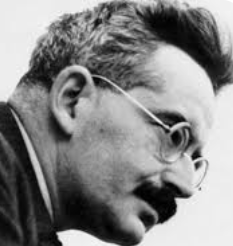
The tradition of the oppressed teaches us that the "state of emergency" in which we live is not the exception but the rule. We must attain to a conception of history that is in keeping with this insight. Then we shall clearly realize that it is our task to bring about a real state of emergency, and this will improve our position in the struggle against Fascism. One reason why Fascism has a chance is that in the name of progress its opponents treat it as a historical norm. The current amazement that the things we are experiencing are "still" possible in the twentieth century is not philosophical. This amazement is not the beginning of knowledge — unless it is the knowledge that the view of history which gives rise to it is untenable.
▼
Source
VIII
4 months 3 weeks ago
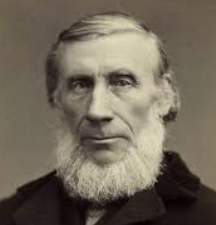
A point highly illustrative of the character of Faraday now comes into view. He gave an account of his discovery of Magneto-electricity in a letter to his friend M. Hachette, of Paris, who communicated the letter to the Academy of Sciences. The letter was translated and published ; and immediately afterwards two distinguished Italian philosophers took up the subject, made numerous experiments, and published their results before the complete memoirs of Faraday had met the public eye. This evidently irritated him. He reprinted the paper of the learned Italians in the Philosophical Magazine accompanied by sharp critical notes from himself. He also wrote a letter dated Dec. 1,1832, to Gay Lussac, who was then one of the editors of the Annales de Chimie in which he analysed the results of the Italian philosophers, pointing out their errors, and' defending himself from what he regarded as imputations on his character. The style of this letter is unexceptionable, for Faraday could not write otherwise than as a gentleman; but the letter shows that had he willed it he could have hit hard. We have heard much of Faraday's gentleness and sweetness and tenderness. It is all true, but it is very incomplete. You cannot resolve a powerful nature into these elements, and Faraday's character would have been less admirable than it was had it not embraced forces and tendencies to which the silky adjectives "gentle" and "tender" would by no means apply. Underneath his sweetness and gentleness was the heat of a volcano. He was a man of excitable and fiery nature; but through high self-discipline he had converted the fire into a central glow and motive power of life, instead of permitting it to waste itself in useless passion. "He that is slow to anger" saith the sage, "is greater than the mighty, and he that ruleth his own spirit than he that taketh a city." Faraday was not slow to anger, but he completely ruled his own spirit, and thus, though he took no cities, he captivated all hearts.
▼
Source
"Points of Character", p. 37.
4 months 3 weeks ago
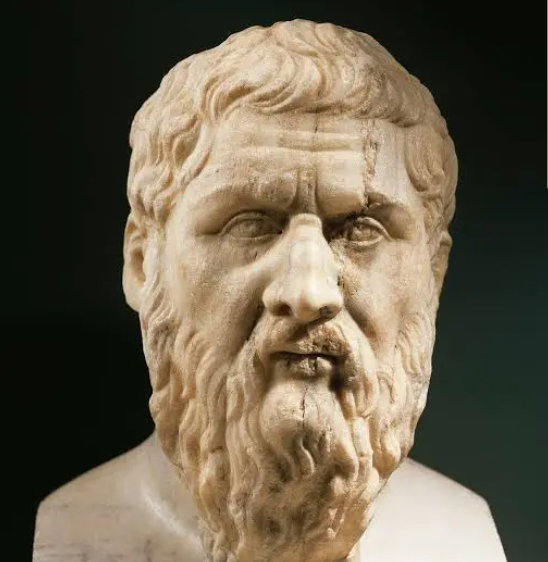
If the very essence of knowledge changes, at the moment of the change to another essence of knowledge there would be no knowledge, and if it is always changing, there will always be no knowledge, and by this reasoning there will be neither anyone to know nor anything to be known. But if there is always that which knows and that which is known —if the beautiful, the good, and all the other verities exist— I do not see how there is any likeness between these conditions of which I am now speaking and flux or motion.
▼
Source
440a–b
4 months 3 weeks ago
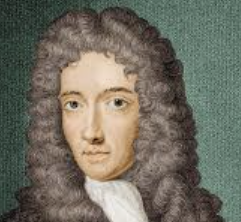
And therefore I think you have done very wisely to make it your business to consider the Phœnomena relating to the present question, which have been afforded by experiments, especially since it might seem injurious to our senses, by whose mediation we acquire so much of the knowledge we have of things corporal, to have recourse to far-fetched and abstracted Ratiocination, to know what are the sensible ingredients of those sensible things that we daily see and handle, and are supposed to have the liberty to untwist (if I may so speak) into the primitive bodies they consist of.
4 months 3 weeks ago
I must give you a piece of intelligence that you perhaps already know—namely, that the ungodly arch-villain Voltaire has died miserably like a dog—just like a brute. That is his reward!
▼
Source
Wolfgang Amadeus Mozart, letter to Leopold Mozart (3 July 1778), in The letters of Wolfgang Amadeus Mozart, 1769-1791, translated, from the collection of Ludwig Nohl, by Lady [Grace] Wallace (Oxford University Press, 1865) Vol. I, # 107 (p. 218)
4 months 3 weeks ago
If someone incessantly drops the word "life," you know he's a sick man.
4 months 3 weeks ago
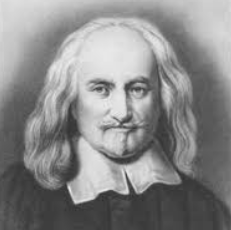
The Register of Knowledge of Fact is called History.
▼
Source
The First Part, Chapter 9, p. 40
4 months 3 weeks ago
Insurrection, never so necessary, is a most sad necessity; and governors who wait for that to instruct them are surely getting into the fatalest courses,—proving themselves sons of Nox and Chaos, of blind Cowardice, not of seeing Valour! How can there be any remedy in insurrection? It is a mere announcement of the disease,—visible now even to sons of Night. Insurrection usually gains little; usually wastes how much. One of its worst kinds of waste, to say nothing of the rest, is that of irritating and exasperating men against each other, by violence done, which is always sure to be injustice done; for violence does even justice unjustly.
▼
Source
Book I, Chap. III
4 months 3 weeks ago
The hopes of the right-minded may be realized, those of fools are impossible.
4 months 3 weeks ago
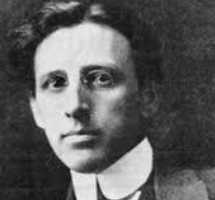
He, who will not reason, is a bigot; he, who cannot, is a fool; and he, who dares not, is a slave.
▼
Source
in [http://books.google.com/books?id=U9FOAAAAYAAJ&pg=PR15 Academical Questions (1805), Preface, p. 15]
4 months 3 weeks ago
The most fatal error that could be committed by the leaders of religious thought is the attempt to force into their own age conceptions which have lived their life, and come to their natural end in preceding ages.
4 months 3 weeks ago
Parmenides: If the one is not, nothing is. Then, and we may add, whether the one is or is not, the one and the others in relation to themselves and to each other all in every way are and are not and appear and do not appear.
▼
Source
166c
4 months 3 weeks ago
He states... that he learned more about the structure and peculiarities of stones... by conversing with a few masons... than he could ever gather from the works of Aristotle and Pliny.
▼
Source
Introductory Remarks
4 months 3 weeks ago
The sphere of consciousness shrinks in action; no one who acts can lay claim to the universal, for to act is to cling to the properties of being at the expense of being itself, to form a reality to reality's detriment.
4 months 3 weeks ago
The Interpretation of the Laws of Nature in a Common-wealth, dependeth not on the books of Moral Philosophy. The Authority of writers, without the Authority of the Commonwealth, maketh not their opinions Law, be they never so true.
▼
Source
The Second Part, Chapter 26, p. 143
4 months 3 weeks ago
In brief, all this Mammon-Gospel, of Supply-and-demand, Competition, Laissez-faire, and Devil take the hindmost, begins to be one of the shabbiest Gospels ever preached on Earth; or altogether the shabbiest.
4 months 3 weeks ago
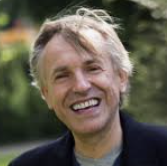
A lot of people recoil from the word "drugs" - which is understandable given today's noxious street drugs and their uninspiring medical counterparts. Yet even academics and intellectuals in our society typically take the prototypical dumb drug, ethyl alcohol. If it's socially acceptable to take a drug that makes you temporarily happy and stupid, then why not rationally design drugs to make people perpetually happier and smarter? Presumably, in order to limit abuse-potential, one would want any ideal pleasure drug to be akin - in one limited but important sense - to nicotine, where the smoker's brain finely calibrates its optimal level: there is no uncontrolled dose-escalation.
▼
Source
"[https://www.abolitionist.com/ The Abolitionist Project]", Talks given at the FHI (Oxford University) and the Charity International Happiness Conference, 2007
4 months 3 weeks ago
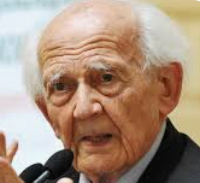
My analysis was that the only wish of Communism was the need to stay in power.
▼
Source
[https://www.theguardian.com/society/2010/nov/03/zygmunt-bauman-ed-miliband-labour "The sociologist influencing Labour's new generation"], The Guardian (3 November 2010)
4 months 3 weeks ago
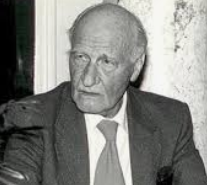
Now it is not our purpose here to condemn this world, from the standpoint of some "holiday-world" of philosophy. No words need be wasted on saying that this work-a-day world is very much with us, that in it the foundations of our physical existence are secured, without which no one can philosophize at all! Nevertheless, let us also recall, that among the voices which fill the workplace and the markets ("How do you get this or that item of daily existence?" "Where do you get that?" etc.) — in the midst of all these voices suddenly one calls above the rest: "Why is there anything at all, and not nothing?" — asking that age-old question, which Heidegger called the basic question of all metaphysics! Must we explicitly state how unfathomable this philosopher's question is, in comparison with that everyday world of needs and purposefulness? If such a question as this were asked, without introduction or interpretation, in the company of those people of efficiency and success, wouldn't the questioner be considered rather … mad?
▼
Source
pp. 66—67
4 months 3 weeks ago
So when the universe was quickened with soul, God was well pleased; and he bethought him to make it yet more like its type. And whereas the type is eternal and nought that is created can be eternal, he devised for it a moving image of abiding eternity, which we call time. And he made days and months and years, which are portions of time; and past and future are forms of time, though we wrongly attribute them also to eternity. For of eternal Being we ought not to say 'it was', 'it shall be', but 'it is' alone: and in like manner we are wrong in saying 'it is' of sensible things which become and perish; for these are ever fleeting and changing, having their existence in time.
▼
Source
37c–38b, as quoted by R. D. Archer-Hind, [https://books.google.com/books?id=q2YMAAAAIAAJ The Timaeus of Plato] (1888)
4 months 3 weeks ago
Knowledge, having irritated and stimulated our appetite for power, will lead us inexorably to our ruin.
4 months 3 weeks ago
Foremost among his friends stands Francis Bacon, who 'loved to converse with him,' and employed him on the translation of some of the famous Essays... into Latin. This connection can be shown to belong to the years 1621-6 when Bacon, after his political disgrace, was devoting himself entirely to scientific work... The influence of Bacon, however, has left no trace on Hobbes's own matured thought. He... has no place for 'Baconian induction' in his own conception of scientific method. Bacon's zeal for experiment, the redeeming feature in an otherwise chaotic scheme of thought, is entirely alien to the essentially deductive and systematic spirit of the Hobbian philosophy.
▼
Source
Alfred Edward Taylor, Thomas Hobbes (1908)
4 months 3 weeks ago
And so in City after City, street-barricades are piled, and truculent, more or less murderous insurrection begins; populace after populace rises, King after King capitulates or absconds; and from end to end of Europe Democracy has blazed up explosive, much higher, more irresistible and less resisted than ever before; testifying too sadly on what a bottomless volcano, or universal powder-mine of most inflammable mutinous chaotic elements, separated from us by a thin earth-rind, Society with all its arrangements and acquirements everywhere, in the present epoch, rests! The kind of persons who excite or give signal to such revolutions—students, young men of letters, advocates, editors, hot inexperienced enthusiasts, or fierce and justly bankrupt desperadoes, acting everywhere on the discontent of the millions and blowing it into flame,—might give rise to reflections as to the character of our epoch. Never till now did young men, and almost children, take such a command in human affairs.
4 months 3 weeks ago
More controversially, technology can accelerate the transition from harming to helping free-living sentient beings: mankind's fitfully expanding "circle of compassion". The civilising process needn't be species-specific but instead extend to free-living dwellers in tomorrow's wildlife parks. Every cubic metre of the biosphere will soon be computationally accessible to surveillance, micro-management and control. Fertility regulation via immunocontraception can replace Darwinian ecosystems governed by starvation and predation. Any species of obligate carnivore we choose to preserve can be genetically and behaviourally tweaked into harmlessness. Asphyxiation, disembowelling, and agonies of being eaten alive can pass into the dustbin of history.
▼
Source
"[https://www.hedweb.com/transhumanism/neojainism.html High-tech Jainism]", The World Transformed, Jul. 2014
4 months 3 weeks ago
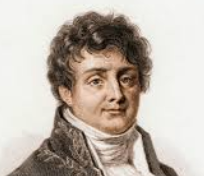
Liquids are very poor conductors of heat; but they have, like aeriform media, the property of carrying it rapidly in certain directions. This is the same property which, combining with, combining with the centrifugal force, displaces and mingles all parts of the atmosphere... [and] ocean, and maintains in them, regular and immense currents.
4 months 3 weeks ago
We speak of a clock as an instrument for measuring time. In Plato and Aristotle's scheme of things, time (χρόνος) is itself a kind of clock, not just the passage of events, but a standard by which that passage can be measured. At one point Plato notes ...'men scarcely realize that the journeyings of these planets are time.' ...time is to be actually identified with the planetary motions.
▼
Source
W. K. C. Guthrie, A History of Greek Philosophy Vol. 1, "The Earlier Presocratics and the Pythagoreans" (1962)
4 months 3 weeks ago
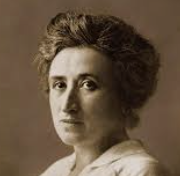
I suppose I must be out of sorts to feel everything so deeply. Sometimes, however, it seems to me that i am not really a human being at all, but like a bird or a beast in human form. I feel so much more at home even in a scrap of garden like the one here, and still more in the meadows when the grass is humming with bees than - at one of the our party congresses.
▼
Source
Prison Letter, (May 12, 1917), Rosa Luxemburg Speaks
4 months 3 weeks ago
To reckon on anything at all, here or elsewhere, is to afford proofs that we are still burdened with chains. The reprobate aspires to paradise; this aspiration disparages, compromises him. To be free is to rid yourself forever of the notion of reward, it is to expect nothing of men or gods, it is to renounce not only this world and all worlds but salvation itself—it is to destroy even the notion of it, that chain among chains.
4 months 3 weeks ago
Literature, the strange entity so called,—that indeed is here. If Literature continue to be the haven of expatriated spiritualisms, and have its Johnsons, Goethes and true Archbishops of the World, to show for itself as heretofore, there may be hope in Literature. If Literature dwindle, as is probable, into mere merry-andrewism, windy twaddle, and feats of spiritual legerdemain, analogous to rope-dancing, opera-dancing, and street-fiddling with a hat carried round for halfpence, or for guineas, there will be no hope in Literature.
4 months 3 weeks ago
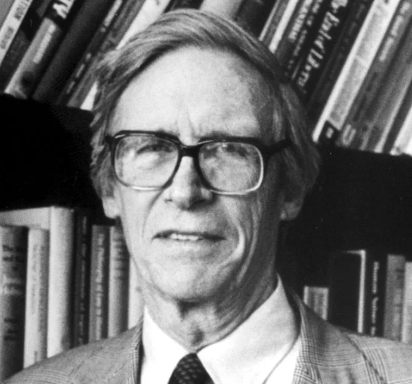
I am particularly grateful to Nozick for his unfailing help and encouragement during the last stages.
▼
Source
Preface, pg. xii
4 months 3 weeks ago
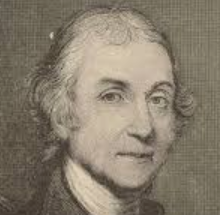
Great as Bacon was, he was far from being free from the mistakes and prejudices of those who went before him. Even some of the most wild and absurd opinions of the antients have the sanction of his approbation and authority. He does not hesitate to assent to an opinion... that visual rays proceed from the eye; giving this reason for it, that every thing in nature is qualified to discharge its proper functions by its own powers, in the same manner as the sun, and other celestial bodies. He acknowledges, however, that the presence of light, as well as several other circumstances, is necessary to vision.
▼
Source
Period I To the Revival of Letters in Erope
4 months 3 weeks ago
One Step Forward, Two Steps Backward, written by Lenin, an outstanding member of the Iskra group, is a methodical exposition of the ideas of the ultra-centralist tendency in the Russian movement. The viewpoint presented with incomparable vigor and logic in this book, is that of pitiless centralism.
4 months 3 weeks ago
To get up in the morning, wash and then wait for some unforeseen variety of dread or depression. I would give the whole universe and all of Shakespeare for a grain of ataraxy.
4 months 3 weeks ago
In several respects, I consider my father as one of the most interesting men I have known. He was a man of perhaps the very largest natural endowment of any it has been my lot to converse with. None of us will ever forget that bold glowing style of his, flowing free from his untutored soul, full of metaphors (though he knew not what a metaphor was) with, all manner of potent words which he appropriated and applied with a surprising accuracy you often would not guess whence; brief, energetic, and which I should say conveyed the most perfect picture — definite, clear, not in ambitious colors, but in full white sunliglit — of all the dialects I have ever listened to. Nothing did I ever hear him undertake to render visible which, did not become almost ocularly so. Never shall we again hear such speech as that was. The whole district knew of it and laughed joyfully over it, not knowing how other-wise to express the feeling it gave them; emphatic I have heard him beyond all men. In anger he had no need of oaths, his words were like sharp arrows that smote into the very heart. The fault was that he exaggerated (which tendency I also inherit), yet only in description and for the sake chiefly of humorous effect.
CivilSimian.com created by AxiomaticPanic, CivilSimian, Kalokagathia