
4 months 3 weeks ago
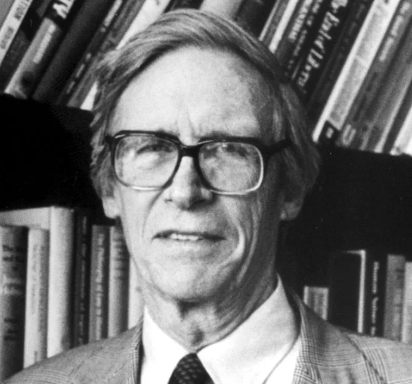
We must not be enticed by mathematically attractive assumptions into pretending that the contingencies of men's social positions and the asymmetries of their situations somehow even out in the end. Rather we must choose our conception of justice fully recognizing that this is not and cannot be the case.
▼
Source
Chapter III, Section 28, pg. 171
4 months 3 weeks ago
To beautify life is to give it an object.
▼
Source
On Oscar Wilde (1882)

4 months 3 weeks ago
Do not unjustly eat what the water has given up, and do not desire as food the flesh of slaughtered animals, Or the white (milk) of mothers who intended its pure draught for their young, not for noble ladies. And do not grieve the unsuspecting birds by taking their eggs; for injustice is the worst of crimes. And spare the honey which the bees get betimes by their industry from the flowers of fragrant plants; For they did not store it that it might belong to others, nor did they gather it for bounty and gifts. I washed my hands of all this; and would that I had perceived my way ere my temples grew hoar!
▼
Source
1. 232, 8
4 months 3 weeks ago
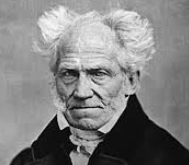
The method of viewing things which proceeds in accordance with the principle of sufficient reason is the rational method, and it alone is valid and of use in practical life and in science. The method which looks away from the content of this principle is the method of genius, which is only valid and of use in art.
▼
Source
Die dem Satz vom Grunde nachgehende ist die vernünftige Betrachtungsart, welche im praktischen Leben, wie in der Wissenschaft, allein gilt und hilft: die vom Inhalt jenes Satzes wegsehende ist die geniale Betrachtungsart, welche in der Kunst allein gilt u

4 months 3 weeks ago
The real, the unique misfortune: to see the light of day. A disaster which dates back to aggressiveness, to the seed of expansion and rage within origins, to the tendency to the worst which first shook them up.

4 months 3 weeks ago
He came and spoke a word, and the chatter of rationalism stopped, and the sums would no longer work out and be ended. He was a breath of Nature turning in her sleep under the load of civilisation, a stir in the very stillness of God to tell us He was still there.
▼
Source
G. K. Chesterton in Twelve Types: A Collection of Mini-Biographies
4 months 3 weeks ago
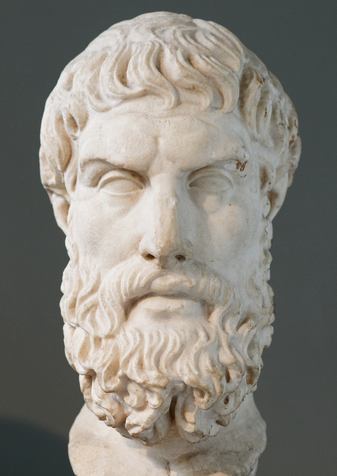
Luxurious food and drinks, in no way protect you from harm. Wealth beyond what is natural, is no more use than an overflowing container. Real value is not generated by theaters, and baths, perfumes or ointments, but by philosophy.
▼
Source
From the esplanade wall at Oenoanda, now in Turkey, as recorded by Diogenes of Oenoanda
4 months 3 weeks ago
One cannot say that the case for Parmenides is proved. If it is accepted, it is a strange freak of history that so fundamental a discovery should have been made by one for whom the whole physical world was an unreal show.
▼
Source
W. K. C. Guthrie, in A History of Greek Philosophy (1981), Vol II. p. 65
4 months 3 weeks ago
Rawls's work, for better or worse, is not inspired by this kind of epic ambition. His very modesty and lack of speculative curiosity are what exclude him from the ranks of the great philosophers. Rawls is not an Isaiah Berlin with his anguished sense of the conflict of goods which besets human life; nor is he a Leo Strauss with his vivid awareness of the forces of persecution with which philosophy has always to contend; nor is he a Michael Oakeshott with his diagnosis of the dangers posed by excessive rationalism to the goals of a free society. Rawls is a philosopher for our time. His desire is to render both theoretically and practically legitimate the redistributivist policies of the prosperous North Atlantic welfare states. There is already more than a whiff of nostalgia about this project. This is by no means a contemptible goal, but it is well to remember that this project of rationalization is one — but only one — way in which philosophy can be practiced.
▼
Source
Steven M. Smith, "The Philosopher of Our Times", The New York Sun (May 11, 2007)
4 months 3 weeks ago
Politics and strategy are one. Nations should live in an atmosphere of self-criticism because it is healthy, but always with one heart and one mind. Stoop to the unhappy, and lift them up in your arms! Thaw out frozen America with the fire of your hearts! Make the natural blood of the nations´ course vigorously through their veins! The new American are on their feet, saluting each other from nation to nation, the eyes of the laborers shining with joy. The natural statesman arises, schooled in the direct study of Nature. He reads to apply his knowledge, not to imitate.

4 months 3 weeks ago
Justice is peculiarly stringent. Its demands may not be modified. Judges and rulers must 'do justice though the heavens fall', not allow family connections, friendship, or even personal worth to turn them aside.
4 months 3 weeks ago
No difference of rank, position, or birth, is so great as the gulf that separates the countless millions who use their head only in the service of their belly, in other words, look upon it as an instrument of the will, and those very few and rare persons who have the courage to say: No! my head is too good for that; it shall be active only in its own service; it shall try to comprehend the wondrous and varied spectacle of this world and then reproduce it in some form, whether as art or as literature, that may answer to my character as an individual.
▼
Source
On Genius, Parerga and Paralipomena, Chapter III,
4 months 3 weeks ago
Progress is the injustice each generation commits with regard to its predecessor.
4 months 3 weeks ago
I have read – nay, I have bought! – Carlyle's Latter Day Pamphlets, and look on my eight shillings as very much thrown away. To me, it appears that the grain of sense is so smothered up in a sack of the sheerest trash, that the former is valueless. He does not himself know what he wants. He has one idea – a hatred of spoken and acted falsehood; and on that he harps through the whole eight pamphlets. I look on him as a man who was always in danger of going mad in literature and who has now done so.
▼
Source
Anthony Trollope, Letter to Frances Trollope, 1850/51, in The Letters of Anthony Trollope, ed. Bradford Allen Booth (1951)
4 months 3 weeks ago
Continence is a branch of temperance, which prevents the diseases, infamy, remorse, and punishment, to which those are exposed, who indulge themselves in unlawful amours.
4 months 3 weeks ago
Happiness exists on earth, and it is won through prudent exercise of reason, knowledge of the harmony of the universe, and constant practice of generosity. He who seeks it elsewhere will not find it for, having drunk from all the glasses of life, he will find satisfaction only in those.
4 months 3 weeks ago
The natural way of doing this [seeking scientific knowledge or explanation of fact] is to start from the things which are more knowable and obvious to us and proceed towards those which are clearer and more knowable by nature; for the same things are not 'knowable relatively to us' and 'knowable' without qualification. So in the present inquiry we must follow this method and advance from what is more obscure by nature, but clearer to us, towards what is more clear and more knowable by nature. Now what is to us plain and obvious at first is rather confused masses, the elements and principles of which became known to us by later analysis...
▼
Source
A.1, 184a.16 sqq, [http://classics.mit.edu//Aristotle/physics.html source:], Book I, Part 1, Tr. R. P. Hardie, R. K. Gaye.
4 months 3 weeks ago
These decrees of yours are no different from spiders' webs. They'll restrain anyone weak and insignificant who gets caught in them, but they'll be torn to shreds by people with power and wealth.
▼
Source
Discussing Solon's laws with him, as quoted by Plutarch, in Solon ch. 5; translation by Robin Waterfield from Plutarch Greek Lives (1998) p. 50. | Variants: | Written laws are like spiders’ webs; they will catch, it is true, the weak and poor, but would b
4 months 3 weeks ago
People who originally have no means but are ultimately able to earn a great deal, through whatever talents they may possess, almost always come to think that these are permanent capital and that what they gain through them is interest. Accordingly, they do not put aside part of their earnings to form a permanent capital, but spend their money as fast as they earn it. But they are then often reduced to poverty because their earnings decrease or come to an end after their talent, which was of a transitory nature, is exhausted, as happens, for example, in the case of almost all the fine arts; or because it could be brought to bear only under a particular set of circumstances that has ceased to exist.
▼
Source
E. Payne, trans. (1974) Vol. 1, p. 348
4 months 3 weeks ago
Consciousness is much more than the thorn, it is the dagger in the flesh.
4 months 3 weeks ago
As to love our neighbour as we love ourselves is the great law of Christianity, so it is the great precept of nature to love ourselves only as we love our neighbour, or what comes to the same thing, as our neighbour is capable of loving us.
▼
Source
Section I, Chap. V.
4 months 3 weeks ago
I write in a hurry, because the little one, who has been sleeping a long time, begins to call for me. Poor thing! when I am sad, I lament that all my affections grow on me, till they become too strong for my peace, though they all afford me snatches of exquisite enjoyment.
▼
Source
Letter to Gilbert Imlay (19 August 1794)

4 months 3 weeks ago
Only when they must choose between competing theories do scientists behave like philosophers.
▼
Source
"Logic of Discovery or Psychology of Research?", Criticism and the growth of knowledge edited by Imre Lakatos and Alan Musgrave (1970)

4 months 3 weeks ago
The demons have always effected that all those who ever so little strived to live by logos and shun vice be hated.
▼
Source
Second Apology, in Readings in World Christian History (2013), p. 40
4 months 3 weeks ago
The essential nature (concerning the soul) cannot be corporeal, yet it is also clear that this soul is present in a particular bodily part, and this one of the parts having control over the rest (heart).
▼
Source
Parva Naturalia 467b.13–16

4 months 3 weeks ago
Racist oppression invades the lives of Black people on an infinite variety of levels. Blacks are imprisoned in a world where our labor and toil hardly allow us to eke out a decent existence, if we are able to find jobs at all. When the economy begins to falter, we are forever the first victims, always the most deeply wounded. When the economy is on its feet, we continue to live in a depressed state. Unemployment is generally twice as high in the ghettos as it is in the country as a whole and even higher among Black women and youth. The unemployment rate among Black youth has presently skyrocketed to 30 per cent. If one-third of America’s white youth were without a means of livelihood, we would either be in the thick of revolution or else under the iron rule of fascism. Substandard schools, medical care hardly fit for animals, overpriced, dilapidated housing, a welfare system based on a policy of skimpy concessions, designed to degrade and divide (and even this may soon be cancelled)—this is only the beginning of the list of props in the overall scenery of oppression which, for the mass of Blacks, is the universe.
4 months 3 weeks ago
Only a male intellect clouded by the sexual drive could call the stunted, narrow-shouldered, broad-hipped and short-legged sex the fair sex: for it is with this drive that all its beauty is bound up. More fittingly than the fair sex, women could be called the unaesthetic sex. Neither for music, nor poetry, nor the plastic arts do they possess any real feeling or receptivity: if they affect to do so, it is merely mimicry in service of their effort to please. This comes from the fact that they are incapable of taking a purely objective interest in anything whatever, and the reason for this is, I think, as follows. Man strives in everything for a direct domination over things, either by comprehending or by subduing them. But woman is everywhere and always relegated to a merely indirect domination, which is achieved by means of man, who is consequently the only thing she has to dominate directly. Thus it lies in the nature of women to regard everything simply as a means of capturing a man, and their interest in anything else is only simulated, is no more than a detour, i.e. amounts to coquetry and mimicry.
▼
Source
Vol. 2 "On Women" as translated in Essays and Aphorisms (1970), as translated by R. J. Hollingdale
4 months 3 weeks ago
How can you know if you are in the truth? The criterion is simple enough: if others make a vacuum around you, there is not a doubt in the world that you are closer to the essential than they are.
4 months 3 weeks ago
By nature a philosopher is not in genius and disposition half so different from a street porter, as a mastiff is from a greyhound,
▼
Source
Chapter II, p. 17.
4 months 3 weeks ago
Affection requires a firmer foundation than sympathy, and few people have a principle of action sufficiently stable to produce rectitude of feeling; for in spite of all the arguments I have heard to justify deviations from duty, I am persuaded that even the most spontaneous sensations are more under the direction of principle than weak people are willing to allow.
▼
Source
Letter 17

4 months 3 weeks ago
This is one of the most intricate problems of religion. For if you look into the traditional arguments () about this problem you will find them contradictory; such also being the case with arguments of reason. The contradiction in the arguments of the first kind is found in the Qur'an and the Hadith.
▼
Source
Part 3: Of Fate And Predestination; Opening sentence
4 months 3 weeks ago
The mind is not a vessel that needs filling, but wood that needs igniting.
▼
Source
On Listening to Lectures (Tr. Waterfield)

4 months 3 weeks ago
Knowledge grows, but human beings remain much the same.Belief in progress is a relic of the Christian view of history as a universal narrative, and an intellectually rigorous atheism would start by questioning it.
4 months 3 weeks ago
I appeal to the philosophers of all countries to unite and never again mention Heidegger or talk to another philosopher who defends Heidegger. This man was a devil. I mean, he behaved like a devil to his beloved teacher, and he has a devilish influence on Germany. ... One has to read Heidegger in the original to see what a swindler he was.
▼
Source
As quoted in "At 90, and Still Dynamic : Revisiting Sir Karl Popper and Attending His Birthday Party" by Eugene Yue-Ching Ho, in Intellectus 23 (Jul-Sep 1992)
4 months 3 weeks ago
Understand then all of you, especially the young, that to want to impose an imaginary state of government on others by violence is not only a vulgar superstition, but even a criminal work. Understand that this work, far from assuring the well-being of humanity is only a lie, a more or less unconscious hypocrisy, camouflaging the lowest passions we possess.
▼
Source
Passage written for for The Law of Love and the Law of Violence (1908), released in 1917, as quoted in Equality in Liberty and Justice (2001) by Antony Flew, p. 89
4 months 3 weeks ago
To avert the danger [posed by theory] to life, Nietzsche could choose one of two ways: he could insist on the strictly esoteric character of the theoretical analysis of life—that is, restore the Platonic notion of the noble delusion—or else he could deny the possibility of theory proper and so conceive of thought as essentially subservient to, or dependent on, life or fate... If not Nietzsche himself, at any rate his successors [Heidegger] adopted the second alternative.
▼
Source
p. 26
4 months 3 weeks ago
Let this serve as an outline of the good; for we must presumably first sketch it roughly, and then later fill in the details. But it would seem that any one is capable of carrying on and articulating what has once been well outlined, and that time is a good discoverer or partner in such a work; to which facts the advances of the arts are due; for any one can add what is lacking. And we must also remember what has been said before, and not look for precision in all things alike, but in each class of things such precision as accords with the subject-matter, and so much as is appropriate to the inquiry. For a carpenter and a geometer investigate the right angle in different ways; the former does so in so far as the right angle is useful for his work, while the latter inquires what it is or what sort of thing it is; for he is a spectator of the truth. We must act in the same way, then, in all other matters as well, that our main task may not be subordinated to minor questions. Nor must we demand the cause in all matters alike; it is enough in some cases that the fact be well established, as in the case of the first principles; the fact is the primary thing or first principle. Now of first principles we see some by induction, some by perception, some by a certain habituation, and others too in other ways. But each set of principles we must try to investigate in the natural way, and we must take pains to state them definitely, since they have a great influence on what follows. For the beginning is thought to be more than half of the whole, and many of the questions we ask are cleared up by it.
▼
Source
Book I, 1098a-b; §7 as translated by W. D. Ross
4 months 3 weeks ago
Although men constitute the vast majority of prisoners in the world, important aspects of the operation of state punishment are missed if it is assumed that women are marginal and thus undeserving of attention.
▼
Source
Chapter Four
4 months 3 weeks ago
...on the fanaticism and endless persecutions, the religious wars, that sanguinary frenzy of which the ancient had no conception! Think of the crusades, a butchery lasting two hundred years and inexcusable, its war cry 'It is lasting two hundred years and inexcusable, its war cry 'It is the will of God,' Think of the orgies of blood, the inquisitions, the heretical tribunals, the bloody and terrible conquests...in three continents, or....in America, whose inhabitants were for the most part, not looked upon as human! And above all, don't lets forget India, the cradle of the human race, or at least of that part of it to which we belong, where first.. were most cruelly infuriated against the adherents of the original faith of mankind. The destruction or disfigurement of the ancient temples and idols, a lamentable, mischievous and barbarous act still bear witness to the monotheistic fury...carried on from Mahmud, the Gahaznevid of cursed memory, down to Aurengzeb, the fratricide, whom the Portuguese...have zealously imitated by destruction of temples and the auto defe of the Inquisition of Goa..."For the sake of truth, I must add that the fanatical enormities perpertrated in the name of religion are only to be put down to the adherents of monotheistic creeds...We hear nothing of the kind in the case of the Hindoos and Buddhists.
▼
Source
source: The Essays of Arthur Schopenhauer - By T. Bailey Saunders p. 42 - 43. [https://www.hinduwisdom.info/European_Imperialism.htm]
4 months 3 weeks ago
One does not inhabit a country; one inhabits a language. That is our country, our fatherland — and no other.
▼
Source
Variant translation: We inhabit a language rather than a country.
4 months 3 weeks ago
With the greater part of rich people, the chief enjoyment of riches consists in the parade of riches, which in their eye is never so complete as when they appear to possess those decisive marks of opulence which nobody can possess but themselves.
▼
Source
Chapter XI, Part II, p. 202 (See also Thorstein Veblen).
4 months 3 weeks ago
Cato requested old men not to add the disgrace of wickedness to old age, which was accompanied with many other evils.
▼
Source
Cato the Elder
4 months 3 weeks ago
Cheating ageing by a low-calorie diet, uploading one’s mind into a super-computer, migrating into outer space … Longing for everlasting life, humans show that they remain the death-defined animal.
▼
Source
Sweet Morality (p. 235)
4 months 3 weeks ago
It is the highest impertinence and presumption, therefore, in kings and ministers, to pretend to watch over the economy of private people, and to restrain their expence, either by sumptuary laws, or by prohibiting the importation of foreign luxuries. They are themselves always, and without any exception, the greatest spendthrifts in the society. Let them look well after their own expence, and they may safely trust private people with theirs. If their own extravagance does not ruin the state, that of their subjects never will.
▼
Source
Chapter III, p. 381.
4 months 3 weeks ago
To one commending an orator for his skill in amplifying petty matters, Agesilaus said, "I do not think that shoemaker a good workman that makes a great shoe for a little foot."
▼
Source
Of Agesilaus the Great
4 months 3 weeks ago
As the Genesis story teaches, knowledge cannot save us from ourselves. If we know more than before, it means only that we have greater scope to enact our fantasies. But – as the Genesis myth also teaches – there is no way we can rid ourselves of what we know. If we try to regain a state of innocence, the result can only be a worse madness. The message of Genesis is that in the most vital areas of human life there can be no progress, only an unending struggle with our own nature.
▼
Source
An Old Chaos: Humanism and Flying Saucers (pp. 79-80)
4 months 3 weeks ago
The aim of art is to represent not the outward appearance of things, but their inward significance.
▼
Source
Source: Will Durant, The Story of Philosophy: The Lives and Opinions of the World's Greatest Philosophers (1926), reprinted in Simon & Schuster/Pocket Books, 1991, ], Ch. II: Aristotle and Greek Science; part VI: Psychology and the Nature of Art: "Artisti
4 months 3 weeks ago
If I were to give a simple formula or recipe for distinguishing between what I consider to be admissible plans for social reform and inadmissible Utopian blueprints, I might say: Work for the elimination of concrete evils rather than for the realization of abstract goods. Do not aim at establishing happiness by political means. Rather aim at the elimination of concrete miseries.
▼
Source
p. 385
4 months 3 weeks ago
Stephan Arkadievich chose neither his attitudes nor his opinions, no, the attitudes and opinions came to him on their own, just as he chose neither the style of his hat nor of his coats but got what people were wearing.
▼
Source
Part 1, Chapter 3
4 months 3 weeks ago
Political philosophy was concerned with the best or just order of society which is by nature best or just everywhere or always, while politics is concerned with the being and well-being of this or that particular society (a polis, a nation, an empire) that is in being at a given place for some time.
CivilSimian.com created by AxiomaticPanic, CivilSimian, Kalokagathia