

4 months 3 weeks ago
If I made laws for Shakers or a school, I should gazette every Saturday all the words they were wont to use in reporting religious experience, as "spiritual life," "God," "soul," "cross," etc., and if they could not find new ones next week, they might remain silent.
▼
Source
June 15, 1844
4 months 3 weeks ago
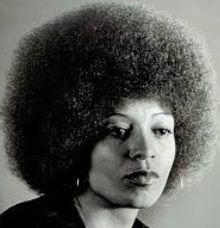
There are many versions of nationalism. And I've always preferred to identify with the pan-Africanism of W. E. B. Du Bois, who argued that Black people, say Black people in the new world, do have a special responsibility to Africa and other parts of the world, Asia...not by virtue of any biological connection, not by virtue of any racial link, but by virtue of a political identification that is forged. So that it is not about Africa because Africa happens to be populated by Black people. It is about Africa because Africa has been the target of colonialism and imperialism. And what I also like about Du Bois's pan-Africanism is that it is open to notions of Afro-Asian struggles as well, and this is something, I think, that has been concealed in the conventional tellings of history at many historical gatherings that were designated as Afro-Asian solidarity. So I prefer to think about the kind of political approach that is open, that is not racially defined but that is poised against racism.

4 months 3 weeks ago
Never unreal, Pain is a challenge to the universal fiction. What luck to be the only sensation granted a content, if not a meaning!
4 months 3 weeks ago
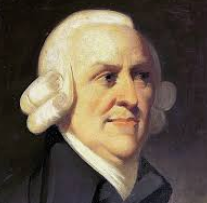
The violence and injustice of the rulers of mankind is an ancient evil, for which, I am afraid, the nature of human affairs can scarce admit a remedy.
▼
Source
Chapter III, Part II, p. 531.
4 months 3 weeks ago
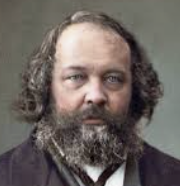
Unity is the great goal toward which humanity moves irresistibly. But it becomes fatal, destructive of the intelligence, the dignity, the well-being of individuals and peoples whenever it is formed without regard to liberty, either by violent means or under the authority of any theological, metaphysical, political, or even economic idea. That patriotism which tends toward unity without regard to liberty is an evil patriotism, always disastrous to the popular and real interests of the country it claims to exalt and serve. Often, without wishing to be so, it is a friend of reaction – an enemy of the revolution, i.e., the emancipation of nations and men.
4 months 3 weeks ago
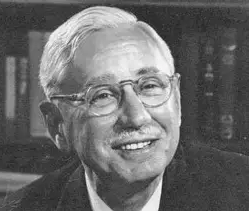
Sir William Hunter, estimated that 40,000,000 of the people of India were seldom or never able to satisfy their hunger. In 1901, 272,000 died of plague introduced from abroad, in 1902, 500,000 died of plague; in 1903, 800,000; in 1904, 1,000,000. We can now understand why there are famines in India. Their cause, in plain terms, is not the absence of food, but the inability of the people to pay for it. It was hoped the railways would solve the problem...the fact that the worst famines have come since the building of the railways...behind all these, as the fundamental source of the terrible famines in India, lies such merciless exploitation, such unbalanced exploitation of goods, and such brutal collection of high taxes in the very midst of famine.... (source: The Case for India - By Will Durant Simon and Schuster, New York. 1930 p.50-53).
4 months 3 weeks ago
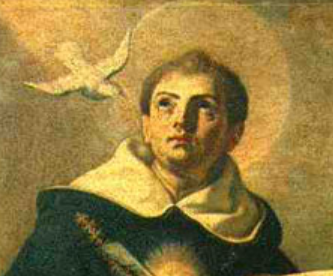
O saving Victim, opening wideThe gate of heaven to man below,Our foes press on from every side,Thine aid supply, Thy strength bestow.
▼
Source
Verbum Supernum Prodiens (hymn for Lauds on Corpus Christi), stanza 5 (O Salutaris Hostia)

4 months 3 weeks ago
The soul is bound to the body by a conversion to the corporeal passions; and again liberated by becoming impassive to the body. That which nature binds, nature also dissolves: and that which the soul binds, the soul likewise dissolves. Nature, indeed, bound the body to the soul; but the soul binds herself to the body. Nature, therefore, liberates the body from the soul; but the soul liberates herself from the body. Hence there is a twofold death; the one, indeed, universally known, in which the body is liberated from the soul; but the other peculiar to philosophers, in which the soul is liberated from the body. Nor does the one entirely follow the other. We do not understand similarly in all things, but in a manner adapted to the essence of each. For intellectual objects we understand intellectually; but those that pertain to soul rationally. We apprehend plants spermatically; but bodies idolically (i.e., as images); and that which is above all these, super-intellectually and super-essentially.
▼
Source
7 - 10
4 months 3 weeks ago
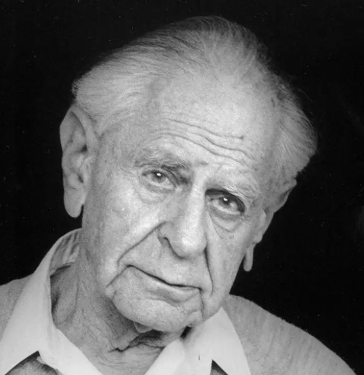
Our aim as scientists is objective truth; more truth, more interesting truth, more intelligible truth. We cannot reasonably aim at certainty. Once we realize that human knowledge is fallible, we realize also that we can never be completely certain that we have not made a mistake.
4 months 3 weeks ago
The positivist philosophy of Comte and the I doctrine deduced from it that humanity is an organism, and Darwin's doctrine of a law of the struggle for existence that is supposed to govern life, with the differentiation of various breeds of people which follows from it, and the anthropology, biology, and sociology of which people are now so fond-all have the same aim. These have all become favourite sciences because they serve to justify the way in which people free themselves from the human obligation to labour, while consuming the fruits of other people's labour.
4 months 3 weeks ago
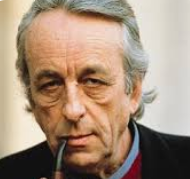
All ideology hails or interpellates concrete individuals as concrete subjects, by the functioning of the category of the subject. ... ideology ‘acts’ or ‘functions’ in such a way that it ‘recruits’ subjects among the individuals (it recruits them all), or ‘transforms’ the individuals into subjects (it transforms them all) by that very precise operation which I have called interpellation or hailing, and which can be imagined along the lines of the most commonplace everyday police (or other) hailing: ‘Hey, you there!’
▼
Source
p. 117
4 months 3 weeks ago
Genius is always sufficiently the enemy of genius by over influence.
▼
Source
par. 19
4 months 3 weeks ago
'Tis not Wit merely, but a Temper which must form the Well-Bred Man. In the same manner, 'tis not a Head merely, but a Heart and Resolution which must compleat the real Philosopher.
▼
Source
Vol. 2, p. 206; "Miscellany III".
4 months 3 weeks ago
Every religious, moral, economic, ethical, or other antithesis transforms into a political one if it is sufficiently strong to group human beings effectively according to friend and enemy. The political does not reside in the battle itself, which. possesses its own technical, psychological, and military laws, but in the mode of behavior which is determined by this possibility, by clearly evaluating the concrete situation and thereby being able to distinguish correctly the real friend and the real enemy.
4 months 3 weeks ago
I. The subjects of every state ought to contribute towards the support of the government, as nearly as possible, in proportion to their respective abilities, that is, in proportion to the revenue which they respectively enjoy under the protection of the state.
▼
Source
Chapter II, Part II, p. 892.
4 months 3 weeks ago
A person is strong only when he stands upon his own truth, when he speaks and acts from his deepest convictions. Then, whatever the situation he may be in, he always knows what he must say and do. He may fall, but he cannot bring shame upon himself or his cause. If we seek the liberation of the people by means of a lie, we will surely grow confused, go astray, and lose sight of our objective, and if we have any influence at all on the people we will lead them astray as well — in other words, we will be acting in the spirit of reaction and to its benefit.
▼
Source
"Appendix A"
4 months 3 weeks ago
This dumb ox will fill the world with his bellowing.
▼
Source
Albertus Magnus, in response to other of his students calling Thomas a "dumb ox" because of his quietude, as quoted in The Great Ages of Western Philosophy : The Age of Belief : The Medieval Philosophers (1962) by Anne Jackson Fremantle
4 months 3 weeks ago
Taxation of earnings from labor is on a par with forced labor. Seizing the results of someone's labor is equivalent to seizing hours from him and directing him to carry on various activities.
▼
Source
Ch. 7 : Distributive Justice, Section I, Redistribution and Property Rights, p. 169
4 months 3 weeks ago
The man who holds the divine theory of life recognizes life not in his own individuality, and not in societies of individualities (in the family, the clan, the nation, the tribe, or the government), but in the eternal undying source of life—in God; and to fulfill the will of God he is ready to sacrifice his individual and family and social welfare. The motor power of his life is love. And his religion is the worship in deed and in truth of the principle of the whole—God.
▼
Source
Chapter IV, Christianity Misunderstood by Men of Science
4 months 3 weeks ago
Certainly no man can rightfully be required to join, or support, an association whose protection he does not desire.
▼
Source
Section III, p. 7
4 months 3 weeks ago
Each the herald is who wrote His rank, and quartered his own coat. There is no king nor sovereign state That can fix a hero's rate.
▼
Source
Astræa
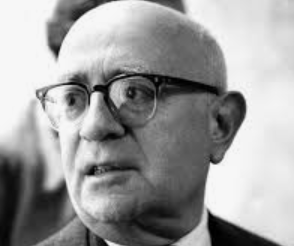
4 months 3 weeks ago
Music for entertainment ... seems to complement the reduction of people to silence, the dying out of speech as expression, the inability to communicate at all. It inhabits the pockets of silence that develop between people molded by anxiety, work and undemanding docility.
▼
Source
p. 271
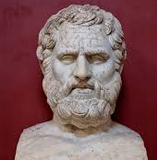
4 months 3 weeks ago
Whatever good fortune befalls you, attribute it to the gods.
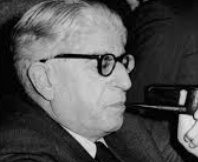
4 months 3 weeks ago
In ourselves alone the absolute light keeps shining, a sigillum falsi et sui, mortis et vitae aeternae [false signal and signal of eternal life and death itself], and the fantastic move to it begins: to the external interpretation of the daydream, the cosmic manipulation of a concept that is utopian in principle. Finding this concept, finding the right for whose sake it behoves us to live, to be organized, to have time—this is where we are headed, why we are clearing the metaphysically constitutive trails afresh, calling for what is not, building into the blue that lines all edges of the world; this is why we build ourselves into the blue and search for truth and reality where mere factuality vanishes.
▼
Source
p. 43
4 months 3 weeks ago
Though in Hume, and also in the works of Bernard Mandeville, we can watch the gradual emergence of the twin concepts of the formations of spontaneous orders and of selective evolution [...], it was Adam Smith and Adam Ferguson who first made systematic use of this approach. Smith's work marks the breakthrough of an evolutionary approach which has progressively displaced the stationary Aristotelian view. The nineteenth-century enthusiast who claimed that the Wealth of Nations was in importance second only to the Bible has often been ridiculed; but he may not have exaggerated so much. Even Aristotle's disciple Thomas Aquinas could not conceal from himself that multae utilitates impedirentur si omnia peccata districte prohiberentur - that much that is useful would be prevented if all sins were strictly prohibited (Summa Theologica, II, ii, q. 78 i).
▼
Source
Friedrich Hayek, The Fatal Conceit (1988), Appendix A: 'Natural' Versus 'Artificial'.
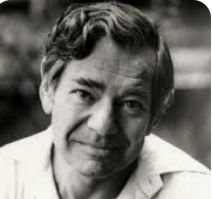
4 months 3 weeks ago
Of faith and morals, one cannot speak honestly for long without hurting feelings. Therefore, most people speak dishonestly of the most important subjects. Many recent philosophers prefer not to speak of them at all. But in some situations honesty is incompatible with silence.
4 months 3 weeks ago
Art is a human activity consisting in this, that one consciously, by means of certain external symbols, conveys to others the feelings one has experienced, whereby people so infected by these feelings, also experience them.
4 months 3 weeks ago
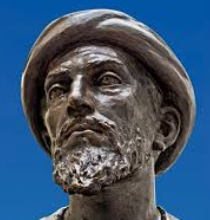
A scholar ... should turn his ears from the talk of the illiterate and not take it to heart.
▼
Source
Treatise 3: “The Study of the Torah,” H. Russell, trans. (1983), p. 69
4 months 3 weeks ago
Out from the heart of Nature rolled The burdens of the Bible old.
▼
Source
The Problem, st. 2
4 months 3 weeks ago
When I speak of 'negative dialectics' not the least important reason for doing so is my desire to dissociate myself from this fetishization of the positive.
▼
Source
p. 18
4 months 3 weeks ago
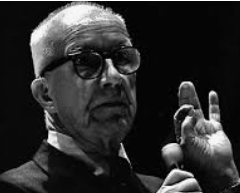
Technology paces industry, but there's a long lag in the process. Industry paces economics. It changes the tools, a great ecological change. And in that manner we come finally to everyday life. The politician is someone who deals in man's problems of adjustment. To ask a politician to lead us is to ask the tail of a dog to lead the dog.
▼
Source
"The Designers and the Politicians" (1962), later published in Beyond Left & Right : Radical Thought for Our Times (1968) by Richard Kostelanetz, p. 368
4 months 3 weeks ago
[T]he great and leading object of Mr. Smith's speculations is to illustrate the provision made by nature in the principles of the human mind, and in the circumstances of man's external situation, for a gradual and progressive augmentation in the means of national wealth; and to demonstrate, that the most effectual plan for advancing a people to greatness, is to maintain that order of things which nature has pointed out; by allowing every man, as long as he observes the rules of justice, to pursue his own interest in his own way, and to bring both his industry and his capital into the freest competition with those of his fellow-citizens. Every system of policy which endeavours, either by extraordinary encouragements, to draw towards a particular species of industry a greater share of the capital of the society than what would naturally go to it; or, by extraordinary restraints, to force from a particular species of industry some share of the capital which would otherwise be employed in it, is in reality, subversive of the great purpose which it means to promote.
▼
Source
Dugald Stewart, Account of the Life and Writings of Adam Smith, LL.D., quoted in The Works of Dugald Stewart, Vol. VII (1829), pp. 56-57
4 months 3 weeks ago
This divergence and perversion of the essential question is most striking in what goes today by the name of philosophy. There would seem to be only one question for philosophy to resolve: What must I do? Despite being combined with an enormous amount of unnecessary confusion, answers to the question have at any rate been given within the philosophical tradition on the Christian nations. For example, in Kant´s Critique of Practical Reason, or in Spinoza, Schopenhauer and specially Rousseau.But in more recent times, since Hegel´s assertion that all that exists is reasonable, the question of what one must do has been pushed to the background and philosophy has directed its whole attention to the investigation of things as they are, and to fitting them into a prearranged theory. This was the first step backwards.The second step, degrading human thought yet further, was the acceptance of the struggle for existence as a basic law, simply because that struggle can be observed among animals and plants. According to this theory the destruction of the weakest is a law which should not be opposed. And finally, the third step was taken when the childish originality of Nietzsche´s half-crazed thought, presenting nothing complete or coherent, but only various drafts of immoral and completely unsubstantiated ideas, was accepted by the leading figures as the final word in philosophical science. In reply to the question: what must we do? the answer is now put straightforwardly as: live as you like, without paying attention to the lives of others.If anyone doubted that the Christian world of today has reached a frightful state of torpor and brutalization (not forgetting the recent crimes committed in the Boers and in China, which were defended by the clergy and acclaimed as heroic feats by all the world powers), the extraordinary success of Nietzsche´s works is enough to provide irrefutable proof of this. Some disjointed writings, striving after effect in a most sordid manner, appear, written by a daring, but limited and abnormal German, suffering from power mania. Neither in talent nor in their basic argument to these writings justify public attention. In the days of Kant, Leibniz, or Hume, or even fifty years ago, such writings would not only have received no attention, but they would not even have appeared. But today all the so called educated people are praising the ravings of Mr. N, arguing about him, elucidating him, and countless copies of his works are printed in all languages.
▼
Source
Chapter 11
4 months 3 weeks ago
God cannot be compared to anything. Note this.
▼
Source
Ch.7
4 months 3 weeks ago
As there is a use in medicine for poisons, so the world cannot move without rogues.
▼
Source
Power
4 months 3 weeks ago
I live on Earth at present, and I don't know what I am. I know that I am not a category. I am not a thing — a noun. I seem to be a verb, an evolutionary process — an integral function of the universe.
▼
Source
I Seem to Be a Verb (1970)
4 months 3 weeks ago
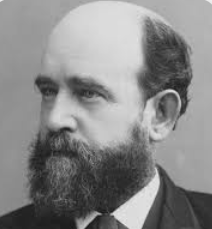
I ask no one who may read this book to accept my views. I ask him to think for himself. Whoever, laying aside prejudice and self-interest, will honestly and carefully make up his own mind as to the causes and the cure of the social evils that are so apparent, does, in that, the most important thing in his power toward their removal. This primary obligation devolves upon us individually, as citizens and as men. Whatever else we may be able to do, this must come first. For "if the blind lead the blind, they both shall fall into the ditch." Social reform is not to be secured by noise and shouting; by complaints and denunciation; by the formation of parties, or the making of revolutions; but by the awakening of thought and the progress of ideas. Until there be correct thought, there cannot be right action; and when there is correct thought, right action will follow. Power is always in the hands of the masses of men. What oppresses the masses is their own ignorance, their own short-sighted selfishness.
▼
Source
Ch. 21 : Conclusion
4 months 3 weeks ago
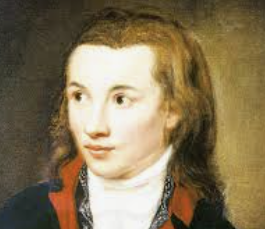
Poets and priests were one in the beginning, and they only separated in later times. But the real poet is always a priest, just as the real priest always remains a poet.
▼
Source
Fragment No. 71

4 months 3 weeks ago
A person who is transformed by the instructions of a teacher, devotes himself to study, and abides by ritual and rightness may become a noble person, while one who follows his nature and emotions, is content to give free play to his passions, and abandons ritual and rightness is a lesser person.
▼
Source
Sources of Chinese Tradition (1999), vol. 1, p. 180
4 months 3 weeks ago
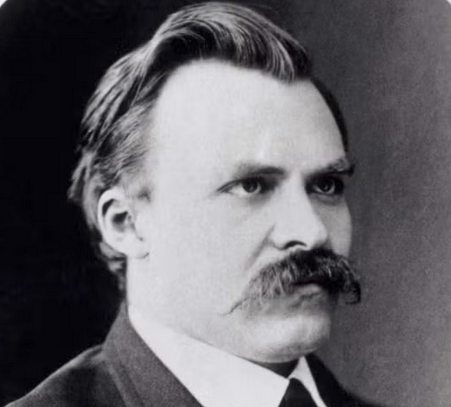
All that had thus far counted as limit, as measuring determination, proved itself here but artificial
▼
Source
page 42
4 months 3 weeks ago
You worldly-minded people are most unfortunate! You are surrounded with sorrows and troubles overhead and underfoot and to the right and to the left, and you are enigmas even to yourselves.
▼
Source
p. 37
4 months 3 weeks ago
The error of the ignorant goes so far as to say that God's power is insufficient, because he has given to this Universe the properties which they imagine cause these great evils, and which do not help all evil-disposed persons to obtain the evil which they seek, and to bring their evil souls to the aim of their desires, though these, as we have shown, are really without limit.
▼
Source
Ch.12
4 months 3 weeks ago
I find men victims of illusion in all parts of life. Children, youths, adults, and old men, all are led by one bawble or another. Yoganidra, the goddess of illusion, Proteus, or Momus, or Gylfi's Mocking, — for the Power has many names, — is stronger than the Titans, stronger than Apollo.
▼
Source
Illusions
4 months 3 weeks ago
Truth is cosmically total: synergetic. Verities are generalized principles stated in semimetaphorical terms. Verities are differentiable. But love is omniembracing, omnicoherent, and omni-inclusive, with no exceptions. Love, like synergetics, is nondifferentiable, i.e., is integral.
▼
Source
[http://www.rwgrayprojects.com/synergetics/s10/p0520.html#1005.50 1005.54]
4 months 3 weeks ago
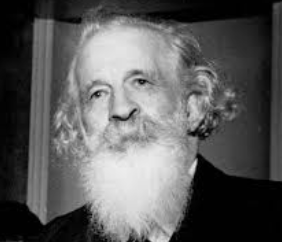
To disappear into deep water or to disappear toward a far horizon, to become part of depth of infinity, such is the destiny of man that finds its image in the destiny of water.
▼
Source
Introduction
4 months 3 weeks ago
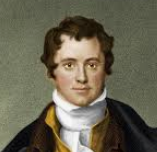
The moment after, I began to respire 20 quarts of unmingled nitrous oxide. A thrilling, extending from the chest to the extremities, was almost immediately produced. I felt a sense of tangible extension highly pleasurable in every limb; my visible impressions were dazzling, and apparently magnified, I heard distinctly every sound in the room and was perfectly aware of my situation. By degrees, as the pleasurable sensations increased, I last all connection with external things; trains of vivid visible images rapidly passed through my mind, and were connected with words in such a manner, as to produce perceptions perfectly novel. I existed in a world of newly connected and newly modified ideas. I theorised — I imagined that I made discoveries. When I was awakened from this semi-delirious trance by Dr. Kinglake, who took the bag from my mouth, indignation and pride were the first feelings produced by the sight of the persons about me. My emotions were enthusiastic and sublime; and for a minute I walked round the room, perfectly regardless of what was said to me. As I recovered my former state of mind, I felt an inclination to communicate the discoveries I had made during the experiment. I endeavoured to recall the ideas, they were feeble and indistinct; one collection of terms, however, presented itself: and with the most intense belief and prophetic manner, I exclaimed to Dr Kinglake, "Nothing exists but thoughts!—the universe is composed of impressions, ideas, pleasures and pains!"
▼
Source
Researches, Chemical and Philosophical: Chiefly Concerning Nitrous Oxide, Or Dephlogisticated Nitrous Air, and Its Respiration (London: J. Johnson, 1800) pp. 487-489 [https://books.google.com/books?id=jhUAAAAAQAAJ&pg=PA487#v=onepage&q&f=true]
4 months 3 weeks ago
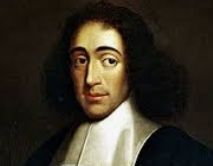
I have resolved to demonstrate by a certain and undoubted course of argument, or to deduce from the very condition of human nature, not what is new and unheard of, but only such things as agree best with practice.
▼
Source
Ch. 1, Introduction
4 months 3 weeks ago
Man is the higher Sense of our Planet; the star which connects it with the upper world; the eye which it turns towards Heaven.

4 months 3 weeks ago
Man know thyself; then thou shalt know the Universe and God.
▼
Source
As quoted in Fragments of Reality: Daily Entries of Lived Life (2006) by Peter Cajander, p. 109
4 months 3 weeks ago
Whoever wishes to justify Philosophy must show ... to what ends a healthy culture uses and has used philosophy.
▼
Source
p. 27
CivilSimian.com created by AxiomaticPanic, CivilSimian, Kalokagathia