
4 months 4 weeks ago
All thinkers have about the same principles, and form but one republic.
▼
Source
p. 27

4 months 4 weeks ago
The source of our actions resides in an unconscious propensity to regard ourselves as the center, the cause, and the conclusion of time. Our reflexes and our pride transform into a planet the parcel of flesh and consciousness we are. If we had the right sense of our position in the world, if to compare were inseparable from to live, the revelation of our infinitesimal presence would crush us. But to live is to blind ourselves to our own dimensions. . . .

4 months 4 weeks ago
I care little about the sword: I will allow a thing to struggle for itself in this world, with any sword or tongue or implement it has, or can lay hold of. We will let it preach, and pamphleteer, and fight, and to the uttermost bestir itself, and do, beak and claws, whatsoever is in it; very sure that it will, in the long-run, conquer nothing which does not deserve to be conquered. What is better than itself, it cannot put away, but only what is worse. In this great Duel, Nature herself is umpire, and can do no wrong: the thing which is deepest-rooted in Nature, what we call truest, that thing and not the other will be found growing at last.
4 months 4 weeks ago
'At my age one's got to be sincere. Lying's too much effort.'
4 months 4 weeks ago
Every man has his fault, and honesty is his.
▼
Source
Lucullus, scene i
4 months 4 weeks ago
Venerate four characters: the sanguine, who has checked volatility and the rage for pleasure; the choleric, who has subdued passion and pride; the phlegmatic, emerged from indolence; and the melancholy, who has dismissed avarice, suspicion and asperity.
▼
Source
No. 609
4 months 4 weeks ago
If as much care were taken to perpetuate a race of fine men as is done to prevent the mixture of ignoble blood in horses and dogs, the genealogy of every one would be written on his face and displayed in his manners.
▼
Source
p. 131
4 months 4 weeks ago
Since it is difficult to approve the reasons people invoke, each time we leave one of our 'fellow men', the question which comes to mind is invariably the same: how does he keep from killing himself?
4 months 4 weeks ago
Europe has made much; great cities, great empires, encyclopaedias, creeds, bodies of opinion and practice: but it has made little of the class of Dante's Thought.
4 months 4 weeks ago
The contradiction is this: man rejects the world as it is, without accepting the necessity of escaping it. In fact, men cling to the world and by far the majority do not want to abandon it.
▼
Source
Part 4: Rebellion and Art
4 months 4 weeks ago
Till the enemy's weakness is known , he should be kept on friendly terms.
4 months 4 weeks ago
Things are only mannequins and even the great world-historical events are only costumes beneath which they exchange glances with nothingness.
▼
Source
Protocols to the Experiments on Hashish, Opium and Mescaline (1927-1934)
4 months 4 weeks ago
You need to know at least one foreign language well enough so that you can read the best literature that that language has produced in the original, and so you carry on a reasonable conversation and have dreams in that language. There are several reasons why this is crucial, but the most important is perhaps this: you can never understand one language until you understand at least two.
4 months 4 weeks ago
One of the greatest autobiographies in the English language.
▼
Source
J. B. Priestley, introduction to the 1967 edition of Powys's Autobiography, quoted in Kenneth Hopkins, 'Powys, John Cowper', in The Dictionary of National Biography 1961–1970, eds. E. T. Williams and C. S. Nicholls (1981), p. 861
4 months 4 weeks ago
Defend me from my friends; I can defend myself from my enemies.
▼
Source
Garantissez-moi de mes amis, écrivait Gourville proscrit et fugitif, je saurai me défendre de mes ennemis. ("Defend me from my friends," wrote Gourville, exile and fugitive, "I can defend myself from my enemies.") — Gabriel Sénac de Meilhan, Considération
4 months 4 weeks ago
Why do you lack the strength to escape the obligation to breathe?
4 months 4 weeks ago
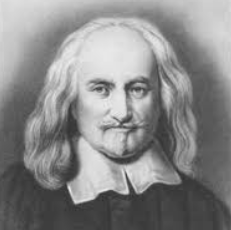
I know not how the world will receive it, nor how it may reflect on those that shall seem to favor it. For in a way beset with those that contend, on one side for too great Liberty, and on the other side for too much Authority, 'tis hard to passe between the points of both unwounded.
▼
Source
The Epistle Dedicatory, Paris, April 15-25, 1651
4 months 4 weeks ago
Burns's Brother Gilbert, a man of much sense and worth, has told me that Robert, in his young days, in spite of their hardship, was usually the gayest of speech; a fellow of infinite frolic, laughter, sense and heart; far pleasanter to hear there, stript cutting peats in the bog, or such like, than he ever afterwards knew him. I can well believe it. This basis of mirth, a primal element of sunshine and joyfulness, coupled with his other deep and earnest qualities, is one of the most attractive characteristics of Burns. A large fund of Hope dwells in him; spite of his tragical history, he is not a mourning man. He shakes his sorrows gallantly aside; bounds forth victorious over them.
4 months 4 weeks ago
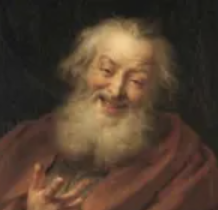
Always go too far, because that's where you'll find the truth.
▼
Source
Please read this article for more information: [https://literature.stackexchange.com/q/16662/1015 Did Camus ever say “Always go too far, because that's where you'll find the truth”? | Literature Stack Exchange]
4 months 4 weeks ago
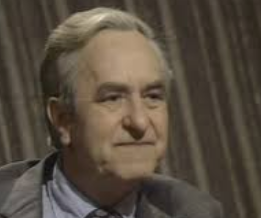
Disease of the home and of the life comes about in the same way as that of the body.
▼
Source
Freeman (1948), p. 170 | Variant: Disease occurs in a household, or in a life, just as it does in a body.
4 months 4 weeks ago
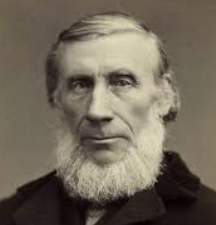
We do not ask ourselves what the ultimate ideas behind our civilization are that have brought us into this danger; we do not search for the human face behind the bewildering array of instruments that man has forged; in a word, we do not dare to be philosophical.
▼
Source
Chapter One, The Advent of Existentialism, p. 3
4 months 4 weeks ago
The Apocrypha... ought to be bound up with all your Bibles; it contains much that is beautiful and wise, and there is in history nothing finer than the description of Eleazar's end.
4 months 4 weeks ago
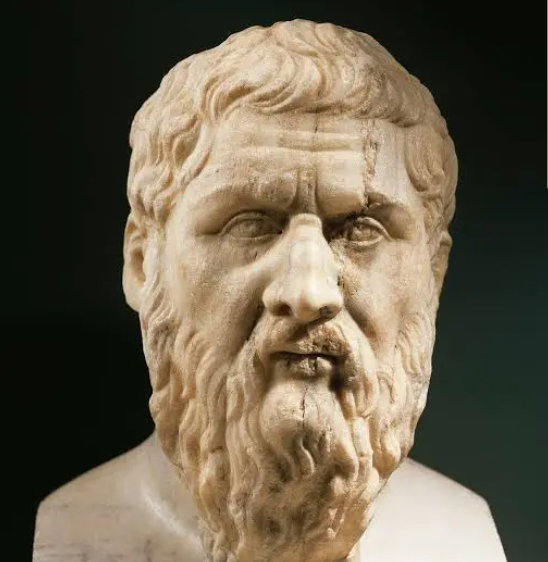
I shall have to test the theory of my father Parmenides, and contend forcibly that after a fashion not-being is and on the other hand in a sense being is not… For unless these statements are either disproved or accepted, no one who speaks about false words, or false opinion —whether images or likenesses or imitations or appearances— about the arts which have to do with them, can ever help being forced to contradict himself and make himself ridiculous.
▼
Source
241d-e
4 months 4 weeks ago
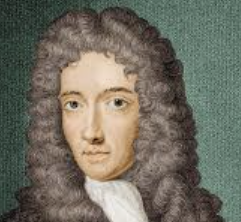
As for the Mystical Writers scrupling to Communicate their Knowledge, they might less to their own Disparagement, and to the trouble of their Readers, have conceal'd it by writing no Books, then by Writing bad ones. If Themistius were here, he would not stick to say that Chymists write thus darkly, not because they think their Notions too precious to be explain'd, but because they fear that if they were explain'd, men would discern, that they are farr from being precious.
4 months 4 weeks ago
Without God, everything is nothingness; and with God? Supreme nothingness.
4 months 4 weeks ago
For Prudence, is but Experience; which equal time, equally bestows on all men, in those things they equally apply themselves unto.
▼
Source
The First Part, Chapter 13, p. 60
4 months 4 weeks ago
Thou, O World, how wilt thou secure thyself against this man? Thou canst not hire him by thy guineas; nor by thy gibbets and law-penalties restrain him. He eludes thee like a Spirit. Thou canst not forward him, thou canst not hinder him. Thy penalties, thy poverties, neglects, contumelies: behold, all these are good for him. Come to him as an enemy; turn from him as an unfriend; only do not this one thing,—infect him not with thy own delusion: the benign Genius, were it by very death, shall guard him against this!—What wilt thou do with him? He is above thee, like a god. Thou, in thy stupendous three-inch pattens, art under him. He is thy born king, thy conqueror and supreme lawgiver: not all the guineas and cannons, and leather and prunella, under the sky can save thee from him. Hardest thickskinned Mammon-world, ruggedest Caliban shall obey him, or become not Caliban but a cramp. Oh, if in this man, whose eyes can flash Heaven's lightning, and make all Calibans into a cramp, there dwelt not, as the essence of his very being, a God's justice, human Nobleness, Veracity and Mercy,—I should tremble for the world. But his strength, let us rejoice to understand, is even this: The quantity of Justice, of Valour and Pity that is in him. To hypocrites and tailored quacks in high places, his eyes are lightning; but they melt in dewy pity softer than a mother's to the downpressed, maltreated; in his heart, in his great thought, is a sanctuary for all the wretched.
4 months 4 weeks ago
My enemy is not the man who wrongs me, but the man who means to wrong me.
4 months 4 weeks ago
If the relationship between man and God were supposed to consist of man’s acceptance of a paragraph of propositions that “raises among ourselves no other questions,” there would be no sense at all in God’s promising that if man inquires and seeks, he will be told “great things” that had until now been hidden.
4 months 4 weeks ago
A genuine awareness of tradition makes us free and independent from the conservatism of those who claim to be its guardians.
4 months 4 weeks ago
They despised everything but virtue, caring little for their present state of life, and thinking lightly of the possession of gold and other property, which seemed only a burden to them; neither were they intoxicated by luxury; nor did wealth deprive them of their self-control; but they were sober, and saw clearly that all these goods are increased by virtue and friendship with one another, whereas by too great regard and respect for them, they are lost and friendship with them.
4 months 4 weeks ago
He was one of the earliest to insist on the necessity of studying the forms of crystals. He saw in their formation proof that the internal motions, configuration, and position of the integral parts are all that is necessary to account for alterations and diversities in outward character.
4 months 4 weeks ago
What every man who loves his country hopes for in his inmost heart: the suppression of half his compatriots.
4 months 4 weeks ago
And when all the world is overcharged with Inhabitants, then the last remedy of all is Warre, which provideth for every man, by Victory or Death.
▼
Source
The Second Part, Chapter 30, p. 181
4 months 4 weeks ago
Why not? What is to hinder this Samson from governing? There is in him what far transcends all apprenticeships; in the man himself there exists a model of governing, something to govern by! There exists in him a heart-abhorrence of whatever is incoherent, pusillanimous, unveracious,—that is to say, chaotic, _un_governed; of the Devil, not of God. A man of this kind cannot help governing! He has the living ideal of a governor in him; and the incessant necessity of struggling to unfold the same out of him.

4 months 4 weeks ago
Here we come to the nub of the issue: the alleged moral force of the term "natural". If any creature, by its very nature, causes terrible suffering, albeit unwittingly, is it morally wrong to change that nature? If a civilised human were to come to believe s/he had been committing acts that caused grievous pain for no good reason, then s/he would stop - and want other moral agents to prevent the recurrence of such behaviour. May we assume that the same would be true of a lion, if the lion were morally and cognitively "uplifted" so as to understand the ramifications of what (s)he was doing? Or a house cat tormenting a mouse? Or indeed a human sociopath?
▼
Source
"[https://www.hedweb.com/abolitionist-project/reprogramming-predators.html Reprogramming Predators]", BLTC Research, 2009
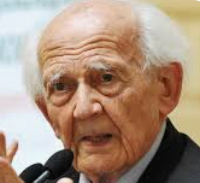
4 months 4 weeks ago
Pascal suggests that people avoid looking inwards and keep running in the vain hope of escaping a face-to-face encounter with their predicament, which is to face up to their utter insignificance whenever they recall the infinity of the universe. And he censures them and castigates them for doing so. It is, he says, that morbid inclination to hassle around rather than stay put which ought to be blamed for all unhappiness. One could, however, object that Pascal, even if only implicitly, does not present us with the choice between a happy and an unhappy life, but between two kinds of unhappiness: whether we choose to run or stay put, we are doomed to be unhappy. The only (putative and misleading!) advantage of being on the move (as long as we keep moving) is that we postpone for a while the moment of that truth. This is, many would agree, a genuine advantage of running out of rather than staying in our rooms—and most certainly it is a temptation difficult to resist. And they will choose to surrender to that temptation, allow themselves to be allured and seduced—if only because as long as they remain seduced they will manage to stave off the danger of discovering the compulsion and addiction that prompts them to run, screened by what is called “freedom of choice” or “self-assertion.” But, inevitably, they will end up longing for the virtues they once possessed but have now abandoned for the sake of getting rid of the agony which practicing them, and taking responsibility for that practice, might have caused.
▼
Source
p. 37.
4 months 4 weeks ago
"None of the gods philosophizes," Plato has Diotima say in the Symposium: "nor do fools; for that is what is so bad about ignorance — that you think you know enough." "Who, then, O Diotima, I asked, are the philosophers, since they are neither those who know nor those who don't know?" Then she answered me: "It's so obvious, Socrates, that a child could understand: the philosophers are the ones in between." This "in-between" is the realm of the truly human. It is truly human, on the one hand, not to understand (as God), and on the other hand, not to become hardened; not to include oneself in the supposedly completely illuminated world of day-to-day life.
▼
Source
p. 109
4 months 4 weeks ago
Socrates: The shoemaker, for example, uses a square tool, and a circular tool, and other tools for cutting?
4 months 4 weeks ago
Word — that invisible dagger.
4 months 4 weeks ago
To rectify the relation that exists between two men, is there no method, then, but that of ending it? The old relation has become unsuitable, obsolete, perhaps unjust; it imperatively requires to be amended; and the remedy is, Abolish it, let there henceforth be no relation at all. From the "Sacrament of Marriage" downwards, human beings used to be manifoldly related, one to another, and each to all; and there was no relation among human beings, just or unjust, that had not its grievances and difficulties, its necessities on both sides to bear and forbear. But henceforth, be it known, we have changed all that, by favor of Heaven: "the voluntary principle" has come up, which will itself do the business for us; and now let a new Sacrament, that of Divorce, which we call emancipation, and spout of on our platforms, be universally the order of the day!—Have men considered whither all this is tending, and what it certainly enough betokens? Cut every human relation which has anywhere grown uneasy sheer asunder; reduce whatsoever was compulsory to voluntary, whatsoever was permanent among us to the condition of nomadic:—in other words, loosen by assiduous wedges in every joint, the whole fabric of social existence, stone from stone: till at last, all now being loose enough, it can, as we already see in most countries, be overset by sudden outburst of revolutionary rage; and, lying as mere mountains of anarchic rubbish, solicit you to sing Fraternity, &c., over it, and to rejoice in the new remarkable era of human progress we have arrived at.
4 months 4 weeks ago
Why expect a false theory of the world, i.e. classical physics, to yield a true account of consciousness?
▼
Source
[https://www.hedweb.com/social-media/2016.html Social Media Unsorted Postings 2016]
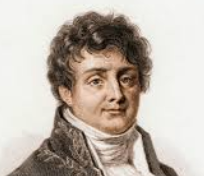
4 months 4 weeks ago
If all the strata of air of... the atmosphere... preserved their density with their transparency, and lost only the mobility... peculiar to them, this mass of air, thus become solid, on being exposed to the rays of the sun, would produce an effect the same in kind... as just described.
4 months 4 weeks ago
Modern man, seeking a middle position in the evaluation of sense impression and thought, can, following Plato, interpret the process of understanding nature as a correspondence, that is, a coming into congruence of pre-existing images of the human psyche with external objects and their behaviour. Modern man, of course, unlike Plato, looks on the pre-existent original images also as not invariable, but as relative to the development of a conscious point of view, so that the word "dialectic" which Plato is fond of using may be applied to the process of development of human knowledge.
▼
Source
Wolfgang Pauli, [http://books.google.com/books?id=ueTd4g7pc5MC Writings on Physics and Philosophy] (1994) 16. "Science and Western Thought" p. 142
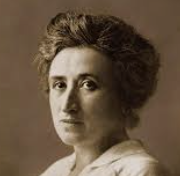
4 months 4 weeks ago
Every legal constitution is the product of a revolution. In the history of classes, revolution is the act of political creation, while legislation is the political expression of the life of a society that has already come into being. Work for reform does not contain its own force independent from revolution. During every historic period, work for reforms is carried on only in the direction given to it by the impetus of the last revolution and continues as long as the impulsion from the last revolution continues to make itself felt. Or, to put it more concretely, in each historic period work for reforms is carried on only in the framework of the social form created by the last revolution. Here is the kernel of the problem.
▼
Source
Ch. 8
4 months 4 weeks ago
Only those moments count when the desire to remain by yourself is so powerful that you'd prefer to blow your brains out than to exchange a word with someone.
4 months 4 weeks ago
Whatsoever is not beaverish seems to go forth in the shape of talk. To such length is human intellect wasted or suppressed in this world!
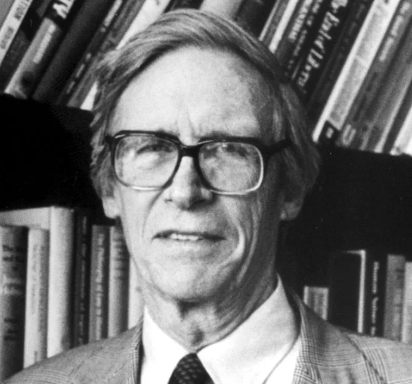
4 months 4 weeks ago
We may suppose that everyone has in himself the whole form of a moral conception.
▼
Source
Chapter I, Section 9, pg. 50
4 months 4 weeks ago
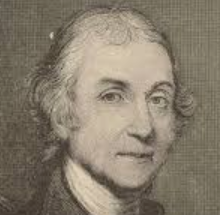
As the greatest things often take their rise from the smallest beginnings, so the worst things sometimes proceed from good intentions. This was certainly the case with respect to the origin of Christian Idolatry. All the early heresies arose from men who wished well to the gospel, and who meant to recommend it to the Heathens, and especially to philosophers among them, whose prejudices they found great difficulty in conquering. Now we learn from the writings of the apostles themselves, as well as from the testimony of later writers, that the circumstance at which mankind in general, and especially the more philosophical part of them, stumbled the most, was the doctrine of a crucified Saviour. They could not submit to become the disciples of a man who had been exposed upon a cross, like the vilest malefactor. Of this objection to Christianity we find traces in all the early writers, who wrote in defence of the gospel against the unbelievers of their age, to the time of Lactantius; and probably it may be found much later. He says, "I know that many fly from the truth out of their abhorrence of the cross." We, who only learn from history that crucifixion was a kind of death to which slaves and the vilest of malefactors were exposed, can but very imperfectly enter into their prejudices, so as to feel what they must have done with respect to it. … Though this circumstance was "unto the Jews a stumbling-block, and unto the Greeks foolishness," it was to others "the power of God and the wisdom of God." 1 Cor. i. 23, 24. For this circumstance at which they cavilled, was that in which the wisdom of God was most conspicuous; the death and resurrection of a man, in all respects like themselves, being better calculated to give other men an assurance of their own resurrection, than that of any super-angelic being, the laws of whose nature they might think to be very different from those of their own. But, "since by man came death, so by man came also the resurrection of the dead." Later Christians, however, and especially those who were themselves attached to the principles of either the Oriental or the Greek philosophy, unhappily took another method of removing this obstacle; and instead of explaining the wisdom of the divine dispensations in the appointment of a man, a person in all respects like unto his brethren, for the redemption of men, and of his dying in the most public and indisputable manner, as a foundation for the clearest proof of a real resurrection, and also of a painful and ignominious death, as an example to his followers who might be exposed to the same … they began to raise the dignity of the person of Christ, that it might appear less disgraceful to be ranked amongst his disciples.
▼
Source
Part I : The History of Opinions Relating to Jesus Christ,
4 months 4 weeks ago
Historically, the errors committed by a truly revolutionary movement are infinitely more fruitful than the infallibility of the cleverest Central Committee.
CivilSimian.com created by AxiomaticPanic, CivilSimian, Kalokagathia