

4 months 4 weeks ago
To have committed every crime but that of being a father.

4 months 4 weeks ago
Complete, at the same time, was his confidence in his own judgment when it spoke to him decisively. He was one of those few that could believe and know as well as inquire and be of opinion. When I remember how much he admired intellectual force, how much he had of it himself, and yet how unconsciously and contentedly he gave others credit for superiority, I again see the healthy spirit of the genuine man.
4 months 4 weeks ago
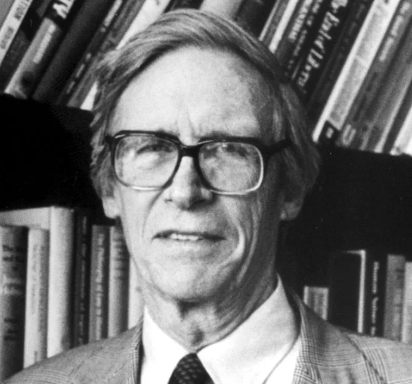
Justice does not require that men must stand idly by while others destroy the basis of their existence.
▼
Source
Chapter IV, Section 35, p. 218
4 months 4 weeks ago
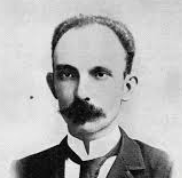
The spirit of a government must be that of the country. The form of a government must come from the makeup of the country. Government is nothing but the balance of the natural elements of a country.
▼
Source
Our America (1891)
4 months 4 weeks ago
This book founds a doctrine which is effectively post-Cartesian, or even post-Lacanian, a doctrine of what, for thought, both un-binds the Heidegerean connection between being and truth and institutes the subject, not as support or origin, but as fragment of the process of a truth.
▼
Source
Introduction
4 months 4 weeks ago
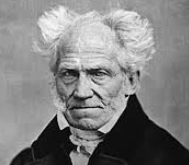
That books do not take the place of experience, and that learning is no substitute for genius, are two kindred phenomena; their common ground is that the abstract can never take the place of the perceptive.
▼
Source
E. Payne, trans., Vol. II, Ch. 7, p. 74
4 months 4 weeks ago
The feeling of being ten thousand years behind, or ahead, of the others, of belonging to the beginnings or to the end of humanity...
4 months 4 weeks ago
I have recently been reading Thomas Carlyle's book on Frederick the Great. This biography is extraordinarily instructive and uplifting. Carlyle is an ardent admirer of Frederick the Great and the picture he draws of his life is that of an heroic epic.
▼
Source
Joseph Goebbels, diary entry (23 March 1945), quoted in Joseph Goebbels, Final Entries 1945: The Diaries of Joseph Goebbels, edited by Hugh Trevor-Roper and translated by Richard Barry (1978), p. 215
4 months 4 weeks ago
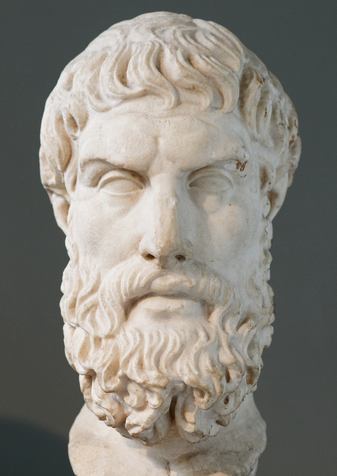
We must consider both the ultimate end and all clear sensory evidence, to which we refer our opinions; for otherwise everything will be full of uncertainty and confusion.
4 months 4 weeks ago
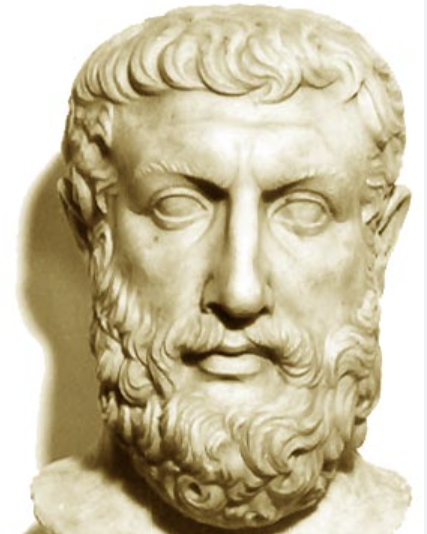
The position of Parmenides is unique because it is also the point of greatest contact with the East.[...] Parmenides' radical solution is this: becoming no longer threatens, it cannot be harmful because it does not exist. [...] Everything that is distressing, terrible and horrendous in the world is illusion; this is the meaning of Parmenides' “'doxa”'. Well, this is also the path taken by the East: the “”Vedas“”, the “”Upanishads“”, the Buddhist revival of Brahmanism are all great themes that converge on this point: man is unhappy because he does not know he is happy, because he does not know that pain is outside him, and that he is a pure gaze that is not contaminated by the pain that passes before him, just as the mirror is not contaminated by the image reflected in it.
4 months 4 weeks ago
It is not the form of things that must be attended to but their spirit. The real is what matters, not the apparent. In politics, reality is that which is unseen. Politics is the art of combining a nation’s diverse or opposing factors to the benefit of its domestic well-being, and of saving the country from the open enmity or covetous friendship of other nations.

4 months 4 weeks ago
Together with the histories of Polybius and Livy, Cicero’s polemical speeches and writings, and his personal correspondence, form some of the most important historical resources for understanding the Roman legal and political system. Here we focus only on his political theory narrowly construed, part of his program to adapt Greek philosophy to Roman social and political purposes, bypassing even the extended defense of the role of oratory in political life that became something like a handbook for the study of rhetoric.
4 months 4 weeks ago
An unbiased reader, on opening one of their [Fichte’s, Schelling’s or Hegel’s] books and then asking himself whether this is the tone of a thinker wanting to instruct or that of a charlatan wanting to impress, cannot be five minutes in any doubt. … The tone of calm investigation, which had characterized all previous philosophy, is exchanged for that of unshakeable certainty, such as is peculiar to charlatanry of every kind and at all times. … From every page and every line, there speaks an endeavor to beguile and deceive the reader, first by producing an effect to dumbfound him, then by incomprehensible phrases and even sheer nonsense to stun and stupefy him, and again by audacity of assertion to puzzle him, in short, to throw dust in his eyes and mystify him as much as possible.
▼
Source
E. Payne, trans. (1974) Vol. 1, p. 23
4 months 4 weeks ago
When I happen to be busy, I never give a moment's thought to the "meaning" of anything, particularly of whatever it is I am doing. A proof that the secret of everything is in action and not abstention, that fatal cause of consciousness.
4 months 4 weeks ago
As nothing ought to be dearer to a philosopher than truth, he should, pursue it by the most direct means, devising no actions himself, nor suffering himself to be imposed upon by the fictions of others, neither poets, orators, nor logicians, making no other use of the rules of rhetoric or grammar, than to enable him to speak or write with accuracy and perspicuity, and always preferring a plain and simple to an ornamented style. Whilst some doubt of everything, and others profess to acknowledge everything, a wise man will embrace such tenets, and only such as are built upon experience, or upon certain and indisputable axioms.
▼
Source
Laertius, quoted in [https://www.gutenberg.org/cache/epub/30200/pg30200-images.html#link2H_4_0015 Ancient and Modern Celebrated Freethinkers (Half-Hours with the Freethinkers)] by Charles Bradlaugh, A. Collins, and J. Watts (1877)
4 months 4 weeks ago
A genuine man goes to the roots. To be a radical is no more than that: to go to the roots. He who does not see things in their depth should not call himself a radical.
4 months 4 weeks ago
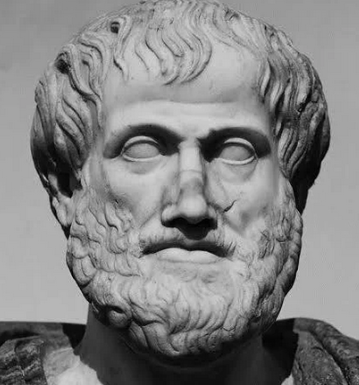
Fortune... and chance, are said to be in the number of causes... With some it is dubious whether these things have subsistence or not. For, say they, nothing is produced from fortune, but there is a definite cause of all such things... For if fortune were any thing, it would truly appear to be absurd; and some one might doubt why no one of the ancient wise men, when assigning the causes of generation and corruption, has ever defined any thing concerning fortune. ...Many things are produced, and have a subsistence, from fortune and chance... They did not, however, think that fortune was any thing belonging to friendship or strife, or fire, or intellect, or any thing else of things of this kind. They are chargeable, therefore, with absurdity, whether they did not conceive that it had a substance, or whether fancying that it had, they omitted it; especially since it was sometimes employed by them. Thus Empedocles says that the air...Thus it then chanc'd to run, tho' varying oft.He also says that the greater part of... animals were generated by fortune. But there are some who assign chance to the cause of this heaven, and of all mundane natures... We must consider... whether chance or fortune are the same... or different from each other, and how they fall into definite causes.
▼
Source
Book II, Ch. IV, pp. 113-115.
4 months 4 weeks ago
Religion always poses a problem for capitalism because, by saying that some things are sacred, it insists that not everything is saleable.
▼
Source
p. 85
4 months 4 weeks ago
Great minds are related to the brief span of time during which they live as great buildings are to a little square in which they stand: you cannot see them in all their magnitude because you are standing too close to them.
▼
Source
Vol. 2, Ch. 20, § 242
4 months 4 weeks ago
Erosion of our being by our infirmities: the resulting void is filled by the presence of consciousness, what am I saying? — that void is consciousness itself.
4 months 4 weeks ago
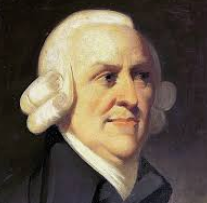
When the happiness or misery of others depends in any respect upon our conduct, we dare not, as self–love might suggest to us, prefer the interest of one to that of many. The man within immediately calls to us, that we value ourselves too much and other people too little, and that, by doing so, we render ourselves the proper object of the contempt and indignation of our brethren. Neither is this sentiment confined to men of extraordinary magnanimity and virtue. It is deeply impressed upon every tolerably good soldier, who feels that he would become the scorn of his companions, if he could be supposed capable of shrinking from danger, or of hesitating, either to expose or to throw away his life, when the good of the service required it.
▼
Source
Chap. III.
4 months 4 weeks ago
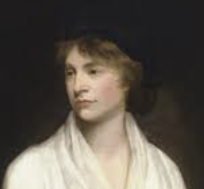
Should it be proved that woman is naturally weaker than man, from whence does it follow that it is natural for her to labour to become still weaker than nature intended her to be? Arguments of this cast are an insult to common sense, and savour of passion. The divine right of husbands, like the divine right of kings, may, it is to be hoped, in this enlightened age, be contested without danger, and though conviction may not silence many boisterous disputants, yet, when any prevailing prejudice is attacked, the wise will consider, and leave the narrow-minded to rail with thoughtless vehemence at innovation.
▼
Source
Ch. 3
4 months 4 weeks ago
These three classes of problems—determination of significant fact, matching of facts with theory, and articulation of theory—exhaust, I think, the literature of normal science, both empirical and theoretical. They do not, of course, quite exhaust the entire literature of science. There are also extraordinary problems, and it may well be their resolution that makes the scientific enterprise as a whole so particularly worthwhile. But extraordinary problems are not to be had for the asking. They emerge only on special occasions prepared by the advance of normal research.
▼
Source
p. 34 (2012 ed.)

4 months 4 weeks ago
If you want to understand the beliefs that are shaping global politics, read the Book of Revelation.
▼
Source
[http://www.guardian.co.uk/books/2006/oct/28/politics Review: Sacred Causes] by Michael Burleigh (2006-10-28)
4 months 4 weeks ago
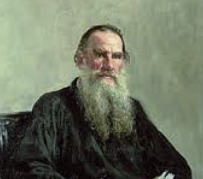
I know that my unity with all people cannot be destroyed by national boundaries and government orders.
▼
Source
My Religion (1884), as translated in The Human Experience : Contemporary American and Soviet Fiction and Poetry (1989) by the Quaker US/USSR Committee
4 months 4 weeks ago
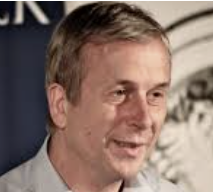
A person's brain and body do not have to be in the same place.
▼
Source
talking about the use of neural implants in Kevin Warwick "Human Enhancement - The Way Ahead", ACM Ubiquity, October 2014.
4 months 4 weeks ago
Every art, and every system, and in like manner every action and purpose aims, it is thought, at some good; for which reason a common and by no means a bad description of the good is, ‘that at which all things aim.’
▼
Source
(Bk I, Ch I)

4 months 4 weeks ago
The colonization of the Southern economy by capitalists from the North gave lynching its most vigorous impulse. If Black people, by means of terror and violence, could remain the most brutally exploited group within the swelling ranks of the working class, the capitalists could enjoy a double advantage. Extra profits would result from the superexploitation of Black labor, and white workers’ hostilities toward their employers would be defused. White workers who assented to lynching necessarily assumed a posture of racial solidarity with the white men who were really their oppressors. This was a critical moment in the popularization of racist ideology.
4 months 4 weeks ago
In early youth, as we contemplate our coming life, we are like children in a theatre before the curtain is raised, sitting there in high spirits and eagerly waiting for the play to begin. It is a blessing that we do not know what is really going to happen. Could we foresee it, there are times when children might seem like innocent prisoners, condemned, not to death, but to life, and as yet all unconscious of what their sentence means.
▼
Source
"On the Sufferings of the World"
4 months 4 weeks ago
Man is fulfilled only when he ceases to be man.
4 months 4 weeks ago
Secrets in manufactures are capable of being longer kept than secrets in trade.
▼
Source
Chapter VII, p. 72.
4 months 4 weeks ago
She strove to reconcile integrity and sexual desire, the duties and needs of women, motherhood and intellectual life, domesticity and fame.
▼
Source
Janet Todd in Mary Wollstonecraft : A Revolutionary Life (2000)

4 months 4 weeks ago
We speak of the matter [of this science] in the sense of its being what the science is about. This is called by some the subject of the science, but more properly it should be called its object, just as we say of a virtue that what it is about is its object, not its subject. As for the object of the science in this sense, we have indicated above that this science is about the transcendentals. And it was shown to be about the highest causes. But there are various opinions about which of these ought to be considered its proper object or subject. Therefore, we inquire about the first. Is the proper subject of metaphysics being as being, as Avicenna claims, or God and the Intelligences, as the Commentator, Averroes, assumes.
▼
Source
Duns Scotus (1266–1308) Quaestiones subtilissimae de metaphysicam Aristotelis, as translated in: William A. Frank, Allan Bernard Wolter (1995) Duns Scotus, metaphysician. p. 20-21
4 months 4 weeks ago
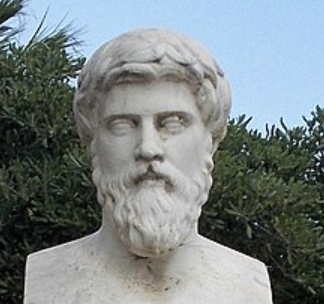
When Darius offered him ten thousand talents, and to divide Asia equally with him, "I would accept it," said Parmenio, "were I Alexander." "And so truly would I," said Alexander, "if I were Parmenio." But he answered Darius that the earth could not bear two suns, nor Asia two kings.
▼
Source
42 Alexander
4 months 4 weeks ago
The idea of a law of progress, or of an all but irresistible tendency to general improvement, is then merely a superstition, one of the tents of the modernist pseudo-religion of humanism. Even if such a law or tendency existed and were demonstrable, the liberal faith in progress would for Santayana be pernicious. For it leads to a corrupt habit of mind in which things are valued, not for their present excellence or perfection, but instrumentally, as leading to something better; and it insinuates into thought and feeling a sort of historical theodicy, in which past evil is justified as a means to present or future good. The idea of progress embodies a kind of time-worship (to adopt an expression used by Wyndham Lewis) in which the particularities of our world are seen and valued, not in themselves, but for what they might perhaps become, thereby leaving us destitute of the sense of the present and, at the same time, of the perspective of eternity.
▼
Source
'Santayana's Alternative' (p.67-8)
4 months 4 weeks ago
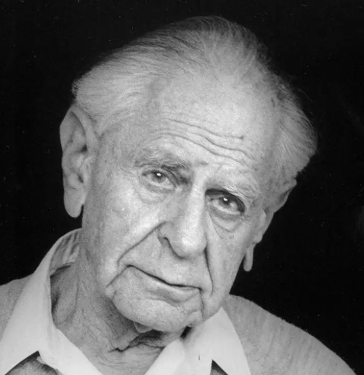
Science does not rest upon solid bedrock. The bold structure of its theories arises, as it were, above a swamp. It is like a building erected on piles. The piles are driven down from above into the swamp, but not down to any natural or 'given' base; and if we stop driving the piles deeper, it is not because we have reached firm ground. We simply stop when we are satisfied that the piles are firm enough to carry the structure, at least for the time being.
▼
Source
Ch. 5 "The Problem of the Empirical Basis", Section 30: Theory and Experiment, p. 94.
4 months 4 weeks ago
Well, Prince, so Genoa and Lucca are now just family estates of the Buonapartes. But I warn you, if you don't tell me that this means war, if you still try to defend the infamies and horrors perpetrated by that Antichrist—I really believe he is Antichrist—I will have nothing more to do with you and you are no longer my friend, no longer my 'faithful slave,' as you call yourself! But how do you do? I see I have frightened you—sit down and tell me all the news.
▼
Source
Bk. I, Ch. I
4 months 4 weeks ago
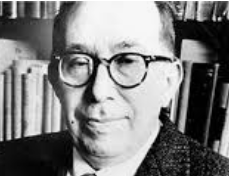
The character, or tone, of a society depends on what the society regards as the most respectable or most worthy of admiration. But by regarding certain habits or attitudes as most respectable, a society admits the superiority, the superior dignity, of those human beings who most perfectly embody the habits or attitudes in question. That is to say, every society regards a specific human type (or a specific mixture of human types) as authoritative. When the authoritative type is the common man, everything has to justify itself before the tribunal of the common man; everything which cannot be justified before that tribunal becomes, at best, merely tolerated, if not despised or suspect. And even those who do not recognize that tribunal are, willy-nilly, molded by its verdicts.
▼
Source
p. 137
4 months 4 weeks ago
The vices respectively fall short of or exceed what is right in both passions and actions, while virtue both finds and chooses that which is intermediate.
▼
Source
Book II, 1107a.4 | Variant: Some vices miss what is right because they are deficient, others because they are excessive, in feelings or in actions, while virtue finds and chooses the mean.

4 months 4 weeks ago
I am not blind to the worth of the wonderful gift of "Leaves of Grass." I find it the most extraordinary piece of wit and wisdom that America has yet contributed. I am very happy in reading it, as great power makes us happy. It meets the demand I am always making of what seemed the sterile and stingy nature, as if too much handiwork, or too much lymph in the temperament, were making our western wits fat and mean. I give you joy of your free and brave thought. I have great joy in it. I find incomparable things said incomparably well, as they must be. I find the courage of treatment which so delights us, and which large perception only can inspire. I greet you at the beginning of a great career, which yet must have had a long foreground somewhere, for such a start. I rubbed my eyes a little, to see if this sunbeam were no illusion; but the solid sense of the book is a sober certainty. It has the best merits, namely, of fortifying and encouraging...
▼
Source
Letter to Walt Whitman, thanking him for a copy of Leaves of Grass (July 21, 1855)
4 months 4 weeks ago
Private prisons are direct sources of profit for the companies that run them, but public prisons have become so thoroughly saturated with the profit-producing products and services of private corporations that the distinction is not as meaningful as one might suspect.
▼
Source
Chapter Five
4 months 4 weeks ago
Keats, entirely a stranger to error, could believe that the nightingale enchanting him was the same one Ruth heard amid the alien corn of Bethlehem in Judah; Stevenson posits a single bird that consumes the centuries: "the nightingale that devours time." Schopenhauer — impassioned, lucid Schopenhauer — provides a reason: the pure corporeal immediacy in which animals live, oblivious to death and memory. He then adds, not without a smile: Whoever hears me assert that the grey cat playing just now in the yard is the same one that did jumps and tricks there five hundred years ago will think whatever he likes of me, but it is a stranger form of madness to imagine that the present-day cat is fundamentally an entirely different one.
▼
Source
Jorge Luis Borges in "A History of Eternity" as translated in Selected Non-Fictions Vol. 1, (1999), edited by Eliot Weinberger
4 months 4 weeks ago
The surest means of not losing your mind on the spot: remembering that everything is unreal, and will remain so...
4 months 4 weeks ago
Thus the labour of a manufacture adds, generally, to the value of the materials which he works upon, that of his own maintenance, and of his masters profits. The labour of a menial servant, on the contrary, adds to the value of nothing.
▼
Source
Chapter III, p. 364 (see Proverbs 14-23 KJV).
4 months 4 weeks ago
There exists, I grant you, a clinical depression, upon which certain remedies occasionally have effect; but there exists another kind, a melancholy underlying our very outbursts of gaiety and accompanying us everywhere, without leaving us alone for a single moment. And there is nothing that can rid us of this lethal omnipresence: the self forever confronting itself.
4 months 4 weeks ago
When the profits of trade happen to be greater than ordinary, over-trading becomes a general error both among great and small dealers.
▼
Source
Chapter I, p. 469.
4 months 4 weeks ago
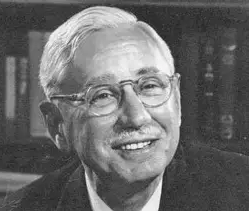
The invention and spread of contraceptives is the proximate cause of our changing morals. The old moral code restricted sexual experience to marriage, because copulation could not be effectively separated from parentage, and parentage could be made responsible only through marriage. But to-day the dissociation of sex from reproduction has created a situation unforeseen by our fathers. All the relations of men and women are being changed by this one factor; and the moral code of the future will have to take account of these new facilities which invention has placed at the service of ancient desires.
▼
Source
Our Changing Morals, in The Mansions of Philosophy: A Survey of Human Life and Destiny (1929), Ch. 5. p. 119
4 months 4 weeks ago
[Plutarch's Lives are] crowded with very wise maxims and rules of life.
▼
Source
David Chytraeus in the anthology Artis Historicae Penus (Basel, 1579), II, 477, quoted in Peter Burke, 'A Survey of the Popularity of Ancient Historians, 1450–1700', History and Theory, Vol. 5, No. 2 (1966), p. 142
4 months 4 weeks ago
In Leopardi’s view, the universal claims of Christianity were a licence for universal savagery. Because it is directed to all of humanity, the Christian religion is usually praised, even by its critics, as an advance on Judaism. Leopardi – like Freud a hundred years later – did not share this view. The crimes of medieval Christendom were worse than those of antiquity, he believed, precisely because they could be defended as applying universal principles: the villainy introduced into the world by Christianity was ‘entirely new and more terrible … more horrible and more barbarous than that of antiquity’. Modern rationalism renews the central error of Christianity – the claim to have revealed the good life for all of humankind. Leopardi described the secular creeds that emerged in modern times as expressions of ‘half-philosophy’, a type of thinking with many of the defects of religion. What Leopardi called ‘the barbarism of reason’ – the project of remaking the world on a more rational model – was the militant evangelism of Christianity in a more dangerous form. Events have confirmed Leopardi’s diagnosis. As Christianity has waned, the intolerance it bequeathed to the world has only grown more destructive. From imperialism through communism and incessant wars launched to promote democracy and human rights, the most barbarous forms of violence have been promoted as means to a higher civilization.
▼
Source
The Faith of Puppets: Leopardi and the Souls of Machines (p.32-3)
4 months 4 weeks ago
He penetrated into the whole universe of things, and subjected its scattered wealth to intelligence; and to him the greater number of the philosophical sciences owe their origin and distinction.
▼
Source
Georg Wilhelm Friedrich Hegel, Vorlesungen über die Gesch. der Philos. (1833) II. 298, as quoted in Aristotle: a Chapter from the History of Science by George Henry Lewes
CivilSimian.com created by AxiomaticPanic, CivilSimian, Kalokagathia