
4 months 3 weeks ago
The peripatetics look on God as they do on carpenters, who build with stone and timber, without any infusion of life. But the world which is God's building is full of spirit, quick and living.
4 months 3 weeks ago
I have that honour for him as to believe that he wrote good sense; and therefore take that sense to be his which is the best.
▼
Source
Speaking of the apostle John's writings. Cited in The Watchtower magazine, 1977, 4/15.
4 months 3 weeks ago
The managers will exercise their control over the instruments of production and gain preference in the distribution of the products, not directly, through property rights vested in them as individuals, but indirectly, through their control of the state which in turn will own and control the instruments of production. The state – that is, the institutions which comprise the state – will if we wish to put it that way, be the “property” of the managers’.
▼
Source
p. 71–72; As cited in: Stijn Maria Verhagen (2005). Zorglogica’s uit balans. p. 300
4 months 3 weeks ago
The universal intelligence puts itself in motion for every separate effect... or it puts itself in motion once, and everything else comes by way of a sequence in a manner; or individual elements are the origin of all things. In a word, if there is a god, all is well; and if chance rules, do not thou be governed by it.
▼
Source
IX, 28

4 months 3 weeks ago
I don't need any support, advice, or compassion, because even if I am the most ruinous man, I still feel so powerful, so strong and fierce. For I am the only one that lives without hope.

4 months 3 weeks ago
The work we desire and prize is not the courage to die decently, but to live manfully.
4 months 3 weeks ago
He realized now that to be afraid of this death he was staring at with animal terror meant to be afraid of life. Fear of dying justified a limitless attachment to what is alive in man. And all those who had not made the gestures necessary to live their lives, all those who feared and exalted impotence — they were afraid of death because of the sanction it gave to a life in which they had not been involved. They had not lived enough, never having lived at all.
4 months 3 weeks ago
Magic is nothing but the wisdom of the Creator revealed and planted in the creature. It is a name — as Agrippa saith — "not distasteful to the very Gospel itself."
4 months 3 weeks ago
All kinds of music are not suited to praise God and to be heard in the sanctuary; all methods of philosophy are not fit for discoursing worthily of God, His power, the principles of His operations, and His mysteries.
▼
Source
Of Freethinkers (23)
4 months 3 weeks ago
Only to the rational animal is it given to follow voluntarily what happens; but simply to follow is a necessity imposed on all.
▼
Source
X, 28
4 months 3 weeks ago
Can it really be that for us existence means exile, and nothingness, home?
4 months 3 weeks ago
Where this will end? In the Abyss, one may prophecy; whither all Delusions are, at all moments, travelling; where this Delusion has now arrived. For if there be a Faith, from of old, it is this, as we often repeat, that no Lie can live for ever. The very Truth has to change its vesture, from time to time; and be born again. But all Lies have sentence of death written down against them, and Heaven's Chancery itself; and, slowly or fast, advance incessantly towards their hour.
▼
Source
Pt. I, Bk. VI, ch. 3.
4 months 3 weeks ago
At this point of his effort man stands face to face with the irrational. He feels within him his longing for happiness and for reason. The absurd is born of this confrontation between the human need and the unreasonable silence of the world. This must not be forgotten. This must be clung to because the whole consequence of a life can depend on it. The irrational, the human nostalgia, and the absurd that is born of their encounter — these are the three characters in the drama that must necessarily end with all the logic of which an existence is capable.
4 months 3 weeks ago
The secret of happiness is freedom and the secret of freedom is courage.
▼
Source
Book II, 2.43
4 months 3 weeks ago
Shortly after 9/11 a French spokesman for the activist group ATTAC quoted the adage: "He who sows the wind shall reap the whirlwind." French prime minister Lionel Jospin seemed to be pointing in this direction when he asked, "What lesson are the Americans going to draw from what has happened?" The lesson, Jospin indicated, should be for the U.S. to moderate her unilateralism. For Cardinal Karl Lehmann, president of the German Bishops' Conference, the lesson to be drawn from terrorism was that "the West must not seek to dominate the rest of the world."
4 months 3 weeks ago
Whoever desires to live among men has to obey their laws—this is what the secular morality of Western civilization comes down to. … Rationality in the form of such obedience swallows up everything, even the freedom to think.
▼
Source
p. 29.
4 months 3 weeks ago
Know the joy of life by piling good deed on good deed until no rift or cranny appears between them.
▼
Source
τί λοιπὸν ἢ ἀπολαύειν τοῦ ζῆν συνάπτοντα ἄλλο ἐπ ἄλλῳ ἀγαθόν, ὥστε μηδὲ τὸ βραχύτατον διάστημα ἀπολείπειν; | XII, 29
4 months 3 weeks ago
Fools admire everything in an author of reputation.
4 months 3 weeks ago
If truth were not boring, science would have done away with God long ago. But God as well as the saints is a means to escape the dull banality of truth.
4 months 3 weeks ago
By... confounding the properties of matter with those of space he arrives at the logical conclusion, that if the matter within a vessel could be entirely removed the space within the vessel would no longer exist. In fact he assumes that all space must be always full of matter.
▼
Source
James Clerk Maxwell, Matter and Motion (1876)
4 months 3 weeks ago
We call that fire of the black thunder-cloud "electricity," and lecture learnedly about it, and grind the like of it out of glass and silk: but what is it? What made it? Whence comes it? Whither goes it? Science has done much for us; but it is a poor science that would hide from us the great deep sacred infinitude of Nescience, whither we can never penetrate, on which all science swims as a mere superficial film. This world, after all our science and sciences, is still a miracle; wonderful, inscrutable, magical and more, to whosoever will think of it.
4 months 3 weeks ago
The absurd man says yes and his effort will henceforth be unceasing.
4 months 3 weeks ago
As for democracy, the men of sense among us knew what it was, and I perhaps as well as any, as I have more cause to complain of it; but there is nothing new to be said of a patent absurdity-meanwhile we did not think it safe to alter it under the pressure of your hostility.
▼
Source
Book VI, 6.89-[6]
4 months 3 weeks ago
Too much gravity argues a shallow mind.
▼
Source
No. 183
4 months 3 weeks ago
We cannot credit our enjoyment of a flower or of the atmosphere of a room to an autonomous esthetic instinct. Man’s esthetic responsiveness relates in its prehistory to various forms of idolatry; his belief in the goodness or sacredness of a thing precedes his enjoyment of its beauty. The applies no less to such concepts as freedom and humanity.
▼
Source
p. 36.
4 months 3 weeks ago
When you wake up in the morning, tell yourself: The people I deal with today will be meddling, ungrateful, arrogant, dishonest, jealous, and surly. They are like this because they can't tell good from evil. But I have seen the beauty of good, and the ugliness of evil, and have recognized that the wrongdoer has a nature related to my own—not of the same blood or birth, but the same mind, and possessing a share of the divine.
▼
Source
II. 1, trans. Gregory Hays
4 months 3 weeks ago
Pleasure has its time; so, too, has wisdom. Make love in thy youth, and in old age, attend to thy salvation.
▼
Source
p. 50
4 months 3 weeks ago
Ideas should be neutral. But man animates them with his passions and folly. Impure and turned into beliefs, they take on the appearance of reality. The passage from logic is consummated. Thus are born ideologies, doctrines, and bloody farce.
4 months 3 weeks ago
It was a rude gross error, that of counting the Great Man a god. Yet let us say that it is at all times difficult to know what he is, or how to account of him and receive him!
4 months 3 weeks ago
Every ideology is contrary to human psychology.
4 months 3 weeks ago
Not only may particular decisions made according to rules result in material injustice, but a rule may systematically discriminate against the poor and the oppressed. In such circumstances, to be committed to applying the rules, however fairly or impartially administered, come what may, is to ignore the more obvious and direct demands of justice and human welfare.
▼
Source
The Left and Rights (Routledge: 1983), p. [http://books.google.com/books?id=9kPnuG9ufDgC&pg=RA1-PT18 18]
4 months 3 weeks ago
The existence of a law is one thing, its merits or demerits is are another thing. Whether a law be, is one inquiry; whether it ought to be o whether it agree with a given or assumed test, is another and a distinct inquiry.
▼
Source
p. 278 | Variant: The existence of law is one thing; its merit or demerit is another. Whether it be or be not is one enquiry; whether it be or be not conformable to an assumed standard, is a different enquiry. A law, which actually exists, is a law, thoug
4 months 3 weeks ago
Why do we dream in our sleep if we have no soul? and, if we have one, how is it that dreams are so incoherent and extravagant?
▼
Source
p. 162
4 months 3 weeks ago
Anyone who speaks in the name of others is always an impostor.
4 months 3 weeks ago
Or indeed we may say again, it is in what I called Portrait-painting, delineating of men and things, especially of men, that Shakspeare is great. All the greatness of the man comes out decisively here. It is unexampled, I think, that calm creative perspicacity of Shakspeare. The thing he looks at reveals not this or that face of it, but its inmost heart and generic secret: it dissolves itself as in light before him, so that he discerns the perfect structure of it. Creative, we said: poetic creation, what is this too but seeing the thing sufficiently? The word that will describe the thing, follows of itself from such clear intense sight of the thing. And is not Shakspeare's morality, his valour, candour, tolerance, truthfulness; his whole victorious strength and greatness, which can triumph over such obstructions, visible there too? Great as the world!
4 months 3 weeks ago
Martyrs must choose between being forgotten, mocked, or made use of. As for being understood—never!
4 months 3 weeks ago
We should always speak what would please the man of whom we expect a favour, like the hunter who sings sweetly when he desires to shoot a deer.
4 months 3 weeks ago
Where the presence of truth should be possible, it can be possible solely under the condition of the recognition of myth—that is, the recognition of its crushing indifference to truth.
▼
Source
p. 326
4 months 3 weeks ago
The sense in which an automatic door "understands instructions" from its photoelectric cell is not at all the sense in which I understand English.
4 months 3 weeks ago
Both in the natural sciences and in sociology direct perception is deceptive, leading to the view that we are confronted with something which is in itself just what it appears to be. This is by no means the case and has long ago been rejected by the physical sciences, and it would be interesting to find out why it is still virtually unchallenged in sociology.
▼
Source
Max Weber and Value-free Sociology: A Marxist Critique (1975), p. 39.
4 months 3 weeks ago
I shall take leave to think the worse, rather of the practice of the men than of the book of God.
▼
Source
"Some Considerations Touching the Style of the Holy Scriptures" (1661) "Seventh Objection", as quoted in Treatises on the High Veneration Man's Intellect Owes to God: on Things Above Reason; and on The Style of the Holy Scriptures (1835) [https://books.go
4 months 3 weeks ago
One hundred years from my day there will not be a Bible in the earth except one that is looked upon by an antiquarian curiosity seeker.
▼
Source
As quoted in Hefley What's so great about the Bible (1969), p. 30 | Variant: "Another century and there will not be a Bible on earth!" | George Sweeting Living in a Dying World (1972), p. 59 | Related: "...only 50 years after his death the Geneva Bible So
4 months 3 weeks ago
Incredible that the prospect of having a biographer has made no one renounce having a life.
4 months 3 weeks ago
It is not easy to fall into any absurdity, unless it be by the length of an account; wherein he may perhaps forget what went before. For all men by nature reason alike, and well, when they have good principles. For who is so stupid as both to mistake in geometry, and also to persist in it, when another detects his error to him? By this it appears that reason is not, as sense and memory, born with us; nor gotten by experience only, as prudence is; but attained by industry: first in apt imposing of names; and secondly by getting a good and orderly method in proceeding from the elements, which are names, to assertions made by connexion of one of them to another; and so to syllogisms, which are the connexions of one assertion to another, till we come to a knowledge of all the consequences of names appertaining to the subject in hand; and that is it, men call science. And whereas sense and memory are but knowledge of fact, which is a thing past and irrevocable, science is the knowledge of consequences, and dependence of one fact upon another; by which, out of that we can presently do, we know how to do something else when we will, or the like, another time: because when we see how anything comes about, upon what causes, and by what manner; when the like causes come into our power, we see how to make it produce the like effects. Children therefore are not endued with reason at all, till they have attained the use of speech, but are called reasonable creatures for the possibility apparent of having the use of reason in time to come.
▼
Source
The First Part, Chapter 5, p. 21 (See also: John Rawls)
4 months 3 weeks ago
Burke said there were Three Estates in Parliament; but, in the Reporter's Gallery yonder, there sat a Fourth Estate more important far than they all.
4 months 3 weeks ago
No less a considerable writer, Camus is a wonderful stylist, certainly an exemplary novelist in many respects. He certainly talks about resistance. But what bothers me is that he is read out of his own context, his own history. Camus's history is that of a colon, a pied noir. He was born and grew up in a place very close to a city in Algeria on the coast, Annaba in Arabic, Bone by the French. It was made over into a French town in the 1880s and 1890s. His family came variously from Corsica and various parts of southern Europe and France. His novels, in my opinion, are really expressions of the colonial predicament. Meursault, in L'Etranger (The Stranger), kills the Arab, to whom Camus gives no name and no history. The whole idea at the end of the novel where Meursault is put on trial is an ideological fiction. No Frenchman was ever put on trial for killing an Arab in colonial Algeria. That's a lie. So he constructs something.Second of all, in his later novel La Peste (The Plague), the people who die in the city are Arabs, but they're not mentioned. The only people who mattered to Camus and to the European reader of the time, and even now, are Europeans. Arabs are there to die. The story, interestingly enough, is always interpreted as a parable or an allegory of the German occupation of France. My reading of Camus, and certainly of his later stories, starts with the fact that he, in the late 1950s, was very much opposed to independence for Algeria. He in fact compared the FLN to Abdel Nasser in Egypt, after Suez, after 1956.
▼
Source
Edward Said, in The Pen and the Sword: Conversations with David Barsamian (1994), pp.73-74
4 months 3 weeks ago
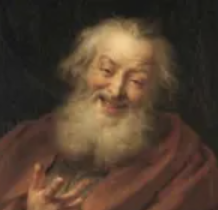
There are two forms of knowledge, one genuine, one obscure. To the obscure belong all of the following: sight, hearing, smell, taste, feeling. The other form is the genuine, and is quite distinct from this. [And then distinguishing the genuine from the obscure, he continues:] Whenever the obscure [way of knowing] has reached the minimum sensibile of hearing, smell, taste, and touch, and when the investigation must be carried farther into that which is still finer, then arises the genuine way of knowing, which has a finer organ of thought.
4 months 3 weeks ago
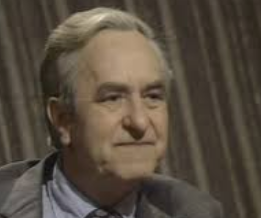
Faith can no more be described to a thoroughly rational mind than the idea of colors can be conveyed to a blind man.
▼
Source
Chapter Five, Christian sources, p. 82
4 months 3 weeks ago
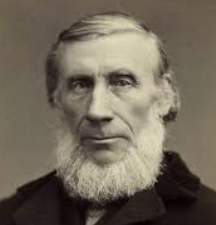
Some years ago I found myself in discussion with a friend who entertained the notion that the general tendency of things in this world is towards equilibrium, the result of which would be peace and blessedness to the human race. My notion, was that equilibrium meant... death. No motive power is to be got from heat, save during its fall from a higher to a lower temperature, as no power is to be got from water save during its descent from a higher to a lower level. Thus also life consists, not in equilibrium, but in the passage towards equilibrium. In man it is the leap from the potential through the actual to repose.
4 months 3 weeks ago
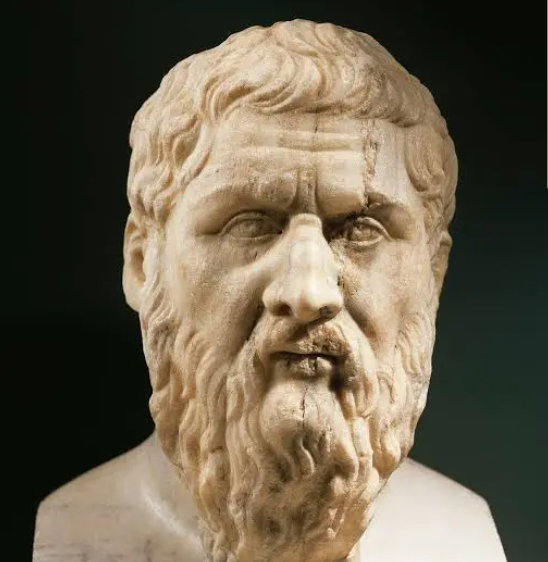
The tyrant has arisen, and the king and oligarchy and aristocracy and democracy, because men are not contented with that one perfect ruler, and do not believe that there could ever be any one worthy of such power or willing and able by ruling with virtue and knowledge to dispense justice and equity rightly to all, but that he will harm and kill and injure any one of us whom he chooses on any occasion, since they admit that if such a man as we describe should really arise, he would be welcomed and would continue to dwell among them, directing to their weal as sole ruler a perfectly right form of government. But, as the case now stands, since, as we claim, no king is produced in our states who is, like the ruler of the bees in their hives, by birth pre-eminently fitted from the beginning in body and mind, we are obliged, as it seems, to follow in the track of the perfect and true form of government by coming together and making written laws.
▼
Source
301c-e
CivilSimian.com created by AxiomaticPanic, CivilSimian, Kalokagathia