

5 months 2 weeks ago
Even at the outset, the total and massive quality has its uniqueness; even when vague and undefined, it is just that which it is and not anything else. If the perception continues, discrimination inevitably sets in. Attention must move, and as it moves, parts, members, emerge from the background. And if attention moves in a unified direction instead of wandering, it is controlled by the pervading qualitative unity; attention is controlled by it because it operates within it.
▼
Source
source
p. 199
3 months 1 week ago
This, evidently was not a minor civilization, produced by inferior people. It ranks with the highest civilizations of history, and some, like Keyserling, would place it at the head and summit of all. The British conquest of India was the invasion and destruction of a high civilization by a trading company utterly without scruple or principle, careless of art, greedy of gain, overrunning with fire and sword a country temporarily disordered and helpless, bribing and murdering, annexing and stealing, and beginning that career of illegal and "legal" plunder which has now gone on ruthlessly for one hundred and seventy-three years, and goes on at this moment while in our secure comfort we write and read. Those who have seen the unspeakable poverty and physiological weakness of the Hindus today will hardly believe that it was the wealth of eighteenth century India which attracted the commercial pirates of England and France.
6 months 2 weeks ago
I believe that there is a necessary connection in both directions between the physical and the mental, but that it cannot be discovered a priori. Opinion is strongly divided on the credibility of some kind of functionalist reductionism, and I won't go through my reasons for being on the antireductionist side of that debate. Despite significant attempts by a number of philosophers to describe the functional manifestations of conscious mental states, I continue to believe that no purely functionalist characterization of a system entails - simply in virtue of our mental concepts - that the system is conscious.
▼
Source
source
"Conceiving the Impossible and the Mind-Body Problem," Royal Institute of Philosophy annual lecture, given in London on February 18, 1998, published in Philosophy vol. 73 no. 285, July 1998, pp 337-352, Cambridge University Press, p. 337.
5 months 2 days ago
In Administrative Behavior, bounded rationality is largely characterized as a residual category - rationality is bounded when it falls short of omniscience. And the failures of omniscience are largely failures of knowing all the alternatives, uncertainty about relevant exogenous events, and inability to calculate consequences. There was needed a more positive and formal characterization of the mechanisms of choice under conditions of bounded rationality... Two concepts are central to the characterization: search and satisficing.
▼
Source
source
p. 502; As cited in Barros (2010, p. 464-5).
7 months 1 week ago
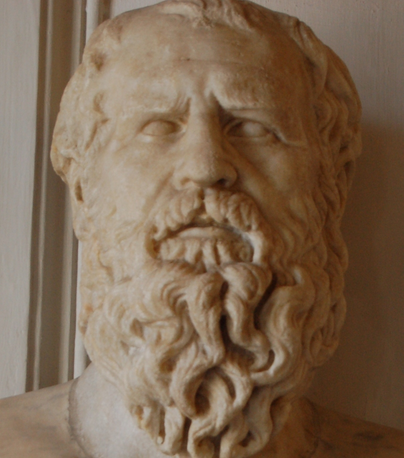
A lifetime is a child playing, playing checkers; the kingdom belongs to a child.



7 months 1 week ago
I will speak in a low voice, just so as to let the judges hear me. For men are not wanting who would be glad to excite that people against me and against every eminent man; and I will not assist them and enable them to do so more easily.
▼
Source
source
Cicero, The Orations of Marcus Tullius Cicero; Translation by C.D. Yonge., 1856.

3 months 2 weeks ago
We are by no means opposed to the globalization of relationships as such-in fact, as we said, the strongest forces of Leftist internationalism have effectively led this process. The enemy, rather, is a specific regime of global relations that we call Empire.
▼
Source
source
45-46

5 months 6 days ago
With Puritanism as the constant check upon American life, neither truth nor sincerity is possible. Nothing but gloom and mediocrity to dictate human conduct, curtail natural expression, and stifle our best impulses.

7 months 3 weeks ago
It is change, continuing change, inevitable change, that is the dominant factor in society today. No sensible decision can be made any longer without taking into account not only the world as it is, but the world as it will be ... This, in turn, means that our statesmen, our businessmen, our everyman must take on a science fictional way of thinking.

5 months 2 weeks ago
Utopia is a mixture of childish rationalism and secularized angelism.

6 months 3 weeks ago
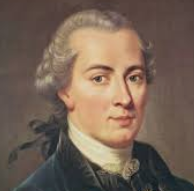
In the natural state no concept of God can arise, and the false one which one makes for himself is harmful. Hence the theory of natural religion can be true only where there is no science; therefore it cannot bind all men together.
▼
Source
source
Part III : Selection on Education from Kant's other Writings, Ch. I Pedagogical Fragments, # 60

3 months 2 weeks ago
Everywhere in life, the true question is not what we gain, but what we do.
▼
Source
source
Essays. Goethe's Helena.
7 months 2 days ago
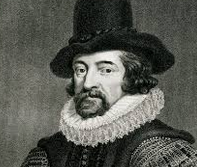
Reading maketh a full man; conference a ready man; and writing an exact man.
▼
Source
source
Of Studies

5 months 1 week ago
And yet there is nothing so badly imagined: nature seems to have provided, that the follies of men should be transient, but they by writing books render them permanent. A fool ought to content himself with having wearied those who lived with him: but he is for tormenting future generations; he is desirous that his folly should triumph over oblivion, which he ought to have enjoyed as well as his grave; he is desirous that posterity should be informed that he lived, and that it should be known for ever that he was a fool. Commonly paraphrased as "An author is a fool who, not content with having bored those who have lived with him, insists on boring future generations".
▼
Source
source
No. 66. (Rica writing to * * *)


7 months 2 weeks ago
I do not want to found anything on the incomprehensible. I want to know whether I can live with what I know and with that alone.

7 months 1 week ago
Whatever you would make habitual, practice it; and if you would not make a thing habitual, do not practice it, but accustom yourself to something else.
▼
Source
source
Book II, ch. 18, 4.
4 months 3 weeks ago
The "tragic flaw" is not a detail of characterization, a mere "fly in the ointment", but a structural feature of ordinary consciousness.
▼
Source
source
(p.45)

6 months 1 week ago
Men have made an idol of luck as an excuse for their own thoughtlessness. Luck seldom measures swords with wisdom. Most things in life quick wit and sharp vision can set right.
5 months 2 weeks ago
The notion that one will not survive a particular catastrophe is, in general terms, a comfort since it is equivalent to abolishing the catastrophe.
▼
Source
source
The Message to the Planet (1989) p. 532.
6 months 3 weeks ago
It is difficult, if not impossible, to define the limit of our reasonable desires in respect of possessions.
▼
Source
source
E. Payne, trans. (1974) Vol. 1, p. 346

4 months ago
The belief that torture is always wrong is a prejudice inherited from an obsolete philosophy. We need to shed the belief that human rights are violated when a terrorist is tortured. As Rawls and others have shown, basic freedoms must form a coherent whole. Self-evidently, there can be no right to attack basic human rights. Therefore, once the proper legal procedures are in place, torturing terrorists cannot violate their rights. In fact, in a truly liberal society, terrorists have an inalienable right to be tortured.This is what demonstrates the moral superiority of liberal societies over others, past and present. Other societies have degraded terrorists by subjecting them to lawless and unaccountable power. In the new world that is taking shape, terrorists, although they themselves degrade human rights by practising terrorism, will be afforded the full dignity of due legal process, even while being tortured.
6 months 2 weeks ago
If we compare the third-person attitude of someone who simply says how things stand (this is the attitude of the scientist, for example) with the performative attitude of someone who tries to understand what is said to him (this is the attitude of the interpreter, for example), the implications ... become clear. ... First, interpreters relinquish superiority that observers have by virtue of their privileged position, in that they themselves are drawn, at least potentially, into negotiations about the meaning and validity of utterances. By taking part in communicative action, they accept in principle the same status as those whose utterances they are trying to understand. ... It is impossible to decide a priori who is to learn from whom.
▼
Source
source
p. 26
5 months 2 weeks ago
There are two kinds of means. One kind is external to that which is accomplished; the other kind is taken up into the consequences and remains immanent in them. There are ends which are merely welcome cessations and there are ends that are fulfillments of what went before. The toil of the laborer is too often an antecedent to the wage he receives, as consumption of gasoline is merely a means to transportation. The means cease to act when the "end" is reached; one would be glad, as a rule, to get the result without having to employ the means. They are but the scaffolding.

6 months 3 weeks ago
Being in love is a good thing, but it is not the best thing. There are many things below it, but there are also things above it. You cannot make it the basis of a whole life. It is a noble feeling, but it is still a feeling... Knowledge can last, principles can last, habits can last; but feelings come and go... But, of course, ceasing to be "in love" need not mean ceasing to love. Love in this second sense-love as distinct from "being in love"-is not merely a feeling. It is a deep unity, maintained by the will and deliberately strengthened by habit; reinforced by (in Christian marriages) the grace which both partners ask, and receive, from God... "Being in love" first moved them to promise fidelity: this quieter love enables them to keep the promise. It is on this love that the engine of marriage is run: being in love was the explosion that started it.
▼
Source
source
Book III, Chapter 6, "Christian Marriage"
5 months 1 week ago
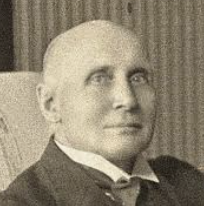
The ideas of Freud were popularized by people who only imperfectly understood them, who were incapable of the great effort required to grasp them in their relationship to larger truths, and who therefore assigned to them a prominence out of all proportion to their true importance.
▼
Source
source
Ch. 28, June 3, 1943.
6 months 2 weeks ago
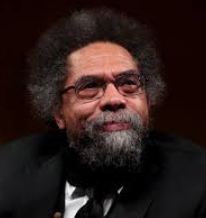
If the only alternative to fascism we produce is a corporate-driven, milquetoast, neoliberal Democratic Party, fascism will come to America. Let us be very clear. It's like a Weimar America.
▼
Source
source
Speaking to Chris Hedges on The Real News Network, Cornel West's presidential candidacy is 'for the least of these'. June 16, 2023.
7 months 3 weeks ago
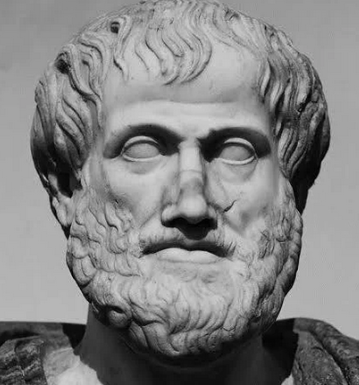
Now men seem, not unreasonably, to form their notions of the supreme good and of happiness from the lives of men.
5 months 1 week ago
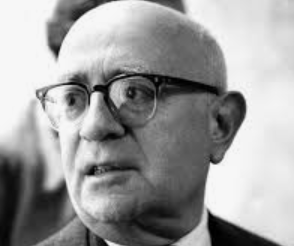
The aim of jazz is the mechanical reproduction of a regressive moment, a castration symbolism. 'Give up your masculinity, let yourself be castrated,' the eunuchlike sound of the jazz band both mocks and proclaims, 'and you will be rewarded, accepted into a fraternity which shares the mystery of impotence with you, a mystery revealed at the moment of the initiation rite.
▼
Source
source
Perennial Fashion - Jazz (1978), Prisms, p. 129, as translated by Samuel Weber and Shierry Weber
4 months 3 weeks ago
To the blind all things are sudden.
▼
Source
source
(p. 41)
5 months 1 week ago
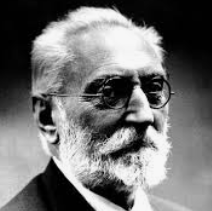
In the root of the word "faith" itself... there is implicit the idea of confidence, of surrender to the will of another, to a person. Confidence is placed only in persons. We trust in Providence, which we perceive as something personal and conscious, not in Fate, which is something impersonal. And thus it is in the person who tells us the truth, in the person that gives us hope, that we believe, not directly or immediately in truth itself or in hope itself.
4 months 1 week ago
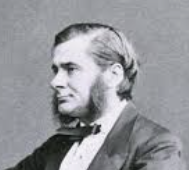
Mr. Darwin's hypothesis is not, so far as I am aware, inconsistent with any known biological fact; on the contrary, if admitted, the facts of Development, of Comparative Anatomy, of Geographical Distribution, and of Palaeontology, become connected together, and exhibit a meaning such as they never possessed before; and I, for one, am fully convinced that if not precisely true, that hypothesis is as near an approximation to the truth as, for example, the Copernican hypothesis was to the true theory of the planetary motions.
▼
Source
source
Ch.2, p. 127
6 months 3 weeks ago
A spurious axiom of the first class is: Whatever is, is somewhere and sometime.

5 months 2 weeks ago
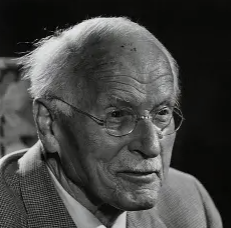
For a woman, the typical danger emanating from the unconscious comes from above, from the "spiritual" sphere personified by the animus, whereas for a man it comes from the chthonic realm of the "world and woman," i.e., the anima projected on to the world.
▼
Source
source
"A Study in the Process of Individuation" (1934) In CW 9, Part I: The Archetypes and the Collective Unconscious. P. 559
6 months 3 weeks ago
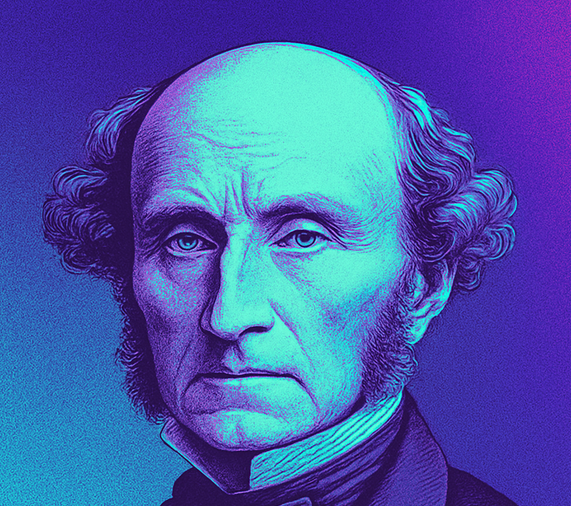
Since the state must necessarily provide subsistence for the criminal poor while undergoing punishment, not to do the same for the poor who have not offended is to give a premium on crime.
▼
Source
source
Book V, Chapter XI, §13
5 months 2 weeks ago
If we would regain our freedom, we must shake off the burden of sensation, no longer react to the world by our senses, break our bonds. For all sensation is a bond, pleasure as much as pain, joy as much as misery. The only free mind is the one that, pure of all intimacy with beings or objects, plies its own vacuity.

5 months 4 weeks ago
When shall we see poets born? After a time of disasters and great misfortunes, when harrowed nations begin to breathe again. And then, shaken by the terror of such spectacles, imaginations will paint things entirely strange to those who have not witnessed them.
3 months 2 days ago
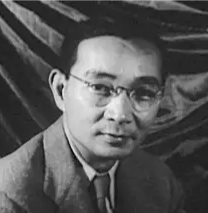
To the West, it seems hardly imaginable that the relationship between man and man (which is morality) could be maintained without reference to a Supreme Being, while to the Chinese it is equally amazing that men should not, or could not, behave toward one another as decent beings without thinking of their indirect relationship through a third party.
▼
Source
source
p. 106

6 months 2 weeks ago
For anyone who at the end of Western philosophy can and must still question philosophically, the decisive question is no longer merely "What basic character do beings manifest?" or "How may the being of beings be characterized?" but "What is this 'being' itself?" The decisive question is that of "the meaning of being," not merely that of the being of beings.
▼
Source
source
p. 18

6 months 3 weeks ago
Do not be too timid and squeamish about your actions. All life is an experiment. The more experiments you make the better.
▼
Source
source
November 11, 1842
5 months 2 weeks ago
The revolution in scientific ideas just mentioned is primarily logical. It is due to recognition that the very method of physical science, with its primary standard units of mass, space, and time, is concerned with measurements of relations of change, not with individuals as such.
7 months 3 weeks ago
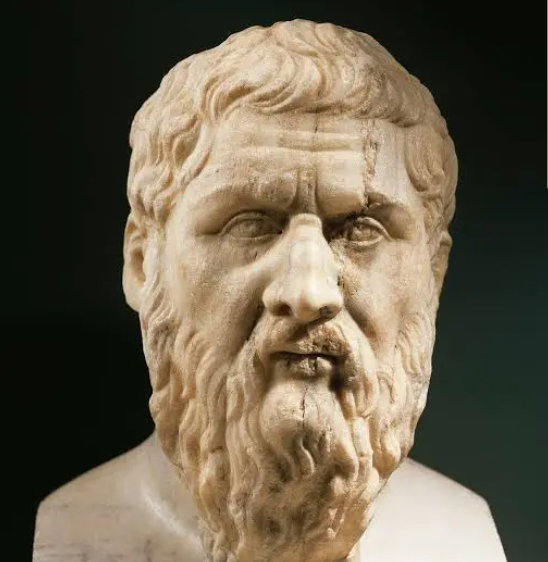
Zeno: The many do not know that except by this devious passage through all things the mind cannot attain to the truth. Zeno: Most people are not aware that this roundabout progress through all things is the only way in which the mind can attain truth and wisdom.
3 months 4 days ago
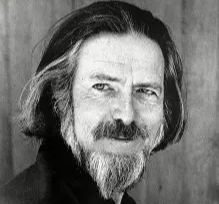
Zen does not confuse spirituality with thinking about God while one is peeling potatoes. Zen spirituality is just to peel the potatoes. Paraphrase of original text which reads "It does not confuse spirituality with thinking about God while one is peeling potatoes. Zen spirituality is just to peel the potatoes.
▼
Source
source
The Way of Zen, Pt. 2, Ch. 2

6 months 3 weeks ago
We all want progress. But progress means getting nearer to the place where you want to be. And if you have taken a wrong turning, then to go forward does not get you any nearer. If you are on the wrong road, progress means doing an about-turn and walking back to the right road; in that case the man who turns back soonest is the most progressive man.
▼
Source
source
Book I, Chapter 5, "We Have Cause to Be Uneasy"
CivilSimian.com created by AxiomaticPanic, CivilSimian, Kalokagathia