

6 months 3 weeks ago
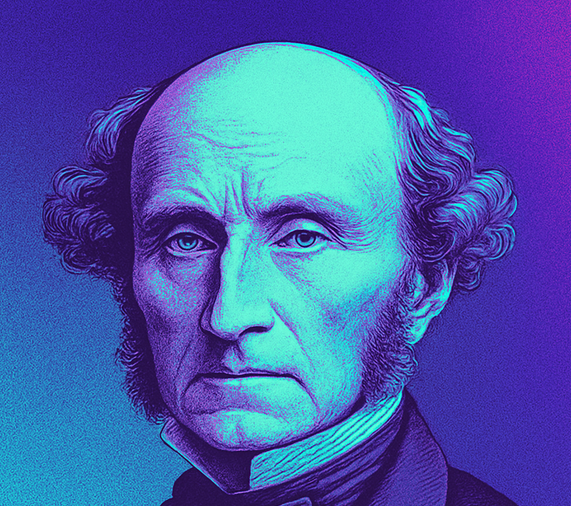
France has done more for even English history than England has.
▼
Source
source
John Stuart Mill. Michelet.On the writing of English history. Complete Works Vol 20. Page 221.
6 months 3 weeks ago
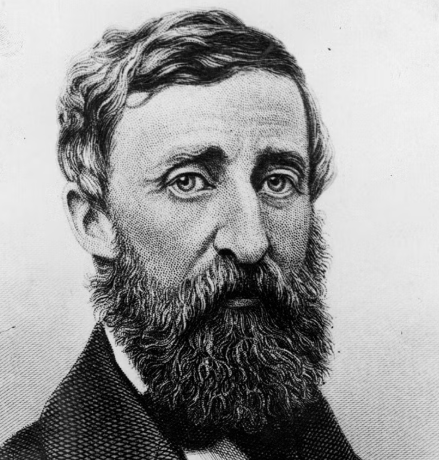
There are a thousand hacking at the branches of evil to one who is striking at the root, and it may be that he who bestows the largest amount of time and money on the needy is doing the most by his mode of life to produce that misery which he strives in vain to relieve.
▼
Source
source
p. 87

2 months 2 weeks ago
It is not enough for a wise man to study nature and truth; he should dare state truth for the benefit of the few who are willing and able to think.
6 months 3 weeks ago
Upstart greatness is everywhere less respected than ancient greatness.
▼
Source
source
Chapter I, Part II, p. 773.
6 months 3 weeks ago
A witty saying proves nothing.
▼
Source
source
Le dîner du comte de Boulainvilliers (1767): Deuxième Entretien
7 months 1 day ago
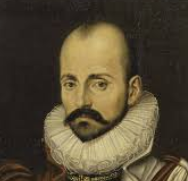
I find that the best goodness I have has some tincture of vice.
▼
Source
source
Ch. 20
5 months 2 weeks ago
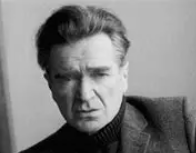
Since it is difficult to approve the reasons people invoke, each time we leave one of our 'fellow men', the question which comes to mind is invariably the same: how does he keep from killing himself?
4 months 3 weeks ago
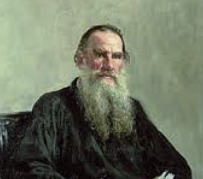
You worldly-minded people are most unfortunate! You are surrounded with sorrows and troubles overhead and underfoot and to the right and to the left, and you are enigmas even to yourselves.
▼
Source
source
p. 37
7 months 3 weeks ago
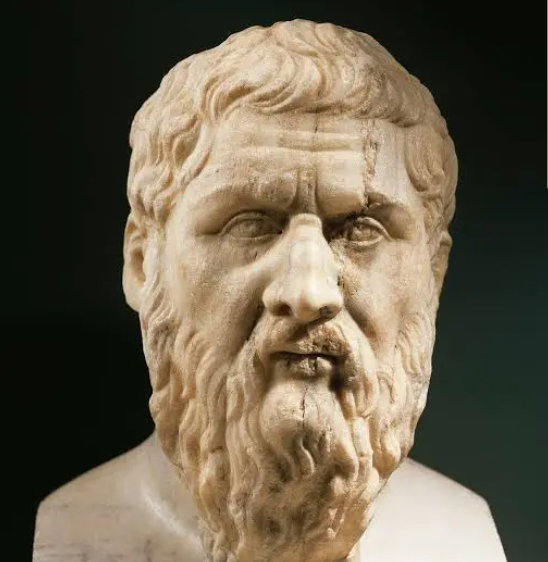
Socrates: I think the most likely view is, that these ideas exist in nature as patterns, and the other things resemble them and are imitations of them; their participation in ideas is assimilation to them, that and nothing else.Parmenides: It is impossible that anything be like the idea, or the idea like anything; for if they are alike, some further idea, in addition to the first, will always appear, and if that is like anything, still another, and a new idea will always be arising, if the idea is like that which partakes of it.
5 months 1 day ago
Probability fractions arise from our knowledge and from our ignorance.
▼
Source
source
Chapter 14, Equipossibility, p. 132.
5 months 2 weeks ago
The third argument, enclosing and defending the other two, consists in the development of those principles of logic according to which the humble argument is the first stage of a scientific inquiry into the origin of the three Universes, but of an inquiry which produces, not merely scientific belief, which is always provisional, but also a living, practical belief, logically justified in crossing the Rubicon with all the freightage of eternity.
▼
Source
source
V
2 months 2 weeks ago
Often injustice lies in what you aren't doing, not only in what you are doing.
▼
Source
source
IX. 5:223

6 months 3 weeks ago
Most shocking of all is alledging the Sacred Scriptures to favour this wicked practice. One would have thought none but infidel cavillers would endeavour to make them appear contrary to the plain dictates of natural light, and Conscience, in a matter of common Justice and Humanity; which they cannot be. Such worthy men, as referred to before, judged otherways; Mr. Baxter declared, the Slave-Traders should be called Devils, rather than Christians; and that it is a heinous crime to buy them.
2 months 2 weeks ago
Every right of suffrage, like any political right in general, is not to be measured by some sort of abstract scheme of "justice," or in terms of any other bourgeois-democratic phrases, but by the social and economic relationships for which it is designed. The right of suffrage worked out by the Soviet government is calculated for the transition period from the bourgeois-capitalist to the socialist form of society, that is, it is calculated for the period of the proletarian dictatorship. But, according to the interpretation of this dictatorship which Lenin and Trotsky represent, the right to vote is granted only to those who live by their own labor and is denied to everyone else.
▼
Source
source
Chapter Five, "The Question of Suffrage"
4 months 2 weeks ago
Conservatism is itself a modernism, and in this lies the secret of its success.
▼
Source
source
"Eliot and Conservatism" (p. 194)

6 months 3 weeks ago
As soon as we have contrived to give our pupil an idea of the word "Useful," we have got an additional means of controlling him, for this word makes a great impression on him, provided that its meaning for him is a meaning relative to his own age, and provided he clearly sees its relation to his own well-being. This word makes no impression on your scholars because you have taken no pains to give it a meaning they can understand, and because other people always undertake to supply their needs so that they never require to think for themselves, and do not know what utility is. "What is the use of that?"

3 months 2 weeks ago
The social contract between all people around the world only has one requirement: Don't kill. From there it's those who don't agree, those that agree but have some reactive justification, and those that agree and don't kill.
7 months 3 weeks ago
It occurs to me that artists go forward by going backward, something which I have nothing against intrinsically when it is a reproduced retreat - as is the case with the better artists. But it does not seem right that they stop with the historical themes already given and, so to speak, think that only these are suitable for poetic treatment, because these particular themes, which intrinsically are no more poetic than others, are now again animated and inspirited by a great poetic nature. In this case the artists advance by marching on the spot. - Why are modern heroes and the like not just as poetic? Is it because there is so much emphasis on clothing the content in order that the formal aspect can be all the more finished?
5 months 1 week ago
Racism has always been a divisive force separating black men and white men, and sexism has been a force that unites the two groups.
5 months 2 weeks ago
The premonition of madness is complicated by the fear of lucidity in madness, the fear of the moments of return and reunion, when the intuition of disaster is so painful that it almost provokes a greater madness. One would welcome chaos if one were not afraid of lights in it.
5 months 3 weeks ago
In order to touch the heart and gain the confidence, the assent, the adhesion, and the co-operation of the illiterate legions of the proletariat - and the vast majority of proletarians unfortunately still belong in this category - it is necessary to begin to speak to those workers not of the general sufferings of the international proletariat as a whole but of their particular, daily, altogether private misfortunes. It is necessary to speak to them of their own trade and the conditions of their work in the specific locality where they live; of the harsh conditions and long hours of their daily work, of the small pay, the meanness of their employer, the high cost of living, and how impossible it is for them properly to support and bring up a family.
▼
Source
source
Founding of the Workers' International
3 months 1 week ago
He knows his own strength; he knows that he was born to carry burdens.
6 months 1 week ago
A prating barber asked Archelaus how he would be trimmed. He answered, "In silence."
▼
Source
source
33 Archelaus
6 months 3 weeks ago
God said, I am tired of kings, I suffer them no more; Up to my ear the morning brings The outrage of the poor.
▼
Source
source
Boston Hymn, st. 2

2 months 3 weeks ago
I repair, then, fellow-citizens, to the post you have assigned me. With experience enough in subordinate offices to have seen the difficulties of this the greatest of all, I have learnt to expect that it will rarely fall to the lot of imperfect man to retire from this station with the reputation and the favor which bring him into it.
6 months 3 weeks ago
Were a stranger to drop on a sudden into this world, I would show him, as a specimen of its ills, a hospital full of diseases, a prison crowded with malefactors and debtors, a field of battle strewed with carcasses, a fleet foundering in the ocean, a nation languishing under tyranny, famine, or pestilence. To turn the gay side of life to him, and give him a notion of its pleasures; whither should I conduct him? to a ball, to an opera, to court? He might justly think, that I was only showing him a diversity of distress and sorrow.
▼
Source
source
Demea to Philo, Part X
7 months 1 week ago
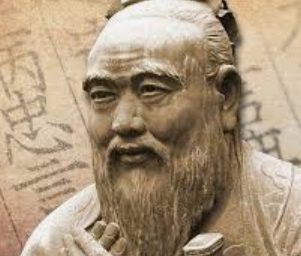
It is said in the Book of Poetry, "In silence is the offering presented, and the spirit approached to; there is not the slightest contention." Therefore the superior man does not use rewards, and the people are stimulated to virtue. He does not show anger, and the people are awed more than by hatchets and battle-axes.
5 months 2 weeks ago
History is nothing but assisted and recorded memory. It might almost be said to be no science at all, if memory and faith in memory were not what science necessarily rest on. In order to sift evidence we must rely on some witness, and we must trust experience before we proceed to expand it. The line between what is known scientifically and what has to be assumed in order to support knowledge is impossible to draw. Memory itself is an internal rumour; and when to this hearsay within the mind we add the falsified echoes that reach us from others, we have but a shifting and unseizable basis to build upon. The picture we frame of the past changes continually and grows every day less similar to the original experience which it purports to describe.
▼
Source
source
Ch. 2 "History"
5 months 2 weeks ago
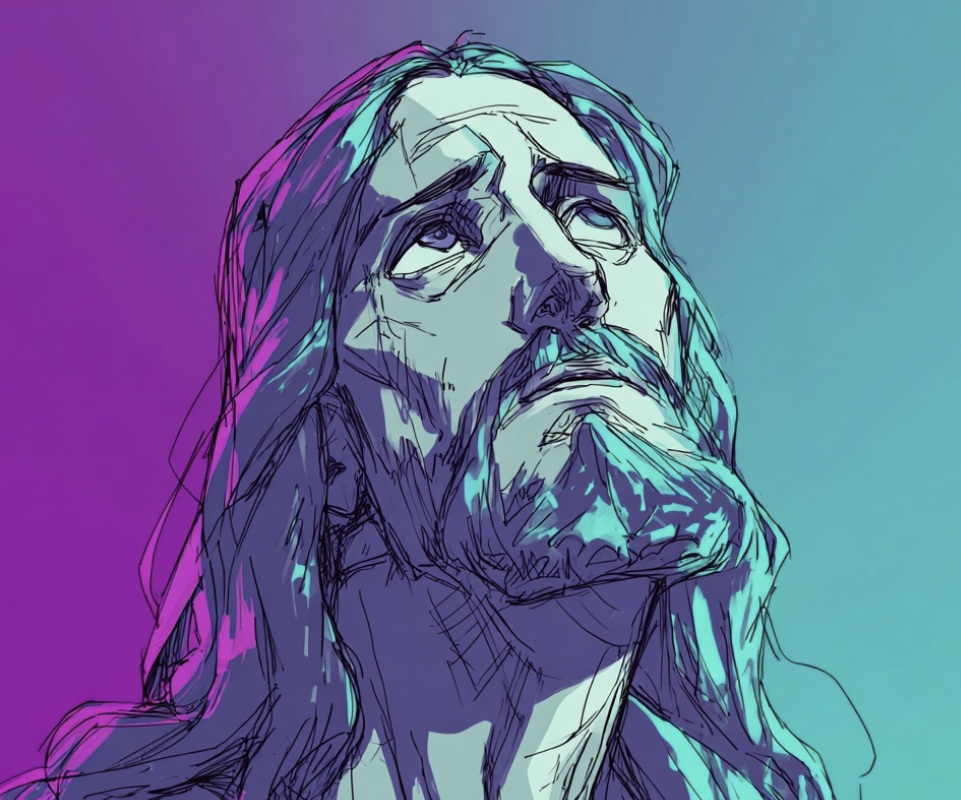
But everyone who hears these sayings of Mine, and does not do them, will be like a foolish man who built his house on the sand: and the rain descended, the floods came, and the winds blew and beat on that house; and it fell. And great was its fall.
▼
Source
source
Matthew 7:24-27 (NKJV) (Also Luke 6:47-49)
6 months 2 weeks ago
If a lion could talk, we could not understand him.
▼
Source
source
Pt II, p. 223 of the 1968 English edition
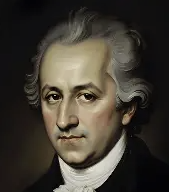
3 months 2 weeks ago
We can't form our children on our own concepts; we must take them and love them as God gives them to us.
▼
Source
source
Hermann und Dorothea
6 months 3 weeks ago
Compared with the greatest poets, he may be said to be the poet of unpoetical natures, possessed of quiet and contemplative tastes. But unpoetical natures are precisely those which require poetic cultivation. This cultivation Wordsworth is much more fitted to give, than poets who are intrinsically far more poets than he.
▼
Source
source
(p. 149)
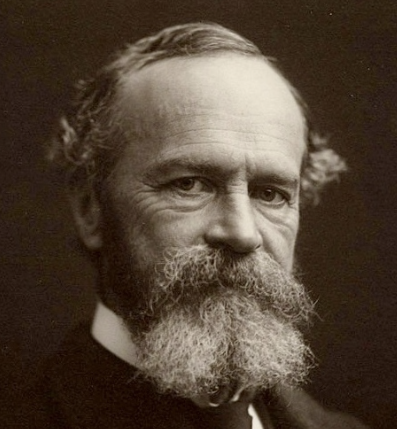
6 months 3 weeks ago
The art of being wise is the art of knowing what to overlook.
▼
Source
source
Ch. 22
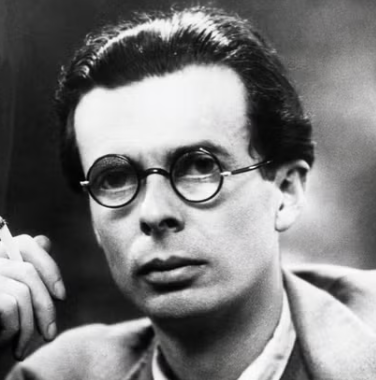
6 months 3 weeks ago
The Quaestor turned back the pages until he found himself among the Pensées. "We are not satisfied," he read, "with the life we have in ourselves and our own being; we want to live an imaginary life in other people's idea of us. Hence all our efforts are directed to seeming what we are not. We labor incessantly to preserve and embellish this imaginary being, and neglect that which is really ours." The Quaestor put down the book, ... and ruefully reflected that all his own troubles had arisen from this desire to seem what in fact he was not. To seem a man of action, when in fact he was a contemplative; to seem a politician, when nature had made him an introspective psychologist; to seem a wit, which God had intended him for a sage.
▼
Source
source
"Variations on a Philosopher" in Themes and Variations (1943), p. 2
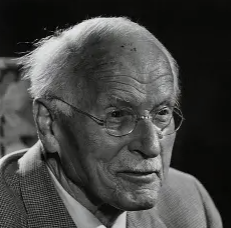
5 months 2 weeks ago
Without consciousness there would, practically speaking, be no world, for the world exists as such only in so far as it is consciously reflected and considered by a psyche. Consciousness is a precondition of being.
▼
Source
source
p 48
7 months 3 weeks ago
To what extent can truth endure incorporation? That is the question; that is the experiment.
4 months 2 weeks ago
Our media make crisis chatter out of news and fill our minds with anxious phantoms of the real thing - a summit in Helsinki, a treaty in Egypt, a constitutional crisis in India, a vote in the U.N., the financial collapse of New York. We can't avoid being politicized (a word as murky as the condition which it describes) because it is necessary after all to know what is going on. Worse yet, what is going on will not let us alone. Neither the facts nor the deformations, the insidious platitudes of the media (tormenting because the underlying realities are so large and so terrible), can be screened out. The study of literature itself is heavily "politicized."
▼
Source
source
To Jerusalem and Back: A Personal Account (1976) [Viking/Penguin, 1998, ISBN 0-141-18075-7], p. 21
6 months 3 weeks ago
All the higher, more penetrating ideals are revolutionary. They present themselves far less in the guise of effects of past experience than in that of probable causes of future experience.
▼
Source
source
"The Moral Philosopher and the Moral Life" in address to the Yale Philosophical Club, published in the International Journal of Ethics, April 1891
4 months 1 week ago
That mysterious independent variable of political calculation, Public Opinion.
▼
Source
source
Universities, Actual and Ideal
2 months 2 weeks ago
It's not about telling people how to be, outside of supporting ideals that teach us what to avoid.
5 months 2 weeks ago
The soul, too, has her virginity and must bleed a little before bearing fruit.
▼
Source
source
"Normal Madness," Ch. 3, P. 56
2 months 3 weeks ago
"Fire is the first and final mask of my God. We dance and weep between two enormous pyres." Our thoughts and our bodies flash and glitter with reflected light. Between the two pyres I stand serenely, my brain unshaken amid the vertigo, and I say: "Time is most short and space most narrow between these two pyres, the rhythm of this life is most sluggish, and I have no time, nor a place to dance in. I cannot wait." Then all at once the rhythm of the earth becomes a vertigo, time disappears, the moment whirls, becomes eternity, and every point in space - insect or star or idea - turns into dance.
5 months 6 days ago
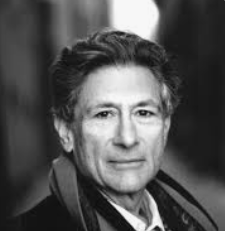
The intellectual's spirit as an amateur can enter and transform the merely professional routine most of us go through into something much more lively and radical; instead of doing what one is supposed to do one can ask why one does it, who benefits from it, how can it reconnect with a personal project and original thoughts.
▼
Source
source
p. 83
5 months 6 days ago
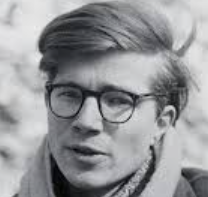
I could see clearly that this problem could only be solved on the individual and personal level; political revolt is irrelevant. Both Camus and Sartre had been neatly hog-tied by their earlier radicalism. Camus came to see that rebellion is a political roundabout that revolves back to the same old tyranny; too ashamed to admit that he had outgrown his leftism, he found himself in an intellectual cul-de-sac. Sartre accused Camus of being a reactionary; but he paid for his own refusal to reexamine his political convictions by congealing into a grotesque attitude of permanent indignation, shaking his fist at some abstract Authority. Where politics is concerned, he seemed determined to be guided by his emotions.
▼
Source
source
p. 101
7 months 3 weeks ago
He was extremely important to his contemporaries, who wanted nothing more than to see in him the Expected One; they wanted almost to press it upon him and and to force him into the role - but that he then refuses to be that!
5 months 6 days ago
Taken as a whole, the Cross Correspondences and the Willet scripts are among the most convincing evidence that at present exists for life after death. For anyone who is prepared to devote weeks to studying them, they prove beyond all reasonable doubt that Myers, Gurney, and Sidgwick went on communicating after death.
▼
Source
source
p. 136
7 months 1 week ago
The way of the superior man may be found, in its simple elements, in the intercourse of common men and women; but in its utmost reaches, it shines brightly through Heaven and Earth.
4 months 3 weeks ago
One can only live while one is intoxicated with life; as soon as one is sober it is impossible not to see that it is all a mere fraud and a stupid fraud! Ch. 4 Variant: It is possible to live only as long as life intoxicates us; once we are sober we cannot help seeing that it is all a delusion, a stupid delusion.
5 months 2 weeks ago
Your vision will become clear only when you can look into your own heart. Without, everything seems discordant; only within does it coalesce into unity. Who looks outside dreams; who looks inside awakes.
▼
Source
source
Letter to Fanny Bowditch, 22 October 1916
6 months 3 weeks ago
In such a chain, too, or succession of objects, each part is caused by that which preceded it, and causes that which succeeds it. Where then is the difficulty? But the WHOLE, you say, wants a cause. I answer, that the uniting of these parts into a whole, like the uniting of several distinct countries into one kingdom, or several distinct members into one body, is performed merely by an arbitrary act of the mind, and has no influence on the nature of things. Did I show you the particular causes of each individual in a collection of twenty particles of matter, I should think it very unreasonable, should you afterwards ask me, what was the cause of the whole twenty. This is sufficiently explained in explaining the cause of the parts.
▼
Source
source
Cleanthes to Demea, Part IX
CivilSimian.com created by AxiomaticPanic, CivilSimian, Kalokagathia