

5 months 2 weeks ago
Master, we saw one casting out devils in thy name, and he followeth not us: and we forbad him, because he followeth not us. But Jesus said, Forbid him not: for there is no man which shall do a miracle in my name, that can lightly speak evil of me. For he that is not against us is on our part.
▼
Source
source
Mark 9:38-40 (KJV)
6 months 3 weeks ago
Her face seems ravaged by both lightning and hail. But on yours there is something like the promise of a storm: one day passion will burn it to the bone.
▼
Source
source
Act 1

7 months ago
Not because Socrates said so, but because it is in truth my own disposition - and perchance to some excess - I look upon all men as my compatriots, and embrace a Pole as a Frenchman, making less account of the national than of the universal and common bond.
▼
Source
source
Ch. 9
7 months 3 weeks ago
It will be easy for us once we receive the ball of yarn from Ariadne (love) and then go through all the mazes of the labyrinth (life) and kill the monster. But how many are there who plunge into life (the labyrinth) without taking that precaution?
3 months 2 weeks ago
When the general population no longer constitutes the armed forces, when the army is no longer the people in arms, then empires fall. Today all armies are again tending to become mercenary armies.
▼
Source
source
49
5 months 5 days ago
When one learns something one first performs an act of will, because only by willing to learn can one learn.
▼
Source
source
"Vico: Autodidact and Humanist," The Centennial Review, Vol. 11, No. 3 (Summer 1967), p. 340
3 months ago
A political, economic, and social order created merely for the sake of temporal life is exclusively characteristic of the modern world, that is, of the antitraditional world.

5 months 1 week ago
Leibniz's theory on the subject as substantia ideans in the sense of a causative agent of decision and acts stands much closer to a materialist interpretation of history than does a philosophy which reduces the thinking subject to the role of subsuming protocol sentences under general propositions and deducing other sentences from them.
▼
Source
source
p. 149.
5 months 2 weeks ago
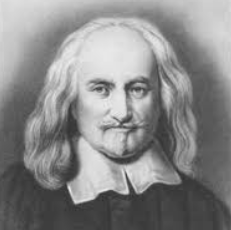
By MANNERS, I mean not here Decency of behaviour; as how one man should salute another, or how a man should wash his mouth, or pick his teeth before company, and such other points of the Small Morals; But those qualities of mankind that concern their living together in Peace and Unity. To which end we are to consider that the Felicity of this life consisteth not in the repose of a mind satisfied. For there is no such Finis ultimus (utmost aim) nor Summum Bonum (greatest good) as is spoken of in the books of the old Moral Philosophers. Nor can a man any more live whose desires are at an end than he whose Senses and Imaginations are at a stand.
▼
Source
source
The First Part, Chapter 11, p. 47
2 months 3 weeks ago
"Since we cannot change reality, let us change the eyes which see reality," says one of my favorite Byzantine mystics. I did this when a child; I do it now as well in the most creative moments of my life.
▼
Source
source
"The Son", Ch. 4, p. 45

6 months 4 days ago
There is no word or action but has its echo in Eternity. Thought is an Idea in transit, which when once released, never can be lured back, nor the spoken word recalled. Nor ever can the overt act be erased All that thou thinkest, sayest, or doest bears perpetual record of itself, enduring for Eternity.
▼
Source
source
As quoted in Pythagoron: The Religious, Moral, and Ethical Teachings of Pythagoras (1947) by Hobart Huson, p. 99
3 months 3 days ago
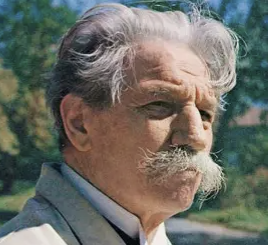
I don't know what your destiny will be, but one thing I know, the only ones among you who will be really happy are those who have sought and found how to serve.
▼
Source
source
Widely attributed to Schwietzer online, no known original source.

4 months 1 week ago
Those who cannot find moral clarity are likely to settle for the far more dangerous simplicity, or purity, instead.
5 months 2 weeks ago
If the flesh came into being because of spirit, it is a wonder. But if spirit came into being because of the body, it is a wonder of wonders. Indeed, I am amazed at how this great wealth has made its home in this poverty.
4 months 3 weeks ago
To say that a life is grievable is to claim that a life, even before it is lost, is, or will be, worthy of being grieved on the occasion of its loss; the life has value in relation to mortality. One treats a person differently if one brings the sense of the grievability of the other to one's ethical bearing toward the other. If an other's loss would register as a loss, would be marked and mourned, and if the prospect of loss is feared, and precautions are thus taken to safeguard that life from harm or destruction, then our very ability to value and safeguard a life depends upon an ongoing sense of its grievability-the conjectured future of a life as an indefinite potential that would be mourned were it cut short or lost.
▼
Source
source
p. 75
3 months ago
It is a cliché that the modern scientific vision has desacralized the world, and the world desacralized by scientific knowledge has become one of the existential elements that make up modern man, all the more so to the degree that he is "civilized." Ever since he has been subject to compulsory education, his mind has been stuffed with "positive" scientific notions; he cannot avoid seeing in a soulless light everything that surrounds him, and therefore acts destructively. What, for example, could the symbol of the sunset of a dynasty, like the Japanese, mean to him when he knows scientifically what the sun is: merely a star, at which one can even fire missiles.
▼
Source
source
p. 138
4 months 1 week ago
French schoolchildren can be proud to become citizens of the country that gave the world the Declaration of the Rights of Man; need they be told that it was disregarded a few years after it inspired the revolution in Haiti, whose leader, Toussaint Louverture, was consigned to death in a French prison?
6 months 3 weeks ago
We must frankly confess, then, using our empirical common sense and ordinary practical prejudices, that in the world that actually is, the virtues of sympathy, charity, and non-resistance may be, and often have been, manifested in excess. ... You will agree to this in general, for in spite of the Gospel, in spite of Quakerism, in spite of Tolstoi, you believe in fighting fire with fire, in shooting down usurpers, locking up thieves, and freezing out vagabonds and swindlers.
▼
Source
source
Lectures XIV and XV, "The Value of Saintliness"
4 months 2 weeks ago
The bias of each medium of communication is far more distorting than the deliberate lie.
▼
Source
source
JQ. Journalism quarterly, Volume 50, Association for Education in Journalism, 1973, p. 145
6 months 1 week ago
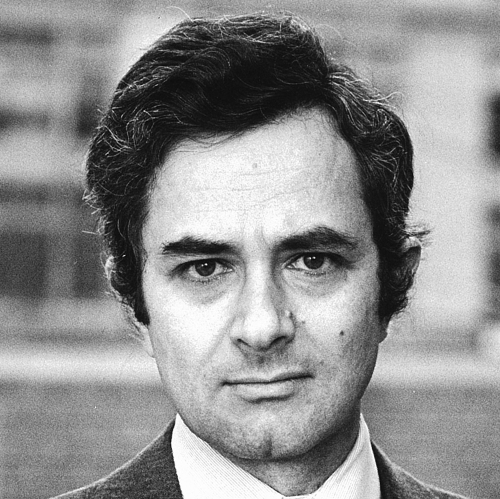
Perhaps there is one chain [of inference] leading from the mental and the physical to a common source. It is conceivable in the abstract that if mental phenomena derive from the properties of matter at all, these may be identical at some level with nonphysical properties from which physical phenomena also derive. ...If there were such properties, they would be discoverable only by explanatory inference from both mental and physical phenomena. ... There would be properties of matter that were not physical from which the mental properties of organic systems were derived. This could still be called panpsychism.
▼
Source
source
"Panpsychism" (1979), pp. 184-185.
2 months 3 weeks ago
While experiencing happiness, we have difficulty in being conscious of it. Only when the happiness is past and we look back on it we do suddenly realize - sometimes with astonishment - how happy we had been.
▼
Source
source
Ch. 6
7 months 1 day ago
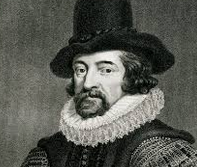
For the inquisition of Final Causes is barren, and like a virgin consecrated to God produces nothing.
▼
Source
source
Book III, viii
2 months 3 weeks ago
I strive to discover how to signal my companions before I die, how to give them a hand, how to spell out for them in time one complete word at least, to tell them what I think this procession is, and toward what we go. And how necessary it is for all of us together to put our steps and hearts in harmony. To say in time a simple word to my companions, a password, like conspirators. Yes, the purpose of Earth is not life, it is not man. Earth has existed without these, and it will live on without them. They are but the ephemeral sparks of its violent whirling. Let us unite, let us hold each other tightly, let us merge our hearts, let us create - so long as the warmth of this earth endures, so long as no earthquakes, cataclysms, icebergs or comets come to destroy us - let us create for Earth a brain and a heart, let us give a human meaning to the superhuman struggle. This anguish is our second duty.

3 months 1 week ago
"By what method or methods can the able men from every rank of life be gathered, as diamond-grains from the general mass of sand: the able men, not the sham-able;-and set to do the work of governing, contriving, administering and guiding for us!" It is the question of questions. All that Democracy ever meant lies there: the attainment of a truer and truer Aristocracy, or Government again by the Best.
5 months 2 weeks ago
The Kingdom is like a wise fisherman who cast his net into the sea and drew it up from the sea full of small fish. Among them the wise fisherman found a fine large fish. He threw all the small fish back into the sea and chose the large fish without difficulty. Whoever has ears to hear, let him hear.
5 months 1 week ago
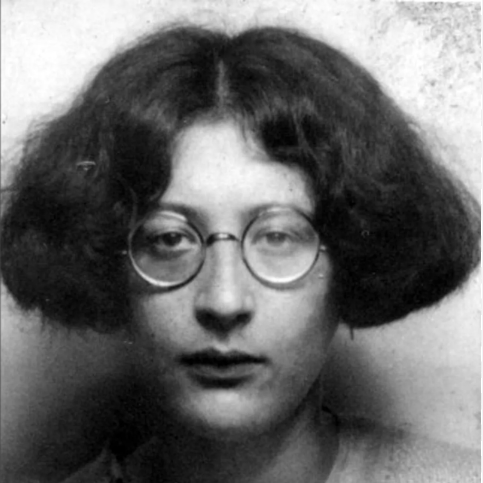
Rome is the Great Beast of atheism and materialism, adoring nothing but itself. Israel is the Great Beast of religion. Neither one nor the other is likable. The Great Beast is always repulsive.
▼
Source
source
p. 123
6 months 3 weeks ago
Everything that is possible demands to exist.
▼
Source
source
1686
3 months ago
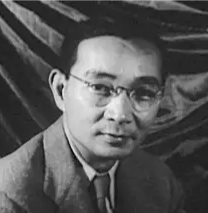
The secret of contentment is knowing how to enjoy what you have, and to be able to lose all desire for things beyond your reach.
▼
Source
source
As quoted in Remarks of Famous People (1965) by Jacob Morton Braude, p. 23
6 months 3 weeks ago
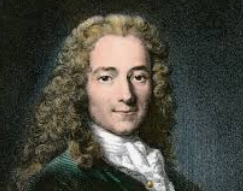
It is better to risk sparing a guilty person than to condemn an innocent one.
▼
Source
source
Zadig, 1747
6 months 3 weeks ago
The study a posteriori of the distribution of consciousness shows it to be exactly such as we might expect in an organ added for the sake of steering a nervous system grown too complex to regulate itself.
▼
Source
source
Ch. 5
5 months 2 weeks ago
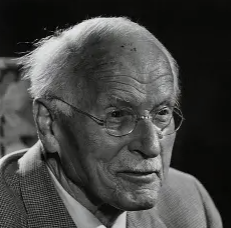
Aion is a child at play, gambling; a child's is the kingship. Telesphorus traverses the dark places of the world, like a star flashing from the deep, leading the way to the gates of the sun and the land of dreams.
▼
Source
source
Combining fragments of Heraclitus and Homer

7 months 2 weeks ago
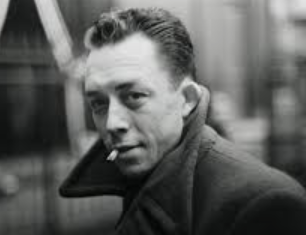
O light! This is the cry of all the characters of ancient drama brought face to face with their fate. This last resort was ours, too, and I knew it now. In the middle of winter I at last discovered that there was in me an invincible summer. Return to Tipasa (1954) Variant translation: In the depths of winter, I finally learned that within me there lay an invincible summer.



6 months 3 weeks ago
A sensible human once said, "If people knew how much ill-feeling unselfishness occasions, it would not be so often recommended from the pulpit"; and again, "She's the sort of woman who lives for others-you can always tell the others by their hunted expression."
▼
Source
source
Letter XXVI

5 months 2 weeks ago
The surest means of not losing your mind on the spot: remembering that everything is unreal, and will remain so...
6 months 2 weeks ago
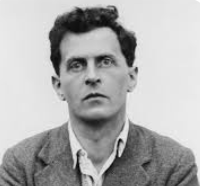
The aspects of things that are most important for us are hidden because of their simplicity and familiarity. (One is unable to notice something - because it is always before one's eyes.) The real foundations of his enquiry do not strike a man at all. Unless that fact has at some time struck him. - And this means: we fail to be struck by what, once seen, is most striking and most powerful.
▼
Source
source
§ 129

6 months 3 weeks ago
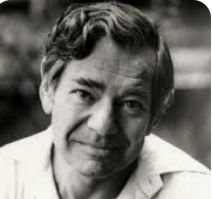
The opinions that are held with passion are always those for which no good ground exists; indeed the passion is the measure of the holder's lack of rational conviction.
▼
Source
source
Opinions in politics and religion are almost always held passionately. Introduction to 1961 edition of Sceptical Essays, 1961
3 months 3 weeks ago
I agree with Paul that love is more important than faith and hope; but so are honesty, integrity, and moral courage. The world needs less faith and more love and nobility.
▼
Source
source
Preface
3 months 1 week ago
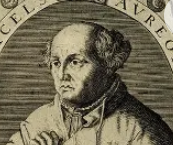
We should become angels and not devils, that's why we have been created and born into the world. Therefore be and stick to what God has chosen you for.
2 months 2 weeks ago
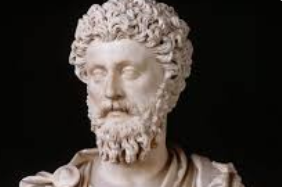
Shame on the soul, to falter on the road of life while the body still perseveres.
▼
Source
source
VI. 29, trans. Maxwell Staniforth
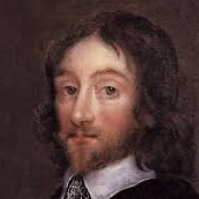
5 months 4 weeks ago
I intend no Monopoly, but a Community in Learning; I study not for my own sake only, but for theirs that study not for themselves.
▼
Source
source
Section 3
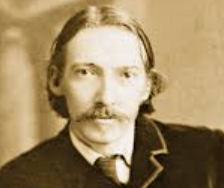
4 months 2 weeks ago
People trifle with love. Now, I deny that love is a strong passion. Fear is the strong passion; it is with fear that you must trifle, if you wish to taste the intensest joys of living.
▼
Source
source
The Suicide Club, Story of the Young Man with the Cream Tarts.
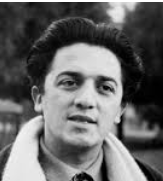
4 months 1 day ago
I think television has betrayed the meaning of democratic speech, adding visual chaos to the confusion of voices. What role does silence have in all this noise?
▼
Source
source
"Television"
5 months 2 weeks ago
What can a man say about woman, his own opposite? I mean of course something sensible, that is outside the sexual program, free of resentment, illusion, and theory. Where is the man to be found capable of such superiority? Woman always stands just where the man's shadow falls, so that he is only too liable to confuse the two. Then, when he tries to repair this misunderstanding, he overvalues her and believes her the most desirable thing in the world.
▼
Source
source
P. 236
CivilSimian.com created by AxiomaticPanic, CivilSimian, Kalokagathia