


6 months 3 weeks ago
John - I'm trying to find the Island in the West. Sensible - You refer, no doubt to some aesthetic experience.
▼
Source
source
Pilgrim's Regress 77
5 months 2 days ago
Before one blames, one should always find out whether one cannot excuse. To discover little faults has been always the particularity of such brains that are a little or not at all above the average. The superior ones keep quiet or say something against the whole and the great minds transform without blaming.
▼
Source
source
K 39 Variant translation: Before we blame we should first see whether we cannot excuse.
4 months 1 day ago
My own sense of how to behave in a simulation has more traditional roots in the theory of perception. I've long believed that each of us lives in an egocentric simulation of the world run by the mind/brain. Since the zombies of each (waking) simulation have sentient real world counterparts, one should treat them as though they were real. Nonetheless as an angst-ridden teenager, my dawning acceptance of an inferential realist theory of perception made me feel as if I'd been condemned to solitary confinement for life. The sense of loneliness was indescribable. Naïve realism is better for one's mental health.
▼
Source
source
Origins and Theory of the World Transhumanist Association, Institute for Ethics and Emerging Technologies, 26 Dec. 2007
3 months 2 weeks ago
In art the best is good enough.
▼
Source
source
Italian Journey
6 months 3 weeks ago
The virtue of frugality lies in a middle between avarice and profusion, of which the one consists in an excess, the other in a defect of the proper attention to the objects of self-interest.
▼
Source
source
Section II, Chap. I.

5 months 3 weeks ago
Free trade is not based on utility but on justice.
5 months 3 weeks ago
We have, indeed, in the part taken by many scientific men in this controversy of "Law versus Miracle," a good illustration of the tenacious vitality of superstitions. Ask one of our leading geologists or physiologists whether he believes in the Mosaic account of the creation, and he will take the question as next to an insult. Either he rejects the narrative entirely, or understands it in some vague non-natural sense. ...Whence ...this notion of "special creations"...Why, after rejecting all the rest of the story, he should strenuously defend this last remnant of it, as though he had received it on valid authority, he would be puzzled to say.
6 months 3 weeks ago
That of beaver skins, of beaver wool, and of gum Senega, has been subjected to higher duties; Great Britain, by the conquest of Canada and Senegal, having got almost the monopoly of those commodities.
▼
Source
source
Chapter II, Part II, Article IV, p. 954-955.

6 months 4 days ago
Honor Wisdom; and deny it not to them that would learn; and shew it unto them that dispraise it! Sow not the sea fields!
3 months 2 weeks ago
The political program of nation building in countries like Afghanistan and Iraq is one central example of the productive project of biopower and war. Nothing could be more postmodernist and antiessentialist than this notion of nation building.
5 months 3 weeks ago
Example is the school of mankind, and they will learn at no other.
▼
Source
source
No. 1, volume v, p. 331
2 months 2 weeks ago
And truly... if men could be persuaded to mind more the advancement of natural philosophy than that of their own reputations, it were not, methinks, very uneasy to make them sensible, that one of the considerablest services, that they could do mankind, were to set themselves diligently and industriously to make experiments and collect observations, without being over-forward to establish principles and axioms, believing it uneasy to erect such theories, as are capable to explicate all the phænomena of nature, before they have been able to take notice of the tenth part of those phænomena, that are to be explicated.
6 months 1 week ago
The sight of both eyes becomes one.
▼
Source
source
fr. 88
7 months 3 weeks ago
But voice is a certain sound of that which is animated; for nothing inanimate emits a voice; but they are said to emit a voice from similitude, as a pipe, and a lyre, and such other inanimate things, have extension, modulation, and dialect; for thus it appears, because voice, also, has these.
4 months 3 weeks ago
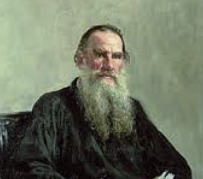
Science is meaningless because it gives no answer to our question, the only question important for us: 'what shall we do and how shall we live.
▼
Source
source
Quoted by Max Weber in his lecture "Science as a Vocation"; in Lynda Walsh (2013)
3 months 2 weeks ago
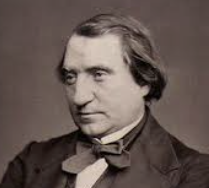
The regeneration of the inferior or bastard races by the superior ones is consistent with God's plans for humanity. The man of the people, in our countries, is always a fallen aristocrat; his hands are made to handle the sword rather than the laborer's tools. He prefers warring to working, that is, he returns to his original calling.
▼
Source
source
93, as translated by Asselin Charles, in "Colonial Discourse Since Christopher Columbus," Journal of Black Studies, Vol. 26, No. 2 (November 1995), 147
5 months 2 weeks ago
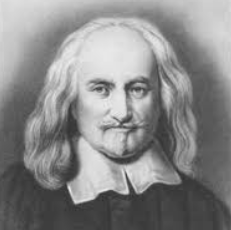
And whereas many men, by accident unevitable, become unable to maintain themselves by their labour; they ought not to be left to the Charity of private persons; but to be provided for, (as far-forth as the necessities of Nature require,) by the Lawes of the Common-wealth. For as it is Unchariablenesse in any man, to neglect the impotent; so it is in the Soveraign of a Common-wealth, to expose them to the hazard of such uncertain Charity.
▼
Source
source
The Second Part, Chapter 30, p. 181
4 months 3 weeks ago
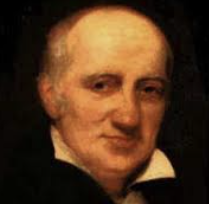
What! all of us, Christians, not only profess to love one another, but do actually live one common life; we whose social existence beats with one common pulse-we aid one another, learn from one another, draw ever closer to one another to our mutual happiness, and find in this closeness the whole meaning of life!-and to-morrow some crazy ruler will say some stupidity, and another will answer in the same spirit, and then I must go expose myself to being murdered, and murder men-who have done me no harm-and more than that, whom I love. And this is not a remote contingency, but the very thing we are all preparing for, which is not only probable, but an inevitable certainty.
▼
Source
source
Chapter V, Contradiction Between our Life and our Christian Conscience
5 months 2 weeks ago
One principle, that I believe is wanting in you, and all our too fervent and impetuous reformers, is the thought, that almost every institution or form of society is good in its place, and in the period of time to which it belongs. How many beautiful and admirable effects grew out of Popery and the monastic institutions, in the period, when they were in their genuine health and vigour! To them we owe almost all our logic and our literature. What excellent effects do we reap, even at this day, from the feudal system and from chivalry! In this point of view, nothing can, perhaps, be more worthy of our applause than the English constitution.
▼
Source
source
Letter to Percy Bysshe Shelley (4 March 1812), quoted in Thomas Jefferson Hogg, The Life of Percy Bysshe Shelley, Vol. II (1858), p. 86
6 months 3 weeks ago
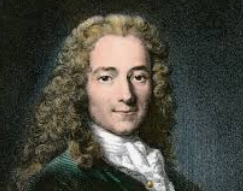
The institution of religion exists only to keep mankind in order, and to make men merit the goodness of God by their virtue. Everything in a religion which does not tend towards this goal must be considered foreign or dangerous.
▼
Source
source
"The Ecclesiastical Ministry"
2 months 3 weeks ago
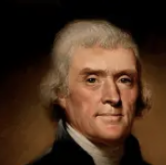
It is between fifty and sixty years since I read it, and I then considered it merely the ravings of a maniac, no more worthy nor capable of explanation than the incoherences of our own nightly dreams. ... what has no meaning admits no explanation.
▼
Source
source
Letter to General Alexander Smyth, on the book of Revelation (or The Apocalypse of St. John the Divine)
6 months 3 weeks ago
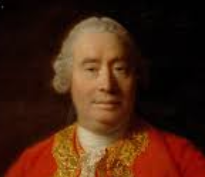
If nature has been frugal in her gifts and endowments, there is the more need of art to supply her defects. If she has been generous and liberal, know that she still expects industry and application on our part, and revenges herself in proportion to our negligent ingratitude. The richest genius, like the most fertile soil, when uncultivated, shoots up into the rankest weeds; and instead of vines and olives for the pleasure and use of man, produces, to its slothful owner, the most abundant crop of poisons.
▼
Source
source
Part I, Essay 16: The Stoic
3 months 3 days ago
I am of course confident that I will fulfil my tasks as a writer in all circumstances - from my grave even more successfully and more irrefutably than in my lifetime. No one can bar the road to truth, and to advance its cause I am prepared to accept even death. But may it be that repeated lessons will finally teach us not to stop the writer's pen during his lifetime? At no time has this ennobled our history.
▼
Source
source
Open letter to the Fourth Soviet Writers' Congress (16 May 1967); as translated in Solzhenitsyn: A Documentary Record (1970) edited by Leopold Labedz
6 months 3 weeks ago
This proof can at most, therefore, demonstrate the existence of an architect of the world, whose efforts are limited by the capabilities of the material with which he works, but not of a creator of the world, to whom all things are subject.
▼
Source
source
A 627, B 655 (Physico-Theological Proof Impossible)

5 months 3 weeks ago
The hatred that men bear to privilege increases in proportion as privileges become fewer and less considerable, so that democratic passions would seem to burn most fiercely just when they have least fuel. I have already given the reason for this phenomenon. [all conditions are unequal, no inequality is so great as to offend the eye, whereas the slightest dissimilarity is odious in the midst of general uniformity; the more complete this uniformity is, the more insupportable the sight of such a difference becomes.] Hence it is natural that the love of equality should constantly increase together with equality itself, and that it should grow by what it feeds on.
▼
Source
source
Chapter III.

5 months 2 weeks ago
What pride to discover that nothing belongs to you - what a revelation.
3 months 1 week ago
He who has injured thee was either stronger or weaker than thee. If weaker, spare him; if stronger, spare thyself.
▼
Source
source
De Ira (On Anger); Book III, Chapter V
5 months 5 days ago
Money, as a matter of principle, makes everything the same.
7 months 2 weeks ago
People don't stop things they enjoy doing just because they reach a certain age. They don't stop playing tennis just because they turn 40, they don't stop with sex just because they turn 40; they keep it up as long as they can if they enjoy it, and learning will be the same thing.
2 months 3 weeks ago
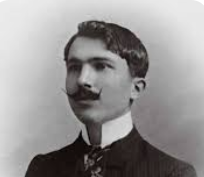
My God and I are horsemen galloping in the burning sun or under drizzling rain. Pale, starving, but unsubdued, we ride and converse. "Leader!" I cry. He turns his face toward me, and I shudder to confront his anguish. Our love for each other is rough and ready, we sit at the same table, we drink the same wine in this low tavern of life.
4 months 2 weeks ago
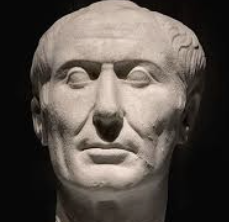
If your parent is just, revere him; if not, bear with him.
▼
Source
source
Maxim 27
5 months 2 days ago
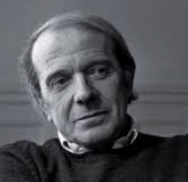
We're tired of trees. We should stop believing in trees, roots, and radicles. They've made us suffer too much. All of arborescent culture is founded on them, from biology to linguistics. Nothing is beautiful or loving or political aside from underground stems and aerial root, adventitious growths and rhizomes.
▼
Source
source
from A Thousand Plateaus: capitalism and schizophrenia, p. 15
3 months 2 weeks ago
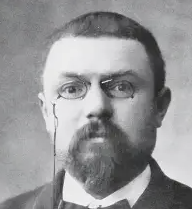
In physical reality one cause does not produce a given effect, but a multitude of distinct causes contribute to produce it, without our having any means of discriminating the part of each of them. ...Causes which have produced a certain effect will never be reproduced except approximately.
5 months 3 weeks ago
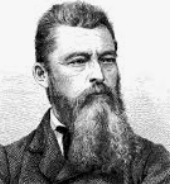
Hegel determines and presents only the most striking differences of various religions, philosophies, time and peoples, and in a progressive series of stages, but he ignores all that is common and identical in all of them. ... His system knows only subordination and succession; coordination and coexistence are unknown to it.
▼
Source
source
Z. Hanfi, trans., in The Fiery Brook (1972), p. 54
6 months 3 weeks ago
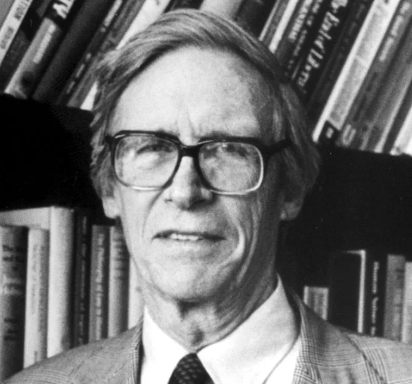
In all sectors of society there should be roughly equal prospects of culture and achievement for everyone similarly motivated and endowed. The expectations of those with the same abilities and aspirations should not be affected by their social class.
▼
Source
source
Chapter II, Section 12, pg. 73
3 months 2 weeks ago
Thought must never submit, neither to a dogma, nor to a party, nor to a passion, nor to an interest, nor to a preconceived idea, nor to whatever it may be, save to the facts themselves, because, for thought, submission would mean ceasing to be.
▼
Source
source
Speech, University of Brussels (19 November 1909), during the festival for the 75th anniversary of the university's foundation; published in Œuvres de Henri Poincaré (1956), p. 152
4 months 2 weeks ago
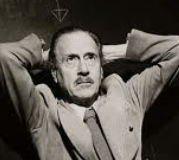
Manuscript culture is conversational if only because the writer and his audience are physically related by the form of publication as performance.
▼
Source
source
(p. 96)
7 months 2 weeks ago
Korell is that frequent phenomenon in history: the republic whose ruler has every attribute of the absolute monarch but the name. It therefore enjoyed the usual despotism unrestrained even by those two moderating influences in the legitimate monarchies: regal, honor and court etiquette.

5 months 5 days ago
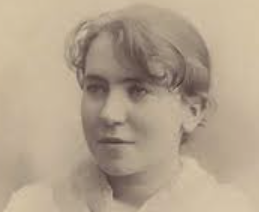
I have been taught that the land should belong to those who till the soil. With all of his deep-seated sympathies with the Arabs, our comrade cannot possibly deny that the Jews in Palestine have tilled the soil. Tens of thousands of them, young and deeply devout idealists, have flocked to Palestine, there to till the soil under the most trying pioneer conditions. They have reclaimed wastelands and have turned them into fertile fields and blooming gardens. Now I do not say that therefore Jews are entitled to more rights than the Arabs, but for an ardent socialist to say that the Jews have no business in Palestine seems to me rather a strange kind of socialism.
6 months 3 weeks ago
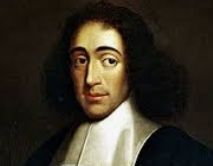
Speaking generally, he holds dominion, to whom are entrusted by common consent affairs of state - such as the laying down, interpretation, and abrogation of laws, the fortification of cities, deciding on war and peace, &c. But if this charge belong to a council, composed of the general multitude, then the dominion is called a democracy; if the council be composed of certain chosen persons, then it is an aristocracy ; and, if, lastly, the care of affairs of state, and, consequently, the dominion rest with one man, then it has the name of monarchy.
▼
Source
source
Ch. 2, Of Natural Right
4 months 6 days ago
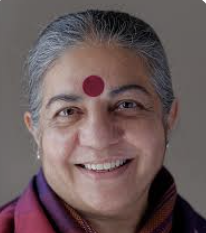
Scarcity is not a result of uneven endowments-that is diversity. Scarcity is having a mismatch between a culture and nature's giving. Cultures have evolved cultural diversity to mimic the biological diversity of climates and ecosystems. It's when that relationship is disrupted that you get unsustainable population growth.
5 months 2 weeks ago
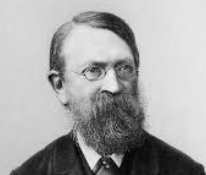
There was a loud echo of Hume in Mach's work, as both emphasized the tangibility of all knowledge-ultimately, all knowledge is based in the senses. Mach also emphasized the internal nature of all knowledge, in that it is experienced in the mind. Finally, he emphasized the importance of quantitative and mathematical methods and models to understand sensory experience.
▼
Source
source
Alan Ebenstein, Hayek's Journey" The Mind of Friedrich Hayek (2003), Ch. 10 : Epistemology, Psychology, and Methodology
2 months 2 weeks ago
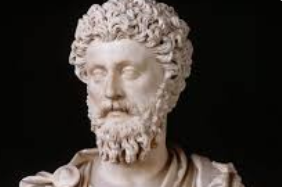
To be like the rock that the waves keep crashing over. It stands unmoved and the raging of the sea falls still around it.
▼
Source
source
IV, 49
6 months 3 weeks ago
The importation of gold and silver is not the principal, much less the sole benefit which a nation derives from its foreign trade.
▼
Source
source
Chapter I, p. 479.
4 months 1 day ago
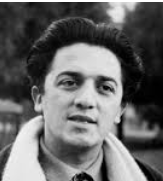
Talking about dreams is like talking about movies, since the cinema uses the language of dreams; years can pass in a second and you can hop from one place to another. It's a language made of image. And in the real cinema, every object and every light means something, as in a dream.
▼
Source
source
As quoted in Rolling Stone no. 421
3 months 1 day ago
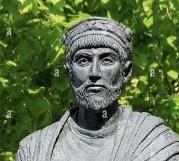
Zeal to do all that is in one's power is, in truth, a proof of piety.
▼
Source
source
Fragment of a Letter to a Priest
CivilSimian.com created by AxiomaticPanic, CivilSimian, Kalokagathia