

3 months 2 days ago
Revolutionary syndicalism keeps alive the desire to strike in the masses and only prospers when important strikes, accompanied by violence, take place.
▼
Source
source
p. 39
6 months 3 weeks ago
IV. Every tax ought to be contrived as both to take out and to keep out of the pockets of the people as little as possible, over and above what it brings into the public treasury of the state.
▼
Source
source
Chapter II, Part II, p. 893.
5 months ago
The physicist who states a law of nature with the aid of a mathematical formula is abstracting a real feature of a real material world, even if he has to speak of numbers, vectors, tensors, state-functions, or whatever to make the abstraction.
▼
Source
source
"What is Mathematical Truth?"
3 months 3 days ago
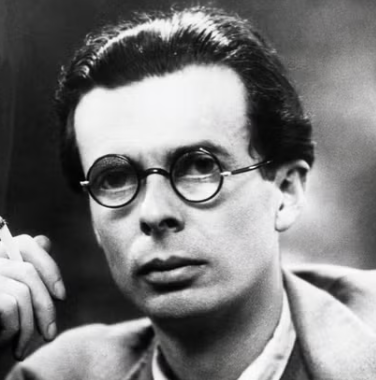
The prevalent sensation of oneself as a separate ego enclosed in a bag of skin is a hallucination which accords neither with Western science nor with the experimental philosophy-religions of the East - in particular the central and germinal Vedanta philosophy of Hinduism. This hallucination underlies the misuse of technology for the violent subjugation of man's natural environment and, consequently, its eventual destruction. We are therefore in urgent need of a sense of our own existence which is in accord with the physical facts and which overcomes our feeling of alienation from the universe.
6 months 3 weeks ago
Human beings are not born identical. There are many different temperaments and constitutions; and within each psycho-physical class one can find people at very different stages of spiritual development. Forms of worship and spiritual discipline which may be valuable for one individual maybe useless or even positively harmful for another belonging to a different class and standing, within that class, at a lower or higher level of development.
4 months 3 weeks ago
Error is the force that welds men together; truth is communicated to men only by deeds of truth. Only deeds of truth, by introducing light into the conscience of each individual, can dissolve the cohesion of error, and detach men one by one from the mass united together by the cohesion of error.
▼
Source
source
My Religion (1884), Ch. 12
2 months 2 weeks ago
Speech is insufficient to utter the last things; and this troubles it not, because the last things may be heard speaking for themselves. At last, after long delay the wondering soul gives form to that which is stirring within it and produces its works art and song and mighty deeds.

7 months 1 week ago
What should a philosopher say, then, in the face of each of the hardships of life? "It was for this that I've been training myself, it was for this that I was practising."
▼
Source
source
Book III, ch. 10,7.
6 months 3 weeks ago
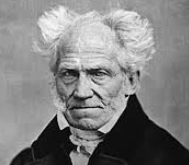
The discovery of truth is prevented more effectively, not by the false appearance things present and which mislead into error, not directly by weakness of the reasoning powers, but by preconceived opinion, by prejudice.
▼
Source
source
Vol. 2, Ch. 1, § 17
6 months 3 weeks ago
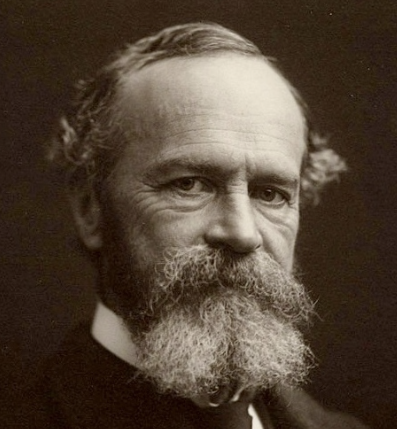
Be not afraid of life. Believe that life is worth living, and your belief will help create the fact.
▼
Source
source
"Is Life Worth Living?"

5 months 2 weeks ago
If man has learned to see and know what really is, he will act in accordance with truth, Epistemology is in itself ethics, and ethics is epistemology.
▼
Source
source
p. 125
6 months 2 weeks ago
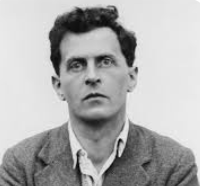
When I am furious about something, I sometimes beat the ground or a tree with my walking stick. But I certainly do not believe that the ground is to blame or that my beating can help anything... And all rites are of this kind.
▼
Source
source
Ch. 7 : Remarks on Frazer's Golden Bough, p. 131
7 months 2 weeks ago
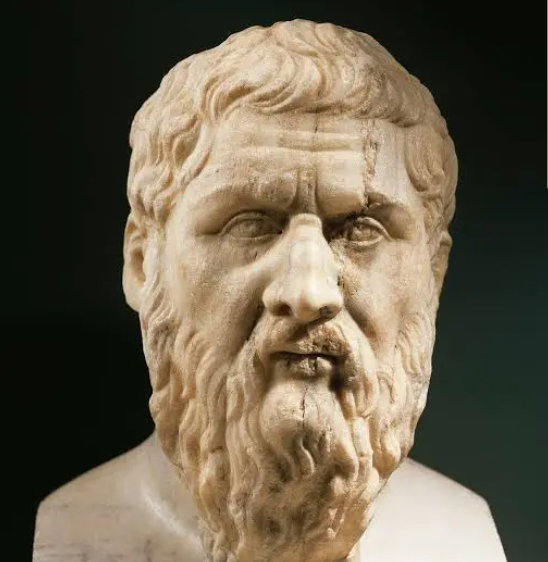
Parnenides: When there is a number of things which seem to you to be great, you may think, as you look at them all, that there is one and the same idea in them, and hence you think the great is one. But if with your mind's eye you regard the absolute great and these many great things in the same way, will not another great appear beyond, by which all these must appear to be great?

6 months 2 weeks ago
This is precisely what is decisive in Nietzsche's conception of art, that he sees it in its essential entirety in terms of the artist; this he does consciously and in explicit opposition to that conception of art which represents it in terms of those who "enjoy" and "experience" it.That is a guiding principle of Nietzsche's teaching on art: art must be grasped in terms of creators and producers, not recipients. Nietzsche expresses it unequivocally in the following words (WM, 811): "Our aesthetics heretofore has been a woman's aesthetics, inasmuch as only the recipients of art have formulated their experiences of 'what is beautiful.' In all philosophy to date the artist is missing." Philosophy of art means "aesthetics" for Nietzsche too-but masculine aesthetics, not feminine aesthetics. The question of art is the question of the artist as the productive, creative one; his experiences of what is beautiful must provide the standard.
▼
Source
source
p. 70
4 months 2 weeks ago
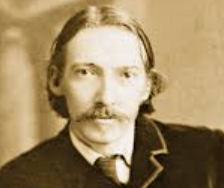
All who have meant good work with their whole hearts, have done good work, although they may die before they have the time to sign it. Every heart that has beat strong and cheerfully has left a hopeful impulse behind it in the world, and bettered the tradition of mankind. And even if death catch people, like an open pitfall, and in mid-career, laying out vast projects, and planning monstrous foundations, flushed with hope, and their mouths full of boastful language, they should be at once tripped up and silenced: is there not something brave and spirited in such a termination? and does not life go down with a better grace, foaming in full body over a precipice, than miserably straggling to an end in sandy deltas?
▼
Source
source
316
7 months 1 week ago
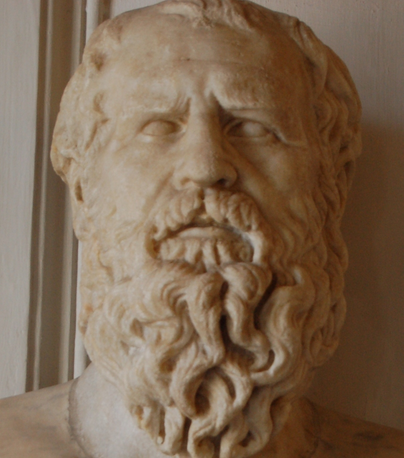
It is better to conceal ignorance than to expose it.
6 months 3 weeks ago
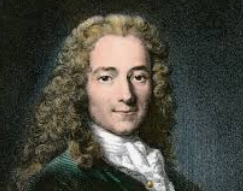
When we hear news, we should always wait for the sacrament of confirmation.
▼
Source
source
Letter to Charles-Augustin Ferriol, comte d'Argental, 28 August 1760]]

7 months 1 week ago
To wisdom belongs the intellectual apprehension of things eternal; to knowledge, the rational apprehension of things temporal.
▼
Source
source
As quoted in The Anchor Book of Latin Quotations: with English translations (1990) by Norbert Guterman, p. 375
6 months 3 weeks ago
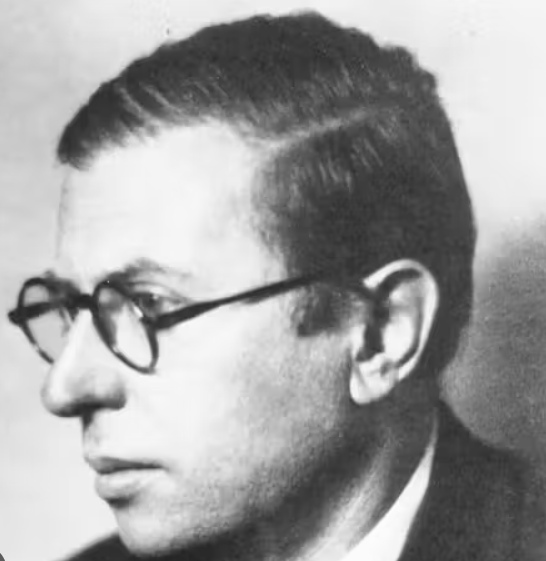
Her face seems ravaged by both lightning and hail. But on yours there is something like the promise of a storm: one day passion will burn it to the bone.
▼
Source
source
Act 1
4 months 3 weeks ago
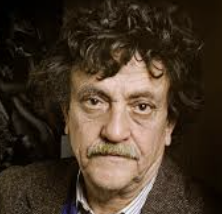
I urge you to please notice when you are happy, and exclaim or murmur or think at some point, "If this isn't nice, I don't know what is."
▼
Source
source
Knowing What's Nice, an essay from In These Times



3 months 1 week ago
Descend where you will into the lower class, in Town or Country, by what avenue you will, by Factory Inquiries, Agricultural Inquiries, by Revenue Returns, by Mining-Labourer Committees, by opening your own eyes and looking, the same sorrowful result discloses itself: you have to admit that the working body of this rich English Nation has sunk or is fast sinking into a state, to which, all sides of it considered, there was literally never any parallel.
2 months 2 weeks ago
Consider all that you've gone through, all that you've survived. And that the story of your life is done, your assignment complete. How many good things have you seen? How much pain and pleasure have you resisted? How many honors have you declined? How many unkind people have you been kind to?
▼
Source
source
(Hays translation) V, 31
7 months 1 week ago
It is not by change of place that we can come nearer to Him who is in every place, but by the cultivation of pure desires and virtuous habits.
▼
Source
source
p. 433

3 months 3 days ago
Adeimantus, in what amounts to an accusation of Socrates, asserts that the philosophers appear to be either useless or vicious. Plato, as I have suggested, teaches that ultimately this is an appearance that cannot be reversed, and this insures the philosophers' permanent marginality. They appear as useless because they are. They are neither artisans, nor statesmen, nor rhetoricians. They are idlers who contribute nothing to security or posterity. Their peculiar contemplative pleasures are not accessible to the majority of mankind, and they do not provide for the popular pleasures as do the poets.
▼
Source
source
Commerce and Culture, p. 285.
6 months 3 weeks ago
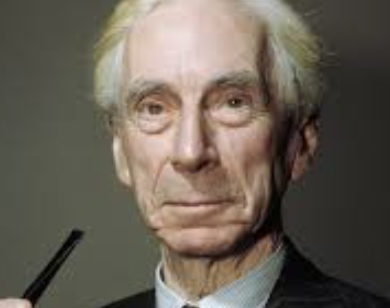
Arithmetic must be discovered in just the same sense in which Columbus discovered the West Indies, and we no more create numbers than he created the Indians.
▼
Source
source
Principles of Mathematics (1903), p. 451
5 months 3 weeks ago
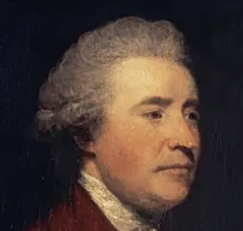
One that confounds good and evil is an enemy to the good.
▼
Source
source
Speech in opening the impeachment of Warren Hastings (18 February 1788), quoted in The Works of the Right Honourable Edmund Burke, Volume the Tenth (1899), p. 48
2 months 3 weeks ago
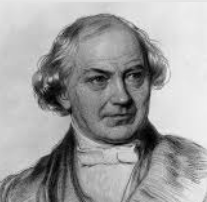
When common words are appropriated as technical terms, their meaning may be modified, and must be rigorously fixed.
4 months 2 weeks ago
Society in shipwreck is a comfort to all.
▼
Source
source
Maxim 144
6 months 2 weeks ago
The paradox of race in America is that our common destiny is more pronounced and imperiled precisely when our divisions are deeper.
▼
Source
source
(p4)
5 months 3 weeks ago
All those instances to be found in history, whether real or fabulous, of a doubtful public spirit, at which morality is perplexed, reason is staggered, and from which affrighted Nature recoils, are their chosen and almost sole examples for the instruction of their youth.
▼
Source
source
No. 1, volume v, p. 286
3 months 2 weeks ago
Culture, when it loses its sacred sense, loses all sense. With the disappearance of the sacred, which imposed limits to the perfection which could be attained by the profane, arises one of the most dangerous illusions of our civilization-the illusion that there are no limits to the changes that human life can undergo, that society is 'in principle' an endlessly flexible thing, and that to deny this flexibility and this perfectibility is to deny man's total autonomy and thus to deny man himself.
▼
Source
source
The Revenge of the Sacred in Secular Culture
2 months 2 weeks ago
The particular conception of ideology operates primarily with a psychology of interests, while the total conception uses a more formal functional analysis, without any reference to motivations, confining itself to an objective description of the structural differences in minds operating in different social settings. The former assumes that this or that interest is the cause of a given lie or deception. The latter presupposes simply that there is a correspondence between a given social situation and a given perspective, point of view, or apperception mass. In this case, while an analysis of constellations of interests may often be necessary it is not to establish causal connections but to characterize the total situation. Thus interest psychology tends to be displaced by an analysis of the correspondence between the situation to be known and the forms of knowledge.
7 months 2 weeks ago
Rhetoric, it seems, is a producer of persuasion for belief, not for instruction in the matter of right and wrong. And so the rhetorician's business is not to instruct a law court or a public meeting in matters of right and wrong, but only to make them believe.
3 months 1 week ago
History is the essence of innumerable biographies.
▼
Source
source
On History.

6 months 3 weeks ago
What can you ever really know of other people's souls - of their temptations, their opportunities, their struggles? One soul in the whole creation you do know: and it is the only one whose fate is placed in your hands. If there is a God, you are, in a sense, alone with Him. You cannot put Him off with speculations about your next door neighbours or memories of what you have read in books.
▼
Source
source
Book IV, Chapter 10, "Nice People or New Men"
4 months 3 weeks ago
People understand the meaning of eating lies in the nourishment of the body only when they cease to consider that the object of that activity is pleasure. ...People understand the meaning of art only when they cease to consider that the aim of that activity is beauty, i.e., pleasure.
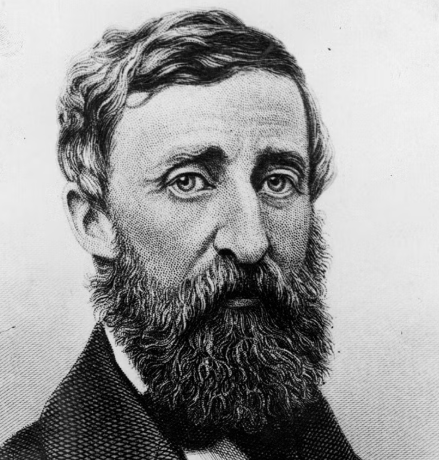
6 months 3 weeks ago
The vessel, though her masts be firm, beneath her copper bears a worm.
▼
Source
source
"Though All the Fates Should Prove Unkind", st. 2
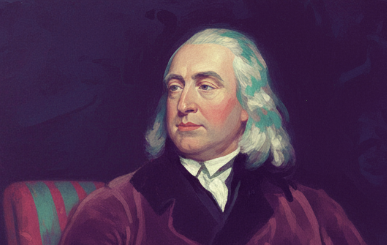
6 months 3 weeks ago
Intense, long, certain, speedy, fruitful, pure-Such marks in pleasures and in pains endure. Such pleasures seek if private be thy end: If it be public, wide let them extend.Such pains avoid, whichever be thy view: If pains must come, let them extend to few.
▼
Source
source
Ch. 4: Value of a Lot of Pleasure or Pain, How to be Measured

6 months 1 week ago
It is difficult to speak of the universal specifically.
▼
Source
source
Line 128
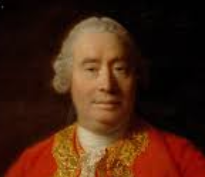
6 months 3 weeks ago
The life of man is of no greater importance to the universe than that of an oyster.
▼
Source
source
On Suicide
4 months 5 days ago
Of the twenty-two civilizations that appear in history, nineteen of them collapsed when they reached the moral state the United States is in now. The average age of the world's great civilizations has been 200 years. All nations have progressed through this sequence:From bondage to spiritual faithFrom spiritual faith to great courageFrom courage to libertyFrom liberty to abundanceFrom abundance to selfishnessFrom selfishness to complacencyFrom complacency to apathyFrom apathy to dependencyFrom dependency back again into bondage.
▼
Source
source
In Joe D. Batten and Gail Batten, The Confidence Chasm (New York: American Management Association, 1972) p. 118

7 months 2 weeks ago
When a war breaks out, people say: "It's too stupid; it can't last long." But though the war may well be "too stupid," that doesn't prevent its lasting. Stupidity has a knack of getting its way; as we should see if we were not always so much wrapped up in ourselves.
6 months 1 week ago
To flee vice is the beginning of virtue, and to have got rid of folly is the beginning of wisdom.
▼
Source
source
Book I, epistle i, line 41
3 months 1 week ago
There is endless merit in a man's knowing when to have done.
▼
Source
source
Dr. Francia (1845).

5 months 2 weeks ago
If thou wilt be perfect, go and sell that thou hast, and give to the poor, and thou shalt have treasure in heaven: and come and follow me.
▼
Source
source
19:21 (KJV)
5 months 2 weeks ago
The Spirit of the Lord is on me, because he has anointed me to proclaim good news to the poor. He has sent me to proclaim freedom for the prisoners and recovery of sight for the blind, to set the oppressed free, to proclaim the year of the Lord's favor.
▼
Source
source
Luke 4:18-19 NIV

5 months 5 days ago
Do not all theists insist that there can be no morality, no justice, honesty or fidelity without the belief in a Divine Power? Based upon fear and hope, such morality has always been a vile product, imbued partly with self-righteousness, partly with hypocrisy. As to truth, justice, and fidelity, who have been their brave exponents and daring proclaimers? Nearly always the godless ones: the Atheists; they lived, fought, and died for them. They knew that justice, truth, and fidelity are not conditioned in heaven, but that they are related to and interwoven with the tremendous changes going on in the social and material life of the human race; not fixed and eternal, but fluctuating, even as life itself.
6 months 3 weeks ago
Undeterred by this examination, the French Revolution gave rise to ideas which led beyond the ideas of the entire old world order. The revolutionary movement which began in 1789 in the Cercle Social, which in the middle of its course had as its chief representatives Leclerc and Roux, and which finally with Babeuf's conspiracy was temporarily defeated, gave rise to the communist idea which Babeuf's friend Buonarroti re-introduced in France after the Revolution of 1830. This idea, consistently developed, is the idea of the new world order.
▼
Source
source
Chapter 6, 3
CivilSimian.com created by AxiomaticPanic, CivilSimian, Kalokagathia