

3 months 1 week ago
She is a woman now, and not an idle girl, not a domestic ornament or a sexual convenience anymore.
▼
Source
source
On the maturation of women, Ch. 4 : On Old Age
5 months 2 weeks ago
This is how I recognize an authentic poet: by frequenting him, living a long time in the intimacy of his work, something changes in myself, not so much my inclinations or my tastes as my very blood, as if a subtle disease had been injected to alter its course, its density and nature. To live around a true poet is to feel your blood run thin, to dream a paradise of anemia, and to hear, in your veins, the rustle of tears.
3 months ago
No, the enjoyment of an idle life doesn't cost any money. The capacity for true enjoyment of idleness is lost in the moneyed class and can be found only among people who have a supreme contempt for wealth. It must come from an inner richness of the soul in a man who loves the simple ways of life and who is somewhat impatient with the business of making money.
▼
Source
source
p. 155

6 months 1 week ago
If evolution is a struggle for survival, why hasn't it ruthlessly eliminated altruists, who seem to increase another's prospects of survival at the cost of their own?
▼
Source
source
Chapter 1, The Origins Of Altruism, p. 5
6 months 2 weeks ago
This investigation aims to analyze the type "bourgeois public sphere". Its particular approach is required, to begin with, by the difficulties specific to an object whose complexity precludes exclusive reliance on the specialized methods of a single discipline. Rather, the category. "public sphere" must be investigated within the broad field formerly reflected in the perspective of the traditional science of "politics."' When particular social-scientific discipline, this object disintegrates. The problems that result from fusing aspects of sociology and economics, of constitutional law and political science, and of social and intellectual history are obvious: given the present state of differentiation and specialization in the social sciences, scarcely anyone will be able to master several, let alone all, of these disciplines.
▼
Source
source
p.xvii
5 months 2 weeks ago
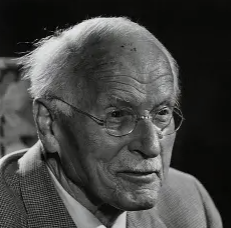
In all chaos there is a cosmos, in all disorder a secret order.
▼
Source
source
p. 32 (1981 edition) Originally presented at an Eranos conference.
7 months ago
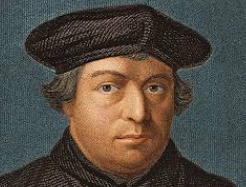
Let us keep to Christ, and cling to Him, and hang on Him, so that no power can remove us.
▼
Source
source
p. 433
6 months 3 weeks ago
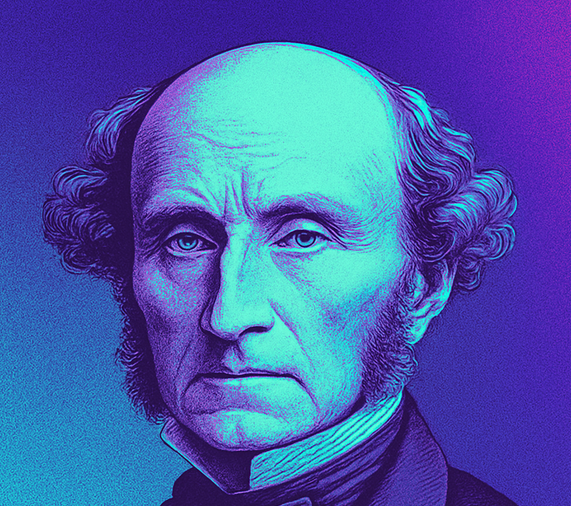
The writers by whom, more than by any others, a new mode of political thinking was brought home to me, were those of the St. Simonian school in France. In 1829 and 1830 I became acquainted with some of their writings. They were then only in the earlier stages of their speculations. They had not yet dressed out their philosophy as a religion, nor had they organized their scheme of Socialism. They were just beginning to question the principle of hereditary property. I was by no means prepared to go with them even this length; but I was greatly struck with the connected view which they for the first time presented to me, of the natural order of human progress; and especially with their division of all history into organic periods and critical periods.
▼
Source
source
(p. 163)
3 months 2 weeks ago
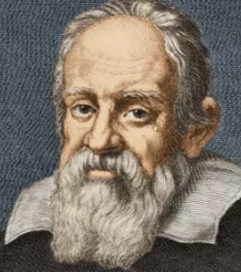
Names and attributes must be accommodated to the essence of things, and not the essence to the names, since things come first and names afterwards.
▼
Source
source
As quoted in Discoveries and Opinions of Galileo (1957) by Stillman Drake, p. 92
7 months 1 week ago
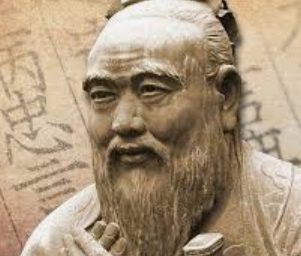
The administration of government lies in getting proper men. Such men are to be got by means of the ruler's own character. That character is to be cultivated by his treading in the ways of duty. And the treading those ways of duty is to be cultivated by the cherishing of benevolence.

3 months 1 week ago
Sarcasm I now see to be, in general, the language of the Devil; for which reason I have, long since, as good as renounced it.
▼
Source
source
Bk. II, ch. 4.
5 months 2 weeks ago
With success and a literary career one becomes an unquestioning part of the mechanism, whereas the only truly important years are those in which one is unknown.
7 months 1 day ago
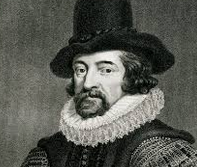
Time, which is the author of authors.
▼
Source
source
Book I, iv, 12
6 months 3 weeks ago
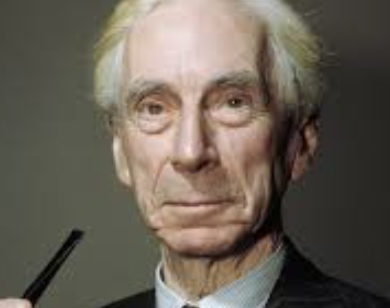
There is no logical impossibility in the hypothesis that the world sprang into being five minutes ago, exactly as it then was, with a population that "remembered" a wholly unreal past. There is no logically necessary connection between events at different times; therefore nothing that is happening now or will happen in the future can disprove the hypothesis that the world began five minutes ago.
▼
Source
source
The Analysis of Mind (1921), Lecture IX: Memory, p. 159


6 months 3 weeks ago
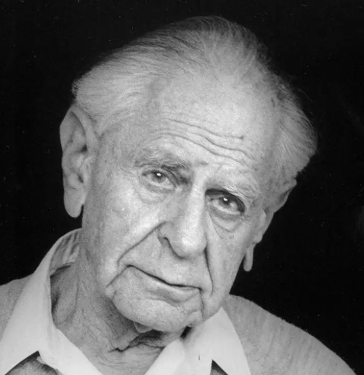
The more we learn about the world, and the deeper our learning, the more conscious, specific, and articulate will be our knowledge of what we do not know, our knowledge of our ignorance. For this, indeed, is the main source of our ignorance - the fact that our knowledge can be only finite, while our ignorance must necessarily be infinite. Variant translation: The more we learn about the world, and the deeper our learning, the more conscious, clear, and well-defined will be our knowledge of what we do not know, our knowledge of our ignorance. The main source of our ignorance lies in the fact that our knowledge can only be finite, while our ignorance must necessarily be infinite.
3 months 1 week ago
"It is nothing-a trifling matter at most; keep a stout heart and it will soon cease"; then in thinking it slight, you will make it slight. Everything depends on opinion; ambition, luxury, greed, hark back to opinion. It is according to opinion that we suffer.
5 months 1 week ago
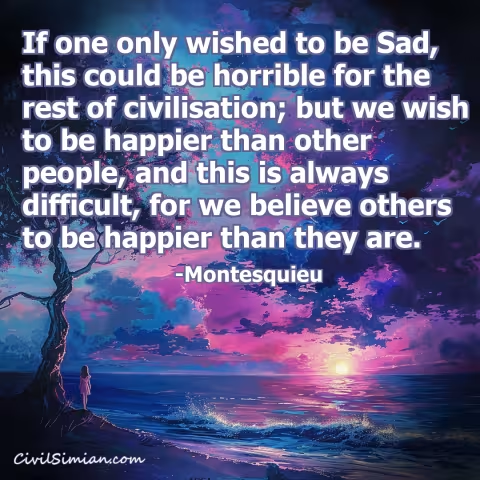
This fighting-shy of every obligation partly explains the phenomenon, half ridiculous, half disgraceful, Of the setting-up in our days of the platform of "youth" as youth. ... In comic fashion people call themselves "young," because they have heard that youth has more rights than obligations, since it can put off the fulfilment of these latter to the Greek Kalends of maturity. ...[T]he astounding thing at present is that these take it as an effective right precisely in order to claim for themselves all those other rights which only belong to the man who has already done something.
▼
Source
source
Chapter XV: We Arrive At The Real Question

7 months 1 week ago
(On the Trinitarian indwelling personally experienced by Saint Augustine) But what is it that I love in loving You? Not corporeal beauty, nor the splendour of time, nor the radiance of the light, so pleasant to our eyes, nor the sweet melodies of songs of all kinds, nor the fragrant smell of flowers, and ointments, and spices, not manna and honey, not limbs pleasant to the embracements of flesh. I love not these things when I love my God; and yet I love a certain kind of light, and sound, and fragrance, and food, and embracement in loving my God, who is the light, sound, fragrance, food, and embracement of my inner man — where that light shines unto my soul which no place can contain, where that sounds which time snatches not away, where there is a fragrance which no breeze disperses, where there is a food which no eating can diminish, and where that clings which no satiety can sunder. This is what I love, when I love my God.
▼
Source
source
X, 6, 8

5 months 2 days ago
Evaluations, in essence, are... ways of being, modes of existence of those who judge and evaluate.
▼
Source
source
p. 1
6 months 3 weeks ago
Science may be described as the art of systematic over-simplification - the art of discerning what we may with advantage omit.
▼
Source
source
The Open Universe : An Argument for Indeterminism (1992), p. 44

6 months 4 days ago
In this theater of man's life it is reserved only for God and angels to be lookers on.
▼
Source
source
Francis Bacon, in The Advancement of Learning (1605) Book II, xx, 8.
3 months 2 weeks ago
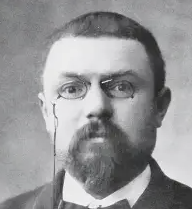
If all the parts of the universe are interchained in a certain measure, any one phenomenon will not be the effect of a single cause, but the resultant of causes infinitely numerous; it is, one often says, the consequence of the state of the universe the moment before.

5 months 2 weeks ago
In order to deceive melancholy, you must keep moving. Once you stop, it wakens, if in fact it has ever dozed off.
6 months 3 weeks ago
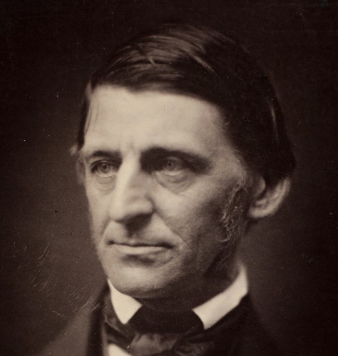
Thought is all light, and publishes itself to the universe. It will speak, though you were dumb, by its own miraculous organ. It will flow out of your actions, your manners, and your face. It will bring you friendships. It will impledge you to truth by the love and expectation of generous minds. By virtue of the laws of that Nature, which is one and perfect, it shall yield every sincere good that is in the soul, to the scholar beloved of earth and heaven.
2 months 3 weeks ago
It is a palpable falsehood to say we can have specie for our paper whenever demanded. Instead, then, of yielding to the cries of scarcity of medium set up by speculators, projectors and commercial gamblers, no endeavors should be spared to begin the work of reducing it by such gradual means as may give time to private fortunes to preserve their poise, and settle down with the subsiding medium; and that, for this purpose, the States should be urged to concede to the General Government, with a saving of chartered rights, the exclusive power of establishing banks of discount for paper.
▼
Source
source
6 November 1813, ME 13:431: The Writings of Thomas Jefferson "Memorial Edition" (20 Vols., 1903-04) edited by Andrew A. Lipscomb and Albert Ellery Bergh, Vol. 13, p. 431

5 months 2 weeks ago
The free will, the actual motor of reason in society, necessarily creates wrong. The individual must clash with the social order that claims to represent his own will in its objective form. But the wrong and the 'avenging justice' that remedies it not only expresses a 'higher logical necessity,' but also prepare the transition to a higher social form of freedom, the transition from abstract right to morality. For, in committing a wrong, and in accepting punishment for his deed, the individual becomes conscious of the 'infinite subjectivity' of his freedom. He learns that he is free only as a private person.
▼
Source
source
P. 198
5 months 2 weeks ago
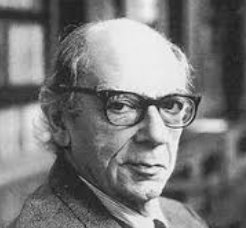
The very desire for guarantees that our values are eternal and secure in some objective heaven is perhaps only a craving for the certainties of childhood or the absolute values of our primitive past.

5 months 2 weeks ago
Yea; have ye never read, Out of the mouth of babes and sucklings thou hast perfected praise?
▼
Source
source
21:16 (KJV)
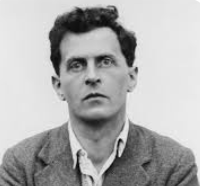
6 months 2 weeks ago
A philosopher who is not taking part in discussions is like a boxer who never goes into the ring.
▼
Source
source
Conversation of 1930
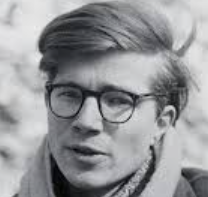
5 months 5 days ago
It was Rousseau who was largely responsible for the problem by giving currency to the idea that freedom can exist without responsibility and discipline.
▼
Source
source
Introductory Essay, p. xx
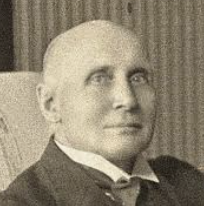
5 months 1 week ago
Nature is a structure of evolving processes. The reality is the process.
▼
Source
source
Ch. 4: "The Eighteenth Century", p. 102
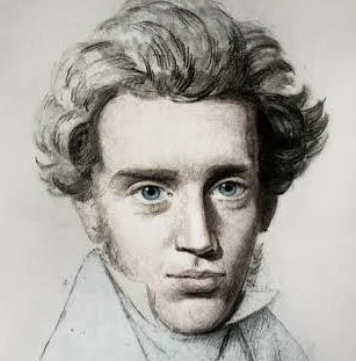
7 months 3 weeks ago
If the genius is an artist, then he accomplishes his work as art, but neither he nor his work of art has a telos outside him.
7 months 2 weeks ago
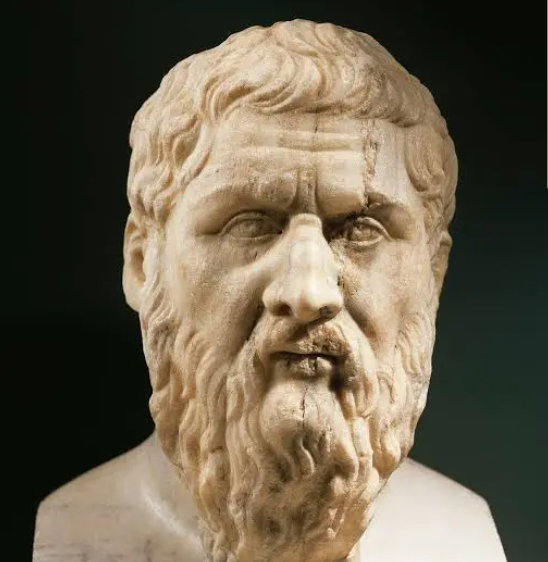
Your pride has been too much for the pride of your admirers; they were numerous and high-spirited, but they have all run away, overpowered by your superior force of character; not one of them remains. And I want you to understand the reason why you have been too much for them. You think that you have no need of them or of any other man, for you have great possessions and lack nothing, beginning with the body, and ending with the soul. Socrates speaking to Alcibiades
6 months 3 weeks ago
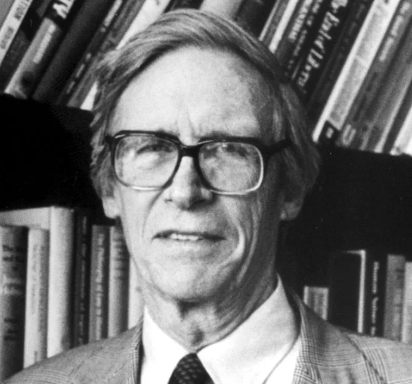
An individual who finds that he enjoys seeing others in positions of lesser liberty understands that he has no claim whatever to this enjoyment.
▼
Source
source
Chapter I, Section 6, pg. 31

7 months 1 week ago
The greatest states have been overthrown by the young and sustained and restored by the old. ... Rashness is the product of the budding-time of youth, prudence of the harvest-time of age.
▼
Source
source
section 20
2 months 3 weeks ago
Small farms make economic sense. They also produce more happiness, more beauty, more health-those things that aren't so quantifiable...
3 months 1 week ago
The science of the age, in short, is physical, chemical, physiological; in all shapes mechanical. Our favourite Mathematics, the highly prized exponent of all these other sciences, has also become more and more mechanical. Excellence in what is called its higher departments depends less on natural genius than on acquired expertness in wielding its machinery. Without undervaluing the wonderful results which a Lagrange or Laplace educes by means of it, we may remark, that their calculus, differential and integral, is little else than a more cunningly-constructed arithmetical mill; where the factors, being put in, are, as it were, ground into the true product, under cover, and without other effort on our part than steady turning of the handle. We have more Mathematics than ever; but less Mathesis.

7 months 1 week ago
Philosophers do not claim that God does not know particulars; they rather claim that He does not know them the way humans do. God knows particulars as their Creator whereas humans know them as a privileged creations of God might know them.

6 months 2 weeks ago
Beneath the humanization of the penalties, what one finds are all those rules that authorize, or rather demand, 'leniency', as a calculated economy of the powder to punish. But they also provoke a shift in the point of application of this power: it is no longer the body, with the ritual play of excessive pains, spectacular branding in the ritual of the public execution; it is the mind or rather a play of representations and sings circulating discreetly but necessarily and evidently in the minds of all. It is no longer the body, but the soul, said Mably. And we see very clearly what he meant by this term: the correlative of a technique of power. Old 'anatomies' of punishment are abandoned, But have we really entered the age of non-corporal punishment?
▼
Source
source
Chapter Two, Generalized Punishment, pp. 101
5 months 2 weeks ago
Sadness makes you God's prisoner.
5 months 3 weeks ago
Bad company is as instructive as licentiousness. One makes up for the loss of one's innocence with the loss of one's prejudices.
3 months 2 days ago
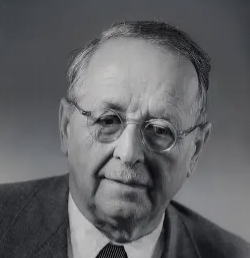
In the field of philosophy Kant was the first to take the next decisive step towards the point of view that not only the qualities revealed by the senses, but also space and spatial characteristics have no objective significance in the absolute sense; in other words, that space, too, is only a form of our perception.
▼
Source
source
Introduction
5 months 2 weeks ago
For a long time - always, in fact - I have known that life here on earth is not what I needed and that I wasn't able to deal with it; for this reason and for this reason alone, I have acquired a touch of spiritual pride, so that my existence seems to me the degradation and the erosion of a psalm.
5 months 4 weeks ago
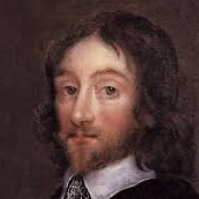
He who discommendeth others obliquely commendeth himself.
▼
Source
source
Part I, Section XXXIV
5 months 2 weeks ago
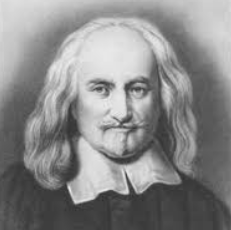
The Interpretation of the Laws of Nature in a Common-wealth, dependeth not on the books of Moral Philosophy. The Authority of writers, without the Authority of the Commonwealth, maketh not their opinions Law, be they never so true.
▼
Source
source
The Second Part, Chapter 26, p. 143
5 months 3 weeks ago
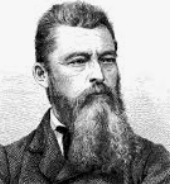
...for stones, plants, and animals there is no God, but only for man.
CivilSimian.com created by AxiomaticPanic, CivilSimian, Kalokagathia