


5 months 1 week ago
Let the modern eye look earnestly on that old midnight hour in St. Edmundsbury Church, shining yet on us, ruddy-bright, through the depths of seven hundred years; and consider mournfully what our Hero-worship once was, and what it now is!
8 months 1 week ago
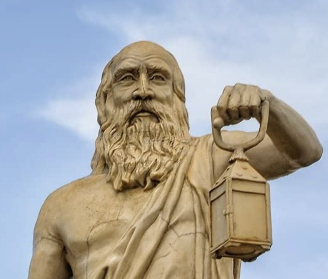
To the question what wine he found pleasant to drink, he replied, "That for which other people pay."
▼
Source
source
Diogenes Laërtius, vi. 54
8 months 3 weeks ago
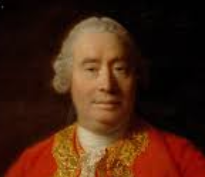
Morality is a subject that interests us above all others: We fancy the peace of society to be at stake in every decision concerning it; and 'tis evident, that this concern must make our speculations appear more real and solid, than where the subject is, in a great measure, indifferent to us. What affects us, we conclude can never be a chimera; and as our passion is engag'd on the one side or the other, we naturally think that the question lies within human comprehension; which, in other cases of this nature, we are apt to entertain some doubt of. Without this advantage I never should have ventur'd upon a third volume of such abstruse philosophy, in an age, wherein the greatest part of men seem agreed to convert reading into an amusement, and to reject every thing that requires any considerable degree of attention to be comprehended.
▼
Source
source
Part 1, Section 1

8 months 2 weeks ago
Can a mortal ask questions which God finds unanswerable? Quite easily, I should think. All nonsense questions are unanswerable. How many hours are there in a mile? Is yellow square or round? Probably half the questions we ask - half our great theological and metaphysical problems - are like that.
8 months 3 weeks ago
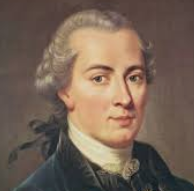
When the man governed by self-interest, the god of this world, does not renounce it but merely refines it by the use of reason and extends it beyond the constricting boundary of the present, he is represented (Luke XVI, 3-9) as one who, in his very person [as servant], defrauds his master [self- interest] and wins from him sacrifices in behalf of "duty."
▼
Source
source
Book IV, Part 1, Section 2, "The Christian religion as a natural religion"
8 months 4 weeks ago
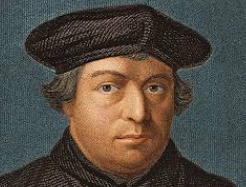
When our Lord and Master Jesus Christ said, "Repent," he willed the entire life of believers to be one of repentance.
▼
Source
source
Thesis 1
8 months 2 weeks ago
What the rest of us see only under the influence of mescalin, the artist is congenitally equipped to see all the time. His perception is not limited to what is biologically or socially useful.
▼
Source
source
Page 168
7 months 1 week ago
I have told you that... we know nothing save what we have first, in one way or another, desired; and it may even be added that we can know nothing well save what we love, save what we pity.

6 months 6 days ago
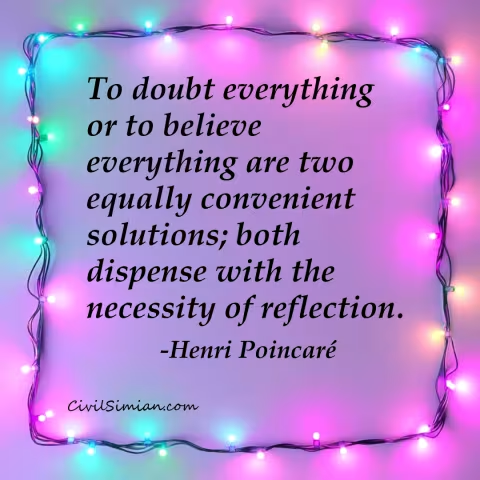
In comparing civilized man with the animal world, one is as the Alpine traveller, who sees the mountains soaring into the sky and can hardly discern where the deep shadowed crags and roseate peaks end, and where the clouds of heaven begin. Surely the awe-struck voyager may be excused if, at first, he refuses to believe the geologist, who tells him that these glorious masses are, after all, the hardened mud of primeval seas, or the cooled slag of subterranean furnaces-of one substance with the dullest clay, but raised by inward forces to that place of proud and seemingly inaccessible glory. But the geologist is right; and due reflection on his teachings, instead of diminishing our reverence and our wonder, adds all the force of intellectual sublimity, to the mere aesthetic intuition of the uninstructed beholder.
▼
Source
source
Ch.2, p. 131-132
9 months 2 weeks ago
For once touched by love, everyone becomes a poet.

9 months 5 days ago
When you do anything from a clear judgment that it ought to be done, never shun the being seen to do it, even though the world should make a wrong supposition about it; for, if you don't act right, shun the action itself; but, if you do, why are you afraid of those who censure you wrongly?
▼
Source
source
(35).
8 months 3 weeks ago
Hatred comes from the heart; contempt from the head; and neither feeling is quite within our control.
▼
Source
source
"Psychological Observations"
4 months 2 weeks ago
The nature of the universe is the nature of things that are. Now, things that are have kinship with things that are from the beginning. Further, this nature is styled Truth; and it is the first cause of all that is true.
▼
Source
source
IX, 1
5 months 1 week ago
It is life that educates, and perhaps love more than anything else in life.
▼
Source
source
Ch. 2 : On Youth

7 months 4 days ago
Now he saw the problem with great clarity. If he lived here, life would be pleasant and safe. But it would also be predictable. A child could be born here, grow up here, die here, without ever experiencing the excitement of discovery. Why did Dona question him endlessly about his life in the burrow and his journey to the country of the ants? Because for her, it represented a world that was dangerous and full of fascinating possibilities. For the children of this underground city, life was a matter of repetition, of habit. And this, he suddenly realized, was the heart of the problem. Habit. Habit was a stifling, warm blanket that threatened you with suffocation and lulled the mind into a state of perpetual nagging dissatisfaction. Habit meant the inability to escape from yourself, to change and develop . . .
▼
Source
source
pp. 132-133
7 months 2 weeks ago
Let us not pretend to doubt in philosophy what we do not doubt in our hearts.
▼
Source
source
Vol. V, par. 265
4 months 3 weeks ago
Crocodiles sweetly shut their lidded eyes, and yawned,for the blond meat had been quite good, and in slow rainsnew flesh would sprout once more and then be munched anew.
▼
Source
source
Book XI, line 652
7 months 3 weeks ago
The created World is but a small Parenthesis in Eternity.
▼
Source
source
Part III, Section XXIX
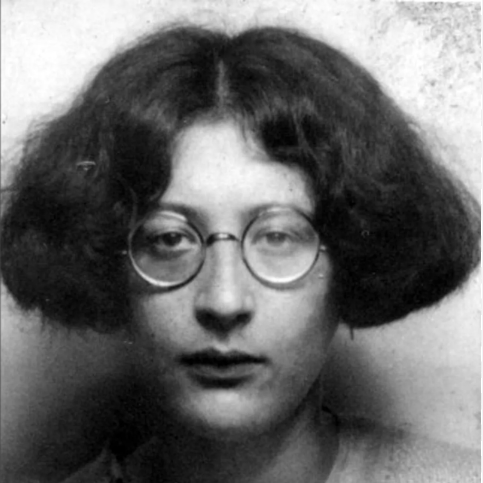
7 months 1 week ago
The full expression of personality depends upon its being inflated by social prestige; it is a social privilege.
▼
Source
source
p. 64
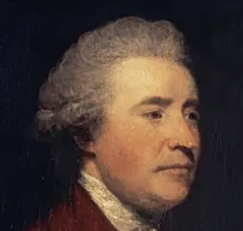
7 months 3 weeks ago
The African [slave] trade was, in his opinion, an absolute robbery. It therefore could not be a doubt with the House, whether it was proper to abolish it.
▼
Source
source
Speech in the House of Commons (12 May 1789), quoted in The Parliamentary History of England, From the Earliest Period to the Year 1803, Vol. XXVIII (1816), column 96
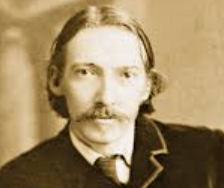
6 months 2 weeks ago
An appeal to his alarm is never a good plan to rid oneself of a spirited young man.
▼
Source
source
The Pavilion on the Links, ch. III.
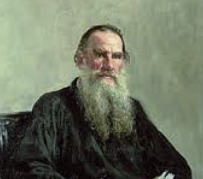
6 months 2 weeks ago
He did not, and could not, understand the meaning of words apart from their context. Every word and action of his was the manifestation of an activity unknown to him, which was his life.
▼
Source
source
About Platon Karataev in Bk. XII, ch. 13
9 months 3 weeks ago
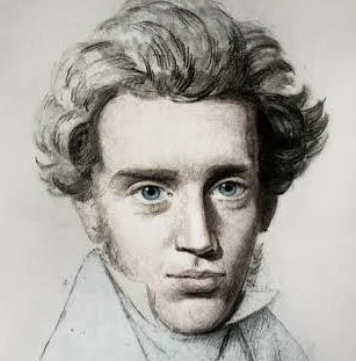
It was a purely Christian satisfaction to me that if ordinarily there was no one else there was one who in action tried a little to do the doctrine about loving the neighbor, alas, one who precisely by his act also received a frightful into what an illusion Christendom is and indeed, particularly later, also into how the common people let themselves be seduced by wretched journalists, whose striving and fighting for equality can only lead, if it leads to anything, since it is in the service of the lie, to making the elite, in self-defense, proud of their aloofness from the common man, and the common man brazen in his rudeness.
8 months 2 weeks ago
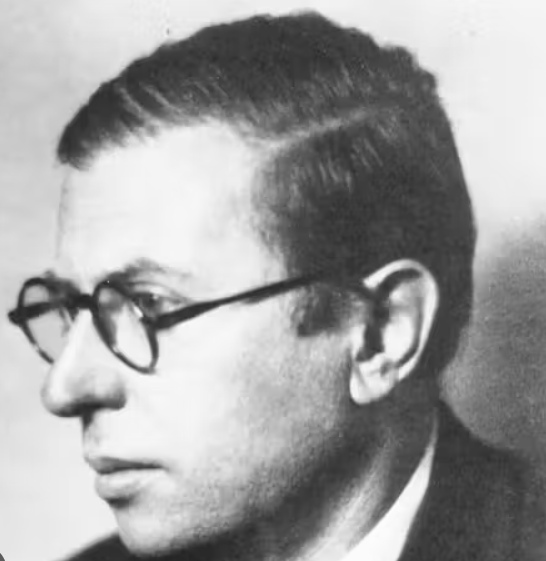
Tout existant naît sans raison, se prolonge par faiblesse et meurt par rencontre. Every existing thing is born without reason, prolongs itself out of weakness and dies by chance.
8 months 2 weeks ago
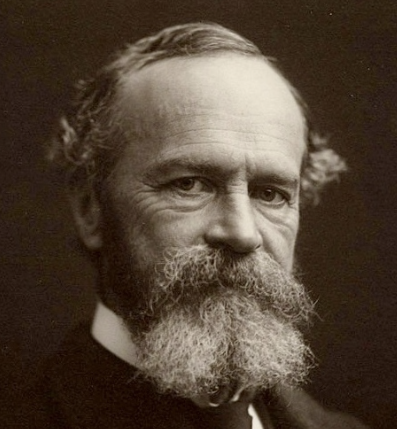
The necessity of faith as an ingredient in our mental attitude is strongly insisted on by the scientific philosophers of the present day; but by a singularly arbitrary caprice they say that it is only legitimate when used in the interests of one particular proposition, - the proposition, namely, that the course of nature is uniform. That nature will follow to-morrow the same laws that she follows to-day is, they all admit, a truth which no man can know; but in the interests of cognition as well as of action we must postulate or assume it.
8 months 2 weeks ago
In the course of evolution nature has gone to endless trouble to see that every individual is unlike every other individual.... Physically and mentally, each one of us is unique. Any culture which, in the interests of efficiency or in the name of some political or religious dogma, seeks to standardize the human individual, commits an outrage against man's biological nature.
▼
Source
source
Chapter 3 (p. 21)
8 months 2 weeks ago
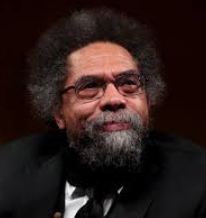
My aim is not to provide excuses for black behavior or to absolve blacks of personal responsibility. But when the new black conservatives accent black behavior and responsibility in such a way that the cultural realities of black people are ignored, they are playing a deceptive and dangerous intellectual game with the lives and fortunes of disadvantaged people. We indeed must criticize and condemn immoral acts of black people, but we must do so cognizant of the circumstances into which people are born and under which they live. By overlooking these circumstances, the new black conservatives fall into the trap of blaming black poor people for their predicament. It is imperative to steer a course between the Scylla of environmental determinism and the Charybdis of a blaming-the-victims perspective.
▼
Source
source
(p56)
8 months 3 weeks ago
Life consists with wildness. The most alive is the wildest. Not yet subdued to man, its presence refreshes him.
9 months 6 days ago
Thus, in this universal catastrophe, the sufferings of Christians have tended to their moral improvement, because they viewed them with eyes of faith.
▼
Source
source
I, 9
6 months 1 week ago
If it is the moral right we are to look at, I say, that on every principle of moral obligation, I hold that the Jew has a right to political power.
▼
Source
source
Speech in the House of Commons (5 April 1830) in favour of Robert Grant's Jewish Disabilities Bill
7 months ago
I am convinced we do not only love ourselves in others but hate ourselves in others too.
▼
Source
source
F 54
9 months ago
The world's a bubble, and the life of man Less than a span.
6 months 1 week ago
People crushed by law have no hopes but from power. If laws are their enemies, they will be enemies to laws.
▼
Source
source
According to Kenneth Owen Morgan (The Illustrated History of Britain (1984) p. 421) this was said by Macaulay in 1832. If so, he was quoting a letter written by Edmund Burke in 1777.
4 months 2 weeks ago
As for life, it is a battle and a sojourning in a strange land; but the fame that comes after is oblivion.
▼
Source
source
II, 17
7 months 2 weeks ago
Just as when a man commits suicide ne negates the body, this rational limit of subjectivity, so when he lapses into fantastic and trascendental practice he associates himself with embodied divine and ghostly appearances, namely, he negates in practise the difference between imagination and perception.
▼
Source
source
Part III, Section 29
5 months 6 days ago
Some of the wisest of men have in consequence of this called anger a short madness: for it is equally devoid of self control, regardless of decorum, forgetful of kinship, obstinately engrossed in whatever it begins to do, deaf to reason and advice, excited by trifling causes, awkward at perceiving what is true and just, and very like a falling rock which breaks itself to pieces upon the very thing which it crushes.
8 months 3 weeks ago
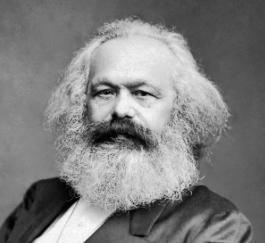
For the world to become philosophic amounts to philosophy's becoming world-order reality; and it means that philosophy, at the same time that it is realized, disappears.
8 months 3 weeks ago
The universal and lasting establishment of peace constitutes not merely a part, but the whole final purpose and end of the science of right as viewed within the limits of reason.

7 months 5 days ago
My thoughts have been shaped by the conviction that feminism must become a mass based political movement if it is to have a revolutionary, transformative impact on society.
▼
Source
source
p. xiii.
8 months 3 weeks ago
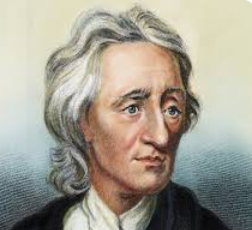
Whensoever therefore the legislative shall transgress this fundamental rule of society; and either by ambition, fear, folly or corruption, endeavour to grasp themselves, or put into the hands of any other, an absolute power over the lives, liberties, and estates of the people; by this breach of trust they forfeit the power the people had put into their hands for quite contrary ends, and it devolves to the people, who have a right to resume their original liberty, and, by the establishment of a new legislative, (such as they shall think fit) provide for their own safety and security, which is the end for which they are in society.
▼
Source
source
Second Treatise of Civil Government, Ch. XIX, sec. 222

7 months 1 week ago
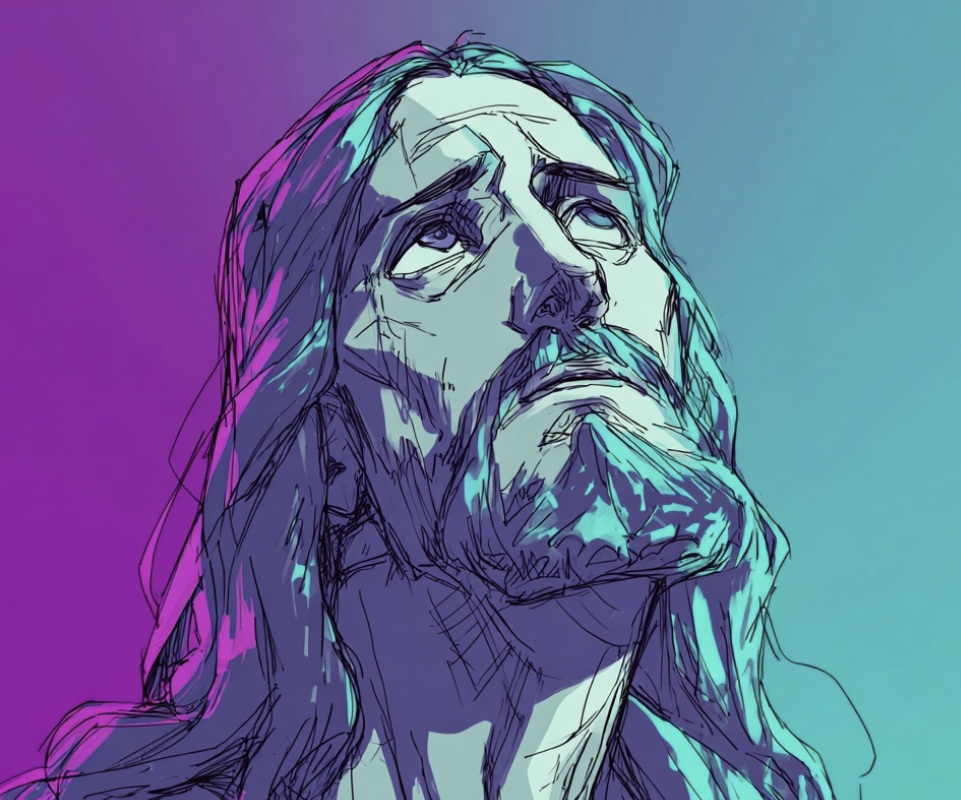
My Father is glorified in this, that you keep bearing much fruit and prove yourselves my disciples. Just as the Father has loved me, so I have loved you; remain in my love. If you observe my commandments, you will remain in my love, just as I have observed the commandments of the Father and remain in his love. “These things I have spoken to you, so that my joy may be in you and your joy may be made full. This is my commandment, that you love one another just as I have loved you. No one has love greater than this, that someone should surrender his life in behalf of his friends. You are my friends if you do what I am commanding you. I no longer call you slaves, because a slave does not know what his master does. But I have called you friends, because I have made known to you all the things I have heard from my Father.
▼
Source
source
15:8-15, New World Translation of the Holy Scriptures
8 months 2 weeks ago
There is one thing, and only one, in the whole universe which we know more about than we could learn from external observation. That one thing is Man. We do not merely observe men, we are men. In this case we have, so to speak, inside information; we are in the know.
▼
Source
source
Book I, Chapter 4, "What Lies behind the Law"
9 months 2 weeks ago
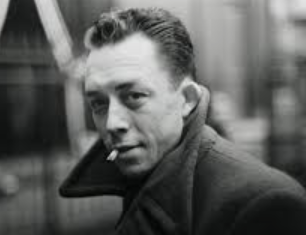
At this point of his effort man stands face to face with the irrational. He feels within him his longing for happiness and for reason. The absurd is born of this confrontation between the human need and the unreasonable silence of the world. This must not be forgotten. This must be clung to because the whole consequence of a life can depend on it. The irrational, the human nostalgia, and the absurd that is born of their encounter, these are the three characters in the drama that must necessarily end with all the logic of which an existence is capable.
5 months 1 week ago
Close thy Byron; open thy Goethe.
▼
Source
source
Bk. I, ch. 9.

CivilSimian.com created by AxiomaticPanic, CivilSimian, Kalokagathia