

8 months 3 weeks ago
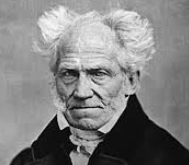
The discovery of truth is prevented more effectively, not by the false appearance things present and which mislead into error, not directly by weakness of the reasoning powers, but by preconceived opinion, by prejudice.
▼
Source
source
Vol. 2, Ch. 1, § 17
4 months 2 weeks ago
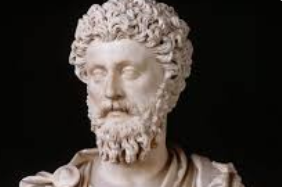
Remember that the term Rational was intended to signify a discriminating attention to every several thing and freedom from negligence; and that Equanimity is the voluntary acceptance of things which are assigned to thee by the common nature; and the Magnanimity is the elevation of the intelligent part above the pleasurable or painful sensations of the flesh, and above that poor thing called fame, and death, and all such things. If then, thou maintainest thyself in the possession of these names, without desiring to be called by these names by others, thou wilt be another person and wilt enter into another life.
▼
Source
source
X, 8
4 months 3 weeks ago
As long as our souls remain strong, that is all that matters; as long as they don't decline. Because with the fall of certain souls in this world, the world itself will collapse. These are the pillars which support it. They are few, but enough.
▼
Source
source
"My Friend Poet. Mount Athos.", Ch. 19, p. 215

4 months 2 weeks ago
A good prescription is still more profitable than an absolution.
▼
Source
source
As quoted by Friedrich Albert Lange, History of Materialism and Critique of its Present Importance Tr. Ernest Chester Thomas (1882) 2nd edition, Vol. 2, p. 55.
7 months 3 weeks ago
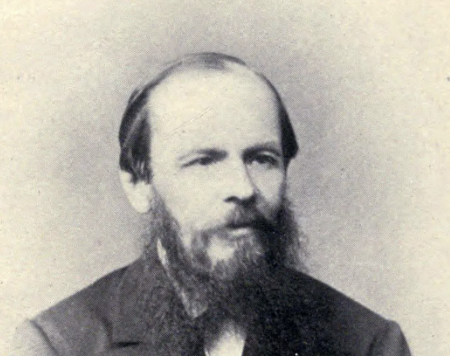
It's easier for a Russian to become an atheist than for anyone else in the world.
▼
Source
source
Part 4, Chapter 7

5 months 1 week ago
Talk never yet could guide any man's or nation's affairs; nor will it yours, except towards the Limbus Patrum, where all talk, except a very select kind of it, lodges at last.

8 months 2 days ago
Repentance deserveth Pardon.
7 months 1 week ago
The pathfinders of modern thought did not derive what is good from the law. ... Their role in history was not that of adapting their words and actions to the text of old documents or generally accepted doctrines: they themselves created the documents and brought about the acceptance of their doctrines.
▼
Source
source
p. 33.
5 months 2 weeks ago
When the general population no longer constitutes the armed forces, when the army is no longer the people in arms, then empires fall. Today all armies are again tending to become mercenary armies.
▼
Source
source
49
9 months 2 weeks ago
In every rebellion is to be found the metaphysical demand for unity, the impossibility of capturing it, and the construction of a substitute universe.
8 months 3 weeks ago
It is said that God is always on the side of the big battalions.
▼
Source
source
Letter to François-Louis-Henri Leriche (6 February 1770) Note: In his Notebooks (c.1735-c.1750)
4 months 1 week ago
As a child, I received instruction both in the Bible and in the Talmud. I am a Jew, but I am enthralled by the luminous figure of the Nazarene.

9 months 3 weeks ago
...and woe betide fateful curiosity should it ever succeed in peering through a crack in the chamber of consciousness, out and down into the depths, and thus gain an intimation of the fact that humanity, in the indifference of its ignorance, rests on the pitiless, the greedy, the insatiable, the murderous clinging in dreams, as it were, to the back of a tiger.
8 months 3 weeks ago
At the present stage in the development of the art of war, there is only way of coping with them, and that is to keep out of war. In all the densely populated countries of Western Europe, it seems almost certain that, within a few days of the outbreak of war, panic will seize the surviving inhabitants of the capitals and the industrial areas, leading to anarchy, starvation, and paralysis of all warlike effort. The only sensible course, therefore, is to prevent war if possible, and to remain neutral if war occurs.
▼
Source
source
Letter to The New Statesman and Nation (10 August 1935)
8 months 2 weeks ago
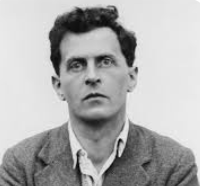
Never stay up on the barren heights of cleverness, but come down into the green valleys of silliness.
▼
Source
source
p. 76e
8 months 3 weeks ago
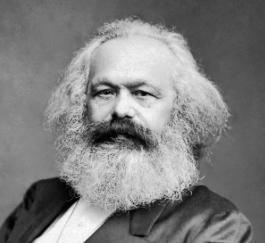
A house may be large or small; as long as the neighboring houses are likewise small, it satisfies all social requirement for a residence. But let there arise next to the little house a palace, and the little house shrinks to a hut. The little house now makes it clear that its inmate has no social position at all to maintain, or but a very insignificant one; and however high it may shoot up in the course of civilization, if the neighboring palace rises in equal or even in greater measure, the occupant of the relatively little house will always find himself more uncomfortable, more dissatisfied, more cramped within his four walls.
▼
Source
source
Wage Labour and Capital (December 1847), in Marx Engels Selected Works, Volume I, p. 163.

7 months 1 week ago
As the great words of freedom and fulfillment are pronounced by campaigning leaders and politicians, on the screens and radios and stages, they turn into meaningless sounds which obtain meaning only in the context of propaganda, business, discipline, and relaxation. This assimilation of the ideal with reality testifies to the extent to which the ideal has been surpassed. It is brought down from the sublimated realm of the soul or the spirit or the inner man, and translated into operational terms and problems. Here are the progressive elements of mass culture. The perversion is indicative of the fact that advanced industrial society is confronted with the possibility of a materialization of ideals. The capabilities of this society are progressively reducing the sublimated realm in which the condition of man was represented, idealized, and indicted. Higher culture becomes part of the material culture. In this transformation, it loses the greater part of its truth.
▼
Source
source
pp. 57-58
9 months 1 week ago
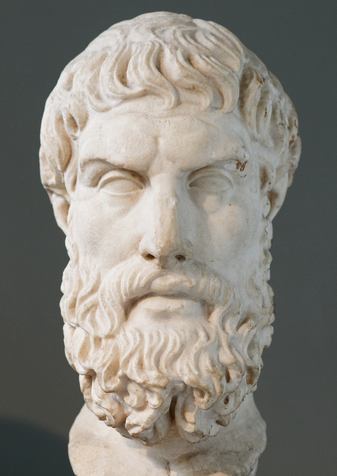
Nearly allied to justice are the virtues of beneficence, compassion, gratitude, piety, and friendship.
4 months 2 weeks ago
He who flies from his master is a runaway; but the law is master, and he who breaks the law is a runaway. And he also who is grieved or angry or afraid, is dissatisfied because something has been or is or shall be of the things which are appointed by Him who rules all things, and He is Law, and assigns to every man what is fit. He then who fears or is grieved or is angry is a runaway.
▼
Source
source
X, 25
8 months 3 weeks ago
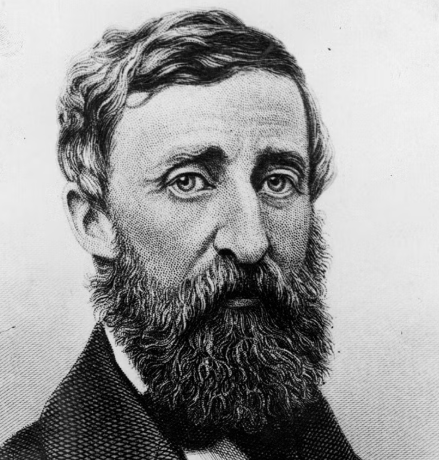
It was his peculiar doctrine that a man has a perfect right to interfere by force with the slaveholder, in order to rescue the slave. I agree with him. They who are continually shocked by slavery have some right to be shocked by the violent death of the slaveholder, but no others.
9 months 5 days ago
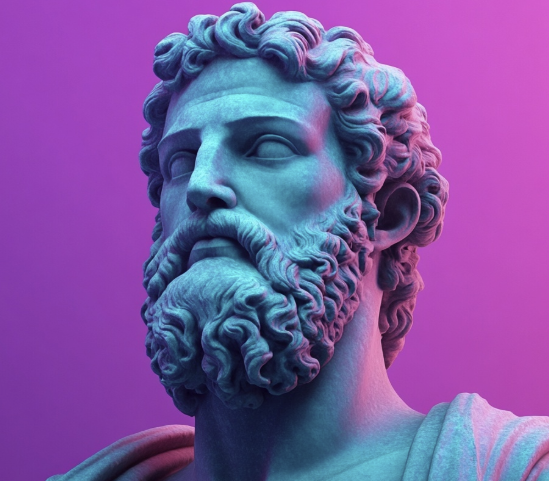
If we are not stupid or insincere when we say that the good or ill of man lies within his own will, and that all beside is nothing to us, why are we still troubled?
▼
Source
source
Book I, ch. 25, § 1.
6 months 6 days ago
The great end of life is not knowledge but action.
▼
Source
source
"Technical Education"
9 months 2 weeks ago
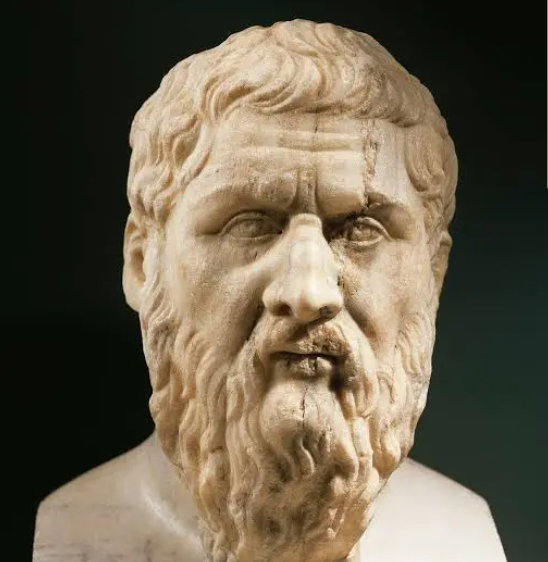
Neither perception nor true opinion, nor reason or explanation combined with true opinion could be knowledge. Then our art of midwifery declare to us that all the offspring that have been born are mere wind-eggs and not worth rearing and if you remain barren, you will be less harsh and gentler to your associates, for you will have the wisdom not to think you know that which you do not know.

7 months 2 weeks ago
The source of an emotion is very difficult to grasp, but it comes to just that. That holds for all phenomena, for faith, etc. Why did it begin, how did it develop? and so forth-only he who has the gift of divination can perceive where it really comes from. But it is not accessible to reflection.

7 months 2 weeks ago
That history just unfolds, independently of a specified direction, of a goal, no one is willing to admit.



5 months 4 weeks ago
Progress in civilization seems possible only in interludes when history is idling.
▼
Source
source
An Old Chaos: The Emperor's Tomb (p. 35)
8 months 3 weeks ago
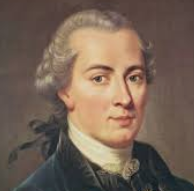
Now the maximum of perfection is called ideal, by Plato, Idea - for instance, his Idea of a Republic - and is the principle of all that is contained under the general notion of any perfection, inasmuch as the lesser grades are not thought determinable but by limiting the maximum. But God, the Ideal of perfection, and hence the principle of cognition, is also, as existing really, the principle of the creation of all perfection.
7 months 2 weeks ago
Where are my sensations? They have melted into... me, and what is this me, this self, but the sum of these evaporated sensations?
7 months 3 weeks ago
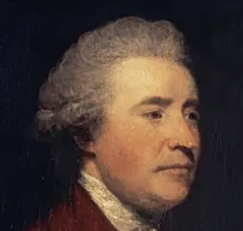
There are few with whom I can communicate so freely as with Pope. But Pope cannot bear every truth. He has a timidity which hinders the full exertion of his faculties, almost as effectually as bigotry cramps those of the general herd of mankind. But whoever is a genuine follower of truth keeps his eye steady upon his guide, indifferent whither he is led, provided that she is the leader. And, my Lord, if it may be properly considered, it were infinitely better to remain possessed by the whole legion of vulgar mistakes, than to reject some, and, at the same time, to retain a fondness for others altogether as absurd and irrational. The first has at least a consistency, that makes a man, however erroneously, uniform at least; but the latter way of proceeding is such an inconsistent chimera and jumble of philosophy and vulgar prejudice, that hardly anything more ridiculous can be conceived.
7 months 5 days ago
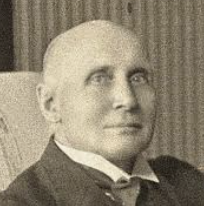
Our minds are finite, and yet even in these circumstances of finitude we are surrounded by possibilities that are infinite, and the purpose of human life is to grasp as much as we can out of the infinitude.
▼
Source
source
Ch. 21, June 28, 1941.
8 months 3 weeks ago
As geological time goes, it is but a moment since the human race began and only the twinkling of an eye since the arts of civilization were first invented. In spite of some alarmists, it is hardly likely that our species will completely exterminate itself. And so long as man continues to exist, we may be pretty sure that, whatever he may suffer for a time, and whatever brightness may be eclipsed, he will emerge sooner or later, perhaps strengthened and reinvigorated by a period of mental sleep. The universe is vast and men are but tiny specks on an insignificant planet. But the more we realize our minuteness and our impotence in the face of cosmic forces, the more astonishing becomes what human beings have achieved.
▼
Source
source
"If We are to Survive this Dark Time", The New York Times Magazine, 9/3/1950
4 months 2 weeks ago
If thou art pained by any external thing, it is not this that disturbs thee, but thy own judgment about it. And it is in thy power to wipe out this judgment now.
▼
Source
source
VIII. 47, trans. George Long

4 months 2 weeks ago
The politicians have kept the environmental movement quiet by designating wilderness areas. And in the meantime, they've let corporations run completely out of control, and extraordinarily destructively, in the economic landscapes, without any acknowledgement at all that the natural world is out there just the same as it is in the parks.

8 months 3 weeks ago
Space is employed as the type even of the concept of time itself, representing it by a line, and its limits - moments - by points. Time, on the other had, approaches more to a universal and rational concept, comprising under its relations all things whatsoever, to wit, space itself, and besides, those accidents which are not comprehended in the relations of space, such as the thoughts of the soul. Again, time, besides this, though it certainly does not dictate the laws of reason, yet constitutes the principal conditions tinder favor of which the mind compares its notions according to the laws of reason. Thus, I cannot judge what is impossible except by predicating a and not-a of the same subject at the same time.
4 months 2 weeks ago
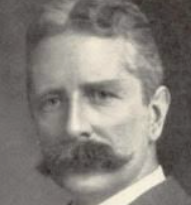
We want philosophers, among other reasons, because the world is full of false philosophy. The way of experience is beset on every hand by a multitude of verbal judgments, of empty phrases, of word-copies, which pass themselves off as the real thing, which pretend to do duty for concrete fact and, by force of their number and importunity, capture our attention and cause the true originals to be overlooked. If it is true that philosophy must perforce fight its battles with words, is it not equally true that words are the weapons against which it must everywhere contend? The philosopher bent on the enlargement of experience perceives at once that his work cannot be done, cannot even be commenced, until he has cleared away the heaps of verbal detritus under which the bedrocks of experience lie buried.
6 months 2 weeks ago
Them that die will be the lucky ones!
▼
Source
source
Ch. 20, Silver's Embassy.

6 months 2 weeks ago
The media themselves are the avant-garde of our society. Avant-garde no longer exists in painting, music and poetry, it's the media themselves.
▼
Source
source
p. 274
7 months 1 week ago
So long as a man's power, that is, his capacity to realize what he has in mind, is bound to the goal, to the work, to the calling, it is, considered in itself, neither good nor evil, it is only a suitable or unsuitable instrument. But as soon as this bond with the goal is broken off or loosened, and the man ceases to think of power as the capacity to do something, but thinks of it as a possession, that is, thinks of power in itself, then his power, being cut off and self-satisfied, is evil; it is power withdrawn from responsibility, power which betrays the spirit, power in itself.
▼
Source
source
p. 152
8 months 1 week ago
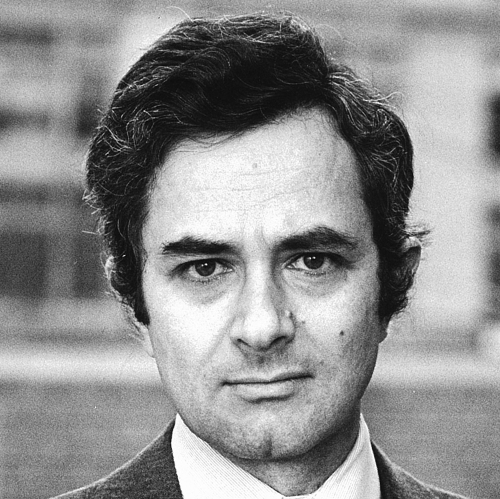
We assume that our own advances in objectivity are steps along a path that extends beyond them and beyond all our capacities. But even allowing unlimited time, or an unlimited number of generations, to take as many successive steps as we like, the process can never be completed. ... What is wanted is some way of making the most objective standpoint the basis of action.
▼
Source
source
pp. 128-129.

7 months 4 days ago
For this is our central human problem: that we are almost constantly the victims of our emotions, always being swept up and down on a kind of inner-switchback. We possess a certain control over them; we can 'direct our thoughts' -- or feelings -- in such a way as to intensify them. This is certainly our most remarkable human characteristic: imagination. Animals require actual physical stimuli to trigger their experience. A man can retreat into a book -- or a daydream -- and live through certain experiences quite independent of the physical world. He can even, for example, imagine a sexual encounter, and not only experience all the appropriate physical responses, but even the sexual climax. Such a curious ability is far beyond the power of any animal.
▼
Source
source
p. 23

8 months 3 weeks ago
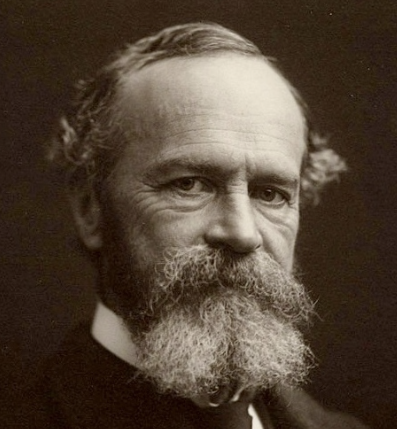
Let sanguine healthy-mindedness do its best with its strange power of living in the moment and ignoring and forgetting, still the evil background is really there to be thought of, and the skull will grin in at the banquet.
▼
Source
source
Lectures IV and V, "The Religion of Healthy-Mindedness"
CivilSimian.com created by AxiomaticPanic, CivilSimian, Kalokagathia