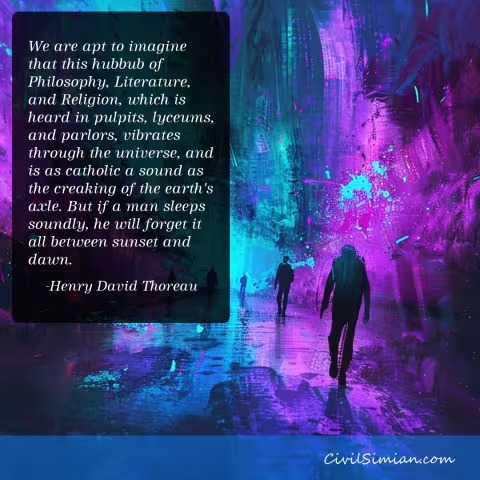
The body has to survive first.....some think they are never surviving well enough...some think things are stable enough and pursue an explanation....



Young man, there is America - which at this day serves for little more than to amuse you with stories of savage men and uncouth manners; yet shall, before you taste of death, show itself equal to the whole of that commerce which now attracts the envy of the world.
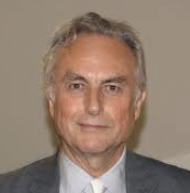
Maybe somewhere in some other galaxy there is a super-intelligence so colossal that from our point of view it would be a god. But it cannot have been the sort of God that we need to explain the origin of the universe, because it cannot have been there that early.
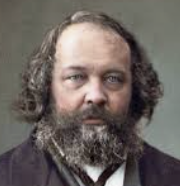
Of escape there are but three methods - two chimerical and a third real. The first two are the dram-shop and the church, debauchery of the body or debauchery of the mind; the third is social revolution.
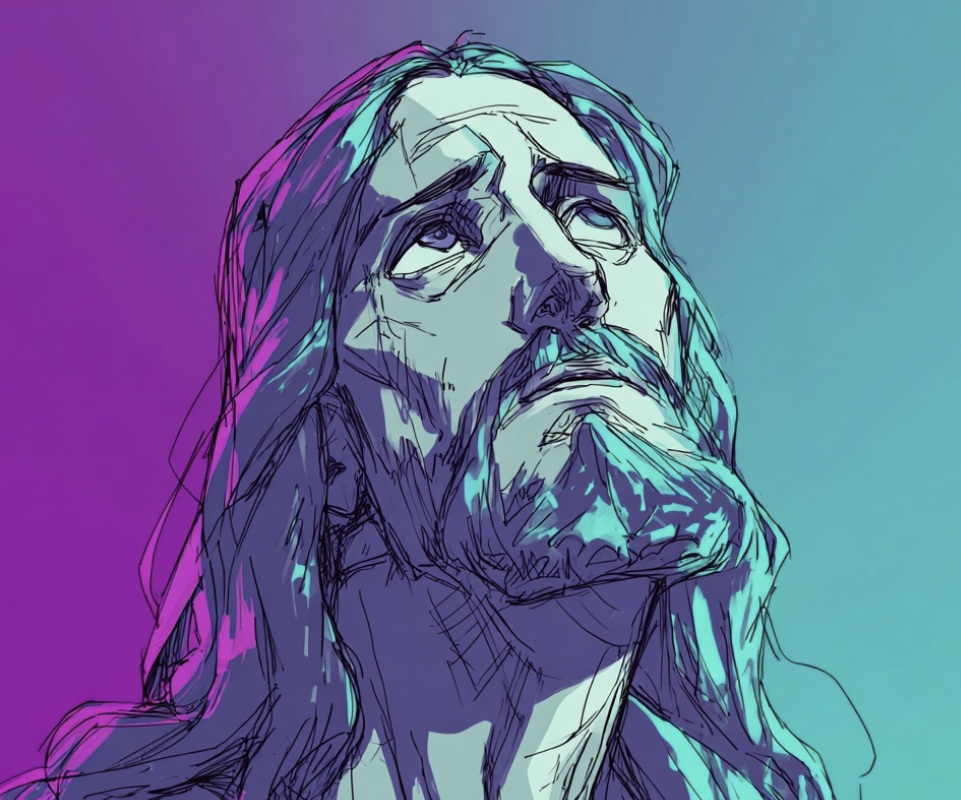
Every plant, which my heavenly Father hath not planted, shall be rooted up. Let them alone: they be blind leaders of the blind. And if the blind lead the blind, both shall fall into the ditch.
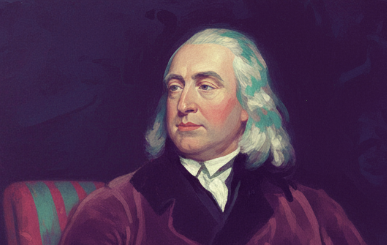
The principle of utility judges any action to be right by the tendency it appears to have to augment or diminish the happiness of the party whose interests are in question... if that party be the community the happiness of the community, if a particular individual, the happiness of that individual.
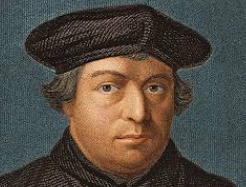
If a woman becomes weary and at last dead from bearing, that matters not; let her only die from bearing, she is there to do it.

I do not think that the real reason why people accept religion has anything to do with argumentation. They accept religion on emotional grounds. One is often told that it is a very wrong thing to attack religion, because religion makes men virtuous. So I am told; I have not noticed it.
The aim of protection, in short, is to prevent the bringing into a country of things in themselves useful and valuable, in order to compel the making of such things. But what all mankind in the individual affairs of every-day life, regard as to be desired is not the making of things, but the possession of things.
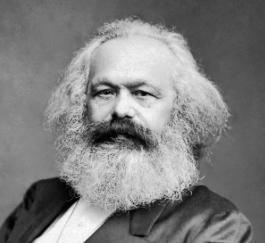
Through the emancipation of private property from the community, the State has become a separate entity, beside and outside civil society; but is it nothing more than the form of organization which the bourgeois necessarily adopt both for internal and external purposes, for the mutual guarantee of their property and interests.
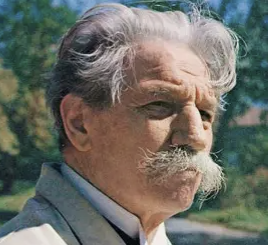
It is the fate of every truth to be an object of ridicule when it is first acclaimed. It was once considered foolish to suppose that black men were really human beings and ought to be treated as such. What was once foolish has now become a recognized truth. Today it is considered as exaggeration to proclaim constant respect for every form of life as being the serious demand of a rational ethic. But the time is coming when people will be amazed that the human race existed so long before it recognized that thoughtless injury to life is incompatible with real ethics. Ethics is in its unqualified form extended responsibility to everything that has life.
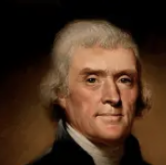
It is literally true that the toleration of banks of paper discount costs the United States one-half their war taxes; or, in other words, doubles the expenses of every war. Now think but for a moment, what a change of condition that would be, which should save half our war expenses, require but half the taxes, and enthral us in debt but half the time.
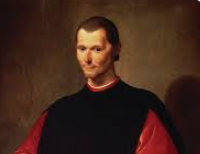
I believe that it is possible for one to praise, without concern, any man after he is dead since every reason and supervision for adulation is lacking.
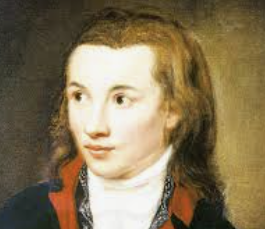
Tools arm the man. One can well say that man is capable of bringing forth a world; he lacks only the necessary apparatus, the corresponding armature of his sensory tools. The beginning is there. Thus the principle of a warship lies in the idea of the shipbuilder, who is able to incorporate this thought by making himself into a gigantic machine, as it were, through a mass of men and appropriate tools and materials. Thus the idea of a moment often required monstrous organs, monstrous masses of materials, and man is therefore a potential, if not an actual creator.

A mollusk is a cheap edition [of man] with a suppression of the costlier illustrations, designed for dingy circulation, for shelving in an oyster-bank or among the seaweed.
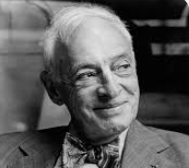
A great deal of intelligence can be invested in ignorance when the need for illusion is deep.
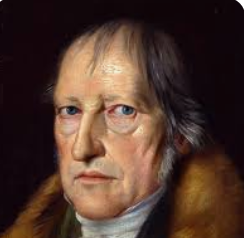
The Few assume to be the deputies, but they are often only the despoilers of the Many.
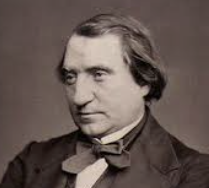
To be free in an age like ours, one must be in a position of authority. That in itself would be enough to make me ambitious.

Step back in time; look closely at the child in the very arms of his mother; see the external world reflected for the first time in the yet unclear mirror of his understanding; study the first examples which strike his eyes; listen to the first words which arouse within him the slumbering power of thought; watch the first struggles which he has to undergo; only then will you comprehend the source of his prejudices, the habits, and the passions which are to rule his life. The entire man, so to speak, comes fully formed in the wrappings of his cradle.
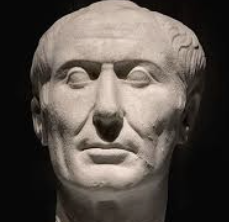
Nothing can be done at once hastily and prudently.

At the edge of life you feel that you are no longer master of the life within you, that subjectivity is an illusion, and that uncontrollable forces are seething inside you, evolving with no relation to a personal center or a definite, individual rhythm.
Truths begin by a conflict with the police - and end by calling them in.

Much of the modern resistance to chastity comes from men's belief that they "own" their bodies - those vast and perilous estates, pulsating with the energy that made the worlds, in which they find themselves without their consent and from which they are ejected at the pleasure of Another!
Even pacifist agitation or the nation-wide fever of big sports competitions acts as a spur to war fever in circumstances like ours. Any kind of excitement or emotion contributes to the possibility of dangerous explosions when the feelings of huge populations are kept inflamed even in peacetime for the sake of the advancement of commerce. Headlines mean street sales. It takes emotion to move merchandise. And wars and rumors of wars are the merchandise and also the emotion of the popular press.
As art sinks into paralysis, artists multiply. This anomaly ceases to be one if we realize that art, on its way to exhaustion, has become both impossible and easy.
Bourgeois society is ruled by equivalence. It makes the dissimilar comparable by reducing it to abstract quantities. To the Enlightenment, that which does not reduce to numbers, and ultimately to the one, becomes illusion.
Never accept compliments or criticism from someone you wouldn't take advice from.
You can take away a man's gods, but only to give him others in return.
Sadism is plainly connected with the need for self-assertion. At the same time it cannot be separated from the idea of defeat. A sadist is a man, who, in some sense, has his back to the wall. Nothing is further from sadism, for example, than the cheerful, optimistic mentality of a Shaw or Wells.
Communism differs from all previous movements in that it overturns the basis of all earlier relations of production and intercourse, and for the first time consciously treats all natural premises as the creatures of hitherto existing men, strips them of their natural character and subjugates them to the power of the united individuals. Its organisation is, therefore, essentially economic, the material production of the conditions of this unity; it turns existing conditions into conditions of unity. The reality, which communism is creating, is precisely the true basis for rendering it impossible that anything should exist independently of individuals, insofar as reality is only a product of the preceding intercourse of individuals themselves.
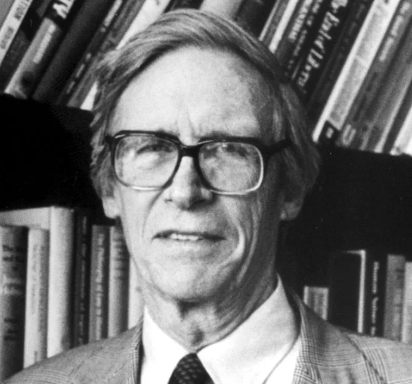
Yet it seems extraordinary that the justice of increasing the expectations of the better placed by a billion dollars, say, should turn on whether the prospects of the least favored increase or decrease by a penny.
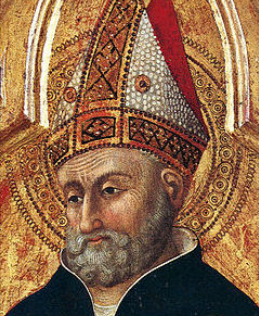
For it still seemed to me that it is not we who sin, but some other nature sinned in us. And it gratified my pride to be beyond blame, and when I did anything wrong not to have to confess that I had done wrong. I loved to excuse my soul and to accuse something else inside me (I knew not what) but which was not I. But, assuredly, it was I, and it was my impiety that had divided me against myself. That sin then was all the more incurable because I did not deem myself a sinner.

Human nature is evil, and goodness is caused by intentional activity.
They have retired into the Judiciary as a stronghold. There the remains of federalism are to be preserved and fed from the Treasury; and from that battery all the works of republicanism are to be beaten down and erased.
The very port and gait of a swan, or turkey, or peacock show the high idea he has entertain'd of himself; and his contempt of all others. This is the more remarkable, that in the two last species of animals, the pride always attends the beauty, and is discover'd in the male only. The vanity and emulation of nightingales in singing have been commonly remark'd [...] All these are evident proofs, that pride and humility are not merely human passions, but extend themselves over the whole animal creation.
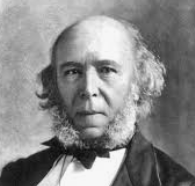
The saying that beauty is but skin deep is but a skin-deep saying.
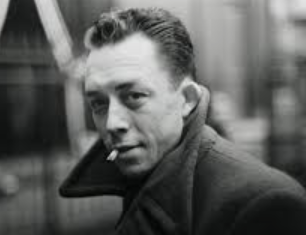
God is not needed to create guilt or to punish. Our fellow men suffice, aided by ourselves.
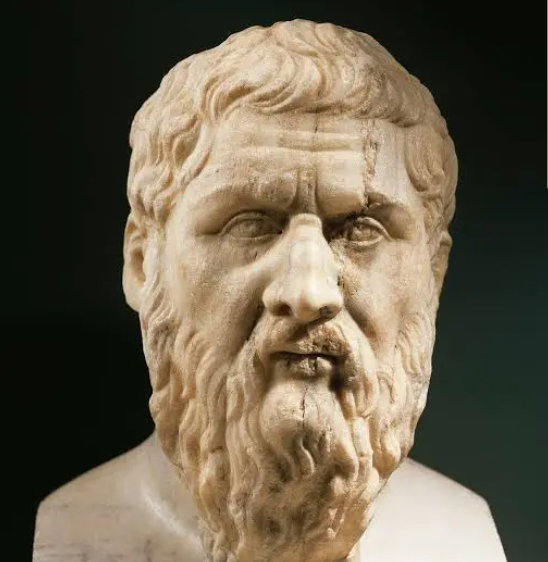
Parmenides: Whatever the subject of your hypothesis, if you suppose that it is or is not, or that it experiences any other affection, you must consider what happens to it and to any other particular things you may choose, and to a greater number and to all in the same way; and you must consider other things in relation to themselves and to anything else you may choose in any instance, whether you suppose that the subject of your hypothesis exists or does not exist, if you are to train yourself completely to see the truth perfectly.
We favor hypotheses for their simplicity and explanatory power, much as the architect of the world might have done in choosing which possibility to create.
To execute laws is a royal office; to execute orders is not to be a king. However, a political executive magistracy, though merely such, is a great trust.
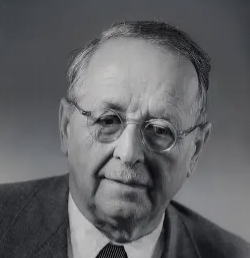
A new theory by the author has been added, which draws the physical inferences consequent on the extension of the foundations of geometry beyond Reimann... and represents an attempt to derive from world-geometry not only gravitational but also electromagnetic phenomena. Even if this theory is still only in its infant stage, I feel convinced that it contains no less truth than Einstein's Theory of Gravitation-whether this amount of truth is unlimited or, what is more probable, is bounded by the Quantum Theory.
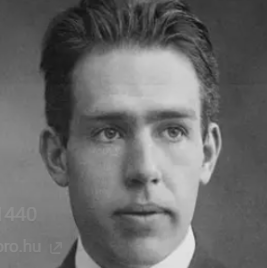
It is a great pity that human beings cannot find all of their satisfaction in scientific contemplativeness.
The wise through excess of wisdom is made a fool.
So many men are deprived of grace. How can one live without grace? One has to try it and do what Christianity never did: be concerned with the damned.
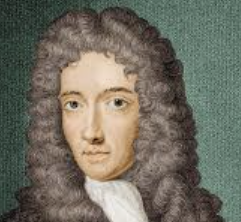
Not that I at all disallow the use of reasoning upon experiments, or the endeavouring to discern as early as we can the confederations, and differences, and tendencies of things: for such an absolute suspension of the exercise of reasoning were exceeding troublesome, if not impossible. And, as in that rule of arithmetic, which is commonly called regula falsi by proceeding upon a conjecturally-supposed number, as if it were that, which we inquire after, we are wont to come to the knowledge of the true number sought for; so in physiology it is sometimes conducive to the discovery of truth, to permit the understanding to make an hypothesis, in order to the explication of this or that difficulty, that by examining how far the phænomena are, or are not, capable of being solved by that hypothesis, the understanding may, even by its own errors, be instructed.
CivilSimian.com created by AxiomaticPanic, CivilSimian, Kalokagathia