


5 months 2 weeks ago
The name of a man is a numbing blow from which he never recovers.
6 months 3 weeks ago
Those wise men knew God to be in things, and Divinity to be latent in Nature, working and glowing differently in different subjects and succeeding through diverse physical forms, in certain arrangements, in making them participants in her, I say, in her being, in her life and intellect.
▼
Source
source
As translated by Arthur Imerti

7 months 2 weeks ago
The days .... come and go like muffled and veiled figures, sent from a distant friendly party; but they say nothing, and if we do not use the gifts they bring, they carry them as silently away.
▼
Source
source
Works and Days
3 months 2 weeks ago
It is always necessary to call men back to history, which is the first master in politics, or more exactly the only master.
▼
Source
source
p. 120

7 months 3 weeks ago
We have to learn to think in a new way. We have to learn to ask ourselves, not what steps can be taken to give military victory to whatever group we prefer, for there no longer are such steps; the question we have to ask ourselves is: what steps can be taken to prevent a military contest of which the issue must be disastrous to all parties?

6 months 3 weeks ago
Gentlemen, the melancholy event of yesterday reads to us an awful lesson against being too much troubled about any of the objects of ordinary ambition. The worthy gentleman, who has been snatched from us at the moment of the election, and in the middle of contest, whilst his desires were as warm, and his hopes as eager as ours, has feelingly told us, what shadows we are, and what shadows we pursue.
▼
Source
source
Speech at Bristol on declining the poll, referring to a Mr. Richard Coombe (9 September 1780), quoted in The Works of the Right Honourable Edmund Burke, Vol. II (1855), p. 171
6 months 1 week ago
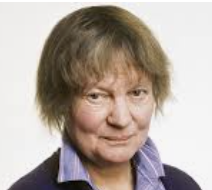
All art is the struggle to be, in a particular sort of way, virtuous.
▼
Source
source
The Black Prince (1973); 2003, p. 181.
7 months 3 weeks ago
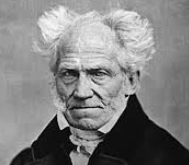
Every man takes the limits of his own field of vision for the limits of the world.
▼
Source
source
"Psychological Observations"

4 months 1 week ago
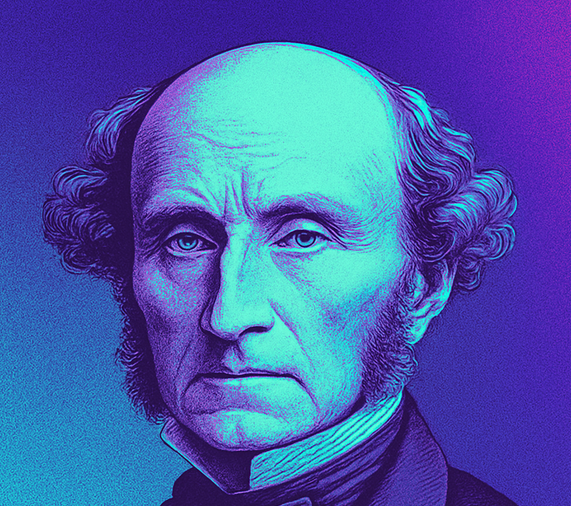
Thus Mr. Sale informs me, the old Arab Tribes would gather in liveliest gaudeamus, and sing, and kindle bonfires, and wreathe crowns of honour, and solemnly thank the gods that, in their Tribe too, a Poet had shewn himself. As indeed they well might; for what usefuller, I say not nobler and heavenlier thing could the gods, doing their very kindest, send to any Tribe or Nation, in any time or circumstances?
7 months 3 weeks ago
May it not be the fact that mankind, who after all are made up of single human beings, obtain a greater sum of happiness when each pursues his own, under the rules and conditions required by the good of the rest, than when each makes the good of the rest his only object, and allows himself no personal pleasures not indispensable to the preservation of his faculties? The regimen of a blockaded town should be cheerfully submitted to when high purposes require it, but is it the ideal perfection of human existence?
▼
Source
source
Auguste Comte and Positivism, p. 142
4 months 6 days ago
I have no need to take up each thing that wants to throw its cause on us and show that it is occupied only with itself, not with us, only with its good, not with ours. Look at the rest for yourselves. Do truth, freedom, humanity, justice, desire anything else than that you grow enthusiastic and serve them?
▼
Source
source
Cambridge 1995, p. 6
4 months 1 day ago
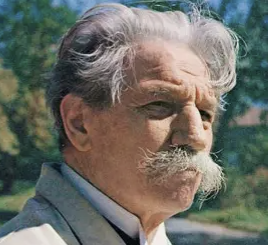
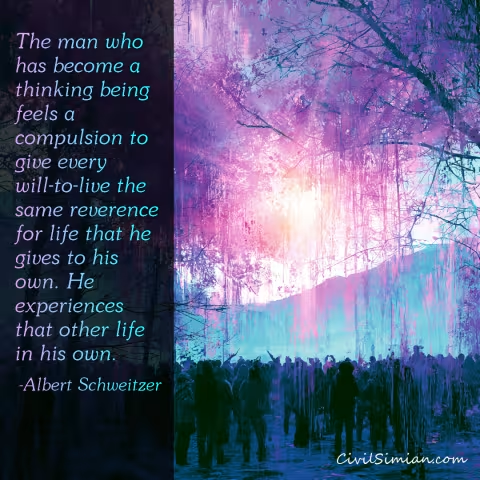
Just as the wave cannot exist for itself, but is ever a part of the heaving surface of the ocean, so must I never live my life for itself, but always in the experience which is going on around me. It is an uncomfortable doctrine which the true ethics whisper into my ear. You are happy, they say; therefore you are called upon to give much.
▼
Source
source
Chapter 26

6 months 2 weeks ago
Death is too exact; it has all the reasons on its side. Mysterious for our instincts, it takes shape, to our reflection, limpid, without glamor, and without the false lures of the unknown. By dint of accumulating non-mysteries and monopolizing non-meanings, life inspires more dread than death: it is life which is the Great Unknown.
6 months 2 weeks ago
Even when nothing happens, everything seems too much for me. What can be said, then, in the presence of an event, any event?
7 months 2 weeks ago
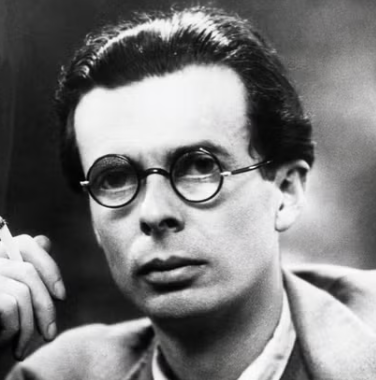
The Ideal Man of the eighteenth century was the Rationalist; of the seventeenth, the Christian Stoic; of the Renaissance, the Free Individual; of the Middle Ages, the Contemplative Saint. And what is our Ideal Man? On what grand and luminous mythological figure does contemporary humanity attempt to model itself? The question is embarrassing. Nobody knows. And, in spite of all the laudable efforts of the Institute for Intellectual Co-operation to fabricate an acceptable Ideal Man for the use of Ministers of Education, nobody, I suspect, will know until such time as a major poet appears upon the scene with the unmistakable revelation. Meanwhile, one must be content to go on piping up for reason and realism and a certain decency.
▼
Source
source
p. 5
6 months 6 days ago
Logic chases truth up the tree of grammar.
▼
Source
source
Philosophy of Logic
7 months 4 weeks ago
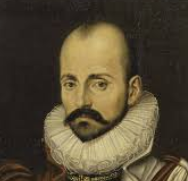
It is more of a job to interpret the interpretations than to interpret the things, and there are more books about books than about any other subject: we do nothing but write glosses about each other.
▼
Source
source
Ch. 13
4 months 5 days ago
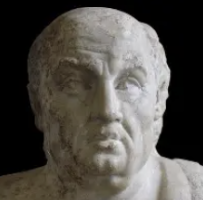
He who has injured thee was either stronger or weaker than thee. If weaker, spare him; if stronger, spare thyself.
▼
Source
source
De Ira (On Anger); Book III, Chapter V

7 months 2 weeks ago
Friendship arises out of mere companionship when two or more of the companions discover that they have in common some insight or interest or even taste which the others do not share and which, till that moment, each believed to be his own unique treasure (or burden). The typical expression of opening Friendship would be something like, "What? You too? I thought I was the only one."
6 months 3 weeks ago
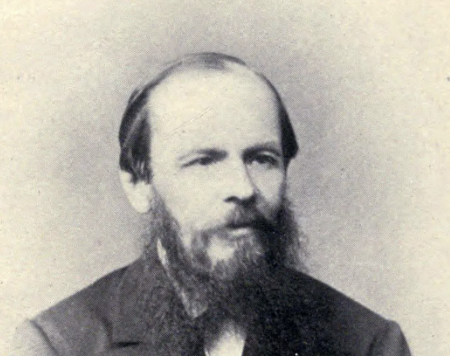
It seemed clear to me that life and the world somehow depended upon me now. I may almost say that the world now seemed created for me alone: if I shot myself the world would cease to be at least for me. I say nothing of its being likely that nothing will exist for anyone when I am gone, and that as soon as my consciousness is extinguished the whole world will vanish too and become void like a phantom, as a mere appurtenance of my consciousness, for possibly all this world and all these people are only me myself.
5 months 2 weeks ago
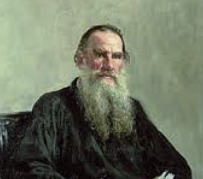
The savage recognizes life only in himself and his personal desires. His interest in life is concentrated on himself alone. The highest happiness for him is the fullest satisfaction of his desires. The motive power of his life is personal enjoyment. His religion consists in propitiating his deity and in worshiping his gods, whom he imagines as persons living only for their personal aims.
▼
Source
source
Chapter IV, Christianity Misunderstood by Men of ScienceChapter IV, Christianity Misunderstood by Men of Science
8 months 5 days ago
For human beings, the measure of every action is the impression of the senses.
▼
Source
source
Book I, ch. 28, 10
7 months 3 weeks ago
In the revolt against idealism, the ambiguities of the word "experience" have been perceived, with the result that realists have more and more avoided the word. It is to be feared, however, that if the word is avoided the confusions of thought with which it has been associated may persist.
▼
Source
source
On the Nature of Acquaintance: Neutral Monism, 1914
6 months 2 weeks ago
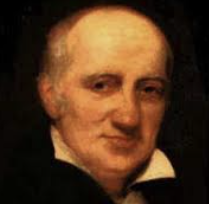
The true object of moral and political disquisition is pleasure or happiness.The primary, or earliest, class of human pleasure is the pleasures of external senses.In addition to these, man is susceptible of certain secondary pleasures, as the pleasures of intellectual feeling, the pleasures of sympathy, and the pleasures of self-approbation. The secondary pleasures are probably more exquisite than the primary; Or, at least,The most desirable state of man is that in which he has access to all these sources of pleasure, and is in possession of a happiness the most varied and uninterrupted. This state is a state of high civilization.
▼
Source
source
Summary of Principles 1.1
6 months 2 weeks ago
By all evidence we are in the world to do nothing.
6 months 2 weeks ago
Sadness makes you God's prisoner.
4 months 2 weeks ago
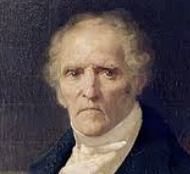
Wisdom, virtue, morality, all these have fallen out of fashion: everybody worships at the shrine of commerce.
▼
Source
source
The Theory of the Four Movements (1808), G. Jones, ed. (1966), p. 269

6 months 3 weeks ago
You may set the Negro free, but you cannot make him otherwise than an alien to the European. Nor is this all we scarcely acknowledge the common features of humanity in this stranger whom slavery has brought among us. His physiognomy is to our eyes hideous, his understanding weak, his tastes low; and we are almost inclined to look upon him as a being intermediate between man and the brutes.
▼
Source
source
Chapter XVIII.
7 months 3 weeks ago
"I don't want to! Why should I?" "Because more people will be happier if you do than if you don't." "So what? I don't care about other people." "You should." "But why?" "Because more people will be happier if you do than if you don't."
▼
Source
source
Dialogue between Russell and his daughter Katharine, as quoted in My Father - Bertrand Russell, 1975
6 months 3 weeks ago
Every man has some reminiscences which he would not tell to everyone, but only to his friends. He has others which he would not reveal even to his friends, but only to himself, and that in secret. But finally there are still others which a man is even afraid to tell himself, and every decent man has a considerable number of such things stored away. That is, one can even say that the more decent he is, the greater the number of such things in his mind.
▼
Source
source
Part 1, Chapter 11
6 months 3 weeks ago
This day I heard from Laurence who has sent me papers confirming the portentous State of France-where the Elements which compose Human Society seem all to be dissolved, and a world of Monsters to be producd in the place of it-where Mirabeau presides as the Grand Anarch; and the late Grand Monarch makes a figure as ridiculous as pitiable.
▼
Source
source
Letter to Richard Burke (c. 10 October 1789), quoted in Alfred Cobban and Robert A. Smith (eds.), The Correspondence of Edmund Burke, Volume VI: July 1789-December 1791 (1967), p. 30
4 months 5 days ago
Growth is slow but collapse is rapid.
▼
Source
source
Ugo Bardi (2017) . "The Seneca Effect: Why growth is slow but collapse is rapid". ISSN 1612-3018. DOI:10.1007/978-3-319-57207-9.

7 months 2 days ago
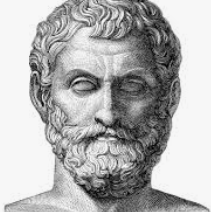
Hope is the only good that is common to all men; those who have nothing else possess hope still.
▼
Source
source
A Dictionary of Thoughts (1908) by Tryon Edwards, p. 234
6 months ago
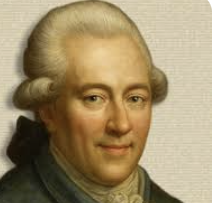
When a book and a head collide and a hollow sound is heard, must it always have come from the book?
▼
Source
source
D 66
6 months 5 days ago
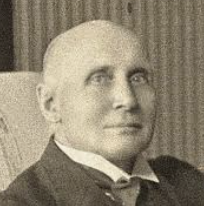
Rightness of limitation is essential for growth of reality.Unlimited possibility and abstract creativity can procure nothing. The limitation, and the basis arising from what is already actual, are both of them necessary and interconnected.
▼
Source
source
Religion in the Making (February 1926), Lecture IV: "Truth and Criticism".
6 months 1 week ago
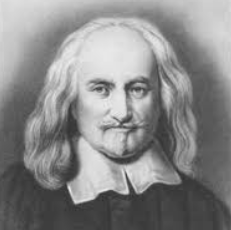
The RIGHT OF NATURE, which Writers commonly call Jus Naturale, is the Liberty each man hath, to use his own power, as he will himself, for the preservation of his own Nature; that is to say, of his own Life; and consequently, of doing any thing, which in his own Judgement, and Reason, he shall conceive to be the aptest means thereunto.
▼
Source
source
The First Part, Chapter 14, p. 64
5 months 2 weeks ago
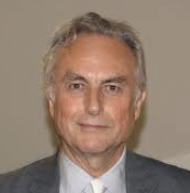
In particular, it is certainly wrong to condemn poor old Homo sapiens as the only species to kill his own kind, the only inheritor of the mark of Cain, and similar melodramatic charges. Whether a naturalist stresses the violence or the restraint of animal aggression depends partly on the kinds of animals he is used to watching, and partly on his evolutionary preconceptions-Lorenz is, after all, a 'good of the species' man. Even if it has been exaggerated, the gloved fist view of animal fights seems to have at least some truth. Superficially this looks like a form of altruism. The selfish gene theory must face up to the difficult task of explaining it. Why is it that animals do not go all out to kill rival members of their species at every possible opportunity?
▼
Source
source
Ch. 5. Aggression: stability and the selfish machine
7 months 3 weeks ago
As a philosopher, if I were speaking to a purely philosophic audience I should say that I ought to describe myself as an Agnostic, because I do not think that there is a conclusive argument by which one prove that there is not a God. On the other hand, if I am to convey the right impression to the ordinary man in the street I think that I ought to say that I am an Atheist, because, when I say that I cannot prove that there is not a God, I ought to add equally that I cannot prove that there are not the Homeric gods.
▼
Source
source
"Proof of God"
5 months 2 weeks ago
The remedy for loneliness is human fellowship, the warmth of real, live, flesh-and-blood companions and loved-ones; not prating in a vacuum to an imaginary friend for whose existence there is no vestige of serious evidence. Even an AI robot is better than that. At least ChatGPT exists, really talks back at you, will actually hold a friendly conversation. But talk to the imaginary friend which is God (Allah, Virgin Mary, Lord Krishna, Thor, Zeus, Mithras, name yours) and the only reply you'll get is conjured within your own imagination. You'll be talking to yourself, which is really rather sad, and hardly an antidote to loneliness. No Satisfying Alternative to Religion? Try Reality.
▼
Source
source
23-Apr-25
6 months 2 days ago
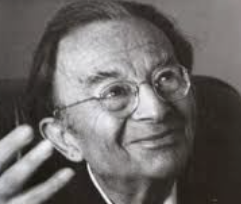
Chronic boredom - compensated or uncompensated - constitutes one of the major psychopathological phenomena in contemporary technotronic society, although it is only recently that it has found some recognition.
▼
Source
source
p. 273
6 months 3 days ago
Crowley wanted to be a magician because he wanted power -- power over other people.
▼
Source
source
p. 157
6 months 2 weeks ago
There is an innate anxiety which supplants in us both knowledge and intuition.

6 months 1 week ago
Being is continuous becoming.
▼
Source
source
P. 136
7 months 3 weeks ago
When I found myself regarded as respectable, I began to wonder what sins I had committed. I must be very wicked, I thought. I began to engage in the most uncomfortable introspection. Interview with Irwin Ross, September 1957;If there were a God, I think it very unlikely that he would have such an uneasy vanity as to be offended by those who doubt his existence.
▼
Source
source
Collected Papers of Bertrand Russell (2005), p. 385
3 months 2 weeks ago
The good old Dominion, the blessed mother of us all.
▼
Source
source
"Thoughts on Lotteries", 1826
4 months 1 week ago
With stupidity and sound digestion man may front much.
▼
Source
source
Bk. II, ch. 4.
5 months 2 weeks ago
All of the new media have enriched our perceptions of language and older media. They are to the man-made environment what species are to biology.
▼
Source
source
(p. 84)
CivilSimian.com created by AxiomaticPanic, CivilSimian, Kalokagathia