

4 months 4 weeks ago
We are passengers, comprehended and displaced by metaphor.
▼
Source
source
Chapter 8, Performative Reflexivity, p. 137
7 months 3 weeks ago
This I think is sufficiently evident, that children generally hate to be idle. All the care then is, that their busy humour should be constantly employ'd in something of use to them; which, if you will attain, you must make what you would have them do a recreation to them, and not a business.
▼
Source
source
Sec. 129
6 months 2 weeks ago
Unless man have a natural bent in accordance with nature's, he has no chance of understanding nature at all.
▼
Source
source
IV
5 months 1 week ago
Conservatism is itself a modernism, and in this lies the secret of its success.
▼
Source
source
"Eliot and Conservatism" (p. 194)
3 months 1 week ago
The standard bearers have grown weak in the defense of their priceless heritage, and the powers of darkness have been strengthened thereby. Weakness of attitude becomes weakness of character; it becomes lack of power to act with courage proportionate to danger. All this must lead to the destruction of our intellectual life unless the danger summons up strong personalities able to fill the lukewarm and discouraged with new strength and resolution.
6 months 1 week ago
And seeing every man is presumed to do all things in order to his own benefit, no man is a fit Arbitrator in his own cause.
▼
Source
source
The First Part, Chapter 15, p. 78
7 months 2 weeks ago
Jehovah, Allah, the Trinity, Jesus, Buddha, are names for a great variety of human virtues, human mystical experiences, human remorses, human compensatory fantasies, human terrors, human cruelties. If all men were alike, all the world would worship the same God.
▼
Source
source
"One and Many," p. 3

6 months 1 week ago
Liberal philosophy, at this point, ceases to be empirical and British in order to become German and transcendental. Moral life, it now believes, is not the pursuit of liberty and happiness of all sorts by all sorts of different creatures; it is the development of a single spirit in all life through a series of necessary phases, each higher than the preceding one. No man, accordingly, can really or ultimately desire anything but what the best people desire. This is the principle of the higher snobbery; and in fact, all earnest liberals are higher snobs.
▼
Source
source
"The Irony of Liberalism"
8 months 6 days ago
We make a ladder of our vices, if we trample those same vices underfoot.
▼
Source
source
3

3 months 2 weeks ago
Do not think me gentle because I speak in praise of gentleness, or elegant because I honor the grace that keeps this world. I am a man crude as any, gross of speech, intolerant, stubborn, angry, full of fits and furies. That I may have spoken well at times, is not natural. A wonder is what it is.
▼
Source
source
A Warning To My Readers
3 months 2 weeks ago
The resolution of complex Facts into precise and measured partial Facts, we call the 'Decomposition of Facts'. This process is requisite for the progress of science, but does not necessarily lead to progress. The Conceptions by which Facts are bound together, are suggested by the sagacity of discoverers. But a supply of appropriate hypotheses cannot be constructed by rule, nor without inventive talent. The truth of tentative hypotheses must be tested by their application to facts. The discoverer must be ready, carefully to try his hypotheses in this manner, and to reject them if they will not bear the test, in spite of indolence and vanity.
7 months 3 weeks ago
Although the whole of this life were said to be nothing but a dream and the physical world nothing but a phantasm, I should call this dream or phantasm real enough, if, using reason well, we were never deceived by it.
▼
Source
source
As quoted in The World of Mathematics (1956) by J. R. Newman, p. 1832

6 months 2 days ago
Immature love says: "I love you because I need you." Mature love says: "I need you because I love you."
▼
Source
source
Ch. 2
8 months 3 weeks ago
Consciousness presupposes itself, and asking about its origin is an idle and just as sophistical a question as that old one, "What came first, the fruit-tree or the stone? Wasn't there a stone out of which came the first fruit-tree? Wasn't there a fruit-tree from which came the first stone?
4 months 1 week ago
Great organizers, as much as inevitable slaves, tend to stoic moods: it is difficult to be either master or servant if one is sensitive.
6 months 3 weeks ago
Social positivism only accepts duties, for all and towards all. Its constant social viewpoint cannot include any notion of rights, for such notion always rests on individuality. We are born under a load of obligations of every kind, to our predecessors, to our successors, to our contemporaries. These obligations then increase or accumulate, for it is some time before we can return any service. ... Any human right is therefore as absurd as immoral. Since there are no divine rights anymore, this concept must therefore disappear completely as related only to the preliminary regime and totally inconsistent with the final state where there are only duties based on functions.
▼
Source
source
Le Catéchisme positiviste
7 months 4 weeks ago
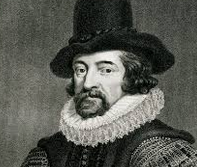
Nay, number (itself) in armies, importeth not much, where the people is of weak courage; for (as Virgil saith) it never troubles the wolf how many the sheep be.
▼
Source
source
Essays or Counsels Civil and Moral (1597), XXIX: "Of the True Greatness of Kingdoms and Estates."

7 months 2 weeks ago
It is a sign of wisdom to be able to use parrhesia without falling into the garrulousness of athuroglossos... One of the problems... how to distinguish that which must be said from that which should be kept silent.
8 months 6 days ago
The Heavenly City outshines Rome, beyond comparison. There, instead of victory, is truth; instead of high rank, holiness; instead of peace, felicity; instead of life, eternity.
▼
Source
source
Book II, Chapter 29
5 months 2 weeks ago
The genes are the master programmers, and they are programming for their lives.
▼
Source
source
Ch. 4. The Gene machine
6 months 1 week ago
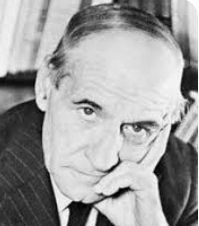
I am I and my circumstance, and if I don't save it I don't save myself.
6 months 6 days ago
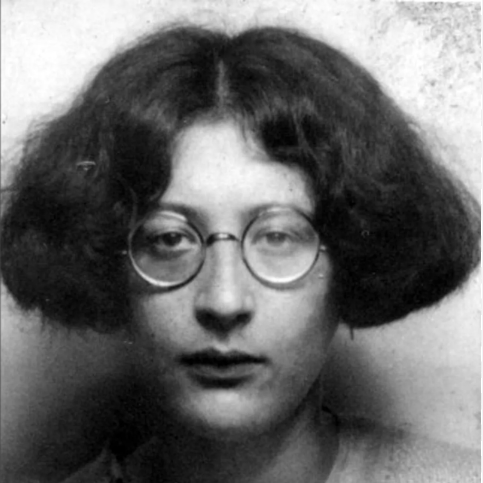
I too have a growing inner certainty that there is a deposit of pure gold in me which ought to be passed on. The trouble is that I am more and more convinced by my experience and observation of my contemporaries that there is no one to receive it.
8 months 3 weeks ago
How could one speak properly about love if you were forgotten, you God of love, source of all love in heaven and on earth; you who spared nothing but in love gave everything; you who are love, so that one who loves is what he is only by being in you.
7 months 2 weeks ago
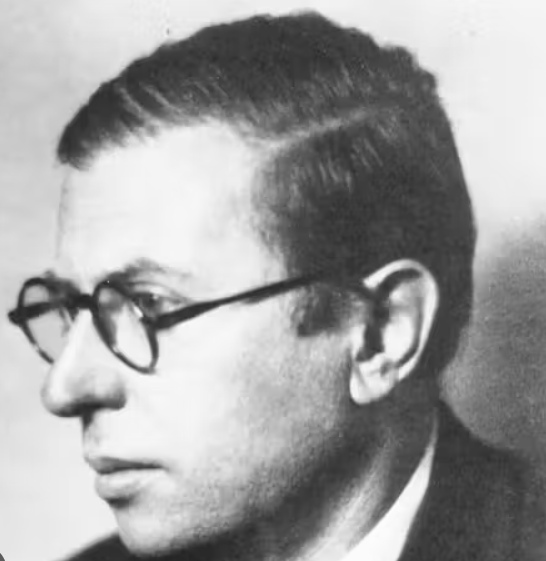
I hate victims who respect their executioners.
▼
Source
source
Loser Wins (Les Séquestrés d'Altona: A Play in Five Acts)

6 months 3 weeks ago
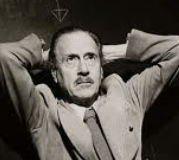
There is hardly a pioneer's hut which does not contain a few odd volumes of Shakespeare. I remember reading the feudal drama of Henry V for the first time in a log cabin.
▼
Source
source
Book One, Chapter XIII.
5 months 2 weeks ago
My method is vertical rather than horizontal so the scenery does not change but the texture does.
▼
Source
source
Letter to The Listener October 1971, Letters of Marshall McLuhan (1987), p. 318
3 months 2 weeks ago
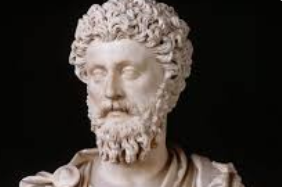
Depart then satisfied, for he also who releases thee is satisfied.
▼
Source
source
XII, 36
7 months 2 weeks ago
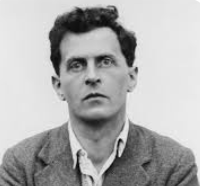
The idea that in order to get clear about the meaning of a general term one had to find the common element in all its applications has shackled philosophical investigation; for it has not only led to no result, but also made the philosopher dismiss as irrelevant the concrete cases, which alone could have helped him understand the usage of the general term.
▼
Source
source
p. 19
7 months 2 weeks ago
The deadliest enemies of nations are not their foreign foes; they always dwell within their borders. And from these internal enemies civilization is always in need of being saved. The nation blest above all nations is she in whom the civic genius of the people does the saving day by day, by acts without external picturesqueness; by speaking, writing, voting reasonably; by smiting corruption swiftly; by good temper between parties; by the people knowing true men when they see them, and preferring them as leaders to rabid partisans or empty quacks.
▼
Source
source
Robert Gould Shaw: Oration upon the Unveiling of the Shaw Monument
5 months 3 weeks ago
Yet sometimes vegetables and animals are, by certain epithets or circumstances, extended to other significations; as a Tree, when called the tree of life or of knowledge; and a Beast, when called the old serpent, or worshiped. When a Beast or Man is put for a kingdom, his parts and qualities are put for the analogous parts and qualities of the kingdom; as the head of a Beast, for the great men who precede and govern; the tail for the inferior people, who follow and are governed; the heads, if more than one, for the number of capital parts, or dynasties, or dominions in the kingdom, whether collateral or successive, with respect to the civil government; the horns on any head, for the number of kingdoms in that head, with respect to military power...
▼
Source
source
Vol. I, Ch. 2: Of the Prophetic Language
5 months 2 weeks ago
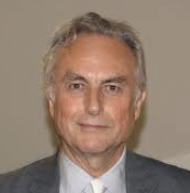
If you have a faith, it is statistically overwhelmingly likely that it is the same faith as your parents and grandparents had. No doubt soaring cathedrals, stirring music, moving stories and parables, help a bit. But by far the most important variable determining your religion is the accident of birth. The convictions that you so passionately believe would have been a completely different, and largely contradictory, set of convictions, if only you had happened to be born in a different place. Epidemiology, not evidence.

4 months 1 week ago
The great law of culture is: Let each become all that he was created capable of being.
▼
Source
source
Richter.
8 months 2 weeks ago
What will be left of the power of example if it is proved that capital punishment has another power, and a very real one, which degrades men to the point of shame, madness, and murder?
7 months 3 weeks ago
Lincoln is not the product of a popular revolution. This plebeian, who worked his way up from stone-breaker to Senator in Illinois, without intellectual brilliance, without a particularly outstanding character, without exceptional importance-an average person of good will, was placed at the top by the interplay of the forces of universal suffrage unaware of the great issues at stake. The new world has never achieved a greater triumph than by this demonstration that, given its political and social organisation, ordinary people of good will can accomplish feats which only heroes could accomplish in the old world!
3 months 3 weeks ago
Contend with the powers of nature, force them to the yoke of superior purpose. Free that spirit which struggles within them and longs to mingle with that spirit which struggles within you.
6 months 2 weeks ago
The plebeian must expect to find himself neglected and despised in proportion as he is remiss in cultivation the objects of esteem; the lord will always be surrounded with sycophants and slaves. The lord therefore has no motive to industry and exertion; no stimulus to rouse him from the lethargic 'oblivious pool', out of which every human intellect originally arose.
▼
Source
source
Book V, Chapter 10, "Of Hereditary Distinction"
5 months 2 weeks ago
He doubly benefits the needy who gives quickly.
▼
Source
source
Maxim 6
5 months 1 week ago
Those who compare the age in which their lot has fallen with a golden age which exists only in imagination, may talk of degeneracy and decay; but no man who is correctly informed as to the past, will be disposed to take a morose or desponding view of the present.
▼
Source
source
Vol. I, ch. 1
6 months 2 weeks ago
Indeed, even this last moment will be recognized like the rest, at least, be just beginning to be so.

6 months 2 weeks ago
We do not rush toward death, we flee the catastrophe of birth, survivors struggling to forget it. Fear of death is merely the projection into the future of a fear which dates back to our first moment of life. We are reluctant, of course, to treat birth as a scourge: has it not been inculcated as the sovereign good - have we not been told that the worst came at the end, not at the outset of our lives? Yet evil, the real evil, is behind, not ahead of us. What escaped Jesus did not escape Buddha: "If three things did not exist in the world, O disciples, the Perfect One would not appear in the world. ..." And ahead of old age and death he places the fact of birth, source of every infirmity, every disaster.
5 months 2 weeks ago
This is still the strangest thing in all man's travelling, that he should carry about with him incongruous memories.
▼
Source
source
Pt. II, ch. III.
8 months 2 weeks ago
For once touched by love, everyone becomes a poet.
7 months 4 weeks ago
Tell your master that if there were as many devils at Worms as tiles on its roofs, I would enter.
▼
Source
source
Psalm. Ein feste Burg ist unser Gott (translated by Frederic H. Hedge), Reported in Bartlett's Familiar Quotations, 10th ed. (1919).
6 months 2 weeks ago
I can prove now, for instance, that two human hands exist. How? By holding up my two hands, and saying, as I make a certain gesture with the right hand, "Here is one hand," and adding, as I make a certain gesture with the left, "and here is another." And if, by doing this, I have proved ipso facto the existence of external things, you will all see that I can also do it now in numbers of other ways: there is no need to multiply examples.
▼
Source
source
"Proof of an External World," Proceedings of the British Academy 25 (1939).
7 months 2 weeks ago
Don't get involved in partial problems, but always take flight to where there is a free view over the whole single great problem.
4 months 1 week ago
Luther's merit in literary history is of the greatest: his dialect became the language of all writing. They are not well written, these Four-and-twenty Quartos of his; written hastily, with quite other than literary objects. But in no Books have I found a more robust, genuine, I will say noble faculty of a man than in these. A rugged honesty, homeliness, simplicity; a rugged sterling sense and strength. He dashes out illumination from him; his smiting idiomatic phrases seem to cleave into the very secret of the matter. Good humor too, nay tender affection, nobleness and depth: this man could have been a Poet too! He had to work an Epic Poem, not write one.
5 months 3 weeks ago
One may dream of a culture where everyone bursts into laughter when someone says: this is true, this is real.
7 months 1 week ago
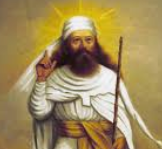
Unto Thee, O Lord, the Soul of Creation cried: "For whom didst Thou create me, and who so fashioned me? Feuds and fury, violence and the insolence of might have oppressed me; None have I to protect me save Thee; Command for me then the blessings of a settled, peaceful life."
▼
Source
source
Ahunuvaiti Gatha; Yasna 29, 1.
CivilSimian.com created by AxiomaticPanic, CivilSimian, Kalokagathia