

3 months 2 weeks ago
To live your brief life rightly, isn't that enough?
▼
Source
source
(Hays translation) X, 31
7 months 4 weeks ago
As we divided natural philosophy in general into the inquiry of causes, and productions of effects: so that part which concerneth the inquiry of causes we do subdivide according to the received and sound division of causes. The one part, which is physic, inquireth and handleth the material and efficient causes; and the other, which is metaphysic, handleth the formal and final causes.
▼
Source
source
Book VII, 3
6 months 2 days ago
The time is come when women must do something more than the "domestic hearth," which means nursing the infants, keeping a pretty house, having a good dinner and an entertaining party.
3 months 3 weeks ago
We do not struggle for ourselves, nor for our race, not even for humanity. We do not struggle for Earth, nor for ideas. All these are the precious yet provisional stairs of our ascending God, and they crumble away as soon as he steps upon them in his ascent. In the smallest lightning flash of our lives, we feel all of God treading upon us, and suddenly we understand: if we all desire it intensely, if we organize all the visible and invisible powers of earth and fling them upward, if we all battle together like fellow combatants eternally vigilant - then the Universe might possibly be saved. It is not God who will save us - it is we who will save God, by battling, by creating, and by transmuting matter into spirit.
4 months 5 days ago
Who can be forced has not learned how to die.
▼
Source
source
line 426; (Megara). Alternate translation: Who can be compelled does not know how to die.
4 months 1 day ago
I was convinced - and I am so still - that the fundamental principles of Christianity have to be proved true by reasoning, and by no other method. Reason, I said to myself, is given us that we may bring everything within the range of its action, even the most exalted ideas of religion. And this certainty filled me with joy.


4 months 5 days ago
You see that man can endure toil: Cato, on foot, led an army through African deserts. You see that thirst can be endured: he marched over sun-baked hills, dragging the remains of a beaten army and with no train of supplies, undergoing lack of water and wearing a heavy suit of armour; always the last to drink of the few springs which they chanced to find. You see that honour, and dishonour too, can be despised: for they report that on the very day when Cato was defeated at the elections, he played a game of ball. You see also that man can be free from fear of those above him in rank: for Cato attacked Caesar and Pompey simultaneously, at a time when none dared fall foul of the one without endeavouring to oblige the other. You see that death can be scorned as well as exile: Cato inflicted exile upon himself and finally death, and war all the while.

7 months 2 weeks ago
But then again of course I know perfectly well that He can't be used as a road. If you're approaching Him not as the goal but as a road, not as the end but as a means, you're not really approaching Him at all.
7 months 2 weeks ago
No man can have society upon his own terms. If he seeks it, he must serve it too.
▼
Source
source
1833
3 months 2 weeks ago
In the present situation, such an experiment would be doubly dangerous to the Russian Social Democracy. It stands on the eve of decisive battles against tsarism. It is about to enter, or has already entered, on a period of intensified creative activity, during which it will broaden (as is usual in a revolutionary period) its sphere of influence and will advance spontaneously by leaps and bounds. To attempt to bind the initiative of the party at this moment, to surround it with a network of barbed wire, is to render it incapable of accomplishing the tremendous task of the hour.
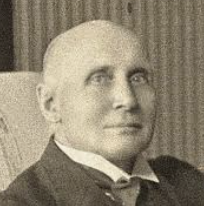
6 months 5 days ago
There is a quality of life which lies always beyond the mere fact of life; and when we include the quality in the fact, there is still omitted the quality of the quality.
▼
Source
source
Religion in the Making (February 1926), Lecture II: "Religion and Dogma".
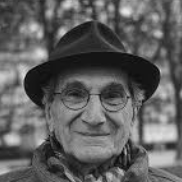
4 months 2 weeks ago
We share bodies with two eyes, ten fingers, ten toes; we share life on this earth; we share capitalist regimes of production and exploitation; we share common dreams of a better future.
▼
Source
source
128
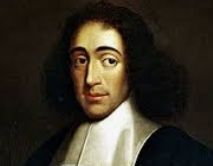
7 months 3 weeks ago
If slavery, barbarism and desolation are to be called peace, men can have no worse misfortune. No doubt there are usually more and sharper quarrels between parents and children, than between masters and slaves ; yet it advances not the art of household management to change a father's right into a right of property, and count children but as slaves. Slavery, then, and not peace, is furthered by handing the whole authority to one man.
▼
Source
source
Ch. 6, On Monarchy

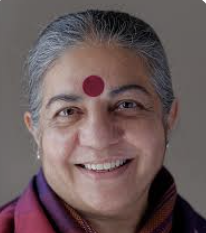
5 months 4 days ago
I believe Gandhi is the only person who knew about real democracy - not democracy as the right to go and buy what you want, but democracy as the responsibility to be accountable to everyone around you. Democracy begins with freedom from hunger, freedom from unemployment, freedom from fear, and freedom from hatred. To me, those are the real freedoms on the basis of which good human societies are based.
▼
Source
source
1998
6 months ago
The noble simplicity in the works of nature only too often originates in the noble shortsightedness of him who observes it.
▼
Source
source
H 1
6 months 2 weeks ago
In the present state of society it appears necessary to go back to first principles in search of the most simple truths, and to dispute with some prevailing prejudice every inch of ground. To clear my way, I must be allowed to ask some plain questions, and the answers will probably appear as unequivocal as the axioms on which reasoning is built; though, when entangled with various motives of action, they are formally contradicted either by the words or conduct of men.
▼
Source
source
Ch. 1, opening
5 months 2 weeks ago
There is but one art, to omit.
▼
Source
source
As cited in The Harper Book of Quotations, Revised Edition (1993), Ed. R. Fitzhenry, HarperCollins, p. 498 : ISBN 0062732137, 9780062732132
6 months 3 days ago
To uphold the institutions of our country-that's it-the institutions which protect and sustain a handful of people in the robbery and plunder of the masses, the institutions which drain the blood of the native as well as of the foreigner, turn it into wealth and power

7 months 2 days ago
When the wise man opens his mouth, the beauties of his soul present themselves to the view, like the statues in a temple.
▼
Source
source
Pythagorean Ethical Sentences From Stobæus

7 months 4 weeks ago
Finally, every man will become dear and pleasing to every other man; all will be beloved by all! and, what is still more desirable, beloved also by Christ; to become acceptable to whom is the highest felicity of human nature.

6 months 2 weeks ago
Whenever I happen to be in a city of any size, I marvel that riots do not break out everyday: Massacres, unspeakable carnage, a doomsday chaos. How can so many human beings coexist in a space so confined without hating each other to death?
6 months 2 days ago
What are novels? What is the secret of the charm of every romance that ever was written? The first thing in a good novel is to place the persons together in circumstances which naturally call out the high feelings and thoughts of the character, which afford food for sympathy between them on these points - romantic events they are called. The second is that the heroine has generally no family ties (almost invariably no mother), or, if she has, these do not interfere with her entire independence. These two things constitute the main charm of reading novels.
4 months 5 days ago
Why then do you occupy me with the words rather than with the works of wisdom? Make me braver, make me calmer, make me the equal of Fortune, make me her superior.
6 months 2 weeks ago
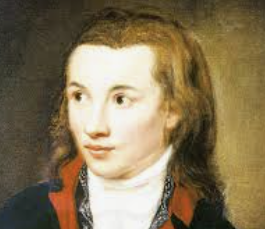
Someone arrived there - who lifted the veil of the goddess, at Sais. - But what did he see? He saw - wonder of wonders - himself. Novalis here alludes to Plutarch's account of the shrine of the goddess Minerva, identified with Isis, at Sais, which he reports had the inscription "I am all that hath been, and is, and shall be; and my veil no mortal has hitherto raised."
3 months 2 weeks ago
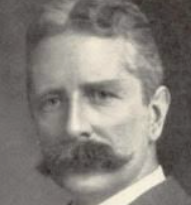
A master in the art of living draws no sharp distinction between his work and his play; his labor and his leisure; his mind and his body; his education and his recreation. He hardly knows which is which. He simply pursues his vision of excellence through whatever he is doing, and leaves others to determine whether he is working or playing. To himself, he always appears to be doing both.
▼
Source
source
Education through Recreation (1932), p. 1.
7 months 2 weeks ago
Great men are they who see that spiritual is stronger than any material force, that thoughts rule the world. No hope so bright but is the beginning of its own fulfillment.
▼
Source
source
July 18, 1867, Progress of Culture Phi Beta Kappa Address
4 months ago
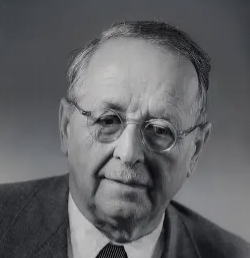
Time is the primitive form of the stream of consciousness. ...If we project ourselves outside the stream of consciousness and represent its content as an object, it becomes an event happening in time, the separate stages of which stand to one another in the relations of earlier and later.
▼
Source
source
Introduction
7 months 2 weeks ago
Is not marriage an open question, when it is alleged, from the beginning of the world, that such as are in the institution wish to get out, and such as are out wish to get in?
▼
Source
source
Montaigne; or, The Skeptic
7 months 2 weeks ago
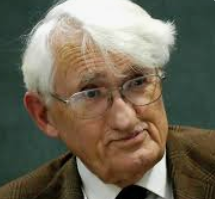
This investigation aims to analyze the type "bourgeois public sphere". Its particular approach is required, to begin with, by the difficulties specific to an object whose complexity precludes exclusive reliance on the specialized methods of a single discipline. Rather, the category. "public sphere" must be investigated within the broad field formerly reflected in the perspective of the traditional science of "politics."' When particular social-scientific discipline, this object disintegrates. The problems that result from fusing aspects of sociology and economics, of constitutional law and political science, and of social and intellectual history are obvious: given the present state of differentiation and specialization in the social sciences, scarcely anyone will be able to master several, let alone all, of these disciplines.
▼
Source
source
p.xvii
6 months 2 days ago
Women are never supposed to have any occupation of sufficient importance not to be interrupted, except "suckling their fools "; and women themselves have accepted this, have written books to support it, and have trained themselves so as to consider whatever they do as not of such value to the world or to others, but that they can throw it up at the first "claim of social life." They have accustomed themselves to consider intellectual occupation as a merely selfish amusement, which it is their " duty " to give up for every trifler more selfish than themselves.
6 months 1 week ago
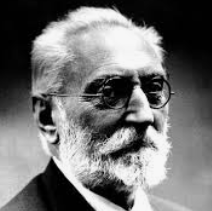
Only the feeble resign themselves to final death and substitute some other desire for the longing for personal immortality. In the strong the zeal for perpetuity overrides the doubt of realizing it, and their superabundance of life overflows upon the other side of death.
7 months 4 weeks ago
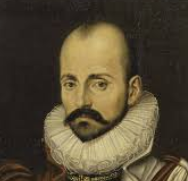
Age imprints more wrinkles in the mind than it does on the face.
▼
Source
source
Book III, Ch. 2

5 months 2 weeks ago
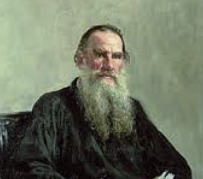
The only thing that we know is that we know nothing - and that is the highest flight of human wisdom.
▼
Source
source
Book V, Ch. I
3 months 2 weeks ago
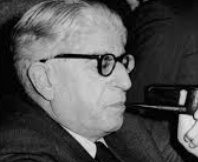
On bourgeois ground ... change is impossible anyway even if it were desired. In fact, bourgeois interest would like to draw every other interest opposed to it into its own failure; so, in order to drain the new life, it makes its own agony apparently fundamental, apparently ontological. The futility of bourgeois existence is extended to be that of the human situation in general, of existence per se.
▼
Source
source
The Principle of Hope (1959), N. Plaice, trans. (1986), p. 4
6 months 2 weeks ago
No one, of a surety, wanders farther from the mark than he who fancies to himself that he already understands this marvellous Kingdom, and can, in few words, fathom its constitution, and everywhere find the right path. To no one, who has broken off, and made himself an Island, will insight rise of itself, nor even without toilsome effort. Only to children, or childlike men, who know not what they do, can this happen. Long, unwearied intercourse, free and wise Contemplation, attention to faint tokens and indications; an inward poet-life, practised senses, a simple and devout spirit: these are the essential requisites of a true Friend of Nature; without these no one can attain his wish.

6 months 3 days ago
Religion, mysticism and magic all spring from the same basic 'feeling' about the universe: a sudden feeling of meaning, which human beings sometimes 'pick up' accidentally, as your radio might pick up some unknown station. Poets feel that we are cut off from meaning by a thick, lead wall, and that sometimes for no reason we can understand the wall seems to vanish and we are suddenly overwhelmed with a sense of the infinite interestingness of things.
▼
Source
source
p. 28
3 months 4 weeks ago
A political, economic, and social order created merely for the sake of temporal life is exclusively characteristic of the modern world, that is, of the antitraditional world.
8 months 2 weeks ago
It is no one's privilege to despise another. It is only a hard-won right after long experience.
6 months 1 week ago
The discovery that mass changes with velocity, a discovery made when minute bodies came under consideration, finally forced surrender of the notion that mass is a fixed and inalienable possession of ultimate elements or individuals, so that time is now considered to be their fourth dimension.
6 months 3 days ago
This is the Outsider's extremity. He does not prefer not to believe; he doesn't like feeling that futility gets the last word in the universe; his human nature would like to find something it can answer to with complete assent. But honesty prevents his accepting a solution that he cannot reason about.
▼
Source
source
Chapter Five, The Pain Threshold
5 months 2 weeks ago
The fact that life evolved out of nearly nothing, some 10 billion years after the universe evolved out of literally nothing, is a fact so staggering that I would be mad to attempt words to do it justice.
▼
Source
source
From tail to tale on the path of pilgrims in life, The Scotsman
6 months 2 weeks ago
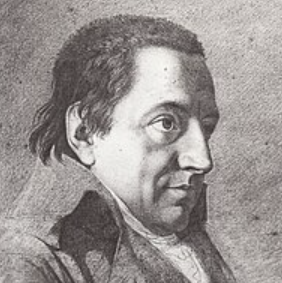
That I should by necessity be either wise and good, or foolish or vicious, without having in one case or the other merit or fault - this it was that filled me with aversion and horror.The determination of my actions by a cause out of myself, whose manifestations were again determined by other causes - this it was from which I so violently revolted.The freedom which was not mine, but that of a foreign power, and, in that, only a conditional, half freedom - this it was with which I could not rest satisfied. I myself - that which in this system only appears as the manifestation of a higher existence, I will be independent, - will be something, not by another or through another, but of myself.
▼
Source
source
Jane Sinnett, trans 1846 p. 21
7 months 4 weeks ago
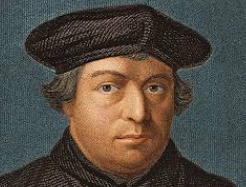
Women . . . have . . . small and narrow chests, and broad hips, to the end they should remain at home, sit still, keep house, and bear and bring up children. . . . A woman is, or at least should be, a friendly, courteous, and a merry companion in life . . . the honor and ornament of the house, and inclined to tenderness, for thereunto are they chiefly created, to bear children, and to be the pleasure, joy and solace of their husbands.
▼
Source
source
-- Table Talk, quoted in Luther On "Woman"
7 months 4 weeks ago
The way of the world is to make laws, but follow custom.
4 months 5 days ago
If one doesn't know his mistakes, he won't want to correct them.
▼
Source
source
Line 9
8 months 3 weeks ago
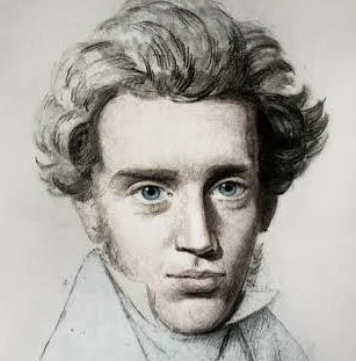
In the Church which was founded at Corinth, St. Paul had special difficulties of the kind I have mentioned. In that flourishing commercial city, which through its shipping and situation, maintained a vital connexion between East and West, numerous crowds of people flocked together from all quarters, different in speech and in culture. As they mingled with the inhabitants, they produced, by contacts and contrasts, new and ever new differences. Even in the Church this differentiation endeavoured to make itself felt in sects and parties; and a kind of pagan wisdom made a special attempt to force itself forward as a teacher of truth. In his first letter to this church, from which the text I read is taken, St. Paul strongly combats this tendency.
7 months 2 weeks ago
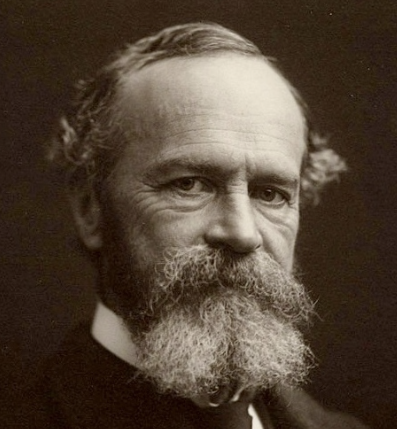
Romeo wants Juliet as the filings want the magnet; and if no obstacles intervene he moves towards her by as straight a line as they. But Romeo and Juliet, if a wall be built between them, do not remain idiotically pressing their faces against its opposite sides like the magnet and the filings with the card. Romeo soon finds a circuitous way, by scaling the wall or otherwise, of touching Juliet's lips directly. With the filings the path is fixed; whether it reaches the end depends on accidents. With the lover it is the end which is fixed, the path may be modified indefinitely.
▼
Source
source
Ch. 1 : The Scope of Psychology
CivilSimian.com created by AxiomaticPanic, CivilSimian, Kalokagathia