

3 months 3 weeks ago
Have not prisons — which kill all will and force of character in man, which enclose within their walls more vices than are met with on any other spot of the globe — always been universities of crime? Is not the court of a tribunal a school of ferocity?

3 months 3 weeks ago
The market is a place set apart where men may deceive each other.
▼
Source
Anacharsis, 5.
3 months 3 weeks ago
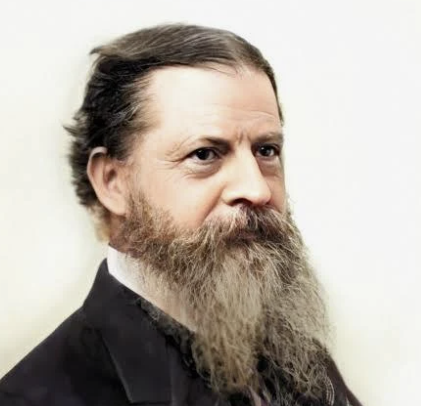
The consciousness of a general idea has a certain "unity of the ego" in it, which is identical when it passes from one mind to another. It is, therefore, quite analogous to a person, and indeed, a person is only a particular kind of general idea.
▼
Source
"Man's Glassy Essence" in The Monist, Vol. III, No. 1 (October 1892)
3 months 3 weeks ago
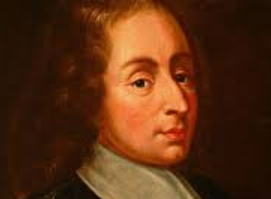
If they have entered into the spirit if these rules, and if the rules have made sufficient impression on them to become rooted and established in their minds, they will feel how much difference there is between what is said here and what a few logicians may perhaps have written by chance approximating to it in a few passages of their works.
3 months 3 weeks ago
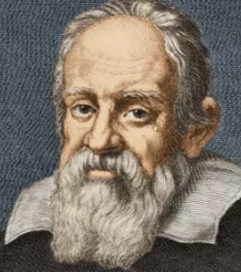
What has philosophy got to do with measuring anything? It's the mathematicians you have to trust, and they measure the skies like we measure a field.
▼
Source
"Matteo" in Concerning the New Star (1606)

3 months 3 weeks ago
Existential analytics [the object of the book] decides nothing about the existence of God, about human freedom and the immortality of the soul.
▼
Source
Emanuele Severino. As quoted in [https://www.raicultura.it/filosofia/articoli/2019/01/Emanuele-Severino-Nietzsche-Leopardi-Gentile-e-il-sottosuolo-filosofico-del-nostro-tempo-0176ac13-3d61-4929-8385-bab Emanuele Severino: il sottosuolo filosofico del nost
3 months 3 weeks ago
The landlord owes his riches to the poverty of the peasants, and the wealth of the capitalist comes from the same source.
▼
Source
Ch. 4 : Expropriation
3 months 3 weeks ago
The chief good he has defined to be the exercise of virtue in a perfect life.
▼
Source
Aristotle, 13.

3 months 3 weeks ago
Descartes, a genius made to blaze new paths and to go astray in them, supposed with some other philosophers that God is the only efficient cause of motion, and that every instant He communicates motion to all bodies. But this opinion is but an hypothesis which he tried to adjust to the light of faith; and in so doing he was no longer attempting to speak as a philosopher or to philosophers. Above all he was not addressing those who can be convinced only by the force of evidence.
▼
Source
Ch. V Concerning the Moving Force of Matter
3 months 3 weeks ago
We have here a question of difficulty, analogous to the question of nominalism and realism.
3 months 3 weeks ago
Everything functions. That is exactly what is uncanny. Everything functions and the functioning drives us further and further to more functioning, and technology tears people away and uproots them from the Earth more and more. I don't know if you are scared; I was certainly scared when I recently saw the photographs of the Earth taken from the Moon. We don't need an atom bomb at all; the uprooting of human beings is already taking place. We only have purely technological conditions left. It is no longer an earth on which human beings live today.
3 months 3 weeks ago
Science, down to the present day, remains permeated with Malthus's teachings. Political economy continues to base its reasoning upon a tacit admission of the impossibility of rapidly increasing the productive powers of a nation, and of thus giving satisfaction to all wants. This postulate stands, undiscussed, in the background of whatever political economy, classical or socialist, has to say about exchange-value, wages, sale of labour force, rent, exchange and consumption. Political economy never rises above the hypothesis of a limited and insufficient supply of the necessities of life; it takes it for granted. And all theories connected with political economy retain the same erroneous principle. Nearly all socialists too, admit the postulate. Nay, even in biology (so deeply interwoven now with sociology) we have recently seen the theory of variability of species borrowing a quite unexpected support from its having been connected by Darwin and Wallace with Malthus's fundamental idea, that the natural resources must inevitably fail to supply the means of existence for the rapidly multiplying animals and plants.
3 months 3 weeks ago
It takes a wise man to discover a wise man.
▼
Source
Xenophanes, 3.

3 months 3 weeks ago
The free will, the actual motor of reason in society, necessarily creates wrong. The individual must clash with the social order that claims to represent his own will in its objective form. But the wrong and the ‘avenging justice’ that remedies it not only expresses a ‘higher logical necessity,’ but also prepare the transition to a higher social form of freedom, the transition from abstract right to morality. For, in committing a wrong, and in accepting punishment for his deed, the individual becomes conscious of the ‘infinite subjectivity’ of his freedom. He learns that he is free only as a private person. P. 198
3 months 3 weeks ago
Whatever the virtue may be, from whatever source it may come, it is worthy of esteem... Mind, beauty, wealth, nobility, although the children of chance, all have their own value, as skill, learning and virtue have theirs.
3 months 3 weeks ago
The recognition by one person of another's personality takes place by means to some extent identical to the means by which he is conscious of his own personality. The idea of the second personality, which is as much as to say that second personality itself, enters within the direct consciousness of the first person, and is immediately perceived as his ego, though less strongly. At the same time, the opposition between the two persons is perceived, so that the externality of the second is perceived.
3 months 3 weeks ago
There you have, then, a theoretical physics which is neither the theory of a believer nor that of a nonbeliever, but merely and simply a theory of a physicist; admirably suited to classify the laws studied by the experimenter, it is incapable of opposing any assertion whatever of metaphysics or of religious dogma, and is equally incapable of lending effective support to any such assertion.
3 months 3 weeks ago
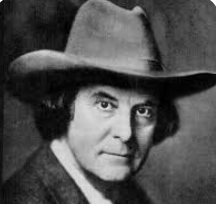
Do nothing, say nothing, and be nothing, and you'll never be criticized.
▼
Source
"John North Willys", in Elbert Hubbard's Selected Writings, Part 2 (1922), p. 335
3 months 3 weeks ago
In which the technical apparatus of production and distribution (with an increasing sector of automation) functions, not as the sum-total of mere instruments which can be isolated from their social and political effects, but rather as a system which determines a priori the product of the apparatus as well as the operations of servicing and extending it. In this society, the productive apparatus tends to become totalitarian to the extent to which it determines not only the socially needed occupations, skills, and attitudes, but also individual needs and aspirations. It thus obliterates the Opposition between the private and public existence, between individual and social needs.
▼
Source
p. xlvii
3 months 3 weeks ago
To say, therefore, that thought cannot happen in an instant, but requires a time, is but another way of saying that every thought must be interpreted in another, or that all thought is in signs.
▼
Source
Vol. V, par. 254
3 months 3 weeks ago
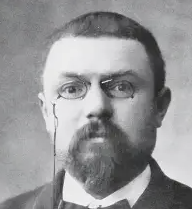
But these labels can only be finite in number. On that score, psychologic time should be discontinuous.
3 months 3 weeks ago
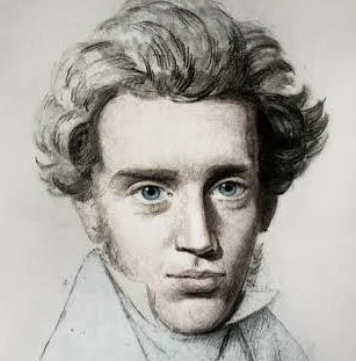
Once in his early youth a man allowed himself to be so far carried away in an overwrought irresponsible state as to visit a prostitute. It is all forgotten. Now he wants to get married. Then anxiety stirs. He is tortured day and night with the thought that he might possibly be a father, that somewhere in the world there could be a created being who owed his life to him. He cannot share his secret with anyone; he does not even have any reliable knowledge of the fact. –For this reason the incident must have involved a prostitute and taken place in the wantonness of youth; had it been a little infatuated or an actual seduction, it would be hard to imagine that he could know nothing about it, but now this this very ignorance is the basis of his agitated torment. On the other hand, precisely because of the rashness of the whole affair, his misgivings do not really start until he actually falls in love.
▼
Source
Journal and Papers 5622 (Papers IV A 65) n.d. 1843
3 months 3 weeks ago
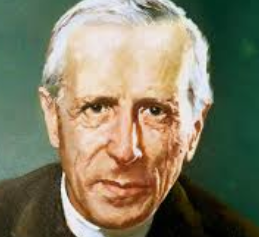
I am far from denying the destructive and disintegrating forces of passion. I will go so far as to agree that apart from the reproductive function, men have hitherto used love, on the whole, as an instrument of self-corruption and intoxication. But what do these excesses prove? Because fire consumes and electricity can kill are we to stop using them? The feminine is the most formidable of the forces of matter. True enough. "Very well, then," say the moralists, "we must avoid it." "Not at all," I reply, "we take hold of it." In every domain of the real (physical, affective, intellectual) "danger" is a sign of power. Only a mountain can create a terrifying drop. The customary education of the Christian conscience tends to make us confuse tutiorism with prudence, safety with truth. Avoiding the risk of transgression has become more important to us than carrying a difficult position for God. And it is this that is killing us. "The more dangerous a thing, the more is its conquest ordained by life": it is from that conviction that the modern world has emerged; and from that our religion, too, must be reborn.
▼
Source
"The Evolution of Chastity" (1934), as translated by René Hague in Toward the Future (1975)
3 months 3 weeks ago
It is the weak man who urges compromise—never the strong man.
▼
Source
p. 52
3 months 3 weeks ago
Entertainment and learning are not opposites; entertainment may be the most effective mode of learning.
▼
Source
pp. 66-67
3 months 3 weeks ago
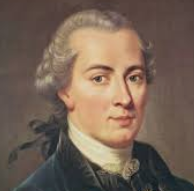
[Religion should be] .... successively freed from all statutes based on history, and one purely moral religion rule over all, in order that God might be all in all. The veil must fall. The leading-string of sacred tradition with all its appendices becomes by degrees useless, and at last a fetter … The humiliating difference between laymen and clergymen must disappear, and equality spring from true liberty. All this, however, must not be expected from an exterior revolution, which acts violently, and depends upon fortune In the principle of pure moral religion, which is a sort of divine revelation constantly taking place in the soul of man, must be sought the ground for a passage to the new order of things, which will be accomplished by slow and successive reforms.
▼
Source
As quoted in German Thought, From The Seven Years' War To Goethe's Death : Six Lectures (1880) by Karl Hillebrand, p. 208
3 months 3 weeks ago
If one prefers to have little with blessing, to have truth with concern, to suffer instead of exulting over imagined victories, then one presumably will not be disposed to praise the knowledge, as if what it bestows were at all proportionate to the trouble it causes, although one would not therefore deny that through its pain it educates a person, if he is honest enough to want to be educated rather than to be deceived, out of the multiplicity to seek the one, out of abundance to seek the one thing needful, as this is plainly and simply offered precisely according to the need for it.
▼
Source
Søren Kierkegaard, Eighteen Upbuilding Discourses, Hong p. 128-129

3 months 3 weeks ago
A text is not a text unless it hides from the first comer, from the first glance, the law of its composition and the rules of its game. A text remains, moreover, forever imperceptible. Its law and its rules are not, however, harbored in the inaccessibility of a secret; it is simply that they can never be booked, in the present, into anything that could rigorously be called a perception.
▼
Source
Plato's Pharmacy, intro
3 months 3 weeks ago
Actuality, irreversibility. ...Omega ...is discovered ...at the end ...[I]n it the movement culminates. Yet... under this evolutive facet Omega still only reveals half of itself. While being the last term of its series, it is also outside all series. ...If by its very nature it did not escape from time and space which it gathers together, it would not be Omega.
3 months 3 weeks ago
There is no such thing as success in a bad business.
3 months 3 weeks ago
The subversive character of truth inflicts upon thought an imperative quality. Logic centers on judgments which are, as demonstrative propositions, imperatives, — the predicative “is” implies an “ought.” … Verification of the proposition involves a process in fact as well as in thought: (S) must become that which it is. The categorical statement thus turns into a categorical imperative; it does not state a fact but the necessity to bring about a fact. For example, it could be read as follows: man is not (in fact) free, endowed with inalienable rights, etc., but he ought to be.
▼
Source
pp. 132-133
3 months 3 weeks ago
To these spurious principles must be added some others of great affinity with them… First, that by which we assume that everything in the universe is done according to the order of nature, which principle by Epicurus was proclaimed without any restriction, and by all other philosophers unanimously with extremely rare exceptions, not to be admitted but from supreme necessity.
3 months 3 weeks ago
Take a book, the poorest one written, but read it with the passion that it is the only book you will read-ultimately you will read everything out of it, that is, as much as there was in yourself, and you could never get more out of reading, even if you read the best of books.
▼
Source
Stages on Life's Way, 1845 p. 363-364
3 months 3 weeks ago
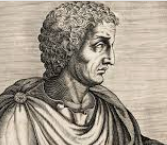
It is far from easy to determine whether she [Nature] has proved to man a kind parent or a merciless stepmother.
▼
Source
Book VII, sec. 1.
3 months 3 weeks ago
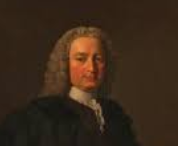
The ultimate notion of right is that which tends to the universal good; and when one's acting in a certain manner has this tendency, he has a right thus to act.
▼
Source
Book II, Ch. III, § VII
3 months 3 weeks ago
In his essay on Repressive Tolerance...Marcuse argues that the tolerance of the advanced industrial democracies is a deceit... Freedom of speech is not an overriding good, for to allow freedom of speech in the present society is to assist in the propagation of error, and "the telos of tolerance is truth." The truth is carried by the revolutionary minorities and their intellectual spokesmen, such as Marcuse, and the majority have to be liberated by being re-educated into the truth by this minority, who are entitled to suppress rival and harmful opinions. This is perhaps the most dangerous of all Marcuse's doctrines, for not only is what he asserts false, but his is a doctrine which if it were widely held would be an effective barrier to any rational progress and liberation...What, then, are the true connections between tolerance, rationality, and liberation? The telos of tolerance is not truth but rationality. Certainly we value rationality because it is by rational methods that we discover truth; but a man may be rational who holds many false beliefs, and a man may have true beliefs and yet be irrational. What is crucial is that the former has the possibility of progressing toward truth, while the second not only has no grounds for asserting what he believes, even though it is true, but is continually liable to acquire false beliefs. What is it to be rational? It is a necessary condition of rationality that a man shall formulate his beliefs in such a way that it is clear what evidence would be evidence against them and that he shall lay himself open to criticism and refutation in the light of any possible extreme. But to foreclose on tolerance is precisely to cut oneself off from such criticism and refutation. It is to gravely endanger one’s own rationality by not admitting one's own fallibility.
▼
Source
Alasdair MacIntyre, Marcuse (1970), pp. 89-91
3 months 3 weeks ago
Morality is thus the relation of actions to the autonomy of the will, that is, to a possible giving of universal law through its maxims. An action that can coexist with the autonomy of the will is permitted; one that does not accord with it is forbidden. A will whose maxims necessarily harmonize with the laws of autonomy is a holy, absolutely good will. The dependence upon the principle of autonomy of a will that is not absolutely good (moral necessitation) is obligation. This, accordingly, cannot be attributed to a holy being. The objective of an action from obligation is called duty.
3 months 3 weeks ago
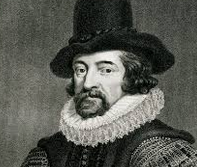
He that defers his charity 'till he is dead, is (if a man weighs it rightly) rather liberal of another man's, than of his own.
▼
Source
Ornamenta Rationalia, http://books.google.com/books?id=VHNUAAAAYAAJ&q="He+that+defers+his+charity+'till+he+is+dead+is+if+a+man+weighs+it"+"rather+liberal+of+another+man's+than+of+his+own"&pg=PA298#v=onepage §55
3 months 3 weeks ago
These two essays probably will essentially be able to interest only theologians. (Preface)
3 months 3 weeks ago
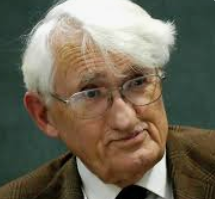
Reaching and understanding is the process of bringing about an agreement on the presupposed basis of validity claims that are mutually recognized.
▼
Source
p. 23
3 months 3 weeks ago
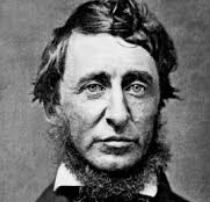
Indeed I am inclined to go so far as to say that the one cause for which one may properly make war is the cause of peace.
▼
Source
"Non-Resistance and The Present War - A Reply to Mr. Russell," International Journal of Ethics (April 1915), vol. 25, no. 3, pp. 307-316
3 months 3 weeks ago
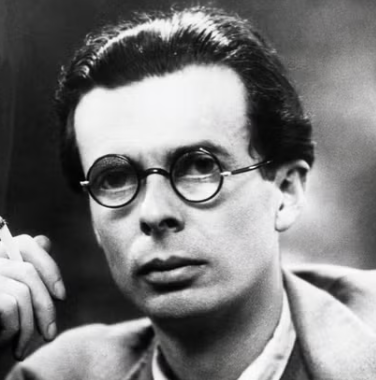
Of course I base my characters partly on the people I know—one can't escape it—but fictional characters are oversimplified; they're much less complex than the people one knows.
▼
Source
[http://www.theparisreview.org/interviews/4698/the-art-of-fiction-no-24-aldous-huxley Interview], The Paris Review (1960)
3 months 3 weeks ago
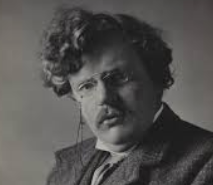
Either criticism is no good at all (a very defensible position) or else criticism means saying about an author the very things that would have made him jump out of his boots.
▼
Source
Appreciations and Criticisms of the Works of Charles Dickens (1911) Ch. 6: "Old Curiosity Shop"
3 months 3 weeks ago
Two things fill the mind with ever-increasing wonder and awe, the more often and the more intensely the mind of thought is drawn to them: the starry heavens above me and the moral law within me.
▼
Source
Variant translations: | Two things fill the mind with ever new and increasing admiration and awe, the oftener and more steadily we reflect on them: the starry heavens above me and the moral law within me. | Translated by Lewis White Beck | Two things fill
3 months 3 weeks ago
Silence is the virtue of a fool.
▼
Source
Book VI, xxxi
3 months 3 weeks ago
Happy is the one in whom there is true sorrow over his sin, so that the extreme unimportance to him of everything else is only the negative expression of the confirmation that one thing is unconditionally important to him, so that the unconditional unimportance to him of everything else is a deadly sickness that still is very far from being a sickness unto death but is precisely unto life, because the life is in this, that one thing is unconditionally important to him: to find forgiveness. ” P. 152
3 months 3 weeks ago
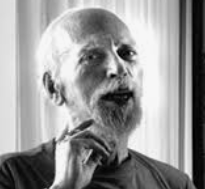
My early work is politically anarchist fiction, in that I was an anarchist for a long period of time. I'm not an anarchist any longer, because I've concluded that anarchism is an impractical ideal. Nowadays, I regard myself as a libertarian. I suppose an anarchist would say, paraphrasing what Marx said about agnostics being "frightened atheists," that libertarians are simply frightened anarchists. Having just stated the case for the opposition, I will go along and agree with them: yes, I am frightened. I'm a libertarian because I don't trust the people as much as anarchists do. I want to see government limited as much as possible; I would like to see it reduced back to where it was in Jefferson's time, or even smaller. But I would not like to see it abolished. I think the average American, if left totally free, would act exactly like Idi Amin. I don't trust the people any more than I trust the government.
▼
Source
"Robert Anton Wilson: Searching For Cosmic Intelligence" - interview by Jeffrey Elliot (1980)
3 months 3 weeks ago
Several excuses are always less convincing than one.
▼
Source
Ch. 1
3 months 3 weeks ago
A stiff apology is a second insult.
▼
Source
[http://books.google.com/books?id=2mpaAAAAMAAJ&q=%22A+stiff+apology+is+a+second+insult%22&pg=PA121#v=onpage "The Real Dr. Johnson"], The Common Man (1950)
3 months 3 weeks ago
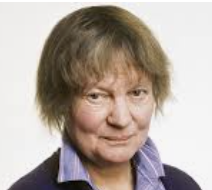
A bad review is even less important than whether it is raining in Patagonia.
▼
Source
Quoted in The Times (6 July 1989).
CivilSimian.com created by AxiomaticPanic, CivilSimian, Kalokagathia