
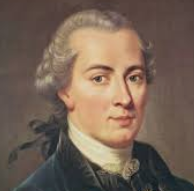
3 months 3 weeks ago
All... good and useful properties of character have a price in exchange for others which have just as much use. Talent has a market price, since the sovereign or estate-owner can use a talented person in all sorts of ways. Temperament has a fancy price,22 since one can converse well with such a person; he is a pleasant companion. But, character has an inner value[,] and it is above all price.
▼
Source
Kant, Immanuel (1996), page 203
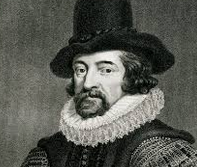
3 months 3 weeks ago
But by far the greatest obstacle to the progress of science and to the undertaking of new tasks and provinces therein is found in this — that men despair and think things impossible.
▼
Source
Aphorism 92
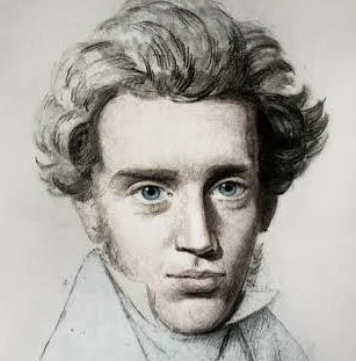
3 months 3 weeks ago
This is the truth of the matter. In every human being there is a capacity, the capacity for knowledge. And every person - the most knowing and the most limited - is in his knowledge far beyond what he is in his life or what his life expresses. Yet this misrelation is of little concern to us. On the contrary, we set a high price on knowledge, and everyone strives for this knowledge more and more. "But," says the sensible person, "one must be careful about the direction one's knowing takes. If my knowing turns inward, against me, if I do not take care to prevent this, then knowing is the most intoxicating thing there is, the way to become completely intoxicated, since there then occurs an intoxicating confusion between the knowledge and the knower, so that the knower himself will resemble, will be, that which is known. If your knowing takes such a turn and you yield to it, it will soon end with your tumbling like a drunk man into actuality, plunging yourself recklessly into drunken action without giving the understanding and sagacity the time to take into proper consideration what is prudent, what is advantageous, what will pay. This is why we, the sober ones, warn you, not against knowing or against expanding your knowledge, but against letting your knowledge take an inward direction, for then it is intoxicating." This is thieves' jargon. It says that it is one's knowledge that, by taking the inward direction in this way, intoxicates, rather than that in precisely this way it makes manifest that one is intoxicated, intoxicated in one's attachment to this earthly life, the temporal, the secular, and the selfish. And this is what one fears, fears that one's knowing, turned inward, toward oneself, will expose the intoxication there, will expose that one prefers to remain in this state, will wrench one out of this state and as a result of such a step will make it impossible for one to slip back into that adored state, into intoxication. p. 118
3 months 3 weeks ago
There are periods of history when the visions of madmen and dope fiends are a better guide to reality than the common-sense interpretation of data available to the so-called normal mind. This is one such period, if you haven't noticed already.
▼
Source
Part I : The Eye in the Pyramid, p. 32
3 months 3 weeks ago
The original scriptures of most religions are poetical and unsystematic. Theology, which generally takes the form of a reasoned commentary on the parables and aphorisms of the scriptures, tends to make its appearance at a later stage of religious history. The Bhagavad-Gita occupies an intermediate position between scripture and theology; for it combines the poetical qualities of the first with the clear-cut methodicalness of the second... one of the clearest and most comprehensive summaries of the Perennial Philosophy ever to have been made. Hence its enduring value, not only for Indians, but for all mankind.
3 months 3 weeks ago
It is amusing to think how much conservative ingenuity has been wasted in the defence of the House of Lords by men who were desperately endeavouring to prove that the House of Lords consisted of clever men. There is one really good defence of the House of Lords [...] and that is, that the House of Lords, in its full and proper strength, consists of stupid men. It really would be a plausible defence of that otherwise indefensible body to point out that the clever men in the Commons, who owed their power to cleverness, ought in the last resort to be checked by the average man in the Lords, who owed their power to accident.
3 months 3 weeks ago
Individualism, united with altruism, has become the basis of our western civilization. It is the central doctrine of Christianity ('love your neighbor,' say the Scriptures, not 'love your tribe'); and it is the core of all ethical doctrines which have grown from our civilization and stimulated it. It is also, for instance, Kant's central practical doctrine ("always recognize that human individuals are ends, and do not use them as mere means to your end.")
▼
Source
Karl Popper, summarizing some of Kant's philosophy, in The Open Society and Its Enemies (1945, p. 102; part of this has sometimes been treated as if it were a direct quote of Kant: Always recognize that human individuals are ends, and do not use them as m
3 months 3 weeks ago
Imagination was given to man to compensate for what he is not, and a sense of humor to console him for what he is.
▼
Source
Attributed to Bacon without citation of work in Geary's Guide to the World's Great Aphorists (2007) by James Geary, p. 112; this is sometimes attributed to others, also without citation of works, but is most often quoted as an anonymous aphorism, with no
3 months 3 weeks ago
Man was born to live with his fellow human beings. Separate him, isolate him, his character will go bad, a thousand ridiculous affects will invade his heart, extravagant thoughts will germinate in his brain, like thorns in an uncultivated land.
▼
Source
The character Suzanne Simon, in La Religieuse [The Nun] (1796)
3 months 3 weeks ago
Logic is not concerned with human behavior in the same sense that physiology, psychology, and social sciences are concerned with it. These sciences formulate laws or universal statements which have as their subject matter human activities as processes in time. Logic, on the contrary, is concerned with relations between factual sentences (or thoughts). If logic ever discusses the truth of factual sentences it does so only conditionally, somewhat as follows: if such-and-such a sentence is true, then such-and-such another sentence is true. Logic itself does not decide whether the first sentence is true, but surrenders that question to one or the other of the empirical sciences.
▼
Source
Rudolf Carnap (1937) cited in: Irving J. Lee (1967) The Language of Wisdom and Folly: Background Readings in Semantics. International Society for General Semantics, p. 44
3 months 3 weeks ago
“What about spatial relationships?” the investigator inquired, as I was looking at the books. It was difficult to answer. True, the perspective looked rather odd, and the walls of the room no longer seemed to meet in right angles. But these were not the really important facts. The really important facts were that spatial relationships had ceased to matter very much and that my mind was perceiving the world in terms of other than spatial categories. At ordinary times the eye concerns itself with such problems as Where?—How far?—How situated in relation to what? In the mescalin experience the implied questions to which the eye responds are of another order. Place and distance cease to be of much interest. The mind does its Perceiving in terms of intensity of existence, profundity of significance, relationships within a pattern. I saw the books, but was not at all concerned with their positions in space. What I noticed, what impressed itself upon my mind was the fact that all of them glowed with living light and that in some the glory was more manifest than in others. In this context position and the three dimensions were beside the point. Not, of course, that the category of space had been abolished. When I got up and walked about, I could do so quite normally, without misjudging the whereabouts of objects. Space was still there; but it had lost its predominance. The mind was primarily concerned, not with measures and locations, but with being and meaning.
▼
Source
describing his experiment with mescaline, pp. 19-20
3 months 3 weeks ago
Ireland is a country in which the political conflicts are at least genuine; they are about something. They are about patriotism, about religion, or about money: the three great realities. In other words, they are concerned with what commonwealth a man lives in, or with what universe a man lives in, or with how he is to manage to live in either.
▼
Source
"The Irishman"
3 months 3 weeks ago
Go further, and require each of them to make a contribution: you will see how many things are still missing, and you will be obliged to get the assistance of a large number of men who belong to different classes, priceless men, but to whom the gates of the academies are nonetheless closed because of their social station. All the members of these learned societies are more than is needed for a single object of human science; all the societies together are not sufficient for a science of man in general.
▼
Source
Article on Encyclopedia

3 months 3 weeks ago
In the history of madness, two events signal this change with singular clarity: in 1657, the founding of the Hôpital Général, and the Great Confinement of the poor; and in 1794, the liberation of the mad in chains at Bicêtre. Between these two singular and symmetrical events, something happened, whose ambiguity has perplexed historians of medicine: blind repression in an absolutist regime, according to some, and, according to others, the progressive discovery, by science and philanthropy, of madness in its positive truth. In fact, beneath these reversible meanings, a structure was taking shape, which did not undo that ambiguity but was decisive for it. This structure explains the passage from the medieval and humanist experience of madness to the experience that is our own, which confines madness in mental illness.
▼
Source
Preface to 1961 edition
3 months 3 weeks ago
The natural law is an instrument for progress, not a weapon of revolution.
3 months 3 weeks ago
Most kings and priests have been despotic, and all religions have been riddled with superstition.
▼
Source
Chapter 6 (pp. 52-53)
3 months 3 weeks ago
The rich are the scum of the earth in every country.
▼
Source
Ch. XV: "The Songs of the Car Club"
3 months 3 weeks ago
There is not a Musselman alive who would not imagine that he was performing an action pleasing to God and his Holy Prophet by exterminating every Christian on earth, while the Christians are scarcely more tolerant on their side.
3 months 3 weeks ago
The public execution, then, has a juridico-political function. It is a ceremonial by which a momentarily injured sovereignty is reconstituted. It restores that sovereignty by manifesting it at its most spectacular. The public execution, however hasty and everyday, belongs to a whole series of great rituals in which power is eclipsed and restored (coronation, entry of the king into a conquered city, the submission of rebellious subjects); over and above the crime that has placed the sovereign in contempt, it deploys before all eyes an invincible force. Its aim is not so much to re-establish a balance as to bring into play, as its extreme point, the dissymmetry between the subject who has dared to violate the law and the all-powerful sovereign who displays his strength.
▼
Source
Chapter One, The Spectacle of the Scaffold

3 months 3 weeks ago
I tore myself away from the safe comfort of certainties through my love for truth — and truth rewarded me.
▼
Source
All Said and Done (1972), p. 16
3 months 3 weeks ago
And he smiles, but not as Sultans smile, and settles back the blade.... (But Don John of Austria rides home from the Crusade.)
▼
Source
Lepanto
3 months 3 weeks ago
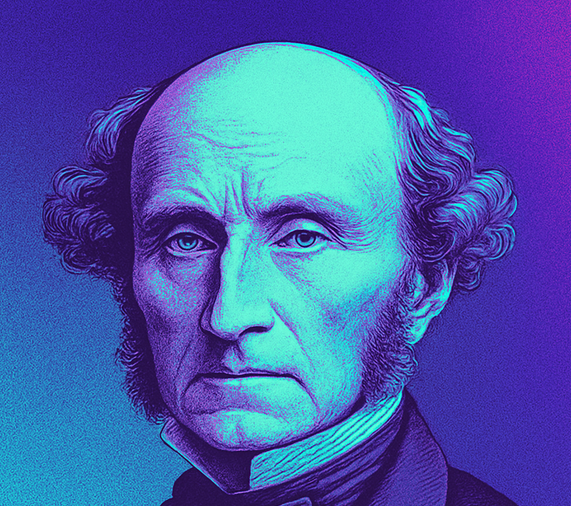
The only purpose for which power can be rightfully exercised over any member of a civilized community, against his will, is to prevent harm to others. His own good, either physical or moral, is not a sufficient warrant.
▼
Source
Ch. 1: Introductory
3 months 3 weeks ago
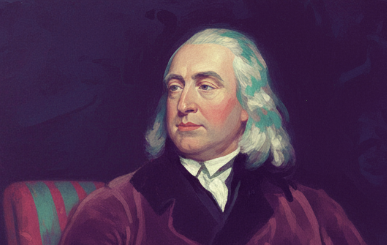
Intense, long, certain, speedy, fruitful, pure—Such marks in pleasures and in pains endure.Such pleasures seek if private be thy end:If it be public, wide let them extend.Such pains avoid, whichever be thy view:If pains must come, let them extend to few.
▼
Source
Ch. 4: Value of a Lot of Pleasure or Pain, How to be Measured
3 months 3 weeks ago
The most defenseless tenderness and the bloodiest of powers have a similar need of confession. Western man has become a confessing animal.
▼
Source
Vol. I, p. 59
3 months 3 weeks ago
The present enshrines the past—and in the past all history has been made by men.
▼
Source
[http://books.google.com/books?id=kUW0AAAAIAAJ&q=%22The+present+enshrines+the+past+and+in+the+past+all+history+has+been+made+by+men%22&pg=PA122#v=onepage Introduction : Woman as Other]
3 months 3 weeks ago
Yet he is right enough about there being a white magic, if he only knows where to look for it.
3 months 3 weeks ago
The entire history of social improvement has been a series of transitions, by which one custom or institution after another, from being a supposed primary necessity of social existence, has passed into the rank of an universally stigmatized injustice and tyranny. So it has been with the distinctions of slaves and freemen, nobles and serfs, patricians and plebeians; and so it will be, and in part already is, with the aristocracies of colour, race, and sex.
▼
Source
Ch. 5
3 months 3 weeks ago
We see..., a connection between the lack of parrhesia and slavery. For if you cannot speak freely... then you are enslaved.

3 months 3 weeks ago
Has a philosopher like you failed to discover that our country is more to be valued and higher and holier far than mother or father or any ancestor, and more to be regarded in the eyes of the gods and of men of understanding?
▼
Source
Crito
3 months 3 weeks ago
The great pessimists in the history of thought [...] have prepared our minds to understand that despair can be what it was for Nietzsche (though on an infra-ontological level and in a domain fraught with mortal dangers) the springboard to the loftiest affirmation.
3 months 3 weeks ago
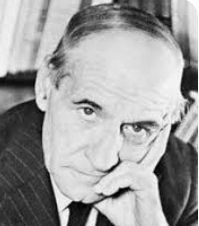
I remember the very place in Hyde Park where, in my fourteenth year, on the eve of leaving my father's house for a long absence, he told me that I should find, as I got acquainted with new people, that I had been taught many things which youths of my age did not commonly know; and that many persons would be disposed to talk to me of this, and to compliment me upon it. What other things he said on this topic I remember very imperfectly; but he wound up by saying, that whatever I knew more than others, could not be ascribed to any merit in me, but to the very unusual advantage which had fallen to my lot.
▼
Source
([https://archive.org/details/autobiography01mill/page/34/mode/1up p. 34])
3 months 3 weeks ago
The primary meaning of the words "modern," "modernity," with which recent times have baptised themselves, brings out very sharply that feeling of "the height of time" which I am at present analysing. "Modern" is what is "in the fashion, "that is to say, the new fashion or modification which has arisen over against the old traditional fashions used in the past. The word "modern" then expresses a consciousness of a new life, superior to the old one, and at the same time an imperative call to be at the height of one's time. For the "modern" man, not to be "modern" means to fall below the historic level.
▼
Source
Chap. III: The Height Of The Times
3 months 3 weeks ago
But the soul which has been polluted, and is impure at the time of her departure, and is the companion and servant of the body always, and is in love with and fascinated by the body and by the desires and pleasures of the body, until she is led to believe that the truth exists only in bodily form, which a man may touch and see and taste and use for the purposes of his lusts—the soul, I mean, accustomed to hate and fear and avoid the intellectual principle, which to the bodily eye is dark and invisible, and can be attained only by philosophy—do you suppose that such a soul as this will depart pure and unalloyed?

3 months 3 weeks ago
What does winter or autumn or spring or summer know of memory. They know nothing of memory. They know that seasons pass and return. They know that they are seasons. That they are time. And they know how to affirm themselves. And they know how to impose themselves. And they know how to maintain themselves, What does autumn know of summer. What sorrows do seasons have. None hate. None love. They just pass.
3 months 3 weeks ago
From the winter of 1821, when I first read Bentham, and especially from the commencement of the Westminster Review, I had what might truly be called an object in life; to be a reformer of the world. My conception of my own happiness was entirely identified with this object. The personal sympathies I wished for were those of fellow labourers in this enterprise. I endeavoured to pick up as many flowers as I could by the way; but as a serious and permanent personal satisfaction to rest upon, my whole reliance was placed on this...
▼
Source
([https://archive.org/details/autobiography01mill/page/132/mode/1up p. 132])
3 months 3 weeks ago
Whatever be the substance which takes possession of such a soul, it will produce the same result, and will change into a pretext for not conforming to any concrete purpose. If it appears as reactionary or anti-liberal it will be in order to affirm that the salvation of the State gives a right to level down all other standards, and to manhandle one's neighbour, above all if one's neighbour is an outstanding personality. But the same happens if it decides to act the revolutionary; the apparent enthusiasm for the manual worker, for the afflicted and for social justice, serves as a mask to facilitate the refusal of all obligations, such as courtesy, truthfulness and, above all, respect or esteem for superior individuals. … As regards other kinds of Dictatorship, we have seen only too well how they flatter the mass-man, by trampling on everything that appeared to be above the common level.
▼
Source
Chapter XV: We Arrive At The Real Question
3 months 3 weeks ago
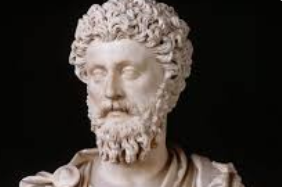
Her reverence for the divine, her generosity, her inability not only to do wrong but even to conceive of doing it. And the simple way she lived—not in the least like the rich. (Hays translation)
▼
Source
I, 3
3 months 3 weeks ago
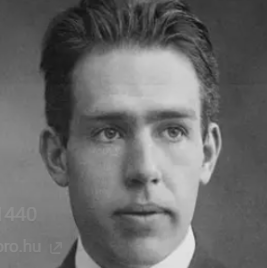
However far the phenomena transcend the scope of classical physical explanation, the account of all evidence must be expressed in classical terms. The argument is that simply by the word "experiment" we refer to a situation where we can tell others what we have done and what we have learned and that, therefore, the account of the experimental arrangement and of the results of the observations must be expressed in unambiguous language with suitable application of the terminology of classical physics.
▼
Source
Niels Bohr, "Discussions with Einstein on Epistemological Problems in Atomic Physics," in , Albert Einstein: Philosopher Scientist (1949) pp. 199-241.
3 months 3 weeks ago
[In the world below...] those who appear to have lived neither well not ill, go to the river Acheron, and mount such conveyances as they can get, and are carried in them to the lake, and there they dwell and are purified of their evil deeds, and suffer the penalty of the wrongs which they have done to others, and are absolved, and receive the rewards of their good deeds according to their deserts. But those who appear to be incurable by reason of the greatness of their crimes—who have committed many and terrible deeds of sacrilege, murders foul and violent, or the like—such are hurled into Tartarus, which is their suitable destiny, and they never come out. Those again who have committed crimes, which, although great, are not unpardonable—who in moment of anger, for example, have done violence to a father or a mother, and have repented for the remainder of their lives, or who have taken the life of another under like extenuating circumstances—these are plunged into Tartarus, the pains of which they are compelled to undergo for a year, but at the end of the year the wave casts them forth—mere homicides by way of Cocytus, patricides and matricides by Pyriphlegethon—and they are borne to the Acherusian Lake, and here they lift up their voices and call upon the victims whom they have slain or wronged, to have pity on them, and to receive them, and to let them come out of the river into the lake. And if they prevail, then they come forth and cease from their troubles; but if not, they are carried back again into Tartarus and from thence into the rivers unceasingly, until they obtain mercy from those whom they have wronged: for this is the sentence inflicted upon them by their judges.

3 months 3 weeks ago
Matter that does not remain beneath form, but surrounds it with a halo.
3 months 3 weeks ago
In this third period (as it may be termed) of my mental progress, which now went hand in hand with hers, my opinions gained equally in breadth and depth, I understood more things, and those which I had understood before, I now understood more thoroughly. I had now completely turned back from what there had been of excess in my reaction against Benthamism. I had, at the height of that reaction, certainly become much more indulgent to the common opinions of society and the world, and more willing to be content with seconding the superficial improvement which had begun to take place in those common opinions, than became one whose convictions on so many points, differed fundamentally from them. I was much more inclined, than I can now approve, to put in abeyance the more decidedly heretical part of my opinions, which I now look upon as almost the only ones, the assertion of which tends in any way to regenerate society.
▼
Source
([https://archive.org/details/autobiography01mill/page/230/mode/1up p. 230])
3 months 3 weeks ago
Never esteem anything as of advantage to you that will make you break your word or lose your self-respect.
▼
Source
III, 7

3 months 3 weeks ago
Ethics is inescapable.
▼
Source
Preface, p. xv
3 months 3 weeks ago
The greatest way to live with honor in this world is to be what we pretend to be.
▼
Source
No findable citation to Socrates. Found ascribed to Socrates in [https://books.google.com/books?id=w4zCIPZrniQC&pg=PA51&dq=%22be+what+we+pretend+to+be%22&hl=en&sa=X&ved=0ahUKEwiyvZnCg5HKAhUU5mMKHQIIAIgQ6AEIHTAA#v=onepage&q=%22be%20what%20we%20pretend%20to
3 months 3 weeks ago
To colonize the world with the European race, which is superior to every other race: to make the world accessible and habitable like Europe—such is the sort of enterprise by which the European Parliament should continually keep Europe active and happy
3 months 3 weeks ago
The dominant model is not a good one for understanding the ultimate basis of moral value, for grounding our present moral beliefs or for pointing the way to radical revisions in them. For these tasks, the older, more philosophical model found in Kant and Mill is far better.
▼
Source
Allen W. Wood, Kantian Ethics (2008), Ch. 3. Ethical Theory
3 months 3 weeks ago
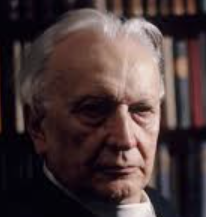
When the titanic apparatus of the mass-order has been consolidated, the individual has to serve it, and must from time to time combine with his fellows in order to renovate it. If he wants to make his livelihood by intellectual activity, he will find it very difficult to do this except by satisfying the needs of the many. He must give currency to something that will please the crowd. They seek satisfaction in the pleasures of the table, eroticism, self-assertion; they find no joy in life if one of these gratifications be curtailed. They also desire some means of self-knowledge. They desire to be led in such as way that they can fancy themselves leaders. Without wishing to be free, they would fain be accounted free. One who would please their taste must produce what is really average and commonplace, though not frankly styled such; must glorify or at least justify something as universally human. Whatever is beyond their understanding is uncongenial to them. One who would influence the masses must have recourse to the art of advertisement. The clamour of puffery is to-day requisite even for an intellectual movement. The days of quiet and unpretentious activity seem over and done with. You must keep yourself in the public eye, give lectures, make speeches, arouse a sensation. Yet the mass-apparatus lacks true greatness of representation, lacks solemnity.
3 months 3 weeks ago
Whatever is in any way beautiful hath its source of beauty in itself, and is complete in itself; praise forms no part of it. So it is none the worse nor the better for being praised.
▼
Source
Variant: That which is really beautiful has no need of anything. (trans. George Long) | IV, 20
3 months 3 weeks ago
Inaugurated in 1975 by Peter Singer“s famous pamphlet, ”'Animal Liberation“”, philosophical research into our duties towards animals, the moral rights to be ascribed to them, how it is right to treat them, and which practices — economic, scientific, technological—are consistent with the principles of a normative ethic that includes among its “clients” the grandchildren of Bentham and Kant as much as those of Fido or Pluto, is now vast. (p. 7)
3 months 3 weeks ago
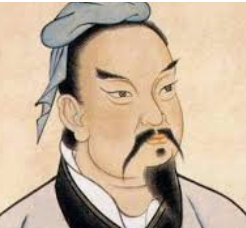
In peace, prepare for war. In war, prepare for peace.
▼
Source
Sometimes erroneously prepended to the opening line "The art of war is of vital importance to the State", but appears to be a variation of the Roman motto "Si vis pacem, para bellum". It is not clear who first misattributed this phrase to Sun Tzu. The ear
CivilSimian.com created by AxiomaticPanic, CivilSimian, Kalokagathia