
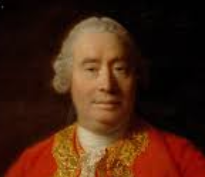
3 months 3 weeks ago
Avarice, the spur of industry, is so obstinate a passion, and works its way through so many real dangers and difficulties, that it is not likely to be scared by an imaginary danger, which is so small, that it scarcely admits of calculation. Commerce, therefore, in my opinion, is apt to decay in absolute governments, not because it is there less secure, but because it is less honourable.
▼
Source
Part I, Essay 12: Of Civil Liberty
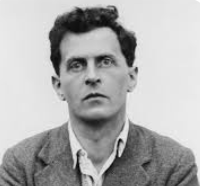
3 months 3 weeks ago
You could attach prices to ideas. Some cost a lot some little. ... And how do you pay for ideas? I believe: with courage.
▼
Source
p. 60e
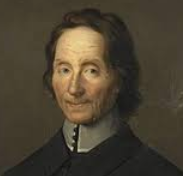
3 months 3 weeks ago
I am not my own light unto myself.
▼
Source
Dialogues on Metaphysics (1688) Dialogue III | Variant translation: I am not a light unto myself.
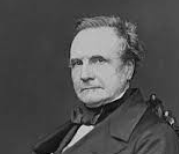
3 months 3 weeks ago
It is difficult to estimate the misery inflicted upon thousands of persons, and the absolute pecuniary penalty imposed upon multitudes of intellectual workers by the loss of their time, destroyed by organ-grinders and other similar nuisances.
▼
Source
Passages from the Life of a Philosopher (1864), ch. 26 "Street Nuisances"
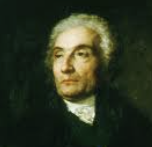
3 months 3 weeks ago
It is from the shadow of a cloister that there emerges one of mankind's greatest very greatest scourges. Luther appears; Calvin follows him. The Peasants' Revolt; the Thirty Years' War; the civil war in France; the massacre of the Low Countries; the massacre of Ireland; the massacre of the Cévennes; St Bartholomew's Day; the murders of Henry II, Henry IV, Mary Stuart, and Charles I; and finally, in our day, from the same source, the French Revolution.
▼
Source
Chapter III, p. 27
3 months 3 weeks ago
And is it possible, CLEANTHES, said PHILO, that after all these reflections, and infinitely more, which might be suggested, you can still persevere in your Anthropomorphism, and assert the moral attributes of the Deity, his justice, benevolence, mercy, and rectitude, to be of the same nature with these virtues in human creatures? His power we allow is infinite: whatever he wills is executed: but neither man nor any other animal is happy: therefore he does not will their happiness. His wisdom is infinite: He is never mistaken in choosing the means to any end: But the course of Nature tends not to human or animal felicity: therefore it is not established for that purpose. Through the whole compass of human knowledge, there are no inferences more certain and infallible than these. In what respect, then, do his benevolence and mercy resemble the benevolence and mercy of men? EPICURUS's old questions are yet unanswered. Is he willing to prevent evil, but not able? then is he impotent. Is he able, but not willing? then is he malevolent. Is he both able and willing? whence then is evil?
▼
Source
Philo to Cleanthes, Part X
3 months 3 weeks ago
Perhaps the best place to begin trying to understand Wittgenstein's character is with the photographs that exist of his face.
▼
Source
Colin McGinn, "My Wicked Heart", London Review of Books (22 November 1990)

3 months 3 weeks ago
Vladimir Ilyich, your concrete actions are completely unworthy of the ideas you pretend to hold. Is it possible that you do not know what a hostage really is — a man imprisoned not because of a crime he has committed, but only because it suits his enemies to exert blackmail on his companions? … If you admit such methods, one can foresee that one day you will use torture, as was done in the Middle Ages. I hope you will not answer me that Power is for political men a professional duty, and that any attack against that power must be considered as a threat against which one must guard oneself at any price. This opinion is no longer held even by kings... Are you so blinded, so much a prisoner of your own authoritarian ideas, that you do not realise that being at the head of European Communism, you have no right to soil the ideas which you defend by shameful methods … What future lies in store for Communism when one of its most important defenders tramples in this way every honest feeling?
▼
Source
Letter to Vladimir Lenin (21 December 1920); as quoted in Peter Kropotkin : From Prince to Rebel (1990) by George Woodcock and Ivan Avakumovic, p. 426 | Variant translation: Whoever holds dear the future of communism cannot embark upon such measures. It i
3 months 3 weeks ago
It is a more rational belief that man may become a brute than that a brute may become a man; and it is an easier faith that plants and animals may dwindle down into an elemental atom, than that this atom should embrace in its organization, and evolve, all the noble forms of vegetable, animal, and intellectual life.
3 months 3 weeks ago
Opinion is so powerful in war that it can alter the nature of the same event and give it two different names, for no reason other than its own whim. A general throws his men between two enemy armies and he writes to his king, I have split him, he has lost. His opponent writes to his king, He has put himself between two fires, he is lost. Which of the two is mistaken? Whoever is seized by the cold goddess. Assuming that all things, especially size, are at least approximately equal, the only difference between the two positions is a purely moral one. It is imagination that loses battles.
▼
Source
"Seventh Dialogue," p. 221
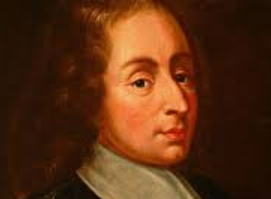
3 months 3 weeks ago
When I consider the short duration of my life, swallowed up in the eternity before and after, the small space which I fill, or even can see, engulfed in the infinite immensity of spaces whereof I know nothing, and which know nothing of me, I am terrified, and wonder that I am here rather than there, for there is no reason why here rather than there, or now rather than then. Who has set me here? By whose order and design have this place and time been destined for me?—Memoria hospitis unius diei prætereuntis.It is not well to be too much at liberty. It is not well to have all we want.How many kingdoms know nothing of us!The eternal silence of these infinite spaces alarms me.
▼
Source
"The Misery of Man Without God": "Man's Disproportion," [https://books.google.com/books?id=LbkIAAAAQAAJ The Thoughts of Blaise Pascal translated from the Text of M. Auguste Molinier] Tr. C. Kegan Paul (1885)
3 months 3 weeks ago
It is not without a certain hesitation that I have decided to take the philosophy and ideal of Anarchy as the subject of this lecture.Those who are persuaded that Anarchy is a collection of visions relating to the future, and an unconscious striving toward the destruction of all present civilization, are still very numerous; and to clear the ground of such prejudices of our education as maintain this view we should have, perhaps, to enter into many details which it would be difficult to embody in a single lecture. Did not the Parisian press, only two or three years ago, maintain that the whole philosophy of Anarchy consisted in destruction, and that its only argument was violence?Nevertheless Anarchists have been spoken of so much lately, that part of the public has at last taken to reading and discussing our doctrines. Sometimes men have even given themselves trouble to reflect, and at the present moment we have at least gained a point: it is willingly admitted that Anarchists have an ideal. Their ideal is even found too beautiful, too lofty for a society not composed of superior beings.

3 months 3 weeks ago
Solon used to say that speech was the image of actions;... that laws were like cobwebs,—for that if any trifling or powerless thing fell into them, they held it fast; while if it were something weightier, it broke through them and was off.
▼
Source
Solon, 10.
3 months 3 weeks ago
The very tension increased his imaginative power, infused his nervous and brilliant style. Here is no Hobbesian materialism, but something far more sensitive. For de Maistre is at heart a romantic, shuddering at the collapse of the aristocratic order to which he belonged, horrified at the blasphemy of philosophers who believed that man could make himself. […] Of all the figures who have contributed to the colourful tapestry of political ideas he is one of the most singular.
▼
Source
John Bowle, Politics and Opinion in the Nineteenth Century (1954), p. 89
3 months 3 weeks ago
As soon as the soul has been made to perceive that a thing can conduct it to that which it loves supremely, it must inevitably embrace it with joy.
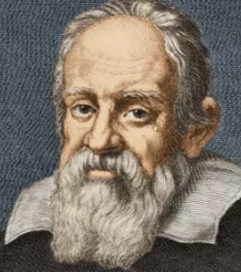
3 months 3 weeks ago
Among all the great men who have philosophized about this remarkable effect, I am more astonished at Kepler than at any other. Despite his open and acute mind, and though he has at his fingertips the motions attributed to the earth, he nevertheless lent his ear and his assent to the moon's dominion over the waters, to occult properties, and to such puerilities.
▼
Source
In regard to Kepler's belief of the moon affecting the tides of the Earth, p. 328

3 months 3 weeks ago
The desire to philosophize from the standpoint of standpointlessness, as a purportedly genuine and superior objectivity, is either childish, or, as is usually the case, disingenuous.
▼
Source
The Essence of Truth, 1931-32
3 months 3 weeks ago
It is above all over the question of the State that socialists are divided. Two main currents can be discerned in the factions that exist among us which correspond to differences in temperament as well as in ways of thinking, but above all to the extent that one believes in the coming revolution. There are those, on the one hand, who hope to achieve the social revolution through the State by preserving and even extending most of its powers to be used for the revolution. And there are those like ourselves who see the State, both in its present form, in its very essence, and in whatever guise it might appear, an obstacle to the social revolution, the greatest hindrance to the birth of a society based on equality and liberty, as well as the historic means designed to prevent this blossoming. The latter work to abolish the State and not to reform it.
▼
Source
I
3 months 3 weeks ago
That the gods superintend all the affairs of men, and that there are such beings as dæmons.
▼
Source
Plato, 42.
3 months 3 weeks ago
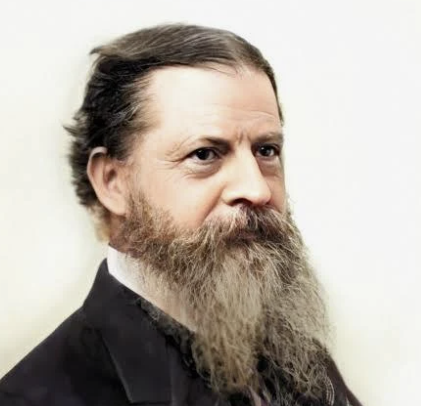
I have taken pains to make my distinction of icons, indices, and tokens clear, in order to enunciate this proposition: in a perfect system of logical notation signs of these several kinds must all be employed. Without tokens there would be no generality in the statements, for they are the only general signs; and generality is essential to reasoning. … But tokens alone do not state what is the subject of discourse ; and this can, in fact, not be described in general terms ; it can only be indicated. The actual world cannot be distinguished from a world of imagination by any description. Hence the need of pronoun and indices, and the more complicated the subject the greater the need of them.
3 months 3 weeks ago
One of the principal reasons that diverts those who are entering upon this knowledge so much from the true path which they should follow, is the fancy that they take at the outset that good things are inaccessible, giving them the name great, lofty, elevated, sublime. This destroys everything. I would call them low, common, familiar: these names suit it better; I hate such inflated expressions.
3 months 3 weeks ago
As a believing scientist it is my deep conviction that it is our task to search nature and the universe, as Galileo Galilei, the father of modern science, did, for the footprints of God.
▼
Source
, RAI Cultura, 2024
3 months 3 weeks ago
“For many, abstract thinking is toil; for me, on good days, it is feast and frenzy.” (XIV, 24) Abstract thinking a feast? The highest form of human existence? … “The feast implies: pride, exuberance, frivolity; mockery of all earnestness and respectability; a divine affirmation of oneself, out of animal plenitude and perfection—all obviously states to which the Christian may not honestly say Yes. The feast is paganism par excellence.” (WM, 916). For that reason, we might add that thinking never takes place in Christianity. That is to say, there is no Christian philosophy. There is no true philosophy that could be determined anywhere else than from within itself.
▼
Source
p. 5
3 months 3 weeks ago
The State is abdicating and appealing in its holy functions to private individuals. Everywhere free organization trespasses on its domain. And yet, the facts we have quoted let us catch only a glimpse of what free agreement has in store for us in the future, when there will be no more State.
▼
Source
Ch 11 : Free Agreement
3 months 3 weeks ago
Diogenes lighted a candle in the daytime, and went round saying, "I am looking for a man."
▼
Source
Diogenes, 6.

3 months 3 weeks ago
In conditions of private property … “life-activity” stands in the service of property instead of property standing the service of free life-activity.
▼
Source
"The Foundations of Historical Materialism," Studies in Critical Philosophy (1972), p. 32

3 months 3 weeks ago
Let us... take in our hands the staff of experience... To be blind and to think that one can do without this staff is the worst kind of blindness.
3 months 3 weeks ago
The development of the human mind has practically extinguished all feelings, except a few sporadic kinds, [like] sound, colors, smells, warmth, etc., which now appear to be disconnected and separate.
3 months 3 weeks ago
The universe of modern science, in its very 'meaninglessness', involves the gesture of 'traversing the fantasy', of abolishing the dark spot, the domain of the Unexplained which harbours fantasies and thus guarantees Meaning: instead, we get the meaningless mechanism. This is why, for Heidegger, modern science stands for metaphysical 'danger': it poses a threat to the universe of meaning. There is no meaning without some dark spot, without some forbidden/impenetrable domain into which we project fantasies which guarantee our horizon of meaning. Perhaps this very growing disenchantment with our actual social world accounts for the fascination exerted by cyberspace …
▼
Source
Slavoj Žižek, The Plague of Fantasies (London: Verso, 1997), p. 207
3 months 3 weeks ago
Unless Socialists are prepared openly and avowedly to profess that the satisfaction of the needs of each individual must be their very first aim; unless they have prepared public opinion to establish itself firmly at this standpoint, the people in their next attempt to free themselves will once more suffer a defeat.
▼
Source
This appeared in "The First Work of the Revolution" an article by an unidentified author in Freedom, Vol. 1, No. (11 August 1887), where another article had been written by Kropotkin.
3 months 3 weeks ago
Let no one be slow to seek wisdom when he is young nor weary in search thereof when he is grown old. For no age is too early or too late for the health of the soul. And to say that the season for studying philosophy has not yet come, or that it is past and gone, is like saying that the season for happiness is not yet or that it is now no more.
▼
Source
122, in Moral Exhortation (1986), p. 33
3 months 3 weeks ago
The revolution, Stahl declared, is the ‘world-historic mark of our age.’ It would found ‘the entire State on the will of man instead of on the commandment and ordinance of God.’ p. 364
3 months 3 weeks ago
The very much shorter section on the rational soul discusses freedom, reflection, judgment, and so on, with the same strong leaning to Materialism there follows a chapter over which is written, "...religious faith alone can confirm our belief as to the existence of a rational soul." ...The object... is to show how metaphysics and religion came to adopt the notion of a soul, and it concludes by saying that true philosophy freely confesses that the... soul is unknown to her. ...Mention is also made of Voltaire's phrase, 'I am body, and I think;' and Lamettrie refers with pleasure to the way in which Voltaire scoffs at the Scholastic proof for the proposition that no matter can think.
3 months 3 weeks ago
There never was a sounder logical maxim of scientific procedure than Ockham's razor: Entia non sunt multiplicanda praeter necessitatem. That is to say; before you try a complicated hypothesis, you should make quite sure that no simplification of it will explain the facts equally well. No matter if it takes fifty generations of arduous experimentation to explode the simpler hypothesis, and no matter how incredible it may seem that that simpler hypothesis should suffice, still fifty generations are nothing in the life of science, which has all time before it; and in the long run, say in some thousands of generations, time will be economized by proceeding in an orderly manner, and by making it an invariable rule to try the simpler hypothesis first. Indeed, one can never be sure that the simpler hypothesis is not the true one, after all, until its cause has been fought out to the bitter end. But you will mark the limitation of my approval of Ockham's razor. It is a sound maxim of scientific procedure. If the question be what one ought to believe, the logic of the situation must take other factors into account. Speaking strictly, belief is out of place in pure theoretical science, which has nothing nearer to it than the establishment of doctrines, and only the provisional establishment of them, at that. Compared with living belief it is nothing but a ghost. If the captain of a vessel on a lee shore in a terrific storm finds himself in a critical position in which he must instantly either put his wheel to port acting on one hypothesis, or put his wheel to starboard acting on the contrary hypothesis, and his vessel will infallibly be dashed to pieces if he decides the question wrongly, Ockham's razor is not worth the stout belief of any common seaman. For stout belief may happen to save the ship, while Entia non sunt multiplicanda praeter necessitatem would be only a stupid way of spelling Shipwreck. Now in matters of real practical concern we are all in something like the situation of that sea-captain.
▼
Source
Lecture II : The Universal Categories, §3. Laws: Nominalism, CP 5.60
3 months 3 weeks ago
We do not have and cannot have any means of discovering whether or not we are carried along in a uniform motion of translation.
▼
Source
L’état actuel et l’avenir de la physique mathematique (1904)
3 months 3 weeks ago
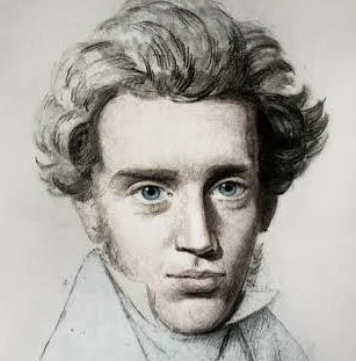
How close men, despite all their knowledge, usually live to madness? What is truth but to live for an idea? When all is said and done, everything is based on a postulate; but not until it no longer stands on the outside, not until one lives in it, does it cease to be a postulate. (Dialectic - Dispute)
▼
Source
Journals of Søren Kierkegaard 1A75, 1835
3 months 3 weeks ago
Now I have to define what I mean by "action". When a material body is transported from one point to another, it involves an action that depends on the speed of the body and on the distance it travels. However, the action is neither the speed nor the distance taken separately; rather, it is proportional to the sum of the distances travelled multiplied each by the speed at which they were travelled.
3 months 3 weeks ago
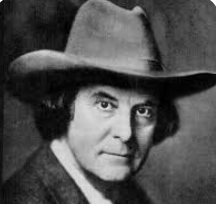
I believe in the Motherhood of God. I believe in the Blessed Trinity of Father, Mother and Child. I believe that God is here, and that we are as near Him now as ever we shall be. I do not believe He started this world a-going and went away and left it to run by itself. I believe in the sacredness of the human body, this transient dwelling place of a living soul, And so I deem it the duty of every man and every woman to keep his or her body beautiful through right thinking and right living. I believe that the love of man for woman, and the love of woman for man is holy; And that this love in all its promptings is as much an emanation of the Divine Spirit as man's love for God, or the most daring hazards of the human mind. I believe in salvation through economic, social, and spiritual freedom. I believe John Ruskin, William Morris, Henry Thoreau, Walt Whitman, and Leo Tolstoy to be Prophets of God, who should rank in mental reach and spiritual insight with Elijah, Hosea, Ezekiel, and Isaiah. I believe that men are inspired to-day as much as ever men were. I believe we are now living in Eternity as much as ever we shall. I believe that the best way to prepare for a Future Life is to be kind, live one day at a time, and do the work you can do best, doing it as well as you can. I believe we should remember the Week-day, to keep it holy. I believe there is no devil but fear. I believe that no one can harm you but yourself. I believe in my own divinity — and yours. I believe that we are all sons of God, and it doth not yet appear what we shall be. I believe the only way we can reach the Kingdom of Heaven is to have the Kingdom of Heaven in our hearts. I believe in every man minding his own business. I believe in sunshine, fresh air, friendship, calm sleep, beautiful thoughts. I believe in the paradox of success through failure. I believe in the purifying process of sorrow, and I believe that death is a manifestation of life. I believe the Universe is planned for good. I believe it is possible that I shall make other creeds, and change this one, or add to it, from time to time, as new light may come to me.
3 months 3 weeks ago
Ascending modern rationalism, in its speculative as well as empirical form, shows a striking contrast between extreme critical radicalism in scientific and philosophic method on the one hand, and an uncritical quietism in the attitude toward established and functioning social institutions. Thus Descartes' ego cogitans was to leave the “great public bodies” untouched, and Hobbes held that “the present ought always to be preferred, maintained, and accounted best.” Kant agreed with Locke in justifying revolution if and when it has succeeded in organizing the whole and in preventing subversion. However, these accommodating concepts of Reason were always contradicted by the evident misery and injustice of the “great public bodies” and the effective, more or less conscious rebellion against them. Societal conditions existed which provoked and permitted real dissociation. from the established state of affairs; a private as well as political dimension was present in which dissociation could develop into effective opposition, testing its strength and the validity of its objectives. With the gradual closing of this dimension by the society, the self-limitation of thought assumes a larger significance. The interrelation between scientific-philosophical and societal processes, between theoretical and practical Reason, asserts itself "behind the back” of the scientists and philosophers. The society bars a whole type of oppositional operations and behavior; consequently, the concepts pertaining to them are rendered illusory or meaningless. Historical transcendence appears as metaphysical transcendence, not acceptable to science and scientific thought. The operational and behavioral point of view, practiced as a “habit of thought” at large, becomes the view of the established universe of discourse and action, needs and aspirations. The “cunning of Reason” works, as it so often did, in the interest of the powers that be. The insistence on operational and behavioral concepts turns against the efforts to free thought and behavior from the given reality and for the suppressed alternatives.
▼
Source
pp. 15-16
3 months 3 weeks ago
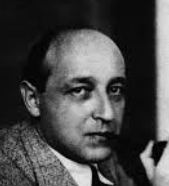
Relativism is a product of the modern historical-sociological procedure which is based on the recognition that all historical thinking is bound up with the concrete position in life of the thinker [Standortsgebundenheit des Denkers]. But relativism combines this historical-sociological insight with an older theory of knowledge which was as yet unaware of the interplay between conditions of existence and modes of thought, and which modelled its knowledge after static prototypes such as might be exemplified by the proposition 2 x 2 = 4. This older type of thought, which regarded such examples as the model of all thought, was necessarily led to the rejection of all those forms of knowledge which were dependent upon the subjective standpoint and the social situation of the knower, and which were, hence, merely "relative".
3 months 3 weeks ago
Peirce was a man of tremendous energy, producing a multitude of ideas, good, bad, and indifferent. He reminds on of a volcano spouting vast masses of rock, of which some, on examination, turn out to be nuggets of pure gold. He holds―and I confess that an examination of scientific inference has made me feel the force of this view―that man is adapted, by his congenital constitution, to the apprehension of natural laws which cannot be proved by experience, although experience is in conformity with them.
▼
Source
Bertrand Russell, Foreword to James K. Feibleman, An Introduction to Peirce's Philosophy (1946)
3 months 3 weeks ago
Behold... the only... rule we can follow: when a phenomenon appears... as the cause of another, we regard it as anterior. ...Therefore by cause... we define time; but...how do we recognize which is the cause and which the effect? We assume... the anterior fact, the antecedent, is the cause of the... consequent. It is then by time that we define cause. ...Shall we escape from this vicious circle?
3 months 3 weeks ago
But on the other hand, the understanding, reflection, is also a gift of God. What shall one do with it, how dispose of it if one is not to use it? And if one then uses it in fear and trembling not for one's own advantage but to serve the truth, if one uses it that way in fear and trembling and furthermore believing that it still is God who determines the issue in its eternal significance, venturing to trust in him, and with unconditional obedience yielding to what he makes use of it: is this not fear of God and serving God the way a person of reflection can, in the somewhat different way than the spontaneously immediate person, but perhaps more ardently. But if this is the case, does not a maieutic element enter into the relation to other man or to various other men. The maieutic is really only the expression for a superiority between man and man. That is exists cannot be denied-but existence presses far more powerfully upon the superior one precisely because he is a maieutic (because he has the responsibility) than upon the other. As far as I am concerned, there has been no lack of witnesses. All my upbuilding discourses are in fact in the form of direct communication. Consequently there can be a question only about this, something that has occupied me for a long time (already back in earlier journals): should I for one definitely explain myself as author, what I declare myself to be, how I from the beginning understood myself to be a religious author. But now is not the time to do it; I am also somewhat strained at the moment, I need more physical recreation.
▼
Source
JP VI 6234 (Pap. IX A 222 1848)
3 months 3 weeks ago
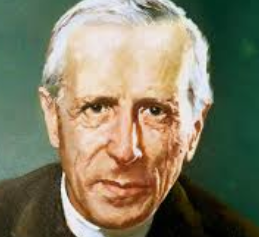
This soul can only be a conspiracy of individuals
▼
Source
Quoted by Marilyn Ferguson in The Aquarian Conspiracy, (1980)
3 months 3 weeks ago
Young women with ambitions should be very crafty and cautious, lest mayhap they be caught in the soft, silken mesh of a happy marriage, and go down to oblivion, dead to the world.
▼
Source
p. 54
3 months 3 weeks ago
Institutionalized desublimation thus appears to be an aspect of the “conquest of transcendence” achieved by the one-dimensional society. Just as this society tends to reduce, and even absorb opposition (the qualitative difference!) in the realm of politics and higher culture, so it does in the instinctual sphere. The result is the atrophy of the mental organs for grasping the contradictions and the alternatives and, in the one remaining dimension of technological rationality, the Happy Consciousness comes to prevail.
▼
Source
p. 79
3 months 3 weeks ago
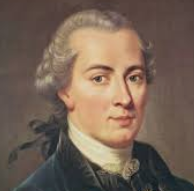
Now the maximum of perfection is called ideal, by Plato, Idea — for instance, his Idea of a Republic — and is the principle of all that is contained under the general notion of any perfection, inasmuch as the lesser grades are not thought determinable but by limiting the maximum. But God, the Ideal of perfection, and hence the principle of cognition, is also, as existing really, the principle of the creation of all perfection.
3 months 3 weeks ago
My hearers, this discourse has not wandered out into the world to look for conflict, it has not tried to get the better of anybody, it has not even tried to uphold anybody, as though there was battle without. It has spoken to you; not by way of explaining anything to you, but trying to speak secretly with you about your relationship to that secret wisdom mentioned in our text. Oh that nothing may upset you in respect to this, “neither life nor death nor things present nor things to come nor any other creature” (Romans 8:38) –not this discourse, which, though it may have profited you nothing, yet has striven for what after all is the first and the last, to help you have what the Scripture calls “faith in yourself before God” (Romans 14:22).
▼
Source
P. 173

3 months 3 weeks ago
No text in the tradition seems as lucid concerning the way in which the political is becoming worldwide. concerning the irreducibility of the technical and the media in the current of the most thinking thought-and this goes beyond the railroad and the newspapers of the time whose powers were analyzed in such an incomparable way in the Manifesto. And few texts have shed so much light on law. international law. and nationalism.
▼
Source
Injunctions of Marx
3 months 3 weeks ago
In the spiritual life, as in all organic processes, everyone has their optimum and it is just as harmful to go beyond it as not to attain it.
▼
Source
On Christian Asceticism, p. 100
CivilSimian.com created by AxiomaticPanic, CivilSimian, Kalokagathia