
3 months 3 weeks ago
Where Sydney Cove her lucid bosom swells,Courts her young navies, and the storm repels;High on a rock amid the troubled airHᴏᴘᴇ stood sublime, and waved her golden hair;Calmed with her rosy smile the tossing deep,And with sweet accents charmed the winds to sleep;To each wild plain she stretched her snowy hand,High-waving wood, and sea-encircled strand. ‘Hear me,’ she cried, ‘ye rising realms! recordTime’s opening scenes, and Truth’s unerring word.There shall broad streets their stately walls extend,The circus widen, and the crescent bend;There, rayed from cities o’er the cultured land,Shall bright canals, and solid roads expand.There the proud arch, colossus-like, bestrideYon glittering streams, and bound the chasing tide;Embellished villas crown the landscape-scene,Farms wave with gold, and orchards blush between.There shall tall spires, and dome-capped towers ascend,And piers and quays their massy structures blend;While with each breeze approaching vessels glide,And northern treasures dance on every tide!’ Then ceased the nymph—tumultuous echoes roar,And Joy’s loud voice was heard from shore to shore—Her graceful steps descending pressed the plain,And Peace, and Art, and Labour, joined her train.
▼
Source
"Visit of Hope to Sydney Cove, near Botany-Bay", The Voyage of Governor Phillip to Botany Bay (1789).

3 months 3 weeks ago
the society which projects and undertakes the technological transformation of nature alters the base of domination by gradually replacing personal dependence (of the slave on the master, the serf on the lord of the manor, the lord on the donor of the fief, etc.) with dependence on the “objective order of things” (on economic laws, the market etc.).
▼
Source
p. 144
3 months 3 weeks ago
All natural capacities of a creature are destined to evolve completely to their natural end.
▼
Source
First Thesis | Variant translations: | All natural capacities of a creature are destined sooner or later to be developed completely and in conformity with their end. | All natural capacities of a creature are destined to develop themselves completely and
3 months 3 weeks ago
Reorganisation, irrespectively of God or king, by the worship of Humanity, systematically adopted. Man’s only right is to do his duty. The Intellect should always be the servant of the Heart, and should never be its slave.
▼
Source
Title Page
3 months 3 weeks ago
The two guides call out to a man early and late. And yet, no, for when remorse calls to a man it is always late. The call to find the way again by seeking out God in the confession of sins is always at the eleventh hour. Whether you are young or old, whether you have sinned much or little, whether you have offended much or neglected much, the guilt makes this call come at the eleventh hour. The inner agitation of the heart understands what remorse insists upon, that the eleventh hour has come. For in the sense of time, the old man's age is the eleventh hour; and the instant of death, the final moment in the eleventh hour. The indolent youth speaks of a long life that lies before him. The indolent old man hopes that his death is still a long way off. But repentance and remorse belong to the eternal in a man.
▼
Source
Søren Kierkegaard, Purity of Heart is to Will One Thing, 1847 p. 40-41
3 months 3 weeks ago
I would in fact tend to have more confidence in the outcome of a democratic decision if there was a minority that voted against it, than if it was unanimous… Social psychology has amply shown the strength of this bandwagon effect.
▼
Source
Habermas (1993) "Further reflections on the public sphere", in: Craig Calhoun Eds. Habermas and the Public Sphere. MIT Press. p. 441
3 months 3 weeks ago
The agricultural population, says Cato, produces the bravest men, the most valiant soldiers, and a class of citizens the least given of all to evil designs…. A bad bargain is always a ground for repentance.
▼
Source
Book XVIII, sec. 26.
3 months 3 weeks ago
To his dog, every man is Napoleon; hence the constant popularity of dogs.
▼
Source
Reader's Digest (1934)
3 months 3 weeks ago
Reason is always a kind of brute force; those who appeal to the head rather than the heart, however pallid and polite, are necessarily men of violence. We speak of 'touching' a man's heart, but we can do nothing to his head but hit it.
▼
Source
Twelve Types (1903) Charles II
3 months 3 weeks ago
I have therefore found it necessary to deny knowledge in order to make room for faith.
3 months 3 weeks ago
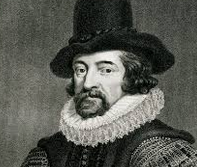
Some books are to be tasted, others to be swallowed, and some few to be chewed and digested; that is, some books are to be read only in parts; others to be read, but not curiously; and some few to be read wholly, and with diligence and attention.
▼
Source
Of Studies
3 months 3 weeks ago
This fact, that the opposite of sin is by no means virtue, has been overlooked. The latter is partly a pagan view, which is content with a merely human standard, and which for that very reason does not know what sin is, that all sin is before God. No, the opposite of sin is faith.
▼
Source
pp. 114 - 115
3 months 3 weeks ago
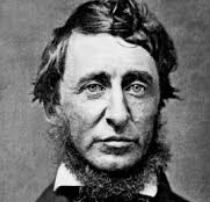
I have little interest in the "conscientious objector"; but I have the greatest regard for the individual thinker. The former opposes private conviction to public policy. His inflexibility is symptomatic of will and emotion, rather than enlightenment. The latter opposes freedom of thought to uniformity of opinion.
3 months 3 weeks ago
That all men are equal is a proposition which at ordinary times no sane individual has ever given his assent.
▼
Source
"The Idea of Equality"
3 months 3 weeks ago
And I will add this point of merely personal experience of humanity: when men have a real explanation they explain it, eagerly and copiously and in common speech, as Huxley freely gave it when he thought he had it. When they have no explanation to offer, they give short dignified replies, disdainful of the ignorance of the multitude.
▼
Source
"Doubts About Darwinism", in The Illustrated London News (17 July 1920)
3 months 3 weeks ago
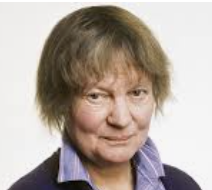
I think being a woman is like being Irish... Everyone says you're important and nice, but you take second place all the same.
▼
Source
The Red and the Green (1965), ch. 2, p. 30.
3 months 3 weeks ago
Although individuals who have begun to awake to freedom of cogitation, after having long unconsciously slumbered under the yoke of a belief (e.g. Protestants), do straightway deem themselves ennobled, in proportion to their articles of belief are scanty; yet, singularly enough, they whose understandings still lie dormant, cling to a very different principle of safety. “Better Believe Too Much Than Believe Too Little,” is here the adage; for whatever is done beyond and above what is duty, cannot in any event harm, but may perchance to good. Upon this delusive dream, which would make dishonesty the very spirit and soul of religious confession, is based on the well-known argumentum a tuto, which obtains a more easy and extended currency, because religion compensates for every fault, and hence also for dishonesty in adopting it. If, says the [https://en.wiktionary.org/wiki/sciolist sciolist], what I profess to believe concerning the Godhead is correct, then I have precisely hit the very truth. Should, on the other hand, the articles contain an error, still, as there is nothing in them morally improper, then have I merely assented to something superfluous and unnecessary, by all which I have no doubt molested, but certainly not incriminated myself. The peril arising out of the improbity of his profession – The Lesson of Conscience-necessarily undergone, when what is declared in the presence of God to be certain, which mankind must nevertheless know not to be so constituted as to admit of being affirmed with unconditioned certainty, are all overlooked by this dishonest maxim, And Indeed Pass With The Hypocrite For Nothing. The genuine safety-principle of true religion is contrariwise as follows. Whatever is a mean or condition of future bliss, unknown to naked reason, and promulgated singly by revelation, can strike root in my conviction, just like any other history; and so far forth as it does not militate against morality, cannot be absolutely false. Besides leaving this point totally undecided, I may unquestionably trust, that whatever of salutary there may lie in a document, will stand me in good stead, provided I do not by my moral short-coming make myself unworthy of it. In this maxim, there is a real moral safety, viz. That conscience be not violated; and more cannot be demanded from mankind. There is, moreover, an utmost danger and insecurity in that lauded stratagem of expediency, whereby we think astutely to evade any disadvantageous sequents that may spring from unbelieving nonconformity. Thus tampering with either party, we destroy our credit with both.
▼
Source
Book IV, Part 2, Section 4 | Immanuel Kant, Religion Within the Boundary of Pure Reason 1793 translated by James W Semple, Advocate ,Edinburgh 1838 p. 255-257
3 months 3 weeks ago
The logic now in use serves rather to fix and give stability to the errors which have their foundation in commonly received notions than to help the search for truth. So it does more harm than good.
▼
Source
Aphorism 7
3 months 3 weeks ago
It is true that in the confessional it is the pastor who preaches; but the true preacher is still the secret-sharer in your inner being. The pastor can preach only in vague generalities; the preacher in your inner being is just the opposite; he speaks simply and solely about you, to you, and within you. P. 183
3 months 3 weeks ago
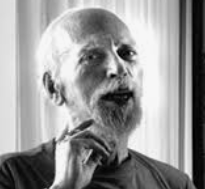
Groups are grammatical fictions; only individuals exist, and each individual is different.
3 months 3 weeks ago
It is only by poets that the life of any epoch can be synthesized. Encyclopaedias and guides to knowledge cannot do it, for the good reason that they affect only the intellectual surface of a man’s life. The lower layers, the core of his being, they leave untouched.
▼
Source
p. 4
3 months 3 weeks ago
Humility is the luxurious art of reducing ourselves to a point, not to a small thing or a large one, but to a thing with no size at all, so that to it all the cosmic things are what they really are — of immeasurable stature. That the trees are high and the grasses short is a mere accident of our own foot-rules and our own stature. But to the spirit which has stripped off for a moment its own idle temporal standards the grass is an everlasting forest, with dragons for denizens; the stones of the road are as incredible mountains piled one upon the other; the dandelions are like gigantic bonfires illuminating the lands around; and the heath-bells on their stalks are like planets hung in heaven each higher than the other.
▼
Source
"A Defence of Humilities"
3 months 3 weeks ago
Man's greatest concern is to know how he shall properly fill his place in the universe and correctly understand what he must be in order to be a man.
▼
Source
Part III : Selection on Education from Kant's other Writings, Ch. I Pedagogical Fragments, # 53
3 months 3 weeks ago
To God, truly, the Giver and Architect of Forms, and it may be to the angels and higher intelligences, it belongs to have an affirmative knowledge of forms immediately, and from the first contemplation. But this assuredly is more than man can do, to whom it is granted only to proceed at first by negatives, and at last to end in affirmatives, after exclusion has been exhausted.
▼
Source
Aphorism XV
3 months 3 weeks ago
As a thorough Christian — or, as he would have put it, infinitely interested in becoming one — Søren Kierkegaard addressed himself neither to Jews nor to Judaism. But they have overheard him. In part because they could not help it... Jews are well advised to be on the alert for what they can learn not only about him but about themselves also.
▼
Source
Rabbi Milton Steinberg, in "Kierkegaard and Judaism" in The Menorah Journal 37:2 (1949)
3 months 3 weeks ago
Most historians merely mention that Bruno was charged with the heresy of teaching Copernican astronomy, but Frances Yates, a historian who specialized in the occult aspects of the scientific revolution, points out that Bruno was charged with 18 heresies and crimes, including the practice of sorcery and organizing secret societies to oppose the Vatican. Yates thinks Bruno may have had a role in the invention of either Rosicrucianism or Freemasonry or both. Bruno's teachings combined the new science of his time with traditional Cabalistic mysticism. He believed in a universe of infinite space with infinite planets, and in a kind of dualistic pantheism, in which the divine is incarnate in every part but always in conflicting forms that both oppose and support each other. Whatever his link with occult secret societies, he influenced Hegel, Marx, theosophy, James Joyce, Timothy Leary, Discordianism, and Dr. Wilhelm Reich.
▼
Source
"Giordano Bruno", p. 95
3 months 3 weeks ago
Ignore death up to the last moment; then, when it can't be ignored any longer, have yourself squirted full of morphia and shuffle off in a coma. Thoroughly sensible, humane and scientific, eh?
3 months 3 weeks ago
Dickens was the character whom anybody can hurt and nobody can kill.
▼
Source
Ch 3: "The Youth of Dickens"
3 months 3 weeks ago
Kant believed that the concept of time is a prior condition of our minds that affects our experience of the world, but this does not explain why different human societies have had different concepts of time and have assigned different degrees of significance to the temporal aspect of phenomena. ...instead of being a prior condition, our concept of time should be regarded as a consequence of our experience of the world, the result of a long evolution. ...In recent years it has become clear that all our mental abilities are potential capacities which we can only realize in practice by learning how to use them.
▼
Source
Gerald James Whitrow, Time in History: Views of Time from Prehistory to the Present Day (1988)
3 months 3 weeks ago
Evil always turns up in this world through some genius or other.
▼
Source
As quoted in Dictionary of Foreign Quotations (1980) by Mary Collison, Robert L. Collison, p. 98

3 months 3 weeks ago
[T]ruly to escape Hegel involves an exact appreciation of the price we have to pay to detach ourselves from him. It assumes that we are aware of the extent to which Hegel, insidiously perhaps, is close to us; it implies a knowledge, in that which permits us to think against Hegel, of that which remains Hegelian. We have to determine the extent to which our anti-Hegelianism is possibly one of his tricks directed against us, at the end of which he stands, motionless, waiting for us.
▼
Source
Discourse on Language, Inaugural Lecture at the Collège de France, 1970-1971. tr. A. M. Sheridan Smith
3 months 3 weeks ago
If someone wishes to speak in his language about a new kind of entities, he has to introduce a system of new ways of speaking, subject to new rules; we shall call this procedure the construction of a linguistic framework for the new entities in question.
▼
Source
Ch. 2. Linguistic frameworks
3 months 3 weeks ago
I don't think that there are any sinister persons deliberately trying to rob people of their freedom but I do think, first of all, that there are a number of impersonal forces which are pushing in the direction of less and less freedom. And I also thing there are a number of technological devices which anybody who wishes to use, can use, to accelerate this process of going away from freedom, of imposing control.
3 months 3 weeks ago
The whole object of travel is not to set foot on foreign land; it is at last to set foot on one's own country as a foreign land.
▼
Source
Ch. XXXI: "The Riddle of the Ivy"
3 months 3 weeks ago
Shakespeare’s fault is not the greatest into which a poet may fall. It merely indicates a deficiency of taste.
3 months 3 weeks ago
This is the moment when it becomes clear that the images of madness are nothing but dream and error, and that if the unfortunate sufferer who is blinded by them invokes them, it is the better to disappear with them into the annihilation for which they are destined.
▼
Source
Part Two: 2. The Transcendence of Delirium
3 months 3 weeks ago
A few weeks before his death, he asked another Columbia philosopher, David Albert, about God. "Why is God making me suffer so much?" he asked. "Just because I don't believe in him?"
▼
Source
The Independent, [http://www.independent.co.uk/news/obituaries/professor-sidney-morgenbesser-550224.html The Independent, Professor Sidney Morgenbesser: Philosopher celebrated for his withering New York Jewish humour], 6 August 2004. The Times, [https://w
3 months 3 weeks ago
Both of us victims of the same twentieth-century plague. Not the Black Death, this time; the Grey Life.
3 months 3 weeks ago
Are they clinging to their crosses?
▼
Source
Antichrist, or the Reunion of Christendom
3 months 3 weeks ago
That power should be exercised over any portion of mankind without any obligation of consulting them, is only tolerable while they are in an infantine, or a semi-barbarous state. In any civilized condition, power ought never to be exempt from the necessity of appealing to the reason, and recommending itself by motives which justify it to the conscience and feelings, of the governed.
▼
Source
[https://en.wikisource.org/wiki/Thoughts_on_Parliamentary_Reform Thoughts on Parliamentary Reform] (1859), p. 24
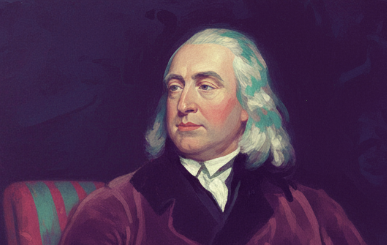
3 months 3 weeks ago
Priestley was the first (unless it was Beccaria) who taught my lips to pronounce this sacred truth — that the greatest happiness of the greatest number is the foundation of morals and legislation.
▼
Source
"Extracts from Bentham's Commonplace Book", in Collected Works, x, p. 142; He credits Priestley in his Essay on the First Principles of Government (1768) or Beccaria with inspiring his use of the phrase, often paraphrased as "The greatest good for the gre
3 months 3 weeks ago
If I had believed him, everything would have been turned upside down... all would have been turned topsy-turvy to make room for impractical theories.
▼
Source
Catherine the Great as quoted by Jackson J. Spielvogel
3 months 3 weeks ago
This, then, is how one must imagine the punitive city. At the crossroads, in the gardens, at the side of roads being repaired or bridges built, in workshops open to all, in the depths of mines that may be visited, will be hundreds of tiny theatres of punishment. Each crime will have its law; each criminal his punishment. It will be a visible punishment, a punishment that tells all, that explains, justifies itself, convicts: placards, different-coloured caps bearing inscriptions, posters, symbols, texts read or printed, tirelessly repeat the code. Scenery, perspectives, optical effects, trompe-l'œil sometimes magnify the scene, making it more fearful than it is, but also clearer. From where the public is sitting, it is possible to believe in the existence of certain cruelties which, in fact, do not take place. But the essential point, in all these real or magnified severities, is that they should all, according to a strict economy, teach a lesson: that each punishment should be a fable. And that, in counterpoint with all the direct examples of virtue, one may at each moment encounter, as a living spectacle, the misfortunes of vice. Around each of these moral ‘representations’, schoolchildren will gather with their masters and adults will learn what lessons to teach their offspring. The great terrifying ritual of the public execution gives way, day after day, street after street, to this serious theatre, with its multifarious and persuasive scenes. And popular memory will reproduce in rumour the austere discourse of the law. But perhaps it will be necessary, above these innumerable spectacles and narratives, to place the major sign of punishment for the most terrible of crimes: the keystone of the penal edifice.
▼
Source
Chapter Three, The Gentle Way in Punishment

3 months 3 weeks ago
One day I'll be old, dead, forgotten. And at this very moment, while I'm sitting here thinking these things, a man in a dingy hotel room is thinking, "I will always be here."
▼
Source
Regina to herself, p. 28
3 months 3 weeks ago
I do not ask them to assume the worth of my creed or any creed; and I could wish they did not so often ask me to assume the worth of their worthless, poisonous plutocratic modern society. But if it could be shown, as I think it can, that a long historical view and a patient political experience can at last accumulate solid scientific evidence of the vital need of such a vow, then I can conceive no more tremendous tribute than this, to any faith, which made a flaming affirmation from the darkest beginnings, of what the latest enlightenment can only slowly discover in the end.
3 months 3 weeks ago
..Whenever it ceases to be true that mankind, as a rule, prefer themselves to others, and those nearest to them to those more remote, from that moment Communism is not only practicable, but the only defensible form of society...
3 months 3 weeks ago
He found the philosophy of law a chaos, he left it a science: he found the practice of the law an Augean stable, he turned the river into it which is mining and sweeping away mound after mound of its rubbish.
▼
Source
John Stuart Mill, 'Bentham', London and Westminster Review (August 1838), in Dissertations and Discussions: Political, Philosophical, and Historical, Vol. I (1859), p. 368
3 months 3 weeks ago
I don't really know what they mean by "intellectuals," all the people who describe, denounce, or scold them. I do know, on the other hand, what I have committed myself to, as an intellectual, which is to say, after all, a cerebro-spinal individual: to having a brain as supple as possible and a spinal column that's as straight as necessary.
3 months 3 weeks ago
The fact that we are human beings is infinitely more important than all the peculiarities that distinguish human beings from one another; it is never the given that confers superiorities: "virtue", as the ancients called it, is defined at the level of "that which depends on us". In both sexes is played out the same drama of the flesh and the spirit, of finitude and transcendence; both are gnawed away by time and laid in wait for by death, they have the same essential need for one another; and they can gain from their liberty the same glory. If they were to taste it, they would no longer be tempted to dispute fallacious privileges, and fraternity between them could then come into existence.
3 months 3 weeks ago
An open mind is really a mark of foolishness, like an open mouth. Mouths and minds were made to shut; they were made to open only in order to shut.
▼
Source
Original quote: | For my friend said that he opened his intellect as the sun opens the fans of a palm tree, opening for opening's sake, opening infinitely for ever. But I said that I opened my intellect as I opened my mouth, in order to shut it again on s
CivilSimian.com created by AxiomaticPanic, CivilSimian, Kalokagathia