
3 months 3 weeks ago
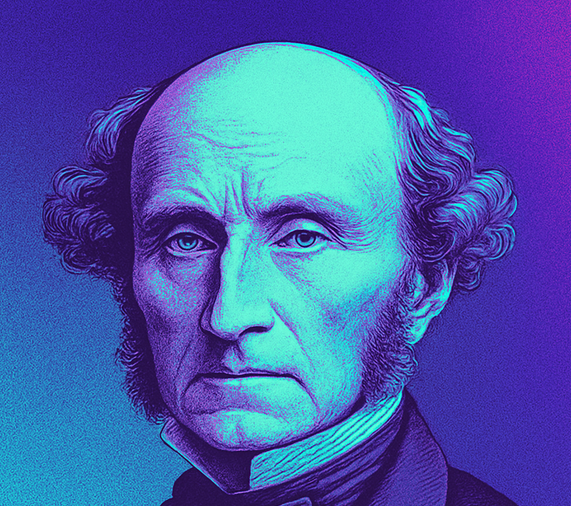
The best state for human nature is that in which, while no one is poor, no one desires to be richer, nor has any reason to fear being thrust back by the efforts of others to push themselves forward.
▼
Source
Book IV, Chapter VI, §2

3 months 3 weeks ago
The aim of this Socratic parrhesiastic activity... is to lead the interlocutor to the choice of that kind of life (bios) that will be in Dorian-harmonic accord with, logos, virtue, courage, and truth.

3 months 3 weeks ago
The body is a source of endless trouble to us by reason of the mere requirement of food; and is also liable to diseases which overtake and impede us in the search after truth: and by filling us so full of loves, and lusts, and fears, and fancies, and idols, and every sort of folly, prevents our ever having, as people say, so much as a thought.
3 months 3 weeks ago
There are today an increasing number of people whose awareness is, in the strict sense of the phrase, without a focus; and the techniques which have transformed the framework of daily life for such people at such a prodigious pace – I am thinking particularly of the cinema and the radio – are making a most powerful contribution towards this defocalizing process. … The human creature under normal conditions finds his bearings in relation to other people, and also to physical objects, that are not only close to him in space but also linked to him by a feeling of intimacy. Of this feeling of intimacy, I would say that in itself it tends to create a focus for human awareness. One might go farther and speak of a kind of constellation, at once material and spiritual, which under normal conditions assembles itself around each human being. … This kind of constellation around the individual life is, in a great many countries, in process of dissolution.
▼
Source
pp. 146-147
3 months 3 weeks ago
Though they may think the proof incomplete that the universe is a work of design, and though they assuredly disbelieve that it can have an Author and Governor who is absolute in power as well as perfect in goodness, they have that which constitutes the principal worth of all religions whatever, an ideal conception of a Perfect Being, to which they habitually refer as the guide of their conscience; and this ideal of Good is usually far nearer to perfection than the objective Deity of those, who think themselves obliged to find absolute goodness in the author of a world so crowded with suffering and so deformed by injustice as ours.
▼
Source
([https://archive.org/details/autobiography01mill/page/46/mode/1up p. 46])
3 months 3 weeks ago
The direction of society has been taken over by a type of man who is not interested in the principles of civilisation. Not of this or that civilisation but — from what we can judge to-day — of any civilisation. …The type of man dominant to-day is a primitive one, a Naturmensch rising up in the midst of a civilised world.
▼
Source
Chap.IX: The Primitive and the Technical
3 months 3 weeks ago
When I was young, Cebes, I had a prodigious desire to know the department of philosophy which is called Natural Science; this appeared to me to have lofty aims, as being the science which has to do with the causes of things, and which teaches why a thing is, and is created and destroyed; and I always agitated myself with the consideration of such questions as these... I went on to examine the decay of them, and then to the study of the heaven and earth, and at last I concluded that I was wholly incapable of these inquiries... There was a time when I thought that I understood the meaning of greater and less pretty well... that ten is more than eight, and that two cubits are more than one, because two is twice one. I should be far from imagining... that I knew the cause of any of them, indeed I should, for I cannot satisfy myself that when one is added to one, the one to which the addition is made becomes two... nor can I understand how the division of one is the way to make two; for then a different cause would produce the same effect.
3 months 3 weeks ago
There's no need to fear or hope, but only to look for new weapons.
▼
Source
from Postscript on the Societies of Control

3 months 3 weeks ago
Intuition is the positive energy that envy kills when it refuses to see the rainbow in the sky.
3 months 3 weeks ago
The enjoyments of life (such was now my theory) are sufficient to make it a pleasant thing, when they are taken en passant, without being made a principal object. Once make them so, and they are immediately felt to be insufficient. They will not bear a scrutinizing examination. Ask yourself whether you are happy, and you cease to be so. The only chance is to treat, not happiness, but some end external to it, as the purpose of life. Let your self-consciousness, your scrutiny, your self-interrogation, exhaust themselves on that; and if otherwise fortunately circumstanced you will inhale happiness with the air you breathe, without dwelling on it or thinking about it, without either forestalling it in imagination, or putting it to flight by fatal questioning. This theory now became the basis of my philosophy of life. And I still hold to it as the best theory for all those who have but a moderate degree of sensibility and of capacity for enjoyment; that is, for the great majority of mankind.
▼
Source
([https://archive.org/details/autobiography01mill/page/142/mode/1up pp. 142-143])
3 months 3 weeks ago
Whether he be an original or a plagiarist, man is the novelist of himself.
▼
Source
“Man has no nature”
3 months 3 weeks ago
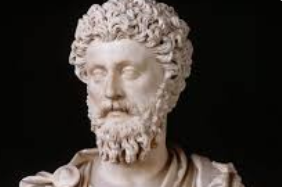
Give thyself time to learn something new and good, and cease to be whirled around.
▼
Source
II, 7
3 months 3 weeks ago
It is not enough to be wrong, one must also be polite.
▼
Source
As quoted in The Genius of Science: A Portrait Gallery (2000) by Abraham Pais, p. 24
3 months 3 weeks ago
You will know that the divine is so great and of such a nature that it sees and hears everything at once, is present everywhere, and is concerned with everything.
▼
Source
Memorabilia I.4.18
3 months 3 weeks ago
The merit of Fascism was that it courageously and vigorously opposed itself to the prejudices of contemporary liberalism—to affirm that the liberty proposed by liberalism serves neither the people nor the individual.
▼
Source
Orgini e dottrina del fascismo, Rome: Libreria del Littorio, (1929). Origins and Doctrine of Fascism, A. James Gregor, translator and editor, Transaction Publishers (2003) p. 31
3 months 3 weeks ago
I have learned to seek my happiness by limiting my desires, rather than in attempting to satisfy them.
▼
Source
Attributed to John Stuart Mill in The Phrenological Journal and Science of Health, Vol. LXXXV (September 1887), p. 170
3 months 3 weeks ago
Men seek retreats for themselves, houses in the country, sea-shores, and mountains; and thou too art wont to desire such things very much. But this is altogether a mark of the most common sort of men, for it is in thy power whenever thou shalt choose to retire into thyself. For nowhere either with more quiet or more freedom from trouble does a man retire than into his own soul.
▼
Source
Variant translation: Nowhere can man find a quieter or more untroubled retreat than in his own soul. | IV, 3.
3 months 3 weeks ago
The goal of maximizing the welfare of all may be better achieved by an ethic that accepts our inclinations and harnesses them so that, taken as a whole, the system works to everyone's advantage.
▼
Source
Chapter 6, A New Understanding Of Ethics, p. 157
3 months 3 weeks ago
writing should be dangerous: as dangerous as Socrates. There should be no refuge for the writer either in the Ivory Tower or the Social Church.
▼
Source
Josephine Herbst "The Ruins of Memory" (April 4, 1956) in The Nation

3 months 3 weeks ago
It gives liberty and breadth to thought, to learn to judge our own epoch from the point of view of universal history, history from the point of view of geological periods, geology from the point of view of astronomy.
▼
Source
20 July 1848
3 months 3 weeks ago
Man is always something more than what he knows of himself. He is not what he is simply once and for all, but is a process...
3 months 3 weeks ago
It needs to realize that what happens to everyone—bad and good alike—is neither good nor bad.
▼
Source
IV, 39(Hays translation)

3 months 3 weeks ago
May it please His Majesty that we fear Him whom we ought to fear, and understand that one venial sin can do us more harm than all hell together; for that is the truth. The evil spirits keep us in terror, because we expose ourselves to the assaults of terror by our attachments to honours, possessions, and pleasures. For then the evil spirits, uniting themselves with us, — we become our own enemies when we love and seek what we ought to hate, — do us great harm. We ourselves put weapons into their hands, that they may assail us; those very weapons with which we should defend ourselves. It is a great pity. But if, for the love of God, we hated all this, and embraced the cross, and set about His service in earnest, Satan would fly away before such realities, as from the plague. He is the friend of lies, and a lie himself. He will have nothing to do with those who walk in the truth. When he sees the understanding of any one obscured, he simply helps to pluck out his eyes; if he sees any one already blind, seeking peace in vanities, — for all the things of this world are so utterly vanity, that they seem to be but the playthings of a child, — he sees at once that such a one is a child; he treats him as a child, and ventures to wrestle with him — not once, but often. May it please our Lord that I be not one of these; and may His Majesty give me grace to take that for peace which is really peace, that for honour which is really honour, and that for delight which is really a delight. Let me never mistake one thing for another — and then I snap my fingers at all the devils, for they shall be afraid of me. I do not understand those terrors which make us cry out, Satan, Satan! when we may say, God, God! and make Satan tremble. Do we not know that he cannot stir without the permission of God? What does it mean? I am really much more afraid of those people who have so great a fear of the devil, than I am of the devil himself. Satan can do me no harm whatever, but they can trouble me very much, particularly if they be confessors. I have spent some years of such great anxiety, that even now I am amazed that I was able to bear it. Blessed be our Lord, who has so effectually helped me!
▼
Source
Ch. XXV. "Divine Locutions. Discussions on That Subject" ¶ 26 & 27 | Variant translation: I do not fear Satan half so much as I fear those who fear him.

3 months 3 weeks ago
We have been twenty years engaged in the two most expensive wars that Europe ever saw. The whole burthen of this charge has lain upon the landed interest during the whole time. The men of estates have, generally speaking, neither served in the fleets nor armies, nor meddled in the public funds, and management of the treasure.A new interest has been created out of their fortunes, and a sort of property, which was not known twenty years ago, is now encreased to be almost equal to the terra firma of our island. The consequences of all this is, that the landed men are become poor and dispirited. They either abandon all thoughts of the publick, turn arrant farmers, and improve the estates they have left: or else they seek to repair their shattered fortunes by listing at court, or under the heads of partys. In the mean while those men are become their masters, who formerly would with joy have been their servants.
▼
Source
Letter to Lord Orrery (9 July 1709), quoted in 'The Letters of Henry St. John to the Earl of Orrery, 1709–1711', ed. H. T. Dickinson, Camden Miscellany, Vol. XXVI (1975), p. 146
3 months 3 weeks ago
...be tolerant with others and strict with yourself. Remember, nothing belongs to you but your flesh and blood—and nothing else is under your control. (Hays translation)
▼
Source
V, 33

3 months 3 weeks ago
For love is ever the beginning of Knowledge, as fire is of light.
▼
Source
Carlyle, Essays, Death of Goethe. Quote reported in Hoyt's New Cyclopedia Of Practical Quotations (1922), p. 419-23.
3 months 3 weeks ago
The encouragement of light-mindedness about traditional philosophical topics serves the same purposes as does the encouragement of light-mindedness about traditional theological topics. Like the rise of large market economies, the increase in literacy, the proliferation of artistic genres, and the insouciant pluralism of contemporary culture, such philosophical superficiality and light-mindedness helps along the disenchantment of the world. It helps make the world’s inhabitants more pragmatic, more tolerant, more liberal, more receptive to the appeal of instrumental rationality.
3 months 3 weeks ago
What indeed has Athens to do with Jerusalem? (Quid ergo Athenae Hierosolymis?)
3 months 3 weeks ago
Among many reasons which determine me to prefer monarchy to every form of government, this is a principal one. When monarchy is the essential form, it may be more easily and more usefully tempered with aristocracy or democracy, or both, than either of them, when they are the essential forms, can be tempered with monarchy. It seems to me, that the introduction of a real permanent monarchical power, or any thing more than the pageantry of it, into either of these, must destroy them and extinguish them, as a great light extinguishes a less. Where it may easily be shewn, and the true form of our government will demonstrate, without seeking any other example, that very considerable aristocratical and democratical powers may be grafted on a monarchical stock, without diminishing the lustre, or restraining the power and authority of the prince, enough to alter in any degree the essential form.
▼
Source
pp. 92-93
3 months 3 weeks ago
Retire into thyself. The rational principle which rules has this nature, that it is content with itself when it does what is just, and so secures tranquility.
▼
Source
VII, 28
3 months 3 weeks ago
Not the external and physical alone is now managed by machinery, but the internal and spiritual also. Here too nothing follows its spontaneous course, nothing is left to be accomplished by old natural methods. Everything has its cunningly devised implements, its preestablished apparatus; it is not done by hand, but by machinery.
3 months 3 weeks ago
Don't let them tell us stories. Don't let them say of the man sentenced to death "He is going to pay his debt to society," but: "They are going to cut off his head." It looks like nothing. But it does make a little difference. And then there are people who prefer to look their fate in the eye.
▼
Source
"Entre oui et non" in L'Envers et l'endroit (1937), translated as "Between Yes and No", in World Review magazine (March 1950), also quoted in The Artist and Political Vision (1982) by Benjamin R. Barber and Michael J. Gargas McGrath
3 months 3 weeks ago
Both (are) brethren, both fellow servants, no difference of spirit or of flesh; nay, (they are) truly “two in one flesh.” Where the flesh is one, one is the spirit too. Together they pray, together prostrate themselves, together perform their fasts; mutually teaching, mutually exhorting, mutually sustaining. Equally (are they) both (found) in the Church of God; equally at the banquet of God; equally in straits, in persecutions, in refreshments. Neither hides (ought) from the other; neither shuns the other; neither is troublesome to the other. The sick is visited, the indigent relieved, with freedom. Alms (are given) without (danger of ensuing) torment; sacrifices (attended) without scruple; daily diligence (discharged) without impediment: (there is) no stealthy signing, no trembling greeting, no mute benediction. Between the two echo psalms and hymns; and they mutually challenge each other which shall better chant to their Lord. Such things when Christ sees and hears, He joys. To these He sends His own peace. Where two (are), there withal (is) He Himself. Where He (is), there the Evil One is not.
▼
Source
To His Wife - Book 2, Chapter VIII.—Arguments Drawn Even from Heathenish Laws to Discountenance Marriage with Unbelievers. The Happiness of Union Between Partners in the Faith Enlarged on in Conclusion.
3 months 3 weeks ago
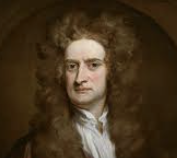
Were I to assume an hypothesis, it should be this, if propounded more generally, so as not to assume what light is further than that it is something or other capable of exciting vibrations of the ether. First, it is to be assumed that there is an ethereal medium, much of the same constitution as air, but far rarer, subtiller, and more strongly elastic. ...In the second place, it is to be supposed that the ether is a vibrating medium, like air, only the vibrations much more swift and minute; those of air made by a man's ordinary voice succeeding at more than half a foot or a foot distance, but those of ether at a less distance than the hundredth-thousandth part of an inch. And as in air the vibrations are some larger than others, but yet all equally swift... so I suppose the ethereal vibrations differ in bigness but not in swiftness. ...In the fourth place, therefore, I suppose that light is neither ether nor its vibrating motion, but something of a different kind propagated from lucid bodies. They that will may suppose it an aggregate of various peripatetic qualities. Others may suppose it multitudes of unimaginable small and swift corpuscles of various sizes springing from shining bodies at great distances one after the other, but yet without any sensible interval of time. ...To avoid dispute and make this hypothesis general, let every man here take his fancy; only whatever light be, I would suppose it consists of successive rays differing from one another in contingent circumstances, as bigness, force, or vigour, like as the sands on the shore... and, further, I would suppose it diverse from the vibrations of the ether. ...Fifthly, it is to be supposed that light and ether mutually act upon one another. ...æthereal vibrations are therefore the best means by which such a subtile agent as light can shake the gross particles of solid bodies to heat them.
3 months 3 weeks ago
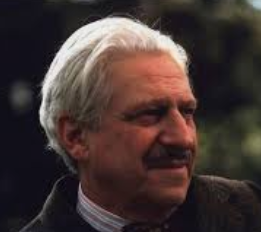
The pioneering practitioners of the new science knew that they were producing a new kind of knowledge and so they declared this newness in the titles of their books and articles. Thus we have Galileo's Two New Sciences, Boyle's New Experiments, Kepler's New Astronomy, and Tartaglia's New Science. When Ben Jonson presented a masque entitled "News from the New World," his new world was not the newly found continent of North America, but the new world of science, the world revealed by the telescope of Galileo.
3 months 3 weeks ago
To change your mind and to follow him who sets you right is to be nonetheless the free agent that you were before.
▼
Source
Remember that to change thy opinion and to follow him who corrects thy error is as consistent with freedom as it is to persist in thy error. (Long translation) | VIII, 16

3 months 3 weeks ago
There are questions which, once approached, either isolate you or kill you outright.
3 months 3 weeks ago
The Book had in a high degree excited us to self-activity, which is the best effect of any book.
▼
Source
Bk. I, ch. 4.
3 months 3 weeks ago
But in the end one needs more courage to live than to kill himself.
3 months 3 weeks ago
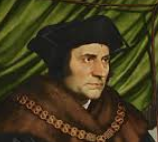
As for rosemarie, I lett it run alle over my garden walls,not onlie because my bees love it,but because 'tis the herb sacred to remembrance and therefore to friendship,whence a sprig of it hath a dumb language that maketh ye chosen emblem at our funeral wakes and in our buriall grounds.
▼
Source
Actually written in 1852 by Anne Manning in her fictional novel The Household of St Thomas More, as if a diary entry was made by his daughter Margaret; and so, although written as said by the character Thomas More in the novel by Anne Manning, it was not
3 months 3 weeks ago
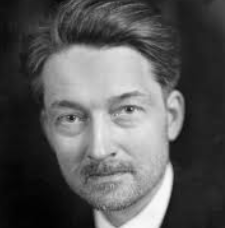
For to love is to give what one is, his very being, in the most absolute, the most brazenly metaphysical, the least phenomenalizable sense of this word.
▼
Source
p 9.
3 months 3 weeks ago
Think not disdainfully of death, but look on it with favor; for even death is one of the things that Nature wills.
▼
Source
IX, 3
3 months 3 weeks ago
I have no ideas, only obsessions. Anybody can have ideas. Ideas have never caused anybody’s downfall.
▼
Source
[https://ibb.co/1z2zxFS]
3 months 3 weeks ago
Do nothing, only keep agitating, debating; and things will destroy themselves.
▼
Source
Pt. I, Bk. VI, ch. 3.
3 months 3 weeks ago
"My field," said Goethe, "is time." That is indeed the absurd speech. What, in fact, is the Absurd Man? He who, without negating it, does nothing for the eternal. Not that nostalgia is foreign to him. But he prefers his courage and his reasoning. The first teaches him to live without appeal and to get along with what he has; the second informs him of his limits. Assured of his temporally limited freedom, of his revolt devoid of future, and of his mortal consciousness, he lives out his adventure within the span of his lifetime.
3 months 3 weeks ago
I would have thee know that every day is a year contracted, that every year is a day extended. Anticipate the year in the day and lose not a day in the year. Make use of indeterminate agents till thou canst find a determinate one. The many may wish well but one only loves. Circumferences spread but centres contract: so superiors dissolve and inferiors coagulate. Stand not long in the sun nor long in the shade. Where extremes meet, there look for complexions.
3 months 3 weeks ago
Human character is never found "to enter into its glory," except through the ordeal of affliction. Its force cannot come forth without the offer of resistance, nor can the grandeur of its free will declare itself, except in the battle of fierce temptation.
▼
Source
Vol. II, p. 126.
3 months 3 weeks ago
The inversion of external compulsion into the compulsion of conscience … produces the machine-like assiduity and pliable allegiance required by the new rationality.
▼
Source
p. 34.
3 months 3 weeks ago
Remember that the term Rational was intended to signify a discriminating attention to every several thing and freedom from negligence; and that Equanimity is the voluntary acceptance of things which are assigned to thee by the common nature; and the Magnanimity is the elevation of the intelligent part above the pleasurable or painful sensations of the flesh, and above that poor thing called fame, and death, and all such things. If then, thou maintainest thyself in the possession of these names, without desiring to be called by these names by others, thou wilt be another person and wilt enter into another life.
▼
Source
X, 8
3 months 3 weeks ago
Let us cultivate our garden.
CivilSimian.com created by AxiomaticPanic, CivilSimian, Kalokagathia