
4 months ago
Truth springs from argument amongst friends.
4 months ago
W. is very excitable: he has more passion about philosophy than I have; his avalanches make mine seem mere snowballs. He has the pure intellectual passion in the highest degree; it makes me love him. His disposition is that of an artist, intuitive and moody. He says every morning he begins his work with hope, and every evening he ends in despair — he has just the sort of rage when he can't understand things as I have.
▼
Source
Bertrand Russell, as quoted in Young Ludwig: Wittgenstein's life, 1889-1921 (1988) by Brian McGuinness, p. 100

4 months ago
The law is an adroit mixture of customs that are beneficial to society, and could be followed even if no law existed, and others that are of advantage to a ruling minority, but harmful to the masses of men, and can be enforced on them only by terror.
▼
Source
"Words of a Rebel"; as quoted in The Heretic's Handbook of Quotations: Cutting Comments on Burning Issues (1992) by Charles Bufe, p. 26
4 months ago
The immense number and variety of the beautiful optical discoveries which we owe to Sir David Brewster makes the comparison in his case a very imperfect representation of his triumphs over nature; and that, besides his place in the history of the Theory of Optics, he must hold a most eminent position in the history of Optical Crystallography, whenever the discovery of a True Optical Theory of Crystals supplies us with the Epoch to which his labors in this field form so rich.
▼
Source
William Whewell (1859). History of the Inductive Sciences, D. Appleto. p. 133
4 months ago
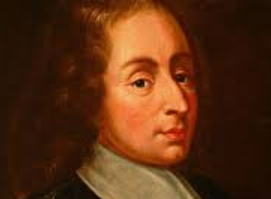
When we reflect, that the Inquisition, by its restrictions, and authority, would have prevented the French revolution,—it is hard to say, whether the Sovereign, who, wholly, and without reserve, gave up this instrument, would not, in reality, be doing an injury to humanity.
▼
Source
p. 31
4 months ago
If it had pleased them [the legislators] to order that this wealth, after having been possessed by fathers during their life, should return to the republic after their death, you would have no reason to complain of it.
4 months ago
Each individual is a cosmos of organs, each organ is a cosmos of cells, each cell is a cosmos of infinitely small ones; and in this complex world, the well-being of the whole depends entirely on the sum of well-being enjoyed by each of the least microscopic particles of organized matter. A whole revolution is thus produced in the philosophy of life.

4 months ago
Pittacus said that half was more than the whole.
▼
Source
Pittacus, 2.
4 months ago
That brief, nervous, lucid style, stripped of phrases, robust of limb, did not at all recall the softness of the eighteenth century, nor the declamations of the latest French books: it was born and steeped in the breath of the Alps; it was virgin, it was young, it was harsh and savage; it had no human respect, it felt its solitude; it improvised depth and form all at once… That man was new among the enfants du siècle [children of the century].
▼
Source
Alphonse de Lamartine, Cours familier de littérature (1859), pp. 426–427
4 months ago
The principles of pleasure are not firm and stable. They are different in all mankind, and variable in every particular with such a diversity that there is no man more different from another than from himself at different times.
4 months ago
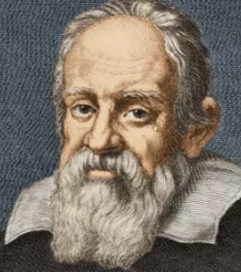
After the publication of my dialogues, I was summoned to Rome by the Congregation of the holy Office, where, being arrived on the 10th of February 1633, I was subjected to the infinite clemency of that tribunal, and of the Sovereign Pontiff, Urban the Eighth; who, notwithstanding, thought me deserving of his esteem.
▼
Source
pp. 145–146

4 months ago
Those in the crossing must in the end know what is mistaken by all urging for intelligibility: that every thinking of being, all philosophy, can never be confirmed by "facts," ie, by beings. Making itself intelligible is suicide for philosophy. Those who idolize "facts" never notice that their idols only shine in a borrowed light. They are also meant not to notice this; for thereupon they would have to be at a loss and therefore useless. But idolizers and idols are used wherever gods are in flight and so announce their nearness.
▼
Source
Contributions to Philosophy (From Enowning) [Beitrage Zur Philosophie (Vom Ereignis)], notes of 1936–1938, as translated by Parvis Emad and Kenneth Maly (1989)
4 months ago
Think of past wars and of those that subjected people will have to wage to conquer the right to breathe freely, the wars for markets, the wars to create colonial empires. And in France we unfortunately know only too well that every war, victorious or not, is followed by slavery. And finally what is even worse than all that has just been enumerated, is the fact that the education we all receive from the State, at school and after, has so warped our minds that the very notion of freedom ends up by being lost, and disguised in servitude. It is a sad sight to see those who believe themselves to be revolutionaries unleashing their hatred on the anarchist — just because his views on freedom go beyond their petty and narrow concepts of freedom learned in the State school. And meanwhile, this spectacle is a reality. The fact is that the spirit of voluntary servitude was always cleverly cultivated in the minds of the young, and still is, in order to perpetuate the subjection of the individual to the State.
▼
Source
IX
4 months ago
Once when Bion was at sea in the company of some wicked men, he fell into the hands of pirates; and when the rest said, "We are undone if we are known,"—"But I," said he, "am undone if we are not known."
▼
Source
Bion, 3.
4 months ago
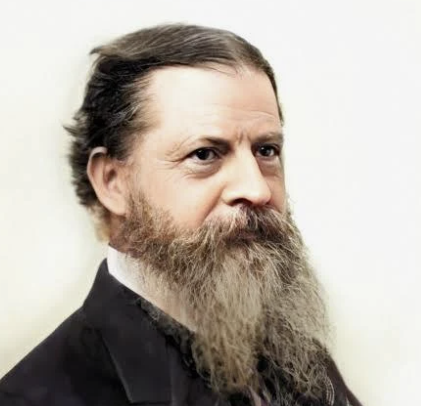
Of the fifty or hundred systems of philosophy that have been advanced at different times of the world's history, perhaps the larger number have been, not so much results of historical evolution, as happy thoughts which have accidently occurred to their authors. An idea which has been found interesting and fruitful has been adopted, developed, and forced to yield explanations of all sorts of phenomena. … The remaining systems of philosophy have been of the nature of reforms, sometimes amounting to radical revolutions, suggested by certain difficulties which have been found to beset systems previouslv in vogue; and such ought certainly to be in large part the motive of any new theory. … When a man is about to build a house, what a power of thinking he has to do, before he can safely break ground! With what pains he has to excogitate the precise wants that are to be supplied. What a study to ascertain the most available and suitable materials, to determine the mode of construction to which those materials are best adapted, and to answer a hundred such questions! Now without riding the metaphor too far, I think we may safely say that the studies preliminary to the construction of a great theory should be at least as deliberate and thorough as those that are preliminary to the building of a dwelling-house.
4 months ago
Knowledge is like a sphere, the greater its volume, the larger its contact with the unknown.
4 months ago
The critique of the highest values hitherto does not simply refute them or declare them invalid. It is rather a matter of displaying their origins as impositions which must affirm precisely what ought to be negated by the values established.
▼
Source
p. 26
4 months ago
In market gardening the soil is always made... Consequently, it is now a usual stipulation in the renting contracts of the Paris maraîcheres that the gardener may carry away his soil, down to a certain depth, when he quits his tenancy. He himself makes it, and when he moves to another plot he carts his soil away...
4 months ago
Asked from what country he came, he replied, "I am a citizen of the world."
▼
Source
Diogenes, 6.

4 months ago
Man is a thinking being. His reason enables him to recognize his own potentialities and those of his world. He is thus not at the mercy of the facts that surround him, but is capable of subjecting them to a higher standard, that of reason. P. 6

4 months ago
The mind, like the body, has its contagious diseases and its scurvy. ...We catch everything from those with whom we come in contact; their gestures, their accent, etc.
4 months ago
A finite interval of time generally contains an innumerable series of feelings; and when these become welded together in association the result is a general idea.

4 months ago
Those who have nothing else to recommend them to the respect of others but only their blood, cry it up at a great rate, and have their mouths perpetually full of it. They swell and vapor, and you are sure to hear of their families and relations every third word.
▼
Source
p. 22 (Ancestry)
4 months ago
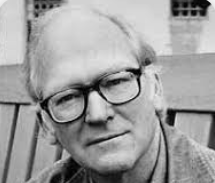
The dominant metaphor of conceptual relativism, that of differing points of view, seems to betray an underlying paradox. Different points of view make sense, but only if there is a common co-ordinate system on which to plot them; yet the existence of a common system belies the claim of dramatic incomparability.
▼
Source
Donald Davidson. "On the Very Idea," p. 184; as cited in: Johannes Brandl, Wolfgang Leopold Gombocz. The Mind of Donald Davidson. Rodopi, 1989, p. 152
4 months ago
To those who hold abstractly to Hegel’s political philosophy, Hobhouse replies that the very fact of class society, the patent influence of class interests on the state, renders it impossible to designate the state as expressive of the real will of individuals as a whole. ‘Wherever a community is governed by one class or one race, the remaining class or race is permanently in the position of having to take what it can get.’ P. 396
4 months ago
The word "God," so "capitalised" (as we Americans say), is the definable proper name, signifying Ens necessarium; in my belief Really creator of all three Universes of Experience.
▼
Source
I, Ens necessarium is a latin expression which signifies "Necessary being, necessary entity"
4 months ago
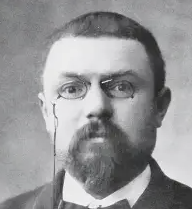
Talk with M. Hermite. He never evokes a concrete image, yet you soon perceive that the more abstract entities are to him like living creatures.
▼
Source
Quoted in G Simmons, Calculus Gems (New York 1992).
4 months ago
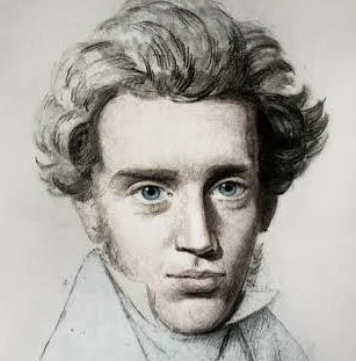
There is a contrast of primary significance between Augustine and Pelagius. The former crushes everything in order to rebuild it again. The other addresses himself to man as he is. The first system, therefore, in respect to Christianity, falls into three stages: creation – the fall and a consequent condition of death and impotence; a new creation – whereby man is placed in a position where he can choose; and then, if he chooses – Christianity. The other system addresses itself to man as he is (Christianity fits into the world). From this is seen the significance of the theory of inspiration for the first system; from this also is seen the relationship between the synergistic and the semipelagian conflict. It is the same question, only that the syngeristic struggle has its presupposition in the new creation of the Augustinian system.
▼
Source
Soren Kierkegaard's Journals and Papers, Volume 1 Hong translation 1967 p. 14-15 1 A 101 January 14, 1837
4 months ago
On the 15th of April 1744, I described the principle upon which the following work is based, in the public assembly of the Royal Academy of Sciences of Paris, as reported in the Acts of that academy.At the end of the same year, Professor Euler published his excellent book Methodus inveniendi lineas curvas maximi minimive proprietate gaudentes. In a supplement to his book, this illustrious geometer showed that, in the trajectory of a particle acted on by a central force, the velocity multiplied by the line element of the trajectory is minimized.This observation gave me great pleasure, as a beautiful application of my principle to the motion of the planets, which is determined by this principle.From the same principle, I will now try to derive higher and more important truths.
4 months ago
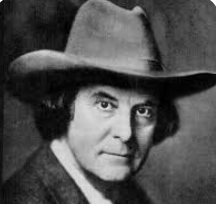
Mankind is governed by the worst — the strongest example of this is to be seen in American municipalities, but it is true of every government. We are governed by rogues who hold their grip upon us by and through statute law. Were it not for law the people could protect themselves against these thieves, but now we are powerless and are robbed legally. One mild form of coercion these rogues resort to is to call us unpatriotic when we speak the truth about them. Not long ago they would have cut off our heads. The world moves. Governments cannot be done away with instantaneously, but progress will come, as it has in the past by lessening the number of laws. We want less governing, and the ideal government will arrive when there is no government at all. So long as governments set the example of killing their enemies, private individuals will occasionally kill theirs. So long as men are clubbed, robbed, imprisoned, disgraced, hanged by the governing class, just so long will the idea of violence and brutality be born in the souls of men.
4 months ago
This mutual dependencies no longer the dialectical relationship between master and servant, which has been broken in the struggle for mutual recognition, but rather a vicious circle which encloses both the master and the servant. Do the technicians rule, or is their rule that of the others, who rely on the technicians as their planners and executors?
▼
Source
p. 33
4 months ago
To-day, there are too many points of view of equal value and prestige, each showing the relativity of the other, to permit us to take any one position and to regard it as impregnable and absolute. Only this socially disorganized intellectual situation makes possible the insight, hidden until now by a generally stable social structure and the practicability of certain traditional norms, that every point of view is particular to a social situation.
4 months ago
Conceptual graphs are system of logic based on the existential graphs of Charles Sanders Peirce and the semantic networks of artificial intelligence. The purpose of the system is to express meaning in a form that is logically precise, humanly readable, and computationally tractable.
▼
Source
John F. Sowa (1993) Conceptual graphs for knowledge representation. p. 3-51
4 months ago
When navigators... determine a ... they must... calculate Paris time...[with] a chronometer set for Paris. The qualitative problem of simultaneity is made to depend upon the quantitative problem of the measurement of time.
4 months ago
He fixed his definition thus: reflection is the possibility of the relation, consciousness is the relation, the first form of which is contradiction. He soon noted that, as a result, the categories of reflection are always dichotomous. For example ideality and reality, soul and body, to recognize – the true, to will – the good, to love – the beautiful, God and the world, and so on, these are categories of reflection. In reflection, these touch each other in such a way that a relation becomes possible. The categories of consciousness, on the other hand, are trichotomous, as language itself indicates, for when I say I am conscious of this, I mention a trinity. Consciousness is mind and spirit, and the remarkable thing is that when in the world of mind or spirit one is divided, it always becomes three and never two. Consciousness, therefore, presupposes reflection. If this were not true it would be impossible to explain doubt. True, language seems to contest this, since in most languages, as far as he knew, the word ‘doubt’ is etymologically related to the word ‘two’. Yet in his opinion this only indicated the presupposition of doubt, especially because it was clear to him that as soon as I, as spirit, become two, I am eo ipso three. If there were nothing but dichotomies, doubt would not exist, for the possibility of doubt lies precisely in that third which places the two in relation to each other. One cannot therefore say that reflection produces doubt, unless one expressed oneself backwards; one must say that doubt presupposes reflection, though not in a temporal sense. Doubt arises through a relation between two, but for this to take place the two must exist, although doubt, as a higher expression, comes before rather than afterwards."
▼
Source
Johannes Climacus (1841) p. 80-81

4 months ago
The end of man (as a factual anthropological limit) is announced to thought from the vantage of the end of man (as a determined opening or the infinity of a telos). Man is that which is in relation to his end, in the fundamentally equivocal sense of the word. Since always.
▼
Source
"The Ends of Man," Margins of Philosophy, tr. w/ notes by Alan Bass. The University of Chicago Press. Chicago, 1982. (original French published in Paris, 1972, as Marges de la philosophie). p. 123
4 months ago
In sum, all the rest of this essay will be nothing but the story of the struggle in the universe between the unified multiple and the unorganized multitude: the full application of great Law of complexity and consciousness: a law that... implies a psychically convergent structure and curvature of the world.
4 months ago
Do not go out of your way to do good whenever it comes your way. Men who make a business of doing good to others are apt to hate others in the same occupation. Simply be filled with the thought of good, and it will radiate — you do not have to bother about it, any more than you need trouble about your digestion.
▼
Source
p. 71
4 months ago
Is this fight against history part of the fight against a dimension of the mind in which centrifugal faculties and forces might develop—faculties and forces that might hinder the total coordination of the individual with the society? Remembrance of the Fast may give rise to dangerous insights, and the established society seems to be apprehensive of the subversive contents of memory. Remembrance is a mode of dissociation from the given facts, a mode of “mediation” which breaks, for short moments, the omnipresent power of the given facts. Memory recalls the terror and the hope that passed. Both come to life again
▼
Source
p. 98
4 months ago
It is absurd to excite reason against the primary postulates of pure time, as, for example, continuity, etc., since they follow from laws prior and superior to which nothing is found, and since reason herself in the use of the principle of contradiction cannot dispense with the support of this concept, so primitive and original is it.
4 months ago
For whoever has what he has from the God himself clearly has it at first hand; and he who does not have it from the God himself is not a disciple. Let us assume that it is otherwise, that the contemporary generation of disciples had received the condition from the God, and that the subsequent generations were to receive it from these contemporaries – what would follow?
▼
Source
p. 76
4 months ago
In order to try to remove what we are going to say from what risks happening, if we judge by the many signs, to Marx's work today, which is to say also to his injunction. What risks happening is that one will try to play Marx off against Marxism so as to neutralize, or at any rate muffle the political imperative in the untroubled exegesis of a classified work. One can sense a coming fashion or stylishness in this regard in the culture and more precisely in the university. And what is there to worry about here? Why fear what may also become a cushioning operation? This recent stereotype would be destined, whether one wishes it or not, to depoliticize profoundly the Marxist reference, to do its best, by putting on a tolerant face, to neutralize a potential force, first of all by enervating a corpus, by silencing in it the revolt [the return is acceptable provided that the revolt, which initially inspired uprising, indignation, insurrection, revolutionary momentum, does not come back]. People would be ready to accept the return of Marx or the return to Marx, on the condition that a silence is maintained about Marx's injunction not just to decipher but to act and to make the deciphering [the interpretation] into a transformation that "changes the world. In the name of an old concept of reading, such an ongoing neutralization would attempt to conjure away a danger: now that Marx is dead, and especially now that Marxism seems to be in rapid decomposition, some people seem to say, we are going to be able to concern ourselves with Marx without being bothered-by the Marxists and, why not, by Marx himself, that is, by a ghost that goes on speaking. We'll treat him calmly, objectively, without bias: according to the academic rules, in the University, in the library, in colloquia! We'll do it systematically, by respecting the norms of hermeneutical, philological, philosophical exegesis. If one listens closely, one already hears whispered: "Marx, you see, was despite everything a philosopher like any other; what is more [and one can say this now that so many Marxists have fallen silent], he was a great-philosopher who deserves to figure on the list of those works we assign for study and from which he has been banned for too long.29 He doesn't belong to the communists, to the Marxists, to the parties-, he ought to figure within our great canon of Western political philosophy. Return to Marx, let's finally read him as a great philosopher." We have heard this and we will hear it again.
▼
Source
Injunctions of Marx
4 months ago
In the "Alexandrian" explanation described above, the multiple from which evolution emerges is both secondary and sinful from its origin: it represents in fact (an idea that smacks of Manicheanism and the Hindu metaphysical systems) broken and pulverized unity. Starting from a very much more modern and completely different point of view, let us assert, as our original postulate, that, the multiple (that is, non-being, if taken in the pure state) being the only rational form of a creatable (creabile) nothingness, the creative act is comprehensible only as a gradual process of arrangement and unification, which amounts to accepting that to create is to unite. And, indeed, there is nothing to prevent our holding that union creates. To the objection that union presupposes already existing elements, I shall answer that physics has just shown us (in the case of mass) that experientially (and for all the protests of "common sense") the moving object exists only as the product of its motion.
▼
Source
[https://archive.org/stream/ChristianityAndEvolution/Christianity_and_Evolution#page/n191/mode/2up pp. 193–195]
4 months ago
Weak with nice sense, the chaste Mɪᴍᴏsᴀ stands,From each rude touch withdraws her timid hands;Oft as light clouds o’er-pass the Summer-glade,Alarm’d she trembles at the moving shade;And feels, alive through all her tender form,The whisper’d murmurs of the gathering storm;Shuts her sweet eye-lids to approaching night;And hails with freshen’d charms the rising light.Veil’d, with gay decency and modest pride,Slow to the mosque she moves, an eastern bride;There her soft vows unceasing love record,Queen of the bright seraglio of her Lord.—So sinks or rises with the changeful hourThe liquid silver in its glassy tower.So turns the needle to the pole it loves,With fine librations quivering as it moves.
▼
Source
[Mimosa], The Botanic Garden (1791), Part ii, Canto i, ll. 247-262.
4 months ago
The liberating force of technology—the instrumentalization of things—turns into … the instrumentalization of man.
▼
Source
p. 159
4 months ago
Nature does nothing in vain, and in the use of means to her goals she is not prodigal. Her giving to man reason and the freedom of the will which depends upon it is clear indication of her purpose. Man accordingly was not to be guided by instinct, not nurtured and instructed with ready-made knowledge; rather, he should bring forth everything out of his own resources.
▼
Source
Third Thesis
4 months ago
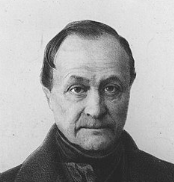
And now I have explained the series of social and intellectual conditions by which the discovery of sociological laws, and consequently the foundation of Positivism, was fixed for the precise date at which I began my philosophical career: that is to say, one generation after the progressive dictatorship of the Convention, and almost immediately after the fall of the retrograde tyranny of Bonaparte.
▼
Source
p. 71
4 months ago
If it were so, as conceited sagacity, proud of not being deceived, thinks, that we should believe nothing that we cannot see with our physical eyes, then we first and foremost ought to give up believing in love. ... We can be deceived by believing what is untrue, but we certainly are also deceived by not believing what is true. ... Which deception is more dangerous?
▼
Source
p. 5
4 months ago
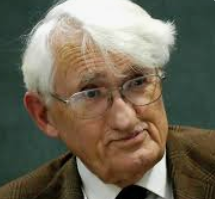
Christianity has functioned for the normative self-understanding of modernity as more than a mere precursor or a catalyst. Egalitarian universalism, from which sprang the ideas of freedom and social solidarity, of an antonomous conduct of life and emancipation, of the individual morality of conscience, human rights, and democracy, is the direct heir to the judaic ethic of justice and the Christian ethic of love. This legacy, substantially unchanged, has been the object of continual critical appropriation and reinterpretation. To this day, there is no alternative to it. And in the light of the current challenges of a postnational constellation, we continue to draw on the substance of this heritage. Everything else is just idle postmodern talk.
▼
Source
Habermas (2006) "Conversation about God and the World." Time of transitions. Cambridge: Polity Press, p. 150-151.
4 months ago
Let not things, because they are common, enjoy for that the less share of our consideration.
▼
Source
Book XIX, sec. 59.
CivilSimian.com created by AxiomaticPanic, CivilSimian, Kalokagathia