
4 months ago
My sympathies are, of course, with the Government side, especially the Anarchists; for Anarchism seems to me more likely to lead to desirable social change than highly centralized, dictatorial Communism.
▼
Source
Authors Take Sides on the Spanish War (1937) edited by Nancy Cunard and publisehd by the Left Review
4 months ago
There is only one thing that it requires real courage to say, and that is a truism.
▼
Source
[http://books.google.com/books?id=PLpLAAAAMAAJ&q="There+is+only+one+thing+that+it+requires+real+courage+to+say+and+that+is+a+truism"&pg=PA17#v=onepage G. F. Watts] (1904)
4 months ago
All thought must, directly or indirectly, by way of certain characters, relate ultimately to intuitions, and therefore, with us, to sensibility, because in no other way can an object be given to us.
▼
Source
B 33
4 months ago
The two ways of contemplation are not unlike the two ways of action commonly spoken of by the ancients: the one plain and smooth in the beginning, and in the end impassable; the other rough and troublesome in the entrance, but after a while fair and even. So it is in contemplation: If a man will begin with certainties, he shall end in doubts; but if he will be content to begin with doubts he shall end in certainties.
▼
Source
Book I, v, 8
4 months ago
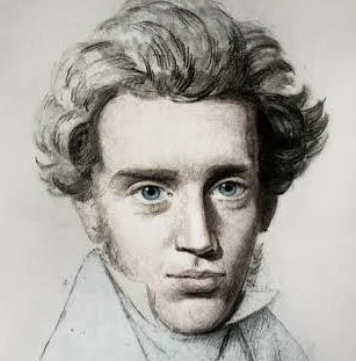
You complain that no one can put himself in your place. I can imagine that it may never have occurred to you, preoccupied day and night with that thought, that you should comfort others: and he, the Comforter, he is the only one of whom it truly holds that no one could put himself in his place-how true if he had complained in that way! He, the Comforter, in whose place no one could put himself, he can put himself completely in your place and in every sufferer's place. .... There is still one who is able to put himself completely in your place, the Lord Jesus Christ, who ”because he has suffered and himself been tempted is able to help those who are tempted” (Hebrews 2:18).
▼
Source
Three Discourses at Friday Communion November 14, 1849 Hong translation 1997 P. 119-120
4 months ago
The generally accepted computation is that 2½ acres of land are required to provide a minimum adequate diet for each person, by Western standards anyhow. On a vegetarian diet it has been estimated that 1½ acres per head may provide enough. The reason for this difference is that animals grazed for meat-eating purposes require about 15 times more land than is necessary to raise an equivalent amount of nutrition in the form of grains, vegetables and fruit for human consumption. This means that India, on a vegetarian diet, is living far more wisely within its own land resources than are the meat-eating peoples.
▼
Source
Which Way Lies Hope? An Examination of Capitalism, Communism, Socialism and Gandhiji's Programme (Ahmedabad: Navajivan Publishing House, 1952), [https://archive.org/stream/in.ernet.dli.2015.54786/2015.54786.Which-Way-Lies-Hope#page/n15/mode/2up p. 8].
4 months ago
To talk about religion except in terms of human psychology is an irrelevance.
▼
Source
“One and Many,” p. 3
4 months ago
I do not believe in a fate that falls on men however they act; but I do believe in a fate that falls on them unless they act.
▼
Source
In The Illustrated London News (29 April 1922) | Collected in Generally Speaking (1929) "XX. On Holland"
4 months ago
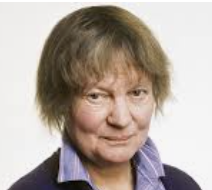
If we ignore the prior work of attention and notice only the emptiness of the moment of choice we are likely to identify freedom with the outward movement since there is nothing else to identify it with. But if we consider what the work of attention is like, how continuously it goes on, and how imperceptibly it builds up structures of value round about us, we shall not be surprised that at crucial moments of choice most of the business of choosing is already over.
▼
Source
The Sovereignty of Good (1970) p. 36.
4 months ago
Only the descent into the hell of self-knowledge can pave the way to godliness.
▼
Source
[N]ur die Höllenfahrt des Selbsterkenntnisses bahnt den Weg zur Vergötterung ... | Ak 6:441
4 months ago
It cannot be that axioms established by argumentation should avail for the discovery of new works, since the subtlety of nature is greater many times over than the subtlety of argument. But axioms duly and orderly formed from particulars easily discover the way to new particulars, and thus render sciences active.
▼
Source
Aphorism 24
4 months ago
I have worked for this restlessness oriented toward inward deepening. But “without authority.” Instead of conceitedly making myself out to be a witness for the truth and causing others rashly to want to be the same, I am an unauthorized poet who influences by means of the ideas.
▼
Source
Soren Kierkegaard, For Self-Examination, Hong p. 21
4 months ago
No, they were not exactly automatons, but they did not know what they were doing. They take down a boy’s britches. They stare at his buttocks. They cane him until the buttocks bleed. And they believe this is virtue, because it is done in a school, and it becomes vice only if it is done in a place with a red lantern over the door.
▼
Source
The Widow's Son
4 months ago
Death is the only thing we haven't succeeded in completely vulgarizing.
▼
Source
Eyeless in Gaza (1936)
4 months ago
The most unfathomable schools and sages have never attained to the gravity which dwells in the eyes of a baby of three months old. It is the gravity of astonishment at the universe, and astonishment at the universe is not mysticism, but a transcendent common-sense. The fascination of children lies in this: that with each of them all things are remade, and the universe is put again upon its trial. As we walk the streets and see below us those delightful bulbous heads, three times too big for the body, which mark these human mushrooms, we ought always primarily to remember that within every one of these heads there is a new universe, as new as it was on the seventh day of creation. In each of those orbs there is a new system of stars, new grass, new cities, a new sea.
▼
Source
"A Defence of Baby-Worship"
4 months ago
Man has his own inclinations and a natural will which, in his actions, by means of his free choice, he follows and directs. There can be nothing more dreadful than that the actions of one man should be subject to the will of another; hence no abhorrence can be more natural than that which a man has for slavery. And it is for this reason that a child cries and becomes embittered when he must do what others wish, when no one has taken the trouble to make it agreeable to him. He wants to be a man soon, so that he can do as he himself likes.
▼
Source
Part III : Selection on Education from Kant's other Writings, Ch. I Pedagogical Fragments, # 62
4 months ago
Sir Henry Wotton used to say that critics are like brushers of noblemen's clothes.
▼
Source
No. 64
4 months ago
There would be no existence if it were reduced to pure existence. My existence is related to that of others. One of the reasons for the emphasis Kierkegaard placed on anxiety and sin and Sartre (in his novel) on nausea is probably that they separated the individual too much (at least at times) from other individuals. It is true that Kierkegaard does not deny the Other, indeed conceives the communion between minds, and above all conceives a spiritual love and a spiritual Church. Nevertheless existence is very often restricted for him to the relation with God. According to him, I am only when I am in the presence of God. In fact, each of these two antithetical positions, that of Kierkegaard and that of Hegel, has its danger. In the too great intensity of the one and in the too great richness of the other there are nearly equal dangers. It is true, as Hegel says, that we are what we know and think and feel, that we are linked with our culture, with history, and finally with the world, that the romantic idea according to which there are in us beautiful unexpressed feelings leads to a kind of effective laziness and a selfish interiority.
▼
Source
Jean Wahl The Philosopher’s Way 1948 Oxford University Press p. 46-47
4 months ago
Dr. Wilhelm Reich was condemned for unscientific claims by the Food and Drug Administration in 1956 because of his theories about sexual freedom and his discovery of an alleged "orgone" energy. He quickly became the most world-famous victim of the FDA's quest to impose One True Faith on medical practice in the United States, because the Feds not only destroyed all the equipment in Dr. Reich's experimental laboratory but burned all his books, too, in an incinerator, and then they put him in jail where he died of a heart attack. Since many disapprove of this unconstitutional way of silencing heresy, Dr. Reich has remained a center of controversy. … In addition to his bio-physical heresies, Dr. Reich vastly offended many people by his sociological theory, which holds that fascism is just an exaggerated form of the basic structure of sex-negative societies and has existed under other names in every civilization based on sexual repression. In this theory, the character and muscular armor of the average citizen — a submissive and frightened attitude anchored in body reflexes — causes the average person to want a strong authority figure above them. Tyranny, in this model, is not created by tyrants alone but by neurotic masses who want tyrants.
▼
Source
p. 361; some of Wilson's account of the suppression of Reich's ideas and work are slightly exaggerative: though an extensive store of Reich's books mentioning his concepts of orgone energy and the "orgone accumulators" of his laboratory were destroyed, th
4 months ago
Our present economic, social and international arrangements are based, in large measure, upon organized lovelessness. We begin by lacking charity towards Nature, so that instead of trying to co-operate with Tao or the Logos on the inanimate and subhuman levels, we try to dominate and exploit, we waste the earth's mineral resources, ruin its soil, ravage its forests, pour filth into its rivers and poisonous fumes into its air. From lovelessness in relation to Nature we advance to lovelessness in relation to art--a lovelessness so extreme that we have effectively killed all the fundamental or useful arts and set up various kinds of mass production by machines in their place. And of course this lovelessness in regard to art is at the same time a lovelessness in regard to the human beings who have to perform the fool-proof and grace-proof tasks imposed by our mechanical art-surrogates and by the interminable paper work connected with mass production and mass distribution. With mass-production and mass-distribution go mass-financing, and the three have conspired to expropriate ever-increasing numbers of small owners of land and productive equipment, thus reducing the sum of freedom among the majority and increasing the power of the minority to exercise a coercive control over the lives of their fellows. (Chapter V - Charity)
4 months ago
The public does not like bad literature. The public likes a certain kind of literature and likes that kind of literature even when it is bad better than another kind of literature even when it is good.
▼
Source
Ch 5: "The Great Popularity"

4 months ago
There are things I can't force. I must adjust. There are times when the greatest change needed is a change of my viewpoint.
▼
Source
As quoted in Cracking the Code of Our Physical Universe : The Key to a Whole New World of Enlightenment and Enrichment (2006) by Matthew M Radmanesh, p. 91

4 months ago
The problem is not to discover in oneself the truth of one's sex, but, rather, to use one's sexuality henceforth to arrive at a multiplicity of relationships. And, no doubt, homosexuality is not a form of desire but something desirable. Therefore, we have to work at becoming homosexuals.
▼
Source
"Friendship as a Way of Life," interview in Gai pied, April 1981, as translated in Ethics, Subjectivity and Truth (1994), pp. 135-136
4 months ago
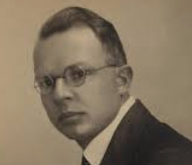
For me personally, Wittgenstein was perhaps the philosopher who, besides Russell and Frege, had the greatest influence on my thinking. The most important insight I gained from his work was the conception that the truth of logical statements is based only on their logical structure and on the meaning of the terms. Logical statements are true under all conceivable circumstances; thus their truth is independent of the contingent facts of the world. On the other hand, it follows that these statements do not say anything about the world and thus have no factual content.
▼
Source
p. 25 as cited in: M. J. Cresswell (2010) "[http://apacentral.org/necessity/Cresswell_Carnap.pdf Carnap's logic]"
4 months ago
The nature of power is such that even those who have not sought it, but have had it forced upon them, tend to acquire a taste for more.
▼
Source
Chapter 1 (p. 12)
4 months ago
But whenever one meets modern thinkers (as one often does) progressing toward a madhouse, one always finds, on inquiry, that they have just had a splendid escape from another madhouse. Thus, hundreds of people become Socialists, not because they have tried Socialism and found it nice, but because they have tried Individualism and found it particularly nasty.
▼
Source
'The New House,' pp. 161-162
4 months ago
People praise virtue, but they hate it, they run away from it. It freezes you to death, and in this world you've got to keep your feet warm.
4 months ago
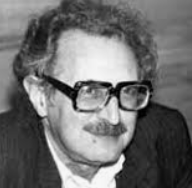
In France at least, the history of science and thought gives pride of place sciences, sciences of the necessary, all close to philosophy: one can observe in their history the almost uninterrupted emergence of truth and pure reason. The other disciplines, however - those, for example, that concern living beings, languages, or economic facts - are considered too tinged with empirical thought, too exposed to the vagaries of chance or imagery to age old traditions and external events, for it to be supposed that their history could be anything other irregular. At most, they are expected to provide evidence of a state of mind, an intellectual fashion, a mixture of archaism and bold conjecture, of intuition and blindness. But what if empirical knowledge, at a given time and in a given culture, did possess a well defined regularity.
▼
Source
Foreword to the English edition
4 months ago
A son is not a judge of his father, but the conscience of the father is in his son.
▼
Source
Book 1, part 1, ch. 5
4 months ago
"Ye shall know the truth and the truth shall make you mad."
▼
Source
Frequently attributed to Aldous Huxley (possibly to Brave New World Revisited) but not traced to a reliable source.
4 months ago
I’ll read "Jack Redskin on the Quest" And feed my brain with better things.
▼
Source
A Ballade of a Book Reviewer
4 months ago
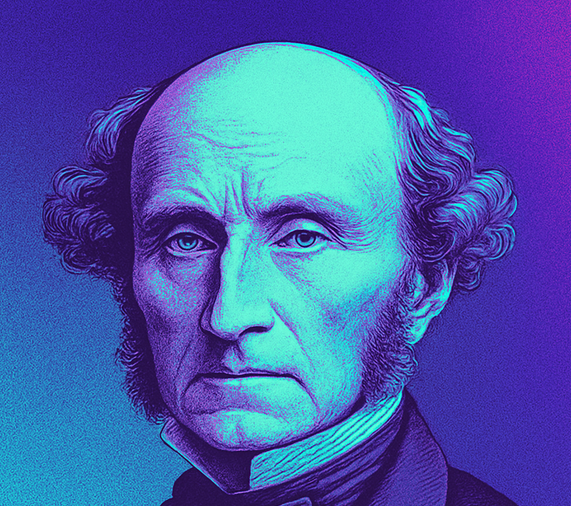
War is an ugly thing, but not the ugliest of things: the decayed and degraded state of moral and patriotic feeling which thinks that nothing is worth a war, is much worse. When a people are used as mere human instruments for firing cannon or thrusting bayonets, in the service and for the selfish purposes of a master, such war degrades a people. A war to protect other human beings against tyrannical injustice; a war to give victory to their own ideas of right and good, and which is their own war, carried on for an honest purpose by their free choice, — is often the means of their regeneration. A man who has nothing which he is willing to fight for, nothing which he cares more about than he does about his personal safety, is a miserable creature who has no chance of being free, unless made and kept so by the exertions of better men than himself. As long as justice and injustice have not terminated their ever-renewing fight for ascendancy in the affairs of mankind, human beings must be willing, when need is, to do battle for the one against the other.
▼
Source
"The Contest in America," Fraser’s Magazine (February 1862); later published in Dissertations and Discussions (1868), vol.1 p. 26
4 months ago
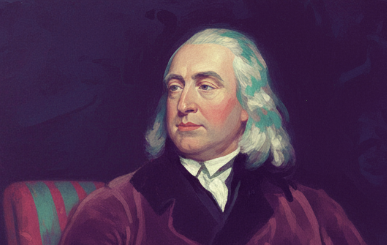
It is the principle of antipathy which leads us to speak of offences as deserving punishment. It is the corresponding principle of sympathy which leads us to speak of certain actions as meriting reward. This word merit can only lead to passion and error. It is effects good or bad which we ought alone to consider.
▼
Source
MSS 29, 32, University College Collection
4 months ago
The perfect disciplinary apparatus would make it possible for a single haze to see everything constantly. A central point would be both the source of light illuminating everything, and a locus of convergence for everything that must be known: a perfect eye that nothing would escape and a centre towards which all gazes would be turned.
▼
Source
Part Three, The Means of Correct Training

4 months ago
You're unique like all other women.
▼
Source
Raimon to Regina, p. 55
4 months ago
The truth is that prohibitions might have done far less harm as prohibitions, if a vague association had not arisen, on some dark day of human unreason, between prohibition and progress. And it was the progress that did the harm, not the prohibition. Men can enjoy life under considerable limitations, if they can be sure of their limited enjoyments; but under Progressive Puritanism we can never be sure of anything. The curse of it is not limitation; it is unlimited limitation. The evil is not in the restriction; but in the fact that nothing can ever restrict the restriction. The prohibitions are bound to progress point by point; more and more human rights and pleasures must of necessity be taken away; for it is of the nature of this futurism that the latest fad is the faith of the future, and the most fantastic fad inevitably makes the pace. Thus the worst thing in the seventeenth-century aberration was not so much Puritanism as sectarianism. It searched for truth not by synthesis but by subdivision. It not only broke religion into small pieces, but it was bound to choose the smallest piece.
▼
Source
"Fads and Public Opinion"
4 months ago
Two very different ideas are usually confounded under the name democracy. The pure idea of democracy, according to its definition, is the government of the whole people by the whole people, equally represented. Democracy, as commonly conceived and hitherto practiced, is the government of the whole people by a mere majority of the people exclusively represented. The former is synonymous with the equality of all citizens; the latter, strangely confounded with it, is a government of privilege in favor of the numerical majority, who alone possess practically any voice in the state. This is the inevitable consequence of the manner in which the votes are now taken, to the complete disfranchisement of minorities.
▼
Source
Ch. VII: Of True and False Democracy; Representation of All, and Representation of the Majority only (p. 247)
4 months ago
The commitment... in parrhesia is linked to... a difference of status between the speaker and his audience... the parrhesiastes says something which is dangerous to himself and thus involves a risk...
4 months ago
Work almost always has a double aspect: it is a bondage, a wearisome drudgery; but it is also a source of interest, a steadying element, a factor that helps to integrate the worker with society. Retirement may be looked upon either as a prolonged holiday or as a rejection, a being thrown on to the scrap-heap.
▼
Source
Pt I, Ch. 4: Old age in present-day society, p. 263
4 months ago
Q: What's wrong with the world? A: I am.
▼
Source
Purportedly a response by Chesterton to the question posed around 1910 by the Times of London (along with other luminaries), but biographer Kevin Belmonte, in 'Defiant Joy: the Remarkable Life & Impact of G.K. Chesterton', was unable to verify. Belmonte s
4 months ago
The reasons for legal intervention in favour of children, apply not less strongly to the case of those unfortunate slaves and victims of the most brutal part of mankind, the lower animals.
▼
Source
Book V, Chapter 11, Section 9
4 months ago
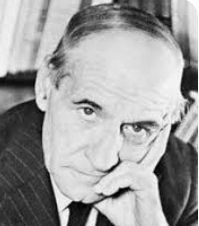
Yo soy yo y mi circumstancia, y si no la salvo a ella no me salvo yo.
▼
Source
I am I and my circumstance, and if I don't save it I don't save myself.
4 months ago
A profound shaking had happened in the seemingly smooth greensward of the classical philosophical tradition... faultlines in the ancient world that one had barely dreamed of ... A manuscript that moved me deeply.
▼
Source
Peter Brown, blurb in Michel Foucault, Fearless Speech (2001)

4 months ago
And now that the hour of departure is appointed to me, this is the hope with which I depart, and not I only, but every man that believes that he has his mind purified.
4 months ago
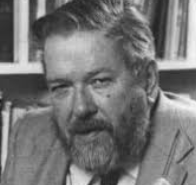
When we represent technology to ourselves through its own common sense we think of ourselves as picking and choosing in a supermarket, rather than within the analogy of the package deal. We have bought a package deal of far more fundamental novelness than simply a set of instruments under our control. It is a destiny which enfolds us in its own conceptions of instrumentality, neutrality and purposiveness.
▼
Source
p. 32
4 months ago
He blamed as severely what he thought a bad action, when the motive was a feeling of duty, as if the agents had been consciously evil doers. He would not have accepted as a plea in mitigation for inquisitors, that they sincerely believed burning heretics to be an obligation of conscience. But though he did not allow honesty of purpose to soften his disapprobation of actions, it had its full effect on his estimation of characters. No one prized conscientiousness and rectitude of intention more highly, or was more incapable of valuing any person in whom he did not feel assurance of it.
▼
Source
([https://archive.org/details/autobiography01mill/page/49/mode/1up pp. 49-50])
4 months ago
The surrealist thinks he has outstripped the whole of literary history when he has written (here a word that there is no need to write) where others have written "jasmines, swans and fauns." But what he has really done has been simply to bring to light another form of rhetoric which hitherto lay hidden in the latrines.
▼
Source
Chapter XI: The Self-Satisfied Age
4 months ago
It may be said, indeed, that without bones and muscles and the other parts of the body I cannot execute my purposes. But to say that I do as I do because of them, and that this is the way in which the mind acts, and not from the choice of the best, is a very careless and idle mode of speaking. I wonder that they cannot distinguish the cause from the condition, which the many, feeling about in the dark, are always mistaking and misnaming.
4 months ago
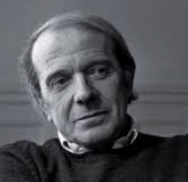
It is at work everywhere, functioning smoothly at times, at other times in fits and starts. It breathes, it heats, it eats. It shits and fucks. What a mistake to have ever said the id. Everywhere it is machines — real ones, not figurative ones: machines driving other machines, machines being driven by other machines, with all the necessary couplings and connections.
▼
Source
from Anti-oedipus: capitalism and schizophrenia, p. 1

4 months ago
New York City is the Darwinist capital of the capitalist world.
CivilSimian.com created by AxiomaticPanic, CivilSimian, Kalokagathia