
4 months ago
In all the works on pedagogy that ever I read — and they have been many, big, and heavy — I don't remember that any one has advocated a system of teaching by practical jokes, mostly cruel. That, however, describes the method of our great teacher, Experience. She says,
4 months ago
It is as useless for a person to want first of all to decide the externals and after that the fundamentals as it is for a cosmic body, thinking to form itself, first of all to decide the nature of its surface, to what bodies it should turn its light, which its dark side, without first letting the harmony of centrifugal and centripetal forces realize its existence and letting the rest come of itself. One must learn to know oneself before knowing anything else (gnothi seauton). Not until a person has inwardly understood himself and then sees the course he is to take does his life gain peace and meaning.
▼
Source
Journal entry, August 1, 1835
4 months ago
The ancient Greeks knew the laws that govern the propagation of light in a uniform medium and upon its reflection. However, the law governing the refraction of light as it passes from one transparent medium to another was unknown until the last century. Snell discovered it, Descartes tried to explain it and Fermat criticized his explanation. Since then, many great geometers have researched the problem, although no one has yet found a way of harmonizing the law of refraction with more fundamental laws that Nature must obey.
4 months ago
If men will not act for themselves, what will they do when the benefit of their effort is for all?

4 months ago
The radical empiricist onslaught … provides the methodological justification for the debunking of the mind by the intellectuals—a positivism which, in its denial of the transcending elements of Reason, forms the academic counterpart of the socially required behavior.
▼
Source
p. 13
4 months ago
The general form of the total conception of ideology is being used by the analyst when he has the courage to subject not just the adversary's point of view but all points of view, including his own, to the ideological analysis.At the present stage of our understanding it is hardly possible to avoid this general formulation of the total conception of ideology, according to which the thought of all parties in all epochs is of an ideological character.
4 months ago
Peirce was concerned to explicate the idea of meaning whereas James was concerned to explicate the meaning of ideas.
▼
Source
Horace Standish Thayer, in his Introduction to a 1975 edition of Pragmatism by William James
4 months ago
Yet when we speak of time... do we not unconsciously adopt this hypothesis... and put ourselves in the place of this imperfect god... Do not even the atheists put themselves in the place where god would be..?
4 months ago
What the age needs is not a genius — it has had geniuses enough, but a martyr, who in order to teach men to obey would himself be obedient unto death. What the age needs is awakening. And therefore someday, not only my writings but my whole life, all the intriguing mystery of the machine will be studied and studied. I never forget how God helps me and it is therefore my last wish that everything may be to his honour.
▼
Source
(20 November 1847)
4 months ago
I can truly say — and this in virtue of the whole structure of my thought — that I now feel more indissolubly bound to the hierarchical Church and to the Christ of the Gospel than ever before in my life. Never has Christ seemed to me more real, more personal or more immense.
▼
Source
Letter from Cape Town to Father General, Jean-Baptiste Janssens (12 October 1951)
4 months ago
Every man is a damn fool for at least five minutes a day. Wisdom consists of not exceeding the limit.
4 months ago
The Superego, in censoring the unconscious and in implanting conscience, also censors the censor.
▼
Source
p. 76
4 months ago
Percepts and phenomena which precedes the logical use of the intellect is called appearance, while the reflex knowledge originating from several appearances compared by the intellect is called experience.
4 months ago
One sticks one's finger into the soil to tell by the smell in what land one is: I stick my finger in existence — it smells of nothing. Where am I? Who am I? How came I here? What is this thing called the world? What does this world mean? Who is it that has lured me into the world? Why was I not consulted, why not made acquainted with its manners and customs instead of throwing me into the ranks, as if I had been bought by a kidnapper, a dealer in souls? How did I obtain an interest in this big enterprise they call reality? Why should I have an interest in it? Is it not a voluntary concern? And if I am to be compelled to take part in it, where is the director? I should like to make a remark to him. Is there no director? Whither shall I turn with my complaint?
▼
Source
Voice: Young Man

4 months ago
To live, by definition, is not something one learns. Not from oneself, it is not learned from life, taught by life. Only from the other and by death. In any case from the other at the edge of life. At the internal border or the external border, it is a heterodidactics between life and death.
▼
Source
Exordium
4 months ago
By virtue of creation, and still more the incarnation, nothing here is profane for those who know how to see.
▼
Source
The Divinisation of Our Activities, p. 66
4 months ago
I can not say specifically where your father and Mrs. Hubbard were when the torpedoes hit, but I can tell you just what happened after that. They emerged from their room, which was on the port side of the vessel, and came on to the boat-deck. Neither appeared perturbed in the least. Your father and Mrs. Hubbard linked arms — the fashion in which they always walked the deck — and stood apparently wondering what to do. I passed him with a baby which I was taking to a lifeboat when he said, "Well, Jack, they have got us. They are a damn sight worse than I ever thought they were." They did not move very far away from where they originally stood. As I moved to the other side of the ship, in preparation for a jump when the right moment came, I called to him, "What are you going to do?" and he just shook his head, while Mrs. Hubbard smiled and said, "There does not seem to be anything to do." The expression seemed to produce action on the part of your father, for then he did one of the most dramatic things I ever saw done. He simply turned with Mrs. Hubbard and entered a room on the top deck, the door of which was open, and closed it behind him. It was apparent that his idea was that they should die together, and not risk being parted on going into the water.
▼
Source
Ernest C. Cowper, a survivor of the sinking of the RMS Lusitania, in a letter to Hubbard's son Elbert Hubbard II (12 March 1916), published in Selected Writings of Elbert Hubbard : His Mintage of Wisdom, Coined from a Life of Love, Laughter and Work (1922
4 months ago
Dialectical logic undoes the abstractions of formal logic and of transcendental philosophy, but it also denies the concreteness of immediate experience. To the extent to which this experience comes to rest with the things as they appear and happen to be, it is a limited and even false experience. It attains its truth if it has freed itself from the deceptive objectivity which conceals the factors behind the facts — that is, if it understands its world as a historical universe, in which the established facts are the work of the historical practice of man.
▼
Source
p. 141
4 months ago
The public use of a man's reason must be free at all times, and this alone can bring enlightenment among men...
4 months ago
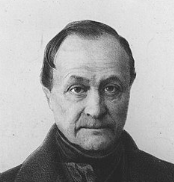
Social positivism only accepts duties, for all and towards all. Its constant social viewpoint cannot include any notion of rights, for such notion always rests on individuality. We are born under a load of obligations of every kind, to our predecessors, to our successors, to our contemporaries. These obligations then increase or accumulate, for it is some time before we can return any service. … Any human right is therefore as absurd as immoral. Since there are no divine rights anymore, this concept must therefore disappear completely as related only to the preliminary regime and totally inconsistent with the final state where there are only duties based on functions.
▼
Source
Le Catéchisme positiviste (1852)
4 months ago
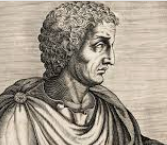
The believer humanly comprehends how heavy the suffering is, but in faith’s wonder that it is beneficial to him, he devoutly says: It is light. Humanly he says: It is impossible, but he says it again in faith’s wonder that what he humanly cannot understand is beneficial to him. In other words, when sagacity is able to perceive the beneficialness, then faith cannot see God; but when in the dark night of suffering sagacity cannot see a handbreadth ahead of it, then faith can see God, since faith sees best in the dark.
▼
Source
Uplifting Discourses in Various Spirits in a section of text entitled “The Gospel of Suffering.” As quoted in: Gordon Marino (February 10, 2021): “Faith sees best in the dark”: Joe Biden, Søren Kierkegaard, and the education of suffering. In: ABC Religon
4 months ago
Bears when first born are shapeless masses of white flesh a little larger than mice, their claws alone being prominent. The mother then licks them gradually into proper shape.
▼
Source
Book VIII, sec. 126.
4 months ago
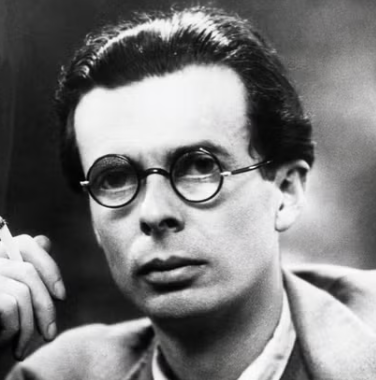
Too much consistency is as bad for the mind as it is for the body. Consistency is contrary to nature, contrary to life. The only completely consistent people are the dead. Consistent intellectualism and spirituality may be socially valuable, up to a point; but they make, gradually, for individual death.
▼
Source
"Wordsworth in the Tropics" in Do What You Will (1929)
4 months ago
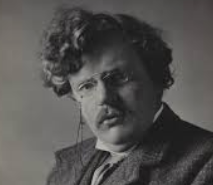
The journalists would appear to be in an almost literal sense the priests of the modern world. They may not rise precisely to the tremendous responsibility which was laid upon Peter, but at least it can be said that whatever they bind on earth is bound on earth, and whatever they loose on earth is loosed on earth. They have essentially and absolutely the same functions that were employed by the old priests, but their power for deceit is even greater and their responsibility to the world even less. A comparison between the priests and the journalists would be striking in many points. [...] The priest's influence and power consisted almost entirely in the fact that he was the only man who brought news. [...] the corruption of the priesthood occurred at the precise moment in which it changed from a minority organised to impart knowledge into a minority organised to withhold it. The great danger of decadence in journalism is almost exactly the same. Journalism possesses in itself the potentiality of becoming one of the most frightful monstrosities and delusions that have ever cursed mankind. This horrible transformation will occur at the exact instant at which journalists realise that they can become an aristocracy.
▼
Source
"The New Priests", in The Speaker, vol. 4 (Mather & Crowther, 1901) [https://books.google.com/books?id=v6-RGg0qKpsC&pg=PA551&dq=%22Journalism+possesses+in+itself+the+potentiality+of+becoming+one+of+the+most+frightful+monstrosities%22&hl=en&newbks=1&newbks
4 months ago
Mathematics, from the earliest times to which the history of human reason can reach, has followed, among that wonderful people of the Greeks, the safe way of science. But it must not be supposed that it was as easy for mathematics as for logic, in which reason is concerned with itself alone, to find, or rather to make for itself that royal road. I believe, on the contrary, that there was a long period of tentative work (chiefly still among the Egyptians), and that the change is to be ascribed to a revolution, produced by the happy thought of a single man, whose experiments pointed unmistakably to the path that had to be followed, and opened and traced out for the most distant times the safe way of a science. The history of that intellectual revolution, which was far more important than the passage round the celebrated Cape of Good Hope, and the name of its fortunate author, have not been preserved to us. ... A new light flashed on the first man who demonstrated the properties of the isosceles triangle (whether his name was Thales or any other name), for he found that he had not to investigate what he saw hi the figure, or the mere concepts of that figure, and thus to learn its properties; but that he had to produce (by construction) what he had himself, according to concepts a priori, placed into that figure and represented in it, so that, in order to know anything with certainty a priori, he must not attribute to that figure anything beyond what necessarily follows from what he has himself placed into it, in accordance with the concept.
▼
Source
Preface to the Second Edition [Tr. F. Max Müller], (New York, 1900), p. 690; as cited in: Robert Edouard Moritz, [https://openlibrary.org/books/OL14022383M/Memorabilia_mathematica Memorabilia mathematica or, The philomath's quotation-book], Published 1914
4 months ago
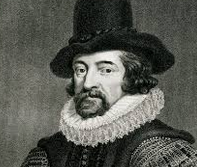
I dare affirm in knowledge of nature, that a little natural philosophy, and the first entrance into it, doth dispose the opinion to atheism; but on the other side, much natural philosophy and wading deep into it, will bring about men's minds to religion; wherefore atheism every way seems to be combined with folly and ignorance, seeing nothing can can be more justly allotted to be the saying of fools than this, "There is no God"
▼
Source
Of Atheism
4 months ago
Let us suppose that a man believes in eternal life on Christ's word. In that case he believes without any fuss about being profound and searching and philosophical and racking his brains.
▼
Source
P. 103
4 months ago
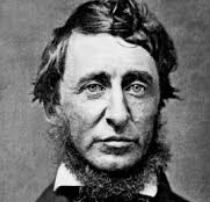
We are taught by biology to believe that the organism carries no passengers, but only members of the crew, each with an allotted part in keeping the ship afloat and bringing it to port.
4 months ago
The proper study of mankind is books.
▼
Source
Ch. XXVIII
4 months ago
The men that worked for England They have their graves at home; * * * * And they that rule in England In stately conclave met, Alas, alas, for England, They have no graves as yet.
▼
Source
Elegy in a Country Churchyard, as printed in W. Kean Seymour (ed.) A Miscellany of Poetry (1919) p. 26
4 months ago
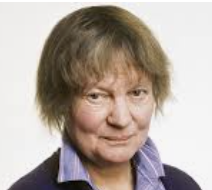
Love is the extremely difficult realisation that something other than oneself is real. Love, and so art and morals, is the discovery of reality.
▼
Source
"The Sublime and the Good", in the Chicago Review, Vol. 13 Issue 3 (Autumn 1959) p. 51.
4 months ago
When the man governed by self-interest, the god of this world, does not renounce it but merely refines it by the use of reason and extends it beyond the constricting boundary of the present, he is represented (Luke XVI, 3-9) as one who, in his very person [as servant], defrauds his master [self- interest] and wins from him sacrifices in behalf of “duty.”
▼
Source
Book IV, Part 1, Section 2, “The Christian religion as a natural religion”
4 months ago
The unassisted hand and the understanding left to itself possess but little power. Effects are produced by the means of instruments and helps, which the understanding requires no less than the hand; and as instruments either promote or regulate the motion of the hand, so those that are applied to the mind prompt or protect the understanding.
▼
Source
Aphorism 2
4 months ago
Christ speaks of two debtors, one of whom owed much and the other little, and who both found forgiveness. He asks: Which of these two ought to love more? The answer: The one who has forgiven much. When you love much, you are forgiven much-and when you are forgiven much, you love much. See here the blessed recurrence of salvation in love! P. 176
4 months ago
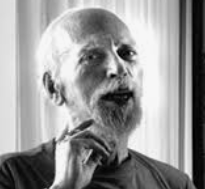
Well I sometimes call myself a libertarian but that's only because most people don't know what anarchist means. Most people hear you're an anarchist and they think you're getting ready to throw a bomb at a building. They don't understand the concept of voluntary association, the whole concept of replacing force with voluntary cooperation or contractual arrangements and so on. So libertarian is a clearer word that doesn't arouse any immediate anxiety upon the listener. And then again, libertarians, if they were totally consistent with their principles would be anarchists. They take the position which they call minarchy, which is the smallest possible government... The reason I don't believe in the smallest possible government is because we started out with that and it only took us 200 years to arrive at the czarist occupation of government that we have now. I think any government is dangerous no matter how small you make it. Instead of governments we should have contractual associations that you can opt out of if you don't like the way the association is going. Religions fought for hundreds of years over which one should dominate Europe and then they finally gave up and made a truce, and they all agreed to tolerate each other — at least in this part of the world... But I think government should be treated like religion, everyone should be able to pick the kind they like. Only it should be contractual not obligatory. I wouldn't mind paying tax money to a local association to maintain a police force, as long as we need one. But I hate like hell paying taxes to help the US government build more nuclear missiles to blow up more people I don't even know and don't think I'd hate them if I did know them. A lot of anarchists had a major roll in influencing my political thinking, especially the individualist anarchists. Benjamin Tucker and Lysander Spooner especially. But I've also been influenced by Leo Tolstoy's anarcho-pacifism. And I find a lot of Kropotkin compatible even though he was a communist anarchist. Nothing wrong with communist anarchism as long as it remains voluntary. Any one that wants to go make a commune, go ahead, do it. I got nothing against it. As long as there's room to the individualist to do his or her own thing.
▼
Source
[http://www.blackcrayon.com/ Interview in TSOG (2002)] [http://www.blackcrayon.com/audio/RAW-anarchism.mp3 (sound file)]
4 months ago
Experience teaches only the teachable...
▼
Source
Tragedy and the Whole Truth
4 months ago
We all know that the 'divine glory of the ego' is socially a great nuisance; we all do actually value our friends for modesty, freshness, and simplicity of heart. Whatever may be the reason, we all do warmly respect humility — in other people.
▼
Source
"A Defence of Humilities"
4 months ago
I'm still very drawn to British women writers, especially Iris Murdoch and her impossible esoteric characters and the philosophical questions that they ask.
▼
Source
Valerie Miner, interview in Backtalk: Women Writers Speak Out by Donna Perry (1993)
4 months ago
Character means that the person derives his rules of conduct from himself and from the dignity of humanity. Character is the common ruling principle in man in the use of his talents and attributes. Thus it is the nature of his will, and is good or bad. A man who acts without settled principles, with no uniformity, has no character. A man may have a good heart and yet no character, because he is dependent upon impulses and does not act according to maxims. Firmness and unity of principle are essential to character.
▼
Source
Part III : Selection on Education from Kant's other Writings, Ch. I Pedagogical Fragments, # 14
4 months ago
Above all, every relation must be considered as suspicious, which depends in any degree upon religion, as the prodigies of Livy: And no less so, everything that is to be found in the writers of natural magic or alchemy, or such authors, who seem, all of them, to have an unconquerable appetite for falsehood and fable.
▼
Source
Aphorism 29
4 months ago
Leap of faith.
▼
Source
This phrase is thought by many to have been coined by Kierkegaard, but analysis of his works in Danish indicate that he does not use a phrase which would translate into English as "leap of faith" anywhere in his writings, though there are instances where
4 months ago
Mind and its contents are functionally identical: My wife only exists, for me, in my mind. Not being a solipsist, I recognize the converse: I only exist, for her, in her mind. Lest the reader exclaim, like Byron of Wordworth, "I wish he would explain his explanation!", let us try it this way: If I am so fortunate as to be listening to the Hammerklavier sonata, the only correct answer, if you ask me suddenly, "Who are you?" would be to hum the Hammerklavier. For, with music of that quality, one is hypnotized into rapt attention: there is no division between "me" and "my experience".
▼
Source
Ch. 14 : The Meta-Programming Circuit, p. 219
4 months ago
Human beings are not born identical. There are many different temperaments and constitutions; and within each psycho-physical class one can find people at very different stages of spiritual development. Forms of worship and spiritual discipline which may be valuable for one individual maybe useless or even positively harmful for another belonging to a different class and standing, within that class, at a lower or higher level of development.
4 months ago
Dickens had all his life the faults of the little boy who is kept up too late at night. The boy in such a case exhibits a psychological paradox; he is a little too irritable because he is a little too happy. Dickens was always a little too irritable because he was a little too happy. Lie the over-wrought child in society, he was splendidly sociable, and yet suddenly quarrelsome.
▼
Source
Ch 2: "The Boyhood of Dickens"
4 months ago
Kant's 'discovery' went thus.Any property that a real x had, an imaginary x could have, and any property that an imaginary x could have, a real x could have.SoExistence is not a property.(Hearty applause, maintained steadily for 200 years so far.)
▼
Source
David Stove, Darwinian Fairy Tales (2007)
4 months ago
Africans are always vicious... mostly inclined to lasciviousness, vengeance, theft and lies.
▼
Source
As quoted in David Johnson, 'Representing the Cape "Hottentots", from the French Enlightenment to Post-Apartheid South Africa', Eighteenth-Century Studies, 40.4 (Summer 2007), 525-52. https://www.jstor.org/stable/30053727.
4 months ago
The task of making more exact a vague or not quite exact concept used in everyday life or in an earlier stage of scientific or logical development, or rather of replacing it by a newly constructed, more exact concept, belongs among the most important tasks of logical analysis and logical construction. We call this the task of explicating, or of giving an explication for the earlier concept; this earlier concept, or sometimes the term used for it, is called the explicandum; and the new concept, or its term, is called an explicatum of the old one.
▼
Source
p. 7-8 as cited in: Erich Reck (2011) "[http://www.faculty.ucr.edu/~reck/Reck-C'ian%20Explic.%20(3rd.%20rev.).pdf Carnapian Explication: A Case Study and Critique]"
4 months ago
What the rest of us see only under the influence of mescalin, the artist is congenitally equipped to see all the time. His perception is not limited to what is biologically or socially useful.
▼
Source
Page 168
4 months ago
Misers get up early in the morning; and burglars, I am informed, get up the night before.
▼
Source
Ch. X: "On Lying in Bed"
4 months ago
It is not human nature we should accuse but the despicable conventions that pervert it.
CivilSimian.com created by AxiomaticPanic, CivilSimian, Kalokagathia