
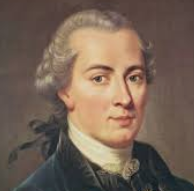
4 months ago
When the man governed by self-interest, the god of this world, does not renounce it but merely refines it by the use of reason and extends it beyond the constricting boundary of the present, he is represented (Luke XVI, 3-9) as one who, in his very person [as servant], defrauds his master [self- interest] and wins from him sacrifices in behalf of “duty.”
▼
Source
Book IV, Part 1, Section 2, “The Christian religion as a natural religion”
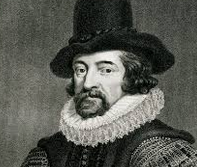
4 months ago
The unassisted hand and the understanding left to itself possess but little power. Effects are produced by the means of instruments and helps, which the understanding requires no less than the hand; and as instruments either promote or regulate the motion of the hand, so those that are applied to the mind prompt or protect the understanding.
▼
Source
Aphorism 2
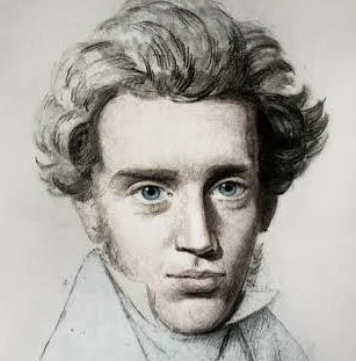
4 months ago
Christ speaks of two debtors, one of whom owed much and the other little, and who both found forgiveness. He asks: Which of these two ought to love more? The answer: The one who has forgiven much. When you love much, you are forgiven much-and when you are forgiven much, you love much. See here the blessed recurrence of salvation in love! P. 176
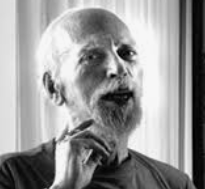
4 months ago
Well I sometimes call myself a libertarian but that's only because most people don't know what anarchist means. Most people hear you're an anarchist and they think you're getting ready to throw a bomb at a building. They don't understand the concept of voluntary association, the whole concept of replacing force with voluntary cooperation or contractual arrangements and so on. So libertarian is a clearer word that doesn't arouse any immediate anxiety upon the listener. And then again, libertarians, if they were totally consistent with their principles would be anarchists. They take the position which they call minarchy, which is the smallest possible government... The reason I don't believe in the smallest possible government is because we started out with that and it only took us 200 years to arrive at the czarist occupation of government that we have now. I think any government is dangerous no matter how small you make it. Instead of governments we should have contractual associations that you can opt out of if you don't like the way the association is going. Religions fought for hundreds of years over which one should dominate Europe and then they finally gave up and made a truce, and they all agreed to tolerate each other — at least in this part of the world... But I think government should be treated like religion, everyone should be able to pick the kind they like. Only it should be contractual not obligatory. I wouldn't mind paying tax money to a local association to maintain a police force, as long as we need one. But I hate like hell paying taxes to help the US government build more nuclear missiles to blow up more people I don't even know and don't think I'd hate them if I did know them. A lot of anarchists had a major roll in influencing my political thinking, especially the individualist anarchists. Benjamin Tucker and Lysander Spooner especially. But I've also been influenced by Leo Tolstoy's anarcho-pacifism. And I find a lot of Kropotkin compatible even though he was a communist anarchist. Nothing wrong with communist anarchism as long as it remains voluntary. Any one that wants to go make a commune, go ahead, do it. I got nothing against it. As long as there's room to the individualist to do his or her own thing.
▼
Source
[http://www.blackcrayon.com/ Interview in TSOG (2002)] [http://www.blackcrayon.com/audio/RAW-anarchism.mp3 (sound file)]
4 months ago
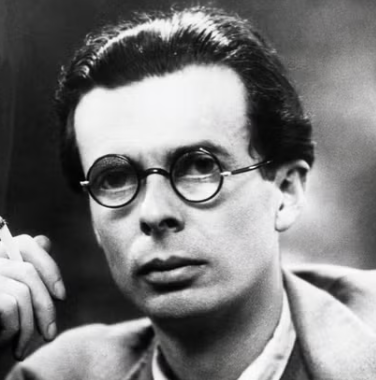
Experience teaches only the teachable...
▼
Source
Tragedy and the Whole Truth
4 months ago
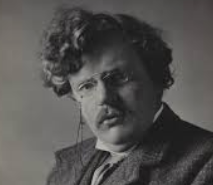
We all know that the 'divine glory of the ego' is socially a great nuisance; we all do actually value our friends for modesty, freshness, and simplicity of heart. Whatever may be the reason, we all do warmly respect humility — in other people.
▼
Source
"A Defence of Humilities"

4 months ago
I'm still very drawn to British women writers, especially Iris Murdoch and her impossible esoteric characters and the philosophical questions that they ask.
▼
Source
Valerie Miner, interview in Backtalk: Women Writers Speak Out by Donna Perry (1993)
4 months ago
Character means that the person derives his rules of conduct from himself and from the dignity of humanity. Character is the common ruling principle in man in the use of his talents and attributes. Thus it is the nature of his will, and is good or bad. A man who acts without settled principles, with no uniformity, has no character. A man may have a good heart and yet no character, because he is dependent upon impulses and does not act according to maxims. Firmness and unity of principle are essential to character.
▼
Source
Part III : Selection on Education from Kant's other Writings, Ch. I Pedagogical Fragments, # 14
4 months ago
Above all, every relation must be considered as suspicious, which depends in any degree upon religion, as the prodigies of Livy: And no less so, everything that is to be found in the writers of natural magic or alchemy, or such authors, who seem, all of them, to have an unconquerable appetite for falsehood and fable.
▼
Source
Aphorism 29
4 months ago
Leap of faith.
▼
Source
This phrase is thought by many to have been coined by Kierkegaard, but analysis of his works in Danish indicate that he does not use a phrase which would translate into English as "leap of faith" anywhere in his writings, though there are instances where
4 months ago
Mind and its contents are functionally identical: My wife only exists, for me, in my mind. Not being a solipsist, I recognize the converse: I only exist, for her, in her mind. Lest the reader exclaim, like Byron of Wordworth, "I wish he would explain his explanation!", let us try it this way: If I am so fortunate as to be listening to the Hammerklavier sonata, the only correct answer, if you ask me suddenly, "Who are you?" would be to hum the Hammerklavier. For, with music of that quality, one is hypnotized into rapt attention: there is no division between "me" and "my experience".
▼
Source
Ch. 14 : The Meta-Programming Circuit, p. 219
4 months ago
Human beings are not born identical. There are many different temperaments and constitutions; and within each psycho-physical class one can find people at very different stages of spiritual development. Forms of worship and spiritual discipline which may be valuable for one individual maybe useless or even positively harmful for another belonging to a different class and standing, within that class, at a lower or higher level of development.
4 months ago
Dickens had all his life the faults of the little boy who is kept up too late at night. The boy in such a case exhibits a psychological paradox; he is a little too irritable because he is a little too happy. Dickens was always a little too irritable because he was a little too happy. Lie the over-wrought child in society, he was splendidly sociable, and yet suddenly quarrelsome.
▼
Source
Ch 2: "The Boyhood of Dickens"
4 months ago
Kant's 'discovery' went thus.Any property that a real x had, an imaginary x could have, and any property that an imaginary x could have, a real x could have.SoExistence is not a property.(Hearty applause, maintained steadily for 200 years so far.)
▼
Source
David Stove, Darwinian Fairy Tales (2007)
4 months ago
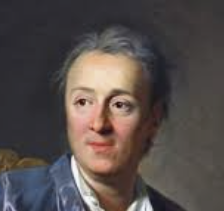
Africans are always vicious... mostly inclined to lasciviousness, vengeance, theft and lies.
▼
Source
As quoted in David Johnson, 'Representing the Cape "Hottentots", from the French Enlightenment to Post-Apartheid South Africa', Eighteenth-Century Studies, 40.4 (Summer 2007), 525-52. https://www.jstor.org/stable/30053727.
4 months ago
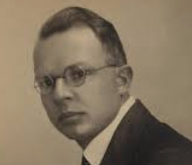
The task of making more exact a vague or not quite exact concept used in everyday life or in an earlier stage of scientific or logical development, or rather of replacing it by a newly constructed, more exact concept, belongs among the most important tasks of logical analysis and logical construction. We call this the task of explicating, or of giving an explication for the earlier concept; this earlier concept, or sometimes the term used for it, is called the explicandum; and the new concept, or its term, is called an explicatum of the old one.
▼
Source
p. 7-8 as cited in: Erich Reck (2011) "[http://www.faculty.ucr.edu/~reck/Reck-C'ian%20Explic.%20(3rd.%20rev.).pdf Carnapian Explication: A Case Study and Critique]"
4 months ago
What the rest of us see only under the influence of mescalin, the artist is congenitally equipped to see all the time. His perception is not limited to what is biologically or socially useful.
▼
Source
Page 168
4 months ago
Misers get up early in the morning; and burglars, I am informed, get up the night before.
▼
Source
Ch. X: "On Lying in Bed"
4 months ago
It is not human nature we should accuse but the despicable conventions that pervert it.

4 months ago
To say that madness is dazzlement is to say that the madman sees the day, the same day that rational men see, as both live in the same light, but that when looking at that very light, nothing else and nothing in it, he sees it as nothing but emptiness, night and nothingness. Darkness for him is another way of seeing the day. Which means that in looking at the night and the nothingness of the night, he does not see at all. And that in the belief that he sees, he allows the fantasies of his imagination and the people of his nights to come to him as realities. For that reason, delirium and dazzlement exist in a relation that is the essence of madness, just as truth and clarity, in their fundamental relation, are constitutive of classical reason.In that sense, the Cartesian progression of doubt is clearly the great exorcism of madness. Descartes closes his eyes and ears the better to see the true light of the essential day, thereby ensuring that he will not suffer the dazzlement of the mad, who open their eyes and only see night, and not seeing at all, believe that they see things when they imagine them. In the uniform clarity of his closed senses, Descartes has broken with all possible fascination, and if he sees, he knows he really sees what he is seeing. Whereas in the madman's gaze, drunk on the light that is night, images rise up and multiply, beyond any possible self-criticism, since the madman sees them, but irremediably separated from being, since the madman sees nothing.Unreason is to reason as dazzlement is to daylight.
▼
Source
Part Two: 2. The Transcendence of Delirium
4 months ago
When challenged why he had written so little, he fired back: "Moses wrote one book. Then what did he do?"
▼
Source
The Independent, [http://www.independent.co.uk/news/obituaries/professor-sidney-morgenbesser-550224.html The Independent, Professor Sidney Morgenbesser: Philosopher celebrated for his withering New York Jewish humour], 6 August 2004. The Times, [https://w
4 months ago
All gods are homemade, and it is we who pull their strings, and so, give them the power to pull ours
▼
Source
Vijaya in Island (1962)
4 months ago
Our chiefs said 'Done,' and I did not deem it; Our seers said 'Peace,' and it was not peace; Earth will grow worse till men redeem it, And wars more evil, ere all wars cease.
▼
Source
A Song of Defeat — first appeared, in part, in George William Russell's Sketches and Snapshots (1910)
4 months ago
A Turk thinks, or used to think (for even Turks are wiser now-a-days), that society would be on a sandbank if women were suffered to walk about the streets with their faces uncovered. Taught by these and many similar examples, I look upon this expression of loosening the foundations of society, unless a person tells in unambiguous terms what he means by it, as a mere bugbear to frighten imbeciles with.
▼
Source
Stability of Society (17 August 1850), quoted in Ann P. Robson and John M. Robson (eds.), [https://oll.libertyfund.org/titles/mill-the-collected-works-of-john-stuart-mill-volume-xxv-newspaper-writings-part-iv/simple#lf0223-25_label_270 The Collected Works
4 months ago
There is only one passion, the passion for happiness.
▼
Source
"Will, Freedom”
4 months ago
Beneath the humanization of the penalties, what one finds are all those rules that authorize, or rather demand, 'leniency', as a calculated economy of the powder to punish. But they also provoke a shift in the point of application of this power: it is no longer the body, with the ritual play of excessive pains, spectacular branding in the ritual of the public execution; it is the mind or rather a play of representations and sings circulating discreetly but necessarily and evidently in the minds of all. It is no longer the body, but the soul, said Mably. And we see very clearly what he meant by this term: the correlative of a technique of power. Old 'anatomies' of punishment are abandoned, But have we really entered the age of non-corporal punishment?
▼
Source
Chapter Two, Generalized Punishment, pp. 101

4 months ago
You made me come to Paris. You pestered me to start living again. Well, now it's up to you to make my life livable. You mustn't let three whole days go by without coming to see me. … You wanted me to take notice of you. Now nothing else matters to me. I know you're alive and I feel emptiness inside me when you're away.
▼
Source
Raimon to Regina. p. 20
4 months ago
The new community which the capitalists are now constructing will be a very complete and absolute community; and one which will tolerate nothing really independent of itself.
▼
Source
pp. 33-34
4 months ago
A general State education is a mere contrivance for molding people to be exactly like one another; and as the mold in which it casts them is that which pleases the dominant power in the government, whether this be a monarch, an aristocracy, or a majority of the existing generation; in proportion as it is efficient and successful, it establishes a despotism over the mind, leading by a natural tendency to one over the body.
▼
Source
Ch. V: Applications
4 months ago
Individualism as regards legislation is popularly, and not without reason, connected with the name and the principles of Bentham. The name of one man, it is true, can never adequately summarise a whole school of thought, but from 1825 onwards the teaching of Bentham exercised so potent an influence that to him is fairly ascribed that thorough-going though gradual amendment of the law of England which was one of the main results of the Reform Act.
▼
Source
A. V. Dicey, Lectures on the Relation between Law & Public Opinion during the Nineteenth Century (1905; 2nd ed. 1914), p. 126
4 months ago
All those movements which took place in the fifteenth and sixteenth centuries and which had the Reformation as their main expression and result should be analyzed as a great crisis of the Western experience of subjectivity and a revolt against the kind of religious and moral power which gave form, during the Middle Ages, to this subjectivity. The need to take a direct part in spiritual life, in the work of salvation, in the truth which lies in the Book—all that was a struggle for a new subjectivity.
▼
Source
p. 782
4 months ago
The curse which lies upon marriage is that too often the individuals are joined in their weakness rather than in their strength, each asking from the other instead of finding pleasure in giving. It is even more deceptive to dream of gaining through the child a plenitude, a warmth, a value, which one is unable to create for oneself; the child brings joy only to the woman who is capable of disinterestedly desiring the happiness of another, to one who without being wrapped up in self seeks to transcend her own existence.
▼
Source
Bk. 2, Pt.. 5, Ch. 2: The Mother, p. 522
4 months ago
A modern man may disapprove of some of his sweeping reforms, and approve others; but finds it difficult not to admire even where he does not approve.
▼
Source
Said of Benito Mussolini while comparing him to Hildebrand (i.e. Pope Gregory VII), as quoted in "The Pearl of Great Price" by Robert Royal, his Introduction to "The Resurrection of Rome" by G. K. Chesterton in The Collected Works of G.K. Chesterton (1990
4 months ago
When we consider the positive evil caused to the disqualified half of the human race by their disqualification — first in the loss of the most inspiriting and elevating kind of personal enjoyment, and next in the weariness, disappointment, and profound dissatisfaction with life, which are so often the substitute for it; one feels that among all the lessons which men require for carrying on the struggle against the inevitable imperfections of their lot on earth, there is no lesson which they more need, than not to add to the evils which nature inflicts, by their jealous and prejudiced restrictions on one another. Their vain fears only substitute other and worse evils for those which they are idly apprehensive of: while every restraint on the freedom of conduct of any of their human fellow-creatures (otherwise than by making them responsible for any evil actually caused by it), dries up pro tanto the principal fountain of human happiness, and leaves the species less rich, to an inappreciable degree, in all that makes life valuable to the individual human being.
▼
Source
Ch. 4
4 months ago
This aristocratic thesis is... the demos, the people, are the most numerous... also comprised of the most ordinary, and... even the worst, citizens. Therefore... what is best for the demos cannot be what is best for the polis... the city.

4 months ago
I am quite ready, Simmias and Cebes, that I ought to be grieved at death, if I were not persuaded that I am going to other gods who are wise and good and to men departed who are better than those whom I leave behind; and therefore I do not grieve as I might have done, for I have good hope that there is yet something remaining for the dead, and, as has been said of old, some far better thing for the good than for the evil.
4 months ago
We ought to be able to see more clearly just for what reason the mass-man is so easily turned into a fanatic. What I seem to myself to have grasped is this, that such permeability is due to the fact that man, that the individual, in order to belong to the mass, to be a mass-man, has had, as a preliminary, though without having had the least awareness of it, to divest himself of that substantial reality which was linked to his initial individuality or rather to the fact of his belonging to a small actual group. The incredibly sinister role of the press, the cinema, the radio, has consisted in passing that original reality through a pair of flattening rollers to substitute for it a superimposed pattern of ideas and images with no real roots in the deep being of the subject of this experiment.
▼
Source
pp. 140-141
4 months ago
I am thus one of the very few examples, in this country, of one who has, not thrown off religious belief, but never had it...
▼
Source
([https://archive.org/details/autobiography01mill/page/43/mode/1up p. 43])
4 months ago
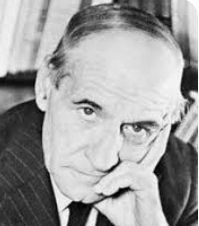
When all these things are lacking there is no culture; there is in the strictest sense of the word, barbarism. And let us not deceive ourselves, this is what is beginning to appear in Europe under the progressive rebellion of the masses. The traveller who arrives in a barbarous country knows that in that territory there are no ruling principles to which it is possible to appeal. Properly speaking, there are no barbarian standards. Barbarism is the absence of standards to which appeal can be made.
▼
Source
Chap. VIII: The Masses Intervene In Everything, And Why Their Intervention Is Solely By Violence
4 months ago
Let us... be careful of admitting into our souls the notion that there is no truth or health or soundness in any arguments at all; but let us rather say that there is as yet no health in us, and that we must quit ourselves like men and do our best to gain health—you and all other men with a view to the whole of your future life, and I myself with a view to death.

4 months ago
Without liberty there is no wealth.
4 months ago
When, however, not more than half that duration of time had elapsed, a small ray of light broke in upon my gloom. I was reading, accidentally, Marmontel's "Mémoires," and came to the passage which relates his father's death, the distressed position of the family, and the sudden inspiration by which he, then a mere boy, felt and made them feel that he would be everything to them—would supply the place of all that they had lost. A vivid conception of the scene and its feelings came over me, and I was moved to tears. From this moment my been grew lighter. The oppression of the thought that all feeling was dead within me, was gone. I was no longer hopeless: I was not a stock or a stone. I had still, it seemed, some of the material out of which all worth of character, and all capacity for happiness, are made. ...Thus the cloud gradually drew off, and I again enjoyed life: and though I had several relapses, some of which lasted many months, I never again was as miserable as I had been.
▼
Source
([https://archive.org/details/autobiography01mill/page/140/mode/1up pp. 140-141])
4 months ago
The species with eyes appears suddenly, capriciously as it were, and it is this species which changes the environment by creating its visible aspect. The eye does not come into being because it is needed. Just the contrary; because the eye appears it can henceforth be applied as a serviceable instrument. Each species builds up its stock of useful habits by selecting among, and taking advantage of, the innumerable useless actions which a living being performs out of sheer exuberance.
▼
Source
p. 17
4 months ago
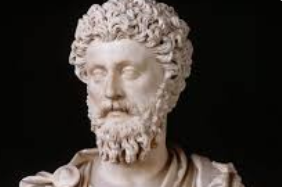
Concentrate every minute like a Roman—like a man—on doing what's in front of you with precise and genuine seriousness, tenderly, willingly, with justice. And on freeing yourself from all other distractions.
▼
Source
II, 5 (Hays translation)
4 months ago
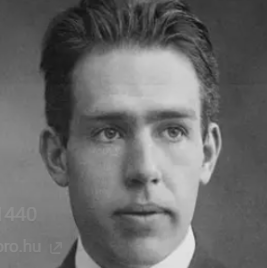
Anyone who is not shocked by quantum theory has not understood it.
▼
Source
As quoted in Meeting the Universe Halfway (2007) by Karen Michelle Barad, p. 254, with a footnote citing The Philosophical Writings of Niels Bohr (1998). | Variants: Those who are not shocked when they first come across quantum mechanics cannot possibly h
4 months ago
He who has lived as a true philosopher has reason to be of good cheer when he is about to die, and that after death he may hope to receive the greatest good in the other world.
▼
Source
Phaedo
4 months ago
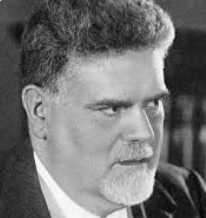
In the Renaissance there is much light, yes, and there is much in it with which Italians may share national pride. But there is much darkness. For the Renaissance is also the age of individualism, that through the splendid visions of poetry and art brought the Italian nation to the indifference, skepticism, and distracted cynicism of those who have nothing to defend, not in their family, their Fatherland, or in the world where every human personality conscious of its own value and personal dignity invest itself.
▼
Source
Che cosa è il fascismo: Discorsi e polemiche (“What is Fascism?”), Florence: Vallecchi, (1925) pp. 13-16
4 months ago
It's not too much to say that every indication of Design in the Kosmos is evidence against the Omnipotence of the Designer. For what is meant by Design? Contrivance: the adaptation of means to an end. But the necessity for contrivance — the need of employing means — is a consequence of the limitation of power. Who would have recourse to means if to attain his end his mere word was sufficient? The very idea of means implies that the means have an efficacy which the direct action of the being who employs them has not. ...
4 months ago
The ruling power within, when it is in its natural state, is so related to outer circumstances that it easily changes to accord with what can be done and what is given it to do.
▼
Source
IV, 1

4 months ago
The only justifiable stopping place for the expansion of altruism is the point at which all whose welfare can be affected by our actions are included within the circle of altruism. This means that all beings with the capacity to feel pleasure or pain should be included; we can improve their welfare by increasing their pleasures and diminishing their pains.
▼
Source
Chapter 4, Reason, p. 120
CivilSimian.com created by AxiomaticPanic, CivilSimian, Kalokagathia