

4 months ago
Socrates it was who truly built piecemeal that theorical man. He did it by his doctrine which was singularly deep in the sense that it went straight out to the end of the initial thought, but his radically false doctrine was that morality is in proportion to knowledge, that the man that does not do good is a man that does not know the good and that the man that knows the good does assuredly do it. Here it is precisely, the theorical man introduced as king of the world! Now nothing is more false than this notion. The opposite is more likely to be true. The man that knows the good does not do it, because he is satisfied with knowing it and that is enough for his conceit and because, knowing the good and knowing that he knows it, he fancies that he is doing it and that he has accomplished and fulfilled his duty. The good is instinctive and passionate; the good is in the action and the action is, we must admit, rarely inspired by the idea and by knowledge. It is frequently, one must admit, the effect of an instinctive and unconscious movement.
▼
Source
Emile Faguet, On Reading Nietzsche p. 75

4 months ago
There is but one thing needful — to possess God. All our senses, all our powers of mind and soul, all our external resources, are so many ways of approaching the divinity, so many modes of tasting and of adoring God. We must learn to detach ourselves from all that is capable of being lost, to bind ourselves absolutely only to what is absolute and eternal, and to enjoy the rest as a loan, as a usufruct…. To worship, to comprehend, to receive, to feel, to give, to act: this our law, our duty, our happiness, our heaven.
▼
Source
16 July 1848
4 months ago
When language is used without true significance, it loses its purpose as a means of communication and becomes an end in itself.
4 months ago
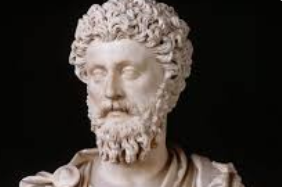
All is ephemeral — fame and the famous as well.
▼
Source
Πᾶν ἐφήμερον, καὶ τὸ μνημονεῦον καὶ τὸ μνημονευόμενον. | IV, 35

4 months ago
All things fail; but Thou, Lord of all, never failest! They who love Thee, oh, how little they have to suffer! oh, how gently, how tenderly, how sweetly Thou, O my Lord, dealest with them! Oh, that no one had ever been occupied with any other love than Thine! It seems as if Thou didst subject those who love Thee to a severe trial: but it is in order that they may learn, in the depths of that trial, the depths of Thy love. O my God, oh, that I had understanding and learning, and a new language, in order to magnify Thy works, according to the knowledge of them which my soul possesses! Everything fails me, O my Lord; but if Thou wilt not abandon me, I will never fail Thee. Let all the learned rise up against me, — let the whole creation persecute me, — let the evil spirits torment me, — but do Thou, O Lord, fail me not; for I know by experience now the blessedness of that deliverance which Thou dost effect for those who trust only in Thee. In this distress, — for then I had never had a single vision, — these Thy words alone were enough to remove it, and give me perfect peace: "Be not afraid, my daughter: it is I; and I will not abandon thee. Fear not." It seems to me that, in the state I was in then, many hours would have been necessary to calm me, and that no one could have done it. Yet I found myself, through these words alone, tranquil and strong, courageous and confident, at rest and enlightened; in a moment, my soul seemed changed, and I felt I could maintain against all the world that my prayer was the work of God. Oh, how good is God! how good is our Lord, and how powerful! He gives not counsel only, but relief as well. His words are deeds. O my God! as He strengthens our faith, love grows.
▼
Source
Ch. XXV. "Divine Locutions. Discussions on That Subject" ¶ 22 & 23
4 months ago
Society lives by faith, develops by reason.
▼
Source
7 May 1870
4 months ago
Art thou angry with him whose arm-pits stink? art thou angry with him whose mouth smells foul? What good will this anger do thee?
▼
Source
V, 28

4 months ago
The unspeakable Turk
▼
Source
A phrase which came into common use after a letter by Carlyle on the Balkan crisis of 1875-76: | The only clear advice I have to give is, as I have stated, that the unspeakable Turk should be immediately struck out of the question, and the country left to
4 months ago
Contemporary intellectuals have given up the Enlightenment assumption that religion, myth, and tradition can be opposed to something ahistorical, something common to all human beings qua human.
4 months ago
This power and disposition of the Divine Intelligence is set forth also in the Scriptures under the name of Σοφία, Wisdom; for what can be better entitled to the name of Wisdom than the Reason or the Word of God? Listen therefore to Wisdom herself, constituted in the character of a Second Person: “At the first the Lord created me as the beginning of His ways, with a view to His own works, before He made the earth, before the mountains were settled; moreover, before all the hills did He beget me;” that is to say, He created and generated me in His own intelligence. Then, again, observe the distinction between them implied in the companionship of Wisdom with the Lord. “When He prepared the heaven,” says Wisdom, “I was present with Him; and when He made His strong places upon the winds, which are the clouds above; and when He secured the fountains, (and all things) which are beneath the sky, I was by, arranging all things with Him; I was by, in whom He delighted; and daily, too, did I rejoice in His presence.” Now, as soon as it pleased God to put forth into their respective substances and forms the things which He had planned and ordered within Himself, in conjunction with His Wisdom’s Reason and Word, He first put forth the Word Himself, having within Him His own inseparable Reason and Wisdom, in order that all things might be made through Him through whom they had been planned and disposed, yea, and already made, so far forth as (they were) in the mind and intelligence of God. This, however, was still wanting to them, that they should also be openly known, and kept permanently in their proper forms and substances.
▼
Source
Chapter VI.—The Word of God is Also the Wisdom of God. The Going Forth of Wisdom to Create the Universe, According to the Divine Plan.

4 months ago
It follows, therefore, that he who breaks the laws of his country resists the ordinance of God, that is, the law of his nature. God has instituted neither monarchy, nor aristocracy, nor democracy, nor mixed government: but tho God has instituted no particular form of government among men, yet by the general laws of his kingdom, he exacts our obedience to the laws of those communities to which each of us is attached by birth, or to which we may be attached by a subsequent and lawful engagement.
▼
Source
pp. 85-86
4 months ago
Ἴδιον ἀνθρώπου φιλεῖν καὶ τοὺς πταίοντας.
▼
Source
It is man's peculiar duty to love even those who wrong him. | VII, 22
4 months ago
Music is well said to be the speech of angels.
▼
Source
The Opera (1852).
4 months ago
For whence is it that the bishops and clergy come? Is it not from all? If all are not bound to monogamy, whence are monogamists (to be taken) into the clerical rank? Will some separate order of monogamists have to be instituted, from which to make selection for the clerical body? (No); but when we are extolling and inflating ourselves in opposition to the clergy, then “we are all one:” then “we are all priests, because He hath made us priests to (His) God and Father.”
▼
Source
Chapter 12
4 months ago
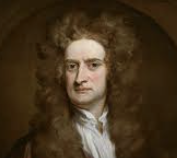
Whence are you certain that ye Ancient of Days is Christ? Does Christ anywhere sit upon ye Throne?
▼
Source
He wrote in discussing with John Locke the passage of Daniel 7:9. The Correspondence of Isaac Newton, Vol. III, Letter 362. Cited in The Watchtower magazine, 1977, 4/15, article: Isaac Newton’s Search for God.
4 months ago
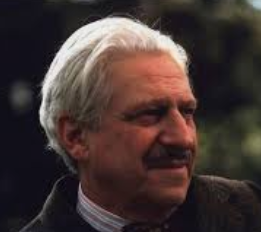
Isaac Newton deserves to be included in a series of companions to major philosophers even though he was not a philosopher in the sense in which Descartes, Locke, and Kant were philosophers. That is, Newton made no direct contributions to epistemology or metaphysics that would warrant his inclusion in the standard list of major philosophers of the seventeenth and eighteenth centuries – Descartes, Spinoza, Locke, Leibniz, Berkeley, Hume, and Kant – or even in a list of other significant philosophers of the era – Bacon, Hobbes, Arnauld, Malebranche, Wolff, and Reid. The contributions to knowledge that made Newton a dominant figure of the last millennium were to science, not to philosophy.
▼
Source
p. 1
4 months ago
On the occasion of every act ask thyself, How is this with respect to me? Shall I repent of it? A little time and I am dead, and all is gone.
▼
Source
VIII, 2

4 months ago
I admire only two types of people: the potentially mad and the potential suicide.
4 months ago
The stupendous Fourth Estate, whose wide world-embracing influences what eye can take in?
4 months ago
Blessed are the hearts that can bend; they shall never be broken.

4 months ago
Therefore I must say that, as I hope for mercy, I can have no other notion of all the other governments that I see or know, than that they are a conspiracy of the rich, who, on pretence of managing the public, only pursue their private ends, and devise all the ways and arts they can find out; first, that they may, without danger, preserve all that they have so ill-acquired, and then, that they may engage the poor to toil and labour for them at as low rates as possible, and oppress them as much as they please; and if they can but prevail to get these contrivances established by the show of public authority, which is considered as the representative of the whole people, then they are accounted laws
▼
Source
Ch. 9 : Of the Religions of the Utopians
4 months ago
The act of philosophizing involves the character of the philosopher.
▼
Source
p. 207.
4 months ago
An arrow has one motion and the mind another. Even when pausing, even when weighing conclusions, the mind is moving forward, toward its goal. (Hays translation)
▼
Source
VIII, 60
4 months ago
Everything is possible, and yet nothing is. All is permitted, and yet again, nothing. No matter which way we go, it is no better than any other. It is all the same whether you achieve something or not, have faith or not, just as it's all the same whether you cry or remain silent. There is an explanation for everything, and yet there is none. Everything is both real and unreal, normal and absurd, splendid and insipid. There is nothing worth more than anything else, nor any idea better than any other. Why grow sad from one's sadness and delight in one's joy? What does it matter whether our tears come from pleasure or pain? Love your unhappiness and hate your happiness, mix everything up, scramble it all! Be a snowflake dancing in the air, a flower floating downstream! Have courage when you don't need to, and be a coward when you must be brave! Who knows? You may still be a winner! And if you lose, does it really matter? Is there anything to win in this world? All gain is loss, all loss is gain. Why always expect a definite stance, clear ideas, meaningful words? I feel as if I should spout fire in response to all the questions which were ever put, or not put, to me.
4 months ago
To a shower of gold most things are penetrable.
▼
Source
Pt. I, Bk. III, ch. 7.
4 months ago
To two men living the same number of years, the world always provides the same sum of experiences. It is up to us to be conscious of them.
4 months ago
I pray for the dead, this is, I wish him a fair remembrance, whose labours have deserved it.
4 months ago
To him let us but cleave in all our strife; and the Tempter will flee; the wilderness will be desolate no more; angels will come and minister unto us; and when we pass thence to the ministry of life, be it to the glory of a transfiguration, the sorrows of a Gethsemane, or the sacrifice of the cross, the tranquilizing peace of God will never be far from us.
▼
Source
Vol. II, p. 49.
4 months ago
When an active individual of sound common sense perceives the sordid state of the world, desire to change it becomes the guiding principle by which he organizes given facts and shapes them into a theory. The methods and categories as well as the transformation of the theory can be understood only in connection with his taking of sides. This, in turn, discloses both his sound common sense and the character of the world. Right thinking depends as much on right willing as right willing on right thinking.
▼
Source
p. 162.
4 months ago
Whatever may happen to thee, it was prepared for thee from all eternity; and the implication of causes was from eternity spinning the thread of thy being, and of that which is incident to it.
▼
Source
Alternate Translation: Whatever may befall you, it was preordained for you from everlasting. | X, 5
4 months ago
In every province, the chief occupations, in order of importance, are lovemaking, malicious gossip, and talking nonsense.
4 months ago
Good health is the best weapon against religion. Healthy bodies and healthy minds have never been shaken by religious fears.
4 months ago
I should like you to consider that these functions (including passion, memory, and imagination) follow from the mere arrangement of the machine’s organs every bit as naturally as the movements of a clock or other automaton follow from the arrangement of its counter-weights and wheels.
▼
Source
Descartes, Rene, L'Homme (The Treatise on Man) (1662) p. 108
4 months ago
Men, I say, never did believe idle songs, never risked their soul's life on allegories: men in all times, especially in early earnest times, have had an instinct for detecting quacks, for detesting quacks.
4 months ago
There is no fate that can not be surmounted by scorn. If the descent is thus sometimes performed in sorrow, it can also take place in joy. This word is not too much. Again I fancy Sisyphus returning toward his rock, and the sorrow was in the beginning.
4 months ago
For the true author of the subjugation of a people is not so much the immediate agent, as the power which permits it having the means to prevent it.
▼
Source
Book I, 69.
4 months ago
Clearly, a civilization that feels guilty for everything it is and does will lack the energy and conviction to defend itself.
▼
Source
This quote was used, and attributed to Jean-Francois Revel, by Jeane Kirkpatrick in her August 20, 1984 speech to the Republican national convention in Dallas, Texas. As cited in Lend Me Your Ears: Great Speeches in History (rev.), ed. William Safire, W.
4 months ago
The pathfinders of modern thought did not derive what is good from the law. … Their role in history was not that of adapting their words and actions to the text of old documents or generally accepted doctrines: they themselves created the documents and brought about the acceptance of their doctrines.
▼
Source
p. 33.
4 months ago
There is no nature which is inferior to art, the arts imitate the nature of things.
▼
Source
XI, 10
4 months ago
O unfortunates who sin without pleasure! in your errors be more reasonable ; be, at least, fortunate sinners. Since you must be damned, be damned for amiable faults.
▼
Source
p. 45
4 months ago
We replace God as best we can; for every god is good, provided he perpetuates in eternity our desire for a crucial solitude. . . .
4 months ago
We will not praise Mahomet's moral precepts as always of the superfinest sort; yet it can be said that there is always a tendency to good in them; that they are the true dictates of a heart aiming towards what is just and true.
4 months ago
The slave begins by demanding justice and ends by wanting to wear a crown. He must dominate in his turn.
4 months ago
Let him remember that many before now have tried to chastise a wrongdoer, and failing to punish their enemy have not even saved themselves; while many who have trusted in force to gain an advantage, instead of gaining anything more, have been doomed to lose what they had. Vengeance is not necessarily successful because wrong has been done, or strength sure because it is confident; but the incalculable element in the future exercises the widest influence, and is the most treacherous, and yet in fact the most useful of all things, as it frightens us all equally, and thus makes us consider before attacking each other.
▼
Source
Book IV, 4.62-[3]-[4]
4 months ago
Few authors understand themselves, and a proper reader must not only understand his author but also be able to see beyond him.
▼
Source
Briefwechsel, ed. Arthur Henkel (1955-1975), vol. VI, p. 22.
4 months ago
In your actions, don't procrastinate. In your conversations, don't confuse. In your thoughts, don't wander. In your soul, don't be passive or aggressive. In your life, don't be all about business.
▼
Source
VIII. 51
4 months ago
Philosophers and men of letters have done more for mankind than Orpheus, Hercules, or Theseus; for it is more meritorious and more difficult to wean men from their prejudices than to civilize the barbarian : It is harder to correct than to instruct.
▼
Source
p. 153
4 months ago
Each of us is born with a share of purity, predestined to be corrupted by our commerce with mankind, by that sin against solitude.
4 months ago
The built house seems all so fit,– everyway as it should be, as if it came there by its own law and the nature of things,– we forget the rude disorderly quarry it was shaped from. The very perfection of the house, as if Nature herself had made it, hides the builder's merit. Perfect, more perfect than any other man, we may call Shakspeare in this: he discerns, knows as by instinct, what condition he works under, what his materials are, what his own force and its relation to them is. It is not a transitory glance of insight that will suffice; it is deliberate illumination of the whole matter; it is a calmly seeing eye; a great intellect, in short. How a man, of some wide thing that he has witnessed, will construct a narrative, what kind of picture and delineation he will give of it,– is the best measure you could get of what intellect is in the man. Which circumstance is vital and shall stand prominent; which unessential, fit to be suppressed; where is the true beginning, the true sequence and ending? To find out this, you task the whole force of insight that is in the man. He must understand the thing; according to the depth of his understanding, will the fitness of his answer be.
4 months ago
In order to cease being a doubtful case, one has to cease being, that's all.
CivilSimian.com created by AxiomaticPanic, CivilSimian, Kalokagathia