
4 months ago
To know who I am is a species of knowing where I stand. My identity is defined by the commitments and identifications which provide the frame or horizon within which I can try to determine from case to case what is good, or valuable, or what ought to be done, or what I endorse or oppose. In other words, it is the horizon within which I am capable of taking a stand.
▼
Source
Sources of the Self: The Making of the Modern Identity (ed. Cambridge University Press, 1992) - ISBN: 9780521429498
4 months ago
The return to order will not be painful, because it will be natural and because it will be favoured by a secret force whose action is wholly creative. We will see precisely the opposite of what we have seen. Instead of these violent commotions, painful divisions, and perpetual and desperate oscillations, a certain stability, and indefinable peace, a universal well-being will announce the presence of sovereignty. There will be no shocks, no violence, no punishment even, except those which the true nation will approve. Even crime and usurpation will be treated with a measured severity, with a calm justice that belongs to legitimate power only. The king will bind up the wounds of the state with a gentle and paternal hand. In conclusion, this is the great truth with which the French cannot be too greatly impressed: the restoration of the monarchy, what they call the counter-revolution, will be not a contrary revolution, but the contrary of revolution.
▼
Source
Chapter X, p. 105
4 months ago
Every one knows that judicious matter and charms of style have rendered Hume's history the manual of every student. I remember well the enthusiasm with which I devoured it when young, and the length of time, the research and reflection which were necessary to eradicate the poison it had instilled into my mind. It was unfortunate that he first took up the history of the Stuarts, became their apologist, and advocated all their enormities... [H]e still continues to be put into the hands of all our young people, and to infect them with the poison of his own principles of government. It is this book which has undermined the free principles of the English government, has persuaded readers of all classes that these were usurpations on the legitimate and salutary rights of the crown, and has spread universal toryism over the land.
▼
Source
Thomas Jefferson to William Duane (12 August 1810), quoted in Thomas Jefferson, Writings, ed. Merrill D. Peterson (1984), pp. 1228–1229

4 months ago
Whoever has a slight knowledge of history and a fairly clear head knows perfectly well from the beginning that theoretical propaganda for revolution will necessarily express itself in action long before the theoreticians have decided that the moment to act has come. Nevertheless, the cautious theoreticians are angry at these madmen, they excommunicate them, they anathematize them. But the madmen win sympathy, the mass of the people secretly applaud their courage, and they find imitators. In proportion as the pioneers go to fill the jails and the penal colonies, others continue their work; acts of illegal protest, of revolt, of vengeance, multiply. Indifference from this point on is impossible. Those who at the beginning never so much as asked what the "madmen" wanted, are compelled to think about them, to discuss their ideas, to take sides for or against. By actions which compel general attention, the new idea seeps into people's minds and wins converts. One such act may, in a few days, make more propaganda than thousands of pamphlets. Above all, it awakens the spirit of revolt: it breeds daring. The old order, supported by the police, the magistrates, the gendarmes and the soldiers, appeared unshakable, like the old fortress of the Bastille, which also appeared impregnable to the eyes of the unarmed people gathered beneath its high walls equipped with loaded cannon. But soon it became apparent that the established order has not the force one had supposed.
4 months ago
Did you even know, until now, that human thought was capable of this degree of corruption? Yet Hegel grew out of Kant, Fichte, and Schelling, as naturally as Green, Bradley, and all the other later idealists, grew out of him. I mention these historical commonplaces, in case anyone should entertain the groundless hope of writing Hegel off as an isolated freak.
▼
Source
[https://https://web.maths.unsw.edu.au/~jim/wrongthoughts.html The Plato Cult and Other Philosophical Follies], 1991. Page 204.
4 months ago
In all that architecture has of the great and eternally beautiful, it is completely a production of the religious spirit. From the ruins of Tentyra to St Peter's in Rome, all the monuments speak; the genius of architecture is really only at ease in temples. It is there that above caprice, fashion, pettiness, licence, and finally all the gnawing cares of talent, it works without discomfort for glory and immortality.
▼
Source
p. 289
4 months ago
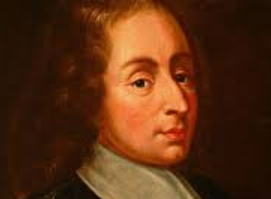
It is not your strength and your natural power that subjects all these people to you. Do not pretend then to rule them by force or to treat them with harshness. Satisfy their reasonable desires; alleviate their necessities; let your pleasure consist in being beneficent; advance them as much as you can, and you will act like the true king of desire.
4 months ago
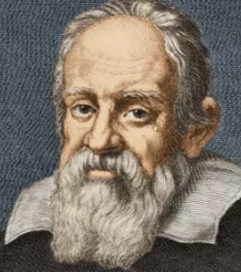
The passage of time has revealed to everyone the truths that I previously set forth; and, together with the truth of the facts, there has come to light the great difference in attitude between those who simply and dispassionately refused to admit the discoveries to be true, and those who combined with their incredulity some reckless passion of their own. Men who were well grounded in astronomical and physical science were persuaded as soon as they received my first message. There were others who denied them or remained in doubt only because of their novel and unexpected character, and because they had not yet had the opportunity to see for themselves. These men have by degrees come to be satisfied. But some, besides allegiance to their original error, possess I know not what fanciful interest in remaining hostile not so much toward the things in question as toward their discoverer. No longer being able to deny them, these men now take refuge in obstinate silence, but being more than ever exasperated by that which has pacified and quieted other men, they divert their thoughts to other fancies and seek new ways to damage me.
4 months ago
We know well the means by which this association of the lord, priest, merchant, judge, soldier, and king founded its domination. It was by the annihilation of all free unions: of village communities, guilds, trades unions, fraternities, and mediæval cities. It was by confiscating the land of the communes and the riches of the guilds; it was by the absolute and ferocious prohibition of all kinds of free agreement between men; it was by massacre, the wheel, the gibbet, the sword, and the fire that Church and State established their domination, and that they succeeded henceforth to reign over an incoherent agglomeration of subjects, who had no direct union more among themselves.It is now hardly thirty or forty years ago that we began to reconquer, by struggle, by revolt, the first steps of the right of association, that was freely practised by the artisans and the tillers of the soil through the whole of the middle ages.And, already now, Europe is covered by thousands of voluntary associations for study and teaching, for industry, commerce, science, art, literature, exploitation, resistance to exploitation, amusement, serious work, gratification and self-denial, for all that makes up the life of an active and thinking being. We see these societies rising in all nooks and corners of all domains: political, economic, artistic, intellectual. Some are as shortlived as roses, some hold their own since several decades, and all strive — while maintaining the independence of each group, circle, branch, or section — to federate, to unite, across frontiers as well as among each nation; to cover all the life of civilized men with a net, meshes of which are intersected and interwoven.

4 months ago
Being asked whether it was better to marry or not, he replied, "Whichever you do, you will repent it."
▼
Source
Socrates, 16.
4 months ago
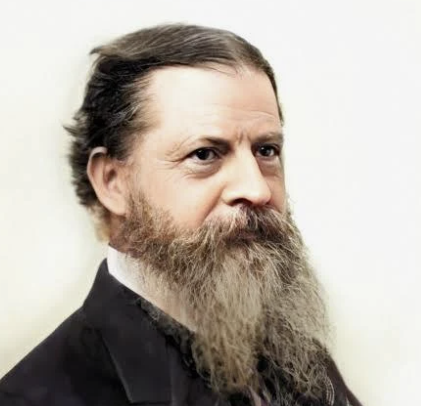
The Scientific Attitude and Fallibilism in Philosophical Writings of Peirce, selected and edited with an introducton by Justus Buchler. p. 49
▼
Source
See also Aristotle#Metaphysics A.1
4 months ago
Rules necessary for demonstrations. To prove all propositions, and to employ nothing for their proof but axioms fully evident of themselves, or propositions already demonstrated or admitted; Never to take advantage of the ambiguity of terms by failing mentally to substitute definitions that restrict or explain them.
4 months ago
It seems to me proper to adorn the Author's thought here with its conformity to a conception of Plato's regarding the determination of the various speeds of equable motion in the celestial motions of revolution. ...he said that God, after having created the movable celestial bodies, in order to assign to them those speeds with which they must be moved perpetually in equable circular motion, made them depart from rest and move through determinate spaces in that natural straight motion in which we sensibly see our moveables to be moved from the state of rest, successively accelerating. And he added that these having been made to gain that degree [of speed] which it pleased God that they should maintain forever, He turned their straight motion into circulation, the only kind [of motion] that is suitable to be conserved equably, turning always without retreat from or approach toward any pre-established goal desired by them. The conception is truly worthy of Plato, and it is to be more esteemed to the extent that its foundations, of which Plato remained silent, but which were discovered by our Author in removing their poetical mask or semblance, show it the guise of a true story.
▼
Source
I. Bernard Cohen's thesis: Galileo believed only circular (not straight line) motion may be conserved (perpetual), see The New Birth of Physics (1960). | Sagredo, Day Four, Stillman Drake translation (1974) pp.283-284

4 months ago
In order to remain silent Da-sein must have something to say.
▼
Source
Stambaugh translation
4 months ago
We must recognize, and loudly proclaim, that every one, whatever his grade in the old society, whether strong or weak, capable or incapable, as, before everything, THE RIGHT TO LIVE, and that society is bound to share amongst all, without exception , the means of existence at its disposal.
▼
Source
Ch. 2 : Well-Being for All, p. 71
4 months ago
Asked what he gained from philosophy, he answered, "To do without being commanded what others do from fear of the laws."
▼
Source
Aristotle, 9.

4 months ago
Write as if thou wert alone in the universe and hadst nothing to fear from the jealousies and prejudices of the people. Otherwise thou wilt miss thy purpose.
▼
Source
Preface, Oeuvres philosophiques de Monsieur de La Mettrie (1764) as quoted by Paul Carus, The Mechanistic Principle and the Non-mechanical (1913) [https://books.google.com/books?id=wGNRAAAAYAAJ&pg=PA102 p. 102.]
4 months ago
The tendency to regard continuity, in the sense in which I shall define it, as an idea of prime importance in philosophy conveniently may be be termed synechism. The present paper is intended chiefly to show what synechism is, and what it leads to.
4 months ago
Technology is in its essence something that human beings cannot master of their own accord.
4 months ago
Those who can be horror-stricken at seeing the population of this country increase by one... every 1,000 seconds who think of a human being as a mere claimant upon the material wealth of mankind, without being at the same time a contributor to that stock. But we, who see in each newborn babe a future worker capable of producing much more than his own share of the common stock—we greet his appearance.
4 months ago
He calls drunkenness an expression identical with ruin.
▼
Source
Pythagoras, 6.

4 months ago
The real field of knowledge is not the given fact about things as they are, but the critical evaluation of them as a prelude to passing beyond their given form. Knowledge deals with appearances in order to get beyond them. …. The concept of reality has thus turned into the concept of possibility. The real is not yet ‘actual,’ but is at first only the possibility of an actual. P. 145
4 months ago
Everything is the work of imagination, and... all the faculties of the soul can be correctly reduced to pure imagination...
4 months ago
Third, these general ideas are not mere words, nor do they consist in this, that certain concrete facts will every time happen under certain descriptions of conditions; but they are just as much, or rather far more, living realities than the feelings themselves out of which they are concreted. And to say that mental phenomenon are governed by law does not mean merely that they are describable by a general formula; but that there is a living idea, a conscious continuum of feeling which pervades them, and to which they are docile.
4 months ago
A physical theory reputed to be satisfactory by the sectarians of one metaphysical school will be rejected by the partisans of another school.
4 months ago
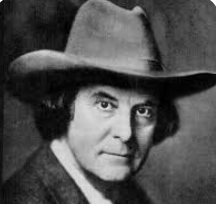
Life is just one damn thing after another.
▼
Source
Attributed in Items of Interest, Vol. 33 (1911), p. 8; variant: "damned"
4 months ago
The judgment that human life is worth living, or rather can and ought to be made worth living, … underlies all intellectual effort; it is the a priori of social theory, and its rejection (which is perfectly logical) rejects theory itself.
▼
Source
p. xliii
4 months ago
Effort supposes resistance.
▼
Source
Vol. I, par. 320
4 months ago
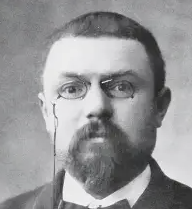
Scientists believe there is a hierarchy of facts and that among them may be made a judicious choice. They are right, since otherwise there would be no science...
4 months ago
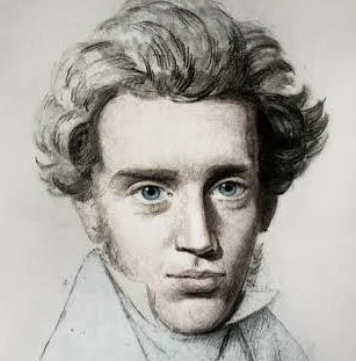
I may live for thirty years, or perhaps forty, or maybe just one day: therefore I have resolved to use this day, or whatever I have to say in these thirty years or whatever I have to say this one day I may have to live — I have resolved to use it in such a way that if not one day in my whole past life has been used well, this one by the help of God will be. JP VIII 1 A 533
4 months ago
The quantity of action is the product of the mass of the bodies times their speed and the distance they travel. When a body is transported from one place to another, the action is proportional to the mass of the body, to its speed and to the distance over which it is transported.
4 months ago
Knowledge is the distilled essence of our intuitions, corroborated by experience.
▼
Source
p. 18
4 months ago
The neo-conservative critics of leftist critics of mass culture ridicule the protest against Bach as background music in the kitchen, against Plato and Hegel, Shelley and Baudelaire, Marx and Freud in the drugstore. Instead, they insist on recognition of the fact that the classics have left the mausoleum and come to life again, that people are just so much more educated. True, but coming to life as classics, they come to life as other than themselves; they are deprived of their antagonistic force, of the estrangement which was the very dimension of their truth.
▼
Source
p. 64
4 months ago
# Civil equality, as the right of the citizen to recognize no one as a superior among the people in relation to himself...; and
4 months ago
Later generations will regard Mengenlehre as a disease from which one has recovered.
4 months ago
Most men pursue pleasure with such breathless haste that they hurry past it.
▼
Source
Swenson, 1959, p. 28
4 months ago
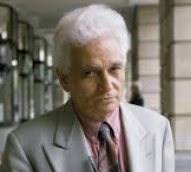
This book, admirable in so many respects, power in its break and style, is even more intimidating for me in that, having formely had the good fortune to study under Michel Foucault, I retain the consciousness of an admiring and grateful disciple. Now, the disciple's consciousness, when he starts, I would not say to dispute, but to engage in dialogue with the master or, better, to articulate the interminable and silent dialogue which made him into a disciple-this disciple's consciousness is an unhappy consciousness.
▼
Source
Cogito and The History of Madness (Routledge classics edition)
4 months ago
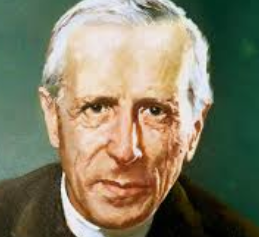
If there were no internal propensity to unite, even at a prodigiously rudimentary level—indeed in the molecule itself—it would be physically impossible for love to appear higher up, with us, in hominized form. . . . Driven by the forces of love, the fragments of the world seek each other so that the world may come into being.
4 months ago
Making men live in three worlds at once — past, present and future has been the chief harm organized religion has done.
4 months ago
In the human reality, all existence that spends itself in procuring the prerequisites of existence is thus an “untrue” and unfree existence. Obviously this reflects the not at all ontological condition of a society based on the proposition that freedom is incompatible with the activity of procuring the necessities of life, that this activity is the “natural” function of a specific class, and that cognition of the truth and true existence imply freedom from the entire dimension of such activity. … Society still is organized in such a way that procuring the necessities of life constitutes the full-time and life-long occupation of specific social classes, which are therefore unfree and prevented from a human existence. In this sense, the classical proposition according to which truth is incompatible with enslavement by socially necessary labor is still valid.
▼
Source
pp. 127-128
4 months ago
A spurious axiom of the first class is: Whatever is, is somewhere and sometime.
4 months ago
Alas, time comes and time goes, it subtracts little by little; then it deprives a person of a good, the loss of which he indeed feels, and his pain is great. Alas, and he does not discover that long ago it has already taken away from him the most important thing of all-the capacity to make a resolution-and it has made him so familiar with this condition that there is no consternation over it, the last thing that could help gain new power for renewed resolution!
▼
Source
p. 48
4 months ago
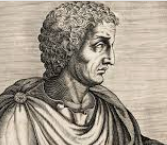
The world, and whatever that be which we call the heavens, by the vault of which all things are enclosed, we must conceive to be a deity, to be eternal, without bounds, neither created nor subject at any time to destruction. To inquire what is beyond it is no concern of man; nor can the human mind form any conjecture concerning it.
▼
Source
Book II, sec. 1.
4 months ago
That Action is best, which procures the greatest Happiness for the greatest Numbers; and that worst, which, in like manner, occasions Misery.
▼
Source
An Inquiry into the Original of our Ideas of Beauty and Virtue (1725) Treatise II, Section 3
4 months ago
A couple of years later I was an Assistant Professor and read Critique of Pure Tolerance. I quite hated it. It espoused a doctrine of the objective truth of what are in fact simply personal opinions with emotive value but no fact value. I also read Herbert Marcuse's One-Dimensional Man, which I also hated. I had lunch with Marcuse when he was lecturing in Cambridge, Ma. I quite liked Marcuse because his was capable of changing his mind, and was mentally vigorous at an advanced age (most of my colleagues ceased thinking beyond tenure). I told him that he and his critical studies comrades were true totalitarians. They hoped for a workers' revolution, after which they would be appointed Cultural Commisars by the Great Leader of the working class, and they would teach people what to think.
▼
Source
Herbert Gintis (2018), [https://www.amazon.com/gp/customer-reviews/R1CWWH2VYEQM26/ Review of A Critique of Pure Tolerance]
4 months ago
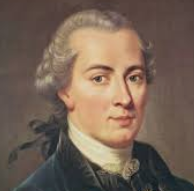
A philosophical attempt to work out a universal history according to a natural plan directed to achieving the civic union of the human race must be regarded as possible and, indeed, as contributing to this end of Nature.
▼
Source
Ninth Thesis
4 months ago
We have also sound houses, where we practice and demonstrate all sounds and their generation. We have harmonies which you have not, of quarter sounds and lesser slides of sounds. Divers instruments of music likewise to you unknown, some sweeter than any you have; together with bells and rings that are dainty and sweet. We represent small sounds as great and deep; likewise divers trembling and warblings of sounds, which in their original are entire. We represent and imitate all articulate sounds and letters, and the voices of beasts and birds. We have certain helps which set to the ear to do further the hearing greatly. We have also divers strange and artificial echoes, reflecting the voice many times, and as if it were tossing it; and some that give back the voice louder than it came, some shriller and some deeper; yea, some rendering the voice, differing in the letters or articulate sound from that they receive. We have also means to convey sounds in tubes and pipes, in strange lines and distance (…).
▼
Source
[http://www.constitution.org/bacon/new_atlantis.htm New Atlantis] (1627)
4 months ago
In the final, positive state, the mind has given over the vain search after Abolute notions, the origin and destination of the universe, and the cause of phenomenon, and applies itself to the tudy of their laws, - that is, their invariable relations of succession and resemblance. Reasoning and observation, duly combined, are the means of this knowledge. What is now understood when we speak of an explanation of the facts is simply the establishment of a connection between single phenomena and some general facts, the number of which continually diminishes with the progress of science.
▼
Source
Vol I
4 months ago
This little book (which in view of the circumstances under which it is issued reminds me of my first and more especially of the first to my first, the Preface to the Two Edifying Discourses of 1843, which came out immediately after Either/Or) will, as I hope, recall this to ‘that single individual whom I with joy and gratitude call my reader’: ‘it desires to remain in retirement, as it was in concealment it had its origin – a little flower in the cover of a great forest.’ Preface. P. 313
4 months ago
If we compare the third-person attitude of someone who simply says how things stand (this is the attitude of the scientist, for example) with the performative attitude of someone who tries to understand what is said to him (this is the attitude of the interpreter, for example), the implications … become clear. … First, interpreters relinquish superiority that observers have by virtue of their privileged position, in that they themselves are drawn, at least potentially, into negotiations about the meaning and validity of utterances. By taking part in communicative action, they accept in principle the same status as those whose utterances they are trying to understand. … It is impossible to decide a priori who is to learn from whom.
▼
Source
p. 26
CivilSimian.com created by AxiomaticPanic, CivilSimian, Kalokagathia