

4 months ago
The deepest and most organic death is death in solitude, when even light becomes a principle of death. In such moments you will be severed from life, from love, smiles, friends and even from death. And you will ask yourself if there is anything besides the nothingness of the world and your own nothingness.

4 months ago
"Do the Duty which lies nearest thee," which thou knowest to be a Duty! Thy second Duty will already have become clearer.
▼
Source
Bk. II, ch. 9.
4 months ago
Like great works, deep feelings always mean more than they are conscious of saying.
4 months ago
I would not have thee look on my endeavors as a design of captivity. I intend not the conquest but the exercise of thy reason, not that, thou should swear allegiance to my dictates but compare my conclusions with Nature and examine their correspondence.
4 months ago
In its own more confused, less advanced way, New Dealism too has spread abroad the stress on the state as against the individual, planning as against private enterprise, jobs (even if relief jobs) against opportunities, security against initiative, "human rights" against "property rights." There can be no doubt that the psychological effect of New Dealism has been what the capitalists say it has been: to undermine public confidence in capitalist ideas and rights and institutions. Its most distinctive features help to prepare the minds of the masses for the acceptance of the managerial social structure.
▼
Source
p. 201–202.
4 months ago
The complexity of the connection between the world of perception and the world of physics does not preclude that such a connection can be shown to exist at any time.
▼
Source
p. 133.
4 months ago
Let there be freedom from perturbations with respect to the things which come from the external cause; and let there be justice in the things done by virtue of the internal cause, that is, let there be movement and action terminating in this, in social acts, for this is according to thy nature.
▼
Source
IX, 31
4 months ago
Only thoughts that are randomly born die. The other thoughts we carry with us without knowing them. They have abandoned themselves to forgetfulness so that they can be with us all the time.
4 months ago
To the very last, he had a kind of idea; that, namely, of la carrière ouverte aux talents,—the tools to him that can handle them.
▼
Source
On Napoleon; Carlyle in his essay on Mirabeau, 1837, quotes this from a "New England book".
4 months ago
In that daily effort in which intelligence and passion mingle and delight each other, the absurd man discovers a discipline that will make up the greatest of his strengths. The required diligence and doggedness and lucidity thus resemble the conqueror's attitude. To create is likewise to give a shape to one's fate. For all these characters, their work defines them at least as much as it is defined by them. The actor taught us this: There is no frontier between being and appearing.
4 months ago
I have, Reader — and, I suppose, it is not unknown to thee — within these few years, in several little treatises, delivered my judgment of philosophy. I say, of philosophy, for alchemy — in the common acceptation, and as it is a torture of metals — I did never believe: much less did I study it.
4 months ago
A Man must be very inert to have no character at all.
▼
Source
1
4 months ago
Subjective reason … is inclined to abandon the fight with religion by setting up two different brackets, one for science and philosophy, and one for institutionalized mythology, thus recognizing both of them. For the philosophy of objective reason there is no such way out. Since it hold to the concept of objective truth, it must take a positive or a negative stand with regard to the content of established religion.
▼
Source
p. 12.
4 months ago
What matter and opportunity [for thy activity] art thou avoiding? For what else are all these things, except exercises for the reason, when it has viewed carefully and by examination into their nature the things which happen in life? Persevere then until thou shalt have made these things thy own, as the stomach which is strengthened makes all things its own, as the blazing fire makes flame and brightness out of everything that is thrown into it.
▼
Source
X, 31
4 months ago
What a pity and what a poverty of spirit, to assert that beasts are machines deprived of knowledge and sentiment, which affect all their operations in the same manner, which learn nothing, never improve, &c. [...] Some barbarians seize this dog, who so prodigiously excels man in friendship, they nail him to a table, and dissect him living, to show the mezarian veins. You discover in him all the same organs of sentiment which are in yourself. Answer me, machinist, has nature arranged all the springs of sentiment in this animal that he should not feel? Has he nerves to be incapable of suffering? Do not suppose this impertinent contradiction in nature. [...] The animal has received those of sentiment, memory, and a certain number of ideas. Who has bestowed these gifts, who has given these faculties? He who has made the herb of the field to grow, and who makes the earth gravitate towards the sun.
▼
Source
"[https://books.google.it/books?id=WQpJAQAAIAAJ&pg=PA8 Beasts]", in A Philosophical Dictionary, Volume 2, J. and H. L. Hunt, 1824, p. 9
4 months ago
From the cradle to the grave, each individual pays for the sin of not being God. That's why life is an uninterrupted religious crisis, superficial for believers, shattering for doubters.
4 months ago
For the whole Past, as I keep repeating, is the possession of the Present; the Past had always something true, and is a precious possession. In a different time, in a different place, it is always some other side of our common Human Nature that has been developing itself. The actual True is the sum of all these; not any one of them by itself constitutes what of Human Nature is hitherto developed. Better to know them all than misknow them. "To which of these Three Religions do you specially adhere?" inquires Meister of his Teacher. "To all the Three!" answers the other: "To all the Three; for they by their union first constitute the True Religion."
4 months ago
Yes, there was an element of abstraction and unreality in misfortune. But when an abstraction starts to kill you, you have to get to work on it.
4 months ago
He who voluntarily confronts tremendous odds must have very great internal resources to draw upon.
▼
Source
Book II, 2.89-[6]
4 months ago
Viewed from a distance, the natural world often presents a vista of sublime, majestic placidity. Yet beneath the foliage and hidden from the distant eye, a vast, unceasing slaughter rages. Wherever there is animal life, predators are stalking, chasing, capturing, killing, and devouring their prey. Agonized suffering and violent death are ubiquitous and continuous.
▼
Source
"[http://opinionator.blogs.nytimes.com/2010/09/19/the-meat-eaters/ The Meat Eaters]", The New York Times, 19 Sept. 2010
4 months ago
A little flesh, a little breath, and a Reason to rule all – that is myself.
▼
Source
II. 2, trans. Maxwell Staniforth
4 months ago
Satire lies about men of letters during their life, and eulogy after their death.
▼
Source
p. 105
4 months ago
This is how I recognize an authentic poet: by frequenting him, living a long time in the intimacy of his work, something changes in myself, not so much my inclinations or my tastes as my very blood, as if a subtle disease had been injected to alter its course, its density and nature. To live around a true poet is to feel your blood run thin, to dream a paradise of anemia, and to hear, in your veins, the rustle of tears.
4 months ago
The Hero as Divinity, the Hero as Prophet, are productions of old ages; not to be repeated in the new. They presuppose a certain rudeness of conception, which the progress of mere scientific knowledge puts an end to. There needs to be, as it were, a world vacant, or almost vacant of scientific forms, if men in their loving wonder are to fancy their fellow-man either a god or one speaking with the voice of a god. Divinity and Prophet are past.
4 months ago
The ancients, even though they believed in destiny, believed primarily in nature, in which they participated wholeheartedly. To rebel against nature amounted to rebelling against oneself. It was butting one's head against a wall.
▼
Source
Part 2: Metaphysical Rebellion
4 months ago
All urgent calls he shall hear at once, but never put off; for when postponed, they will prove too hard or impossible to accomplish.
▼
Source
Book I : "Concerning Discipline" Chapter 19
4 months ago
The Thracian people, like the bloodiest of the barbarians, being ever most murderous when it has nothing to fear.
▼
Source
Book VII, 7.29-[4]
4 months ago
There is probably no more abused a term in the history of philosophy than “representation,” and my use of this term differs both from its use in traditional philosophy and from its use in contemporary cognitive psychology and artificial intelligence.... The sense of “representation” in question is meant to be entirely exhausted by the analogy with speech acts: the sense of “represent” in which a belief represents its conditions of satisfaction is the same sense in which a statement represents its conditions of satisfaction. To say that a belief is a representation is simply to say that it has a propositional content and a psychological mode.
▼
Source
P. 12.
4 months ago
The more honesty a man has, the less he affects the air of a saint — the affectation of sanctity is a blotch on the face of piety.
▼
Source
No. 200
4 months ago
The Emperor Cæsar Marcus Aurelius Antoninus, Germanicus, Parthicus, Sarmaticus, to the People of Rome, and to the sacred Senate greeting: I explained to you my grand design, and what advantages I gained on the confines of Germany, with much labour and suffering, in consequence of the circumstance that I was surrounded by the enemy; I myself being shut up in Carnuntum by seventy-four cohorts, nine miles off. And the enemy being at hand, the scouts pointed out to us, and our general Pompeianus showed us that there was close on us a mass of a mixed multitude of 977,000 men, which indeed we saw; and I was shut up by this vast host, having with me only a battalion composed of the first, tenth, double and marine legions. Having then examined my own position, and my host, with respect to the vast mass of barbarians and of the enemy, I quickly betook myself to prayer to the gods of my country. But being disregarded by them, I summoned those who among us go by the name of Christians. And having made inquiry, I discovered a great number and vast host of them, and raged against them, which was by no means becoming; for afterwards I learned their power. Wherefore they began the battle, not by preparing weapons, nor arms, nor bugles; for such preparation is hateful to them, on account of the God they bear about in their conscience. Therefore it is probable that those whom we suppose to be atheists, have God as their ruling power entrenched in their conscience. For having cast themselves on the ground, they prayed not only for me, but also for the whole army as it stood, that they might be delivered from the present thirst and famine. For during five days we had got no water, because there was none; for we were in the heart of Germany, and in the enemy's territory. And simultaneously with their casting themselves on the ground, and praying to God (a God of whom I am ignorant), water poured from heaven, upon us most refreshingly cool, but upon the enemies of Rome a withering hail. And immediately we recognised the presence of God following on the prayer -- a God unconquerable and indestructible. Founding upon this, then, let us pardon such as are Christians, lest they pray for and obtain such a weapon against ourselves. And I counsel that no such person be accused on the ground of his being a Christian. But if any one be found laying to the charge of a Christian that he is a Christian, I desire that it be made manifest that he who is accused as a Christian, and acknowledges that he is one, is accused of nothing else than only this, that he is a Christian; but that he who arraigns him be burned alive. And I further desire, that he who is entrusted with the government of the province shall not compel the Christian, who confesses and certifies such a matter, to retract; neither shall he commit him. And I desire that these things be confirmed by a decree of the Senate. And I command this my edict to be published in the Forum of Trajan, in order that it may be read. The prefect Vitrasius Pollio will see that it be transmitted to all the provinces round about, and that no one who wishes to make use of or to possess it be hindered from obtaining a copy from the document I now publish.
▼
Source
Saint Justin Martyr, The First Apology of Justin Martyr (c. 155 A.D.)
4 months ago
I cannot imagine how the clockwork of the universe can exist without a clockmaker.
▼
Source
As attributed in More Random Walks in Science : An Anthology (1982) by Robert L. Weber, p. 65
4 months ago
You are forgiven everything provided you have a trade, a subtitle to your name, a seal on your nothingness.
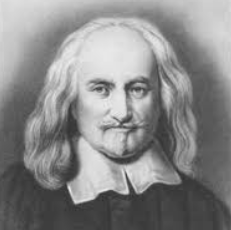
4 months ago
Give an inch, he'll take an ell.
▼
Source
Liberty and Necessity (no. 111)
4 months ago
In the true Literary Man there is thus ever, acknowledged or not by the world, a sacredness: he is the light of the world; the world's Priest;—guiding it, like a sacred Pillar of Fire, in its dark pilgrimage through the waste of Time.
4 months ago
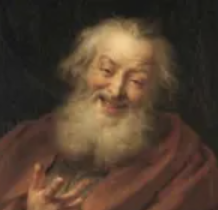
Fiction is the lie through which we tell the truth.
▼
Source
Pablo Picasso said something very similar. Perhaps it is the source? From Herschel B. Chipp's Theories of Modern Art: "We all know that Art is not truth. Art is a lie that makes us realize truth, at least the truth that is given us to understand."
4 months ago
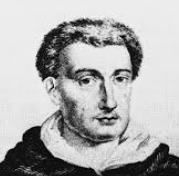
The brave man is not only he who overcomes the enemy, but he who is stronger than pleasures. Some men are masters of cities, but are enslaved to women.
▼
Source
Freeman (1948), p. 163 | Variant: The brave man is he who overcomes not only his enemies but his pleasures. There are some men who are masters of cities but slaves to women.
4 months ago
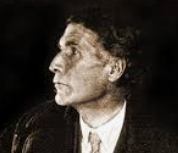
I learn more from the anatomy of an ant or a blade of grass...than from all the books which have been written since the beginning of time. This is so, since I have begun...to read the book of God...the model according to which I correct the human books which have been copied badly and arbitrarily and without attention to the things that are written in the original book of the Universe.
▼
Source
"Letter of 1607", as cited by Eisenstein, Elizabeth L., 2012, The Printing Revolution in Early Modern Europe, Cambridge University Press, p. 218.
4 months ago
Most of the pathetic scenes in almost everybody's life are scenes unnoted by anyone and totally disregarded by the person in question.
▼
Source
A Glastonbury Romance (1932; 1955) p. 849
4 months ago
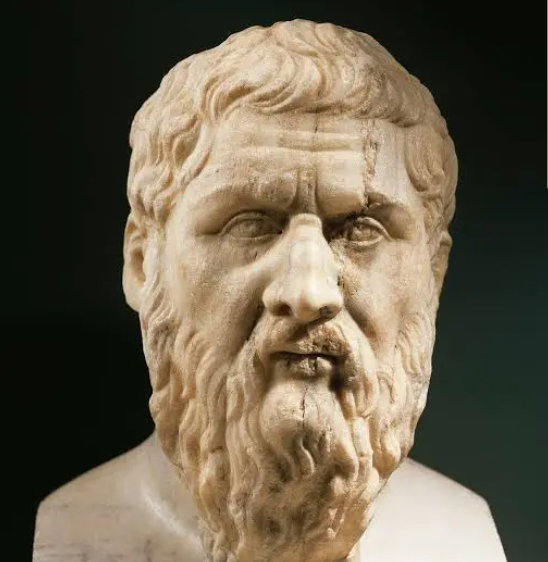
It is impossible that evils should be done away with, for there must always be something opposed to the good; and they… must inevitably hover about mortal nature and this earth. Therefore we ought to try to escape from earth to the dwelling of the gods as quickly as we can; and to escape is to become like God, so far as this is possible… God is in no wise and in no manner unrighteous, but utterly and perfectly righteous, and there is nothing so like him as that one of us who in turn becomes most nearly perfect in righteousness.
▼
Source
176a–c
4 months ago
Contrary to Voltaire's sarcasm, the Creator does not resemble his creature.
▼
Source
Jean-Pierre Torrell, Inos Biffi, La teologia cattolica, Editoriale Jaca Book, 1998, 128 p. , OCLC 83129915
4 months ago
Erect I make a resolution; prone I revoke it.
4 months ago
Felicity is a continual progress of the desire from one object to another, the attaining of the former being still but the way to the latter.The cause whereof is that the object of man's desire is not to enjoy once only, and for one instant of time, but to assure forever the way of his future desire. And therefore the voluntary actions and inclinations of all men tend not only to the procuring, but also to the assuring of a contented life, and differ only in the way, which ariseth partly from the diversity of passions in diverse men, and partly from the difference of the knowledge or opinion each one has of the causes which produce the effect desired.
▼
Source
The First Part, Chapter 11, p. 47
4 months ago
Every pitifulest whipster that walks within a skin has had his head filled with the notion that he is, shall be, or by all human and divine laws ought to be, 'happy.' His wishes, the pitifulest whipster's, are to be fulfilled for him; his days, the pitifulest whipster's, are to flow on in an ever-gentle current of enjoyment, impossible even for the gods. The prophets preach to us, Thou shalt be happy; thou shalt love pleasant things, and find them. The people clamor, Why have we not found pleasant things? ...God's Laws are become a Greatest Happiness Principle. There is no religion; there is no God; man has lost his soul.
▼
Source
Bk. III, ch. 4.
4 months ago
Good means not [merely] not to do wrong, but rather not to desire to do wrong.
4 months ago
A curious paradox: people have only the narrowest private interest in mind when they act, yet they are at the same time more than ever determined in their behavior by the instincts of the mass. ... The diversity of individual goals is immaterial in face of the identity of the determining forces.
▼
Source
p. 451
4 months ago
The innovator, however, must in the first place be discontented, he must doubt the value of what he is doing or question the accepted ways of doing it. And secondly, he must be prepared to take fresh paths, to venture into fields where he is by no means expert. This is true, at least, of major forms of innovation; they make it possible for other men to be expert, but are not themselves forms of expertise. Freud was not an expert psycho-analyst; before Freud wrote there was no such thing; he created the standards by which psycho-analysts are judged expert. Neither was Marx an expert in interpreting history in economic terms nor Darwin an expert in evolutionary biology. If a man is trained, purely and simply, to be expert and contented in a particular task he will not innovate; Freud would have remained an anatomist, Marx a philosopher, Darwin a field-naturalist.
▼
Source
p. 282.
4 months ago
The orators — and the despots — have the least power in their cities … since they do nothing that they wish to do, practically speaking, though they do whatever they think to be best.
4 months ago
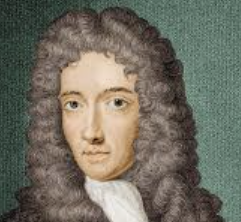
And that you may know... what kind of writings I mean, I shall name to you the learned Gassendus his little Syntagma of Epicuruss philosophy, and that most ingenious gentleman Monsieur Descartes his principles of philosophy. For though I purposely refrained, though not altogether from transiently consulting about a few particulars, yet from seriously and orderly reading over those excellent (though disagreeing) books, or so much as Sir Francis Bacon's Novum Organum, that I might not be prepossessed with any theory or principles, till I had spent some time in trying what things themselves would incline me to think; yet beginning now to allow myself to read those excellent books, I find by the little I have read in them already, that if I had read them before I began to write, I might have enriched the ensuing essays with divers truths, which they now want, and have explicated divers things much better than I fear I have done.
4 months ago
Anyone can escape into sleep, we are all geniuses when we dream, the butcher's the poet's equal there.
4 months ago
Of all passions, that which inclineth men least to break the laws is fear.
▼
Source
The Second Part, Chapter 27
CivilSimian.com created by AxiomaticPanic, CivilSimian, Kalokagathia