
4 months ago
He did not know the way things were going: he was too Victorian to understand the Victorian epoch. He did not know enough ignorant people to have heard the news.
▼
Source
On William Makepeace Thackeray Ch. II: The Great Victorian Novelists (p. 65)
4 months ago
The general interest of the masses might take the place of the insight of genius if it were allowed freedom of action.

4 months ago
This book is intended as a correlative history of the modern soul and of a new power to judge; a genealogy of the present scientifico-legal complex from which the power to punish derives its bases, justifications and rules, from which it extends its effects and by which it extends its effects and by which it masks its exorbitant singularity.
▼
Source
Chapter One, The Spectacle of the Scaffold, pp.42

4 months ago
Self-knowledge is no guarantee of happiness, but it is on the side of happiness and can supply the courage to fight for it. Psychiatrists have told me that they give The Second Sex to their women patients to read, and not merely to intellectual women but to lower-middle-class women, to office workers and women working in factories. 'Your book was a great help to me. Your book saved me,' are the words I have read in letters from women of all ages and all walks of life. If my book has helped women, it is because it expressed them, and they in their turn gave it its truth. Thanks to them, it is no longer a matter for scandal and concern. During these last ten years the myths that men created have crumbled, and many women writers have gone beyond me and have been far more daring than I. Too many of them for my taste take sexuality as their only theme; but at least when they write about it they now present themselves as the eye-that-looks, as subject, consciousness, freedom.
▼
Source
Force of Circumstances Vol. III (1963) as translated by Richard Howard (1968)
4 months ago
You could always tell by his conversation which volume of the Encyclopedia Britannica he'd been reading. One day it would be Alps, Andes and Apennines, and the next it would be the Himalayas and the Hippocratic Oath.
▼
Source
Bertrand Russell, in a letter to R. W. Clark (July 1965)
4 months ago
And above the ships are palaces of brown, black-bearded chiefs,And below the ships are prisons, where with multitudinous griefs,Christian captives sick and sunless, all a labouring race repinesLike a race in sunken cities, like a nation in the mines.
▼
Source
Lepanto
4 months ago
Since reasoning, or inference, the principal subject of logic, is an operation which usually takes place by means of words, and in complicated cases can take place in no other way: those who have not a thorough insight into both the signification and purpose of words, will be under chances, amounting almost to certainty, of reasoning or inferring incorrectly.
▼
Source
p. 11: Cited in Gaines (1976) "Foundations of fuzzy reasoning" in: International Journal of Man-Machine Studies 8(6), p. 623
4 months ago
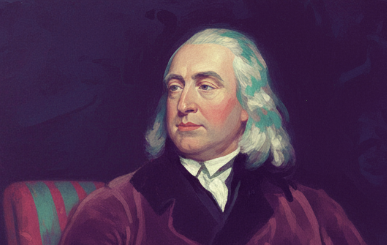
That which has no existence cannot be destroyed — that which cannot be destroyed cannot require anything to preserve it from destruction. Natural rights is simple nonsense: natural and imprescriptible rights, rhetorical nonsense — nonsense upon stilts. But this rhetorical nonsense ends in the old strain of mischievous nonsense for immediately a list of these pretended natural rights is given, and those are so expressed as to present to view legal rights. And of these rights, whatever they are, there is not, it seems, any one of which any government can, upon any occasion whatever, abrogate the smallest particle.
▼
Source
The often-quoted phrase ‘nonsense upon stilts’ is often modernised to ‘nonsense on stilts’.
4 months ago
In the darkest region of the political field the condemned man represents the symmetrical, inverted figure of the king.
4 months ago
Try to stay a man amongst men … There's no other hope for you.
▼
Source
Marianne to Raimon
4 months ago
'You do believe it,' he said. 'You do believe everything. We all believe everything, even when we deny everything. The denyers believe. The unbelievers believe. Don't you feel in your heart that these contradictions do not really contradict: that there is a cosmos that contains them all? The soul goes round upon a wheel of stars and all things return; perhaps Strake and I have striven in many shapes, beast against beast and bird against bird, and perhaps we shall strive for ever. But since we seek and need each other, even that eternal hatred is an eternal love. Good and evil go round in a wheel that is one thing and not many. Do you not realize in your heart, do you not believe behind all your beliefs, that there is but one reality and we are its shadows; and that all things are but aspects of one thing: a centre where men melt into Man and Man into God?' 'No,' said Father Brown.
4 months ago
Again, defenders of utility often find themselves called upon to reply to such objections as this—that there is not time, previous to action, for calculating and weighing the effects of any line of conduct on the general happiness. This is exactly as if any one were to say that it is impossible to guide our conduct by Christianity, because there is not time, on every occasion on which anything has to be done, to read through the Old and New Testaments. The answer to the objection is, that there has been ample time, namely, the whole past duration of the human species. During all that time mankind have been learning by experience the tendencies of actions
▼
Source
Ch. 2
4 months ago
In parrhesia the speaker uses his freedom and chooses frankness instead of persuasion, truth instead of falsehood or silence, the risk of death instead of life and security, criticism instead of flattery, and moral duty instead of and moral apathy... in most of the Greek texts... from the Fifth Century B.C. to the Fifth Century A.D.

4 months ago
It would be better for me... that multitudes of men should disagree with me rather than that I, being one, should be out of harmony with myself.
▼
Source
Gorgias, 482c
4 months ago
Is there such a thing as being? What is it? etc. Yet immediately an abyss opens under my feet: I who ask these questions about being, how can I be sure that I exist? Yet surely I, who formulate this problem should be able to remain outside it - before or beyond it? Clearly this is not so. The more I consider it the more I find that this problem tends inevitably to invade the proscenium from which it is excluded in theory: it is only by means of a fiction that Idealism in its traditional form seeks to maintain on the margin of being the consciousness which asserts or denies it.
4 months ago
Most boys or youths who have had much knowledge drilled into them, have their mental capacities not strengthened, but over-laid by it. They are crammed with mere facts, and with the opinions or phrases of other people, and these are accepted as a substitute for the power to form opinions of their own: and thus the sons of eminent fathers, who have spared no pains in their education, so often grow up mere parroters of what they have learnt, incapable of using their minds except in the furrows traced for them. Mine, however, was not an education of cram. My father never permitted anything which I learnt to degenerate into a mere exercise of memory. He strove to make the understanding not only go along with every step of the teaching, but, if possible, precede it. Anything which could be found out by thinking I never was told, until I had exhausted my efforts to find it out for myself.
▼
Source
([https://archive.org/details/autobiography01mill/page/31/mode/1up p. 31])
4 months ago
The history of the Roman Empire is also the history of the uprising of the Empire of the Masses, who absorb and annul the directing minorities and put themselves in their place. Then, also, is produced the phenomenon of agglomeration, of "the full." For that reason, as Spengler has very well observed, it was necessary, just as in our day, to construct enormous buildings. The epoch of the masses is the epoch of the colossal.
▼
Source
Chap.II: The Rise Of The Historic Level
4 months ago
Now the compound or composite may be supposed to be naturally capable of being dissolved in like manner as being compounded; but that which is uncompounded, and that only, must be, if anything is, indissoluble. ...And the uncompounded may be assumed to be the same and unchanging, where the compound is always changing and never the same? ...Is that idea or essence, which in the dialectical process we define as essence of true existence—whether essence of equality, beauty, or anything else: are these essences, I say, liable at times to some degree of change? or are they each of them always what they are, having the same simple, self-existent and unchanging forms, and not admitting of variation at all, or in any way, or at any time?

4 months ago
I want to take poetry to walk other genres. I want poetry to walk through other genres. When I started writing, this was my main concern: get out of poetry. Let poetry walk the streets of New York. Make her cosmopolitan. See the world. Not in these estrofas, not in these stanzas, which are camisas de fuerza.I have to get out of poetry. I have to do what James Joyce did to the novel: he took the novel out of the novel.
▼
Source
[https://www.academia.edu/36916781/A_Graphic_Revolution_Talking_Poetry_and_Politics_with_Giannina_Braschi “A Graphic Revolution Talking Poetry & Politics with Giannina Braschi”] in Chiricú Journal (2018)
4 months ago
I conceive that the description so often given of a Benthamite, as a mere reasoning machine, though extremely inapplicable to most of those who have been designated by that title, was during two or three years of my life not altogether untrue of me. ...There is nothing very extraordinary in this fact: no youth of the age I then was, can be expected to be more than one thing, and this was the thing I happened to be. Ambition and desire of distinction, I had in abundance; and zeal for what I thought the good of mankind was my strongest sentiment, mixing with and colouring all others. But my zeal was as yet little else, at that period of my life, than zeal for speculative opinions. It had not its root in genuine benevolence, or sympathy with mankind; though these qualities held their due place in my ethical standard. Nor was it connected with any high enthusiasm for ideal nobleness.
▼
Source
([https://archive.org/details/autobiography01mill/page/109/mode/1up pp. 109-110])
4 months ago
The State is always, whatever be its form — primitive, ancient, medieval, modern — an invitation issued by one group of men to other human groups to carry out some enterprise in common. That enterprise, be its intermediate processes what they may, consists in the long run in the organisation of a certain type of common life. … [As Renan says,] "To have common glories in the past, a common will in the present; to have done great things together; to wish to do greater; these are the essential conditions which make up a people.… In the past, an inheritance of glories and regrets; in the future, one and the same programme to carry out.… The existence of a nation is a daily plebiscite."
▼
Source
Chapter XIV: Who Rules The World?
4 months ago
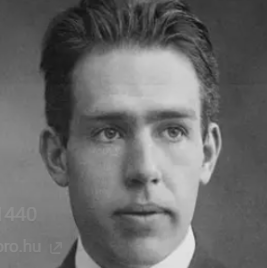
The great extension of our experience in recent years has brought light to the insufficiency of our simple mechanical conceptions and, as a consequence, has shaken the foundation on which the customary interpretation of observation was based.
▼
Source
Niels Bohr, "Atomic Physics and the Description of Nature" (1934)
4 months ago
For after death, as they say, the genius of each individual, to whom he belonged in life, leads him to a certain place in which the dead are gathered together for judgment, whence they go into the world below, following the guide who is appointed to conduct them from this world to the other; and when they have there received their due and remained their time, another guide brings them back again after many revolutions of ages.

4 months ago
If human beings were or had to be this or that substance, this or that destiny, no ethical experience would be possible... This does not mean, however, that humans are not, and do not have to be, something, that they are simply consigned to nothingness and therefore can freely decide whether to be or not to be, to adopt or not to adopt this or that destiny (nihilism and decisionism coincide at this point). There is in effect something that humans are and have to be, but this is not an essence nor properly a thing: It is the simple fact of one's own existence as possibility or potentiality.
▼
Source
Ch. 11 : Ethics
4 months ago
I believe that the early success and reputation of Carlyle's French Revolution, were considerably accelerated by what I wrote about it in the Review. Immediately on its publication, and before the commonplace critics, all whose rules and modes of judgment it set at defiance, had time to preoccupy the public with their disapproval of it, I wrote and published a review of the book, hailing it as one of those productions of genius which are above all rules, and are a law to themselves.
▼
Source
([https://archive.org/details/autobiography01mill/page/217/mode/1up p. 217])
4 months ago
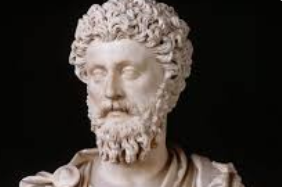
Be not unwilling in what thou doest, neither selfish nor unadvised nor obstinate; let not over-refinement deck out thy thought; be not wordy nor a busybody.
▼
Source
III, 5
4 months ago
Not often in life has a human being caused me such joy by his mere presence as you did.
▼
Source
Albert Einstein in a letter to Bohr (1920)

4 months ago
How far down the evolutionary scale shall we go? Shall we eat fish? What about shrimps? Oysters? To answer these questions we must bear in mind the central principle on which our concern for other beings is based. As I said … the only legitimate boundary to our concern for the interests of other beings is the point at which it is no longer accurate to say that the other being has interests. To have interests, in a strict, nonmetaphorical sense, a being must be capable of suffering or experiencing pleasure. If a being suffers, there can be no moral justification for disregarding that suffering, or for refusing to count it equally with the like suffering of any other being. But the converse of this is also true. If a being is not capable of suffering, or of enjoyment, there is nothing to take into account.
▼
Source
Ch. 4: Becoming a Vegetarian
4 months ago
Know thyself.
▼
Source
This statement actually predates Socrates, and was used as an Inscription at the Oracle of Delphi. It is a saying traditionally ascribed to one of the "Seven Sages of Greece", notably Solon, but accounts vary as to whom. Socrates himself is reported to ha
4 months ago
It may be argued that writers stick to their convictions and serve only the truth, and that they only approve and support governmental conduct when they judge it to be in the interests of the governed. We accept that. We know that even those writers working under the eyes and under the influence of the Government always work, or at least claim to work only for society as a whole, and would be offended if it were thought otherwise. Nevertheless, we are convinced that the governed know better than anyone what they want and what is in their interest. We believe that government is at least an unnecessary intermediary between those who think about the public interest and those who feel it, between political writers and industry.
4 months ago
[T]he last and greatest of liberal thinkers.
▼
Source
R. H. Tawney, The Acquisitive Society (1920), p. 89
4 months ago
We cannot avoid conflict, conflict with society, other individuals and with oneself. Conflicts may be the sources of defeat, lost life and a limitation of our potentiality but they may also lead to greater depth of living and the birth of more far-reaching unities, which flourish in the tensions that engender them.
▼
Source
As quoted in Turning Conflict Into Profit : A Roadmap for Resolving Personal and Organizational Disputes (2005) by Larry Axelrod and Rowland Johnson
4 months ago
Many the lumps of frankincense on the same altar; one falls there early and another late, but it makes no difference.
▼
Source
IV, 15
4 months ago
The kind of equality utilitarianism supports is given by Bentham’s formula...: ‘everybody to count for one, and nobody for more than one’...Utilitarianism seeks to maximize happiness, and in deciding how to calculate whether happiness is being maximized, no one’s pleasures or pains should count for less because they are peasants rather than aristocrats, slaves rather than slave-owners, Africans rather than Europeans, poor rather than rich, illiterates rather than doctors of philosophy, children rather than adults, females rather than males, or even, as we have seen, non-human animals rather than human beings.
▼
Source
p. 349
4 months ago
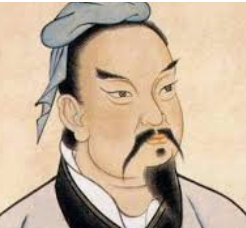
Keep your friends close, and your enemies closer.
▼
Source
This has often been attributed to Sun Tzu and sometimes to Petrarch. It comes most directly from a line spoken by Michael Corleone in The Godfather Part II (1974), written by Mario Puzo and Francis Ford Coppola: | My father taught me many things here. He

4 months ago
Let us be true: this is the highest maxim of art and of life, the secret of eloquence and of virtue, and of all moral authority.
▼
Source
17 December 1854
4 months ago
How easy it is to repel and to wipe away every impression which is troublesome or unsuitable, and immediately to be in all tranquility.
▼
Source
To shrug it all off and wipe it clean--every annoyance and distraction--and reach utter stillness. Child's play. (Hays translation) | V, 2

4 months ago
I am fast becoming a patriot of the most decided stamp. Scornfully as I used to speak and think of Scotland in my hours of bitterness and irritation, I never fail to stand up manfully in defence of it thro' thick and thin, whenever a renegade Scot takes upon him to abuse it.
▼
Source
Letter to Thomas Murray (24 August 1824), quoted in Fred Kaplan, Thomas Carlyle: A Biography (1983), p. 100
4 months ago
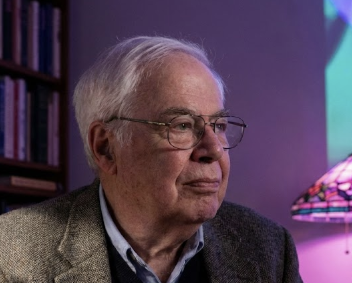
… our maturation has consisted in the gradual realization that, if we can rely on one another, we need not rely on anything else. In religious terms, this is the Feuerbachian thesis that God is just a projection of the best, and sometimes the worst, of humanity. In philosophical terms, it is the thesis that anything that talk of objectivity can do to make our practices intelligible can be done equally well by talk of intersubjectivity.
▼
Source
"John Searle on Realism and Relativism." Truth and Progress: Philosophical Papers, Volume 3 (1998).

4 months ago
I strongly recommend that all read the autobiography of St. Theresa. In spite of the fact that this work went through the "spiritual" censorship of the Church, some amazing pages have been preserved. By propagating the dogma of Jesus Christ as the only begotten Son of God, the Church contradicts the very sense of the prayer given to us by Jesus Christ himself, "Our Father which art in heaven." And also the words of the Scriptures, "So God created man in his own image." (Genesis 1:27) Thus, by claiming the exclusiveness of sonship and divine origin for Jesus Christ, the Church, by that very claim, forever divorced him from mankind. From this came a whole train of grave events; the exclusion of Jesus Christ from the life of humanity, the obliteration of his human Sacrifice and the awful suggestion implying that the death of Christ on the Cross saved humanity from "original" sin (?!) and from all subsequent sins.
▼
Source
Helena Roerich, in Letters of Helena Roerich II, (2 April 1936)

4 months ago
One party [the Whigs] had given their whole attention, during several years, to the project of enriching themselves, and impoverishing the rest of the nation; and, by these and other means, of establishing their dominion under the government and with the favour of a family, who were foreigners, and therefore might believe, that they were established on the throne by the good will and strength of this party alone. This party in general were so intent on these views, and many of them, I fear, are so still, that they did not advert in time to the necessary consequences of the measures they abetted: nor did they consider, that the power they raised, and by which they hoped to govern their country, would govern them with the very rod of iron they forged, and would be the power of a prince or minister, not that of a party long.
▼
Source
pp. 20-21
4 months ago
I can control my thoughts as necessary; then how can I be troubled? (Hays translation)
▼
Source
VII, 2
4 months ago
His religion at best is an anxious wish, — like that of Rabelais, a great Perhaps.
▼
Source
Burns; compare: "The grand perhaps", Browning, Bishop Bloughram's Apology.
4 months ago
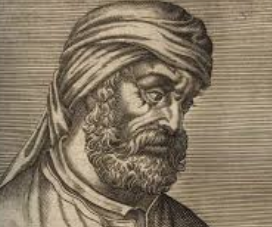
If, also, He exercised no right of power even over His own followers, to whom He discharged menial ministry; if, in short, though conscious of His own kingdom, He shrank back from being made a king, He in the fullest manner gave His own an example for turning coldly from all the pride and garb, as well of dignity as of power. For if they were to be used, who would rather have used them than the Son of God? What kind and what number of fasces would escort Him? what kind of purple would bloom from His shoulders? what kind of gold would beam from His head, had He not judged the glory of the world to be alien both to Himself and to His? Therefore what He was unwilling to accept, He has rejected; what He rejected, He has condemned; what He condemned, He has counted as part of the devil’s pomp. For He would not have condemned things, except such as were not His; but things which are not God’s, can be no other’s but the devil’s. If you have forsworn “the devil’s pomp,” know that whatever there you touch is idolatry. Let even this fact help to remind you that all the powers and dignities of this world are not only alien to, but enemies of, God; that through them punishments have been determined against God’s servants; through them, too, penalties prepared for the impious are ignored. But “both your birth and your substance are troublesome to you in resisting idolatry.” For avoiding it, remedies cannot be lacking; since, even if they be lacking, there remains that one by which you will be made a happier magistrate, not in the earth, but in the heavens.
▼
Source
Chapter XVIII, Dress as Connected with Idolatry
4 months ago
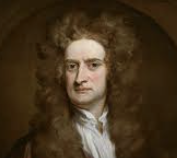
1. Fidelity & Allegiance sworn to the King is only such a fidelity and obedience as is due to him by the law of the land; for were that faith and allegiance more than what the law requires, we would swear ourselves slaves, and the King absolute; whereas, by the law, we are free men, notwithstanding those Oaths. 2. When, therefore, the obligation by the law to fidelity and allegiance ceases, that by the Oath also ceases...
▼
Source
Letter to Dr. Covel Feb. 21, (1688-9) Thirteen Letters from Sir Isaac Newton to J. Covel, D.D. (1848)
4 months ago
Lord Bolingbroke, one of the ablest men who ever lived, was a firm and uncompromising Tory, and he advocated triennial Parliaments. He said that without this there was no security for the people, no integrity for the constitution.
▼
Source
Benjamin Disraeli, speech in High Wycombe (27 November 1832), quoted in Selected Speeches of the late Right Honourable the Earl of Beaconsfield: Volume II, ed. T. E. Kebbel (1882), p. 7
4 months ago
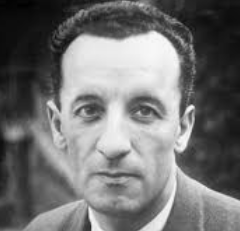
Socrates reminds us that it is not the same thing, but almost the opposite, to understand religion and to accept it.
▼
Source
p. 45
4 months ago
Everywhere and at all times it is in thy power piously to acquiesce in thy present condition, and to behave justly to those who are about thee, and to exert thy skill upon thy present thoughts, that nothing shall steal into them without being well examined.
▼
Source
VII, 54
4 months ago
The infinite, absolute character of Virtue has passed into a finite, conditional one; it is no longer a worship of the Beautiful and Good; but a calculation of the Profitable.

4 months ago
Life continues, and some mornings, weary of the noise, discouraged by the prospect of the interminable work to keep after, sickened also by the madness of the world that leaps at you from the newspaper, finally convinced that I will not be equal to it and that I will disappoint everyone—all I want to do is sit down and wait for evening. This is what I feel like, and sometimes I yield to it.
▼
Source
"Letter to P.B." in Lyrical and Critical Essays (1970)
CivilSimian.com created by AxiomaticPanic, CivilSimian, Kalokagathia