

3 months 4 weeks ago
Epimenides was sent by his father into the field to look for a sheep, turned out of the road at mid-day and lay down in a certain cave and fell asleep, and slept there fifty-seven years; and after that, when awake, he went on looking for the sheep, thinking that he had been taking a short nap.
▼
Source
Epimenides, 2.
3 months 4 weeks ago
You are of all my friends the one who illustrates pragmatism in its most needful forms. You are a jewel of pragmatism.
▼
Source
Letter to William James (16 March 1903), published in The thought and character of William James, as revealed in unpublished correspondence and notes (1935) by Ralph Barton Perry, Vol. 2, p. 427
3 months 4 weeks ago
I would inquire of reasonable persons whether this principle: Matter is naturally wholly incapable of thought, and this other: I think, therefore I am, are in fact the same in the mind of Descartes, and in that of St. Augustine, who said the same thing twelve hundred years before. ...I am far from affirming that Descartes is not the real author of it, even if he may have learned it only in reading this distinguished saint; for I know how much difference there is between writing a word by chance without making a longer and more extended reflection on it, and perceiving in this word an admirable series of conclusions, which prove the distinction between material and spiritual natures, and making of it a firm and sustained principle of a complete metaphysical system, as Descartes has pretended to do. ...it is on this supposition that I say that this expression is as different in his writings from the saying in others who have said it by chance, as in a man full of life and strength, from a corpse.
▼
Source
see St. Augustine, Civitate Dei, 1. XI, c. xxvi
3 months 4 weeks ago
We seek not what God could have done but what He has done.… God could have caused birds to fly with bones of solid gold, with veins full of quicksilver, with flesh heavier than lead and very small and heavy wings, so as to better show His power … but He wanted to make their bones, flesh and feathers very light … to teach us that He likes simplicity and ease.
▼
Source
Notes in a copy of Jean-Baptiste Morin's "Famous and ancient problems of the earth's motion or rest, yet to be solved" (published 1631). Some English sources incorrectly attribute this to the Dialogue, concluding it (also inaccurately): "It is only to shi

3 months 4 weeks ago
The human being is not the lord of beings, but the shepherd of Being.
▼
Source
Letter on Humanism (1947)

3 months 4 weeks ago
That we are Utopians is well known. So Utopian are we that we go the length of believing that the Revolution can and ought to assure shelter, food, and clothes to all — an idea extremely displeasing to middle-class citizens, whatever their party color, for they are quite alive to the fact that it is not easy to keep the upper hand of a people whose hunger is satisfied.
▼
Source
Ch. 5 : Food, p. 98
3 months 4 weeks ago
It was a favourite expression of Theophrastus that time was the most valuable thing that a man could spend.
▼
Source
Theophrastus, 10.

3 months 4 weeks ago
We have now but to prove a third attribute: I mean the faculty of feeling which the philosophers of all centuries have found in this same substance. ...[T]he Cartesians have made, in vain, to rob matter of this faculty. But in order to avoid insurmountable difficulties, they have flung themselves into a labyrinth from which they have thought to escape by this absurd system "that animals are pure machines."An opinion so absurd has never gained admittance among philosophers... Experience gives us no less proof of the faculty of feeling in animals than of feeling in men.
▼
Source
Ch. VI Concerning the Sensitive Faculty of Matter
3 months 4 weeks ago
How can a past idea be present?... it can only be going, infinitesimally past, less past than any assignable past date. We are thus brought to the conclusion that the present is connected to the past by a series of real infinitesimal steps.
3 months 4 weeks ago
It seems to be for the greater glory of Heidegger that all thinkers of the past twenty-five hundred years are found to have been so tragically off the track.
▼
Source
Marjorie Glicksman, "A Note on the Philosophy of Heidegger". The Journal of Philosophy, Vol 35 no 4, Feb 17, 1938, pp. 93-104.
3 months 4 weeks ago
Industrial wealth has grown at a rate which no possible increase of population could attain, and it can grow with still greater speed. But agriculture is still considered a stronghold of the Malthusian pseudophilosophy. The recent achievements of agriculture and are not sufficiently well known; and while our gardeners defy climate and latitude, acclimatise sub-tropical plants, raise several crops a year instead of one, and themselves make the soil they want for each special culture, the economists nevertheless continue saying that the surface of the soil is limited, and still more its productive powers; they still maintain that population which should double each thirty years would soon be confronted by a lack of the necessities of life!
3 months 4 weeks ago
Nothing can be produced out of nothing.
▼
Source
Diogenes of Apollonia, 2.

3 months 4 weeks ago
The concept of freedom, as the Philosophy of Right has shown, follows the pattern of free ownership. As a result, the history of the world that Hegel looks out upon exalts and enshrines the history of the middle-class, which based itself on this pattern. There is a stark truth in Hegel’s strangely certain announcement that history has reached its end. But it announces the funeral of a class, not of history. P. 227
3 months 4 weeks ago
He who has the most imagination should be regarded as having the most intelligence or genius, for all these words are synonymous...
3 months 4 weeks ago
A difficulty which confronts the synechistic philosophy is this. In considering personality, that philosophy is forced to accept the doctrine of a personal God; but in considering communication, it cannot but admit that if there is a personal God, we must have a direct perception of that person and indeed be in personal communication with him. Now, if that be the case, the question arises how it is possible that the existence of this being should ever have been doubted by anybody. The only answer that I can at present make is that facts that stand before our face and eyes and stare us in the face are far from being, in all cases, the ones most easily discerned. That has been remarked since time immemorial.
3 months 4 weeks ago
The ancient Greek philosopher, Democritus, propounded an hypothesis of the constitution of matter, and gave the name of atoms to the ultimate unalterable parts of which he imagined all bodies to be constructed. In the 17th century, Gassendi revived this hypothesis, and attempted to develope it, while Newton used it with marked success in his reasonings on physical phenomena; but the first who formed a body of doctrine which would embrace all known facts in the constitution of matter, was Roger Joseph Boscovich, of Italy, who published at Vienna, in 1759, a most important and ingenious work, styled Theoria Philosophiæ Naturalis ad unicam legem virium, in Natura existentium redacta. This is one of the most profound contributions ever made to science; filled with curious and important information, and is well worthy of the attentive perusal of the modern student. In more recent days, the theory of Boscovich has received further confirmation and extension in the researches of Dalton, Joule, Thomson, Faraday, Tyndall, and others.
▼
Source
Alfred Marshall Mayer, Lecture-notes on Physics (1868) [https://books.google.com/books?id=hqsLAAAAYAAJ Part 1]
3 months 4 weeks ago
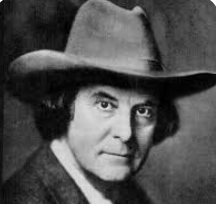
He picked up the lemons that Fate had sent him and started a lemonade-stand.
▼
Source
Selected Writings of Elbert Hubbard (1922) p. 237 | Often quoted as "When life gives you lemons, make lemonade" | Also: A genius is a man who takes the lemons that Fate hands him and starts a lemonade stand with them. (As quoted in [http://archive.org/det
3 months 4 weeks ago
If the individual were no longer compelled to prove himself on the market, as a free economic subject, the disappearance of this kind of freedom would be one of the greatest achievements of civilization. The technological processes of mechanization and standardization might release individual energy into a yet uncharted realm of freedom beyond necessity. The very structure of human existence would be altered; the individual would be liberated from the work world's imposing upon him alien needs and alien possibilities. The individual would be free to exert autonomy over a life that would be his own.
▼
Source
p. 2
3 months 4 weeks ago
Consider what effects that might conceivably have practical bearings you conceive the objects of your conception to have. Then, your conception of those effects is the whole of your conception of the object.
▼
Source
Vol. V, par. 438
3 months 4 weeks ago
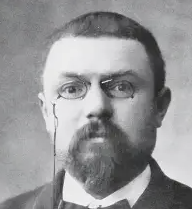
We have not a direct intuition of the equality of two intervals of time.
3 months 4 weeks ago
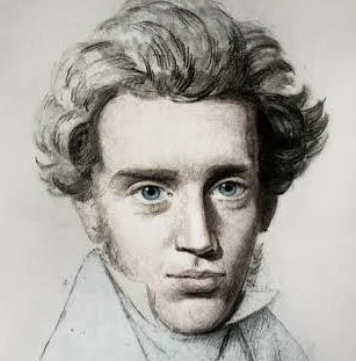
I have never worked as hard as now. I go for a brief walk in the morning. Then I come home and sit in my room without interruption until about three o'clock. My eyes can barely see. Then with my walking stick in hand I sneak off to the restaurant, but am so weak that I believe that if somebody were to call out my name, I would keel over and die. Then I go home and begin again. In my indolence during the past months I had pumped up a veritable shower bath, and now I have pulled the string and the ideas are cascading down upon me: healthy, happy, merry, gay, blessed children born with ease and yet all of them with the birthmark of my personality.
▼
Source
Letter from Berlin to Emil Boesen, May 25, 1843, Letter 82
3 months 4 weeks ago
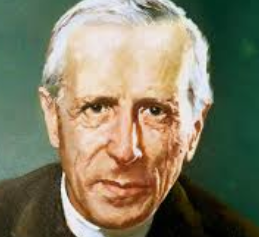
What paralyzes life is lack of faith and lack of audacity. The difficulty lies not in solving problems but expressing them. And so we cannot avoid this conclusion: it is biologically evident that to gain control of passion and so make it serve spirit must be a condition of progress. Sooner or later, then, the world will brush aside our incredulity and take this step : because whatever is the more true comes out into the open, and whatever is better is ultimately realized. The day will come when, after harnessing the ether, the winds, the tides, gravitation, we shall harness for God the energies of love. And, on that day, for the second time in the history of the world, man will have discovered fire.
▼
Source
"The Evolution of Chastity" (February 1934), as translated in Toward the Future (1975) edited by by René Hague, who also suggests "space" as an alternate translation of "the ether." | Variants: | "One day after mastering the winds, the waves, the tides an
3 months 4 weeks ago
One machine can do the work of fifty ordinary men. No machine can do the work of one extraordinary man.
▼
Source
p. 151
3 months 4 weeks ago
The avant-garde and the beatniks share in the function of entertaining without endangering the good conscience of the men of good will.
▼
Source
p. 70
3 months 4 weeks ago
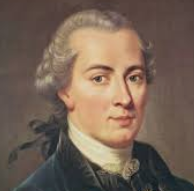
The death of dogma is the birth of morality.
▼
Source
As quoted in Faith Or Fact (1897) by Henry Moorehouse Taber, p. 86
3 months 4 weeks ago
In the external, patience is some third element that must be added, and, humanly speaking, it would be better if it were not needed; some days it is needed more, some days less, all according to fortune, whose debtor a person becomes, even though he gained ever so little, because only when he wants to gain patience does he become one's debtor.
▼
Source
' p. 168

3 months 4 weeks ago
In writing what he does not speak, what he would never say and, in truth, would probably never even think, the author of the written speech is already entrenched in the posture of the sophist; the man of non-presence and non-truth. Writing is thus already on the scene. The incompatibility between written and the true is clearly announced at the moment Socrates starts to recount the way in which men are carried out themselves by pleasure, become absent from themselves, forget themselves and die in the thrill of song.
▼
Source
Plato's Pharmacy, Pharmacia
3 months 4 weeks ago
However convergent it be, evolution cannot attain to fulfilment on earth except through a point of dissociation.With this we are introduced to a fantastic and inevitable event which now begins to take shape in our perspective, the event which comes nearer with every day that passes: the end of all life on our globe, the death of the planet, the ultimate phase of the phenomenon of man.
3 months 4 weeks ago
The ineffable joy of forgiving and being forgiven forms an ecstasy that might well arouse the envy of the gods.
3 months 4 weeks ago
Thought is led, by the situation of its objects, to measure their truth in terms of another logic, another universe of discourse. And this logic projects another mode of existence: the realization of the truth in the words and deeds of man. And inasmuch as this project involves man as societal animal,” the polis, the movement of thought has a political content. Thus, the Socratic discourse is political discourse inasmuch as it contradicts the established political institutions. The search for the correct definition, for the “concept” of virtue, justice, piety, and knowledge becomes a subversive undertaking, for the concept intends a new polis.
▼
Source
pp. 133-134
3 months 4 weeks ago
The third of this kind of principles is : matter neither originates nor perishes; all the changes in the world concern form only ; a postulate which on the recommendation of common sense has spread through all philosophical schools, not because it is to be taken as having been found so, or as having been demonstrated by arguments a priori, but because if we were to admit that matter itself is fleeting and transitory, nothing at all that is stable and lasting would be left any longer to serve for the explication of phenomena according to universal and perpetual laws, and hence nothing at all would be left for the exercise of the intellect.
3 months 4 weeks ago
To understand oneself in existence is the Christian principle, except that this self has received much richer and much more profound qualifications that are even more difficult to understand together with existing. The believer is a subjective thinker, and the difference, is only between the simple person and the simple wise person. Here again the oneself is not humanity in general, subjectivity in general, and other such things, whereas everything becomes easy inasmuch as the difficulty is removed and the whole matter is shifted over into the shadow play of abstraction.
▼
Source
Concluding Unscientific Postscript to Philosophical Fragments, Vol. I, Hong p. 353
3 months 4 weeks ago
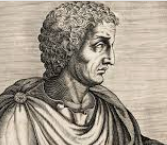
To laugh, if but for an instant only, has never been granted to man before the fortieth day from his birth, and then it is looked upon as a miracle of precocity.
▼
Source
Book VII, sec. 2.
3 months 4 weeks ago
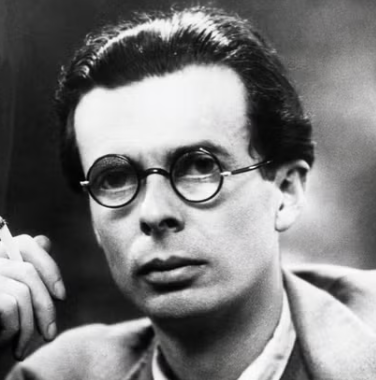
Stupidity or reason? Oh, there was no choice now. It was imbecility every time.
▼
Source
The Gioconda smile, in Mortal Coils (1921)
3 months 4 weeks ago
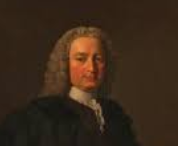
Kant in fact seems to have begun his reflections on moral theory as an adherent of Francis Hutcheson’s moral sense theory. Even after abandoning it, he persists in maintaining the importance of “moral feeling” and tries consistently to make a place for it within his moral psychology.
▼
Source
Allen W. Wood, Kantian Ethics (2008), Ch. 2. Moral Worth
3 months 4 weeks ago
Marcuse, Sartre, Colletti and Althusser were style-maestros of turgidity and never tried to rise to the flights of Marx and Engels in their inspired moments. Not one of them would choose a monosyllable if a longer word could be discovered or devised. Their Marxism, if not exactly pessimistic, was cramped and cautious. What is more, they were philosophers writing mainly for other philosophers. Only Marcuse became a genuine favourite of the thousands of students who rebelled in 1968 against ‘bourgeois society’ and university discipline, as well as the American war in Vietnam. He and his ideas were accorded a profile in Playboy magazine. (It is hard to imagine another Marxist theorist, except perhaps Marx himself, tolerating this without complaint.) Marcuse had grown popular because of the significance he attached to the students; it also did him no harm that he was willing to discuss the erotic as well as the socio-political.
▼
Source
Robert Service, Comrades: A History of World Communism (1968)
3 months 4 weeks ago
I maintain that in every special natural doctrine only so much science proper is to be met with as mathematics; for... science proper, especially of nature, requires a pure portion, lying at the foundation of the empirical, and based upon à priori knowledge of natural things. ...the conception should be constructed. But the cognition of the reason through construction of conceptions is mathematical. A pure philosophy of nature in general, namely, one that only investigates what constitutes a nature in general, may thus be possible without mathematics; but a pure doctrine of nature respecting determinate natural things (corporeal doctrine and mental doctrine), is only possible by means of mathematics; and as in every natural doctrine only so much science proper is to be met with therein as there is cognition à priori, a doctrine of nature can only contain so much science proper as there is in it of applied mathematics.
▼
Source
Preface, [https://books.google.com/books?id=OCJLAAAAMAAJ Tr.] Ernest Belfort Bax (1883)
3 months 4 weeks ago
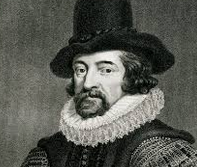
My mind is calm, for my fortune is not my felicity. I know I have clean hands and a clean heart, and I hope a clean house for friends or servants; but Job himself, or whoever was the justest judge, by such hunting for matters against him as hath been used against me, may for a time seem foul, especially in a time when greatness is the mark and accusation is the game.
▼
Source
Quoted by Thomas Fowler in "Francis Bacon 1561–1626 (1885)
3 months 4 weeks ago
He was extremely important to his contemporaries, who wanted nothing more than to see in him the Expected One; they wanted almost to press it upon him and and to force him into the role - but that he then refuses to be that!
▼
Source
p. 60
3 months 4 weeks ago
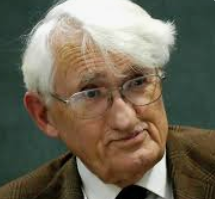
Critical systems thinkers like Gerald Midgley identify three waves of systems thinking over the last 50 years or so. Early systems theorists (e.g. Bertalanffy) described systems in physical terms, resorting to metaphors from electronic computation or biology. This 'hard systems' tradition still has its advocates and practitioners... Subsequently the limits of the physical metaphor... were reached, and the secondwave of systems thinking developed. This 'soft systems thinking' employed social metaphors to develop appropriate systems approaches for human systems. The move to a more phenomenological, interpretative understanding of human systems, where meaning is central and is negotiated intersubjectively, parallels the new paradigm / crisis of social psychology of the 1970s. The Third wave, or critical systems school, in which Midgley locates himself, has drawn on the critical theory of Habermas, particularly in relation to theories of knowledge and of communicative rationality, and on the work of Foucault and followers on the nature of power.
▼
Source
Mark Burton (2003) "[http://users.cooptel.net/mark.burton/ReviewMidg.pdf Review Systemic Intervention: Philosophy, Methodology, and Practice MIDGLEY, G. (2000)]" in: Journal of Community and Applied Psychology 2003 13 (4) 330-333
3 months 4 weeks ago
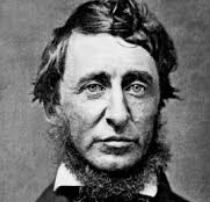
He believed that liberalism had saved the intellect at the cost of the repudiating the great historical phenomenon of religion.
▼
Source
"The Thought and Character of William James" (1935), Vol 2, ch. LXIX
3 months 4 weeks ago
Words are good servants but bad masters.
▼
Source
As quoted by Laura Huxley, in conversation with Alan Watts about her memoir This Timeless Moment (1968), in Pacifica Archives #BB2037 [sometime between 1968-1973])
3 months 4 weeks ago
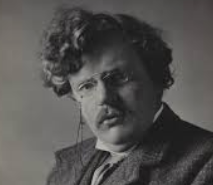
I object to a quarrel because it always interrupts an argument.
▼
Source
Magic: A Fantastic Comedy (1913)
3 months 4 weeks ago
Morality is not properly the doctrine of how we may make ourselves happy, but how we may make ourselves worthy of happiness.
3 months 4 weeks ago
This misplacing hath caused a deficience, or at least a great improficience in the sciences themselves. For the handling of final causes, mixed with the rest in physical inquiries, hath intercepted the severe and diligent inquiry of all real and physical causes, and given men the occasion to stay upon these satisfactory and specious causes, to the great arrest and prejudice of further discovery. For this I find done not only by Plato, who ever anchoreth upon that shore, but by Aristotle, Galen, and others which do usually likewise fall upon these flats of discoursing causes.
▼
Source
Book VII, 7
3 months 4 weeks ago
To the contemporary, Christ can only say: I will offer myself as a sacrifice for the sins of the world and for yours also. Is this easier to believe now than when he has done it, has offered himself? Or is the comfort greater because of his saying that he will do it than it is because of his having done it? There is no greater love than this, that someone lays down his life for another, but when is it easier to believe, and when is the comfort greater: when the loving one says he will do it – or when he has done it? P. 159
3 months 4 weeks ago
"Every national border in Europe," El Eswad added ironically, "marks the place where two gangs of bandits got too exhausted to kill each other anymore and signed a treaty. Patriotism is the delusion that one of these gangs of bandits is better than all the others."
▼
Source
The Earth Will Shake: The History of the Early Illuminati (The Historical Illuminatus Chronicles Vol. 1) (1982), p. 100
3 months 4 weeks ago
Ever since his mother's second marriage Spandrell had always perversely made the worst of things, chosen the worst course, deliberately encouraged his own worst tendencies. It was with debauchery that he distracted his endless leisures. He was taking his revenge on her... He was spiting her, spiting himself, spiting God. He hoped there was a hell for him to go to and regretted his inability to believe in its existence. ...it was even exciting in those early days to know that one was doing something bad and wrong. But there is in debauchery something so intrinsically dull, something so absolutely and hopelessly dismal, that it is only the rarest beings, gifted with much less than the usual amount of intelligence and much more than the usual intensity of appetite, who can go on actively enjoying a regular course of vice or continue actively to believe in its wickedness. Most habitual debauchees are debauchees not because they enjoy debauchery, but because they are uncomfortable when deprived of it. Habit converts luxurious enjoyments into dull and daily necessities.
▼
Source
Ch. 17
3 months 4 weeks ago
In our time the blasphemies are threadbare. Pessimism is now patently, as it always was essentially, more commonplace than piety. Profanity is now more than an affectation — it is a convention. The curse against God is Exercise I in the primer of minor poetry.
▼
Source
"Introduction"
3 months 4 weeks ago
Serious reflexion about one's own character will often induce a curious sense of emptiness; and if one knows another person well, one may sometimes intuit a similar void in him. (This is one of the strange privileges of friendship.)
▼
Source
Ch. 8, p. 119
CivilSimian.com created by AxiomaticPanic, CivilSimian, Kalokagathia