
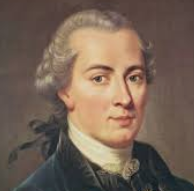
3 months 4 weeks ago
The woman wants to dominate, the man wants to be dominated.
▼
Source
Kant, Immanuel (1996), page 220
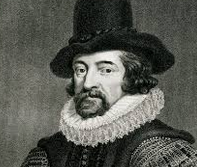
3 months 4 weeks ago
Those who have handled sciences have been either men of experiment or men of dogmas. The men of experiment are like the ant, they only collect and use; the reasoners resemble spiders, who make cobwebs out of their own substance. But the bee takes a middle course: it gathers its material from the flowers of the garden and of the field, but transforms and digests it by a power of its own. Not unlike this is the true business of philosophy; for it neither relies solely or chiefly on the powers of the mind, nor does it take the matter which it gathers from natural history and mechanical experiments and lay it up in the memory whole, as it finds it, but lays it up in the understanding altered and digested. Therefore from a closer and purer league between these two faculties, the experimental and the rational (such as has never yet been made), much may be hoped.
▼
Source
Aphorism 95
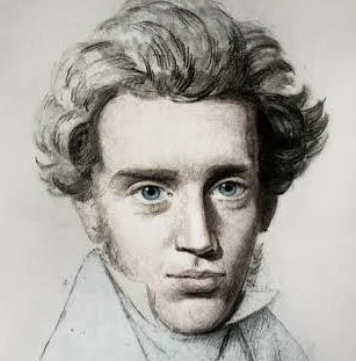
3 months 4 weeks ago
Is not “Christendom” the most colossal attempt at serving God, not by following Christ, as He required, and suffering for the doctrine, but instead of that, by “building the sepulchers of the prophets and garnishing the tombs of the righteous.”
▼
Source
p. 121
3 months 4 weeks ago
The individual act of obedience is the cornerstone not only of the strength of authoritarian society but also of its weakness.
3 months 4 weeks ago
Suso has even left a diagrammatic picture of the relations subsisting between Godhead, triune God and creatures. In this very curious and interesting drawing a chain of manifestation connects the mysterious symbol of the Divine Ground with the three Persons of the Trinity, and the Trinity in turn is connected in a descending scale with angels and human beings. These last, as the drawing vividly shows, may make one of two choices. They can either live the life of the outer man, the life of the separative selfhood; in which case they are lost (for, in the words of the Theologia Germanica, “nothing burns in hell but the self”). Or else they can identify themselves with the inner man, in which case it becomes possible for them, as Suso shows, to ascend again, through unitive knowledge, to the Trinity and even, beyond the Trinity, to the ultimate Unity of the Divine Ground.
3 months 4 weeks ago
Whatever the word "great" means, Dickens was what it means.
▼
Source
Ch 1: "The Dickens Period"
3 months 4 weeks ago
Immanuel Kant was the first hippie in history.
▼
Source
Ayn Rand, [http://arc-tv.com/apollo-and-dionysus/ Apollo and Dionysus], Ford Hall Forum (1969)
3 months 4 weeks ago
For behavior, men learn it, as they take diseases, one of another.
▼
Source
In an essay by Ralph Waldo Emerson, "Solitude and Society" in The Atlantic Monthly, Vol. 1, (December 1857), p. 228, this follows a statement clearly attributed to Bacon, which might be a paraphrase. Without explicit citation, this is added to the parapgr
3 months 4 weeks ago
The wisest among us is very lucky never to have met the woman, be she beautiful or ugly, intelligent or stupid, who could drive him crazy enough to be fit to be put into an asylum.
▼
Source
Ceci n’est pas un conte [This Is No Tale] (1796),
3 months 4 weeks ago
Philosophy is to be replaced by the logic of science -- that is to say, by the logical analysis of the concepts and sentences of the sciences, for the logic of science is nothing other than the logical syntax of the language of science.
▼
Source
Foreword
3 months 4 weeks ago
Reflecting on my experience, I find myself agreeing with the eminent Cambridge philosopher, Dr. C. D. Broad, “that we should do well to consider much more seriously than we have hitherto been inclined to do the type of theory which Bergson put forward in connection with memory and sense perception. The suggestion is that the function of the brain and nervous system and sense organs is in the main eliminative and not productive. Each person is at each moment capable of remembering all that has ever happened to him and of perceiving everything that is happening everywhere in the universe. The function of the brain and nervous system is to protect us from being overwhelmed and confused by this mass of largely useless and irrelevant knowledge, by shutting out most of what we should otherwise perceive or remember at any moment, and leaving only that very small and special selection which is likely to be practically useful.” According to such a theory, each one of us is potentially Mind at Large. But in so far as we are animals, our business is at all costs to survive. To make biological survival possible, Mind at Large has to be funneled through the reducing valve of the brain and nervous system. What comes out at the other end is a measly trickle of the kind of consciousness which will help us to stay alive on the surface of this particular planet. To formulate and express the contents of this reduced awareness, man has invented and endlessly elaborated those symbol-systems and implicit philosophies which we call languages. Every individual is at once the beneficiary and the victim of the linguistic tradition into which he has been born—the beneficiary inasmuch as language gives access to the accumulated records of other people's experience, the victim in so far as it confirms him in the belief that reduced awareness is the only awareness and as it bedevils his sense of reality, so that he is all too apt to take his concepts for data, his words for actual things. That which, in the language of religion, is called “this world” is the universe of reduced awareness, expressed, and, as it were, petrified by language. The various “other worlds,” with which human beings erratically make contact are so many elements in the totality of the awareness belonging to Mind at Large. Most people, most of the time, know only what comes through the reducing valve and is consecrated as genuinely real by the local language. Certain persons, however, seem to be born with a kind of by-pass that circumvents the reducing valve. In others temporary by-passes may be acquired either spontaneously, or as the result of deliberate “spiritual exercises,” or through hypnosis, or by means of drugs. Through these permanent or temporary by-passes there flows, not indeed the perception “of everything that is happening everywhere in the universe” (for the by-pass does not abolish the reducing valve, which still excludes the total content of Mind at Large), but something more than, and above all something different from, the carefully selected utilitarian material which our narrowed, individual minds regard as a complete, or at least sufficient, picture of reality.
▼
Source
describing his experiment with mescaline, p. 22-24
3 months 4 weeks ago
We all know that constancy, jealousy, and the personal pledge are natural and inevitable in sex; we do not feel any surprise when we see them either in a murder or in a valentine.
▼
Source
[https://en.wikisource.org/wiki/Page:George_Bernard_Shaw_(IA_cu31924013547645).pdf/187 "The Philosopher" pg. 181]
3 months 4 weeks ago
If exclusive privileges were not granted, and if the financial system would not tend to concentrate wealth, there would be few great fortunes and no quick wealth. When the means of growing rich is divided between a greater number of citizens, wealth will also be more evenly distributed; extreme poverty and extreme wealth would be also rare.
▼
Source
Article on Wealth

3 months 4 weeks ago
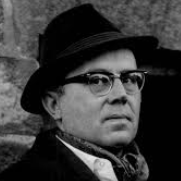
Navigation brought man face to face with the uncertainty of destiny, where each is left to himself and every departure might always be the last. The madman on his crazy boat sets sail for the other world, and it is from the other world that he comes when he disembarks. This enforced navigation is both rigorous division and absolute Passage, serving to underline in real and imaginary terms the liminal situation of the mad in medieval society. It was a highly symbolic role, made clear by the mental geography involved, where the madman was confined at the gates of the cities. His exclusion was his confinement, and if he had no prison other than the threshold itself he was still detained at this place of passage. In a highly symbolic position he is placed on the inside of the outside, or vice versa. A posture that is still his today, if we admit that what was once the visible fortress of social order is now the castle of our own consciousness.
▼
Source
Part One: 1. Stultifera Navis
3 months 4 weeks ago
Conservatives have no intention of compromising with socialists, but even such an alliance, ridiculous though it would be, is more conceivable than the coalition of conservatives and libertarians.
3 months 4 weeks ago
An unexciting truth may be eclipsed by a thrilling falsehood.
▼
Source
Chapter 11 (p. 104)
3 months 4 weeks ago
In the city set upon slime and loam,They cry in their Parliament, "Who goes home?"And there comes no answer in arch or dome,For none in the city of graves goes home.Yet these shall perish and understand,For God has pity on this great land.
▼
Source
Ch. XXI: "The Road to Roundabout"
3 months 4 weeks ago
How did they meet? By chance, like everybody … Where did they come from? From the nearest place. Where were they going? Do we know where we are going?
▼
Source
Prologue
3 months 4 weeks ago
If torture was so strongly embedded in legal practice, it was because it revealed truth and showed the operation of power. It assured the articulation of the written on the oral, the secret on the public, the procedure of investigation on the operation of the confession; it made it possible to reproduce the crime on the visible body of the criminal.
▼
Source
Chapter One, pp.55

3 months 4 weeks ago
No woman should be authorized to stay at home to raise her children. Society should be totally different. Women should not have that choice, precisely because if there is such a choice, too many women will make that one. It is a way of forcing women in a certain direction.
▼
Source
“A Dialogue with Simone de Beauvoir,” in Betty Friedan, It Changed My Life: Writings on the Women’s Movement, (New York: Random House, 1976), [https://books.google.com/books?id=iv4-Qy82BJ0C&pg=PA397&lpg=PA397 p. 397].
3 months 4 weeks ago
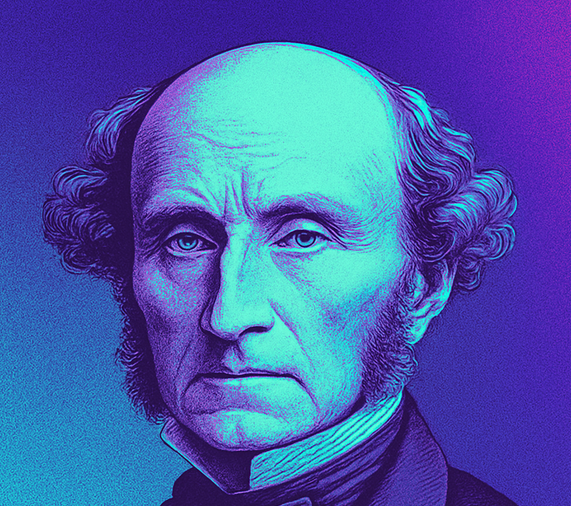
To have seen you and your unforgotten face, Brave as a blast of trumpets for the fray, Pure as white lilies in a watery space, It were something, though you went from me today. To have known the things that from the weak are furled, Perilous ancient passions, strange and high; It is something to be wiser than the world, It is something to be older than the sky.
▼
Source
The Great Minimum
3 months 4 weeks ago
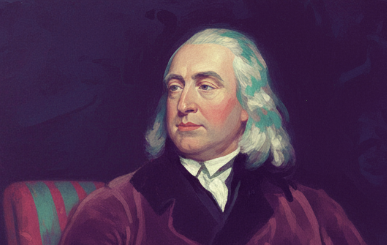
If all mankind minus one, were of one opinion, and only one person were of the contrary opinion, mankind would be no more justified in silencing that one person, than he, if he had the power, would be justified in silencing mankind.
▼
Source
Ch. II: Of the Liberty of Thought and Discussion
3 months 4 weeks ago
Pleasure is in itself a good; nay, even setting aside immunity from pain, the only good: pain is in itself an evil; and, indeed, without exception, the only evil; or else the words good and evil have no meaning. And this is alike true of every sort of pain, and of every sort of pleasure.
▼
Source
Ch. 10: Of Motives
3 months 4 weeks ago
The appearance in nineteenth-century psychiatry, jurisprudence, and literature of a whole series of discourses on the species and subspecies of homosexuality, inversion, pederasty, and "psychic hermaphroditism" made possible a strong advance of social controls into this area of "perversity"; but it also made possible the formation of a "reverse" discourse: homosexuality began to speak in its own behalf, to demand that its legitimacy or "naturality" be acknowledged, often in the same vocabulary, using the same categories by which it was medically disqualified.
▼
Source
Vol. I, p. 101
3 months 4 weeks ago
One is not born a genius, one becomes a genius; and the feminine situation has up to the present rendered this becoming practically impossible.
▼
Source
Bk. I, Pt. 2, Ch. 8: Since the French Revolution: the Job and the Vote, p. 133
3 months 4 weeks ago
Those dry Deists and hard-headed Utilitarians who stalked the streets of Edinburgh and Glasgow in the eighteenth and early nineteenth centuries were very obviously the products of the national religious spirit. The Scottish atheists were unmistakable children of the Kirk. And though they often seemed absurdly detached and dehumanised, the world is now rather suffering for want of such dull lucidity.
▼
Source
Ch. V: "The Scottish Stories"
3 months 4 weeks ago
May it not be the fact that mankind, who after all are made up of single human beings, obtain a greater sum of happiness when each pursues his own, under the rules and conditions required by the good of the rest, than when each makes the good of the rest his only object, and allows himself no personal pleasures not indispensable to the preservation of his faculties? The regimen of a blockaded town should be cheerfully submitted to when high purposes require it, but is it the ideal perfection of human existence?
▼
Source
Auguste Comte and Positivism, p. 142
3 months 4 weeks ago
Ion is... a parrhesiastes, i.e., the sort... so valuable to democracy or monarchy since he is courageous enough to explain either to the demos or to the king just what the short-comings of their life really are.

3 months 4 weeks ago
Each of these private teachers who work for pay ... inculcates nothing else than these opinions of the multitude which they opine when they are assembled and calls this knowledge wisdom.
▼
Source
Plato, Republic, 493a
3 months 4 weeks ago
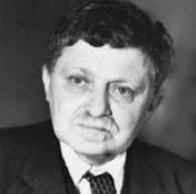
And yet it is clear that the normal development of a human being implies an increasingly precise and, as it were, automatic division between what concerns him and what does not, between things for which he is responsible and those for which he is not. Each one of us becomes the centre of a sort of mental space arranged in concentric zones of decreasing interest and participat ion. It is as though each one of us secreted a kind of shell which gradually hardened and imprisoned him; and this sclerosis is bound up with the hardening of the categories in accordance with which we conceive and evaluate the world.
3 months 4 weeks ago
I consequently remained long, and in a less degree have always remained, inexpert in anything requiring manual dexterity; my mind as well as my hands, did its work very lamely when it was applied, or ought to have been applied, to the practical details which, as they are the chief interest of life to the majority of men, are also the things in which whatever mental capacity they have, chiefly shows itself: I was constantly meriting reproof by inattention, inobservance, and general slackness of mind in matters of daily life. My father was the extreme opposite in these particulars: his senses and mental faculties were always on the alert; he carried decision and energy of character in his whole manner and into every action of life: and this, as much as his talents, contributed to the strong impression which he always made upon those with whom he came into personal contact. But the children of energetic parents, frequently grow up unenergetic, because they lean on their parents, and the parents are energetic for them.
▼
Source
([https://archive.org/details/autobiography01mill/page/36/mode/1up pp. 36–37])
3 months 4 weeks ago
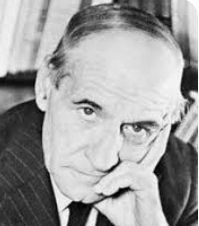
The mass-man would never have accepted authority external to himself had not his surroundings violently forced him to do so. As to-day, his surroundings do not so force him, the everlasting mass-man, true to his character, ceases to appeal to other authority and feels himself lord of his own existence. On the contrary the select man, the excellent man is urged, by interior necessity, to appeal from himself to some standard beyond himself, superior to himself, whose service he freely accepts.… Contrary to what is usually thought, it is the man of excellence, and not the common man who lives in essential servitude. Life has no savour for him unless he makes it consist in service to something transcendental. Hence he does not look upon the necessity of serving as an oppression. When, by chance, such necessity is lacking, he grows restless and invents some new standard, more difficult, more exigent, with which to coerce himself. This is life lived as a discipline — the noble life.
▼
Source
Chap. VII: Noble Life And Common Life, Or Effort And Inertia
3 months 4 weeks ago
They who have a care of their souls, and do not merely live in the fashions of the body, say farewell to all this; they will not walk in the ways of the blind: and when philosophy offers them purification and release from evil, they feel that they ought not resist her influence, and to her they incline, and whither she leads they follow her.

3 months 4 weeks ago
Only what is fated to die is capable of living. Only what dies lives. Why do you think Christ was killed? They killed him to prove that he wasn’t a god. But in killing him, they immortalized the perishable and transformed man into a god.
3 months 4 weeks ago
In vain I sought relief from my favourite books; those memorials of past nobleness and greatness from which I had always hitherto drawn strength and animation. I read them now without feeling, or with the accustomed feeling minus all its charm; and I became persuaded, that my love of mankind, and of excellence for its own sake, had worn itself out. I sought no comfort by speaking to others of what I felt. If I had loved any one sufficiently to make confiding my griefs a necessity, I should not have been in the condition.
▼
Source
([https://archive.org/details/autobiography01mill/page/134/mode/1up pp. 134-135])
3 months 4 weeks ago
What, by a word lacking even in grammar, is called amorality, is a thing that does not exist. If you are unwilling to submit to any norm, you have, nolens volens, to submit to the norm of denying all morality, and this is not amoral, but immoral. It is a negative morality which preserves the empty form of the other.
▼
Source
Chapter XV: We Arrive At The Real Question
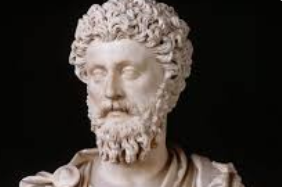
3 months 4 weeks ago
Of Fronto, to how much envy and fraud and hypocrisy the state of a tyrannous king is subject unto, and how they who are commonly called [Eupatridas Gk.], i.e. nobly born, are in some sort incapable, or void of natural affection.
▼
Source
I, 8
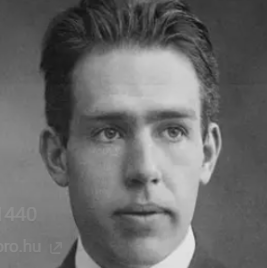
3 months 4 weeks ago
We are all agreed that your theory is crazy. The question that divides us is whether it is crazy enough to have a chance of being correct.
▼
Source
Said to Wolfgang Pauli after his presentation of Heisenberg's and Pauli's nonlinear field theory of elementary particles, at Columbia University (1958), as reported by F. J. Dyson in his paper "Innovation in Physics" (Scientific American, 199, No. 3, Sept
3 months 4 weeks ago
I do not mean to affirm that the description which I have given of the soul and her missions is exactly true—a man of sense ought hardly say that. But I do say that, inasmuch as the soul is shown to be immortal, he may venture to think, not improperly or unworthily, that something of this kind is true.

3 months 4 weeks ago
Modern totalitarianism can be defined as the establishment, by means of the state of exception, of a legal civil war that allows for the physical elimination not only of political adversaries but of entire categories of citizens who for some reason cannot be integrated into the political system.
▼
Source
Chapter One, p. 2.
3 months 4 weeks ago
These considerations did not make us overlook the folly of premature attempts to dispense with the inducements of private interest in social affairs, while no substitute for them has been or can be provided: but we regarded all existing institutions and social arrangements as being (in a phrase I once heard from Austin) "merely provisional," and we welcomed with the greatest pleasure and interest all socialistic experiments by select individuals (such as the Co-operative Societies), which, whether they succeeded or failed, could not but operate as a most useful education of those who took part in them, by cultivating their capacity of acting upon motives pointing directly to the general good, or making them aware of the defects which render them and others incapable of doing so.
▼
Source
([https://archive.org/details/autobiography01mill/page/233/mode/1up pp. 233-234])
3 months 4 weeks ago
Remember that man lives only in the present, in this fleeting instant; all the rest of his life is either past and gone, or not yet revealed. Short, therefore, is man's life, and narrow is the corner of the earth wherein he dwells.
▼
Source
III, 10

3 months 4 weeks ago
If evolution is a struggle for survival, why hasn't it ruthlessly eliminated altruists, who seem to increase another's prospects of survival at the cost of their own?
▼
Source
Chapter 1, The Origins Of Altruism, p. 5
3 months 4 weeks ago
The really important thing is not to live, but to live well. And to live well meant, along with more enjoyable things in life, to live according to your principles.
▼
Source
Presented as a full Socrates quote by various sources like [https://www.goodreads.com/quotes/106034-the-really-important-thing-is-not-to-live-but-to this page], the first sentence of the quote is indeed attributed to Socrates in Plato's dialogue The Apolo

3 months 4 weeks ago
There is a great affinity in me with the Hindu genius - that mind, vast, imaginative, loving, dreamy and speculative, but destitute of ambition, personality and will. Pantheistic disinterestedness, the effacement of the self in the great whole, womanish gentleness, a horror of slaughter, antipathy to action - these are all present in my nature, in the nature at least which has been developed by years and circumstances. Still the West has also its part in me. What I have found difficult to keep up a prejudice in favor of my form, nationality or individuality whatever. Hence my indifference to my own person, my own usefulness, interest or opinions of the moment. What does it all matter? It is not perhaps not a bad thing,' he says, 'that in the midst of the devouring activities of the Western world there should be a few Brahmanical souls.
▼
Source
Amiel, Henri-Frederic Amiel's journal: The Journal Intime of Henri-Frederic Amiel, p. 159 161,224. and 269. Quoted in Londhe, S. (2008). A tribute to Hinduism: Thoughts and wisdom spanning continents and time about India and her culture. New Delhi: Pragun
3 months 4 weeks ago
In his collective influence he made innumerable pulses of knowledge and thought vibrate in his generation. Respect for him became an element of men's own self-respect. How of wit or humour, you ask? He was perfectly patient of a playful sally levelled at bad reasoning, or perverse feeling, or questionable act; but for himself, we were content with his swift detection of a sophism or trenchant exposure of a fallacy, performed with a neatness, finish, and celerity that was a very passable substitute for wit.
▼
Source
pp. 53-54
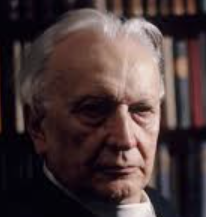
3 months 4 weeks ago
At the parting of ways in the life-order, where the question is between the new creation or decay, that man will be decisive for new creation who is able on his own initiative to seize the helm and steer a course of his own choosing — even if that course be opposed to the will of the masses. Should the emergence of such persons become impossible a lamentable shipwreck will be inevitable.
3 months 4 weeks ago
All that is harmony for you, my Universe, is in harmony with me as well. Nothing that comes at the right time for you is too early or too late for me. Everything is fruit to me that your seasons bring, Nature. All things come of you, have their being in you, and return to you.
▼
Source
Πᾶν μοι συναρμόζει ὃ σοὶ εὐάρμοστόν ἐστιν, ὦ κόσμε· οὐδέν μοι πρόωρον οὐδὲ ὄψιμον ὃ σοὶ εὔκαιρον. πᾶν μοι καρπὸς ὃ φέρουσιν αἱ σαὶ ὧραι, ὦ φύσις· ἐκ σοῦ πάντα, ἐν σοὶ πάντα, εἰς σὲ πάντα. ἐκεῖνος μέν φησιν· | IV, 23

3 months 4 weeks ago
Let nothing disturb thee; Let nothing dismay thee: All things pass; God never changes. Patience attains All that it strives for. He who has God Finds he lacks nothing: God alone suffices.
▼
Source
"Poem IX", in Complete Works St. Teresa of Avila (1963) edited by E. Allison Peers, Vol. 3, p. 288
3 months 4 weeks ago
The spirit of sarcasm lives and thrives in the midst of universal wreck; its balls are enchanted and itself invulnerable, and it braves retaliations and reprisals because itself is a mere flash, a bodiless and magical nothing.
▼
Source
16 February 1868
CivilSimian.com created by AxiomaticPanic, CivilSimian, Kalokagathia