
3 months 4 weeks ago
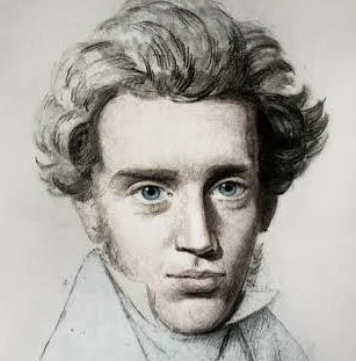
Concepts, like individuals, have their histories, and are just as incapable of withstanding the ravages of time as are individuals.
3 months 4 weeks ago
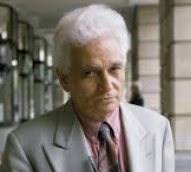
I am one of those marranes who no longer say they are Jews even in the secret of their own hearts.
▼
Source
"Circumfession." In Jacques Derrida, eds. G. Bennington & J. Derrida, trans. G. Bennington. Chicago: University of Chicago Press, 1993, p. 170
3 months 4 weeks ago
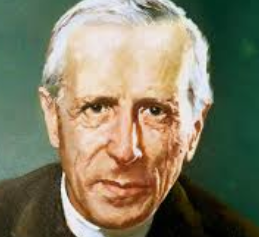
To the cosmic corpuscles we should find it natural to attribute an individual radius of action as limited as their dimensions. We find, on the contrary, that each of them can only be defined by virtue of its influence on all around it. Whatever space we suppose it to be in, each cosmic element radiates in it and entirely fills it. However narrowly the heart of an atom may be circumscribed, its realm is co-extensive, at least potentially, with that of every other atom. This strange property we will come across again, even in the human molecule.
3 months 4 weeks ago
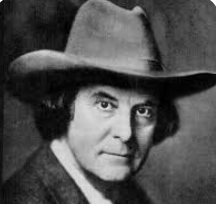
Men who marry for gratification, propagation or the matter of buttons or socks, must expect to cope with and deal in a certain amount of quibble, subterfuge, concealments, and double, deep-dyed prevarication.
▼
Source
p. 159

3 months 4 weeks ago
It is the sphere farthest removed from the concreteness of society which may show most clearly the extent of the conquest of thought by society.
▼
Source
p. 104
3 months 4 weeks ago
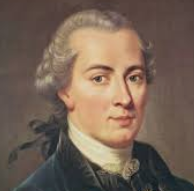
The question of the principle of the form of the intelligible world turns, therefore, upon making apparent in what manner it is possible for several substances to be in mutual commerce, and for this reason to pertain to the same whole, which is called world. We do not here consider the world, let it be understood, as to matter, that is, as to the nature of the substances of which it consists, whether they be material or immaterial, but as to form, that is to say, how among several things taken separately a connection, and among them all, totality can have place.
3 months 4 weeks ago
When it is stated in Genesis that God said to Adam, “Only from the tree of the knowledge of good and evil you must not eat,” it follows as a matter of course that Adam really has not understood this word, for how could he understand the difference between good and evil when this distinction would follow as a consequence of the enjoyment of the fruit. When it is assumed that the prohibition awakens the desire one acquires knowledge instead of ignorance, and in that case Adam must have had knowledge of freedom, because the desire was to use it. The explanation is therefore subsequent. The prohibition induces in him anxiety, for the prohibition awakens in him freedom’s possibility. What passed by innocence as the nothing of anxiety has now entered into Adam, and here again it is a nothing-the anxious possibility of being able. He has no conception of what he is able to do; otherwise-and this it what usually happens-that which comes later, the difference between good and evil, would have to be presupposed. Only the possibility of being able is present as a higher form of ignorance, as a higher expression of anxiety, because in a higher sense it both is and is not, because in a higher sense he both loves it and flees from it.
▼
Source
p. 44-45
3 months 4 weeks ago
There is no Animal in the general singular, separated from man by a single, indivisible limit. We have to envisage the existence of “living creatures,” whose plurality cannot be assembled within the single figure of an animality that is simply opposed to humanity. … The confusion of all nonhuman living creatures within the general and common category of the animal is not simply a sin against rigorous thinking, vigilance, lucidity, or empirical authority, it is also a crime. Not a crime against animality, precisely, but a crime of the first order against the animals, against animals.
3 months 4 weeks ago
In his own poetic style, the French Jesuit Teilhard de Chardin liked to meditate on the Eucharist as the firstfruits of the new creation. In an essay called The Monstrance he describes how, kneeling in prayer, he had a sensation that the Host was beginning to grow until at last, through its mysterious expansion, "the whole world had become incandescent, had itself become like a single giant Host." Although it would probably be incorrect to imagine that the universe will eventually be transubstantiated, Teilhard correctly identified the connection between the Eucharist and the final glorification of the cosmos.
▼
Source
Cardinal Avery Dulles, in "A Eucharistic Church : The Vision of John Paul II" (10 November 2004)
3 months 4 weeks ago
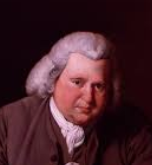
Would it be too bold to imagine that, in the great length of time since the earth began to exist, perhaps millions of ages before the commencement of the history of mankind would it be too bold to imagine that all warm-blooded animals have arisen from one living filament, which the great First Cause endued with animality, with the power of acquiring new parts, attended with new propensities, directed by irritations, sensations, volitions and associations, and thus possessing the faculty of continuing to improve by its own inherent activity, and of delivering down these improvements by generation to its posterity, world without end!
▼
Source
Zoönomia, vol. 1 (1794).
3 months 4 weeks ago
No, you cannot expect people to understand the higher reaches of philosophy. Culture should be taken out of the hands of the dollar chasers. We need a national subsidy for literature. It is disgraceful that artists are treated like peddlers and that art works have to be sold like soap.
3 months 4 weeks ago
The problem of establishing a perfect civic constitution is dependent upon the problem of a lawful external relation among states and cannot be solved without a solution of the latter problem.
▼
Source
Seventh Thesis
3 months 4 weeks ago
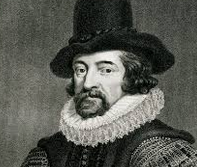
It is not the pleasure of curiosity, nor the quiet of resolution, nor the raising of the spirit, nor victory of wit, nor faculty of speech (…) that are the true ends of knowledge (…), but it is a restitution and reinvesting, in great part, of man to the sovereignty and power, for whensoever he shall be able to call the creatures by their true names, he shall again command them.
▼
Source
Valerius Terminus: Of the Interpretation of Nature (ca. 1603), in Works, Vol. I, p. 83; The Works of Francis Bacon (1819), Vol. 2, [https://books.google.com/books?id=xgE9AAAAYAAJ&pg=PA133 p. 133]
3 months 4 weeks ago
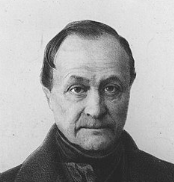
Thus the social position of women is in this respect very similar to that of philosophers and of the working classes. And we now see why these three elements should be united. It is their combined action which constitutes the moral or modifying force of society.
▼
Source
p. 235
3 months 4 weeks ago
It was a purely Christian satisfaction to me that if ordinarily there was no one else there was one who in action tried a little to do the doctrine about loving the neighbor – alas, one who precisely by his act also received a frightful into what an illusion Christendom is and indeed, particularly later, also into how the common people let themselves be seduced by wretched journalists, whose striving and fighting for equality can only lead, if it leads to anything, since it is in the service of the lie, to making the elite, in self-defense, proud of their aloofness from the common man, and the common man brazen in his rudeness.
▼
Source
P. 60 Hong
3 months 4 weeks ago
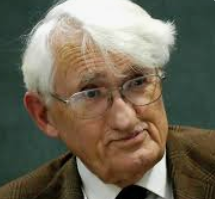
Although objectively greater demands are placed on this authority, it operates less as a public opinion giving a rational foundation to the exercise of political and social authority, the more it is generated for the purpose of an abstract vote that amounts to no more than an act of acclamation within a public sphere temporarily manufactured for show or manipulation.
▼
Source
p. 222
3 months 4 weeks ago
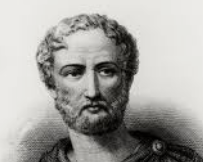
Modestus said of Regulus that he was "the biggest rascal that walks upon two legs."
▼
Source
Letter 5, 14.
3 months 4 weeks ago
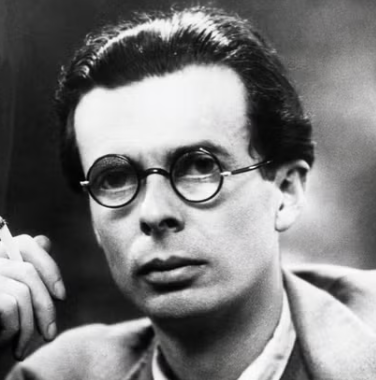
Happiness is not achieved by the conscious pursuit of happiness; it is generally the by-product of other activities.
▼
Source
Essay "Religion and Time" in Vedanta for the Western World (1945) edited by Christopher Isherwood
3 months 4 weeks ago
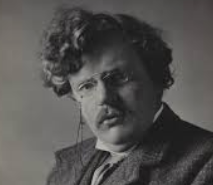
I think that if they gave me leave, Within the world to stand, I would be good through all the day I spent in fairyland. They should not hear a word from me, Of selfishness or scorn, If only I could find the door, If only I were born.
▼
Source
"By the Babe Unborn", sts. 5 and 6. The Wild Knight, &c., 2nd ed. (1906)
3 months 4 weeks ago
It is therefore correct to say that the senses do not err — not because they always judge rightly, but because they do not judge at all.
▼
Source
A 293, B 350
3 months 4 weeks ago
Cleanness of body was ever deemed to proceed from a due reverence to God.
▼
Source
Book II
3 months 4 weeks ago
The truth is always in the minority, and the minority is always stronger than the majority, because as a rule the minority is made up of those who actually have an opinion, while the strength of the majority is illusory, formed of that crowd which has no opinion — and which therefore the next moment (when it becomes clear that the minority is the stronger) adopts the latter's opinion, which now is in the majority, i.e. becomes rubbish by having the whole retinue and numerousness on its side, while the truth is again in a new minority.
▼
Source
1850

3 months 4 weeks ago
Understanding, however--and sometimes a very considerable depth of it--results from seeing the obstinate difficulties in views which often seem, on other grounds, quite obviously true...Let the reader be warned accordingly, that whenever he hears a philosopher proclaim any metaphysical opinion with great confidence, or hears him asset that something in metaphysics is obvious, or that some metaphysical problem turns only on confusions of concepts or upon the meanings of words, then he can be quite sure that this man is still infinitely far from philosophical understanding. His views appear to him devoid of difficulties only because he stoutly refuses to see difficulties.
▼
Source
Metaphysics, [https://babel.hathitrust.org/cgi/pt?id=uc1.b4410806&seq=22 Introduction, p. 2]
3 months 4 weeks ago
It is because we are predominantly purposeful beings that we are perpetually correcting our immediate sensations. But men are free not to be utilitarianly purposeful. They can sometime be artists, for example. In which case they may like to accept the immediate sensation uncorrected, because it happens to be beautiful.
▼
Source
“One and Many,” p. 11
3 months 4 weeks ago
For the secular society of to-day is sceptical not merely about spiritual assumptions, but about its own secular assumptions. It has not merely broken the church window or besieged the tower of tradition; it has also kicked away the ladder of progress by which it had climbed. The Declaration of Independence, once the charter of democracy, begins by saying that certain things are self-evident. If we were to trace the history of the American mind from Thomas Jefferson to William James, we should find that fewer and fewer things were self-evident, until at last hardly anything is self-evident. So far from it being self-evident to the modern that men are created equal, it is not self-evident that men are created, or even that men are men. They are sometimes supposed to be monkeys muddling through a transition stage before the Superman. But there is not only doubt about mystical things; not even only about moral things. There is most doubt of all about rational things. I do not mean that I feel these doubts, either rational or mystical; but I mean that a sufficient number of modern people feel them to make unanimity an absurd assumption. Reason was self-evident before Pragmatism. Mathematics were self-evident before Einstein. But this scepticism is throwing thousands into a condition of doubt, not about occult but about obvious things. We shall soon be in a world in which a man may be howled down for saying that two and two make four, in which furious party cries will be raised against anybody who says that cows have horns, in which people will persecute the heresy of calling a triangle a three-sided figure, and hang a man for maddening a mob with the news that grass is green.
▼
Source
In The Illustrated London News (14 August 1926)
3 months 4 weeks ago
To eat, teeth must meet.
▼
Source
The Sacred and Profane Love Machine (1974), p. 66.
3 months 4 weeks ago
Collectively, the more civilized men are, the more they are actors. They assume the appearance of attachment, of esteem for others, of modesty, and of disinterestedness, without ever deceiving anyone, because everyone understands that nothing sincere is meant. Persons are familiar with this, and it is even a good thing that this is so in this world, for when men play these roles, virtues are gradually established, whose appearance had up until now only been affected. These virtues ultimately will become part of the actor's disposition. To deceive the deceiver in ourselves, or the tendency to deceive, is a fresh return to obedience[.]
▼
Source
Kant, Immanuel (1996), page 37
3 months 4 weeks ago
There are also Idols formed by the intercourse and association of men with each other, which I call Idols of the Market Place, on account of the commerce and consort of men there. For it is by discourse that men associate, and words are imposed according to the apprehension of the vulgar. And therefore the ill and unfit choice of words wonderfully obstructs the understanding. Nor do the definitions or explanations wherewith in some things learned men are wont to guard and defend themselves, by any means set the matter right. But words plainly force and overrule the understanding, and throw all into confusion, and lead men away into numberless empty controversies and idle fancies.
▼
Source
Aphorism 43
3 months 4 weeks ago
His life from the very beginning is a story of temptation; it is not only one particular period in his life, the forty days, that is the story of temptation – no his whole life is a story of temptation (just as it is also of suffering). Every moment of his life he is tempted – that is, he has this possibility in his power, to take his calling, his task, in vain.
▼
Source
Soren Kierkegaard, For Self-Examination, Hong p. 58-59
3 months 4 weeks ago
Conspiracy is just another name for coalition.
▼
Source
The Historical Illuminatus as spoken by Luigi Duccio
3 months 4 weeks ago
Wherever we turn we find that the real obstacles to peace are human will and feeling, human convictions, prejudices, opinions. If we want to get rid of war we must get rid first of all of its psychological causes. Only when this has been done will the rulers of the nations even desire to get rid of the economic and political causes.
▼
Source
Ch. 9, p. 138 [2012 reprint]
3 months 4 weeks ago
The humorous look of children is perhaps the most endearing of all the bonds that hold the Cosmos together. Their top-heavy dignity is more touching than any humility; their solemnity gives us more hope for all things than a thousand carnivals of optimism; their large and lustrous eyes seem to hold all the stars in their astonishment; their fascinating absence of nose seems to give to us the most perfect hint of the humour that awaits us in the kingdom of heaven.
▼
Source
"A Defence of Baby-Worship"
3 months 4 weeks ago
Experience without theory is blind, but theory without experience is mere intellectual play.
▼
Source
This is declared to be "an old Kantian maxim" in General Systems Vol. 7-8 (1962), p. 11, by the Society for the Advancement of General Systems Theory, but may simply be a paraphrase or summation of Kantian ideas. | Kant's treatment of the transcendental
3 months 4 weeks ago
Cato said the best way to keep good acts in memory was to refresh them with new.
▼
Source
No. 247
3 months 4 weeks ago
In this context, Hans Asperger and other medics began dividing autistics up into those deemed to have potential worth to the Third Reich given their purportedly strong logical capacities, and those who were to be sterilized or killed along with countless other mad and disabled targets.
▼
Source
p. 62
3 months 4 weeks ago
To see ourselves as others see us is a most salutary gift. Hardly less important is the capacity to see others as they see themselves.
3 months 4 weeks ago
A man looking at a hippopotamus may sometimes be tempted to regard a hippopotamus as an enormous mistake; but he is also bound to confess that a fortunate inferiority prevents him personally from making such mistakes.
▼
Source
Ch. 10 "The Great Dickens Characters"
3 months 4 weeks ago
The God of the Christians is a father who makes much of his apples, and very little of his children.
▼
Source
No. 16

3 months 4 weeks ago
One can say that the author is an ideological product, since we represent him as the opposite of his historically real function. (When a historically given function is represented in a figure that inverts it, one has an ideological production.) The author is therefore the ideological figure by which one marks the manner in which we fear the proliferation of meaning.
▼
Source
"What is an author?" (1984)
3 months 4 weeks ago
Even the wisest of mankind cannot live by reason alone; pure arrogant reason, denying the claims of prejudice (which commonly are also the claims of conscience), leads to a wasteland of withered hopes and crying loneliness, empty of God and man: the wilderness in which Satan tempted Christ was not more dreadful than the arid expanse of intellectual vanity deprived of tradition and intuition, where modern man is tempted by his own pride.
3 months 4 weeks ago
In the course of evolution nature has gone to endless trouble to see that every individual is unlike every other individual.... Physically and mentally, each one of us is unique. Any culture which, in the interests of efficiency or in the name of some political or religious dogma, seeks to standardize the human individual, commits an outrage against man's biological nature.
▼
Source
Chapter 3 (p. 21)
3 months 4 weeks ago
The academic mind reflects infinity, and is full of light by the simple process of being shallow and standing still.
▼
Source
Arthur Inglewood in Part II, ch. I
3 months 4 weeks ago
We are all instruments endowed with feeling and memory. Our senses are so many strings that are struck by surrounding objects and that also frequently strike themselves.
▼
Source
“Conversation Between D’Alembert and Diderot”
3 months 4 weeks ago
Is it surprising that prisons resemble factories, schools, barracks, hospitals, which all resemble prisons?
▼
Source
Discipline and Punish (1977) as translated by Alan Sheridan, p. 228
3 months 4 weeks ago
What is the internally free man free from? First of all - he or she is free from fear of people and life; from conventional opinion. He or she is independent from the crowd, from stereotypical thinking. He or she is able to have their own personal point of view; free from prejudices. He or she is free from envy, selfishness and from aggressive personal drives.
▼
Source
[http://parentingforeveryone.com/freedom/ Talent of Freedom. What Is Internal Freedom?]
3 months 4 weeks ago
I must comment briefly on Aldous Huxley's Island... Well I picked it up last night and just began rapidly leafing through it. What [her friend] sees in either of the Huxleys is quite beyond me...Running through what appears to be a completely confused and sort of nightmarish narrative, are stories of two women who were victims of breast cancer, including the deathbed scene of one of them!! Instead of being depressed, it made me so mad, I threw the book on the floor!
▼
Source
Rachel Carson, 1964 letter collected in Always, Rachel: The Letters of Rachel Carson and Dorothy Freeman (1994)
3 months 4 weeks ago
The strangest whim has seized me. ... After all I think I will not hang myself to-day.
▼
Source
A Ballade of Suicide, st. 1
3 months 4 weeks ago
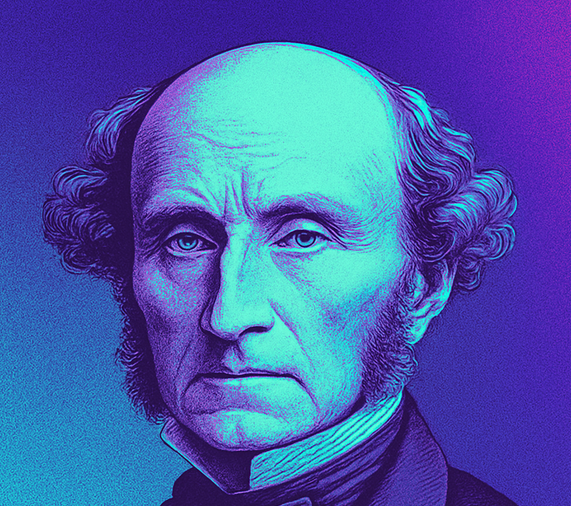
It might be plausibly maintained, that in almost every one of the leading controversies, past or present, in social philosophy, both sides were in the right in what they affirmed, though wrong in what they denied.
▼
Source
J. S. Mill, [http://books.google.gr/books?id=FyfPAAAAMAAJ&dq= Dissertations and discussions: political, philosophical, and historical, Volume 2], H. Holt, 1864, p. 11.
3 months 4 weeks ago
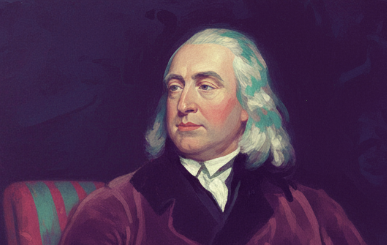
I am at heart more of a United-States-man than an Englishman.
▼
Source
Letter to Andrew Jackson (14 June 1830), quoted in Correspondence of Andrew Jackson, Volume 4, ed. David Maydole Matteson (1929), p. 146
3 months 4 weeks ago
There is no power relation without the correlative constitution of a field of knowledge, nor any knowledge that does not presuppose and constitute at the same time power relations
CivilSimian.com created by AxiomaticPanic, CivilSimian, Kalokagathia