

3 months 4 weeks ago
There is only one good. And that is to act according to the dictates of one's conscience.
▼
Source
p. 181
3 months 4 weeks ago
About sex especially men are born unbalanced; we might almost say men are born mad. They scarcely reach sanity till they reach sanctity.
3 months 4 weeks ago
The creed which accepts as the foundation of morals, Utility, or the Greatest Happiness Principle, holds that actions are right in proportion as they tend to promote happiness, wrong as they tend to produce the reverse of happiness. By happiness is intended pleasure, and the absence of pain; by unhappiness, pain, and the privation of pleasure.
▼
Source
Ch. 2

3 months 4 weeks ago
When a philosopher addresses himself to... a , and tells him... tyranny is incompatible with justice, then the philosopher speaks... and believes he is speaking the truth, and... takes a risk... That was Plato's situation with Dionysius in Syracuse... reference... Plato's Seventh Letter, and... The Life of Dion by Plutarch.
▼
Source
Ref: 1) , [https://archive.org/details/platosseventhlet0000edel/mode/2up Plato's seventh letter] (1966) 2) Plutarch, [https://archive.org/details/lifeofdion0000plut/page/n23/mode/2up Life of Dion]
3 months 4 weeks ago
What should a society be, so that in his last years a man might still be a man? The answer is simple: he would always have to have been treated as a man. By the fate that it allots to its members who can no longer work, society gives itself away — it has always looked upon them as so much material. Society confesses that as far as it is concerned, profit is the only thing that counts, and that its "humanism" is mere window-dressing. In the nineteenth century the ruling classes explicitly equated the proletariat with barbarism. The struggles of the workers succeeded in making the proletariat part of mankind once more. But only in so far as it is productive. Society turns away from the aged worker as though he belonged to another species. That is why the whole question is buried in a conspiracy of silence.
▼
Source
Conclusion, p. 542
3 months 4 weeks ago
There is great poetry being written now. G.K. Chesterton, for instance.
▼
Source
Robert E. Howard, in a letter to his friend Tevis Clyde Smith (6 August 1926)
3 months 4 weeks ago
In the same year in which I began Latin, I made my first commencement in the Greek poet with the Iliad. After I had made some progress in this, my father put Pope's translation into my hands. It was the first English verse I had cared to read, and it became one of the books in which for many years I most delighted: I think I must have read it from twenty to thirty times through. I should not have thought it worth while to mention a taste apparently so natural to boyhood, if I had not, as I think, observed that the keen enjoyment of this brilliant specimen of narrative and versification is not so universal with boys, as I should have expected both à priori and from my individual experience.
▼
Source
([https://archive.org/details/autobiography01mill/page/10/mode/1up p. 10])
3 months 4 weeks ago
Now, apparently, many men are again feeling homesick for the herd. They devote themselves passionately to whatever there is left in them of the sheep. They want to march through life together, along the collective path, shoulder to shoulder, wool rubbing wool, and the head down. This is the reason why so many European peoples are looking for a shepherd and a sheep dog.
▼
Source
p. 170
3 months 4 weeks ago
Michel Foucault once characterized Derrida's prose style to me as "obscurantisme terroriste." The text is written so obscurely that you can't figure out exactly what the thesis is (hence "obscurantisme") and then when one criticizes it, the author says, "Vous m'avez mal compris; vous êtes idiot" ["You did not understand; you are an idiot"] (hence "terroriste").
▼
Source
John Searle, "The Word Turned Upside Down", The New York Review of Books, Volume 30, Number 16, October 27, 1983

3 months 4 weeks ago
And are not the temperate exactly in the same case? They are temperate because they are intemperate—which may seem to be a contradiction, but is nevertheless the sort of thing which happens with this foolish temperance. For there are pleasures which they must have, and are afraid of losing; and therefore they abstain from one class of pleasures because they are overcome by another: and whereas intemperance is defined as "being under the domination of pleasure," they overcome only because they are overcome by pleasure.

3 months 4 weeks ago
Nostalgia is a fruit with the pain of distance in its pit.
▼
Source
Assault on Time, 1981.
3 months 4 weeks ago
But Bentham's subject was Legislation, of which Jurisprudence is only the formal part: and at every page he seemed to open a clearer and broader conception of what human opinions and institutions ought to be, how they might be made what they ought to be, and how far removed from it they now are. When I laid down the last volume of the Traité, I had become a different being. The "principle of utility" understood as Bentham understood it, and applied in the manner in which he applied it through these three volumes, fell exactly into its place as the keystone which held together the detached and fragmentary component parts of my knowledge and beliefs. It gave unity to my conceptions of things. I now had opinions; a creed, a doctrine, a philosophy; in one among the best senses of the word, a religion; the inculcation and diffusion of which could be made the principal outward purpose of a life. And I had a grand conception laid before me of changes to be effected in the condition of mankind through that doctrine. The Traité de Législation wound up with what was to me a most impressive picture of human life as it would be made by such opinions and such laws as were recommended in the treatise.
▼
Source
([https://archive.org/details/autobiography01mill/page/66/mode/1up pp. 66-67])
3 months 4 weeks ago
It is necessary to insist upon this extraordinary but undeniable fact: experimental science has progressed thanks in great part to the work of men astoundingly mediocre, and even less than mediocre. That is to say, modern science, the root and symbol of our actual civilization, finds a place for the intellectually commonplace man and allows him to work therein with success.
▼
Source
Chapter XII: The Barbarism Of "Specialisation"
3 months 4 weeks ago
You would say... inexperienced as I am, and ready to start, as the proverb says, at my own shadow, I cannot afford to give up the sure ground of principle. ...and when you are further required to give an explanation of this principle, you would go on to assume a higher principle, and the best of the higher ones, until you found a resting place; but you would not refuse the principle and consequences in your reasoning like the Eristics—at least if you wanted to discover real existence.
3 months 4 weeks ago
Second, we make no distinction between man and nature: the human essence of nature and the natural essence of man become one within nature in the form of production or industry, just as they do within the life of man as a species. Industry is then no longer considered from the extrinsic point of view of utility, but rather from the point of view of its fundamental identity with nature as production of man and by man.
▼
Source
The Desiring Machine
3 months 4 weeks ago
Soy boricua. In spite of my family and in spite of my country, I’m writing the process of the Puerto Rican mind— taking it out of context—as a native and a foreigner—expressing it through Spanish, Spanglish, and English—Independencia, Estado Libre Asociado, and Estadidad—from the position of a nation, a colony, and a state—Wishy, Wishy-Washy, and Washy.
3 months 4 weeks ago
M. Comte soon left the St. Simonians, and I lost sight of him and his writings for a number of years. But the St. Simonians I continued to cultivate. I was kept au courant of their progress by one of their most enthusiastic disciples, M. ... I was introduced to their chiefs, Bazard and Enfantin, in 1830; and as long as their public teachings and proselytism continued, I read nearly everything they wrote. Their criticisms on the common doctrines of Liberalism seemed to me full of important truth; and it was partly by their writings that my eyes were opened to the very limited and temporary value of the old political economy, which assumes private property and inheritance as indefeasible facts, and freedom of production and exchange as the dernier mot of social improvement. The scheme gradually unfolded by the St. Simonians, under which the labour and capital of society would be managed for the general account of the community every individual being required to take a share of labour either as thinker, teacher, artist, or producer, all being classed according to their capacity, and remunerated according to their works, appeared to me a far superior description of Socialism to Owen's.
▼
Source
([https://archive.org/details/autobiography01mill/page/166/mode/1up pp. 166-167])
3 months 4 weeks ago
Without a strategic retreat into the self, without vigilant thought, human life is impossible. Call to mind all that mankind owes to certain great withdrawals into the self! It is no chance that all the great founders of religions preceded their apostolates by famous retreats. Buddha withdraws to the forest; Mahomet withdraws to his tent, and even there he withdraws from his tent by wrapping his head in his cloak; above all, Jesus goes apart into the desert for forty days.
▼
Source
p. 35
3 months 4 weeks ago
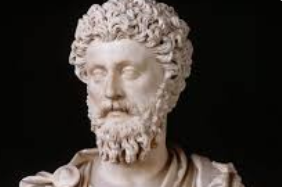
Human life. Duration: momentary. Nature: changeable. Perception: dim. Condition of Body: decaying. Soul: spinning around. Fortune: unpredictable. Lasting Fame: uncertain. Sum Up: The body and its parts are a river, the soul a dream and mist, life is warfare and a journey far from home, lasting reputation is oblivion.
▼
Source
II, 17 (Hays translation)
3 months 4 weeks ago
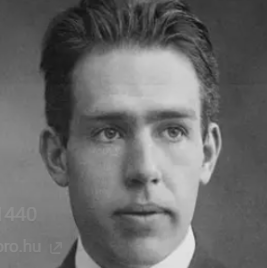
Anyone who is not shocked by quantum theory has not understood it.
▼
Source
Werner Heisenberg recounts a personal conversation he had with Pauli and Bohr in 1952 in which Bohr says, "Those who are not shocked when they first come across quantum theory cannot possibly have understood it." Heisenberg, Werner, Physics and Beyond. (N

3 months 4 weeks ago
People do not feel in any way ashamed or guilty about spending money on new clothes or a new car instead of giving it to famine relief. (Indeed, the alternative does not occur to them.) This way of looking at the matter cannot be justified. When we buy new clothes not to keep ourselves warm but to look "well-dressed" we are not providing for any important need. We would not be sacrificing anything significant if we were to continue to wear our old clothes, and give the money to famine relief. By doing so, we would be preventing another person from starving. It follows from what I have said earlier that we ought to give money away, rather than spend it on clothes which we do not need to keep us warm. To do so is not charitable, or generous. Nor is it the kind of act which philosophers and theologians have called "supererogatory" - an act which it would be good to do, but not wrong not to do. On the contrary, we ought to give the money away, and it is wrong not to do so.
3 months 4 weeks ago
The man who eats with the greatest appetite has the least need of delicacies.
3 months 4 weeks ago
No man has a right to free himself from the law of labour
▼
Source
as quoted from The New International Encyclopædia, Volume 17, (1905 edition) p. 471, by Gilman, Daniel Coit; Colby, Frank Moore; Peck, Harry Thurston. Editor Dodd, Mead.
3 months 4 weeks ago
Reformers like Mill saw women's oppression as a 'relic of the past...discordant with the future and which must necessarily disappear.'
▼
Source
Maxine Molyneux Women's Movements in International Perspective: Latin America and Beyond (2000)
3 months 4 weeks ago
If mind is common to us, then also the reason, whereby we are reasoning beings, is common. If this be so, then also the reason which enjoins what is to be done or left undone is common. If this be so, law also is common; if this be so, we are citizens; if this be so, we are partakers in one constitution; if this be so, the Universe is a kind of Commonwealth.
▼
Source
IV, 4 (as translated by ASL Farquharson)
3 months 4 weeks ago
Living a minimally acceptable ethical life involves using a substantial part of our spare resources to make the world a better place. Living a fully ethical life involves doing the most good we can.
▼
Source
Preface (p. vii)
3 months 4 weeks ago
The wisest of you men is he who has realized, like Socrates, that in respect of wisdom he is really worthless.
▼
Source
Plato, in Apology, 23b, as quoted in The last days of Socrates: Euthyphro, The apology: Crito [and] Phaedo (1967), p. 52

3 months 4 weeks ago
Everything which is, is thought, but not conscious and individual thought. The human intelligence is but the consciousness of being. It is what I have formulated before: Everything is a symbol of a symbol, and a symbol of what? of mind.
▼
Source
30 December 1850
3 months 4 weeks ago
To be like the rock that the waves keep crashing over. It stands unmoved and the raging of the sea falls still around it.
▼
Source
IV, 49

3 months 4 weeks ago
Always think of yourself as everyone's servant; look for Christ Our Lord in everyone and you will then have respect and reverence for them all.
▼
Source
Maxim 25, p. 257

3 months 4 weeks ago
They (Thucydides and Xenophon) maintained the dignity of history.
▼
Source
On the Study and Use of History, letter 5 (1752); compare Henry Fielding, Tom Jones, book xi. chap. ii.; Horace Walpole, Advertisement to Letter to Sir Horace Mann; Thomas Babington Macaulay, History of England, vol. i. chap. i.
3 months 4 weeks ago
Stir up thy mind, and recall thy wits again from thy natural dreams, and visions, and when thou art perfectly awoken, and canst perceive that they were but dreams that troubled thee, as one newly awakened out of another kind of sleep look upon these worldly things with the same mind as thou didst upon those, that thou sawest in thy sleep.
▼
Source
VI, 29

3 months 4 weeks ago
Literary men are...a perpetual priesthood.
▼
Source
The State of German Literature.
3 months 4 weeks ago
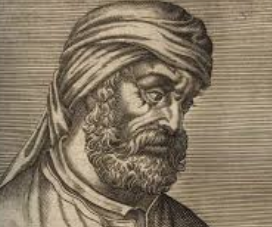
For in the beginning of the world He gave to Adam himself and Eve a law, that they were not to eat of the fruit of the tree planted in the midst of paradise; but that, if they did contrariwise, by death they were to die. Which law had continued enough for them, had it been kept. For in this law given to Adam we recognise in embryo all the precepts which afterwards sprouted forth when given through Moses; that is, Thou shalt love the Lord thy God from thy whole heart and out of thy whole soul; Thou shalt love thy neighbour as thyself; Thou shalt not kill; Thou shalt not commit adultery; Thou shalt not steal; False witness thou shalt not utter; Honour thy father and mother; and, That which is another’s, shalt thou not covet. For the primordial law was given to Adam and Eve in paradise, as the womb of all the precepts of God. In short, if they had loved the Lord their God, they would not have contravened His precept; if they had habitually loved their neighbour—that is, themselves—they would not have believed the persuasion of the serpent, and thus would not have committed murder upon themselves, by falling from immortality, by contravening God’s precept; from theft also they would have abstained, if they had not stealthily tasted of the fruit of the tree, nor had been anxious to skulk beneath a tree to escape the view of the Lord their God; nor would they have been made partners with the falsehood-asseverating devil, by believing him that they would be “like God;” and thus they would not have offended God either, as their Father, who had fashioned them from clay of the earth, as out of the womb of a mother; if they had not coveted another’s, they would not have tasted of the unlawful fruit.
▼
Source
Chapter II.—The Law Anterior to Moses.
3 months 4 weeks ago
The result of what has been said is, in general, that the wealth and power of all nations depending so much on their trade and commerce, and every nation being...in such different circumstances of advantage or disadvantage in the pursuit of this common interest; a good government, and therefore the government of a patriot king, will be directed constantly to make the most of every advantage that nature has given, or art can procure towards the improvement of trade and commerce. And this is one of the principal criterions, by which we are to judge whether governors are in the true interest of the people, or not.It results, in particular, that Great Britain might improve her wealth and power in a proportion superior to that of any nation who can be deemed her rival, if the advantages she has were as wisely cultivated, as they will be in the reign of a patriot king.
▼
Source
pp. 186-187
3 months 4 weeks ago
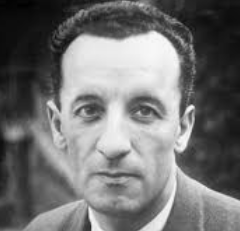
Language transcends us and yet, we speak.
▼
Source
p. 349
3 months 4 weeks ago
For thus it is, men of Athens, in truth: wherever a man has placed himself thinking it is the best place for him, or has been placed by a commander, there in my opinion he ought to stay and to abide the hazard, taking nothing into the reckoning, either death or anything else, before the baseness [of deserting his post].
▼
Source
VII, 45
3 months 4 weeks ago
It is no longer the moral, religious, spiritual condition of the people that is our concern, but their physical, practical, economical condition, as regulated by public laws.
3 months 4 weeks ago
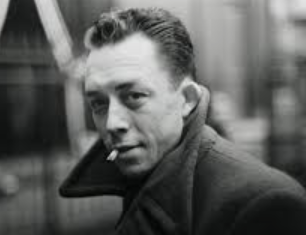
O light! This is the cry of all the characters of ancient drama brought face to face with their fate. This last resort was ours, too, and I knew it now. In the middle of winter I at last discovered that there was in me an invincible summer.
▼
Source
Return to Tipasa (1954) | Variant translation: In the depths of winter, I finally learned that within me there lay an invincible summer. | As translated in Lyrical and Critical Essays (1968), p. 169; also in The Unquiet Vision : Mirrors of Man in Existent

3 months 4 weeks ago
Now there was a young gentleman which had married a merchant's wife. And having a little wanton money, which him thought burned out the bottom of his purse, in the first year of his wedding took his wife with him and went over sea, for none other errand but to see Flanders and France and ride out one summer in those countries.
▼
Source
Works (c. 1530) | Sometimes paraphrased "A little wanton money, which burned out the bottom of his purse."

3 months 4 weeks ago
In Constructions that are equally Geometrical, the most simple are always to be preferr'd. This Law is so universal as to be without Exception. But Algebraick Expressions add nothing to the Simplicity of the Construction; the bare Descriptions of the Lines only are here to be consider'd and these alone were consider'd by those Geometricians who joyn'd a Circle with a right Line. And as these are easy or hard, the Construction becomes easy or hard: And therefore it is foreign to the Nature of the Thing, from any Thing else to establish Laws about Constructions. Either therefore let us, with the Antients, exclude all Lines besides the Circle, and perhaps the Conick Sections, out of Geometry, or admit all, according to the Simplicity of the Description. If the Trochoid were admitted into Geometry, we might, by its Means, divide an Angle in any given Ratio. Would you therefore blame those who should make Use of this Line... and contend that this Line was not defin'd by an Æquition, but that you must make use of such Lines as are defin'd by Æquations?
3 months 4 weeks ago
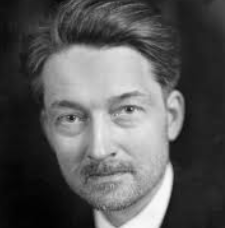
Whereas the intelligence of God is both the cause and the measure of the truth of things, things are both the cause and the measure of the truth of our intelligence.
▼
Source
p. 9.
3 months 4 weeks ago
To accept it without arrogance, to let it go with indifference. (Hays translation)
▼
Source
VIII, 33
3 months 4 weeks ago
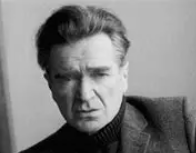
If I were to be totally sincere, I would say that I do not know why I live and why I do not stop living. The answer probably lies in the irrational character of life which maintains itself without reason.
3 months 4 weeks ago
Sarcasm I now see to be, in general, the language of the Devil; for which reason I have, long since, as good as renounced it.
▼
Source
Bk. II, ch. 4.
3 months 4 weeks ago
For the first time in a long time I thought about Maman. I felt as if I understood why at the end of her life she had taken a 'fiancé,' why she had played at beginning again. Even there, in that home where lives were fading out, evening was a kind of wistful respite. So close to death, Maman must have felt free then and ready to live it all again. Nobody, nobody had the right to cry over her. And I felt ready to live it all again too. As if the blind rage had washed me clean, rid me of hope; for the first time, in that night alive with signs and stars, I opened myself to the gentle indifference of the world. Finding it so much like myself — so like a brother, really — I felt I had been happy and that I was happy again. For everything to be consummated, for me to feel less alone, I had only to wish that there be a large crowd of spectators the day of my execution and that they greet me with cries of hate.
▼
Source
Variant translation: I, too, felt ready to start life all over again. It was as if that great rush of anger had washed me clean, emptied me of hope, and, gazing up at the dark sky spangled with its signs and stars, for the first time, the first, I laid my
3 months 4 weeks ago
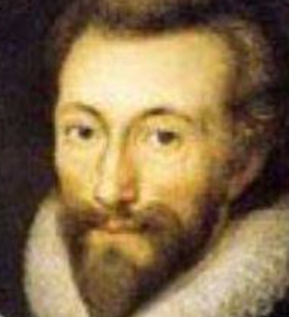
Notwithstanding I acknowledge the schoolmen ingenious: they conceive their principles irregular, and prescribe rules for method, though they want matter.
3 months 4 weeks ago
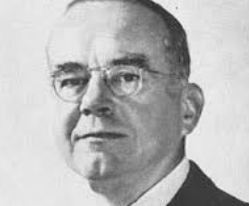
I shall present a theory - which I call "the theory of the managerial revolution." During the past century, dozens, perhaps even hundreds, of "theories of history" have been elaborated. All of the theories, with the exception of those few which approximate to the theory of the managerial revolution, boil down to two and only two. The first of these predicts that capitalism will continue for an indefinite, but long, time, if not forever:' that is, that the major institutions of capitalist society, or at least most of them, will not be radically changed. The second predicts that capitalist society will be replaced by socialist society. The theory of the managerial revolution predicts that capitalist society will be replaced by "managerial society," that, in fact, the transition from capitalist society to managerial society is already well under way.
▼
Source
p. 7, as cited in: Albert Lepawsky (1949), Administration, p. 12-13
3 months 4 weeks ago
All things are changing; and thou thyself art in continuous mutation and in a manner in continuous destruction and the whole universe to.
▼
Source
IX, 19
3 months 4 weeks ago
I don't understand how people can believe in God, even when I myself think of him everyday.
CivilSimian.com created by AxiomaticPanic, CivilSimian, Kalokagathia