

3 months 4 weeks ago
Under all speech that is good for anything there lies a silence that is better. Silence is deep as Eternity; speech is shallow as Time.
3 months 4 weeks ago
There is no mystery in humans creation. Will performs this miracle. But at least there is no true creation without a secret.
▼
Source
Kirilov

3 months 4 weeks ago
The Holy Spirit, moving upon the chaos — which action some divines compare to the incubation of a hen upon her eggs, did together with his heat communicate other manifold influences to the matter.
3 months 4 weeks ago
A preacher must have some intelligence to charm the people by his florid style, by his exhilarating system of morality, by the repetition of his figures of speech, his brilliant remarks and vivid descriptions ; but, after all, he has not too much of it, for if he possessed some of the right quality he would neglect these extraneous ornaments, unworthy of the Gospel, and preach naturally, forcibly, and like a Christian.
▼
Source
Of The Pulpit (8)
3 months 4 weeks ago
The metaphysical apologia at least betrayed the injustice of the established order through the incongruence of concept and reality. The impartiality of scientific language deprived what was powerless of the strength to make itself heard and merely provided the existing order with a neutral sign for itself. Such neutrality is more metaphysical than metaphysics.
▼
Source
E. Jephcott, trans., p. 17.
3 months 4 weeks ago
Let this always be plain to thee, that this piece of land is like any other; and that all things here are the same with all things on the top of a mountain, or on the sea-shore, or wherever thou chooses to be. For thou wilt find just what Plato says, Dwelling within the walls of the city as in a shepherd's fold on a mountain.
▼
Source
X, 23
3 months 4 weeks ago
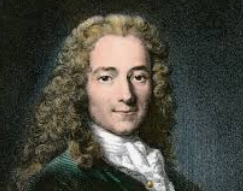
William Penn, when only fifteen years of age, chanced to meet a Quaker in Oxford, where he was then following his studies. This Quaker made a proselyte of him; and our young man, being naturally sprightly and eloquent, having a very winning aspect and engaging carriage, soon gained over some of his companions and intimates, and in a short time formed a society of young Quakers, who met at his house; so that at the age of sixteen he found himself at the head of a sect. Having left college, at his return home to the vice-admiral, his father, instead of kneeling to ask his blessing, as is the custom with the English, he went up to him with his hat on, and accosted him thus: "Friend, I am glad to see thee in good health." The viceadmiral thought his son crazy; but soon discovered he was a Quaker. He then employed every method that prudence could suggest to engage him to behave and act like other people. The youth answered his father only with repeated exhortations to turn Quaker also. After much altercation, his father confined himself to this single request, that he would wait on the king and the duke of York with his hat under his arm, and that he would not "thee" and "thou" them. William answered that his conscience would not permit him to do these things. This exasperated his father to such a degree that he turned him out of doors. Young Penn gave God thanks that he permitted him to suffer so early in His cause, and went into the city, where he held forth, and made a great number of converts; and being young, handsome, and of a graceful figure, both court and city ladies flocked very devoutly to hear him. The patriarch Fox, hearing of his great reputation, came to London — notwithstanding the length of the journey — purposely to see and converse with him. They both agreed to go upon missions into foreign countries; and accordingly they embarked for Holland, after having left a sufficient number of laborers to take care of the London vineyard.

3 months 4 weeks ago
All that is Life in me urges me to give up God.
3 months 4 weeks ago
A great soul, any sincere soul, knows not what he is,—alternates between the highest height and the lowest depth; can, of all things, the least measure—Himself! What others take him for, and what he guesses that he may be; these two items strangely act on one another, help to determine one another. With all men reverently admiring him; with his own wild soul full of noble ardors and affections, of whirlwind chaotic darkness and glorious new light; a divine Universe bursting all into godlike beauty round him, and no man to whom the like ever had befallen, what could he think himself to be?
3 months 4 weeks ago
When a war breaks out, people say: "It's too stupid; it can't last long." But though the war may well be "too stupid," that doesn't prevent its lasting. Stupidity has a knack of getting its way; as we should see if we were not always so much wrapped up in ourselves.
3 months 4 weeks ago
I could have wished that the reputations of many brave men were not to be imperilled in the mouth of a single individual, to stand or fall according as he spoke well or ill. For it is hard to speak properly upon a subject where it is even difficult to convince your hearers that you are speaking the truth. On the one hand, the friend who is familiar with every fact of the story may think that some point has not been set forth with that fullness which he wishes and knows it to deserve; on the other, he who is a stranger to the matter may be led by envy to suspect exaggeration if he hears anything above his own nature. For men can endure to hear others praised only so long as they can severally persuade themselves of their own ability to equal the actions recounted: when this point is passed, envy comes in and with it incredulity.
▼
Source
Book II, 2.35-[1]-[3]
3 months 4 weeks ago
Poverty and inequality like this should cause Europeans to cringe in horror, especially since (we have it on good authority) there is no safety net in America, no unemployment benefits, no retirement, no assistance for the destitute--not the slightest bit of social solidarity. In the U.S. "only the most fortunate have the right to medical care and to grow old with dignity," as one writer recently put it in Libération. University courses are reserved only for those who can pay, which partly explains the "low level of education" in the benighted US.
3 months 4 weeks ago
I have often wondered how it should come to pass, that every man loving himself best, should more regard other men's opinions concerning himself than his own.
▼
Source
XII, 3
3 months 4 weeks ago
Our country is that spot to which our heart is attached.
▼
Source
p. 84
3 months 4 weeks ago
But where is the antidote for lucid despair, perfectly articulated, proud, and sure? All of us are miserable, but how many know it? The consciousness of misery is too serious a disease to figure in an arithmetic of agonies or in the catalogues of the Incurable. It belittles the prestige of hell, and converts the slaughterhouses of time into idyls. What sin have you committed to be born, what crime to exist? Your suffering like your fate is without motive. To suffer, truly to suffer, is to accept the invasion of ills without the excuse of causality, as a favor of demented nature, as a negative miracle. . .
3 months 4 weeks ago
It has ever been held the highest wisdom for a man not merely to submit to Necessity,—Necessity will make him submit,—but to know and believe well that the stern thing which Necessity had ordered was the wisest, the best, the thing wanted there. To cease his frantic pretension of scanning this great God's-World in his small fraction of a brain; to know that it had verily, though deep beyond his soundings, a Just Law, that the soul of it was Good;—that his part in it was to conform to the Law of the Whole, and in devout silence follow that; not questioning it, obeying it as unquestionable.
3 months 4 weeks ago
Man is the only creature who refuses to be what he is.
▼
Source
Introduction
3 months 4 weeks ago
I think, therefore, that we ought to take great numbers of hoplites, both from Athens and from our allies, and not merely from our subjects, but also any we may be able to get for love or money in the Peloponnesus, and great numbers also of archers and slingers, to oppose the Sicilian horse.
▼
Source
Book VI, 6.22-[1]
3 months 4 weeks ago
In the performance of an illocutionary act in the literal utterance of a sentence, the speaker intends to produce a certain effect by means of getting the hearer to recognize his intention to produce that effect; and furthermore, if he is using the words literally, he intends this recognition to be achieved in virtue of the fact that the rules for using the expressions he utters associate the expression with the production of that effect.
▼
Source
P. 45.
3 months 4 weeks ago
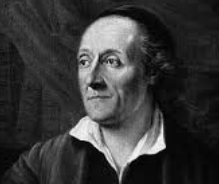
The discovery of truth by slow progressive meditation is wisdom. Intuition of truth, not preceded by perceptible meditation, is genius.
▼
Source
No. 93
3 months 4 weeks ago
I'm constantly amazed by how easily we love ourselves above all others, yet we put more stock in the opinions of others than in our own estimation of self....How much credence we give to the opinions our peers have of us and how little to our very own!
▼
Source
XII. 4
3 months 4 weeks ago
Life is long enough for him who knows how to use it. Working and thinking extend its limits.
▼
Source
p. 219
3 months 4 weeks ago
The universal view melts things into a blur.
3 months 4 weeks ago
In the whole world, that day, there was not a more entirely unimportant-looking pair of people than this Miner and his Wife. And yet what were all Emperors, Popes and Potentates, in comparison? There was born here, once more, a Mighty Man; whose light was to flame as the beacon over long centuries and epochs of the world; the whole world and its history was waiting for this man. It is strange, it is great.
3 months 4 weeks ago
What will be left of the power of example if it is proved that capital punishment has another power, and a very real one, which degrades men to the point of shame, madness, and murder?

3 months 4 weeks ago
I would rather discover one cause than gain the kingdom of Persia.
▼
Source
Freeman (1948), p. 155 | Variant: I would rather discover a single demonstration [in geometry] than become king of the Persians. | Durant (1939),Ch. XVI, §II, p. 352, citinas G.Grote, Plato and the Other Companions of Socrates (London, 1875), vol. 1, p. 6
3 months 4 weeks ago
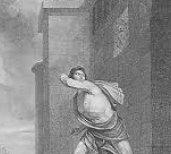
If thou wert the lion, the fox would beguile thee; if thou wert the lamb, the fox would eat thee; if thou wert the fox, the lion would suspect thee, when, peradventure, thou wert accused by the ass; if thou wert the ass, thy dulness would torment thee, and still thou livedst but as a breakfast to the wolf; if thou wert the wolf, thy greediness would afflict thee, and oft thou shouldst hazard thy life for thy dinner; wert thou the unicorn, pride and wrath would confound thee, and make thine own self the conquest of thy fury; wert thou a bear, thou wouldst be killed by the horse; wert thou a horse, thou wouldst be seized by the leopard; wert thou a leopard, thou wert german to the lion, and the spots of thy kindred were jurors on thy life; all thy safety were remotion, and thy defence, absence. What beast couldst thou be, that were not subject to a beast? and what beast art thou already, that seest not thy loss in transformation!
▼
Source
Timon, scene iii
3 months 4 weeks ago
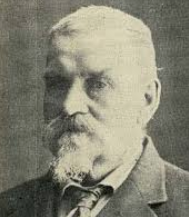
Since the term command comprises the term law the first is the simpler as well as the larger of the two. But simple as it is, it admits of explanation. And, since it is the key to the sciences of jurisprudence and morals, its meaning should be analyzed with. precision.
▼
Source
p. 6
3 months 4 weeks ago
Likewise, there is much truth in Voltaire's enthusiastic Orientalist assumption that unlike Judaism, Christianity and Islam, the Indian and Chinese "religions" were not based on prophetic "revelations" but on a purely human contemplation of reality.
▼
Source
Koenraad Elst. 2001, Decolonizing the Hindu Mind, p. 44
3 months 4 weeks ago
Boredom is a larval anxiety; depression, a dreamy hatred.
3 months 4 weeks ago
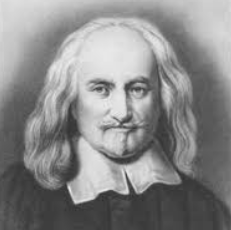
Of all Discourse, governed by desire of Knowledge, there is at last an End, either by attaining, or by giving over.
▼
Source
The First Part, Chapter 7, p. 30
3 months 4 weeks ago
With his sharp power of vision, resolute power of action, I doubt not he could have learned to write Books withal, and speak fluently enough;—he did harder things than writing of Books. This kind of man is precisely he who is fit for doing manfully all things you will set him on doing.
3 months 4 weeks ago
Fools learn wisdom through misfortune.
3 months 4 weeks ago
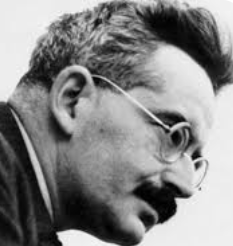
There is no muse of philosophy, nor is there one of translation.
▼
Source
"The Task of the Translator," translated by Harry Zohn
3 months 4 weeks ago
The physicists of Gilbert's time had recourse to mechanism infrequently, and its effective explanations touched only a few disconnected phenomena. The virtuosity, inventiveness, and optimism of Descartes, however, and the counter-example of latter- day hermetists like Robert Fludd, persuaded many that mechanical models offered the only hope for a precise and comprehensible physics. Expectations rose. Physicists demanded more from models, perhaps even a complete fit with phenomena, with little or no negative analogy.Gilbert's countrymen , diplomat and philosopher, and Thomas Browne, physician diplomat and literateur, freed his watery humor objections of Cabeo by concocting it into an unctuous, elastic vapor. Such a vapor could allow Cabeo's rebounds, occasion the reattractions of ricocheting that Digby noticed, and — in its elastic contractions — draw the electric as well as the chaff. This last inference was first made about 1660, by the unconventional Cartesian fellow traveller , S.J., 'a veritable giant in science' and a liberal and candid physicist whenever his Society's obligation to combat Copernicans did interfer.
▼
Source
John L. Heilbron, Electricity in the 17th and 18th centuries: A study of early modern physics. Univ of California Press, 1979. p. 195 | The quote "a veritable giant in science," originates from: Elise C. Otté (1881). Denmark and Iceland, p. 156
3 months 4 weeks ago
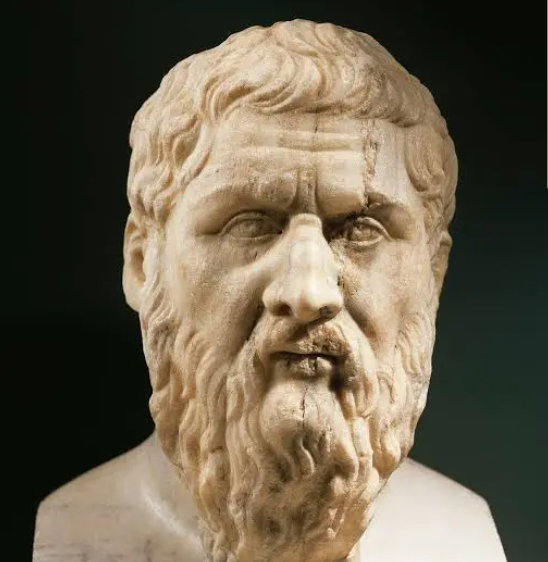
Parmenides: I was pleased with you, Socrates, because you would not discuss the doubtful question in terms of visible objects or in relation to them, but only with reference to what we conceive most entirely by the intellect and may call ideas… But if you wish to get better training, you must do something more than that; you must consider not only what happens if a particular hypothesis is true, but also what happens if it is not true.
▼
Source
135e
3 months 4 weeks ago
On the frontiers of the self: "What I have suffered, what I am suffering, no one will ever know, not even I."
3 months 4 weeks ago
For naturall Bloud is in like manner made of the fruits of the Earth; and circulating, nourisheth by the way, every Member of the Body of Man.
▼
Source
The Second Part, Chapter 24, p. 130 (See also: Velocity of money)
3 months 4 weeks ago
Money is miraculous. What miraculous facilities has it yielded, will it yield us; but also what never-imagined confusions, obscurations has it brought in; down almost to total extinction of the moral-sense in large masses of mankind!
3 months 4 weeks ago
All who delight in the pleasures of the belly, exceeding all measure in eating and drinking and love, find that the pleasures are brief and last but a short while—only so long as they are eating and drinking—but the pains that come after are many and endure. The longing for the same things keeps ever returning, and whenever the objects of one's desire are realized forthwith the pleasure vanishes, and one has no further use for them. The pleasure is brief, and once more the need for the same things returns.

3 months 4 weeks ago
The negative utilitarian might reply that this formulation of the problem is misleading. We do not live in a notional world where only a pinprick, minor pains, or even just "mild" suffering exists. In the real world, frightful horrors as well as humdrum malaise occur every day. The intensity of suffering is sometimes so dreadful that its victims are prepared to destroy themselves to bring their torment to an end. Each year, some 800,000 people across the planet kill themselves while in the grip of suicidal despair. Tens of millions of people are severely depressed or suffer chronic neuropathic pain. By way of contrast, the genteel conventions of an ethics seminar in academic philosophy, or the scholarly technicalities of a journal article, simply fail to come to terms with the enormity of what's at stake. To talk of a "pinprick" is to trivialise the NU ethical stance.
▼
Source
"[https://www.utilitarianism.com/pinprick-argument.html The Pinprick Argument]", BLTC Research, 2005
3 months 4 weeks ago
Jaspers sees the historical meaning of existential philosophy as a struggle to awaken in the individual the possibilities of an authentic and genuine life, in the face of the great modern drift toward a standardized mass society.
▼
Source
Chapter Two, The Encounter With Nothingness, p. 28
3 months 4 weeks ago
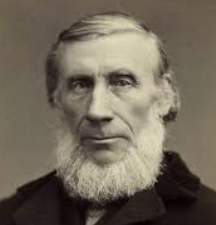
When arguments or proofs were needed, whether on the side of the Jewish Christians or of the Gentile Christians, a document was discovered which met the case, and on which the name of an apostle, or of some authoritative contemporary of the apostles, was boldly inscribed. The end being held to sanctify the means, there was no lack of manufactured testimony.
3 months 4 weeks ago
There have been, and will be again, many destructions of mankind arising out of many causes; the greatest have been brought about by the agencies of fire and water, and other lesser ones by innumerable other causes. There is a story, which even you have preserved, that once upon a time Phaethon, the son of Helios, having yoked the steeds in his father's chariot, because he was not able to drive them in the path of his father, burnt up all that was upon the earth, and was himself destroyed by a thunderbolt. Now this has the form of a myth, but really signifies a declination of the bodies moving in the heavens around the earth, and a great conflagration of things upon the earth, which recurs after long intervals; at such times those who live upon the mountains and in dry and lofty places are more liable to destruction than those who dwell by rivers or on the seashore. And from this calamity the Nile, who is our never-failing saviour, delivers and preserves us. When, on the other hand, the gods purge the earth with a deluge of water, the survivors in your country are herdsmen and shepherds who dwell on the mountains, but those who, like you, live in cities are carried by the rivers into the sea. Whereas in this land, neither then nor at any other time, does the water come down from above on the fields, having always a tendency to come up from below; for which reason the traditions preserved here are the most ancient. The fact is, that wherever the extremity of winter frost or of summer sun does not prevent, mankind exist, sometimes in greater, sometimes in lesser numbers. And whatever happened either in your country or in ours, or in any other region of which we are informed—if there were any actions noble or great or in any other way remarkable, they have all been written down by us of old, and are preserved in our temples.
▼
Source
Benjamin Jowett translation
3 months 4 weeks ago
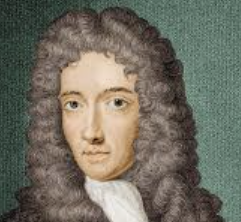
That which I am now entering upon being the Consideration of the things themselves whereinto Spagyrists resolve mixt Bodies by the Fire, If I can shew that these are not of an Elementary Nature, it will be no great matter what names these or those Chymists have been pleased to give them. And I question not that to a Wise man, and consequently to Eleutherius, it will be lesse considerable to know, what Men Have thought of Things, then what they Should have thought.
3 months 4 weeks ago
Woes and wonders of power, that tonic hell, synthesis of poison and panacea.
3 months 4 weeks ago
At the core of Hobbes’s theory of political authority is the provision of security. “The end of Obedience is Protection,” Hobbes insists in chapter 21 of Leviathan. The Obligation of Subjects to the Soveraign, is understood to last as long, and no longer, than the power lasteth, by which he is able to protect them.” This is because “the right men have by Nature to protect themselves, when none else can protect them, can by no Covenant be relinquished.”6 The king’s rightful authority is rooted in his capacity to protect his subjects. As a result, their obligation to obey him, unqualified as it is while it lasts, expires with the king’s ability to protect them.Hobbes spelled this out even more perspicaciously in his discussion of conquest—with clear implications for what was at stake in the Engagement controversy. A person is conquered not by being slain or imprisoned. (In the latter case “he is still an Enemy, and may save himself if hee can.”) Rather, “he that upon promise of Obedience, hath his Life and Liberty allowed him, is then Conquered, and a Subject; and not before.” The long and short of it was that once Parliament had replaced the king as protector of the people of England, they owed Parliament their unqualified allegiance. Engagement was therefore legitimate. Indeed, in the circumstances after 1649, it was obligatory. And it would follow, a fortiori, that should Parliament lose the capacity to provide protection, then the obligation to Engage would cease as well.In this way, Hobbes could counsel Charles’s supporters to promise allegiance to Parliament, but they could do it in a manner that would not compromise their ability to support the king in the event of a restoration. As it turned out, making this move alienated Hobbes from many royalists—even though he offered them a doctrine that promised to get them out of a tight spot and hedge their bets for the future. Their attachment, it seems, was to Charles himself, or at least to the institution of the monarchy.
▼
Source
Ian Shapiro, "Introduction: Reading Hobbes Today", in Thomas Hobbes, Leviathan (Yale University Press, 2010)
3 months 4 weeks ago
A healthy hatred of scoundrels.
▼
Source
Latter Day Pamphlets, No. 12.
3 months 4 weeks ago
What right have humans to impose our values on members of another race or species? The charge is seductive but misplaced. There is no anthropomorphism here, no imposition of human values on alien minds. Human and nonhuman animals are alike in an ethically critical respect. The pleasure-pain axis is universal to sentient life. No sentient being wants to be harmed – to be asphyxiated, dismembered, or eaten alive. The wishes of a terrified toddler or a fleeing zebra to flourish unmolested are not open to doubt even in the absence of the verbal capacity to say so.
▼
Source
"[https://io9.gizmodo.com/the-radical-plan-to-eliminate-earths-predatory-species-1613342963 The Radical Plan to Phase out Earth's Predatory Species]", io9, 30 Jul. 2014

3 months 4 weeks ago
Progressives regarded Woodrow Wilson’s Fourteen Points and the Atlantic Charter of Franklin Roosevelt and Winston Churchill as beacons of hope for mankind—and this precisely because they were considered expressions of nationalism, promising national independence and self-determination to enslaved peoples around the world. Conservatives from Teddy Roosevelt to Dwight Eisenhower likewise spoke of nationalism as a positive good, and in their day Ronald Reagan and Margaret Thatcher were welcomed by conservatives for the “new nationalism” they brought to political life. In other lands, statesmen from Mahatma Gandhi to David Ben-Gurion led nationalist political movements that won widespread admiration and esteem as they steered their peoples to freedom.
CivilSimian.com created by AxiomaticPanic, CivilSimian, Kalokagathia